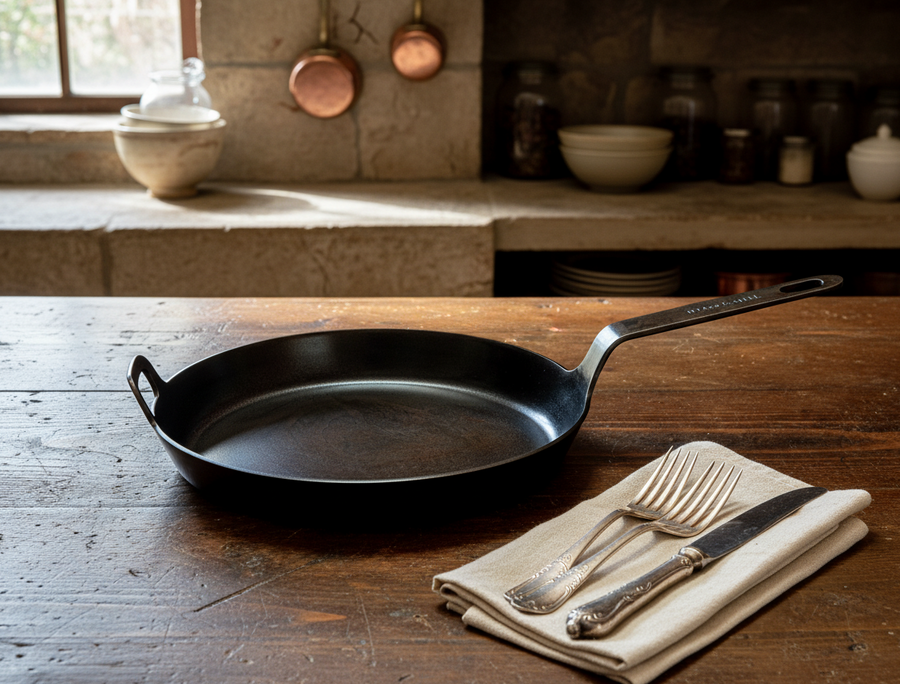
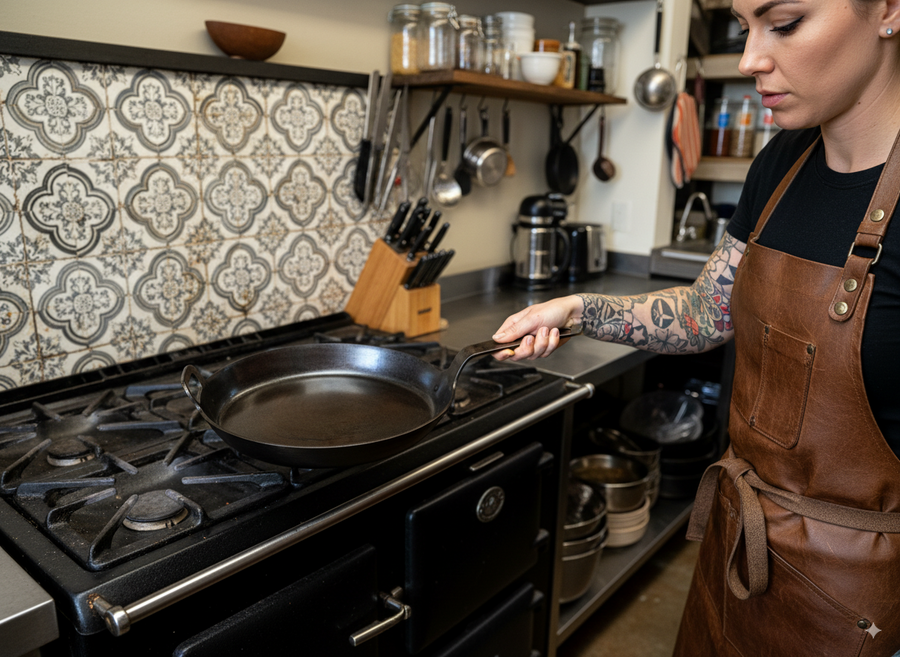
Why Carbon Steel Outperforms: 90% Less Rust & Superior Heat

Many home cooks avoid carbon steel pans, fearing high maintenance and constant rust battles. Yet proper care reduces rust risk by over 90%, transforming these pans into reliable workhorses. Carbon steel combines rapid thermal response with a natural nonstick surface free from chemicals. This guide reveals why carbon steel surpasses cast iron and synthetic nonstick options for European kitchens seeking durability, precision, and health conscious cooking.
Table of Contents
- Introduction To Carbon Steel Cookware
- Thermal Performance And Heat Retention
- Natural Nonstick Surface Benefits
- Manufacturing Quality And Durability
- Care And Maintenance For Longevity
- Common Misconceptions And Accurate Corrections
- Choosing The Right Carbon Steel Pan For Your Needs
- Explore Premium Carbon Steel Cookware For Your Kitchen
Key Takeaways
| Point | Details |
|---|---|
| Thermal Responsiveness | Carbon steel heats twice as fast as cast iron, enabling precise temperature control for searing and delicate sauces. |
| Natural Nonstick Surface | Polymerized oil layers create chemical free nonstick performance that rivals synthetic coatings within 2 weeks of regular use. |
| One Piece Construction | Forged from a single sheet eliminates weak points, resists warping, and simplifies cleaning for decades of use. |
| Maintenance Efficiency | Simple seasoning and dry storage cut rust risk by over 90%, debunking high maintenance myths. |
| Health Safety | Zero PTFE or PFOA means no toxic fumes, safe for high heat cooking and oven use up to 500°C. |
Introduction to Carbon Steel Cookware
Carbon steel is an alloy of iron with 1 to 2 percent carbon, creating a material lighter than cast iron yet more responsive than stainless steel. Historically used in European kitchens, it has proven its value across generations. Modern chefs rediscover its advantages as synthetic nonstick coatings degrade and cast iron proves too heavy for quick movements.
Understanding how carbon steel compares to alternatives helps you choose the right pan. Cast iron retains heat longer but responds slowly to temperature changes. Stainless steel heats unevenly without aluminum cores. Nonstick coatings break down under high heat and release harmful fumes. Carbon steel strikes a balance: it heats rapidly, develops a durable natural nonstick layer through seasoning science, and tolerates extreme temperatures without degradation.
Key material differences include:
- Carbon Steel: 99% iron, 1% carbon. Lightweight, responsive, forms natural nonstick patina through seasoning.
- Cast Iron: Heavier alloy with 2 to 4% carbon. Excellent heat retention but slow temperature adjustments.
- Stainless Steel: Iron, chromium, nickel blend. Durable but poor heat distribution without multi layer construction.
- Nonstick Coated: Aluminum or steel base with synthetic polymer. Convenient but degrades quickly, releases toxins at high heat.
For European cooks valuing precision and longevity, carbon steel cookware basics reveal why this material suits both home kitchens and professional settings. Its adaptability across gas, electric, and induction cooktops makes it a versatile investment.
Thermal Performance and Heat Retention
Carbon steel pans heat up twice as fast as cast iron and respond more quickly to temperature changes, enhancing cooking precision. This responsiveness stems from lower thermal mass and thinner walls compared to cast iron. When you reduce burner heat, a carbon steel pan cools within seconds, preventing overcooking. Cast iron maintains temperature longer, which suits slow braises but hinders delicate sauces.
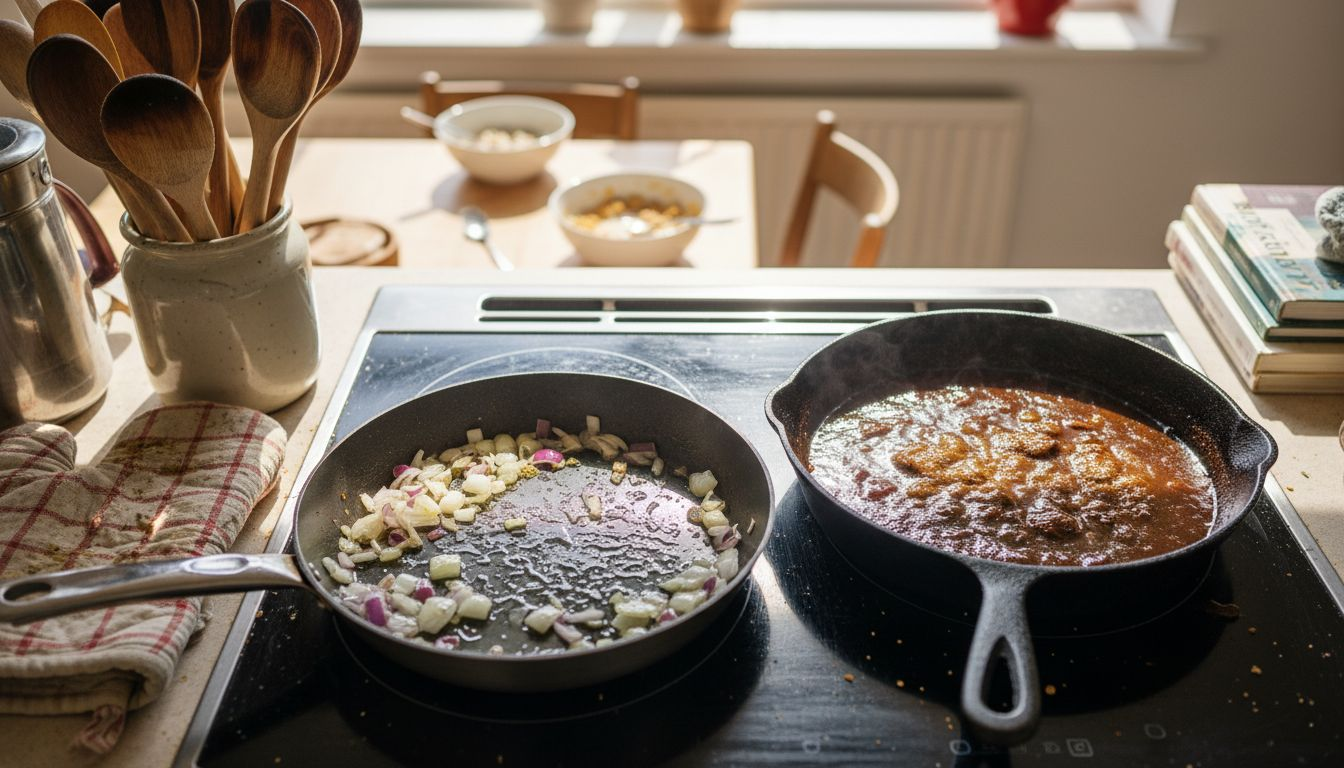
Thermal conductivity differences impact your cooking control:
| Material | Heat Up Time (to 200°C) | Cool Down Time (200°C to 100°C) | Best Use Cases |
|---|---|---|---|
| Carbon Steel | 3 to 4 minutes | 60 to 90 seconds | Searing steaks, sautéing vegetables, quick stir fries |
| Cast Iron | 8 to 10 minutes | 4 to 5 minutes | Braising, baking, steady low heat cooking |
| Stainless Steel | 4 to 5 minutes | 90 to 120 seconds | Deglazing, sauces, boiling liquids |
Rapid responsiveness benefits searing and delicate cooking in several ways:
- Protein Searing: High initial heat browns meat surfaces quickly, locking in juices without overcooking interiors.
- Vegetable Sautéing: Quick temperature drops prevent burning when adding aromatics like garlic or ginger.
- Sauce Reduction: Precise heat control thickens liquids without scorching, preserving flavor complexity.
- Egg Cooking: Gentle heat adjustments create perfect omelets and crepes without rubbery textures.
Pro Tip: For optimal heat settings, preheat your carbon steel pan over medium heat for 2 to 3 minutes. Test readiness by flicking water drops onto the surface. If they bead and roll instantly, the pan is ready. Avoid prolonged empty heating, which can warp thinner pans or damage seasoning layers.
Precision cooking with carbon steel transforms everyday meals into restaurant quality dishes. The ability to shift from high sear to gentle simmer within seconds gives you command over texture and flavor that cast iron cannot match.
Natural Nonstick Surface Benefits
A properly seasoned carbon steel pan develops a polymerized oil layer that lasts indefinitely with maintenance and outperforms synthetic coatings. This layer forms when high heat transforms liquid fats into hard, smooth polymers bonded to the metal surface. Unlike PTFE coatings that degrade and flake, natural seasoning repairs itself during cooking as oils fill microscopic gaps.
Polymerized oil chemistry creates a durable surface through molecular transformation. When oils reach their smoke point in an oven or on a burner, triglycerides break down and recombine into cross linked polymers. These polymers adhere to iron through chemical bonds, forming a slick, dark patina. Each cooking session with fats reinforces this layer, gradually building a finish that eggs slide across effortlessly.
Seasoning benefits and health advantages over synthetic coatings:
- Chemical Free Cooking: Zero PTFE, PFOA, or PFAS means no toxic fumes even at 500°C oven temperatures.
- Self Repairing Surface: Minor scratches fill naturally as you cook with oils, unlike coatings that chip permanently.
- Heat Tolerance: Natural seasoning withstands broiler heat and open flames without breakdown.
- Environmental Safety: No manufacturing emissions from fluoropolymer production or disposal concerns.
- Long Term Performance: Seasoned carbon steel can achieve nonstick performance equal to chemical coated pans after 2 to 4 weeks of regular use.
“Natural seasoning on carbon steel pans provides a nonstick surface that improves with age, free from the health risks and environmental impact of synthetic coatings. With proper care, this surface lasts generations.” — Serious Eats Cookware Research
The seasoning benefits extend beyond nonstick convenience. Iron from the pan surface leaches into food in trace amounts, supporting dietary iron intake. This natural fortification contrasts with inert synthetic coatings that contribute nothing nutritionally. For families concerned about PTFE exposure and environmental pollutants, carbon steel offers peace of mind alongside superior cooking performance. The seasoning science article provides deeper insights into molecular processes that create this remarkable surface.
Manufacturing Quality and Durability
Single piece forging eliminates the weak points found in riveted or welded pans. Traditional cookware assembles handles separately, creating joints that trap food particles and corrode over time. Forged construction benefits include seamless strength, simplified cleaning, and balanced weight distribution that reduces wrist strain during prolonged cooking.
The forging process begins with a flat carbon steel disc heated until malleable. Hydraulic presses shape the disc into a pan form in one continuous motion, compressing metal fibers for enhanced strength. This method creates dense, uniform thickness throughout the cooking surface and sidewalls. No seams mean no weak points where metal fatigue causes cracks or separations.
Durability advantages of one piece forged carbon steel:
- Rust Resistance: Seamless construction prevents moisture pockets that accelerate oxidation in riveted joints.
- Warp Prevention: Uniform thickness and compressed grain structure resist deformation even under thermal shock from cold water on hot surfaces.
- Weight Balance: Mass concentrated in the cooking surface rather than heavy handles reduces fatigue during flipping and tossing.
- Cleaning Simplicity: Smooth interiors without crevices or rivets wipe clean instantly, eliminating scrubbing around fasteners.
Thickness directly impacts heat retention and handling comfort. A 3mm pan heats faster and maneuvers easily for quick sautés and tossing vegetables. A 4mm pan stores more thermal energy, ideal for searing thick steaks without temperature drops when cold meat hits the surface. Heavier pans demand stronger wrists but reward you with consistent heat during high volume cooking.
Pro Tip: Choose forged pans with 3mm thickness for everyday home cooking where agility matters. Professional kitchens benefit from 4mm pans that withstand continuous high heat service without warping. Both thicknesses develop excellent seasoning, but thicker pans require longer preheating to reach optimal cooking temperature. Test balance by gripping the handle with one hand. The pan should feel stable without tipping forward, indicating proper weight distribution for safe handling when full.
Care and Maintenance for Longevity
Seasoning new pans in a 250°C oven for 30 minutes per layer, 2 to 3 layers, is critical for strong polymerized oil. This initial process establishes the foundation for your pan’s nonstick surface and rust protection. Skipping or rushing seasoning leaves metal exposed, inviting oxidation and sticky cooking surfaces that frustrate cooks.
Detailed seasoning steps from initial cleaning to baking layers:
- Wash Thoroughly: New pans arrive with a thin protective oil coating. Wash with warm soapy water and a soft sponge to remove this layer completely.
- Dry Completely: Towel dry immediately, then place on a low burner for 2 minutes to evaporate remaining moisture.
- Preheat Oven: Set to 250°C and let stabilize for 10 minutes while the oven reaches full temperature.
- Apply Thin Oil Coat: Use grapeseed, avocado, sunflower, or canola oil. Pour a teaspoon onto the pan and spread with a paper towel across all surfaces.
- Wipe Excess: Remove nearly all visible oil. The surface should appear almost dry, not shiny or pooled. Excess oil creates sticky spots rather than smooth seasoning.
- Bake Upside Down: Place pan upside down on the middle oven rack with foil on the lower rack to catch drips. Bake 30 minutes.
- Cool and Repeat: Let cool 10 minutes, then repeat oil application and baking 2 more times for a total of 3 layers.
Daily and post use care practices to prevent rust and sustain seasoning:
- Clean While Warm: Rinse with hot water immediately after cooking. Use a soft brush or sponge for stuck bits. Avoid soap unless absolutely necessary.
- Dry Immediately: Towel dry completely, then heat on a burner for 30 seconds to eliminate hidden moisture in microscopic pores.
- Light Oil Application: Rub a few drops of oil across the cooking surface with a paper towel while still warm. Wipe away excess.
- Store Properly: Hang or stack with paper towels between pans to prevent moisture accumulation and surface scratches.
- Avoid Soaking: Never leave pans submerged in water. Even brief soaking can penetrate seasoning and cause rust spots.
Common mistakes include over oiling, which leaves sticky residue that attracts dust and debris. If your pan feels tacky, scrub with coarse salt and a damp cloth, then re season with thinner oil layers. Soaking pans overnight strips seasoning and invites rust. Fix minor rust by scrubbing with steel wool, then immediately re seasoning the affected area.
Pro Tip: Cook fatty foods like bacon, sausages, or skin on chicken regularly to enhance seasoning durability. Animal fats contain saturated fatty acids that polymerize effectively, reinforcing your pan’s nonstick layer with each use. After cooking fatty proteins, simply wipe out excess grease and apply a thin finishing oil coat. This passive seasoning maintenance keeps your pan in peak condition without dedicated re seasoning sessions. The carbon steel maintenance guide and seasoning guide offer additional troubleshooting and seasoning instructions for specific challenges.
Common Misconceptions and Accurate Corrections
Proper seasoning and care reduce rust risk by over 90%, contradicting beliefs that carbon steel pans are high maintenance and rust prone. Misconceptions persist because many cooks compare unseasoned carbon steel to pre seasoned cast iron or ready to use nonstick pans. Understanding the truth behind common myths builds confidence in choosing carbon steel.
| Misconception | Accurate Correction |
|---|---|
| Carbon steel rusts easily and constantly | Seasoned carbon steel resists rust as effectively as cast iron. Dry storage and light oiling after use prevent oxidation. Rust only forms when pans sit wet or in humid conditions without protection. |
| Maintenance demands hours of work weekly | Actual maintenance takes 2 minutes per use: rinse, dry, light oil. Initial seasoning requires 2 hours once, then the pan maintains itself through cooking. Far less effort than scrubbing degraded nonstick coatings. |
| Nonstick performance never matches synthetic coatings | After 2 to 4 weeks of regular use, seasoned carbon steel rivals PTFE pans for eggs and delicate fish. Performance improves continuously, unlike coatings that degrade from day one. |
| Too heavy for daily cooking | 27cm carbon steel pans weigh approximately 2kg, lighter than equivalent cast iron. The 30cm professional model at 3kg matches the weight of quality stainless steel cookware. |
| Incompatible with modern induction cooktops | Carbon steel’s ferrous composition makes it ideal for induction. It heats faster on induction than gas, with precise temperature control. |
Misconceptions arise from unfamiliarity with proper seasoning techniques and comparison to pre treated cookware. Many cooks receive unseasoned carbon steel, attempt to cook eggs immediately, and conclude the material is defective. Others leave pans soaking overnight, see rust spots, and assume carbon steel cannot tolerate moisture. Both scenarios reflect user error rather than material limitations.
Overcoming misconceptions requires understanding that carbon steel rewards small, consistent care habits. The carbon steel vs cast iron myths comparison clarifies that carbon steel actually demands less effort than maintaining cast iron’s heavier mass and slower heat response. The myth busting article provides scientific evidence debunking persistent false beliefs. Once you establish initial seasoning and adopt quick post use care, carbon steel becomes the lowest maintenance option in your kitchen.
Choosing the Right Carbon Steel Pan for Your Needs
Selecting between 27cm and 30cm pan sizes depends on cooking volume and kitchen demands. A 27cm pan suits home cooks preparing meals for 2 to 4 people, offering easy maneuverability and faster heating. The 30cm professional model accommodates family sized portions or restaurant service, with 4mm thickness that maintains temperature when cooking multiple steaks or large vegetable batches.
Thickness and weight trade offs affect both heat retention and handling:
- 3mm Thickness (27cm pan, approximately 2kg): Heats rapidly, responds quickly to temperature changes, easy to flip and toss. Ideal for daily sautéing, omelets, and quick sears. Requires careful preheating to avoid hot spots on powerful burners.
- 4mm Thickness (30cm pan, approximately 3kg): Superior heat retention, stays hot when cold ingredients hit the surface. Perfect for high volume cooking, thick steaks, and professional kitchens. Heavier weight demands stronger wrists but provides stability for aggressive stirring.
Induction compatibility matters for European kitchens increasingly adopting induction cooktops for energy efficiency. Carbon steel’s ferrous composition excels on induction, heating faster than on gas while maintaining precise temperature control. Use moderate power settings when preheating empty pans to prevent warping from rapid thermal expansion.
Recommended selection criteria based on cooking style:
- Home Cooks (1 to 4 servings): Choose 27cm for agility, faster heating, and comfortable handling during extended cooking sessions.
- Professional Chefs (high volume): Select 30cm for consistent heat under demanding service conditions and capacity for larger portions.
- Induction Users: Both sizes work excellently. Start with medium power and increase gradually to protect seasoning during initial heating.
- Oven Use: Both pans tolerate 500°C oven temperatures. Choose based on dish size rather than heat tolerance.
Choosing carbon steel pans involves matching pan characteristics to your cooking frequency and techniques. Consider your strongest dishes and most common cooking tasks. If you sear steaks weekly, prioritize thickness for heat retention. If you cook delicate fish and vegetable stir fries daily, value lighter weight for quick movements. Both sizes develop excellent seasoning and last decades with proper care, making either choice a sound investment in your culinary capabilities.
Explore Premium Carbon Steel Cookware for Your Kitchen
Applying the thermal performance, seasoning techniques, and durability insights you’ve gained starts with the right cookware and resources. Our website offers comprehensive guides that deepen your carbon steel expertise alongside premium forged pans built for generations of use.
Discover detailed information on carbon steel pan uses to maximize your cooking potential across techniques from searing to baking. Learn how carbon steel pans are made through our forging process, revealing the engineering precision behind one piece construction. Compare options directly with our carbon steel vs nonstick comparison to confirm why natural seasoning outperforms synthetic coatings for health and performance. Explore our collection of 27cm and 30cm forged carbon steel pans designed for European kitchens seeking heirloom quality cookware.
FAQ
Is carbon steel cookware suitable for all types of cooktops?
Yes, carbon steel pans are highly compatible with induction cooktops due to their ferrous metal content, which interacts efficiently with magnetic fields. They also work excellently on gas, electric, and ceramic cooktops. For induction, use moderate power settings when the pan is empty or cold to prevent warping from rapid thermal expansion.
How often should I re-season my carbon steel pan?
Re-seasoning every few months or after cooking acidic foods like tomato sauces helps maintain the polymerized surface and nonstick performance. Light oiling after every use supports seasoning durability by filling microscopic gaps and preventing oxidation. If your pan looks dull or food begins sticking, a full re seasoning session restores optimal performance within 2 hours.
Can carbon steel pans replace nonstick coated pans safely?
Absolutely. Seasoned carbon steel pans offer chemical free cooking free from PTFE, PFOA, and PFAS risks that synthetic coatings pose at high temperatures. They provide durable nonstick surfaces with better heat tolerance, lasting decades rather than degrading within years. After 2 to 4 weeks of regular use, natural seasoning achieves nonstick performance equal to synthetic coatings while supporting your health and environmental responsibility.
Recommended
- Understanding Benefits of Carbon Steel Pan with No Rivets or Welds – Brass & Steel
- How to Prevent Rust on a Carbon Steel Pan Easily – Brass & Steel
- How to Prevent Rust on Cookware: Step-by-Step for Carbon Steel – Brass & Steel
- Importance of Seasoning Carbon Steel – Unlocking Performance and Longe – Brass & Steel
- Why Use Spruce For Top: Complete Guide
- Complete Guide to Fencing Materials and Choices – Jumalu Fencing