Maintenance for Carbon Steel Cookware – Key to Longevity
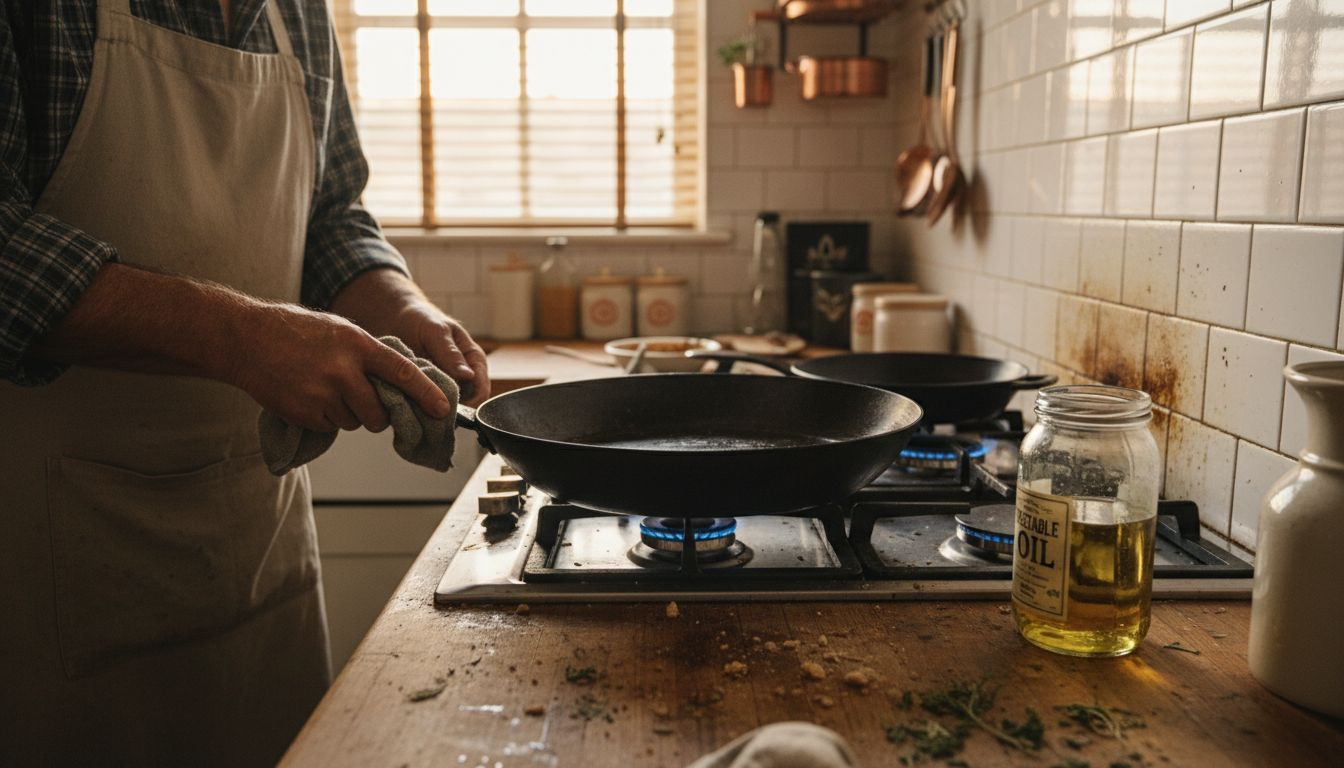
Every passionate chef in a well-equipped kitchen across Europe knows the distinct power and versatility of carbon steel cookware. Yet keeping these pans enduringly slick and corrosion-free demands more than casual cleaning. Surface management and consistent routines are the backbone of true longevity in induction-compatible carbon steel, directly affecting performance and reliability. By mastering the specifics of inspections, seasoning, and rust prevention, culinary professionals and ambitious home cooks unlock the remarkable lifespan that sets carbon steel apart from ordinary options.
Table of Contents
- What Maintenance For Carbon Steel Means
- Types Of Carbon Steel Cookware Maintenance
- Seasoning Process And Its Importance
- Cleaning, Drying, And Rust Prevention Steps
- Common Mistakes And How To Avoid Them
Key Takeaways
| Point | Details |
|---|---|
| Consistent Maintenance is Key | Regular care routines prevent rust and enhance performance, ensuring your carbon steel cookware lasts for decades. |
| Understanding Seasoning Improves Longevity | Proper seasoning creates a protective layer, essential for both nonstick properties and rust prevention. |
| Prompt Cleaning and Drying are Crucial | Cleaning, thoroughly drying, and applying a thin coat of oil immediately after use are vital to avoid moisture-related damage. |
| Corrective Maintenance Addresses Issues | Knowing how to manage small rust spots or sticky surfaces promptly helps to restore and prolong the life of your pan. |
What Maintenance for Carbon Steel Means
Maintenance for carbon steel cookware means actively protecting and managing the surface of your pan to prevent rust, maintain its nonstick properties, and ensure it performs optimally for decades. This isn’t complicated chemistry or mysterious ritual. It’s simply understanding that carbon steel is a living, breathing material that responds to how you treat it. When you cook with fat, you’re building layers. When you clean carelessly, you’re stripping those layers away. When you leave moisture sitting on the surface, you’re inviting rust. Maintenance is your direct conversation with the material.
At its core, carbon steel surface management involves understanding how the metal’s surface properties and corrosion behaviour work together. The texture, surface energy, and even microscopic defects from manufacturing all affect how quickly rust develops and how well your seasoning sticks. Think of your pan’s surface like soil in a garden. You can’t just plant seeds and ignore everything else. You need to prepare it, nurture it, and protect it from hostile conditions. Corrosive elements like moisture, salt, and acidic foods are the weeds that threaten your investment. Proper maintenance means controlling your cooking environment and your cleaning methods to keep these threats at bay. Early detection matters enormously. A small rust spot caught and treated immediately takes minutes to fix. That same spot ignored for weeks becomes a pit that’s nearly impossible to restore.
The practical side of this involves several overlapping routines. Regular inspection and cleaning form the foundation, allowing you to catch problems before they become serious. You’re looking for dull patches that suggest seasoning has worn away, sticky residue that means too much oil accumulated, or any hint of rust forming. Beyond visual checks, you’re managing moisture constantly, because water is carbon steel’s primary enemy. You’re also using your pan correctly, choosing cooking fats that strengthen rather than weaken your seasoning, and avoiding sudden temperature swings that can warp the metal. This is why maintenance extends far beyond cleanup. It’s every decision you make from the moment you buy the pan through years of use.
What separates someone who keeps a carbon steel pan looking new for thirty years from someone whose pan deteriorates in three is consistency. Not perfection. Consistency. You don’t need to be obsessive, but you do need to develop habits. Clean promptly after cooking. Dry thoroughly. Oil lightly while still warm. Avoid letting soapy water sit in the pan. Store it somewhere dry, not under the sink where humidity collects. These aren’t onerous demands. Once established, they take less time than waiting for a nonstick pan to heat up. The reward is a tool that literally improves with age, becoming darker, smoother, and more naturally nonstick as your seasoning deepens. That’s what maintenance truly means: a small, consistent effort that compounds into genuine heirloom quality.
Pro tip: Establish a post-cook routine and stick to it religiously. Clean immediately while the pan is still warm, dry completely within one minute, and apply a whisper-thin coat of oil while the surface is still slightly warm. This three-step sequence takes under two minutes and prevents roughly 90% of maintenance headaches before they start.
Types of Carbon Steel Cookware Maintenance
Carbon steel cookware maintenance falls into two distinct categories that work together to keep your pan performing beautifully. Preventive maintenance stops problems before they start, whilst corrective maintenance fixes issues once they appear. Understanding the difference matters because you’ll spend most of your time preventing trouble, but you need to know how to handle it when prevention wasn’t quite enough. Think of preventive maintenance as brushing your teeth daily, and corrective maintenance as the occasional dental work. Both are necessary, but you’d rather focus on the former.
Preventive maintenance is your daily and weekly routine. This includes proper cleaning immediately after cooking, thorough drying within seconds of washing, and applying a light coat of oil whilst the pan is still warm. You’re also making smart storage choices, keeping your pan somewhere dry and away from humidity. Seasoning builds a protective layer that functions as both a nonstick surface and a barrier against rust and corrosion. Every time you cook with fat, you’re reinforcing that layer. Choosing the right oils matters here. Grapeseed, avocado, sunflower, and canola oil all work excellently because they have high smoke points and bond well to the steel. Olive oil and animal fats will gum up and create a sticky, unpleasant surface. Beyond cleaning routines, preventive maintenance includes how you cook. Avoiding sudden temperature changes prevents warping. Not letting acidic foods sit in the pan for hours prevents pitting. Using wooden or silicone utensils instead of metal prevents scraping away your seasoning. These choices compound over time.
Corrective maintenance kicks in when prevention falls short. Perhaps your pan developed a dull patch where seasoning wore away, or rust spotted the surface, or the pan feels sticky from accumulated oil residue. Rust removal and reseasoning address these issues directly. Minor rust spots can be scrubbed away with a slightly damp cloth and a bit of salt or a stainless steel scrubber, then immediately dried and oiled. More serious rust requires stripping the affected area completely and reapplying seasoning. A sticky surface means you’ve applied too much oil over time, so you’ll scrub the pan thoroughly with warm soapy water to remove the buildup, then start fresh with proper oiling technique using only a whisper-thin coat. Occasionally, you might need to fully re-season your entire pan if the coating has degraded significantly or become patchy and inconsistent. This involves washing, drying completely in a warm oven, then going through the seasoning cycle multiple times until you’ve built a solid foundation again. The good news is that corrective maintenance rarely takes more than thirty minutes, and you’ll only need it every few years if you maintain preventive routines consistently.
The key is recognising that these maintenance types overlap. When you cook with fat and dry your pan properly, you’re doing preventive maintenance that also provides some corrective benefit, gently maintaining your seasoning. When you’re inspecting your pan regularly for early signs of wear or rust, you’re catching problems at the prevention stage before they need corrective action. Established care routines combine both approaches seamlessly. You develop habits around preventive tasks, but you also stay alert to what your pan is telling you. A dull spot means oil your pan more frequently for a while. Sticky residue means reduce your oiling amount. A minor rust patch means increase your drying speed. Your pan communicates if you’re paying attention, and most of what it communicates is preventable through small adjustments to your routine.
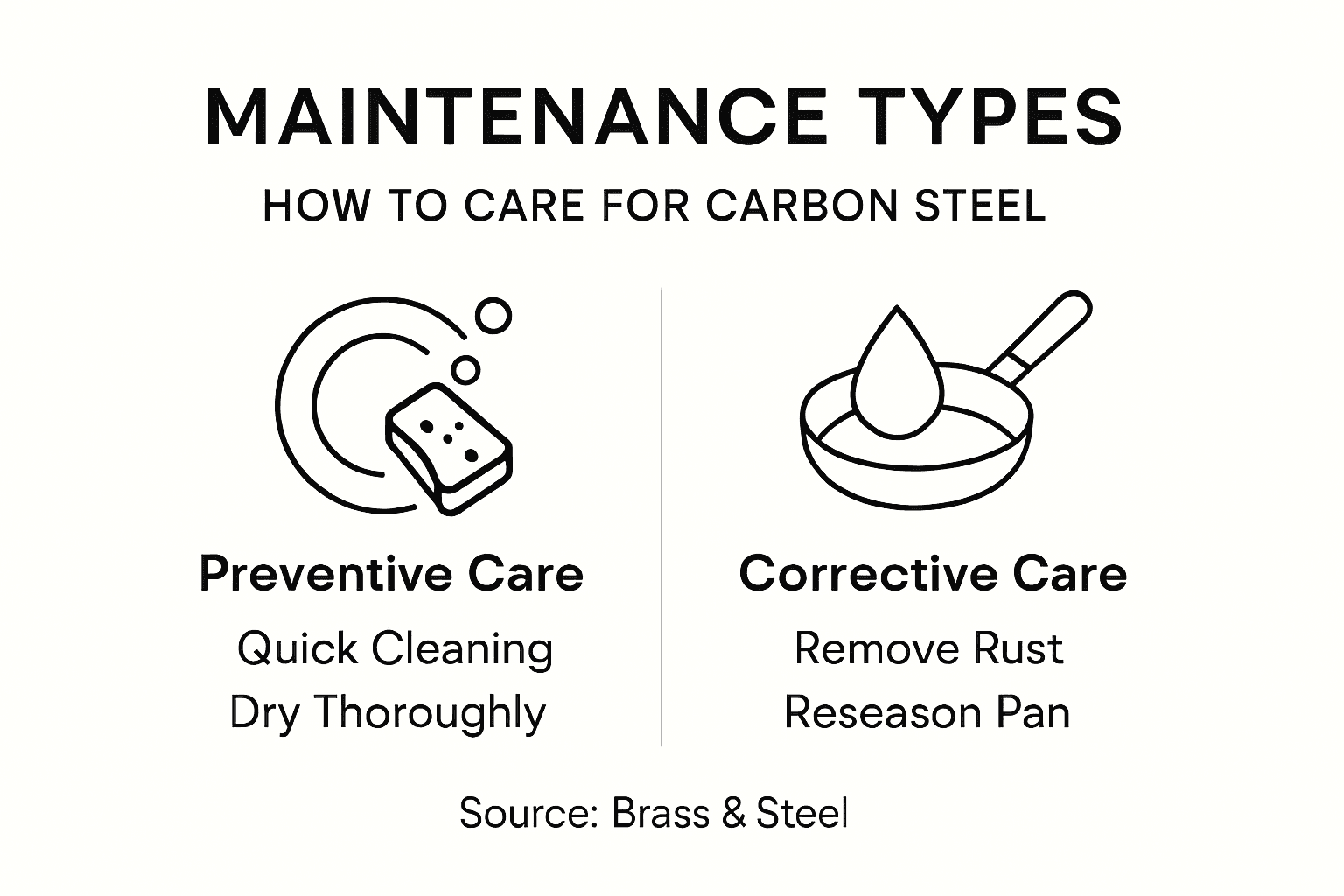
Here’s a concise comparison of the two main types of carbon steel cookware maintenance routines:
| Aspect | Preventive Maintenance | Corrective Maintenance |
|---|---|---|
| Frequency | Daily and weekly routines | Occasionally, when issues appear |
| Typical Actions | Cleaning, drying, light oiling | Rust removal, reseasoning, deep cleaning |
| Main Purpose | Stops rust and wear before they start | Restores pan after damage or neglect |
| Impact on Longevity | Maintains optimal surface for years | Repairs issues to extend pan’s life |
Pro tip: Create a simple maintenance checklist for yourself: after each use, clean and dry immediately, apply thin oil whilst warm. Weekly, inspect the surface under good light for any dull or sticky patches. Monthly, store in a dry location and avoid humid environments. This simple framework transforms maintenance from mysterious obligation into automatic habit.
Seasoning Process and Its Importance
Seasoning your carbon steel pan is the single most important thing you can do to make it work properly. Without it, you have a bare metal surface that will rust quickly, stick like crazy during cooking, and frustrate you into throwing it in the bin. With proper seasoning, you get a naturally nonstick surface that improves with every meal you cook. The best part? Seasoning isn’t mysterious alchemy. It’s just heating oil to the point where it polymerises, creating a hard protective layer that bonds to the steel at the molecular level. This layer does multiple jobs simultaneously. It prevents rust by blocking moisture from reaching the metal. It creates a naturally nonstick surface without any synthetic chemicals or coatings. It improves heat distribution and helps your pan perform like a professional tool. That’s why seasoning matters so much.
Oil polymerisation creates durable, corrosion-resistant surfaces) that are fundamentally different from the bare steel underneath. You’re not just wiping oil on the pan like furniture polish. You’re chemically transforming the surface through heat. When you apply a thin coat of high-smoke-point oil and bake it in the oven, the molecules break down and fuse together, forming a hard plastic-like layer. This layer is tough enough to withstand cooking, scratching, and decades of use. Each time you cook with fat and then oil the hot pan afterwards, you’re adding another microscopic layer to your seasoning. Over years, this builds into a thick, smooth, genuinely nonstick surface that commercial nonstick pans simply cannot match in durability. Commercial coatings wear out. Seasoning gets better.
Initial seasoning requires attention to detail but takes less than an hour of active work. First, wash your new pan thoroughly with warm soapy water to remove the protective factory oil coating, then dry it completely. Preheat your oven to 250 degrees Celsius. Place the pan in the oven for 10 minutes to ensure it’s bone dry, because any moisture will interfere with seasoning. Remove the pan, apply an extremely thin coat of oil (grapeseed, avocado, sunflower, or canola work best), then wipe off the excess until the pan looks almost dry. Bake the pan upside down for 30 minutes, then let it cool completely. Repeat this process 2 to 3 times to build a solid foundation. Many people worry they’re doing it wrong, but the most common mistake is applying too much oil. You want a whisper-thin coat that looks almost transparent. Too much creates a sticky, gummy surface that wipes away easily. The goal is multiple thin layers, not one thick coat. Once you’ve completed your initial seasoning, seasoning becomes an ongoing maintenance step that happens naturally every time you cook with fat and oil your hot pan afterwards. Maintenance seasoning requires no special effort beyond your normal routine.
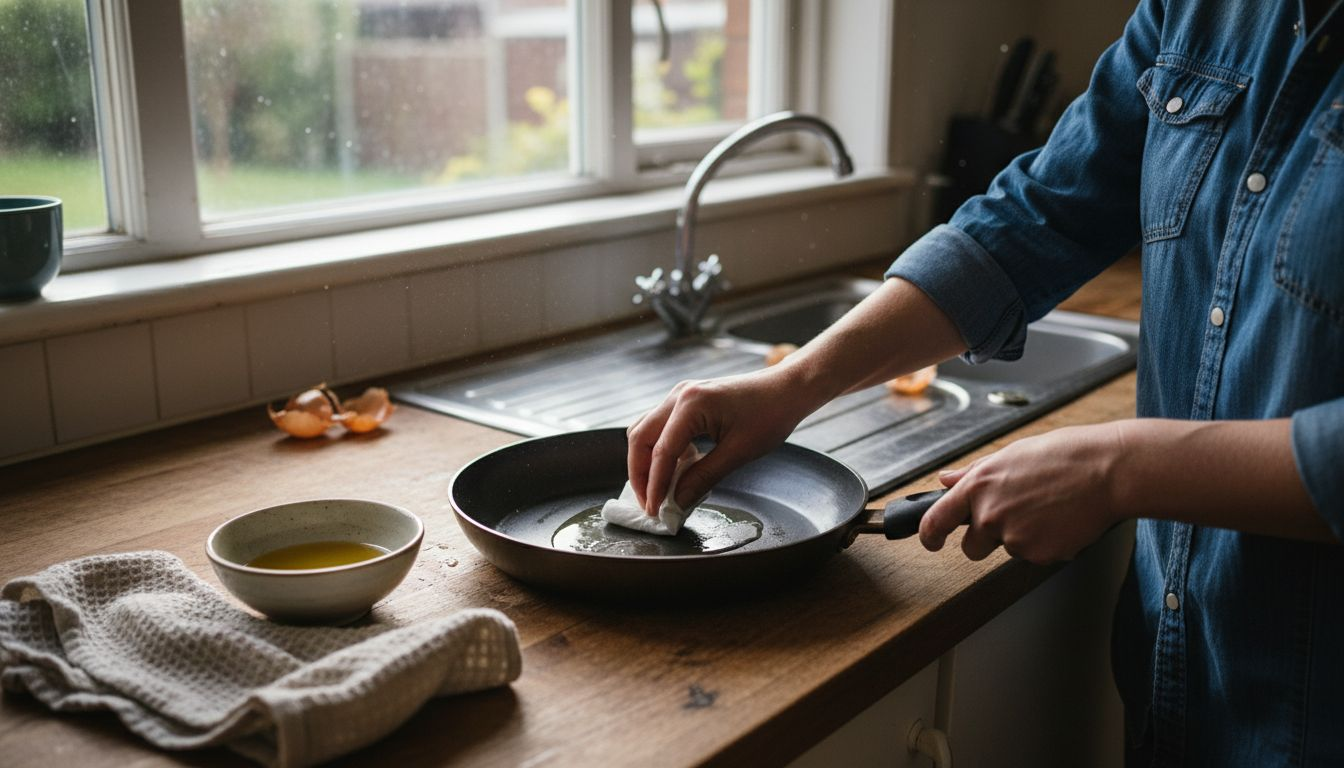
The importance of seasoning extends far beyond the first few weeks. A properly seasoned pan is the difference between enjoying carbon steel cooking and resenting it. When your seasoning is strong and consistent, food releases easily, your pan performs beautifully, and maintenance becomes genuinely simple. When seasoning is weak or patchy, you’ll experience sticking, rust spots, and frustration. This is why we stress seasoning so heavily in every piece of advice we give. It’s not a step you do once and forget. It’s a relationship you maintain. Some months you’ll cook frequently with fatty foods and your seasoning will get stronger. Other months you might cook more delicately and notice dull patches forming, which means it’s time to oil more consciously or do a quick maintenance seasoning session. Your pan will tell you what it needs if you’re paying attention. Listen to it.
Pro tip: Always apply your post-cook oil whilst the pan is still warm, not after it has cooled completely. The warm surface absorbs the oil better, creating a smoother bond and stronger seasoning with each use. This single habit, done consistently, eliminates 80 percent of seasoning problems before they start.
Cleaning, Drying, and Rust Prevention Steps
The difference between a carbon steel pan that lasts decades and one that rusts within months comes down to three simple steps you do immediately after cooking. Clean it properly, dry it completely, and protect it with oil. That’s the entire formula. Skip any one of these and rust will find its way in. The brilliant part is that none of these steps requires special equipment or complicated technique. You probably already have everything you need in your kitchen right now. The key is doing them consistently, every single time you cook, until they become automatic habit rather than something you have to remember.
Cleaning your carbon steel pan correctly means being gentle with the seasoning layer you’ve built. Use hot water, not cold, because it helps remove fat residue more effectively and dries faster. Add a small amount of washing-up liquid if needed, especially after cooking fatty foods. Use a soft cloth or soft brush to wipe away food particles, never harsh scrubbers or steel wool, which will strip your seasoning. For stuck-on food, pour warm water into the pan and let it sit for a minute or two, then use a wooden spoon to gently dislodge the debris. Some people worry that any soap will ruin their pan, but that’s outdated thinking. A tiny bit of mild soap won’t harm your seasoning. What destroys it is soaking the pan for hours, using harsh degreasers, or aggressive scrubbing. Avoiding prolonged soaking and harsh detergents preserves the protective seasoning layer whilst still achieving a thoroughly clean surface. The entire cleaning process should take about 30 seconds. If it’s taking longer, you’re overthinking it. Once cleaned, immediately move to the next step.
Drying is where most people make mistakes. After rinsing, you must dry the pan completely within a few seconds. Don’t set it on the drying rack and hope the air takes care of it. Grab a clean tea towel and wipe it dry immediately, getting every surface, including the underside and handle. If any moisture remains, it will oxidise the steel and start the rust process. The speed matters more than the method. Some cooks dry their pan on the stovetop over low heat for 30 seconds, which works brilliantly because the warmth evaporates any residual moisture and actually helps your next oiling step. Immediate thorough drying inhibits rust formation far more effectively than anything else you can do. This single step is your most powerful rust prevention tool. You can’t skip it, and you can’t do it halfway.
Once dry, apply a whisper-thin coat of oil whilst the pan is still warm or hot. Use grapeseed, avocado, sunflower, or canola oil, as these have high smoke points and won’t gum up over time. The key word is whisper-thin. Most beginners apply far too much oil, creating a sticky residue that feels awful and actually attracts dust and debris. Instead, put a tiny dab on a clean cloth and wipe the entire surface, including the sides and underside. The pan should look almost dry when you’re finished. This thin layer acts as a moisture barrier, preventing rust between uses. After the pan cools completely, store it somewhere dry and ideally not in humid environments like under the sink. A kitchen cupboard or shelf away from steam and moisture is perfect. Together, these three steps create an almost impenetrable rust prevention system. A properly cleaned, dried, and oiled pan simply won’t rust under normal kitchen conditions. The only way you’ll get rust is if you leave the pan wet for days, soak it repeatedly, or store it somewhere damp.
For quick reference, here are typical cleaning, drying, and oiling methods and their effects:
| Step | Most Effective Method | Common Mistake | Impact on Pan Quality |
|---|---|---|---|
| Clean | Hot water, soft cloth | Using steel wool or harsh scrubber | Can strip seasoning, causes damage |
| Dry | Immediate towel or low heat | Air drying, leaving damp | Moisture leads to rust |
| Oil | Whisper-thin high smoke point oil | Applying too much oil | Excess causes sticky residue |
Pro tip: Set a timer on your phone for 30 seconds after you finish cooking. By the time it goes off, your pan should be cleaned, dried, and oiled. This forces you to work efficiently and builds the habit of completing all three steps before moving on to anything else.
Common Mistakes and How to Avoid Them
Most people who struggle with carbon steel cookware aren’t doing anything fundamentally wrong. They’re just making small, fixable mistakes that compound over time. The brilliant news is that recognising these mistakes means you can stop making them immediately. Once you understand what goes wrong and why, maintenance becomes genuinely straightforward. You’ll move from frustrated to confident, and your pan will reward that confidence with decades of reliable performance.
The most frequent mistake is applying too much oil during seasoning or the post-cook maintenance ritual. Beginners see a thin layer and think, “That’s not enough,” then slather on more. What results is a sticky, gummy surface that feels awful to touch and actually traps dust and debris. The excess oil never polymerises properly, so it just sits there getting thicker and nastier. The fix is simple but counterintuitive: less is more. Apply oil, then wipe it off until the pan looks almost dry. If you can see a shiny, wet-looking surface, you’ve applied too much. The goal is so subtle that someone casually glancing at your pan shouldn’t immediately notice the oil is there. Another common error is using the dishwasher. Even if your particular dishwasher doesn’t destroy your pan directly, the harsh detergents and prolonged moisture exposure will strip your seasoning and encourage rust. Hand washing takes 30 seconds. The dishwasher will destroy months of seasoning building. Avoid it entirely. Similarly, leaving your pan wet after washing, either by air drying on a rack or by storing it whilst damp, gives rust everything it needs to start forming. Using harsh detergents and leaving cookware wet are two of the most damaging mistakes you can make, undermining all your other maintenance efforts.
Cooking mistakes matter too. Cooking acidic foods like tomatoes or vinegar-based sauces excessively or for extended periods will degrade your seasoning because acid breaks down the polymerised oil layer. You can cook these foods, but follow them immediately with fatty foods that will help rebuild the layer. Another issue is cooking on excessively high heat. Carbon steel handles heat beautifully, but constant high-temperature use without adequate oil protection will damage the seasoning over time. Use moderate to moderately high heat most of the time. Save maximum heat for specific tasks like searing. Additionally, many cooks either skip seasoning maintenance entirely or misunderstand what it involves. Neglecting periodic re-seasoning or applying excessive oil creates uneven cooking surfaces and sticky residue that makes the pan unpleasant to use. Re-seasoning doesn’t mean a complicated process. It simply means occasionally (perhaps quarterly if you cook frequently, or annually if you don’t) running your pan through the full oven seasoning process to build the foundation back up. And remember the oil principle: whisper-thin coats applied regularly beat thick coats applied occasionally.
Storage mistakes often go unnoticed until rust suddenly appears. Storing your pan under the sink or near steam from the cooker subjects it to constant moisture exposure. Even properly cleaned and dried pans will develop rust if stored in humid environments. Find a dry cupboard or shelf away from direct steam and humidity. If you live somewhere very humid or take extended cooking breaks, you might even consider a light protective oil coat before long-term storage. Stop and think before each maintenance step. Should I use soap? Yes, a tiny bit is fine. Should I scrub aggressively? No, gentle is always better. Should I let this air dry on the rack? No, grab a towel immediately. Should I apply more oil if I already oiled it? No, whisper-thin is the target. Should I cook this acidic sauce? Yes, just follow it with something fatty. These mental checkpoints prevent most mistakes before they happen. Your pan will feel different when you’re doing things right. It’ll feel smooth, look dark and glossy, and cook beautifully. When you make mistakes, your pan feels sticky or rough, looks dull, or food sticks excessively. Listen to what your pan is telling you.
Pro tip: After each use, run through a quick mental checklist: cleaned properly, dried thoroughly, oiled lightly. If you can answer yes to all three, you’re good to go. Most maintenance problems trace back to skipping or rushing one of these steps, so this simple verification prevents 95 percent of issues before they start.
Elevate Your Carbon Steel Cookware Experience with Brass & Steel
Maintaining your carbon steel pan is essential to unlocking decades of cooking performance and a natural, durable nonstick surface. If you want a pan that improves with age rather than deteriorates, choosing the right cookware makes all the difference. Brass & Steel offers premium carbon steel pans crafted with a single-piece forged construction for unmatched durability and seamless cleaning. Our pans are designed to work hand in hand with proper seasoning and maintenance techniques to give you a smooth, rust-resistant surface that responds beautifully to your care.
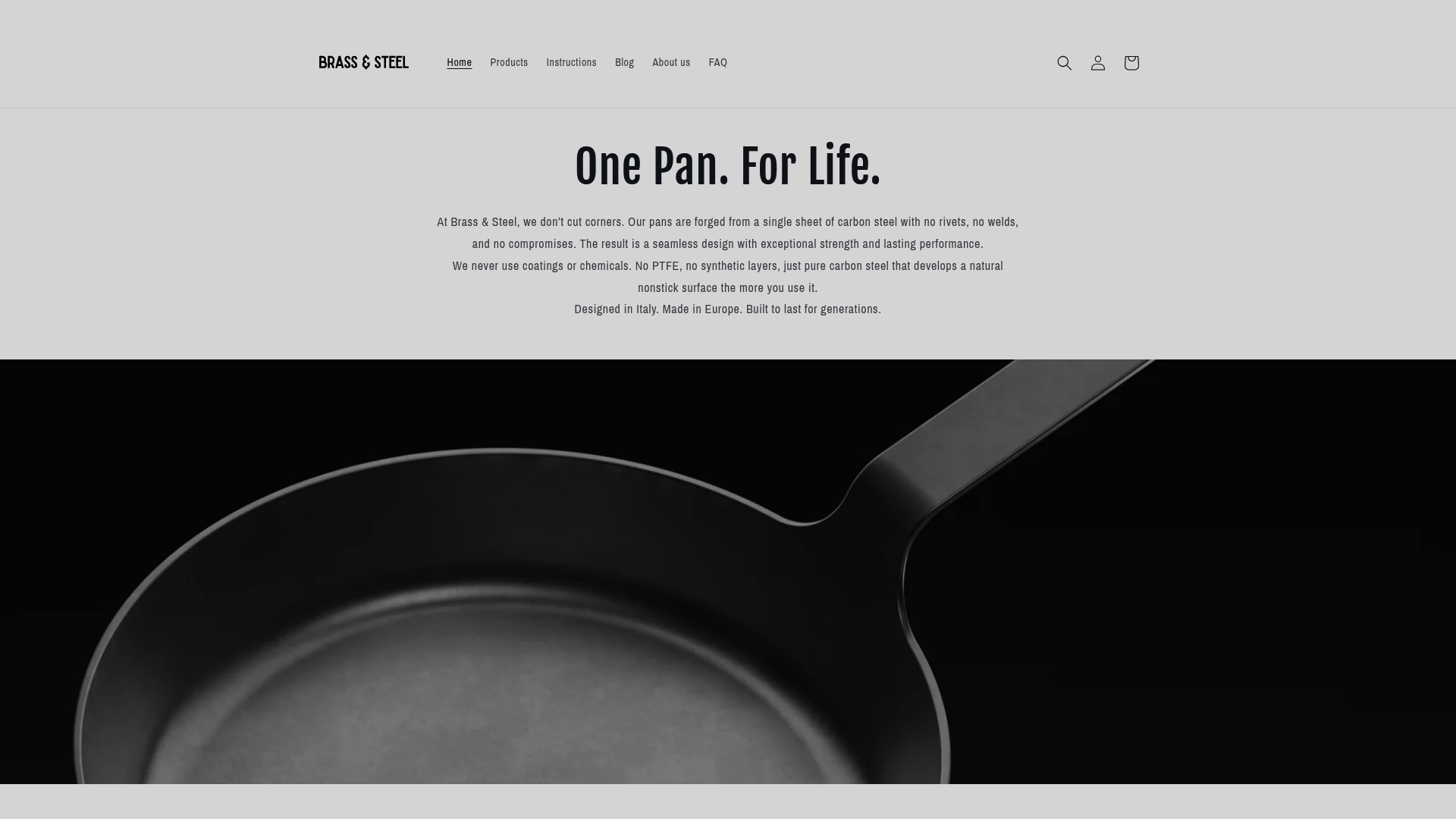
Don’t settle for cookware that loses its edge over time. Visit Brass & Steel today to explore our heirloom-quality range and experience professional carbon steel cookware built for real kitchen life. Start your journey to effortless maintenance and superior cooking results now by selecting a pan that matches your lifestyle. Your next great meal begins with the right pan and a simple, consistent care routine.
Frequently Asked Questions
What is the best way to maintain carbon steel cookware?
To maintain carbon steel cookware, clean it immediately after cooking, dry it thoroughly, and apply a whisper-thin coat of high-smoke-point oil while the pan is still warm. This prevents rust and maintains the seasoning.
How often should I season my carbon steel pan?
You should season your carbon steel pan periodically, ideally every few months or whenever you notice a dull patch or signs of wear. Regular cooking with fat will naturally help maintain the seasoning as well.
What are the common mistakes to avoid when using carbon steel cookware?
Common mistakes include using too much oil during seasoning, neglecting to dry the pan completely after washing, and cooking acidic foods for extended periods. Avoiding harsh detergents and aggressive scrubbing will also help preserve the seasoning.
How do I remove rust from my carbon steel pan?
To remove rust, scrub the affected area gently with a damp cloth and some salt or a stainless steel scrubber. Afterward, dry the pan thoroughly and reapply seasoning to restore its protective layer.