How to Prevent Rust on a Carbon Steel Pan Easily
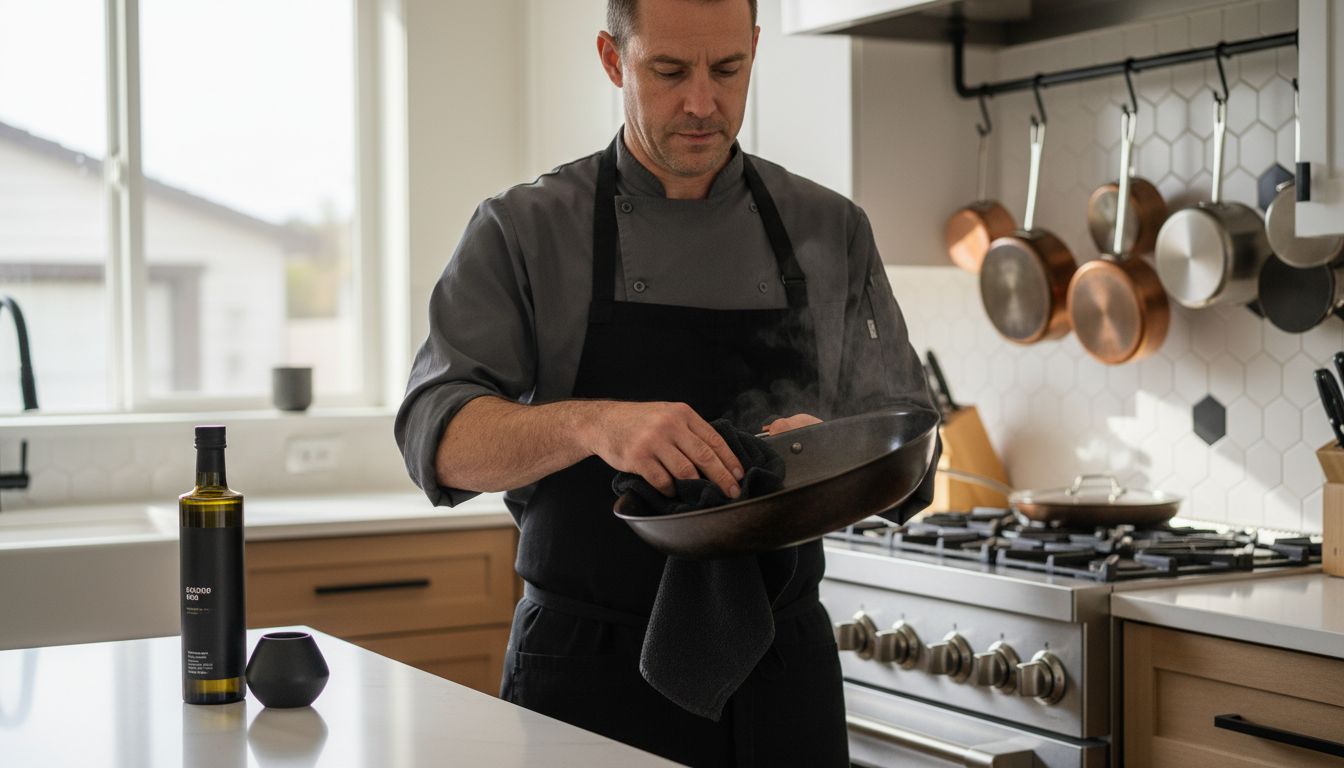
Rust can start to attack a carbon steel pan in as little as a day if moisture lingers on its surface. Many home cooks discover their favorite pans showing orange specks after just one careless wash. Knowing how to clean, dry, and protect your pan keeps it cooking smoothly and looking great for years. With a few simple habits, you can enjoy a pan that resists rust, develops beautiful seasoning, and stays ready for every meal.
Table of Contents
- Step 1: Clean Your Carbon Steel Pan Thoroughly
- Step 2: Dry the Pan Completely After Washing
- Step 3: Apply a Thin Layer of High-Smoke-Point Oil
- Step 4: Season the Pan in the Oven for Lasting Protection
- Step 5: Store the Pan in a Dry, Ventilated Space
Quick Summary
| Key Point | Explanation |
|---|---|
| 1. Clean Your Pan Thoroughly | Rinse and scrub the pan to remove any protective wax, ensuring no stickiness remains for proper seasoning. |
| 2. Dry the Pan Completely | Moisture can cause rust; dry the pan using a lint-free towel and apply medium heat to evaporate any remaining moisture. |
| 3. Apply High-Smoke-Point Oil | After drying, coat the pan with a thin layer of high-smoke-point oil to protect against rust and enhance nonstick qualities. |
| 4. Season in the Oven | Bake the pan with oil to create a protective layer; repeat multiple times for optimal seasoning and rust prevention. |
| 5. Store in a Ventilated Area | Keep the pan in a dry, well-ventilated space to avoid moisture accumulation, extending the cookware’s lifespan. |
Step 1: Clean Your Carbon Steel Pan Thoroughly
Cleaning your carbon steel pan thoroughly is the first crucial step in preventing rust and maintaining its long-term performance. When done correctly, this process removes protective layers and prepares your pan for proper seasoning.
According to professionalsecrets.com, start by rinsing your new pan with hot water and use a bristle brush to remove any protective wax layer. Scrub gently but thoroughly, ensuring no stickiness remains on the surface. After scrubbing, dry the pan completely with a clean kitchen towel.
Pay special attention to removing moisture. Water is the primary culprit for rust formation, so after washing, place your pan on low heat to evaporate any remaining droplets. This extra step helps create a dry surface that resists oxidation. For best results, you can also lightly coat the pan with a thin layer of high smoke point oil like grapeseed or avocado oil, which provides an additional protective barrier against potential rust.
If you want to learn more about maintaining your carbon steel cookware, check out our guide on carbon steel care routines.
Step 2: Dry the Pan Completely After Washing
Drying your carbon steel pan thoroughly is a critical step in preventing rust and maintaining its pristine condition. Moisture is the primary enemy of carbon steel cookware, and proper drying techniques can significantly extend your pan’s lifespan.
According to hospitalityconnect.com.au, you should dry the pan immediately after washing and heat it over medium heat for a few minutes to evaporate any remaining moisture. This method ensures that no water droplets linger on the surface, which could potentially cause rust. Use a clean lint-free kitchen towel to first remove as much water as possible, then place the pan on the stovetop.
When drying your pan, be thorough but gentle. Wipe the entire surface carefully, paying special attention to corners and handle areas where water can easily collect. A quick pass over medium heat will help evaporate any microscopic moisture droplets that your towel might have missed. Pro tip: If you notice any water beading up, continue heating until the surface looks completely dry and slightly glossy.
To learn more about maintaining your carbon steel cookware, explore our guide on best practices for carbon steel care.
Step 3: Apply a Thin Layer of High-Smoke-Point Oil
Applying a thin layer of high-smoke-point oil is your final defence against rust and an essential step in maintaining your carbon steel pan. This protective coating creates a barrier that prevents moisture from directly contacting the metal surface.
According to Brass & Steel, after drying your pan, you should apply a very light coat of cooking oil to help maintain the nonstick surface and provide additional protection against moisture. Choose oils with high smoke points like grapeseed, avocado, or sunflower oil. Use a clean paper towel or lint-free cloth to spread an extremely thin layer across the entire pan surface, ensuring even coverage without pooling.
When applying the oil, less is definitely more. Wipe the pan until it looks almost dry with just a faint sheen. Too much oil can become sticky and attract dust or create uneven seasoning. Aim for a layer so thin that the pan almost looks unchanged.
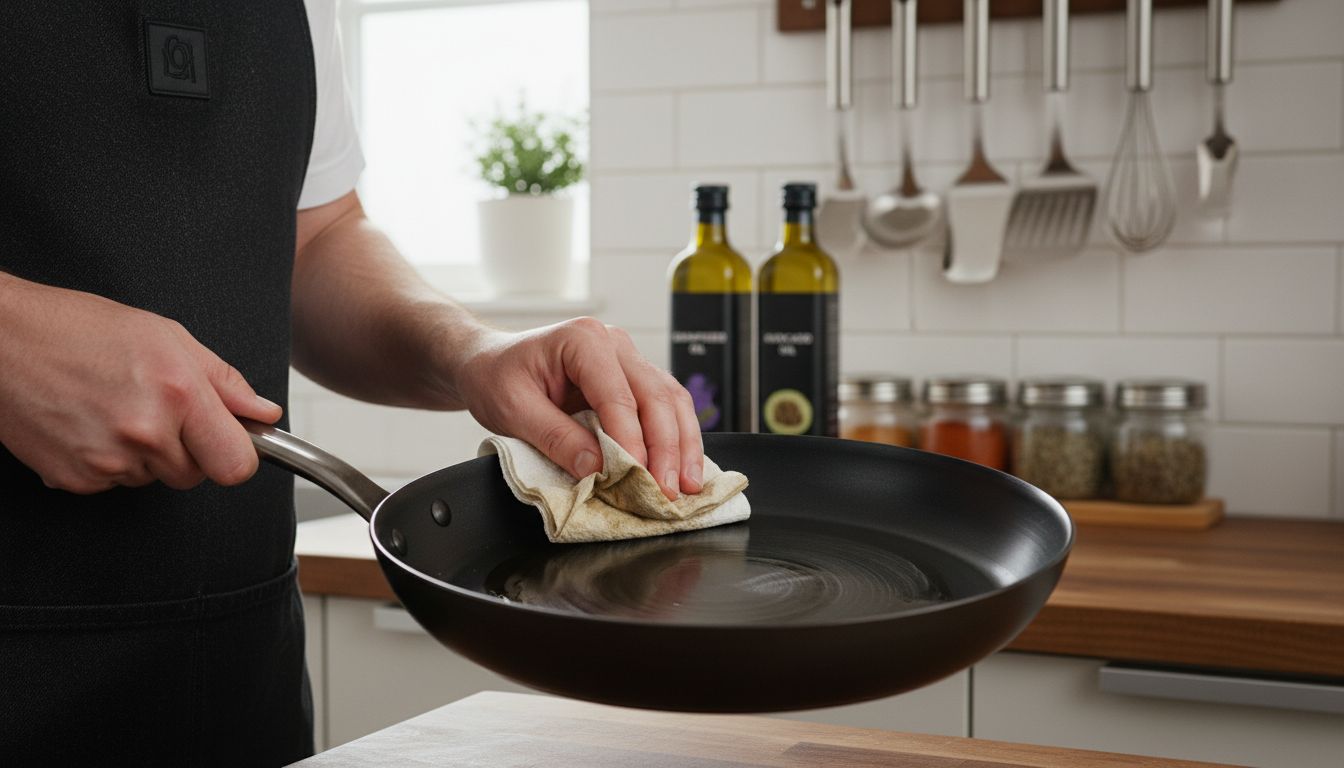 If you see excess oil, keep wiping until only a microscopic protective film remains. This technique not only prevents rust but also continues to build your pan’s natural nonstick seasoning.
For more detailed guidance on maintaining your carbon steel cookware, check out our guide on how to season a carbon steel pan.
Step 4: Season the Pan in the Oven for Lasting Protection
Seasoning your carbon steel pan in the oven is the ultimate method for creating a durable protective layer that prevents rust and develops a naturally nonstick surface. This process transforms your pan from a raw metal cooking surface into a resilient kitchen tool that will serve you for years.
According to professionalsecrets.com, you should warm the pan on moderate heat and add 2 to 3 tablespoons of oil, cooking over medium heat for about 10 minutes while moving the oil around the bottom and sides. For oven seasoning, preheat your oven to 250°C and place the pan upside down on the middle rack. This allows excess oil to drip off and prevents pooling. Use a high smoke point oil like grapeseed or avocado oil, applying an extremely thin layer that looks almost transparent.
The key to successful seasoning is patience and multiple layers. Bake the pan for 30 minutes, then let it cool completely before repeating the process 2 to 3 times. This builds up a strong protective patina that not only prevents rust but also improves your pan’s nonstick properties. Remember that each layer adds depth to your seasoning, creating a more robust barrier against moisture and potential corrosion.
To dive deeper into perfecting your carbon steel pan care, explore our ultimate carbon steel pan seasoning guide.
Step 5: Store the Pan in a Dry, Ventilated Space
Proper storage is the final line of defence against rust and corrosion for your carbon steel pan. Choosing the right environment can significantly extend your cookware’s lifespan and maintain its pristine condition.
According to hospitalityconnect.com.au, after drying and oiling, you should store the pan in a dry place to prevent rust. Seek out a well ventilated spot with consistent temperature and low humidity. Avoid storing your pan in damp areas like under the sink or near the dishwasher. Instead, consider hanging it on a wall rack or placing it on an open shelf where air can circulate freely around the entire pan.
If you live in a particularly humid environment, consider using silica gel packets near your stored pan to absorb excess moisture. Make sure the pan is completely dry before storage and that no water droplets are present. Stack pans with a paper towel between them to prevent scratching and allow air circulation. Never store your carbon steel pan in a closed cabinet immediately after cooking or cleaning unless it is absolutely bone dry.
For more comprehensive guidance on maintaining your carbon steel cookware, explore our guide on how to store carbon steel pans.
Protect Your Investment with the Right Carbon Steel Pan
Rust prevention is a common challenge for carbon steel cookware owners but it need not be your worry if you choose the right pan and maintain it well. The article breaks down essential steps like thorough cleaning, drying, applying high-smoke-point oils and proper seasoning to keep your pan in top condition. These steps address crucial issues like moisture retention that cause rust and sticky seasoning layers.
At Brass & Steel, we craft our carbon steel pans with a one-piece forged design that eliminates weak spots where rust could start. Our pans develop a natural nonstick patina with seasoning that you can maintain using the simple techniques described in the article. Start your rust-free cooking journey today by exploring our expertly engineered Carbon Steel Collection | Brass&Steel. With high heat performance and induction compatibility, these pans are durable, health-conscious, and built for serious cooks. Discover our latest innovations at New arrivals – Brass & Steel and learn more about why brilliant carbon steel cookware can transform your kitchen at Brass & Steel.
Take control of rust prevention now with cookware made to last a lifetime.

Frequently Asked Questions
How can I clean my carbon steel pan to prevent rust?
To clean your carbon steel pan effectively, rinse it with hot water and use a bristle brush to remove any protective wax layer. After scrubbing, dry the pan completely with a lint-free towel and heat it on low to evaporate any remaining moisture.
What oil should I apply to my carbon steel pan to prevent rust?
Apply a thin layer of high-smoke-point oil such as grapeseed or avocado oil to your carbon steel pan. Use a clean paper towel to spread the oil evenly, ensuring it looks almost dry with just a faint sheen to create a protective barrier against moisture.
How long should I season my carbon steel pan in the oven?
Season your carbon steel pan in the oven by preheating it to 250°C and baking it upside down for 30 minutes. For best results, repeat the seasoning process 2 to 3 times to develop a strong protective patina that prevents rust and enhances nonstick properties.
Where should I store my carbon steel pan to avoid rusting?
Store your carbon steel pan in a dry, well-ventilated space to prevent rust. Avoid damp areas and consider hanging the pan or placing it on an open shelf, while ensuring it is completely dry and free of moisture before storage.
How can I dry my carbon steel pan after washing to prevent rust?
To dry your carbon steel pan effectively, use a lint-free towel to remove excess moisture, then heat it over medium heat for a few minutes. This step will ensure that no water droplets linger on the surface that could cause rust.
What should I do if I notice rust on my carbon steel pan?
If you notice rust on your carbon steel pan, scrub it off gently with a bristle brush and clean it thoroughly. After removing the rust, re-season the pan by applying oil and baking it in the oven to restore its protective coating and prevent future rust.