Importance of Seasoning Carbon Steel – Unlocking Performance and Longevity
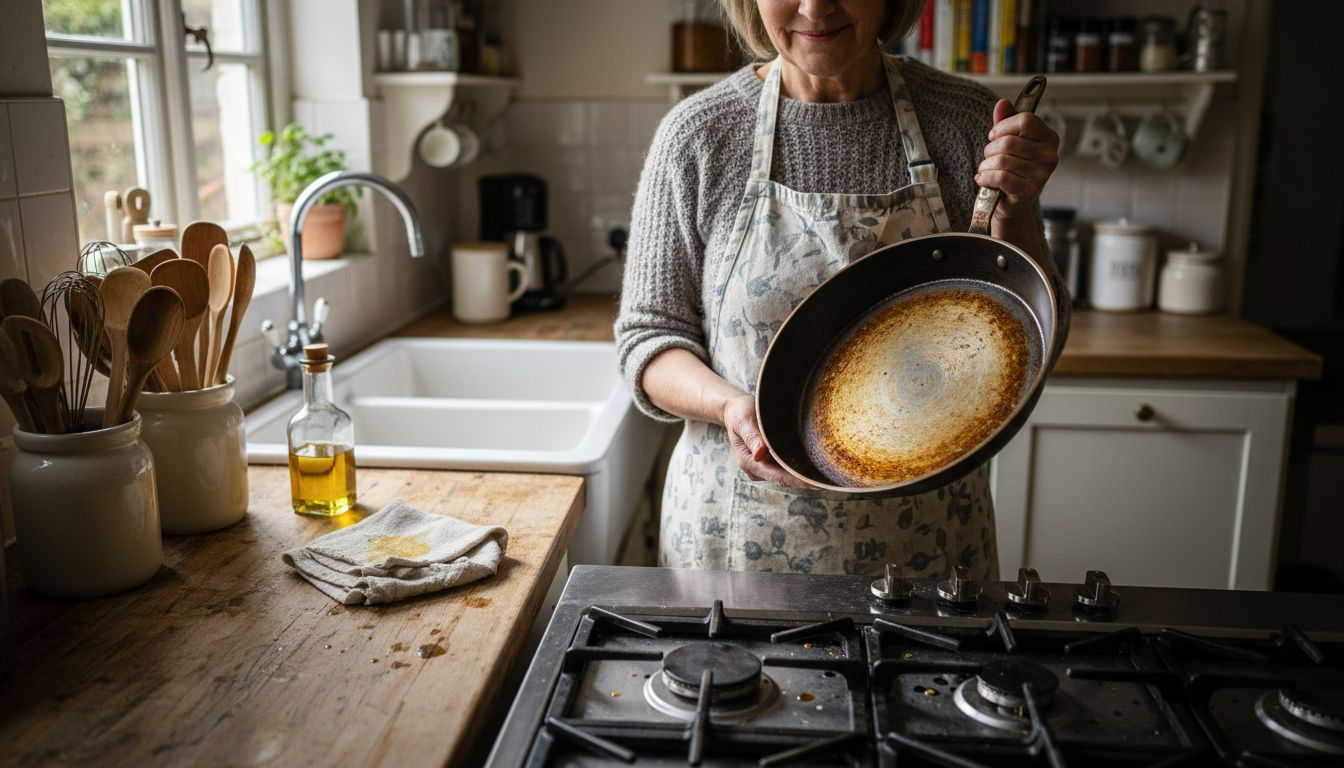
What makes a seasoned carbon steel pan outperform synthetic alternatives year after year? For many European home cooks and chefs, understanding the science behind seasoning unlocks healthier, longer-lasting non-stick performance. By harnessing repeated layers of polymerised oil, you create a food-safe, durable, self-repairing nonstick surface that only gets better with use and careful technique. This guide offers practical steps for building a resilient seasoning that protects against rust, supports everyday cooking, and upgrades your pan into a trusted kitchen companion.
Table of Contents
- Defining Carbon Steel Seasoning Process
- How Seasoning Creates Nonstick and Prevents Rust
- Natural Nonstick Vs Chemical Coatings
- Choosing the Best Oils for Seasoning
- Comparing Carbon Steel to Cast Iron Alternatives
- Common Mistakes and How to Avoid Them
Key Takeaways
| Point | Details |
|---|---|
| Proper Seasoning is Essential | Build up a protective, non-stick layer using high-smoke-point oils through multiple thin applications. |
| Continuous Improvement | Every cooking session using fat strengthens the seasoning, enhancing performance over time. |
| Avoid Common Mistakes | Use minimal oil and maintain adequate heat; too much oil creates a sticky surface, while insufficient heat prevents proper bonding. |
| Distinct Advantages | Carbon steel cookware is lighter and more responsive than cast iron, making it ideal for varied cooking tasks. |
Defining Carbon Steel Seasoning Process
Carbon steel seasoning is the process of building up a natural, protective layer on your pan’s surface that improves its non-stick properties and prevents rust. Unlike modern cookware with factory-applied coatings, carbon steel relies on layers of polymerised oil to create its cooking surface. This isn’t some mysterious kitchen technique—it’s a straightforward chemical reaction where oil bonds to the metal at high temperatures, transforming it into a durable patina that strengthens with use.
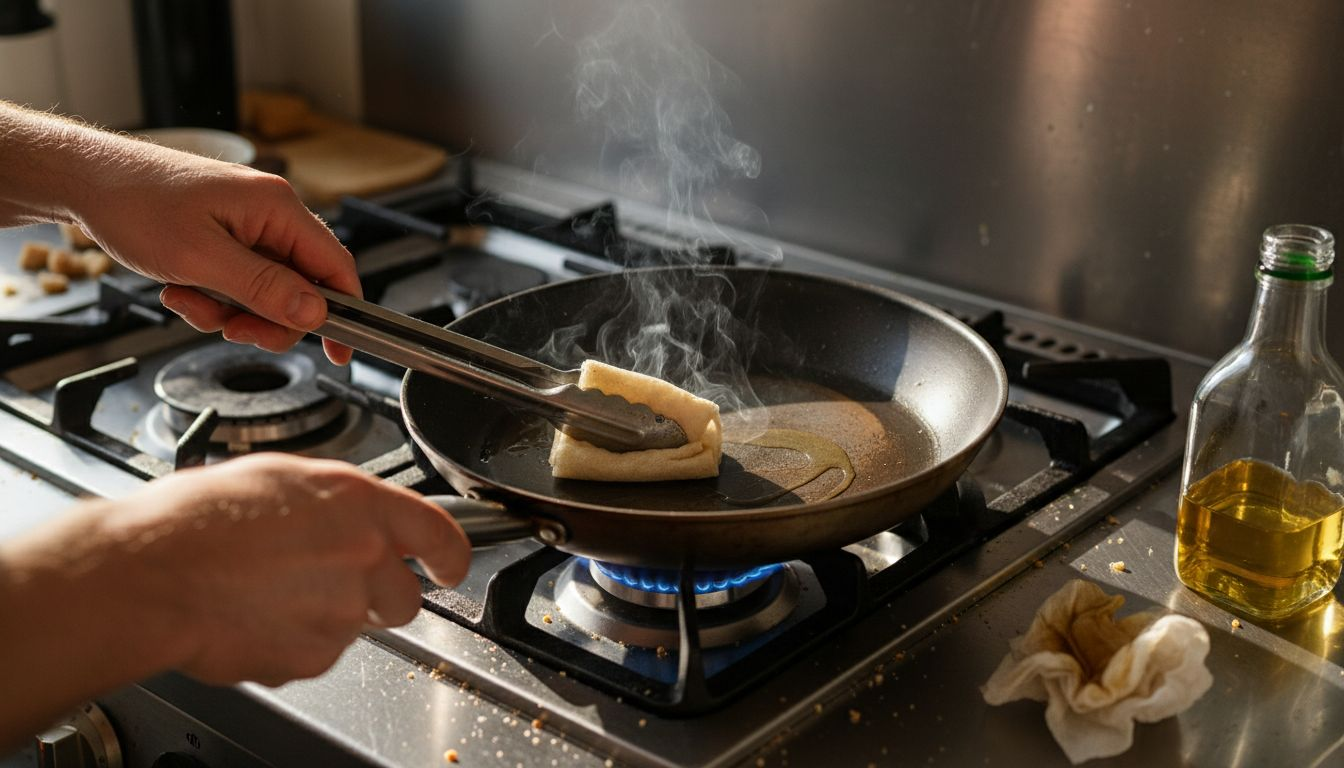
The basic sequence involves cleaning the pan to remove factory protection, then applying thin layers of high-smoke-point oil, wiping away excess, and heating the pan until the oil bonds to the steel. This requires multiple applications over time, not a single effort. Each layer builds upon the last, gradually creating a more effective non-stick surface and rust barrier. Your Brass & Steel pan arrives with a light protective coating for shipping, but you’ll want to establish your own seasoning base before serious cooking begins. The entire process hinges on three factors: proper oil selection (grapeseed, avocado, sunflower, or canola work brilliantly), meticulous removal of excess oil, and consistent heat application to cure each layer.
What makes this process practical for everyday cooks is that seasoning doesn’t stop after your initial applications. Every time you cook with fat or oil, you’re strengthening the patina. Fatty foods like bacon, steak, and oily vegetables naturally contribute to seasoning development during normal cooking. This means your pan improves with age and use, becoming more non-stick and more reliable over time. Unlike synthetic non-stick coatings that wear down, your carbon steel’s performance actually increases, making it a genuine investment. The seasoning process transforms your pan from a raw piece of forged steel into a personalised cooking tool that reflects your cooking habits and preferences.
Pro tip: Wipe your pan with a barely damp cloth and apply a microscopic amount of oil immediately after cooking whilst the surface is still warm, when the metal is slightly expanded and the oil absorbs more readily into the patina.
How Seasoning Creates Nonstick and Prevents Rust
The magic of seasoning happens when you heat oil past its smoke point on your carbon steel pan’s surface. At this temperature, the oil undergoes a chemical transformation called polymerisation, bonding permanently to the metal rather than simply sitting on top of it. This chemical bond forms a tough, black layer that gives your pan its natural non-stick properties. Unlike synthetic coatings that can flake or peel, this seasoning becomes part of the pan itself, improving with every use and lasting the lifetime of your cookware.
What makes seasoning so effective at preventing rust is straightforward chemistry. That polymerised oil layer acts as a physical barrier, blocking oxygen and moisture from reaching the underlying steel. Rust requires direct contact between metal, water, and air, so when you seal the surface with seasoning, you eliminate the conditions rust needs to form. This is why a well-seasoned Brass & Steel pan can sit in a humid kitchen without developing any orange spots or corrosion. The darker your seasoning becomes over months and years, the stronger this protective seal grows. You are not just building a non-stick surface, you are creating armour against rust.
The non-stick properties emerge gradually as your seasoning layers accumulate. Initially, your pan feels slightly sticky or rough because the surface is still establishing itself. After several cooking sessions with fatty foods, the texture smooths out and food releases more easily. By month three or four, many cooks notice their seasoned pan rivals traditional non-stick cookware for everyday tasks like sautéing vegetables or cooking eggs. The difference is that your carbon steel’s non-stick surface strengthens over time rather than weakening. A 10-year-old Brass & Steel pan often outperforms a brand new synthetic non-stick pan because the seasoning has deepened and matured. You are investing in a tool that becomes more capable with age.
The following table summarises how carbon steel seasoning evolves throughout its lifespan:
| Stage of Use | Appearance | Non-stick Performance | Rust Resistance |
|---|---|---|---|
| Initial seasoning | Pale brown patina | Food may stick slightly | Basic barrier, prone to rust |
| After 1 month | Darkening surface | Noticeably improved release | Reliable rust protection |
| After 1 year | Deep black patina | Exceptional non-stick qualities | Armour-like rust prevention |
| After 10 years | Mature, glossy finish | Rivals premium non-stick pans | Maximum resilience in humid kitchens |
Pro tip: Cook with fatty ingredients like bacon, butter, or oil at least twice weekly to accelerate seasoning development and maintain the protective rust-prevention layer.
Natural Nonstick Vs Chemical Coatings
When you compare seasoned carbon steel to modern chemical non-stick coatings, you are looking at two fundamentally different approaches to preventing food from sticking. Chemical coatings like PTFE (commonly known as Teflon) are factory-applied synthetic layers that sit on top of the pan’s surface. They work brilliantly at first, offering effortless food release with minimal oil. However, these coatings degrade with time, heat, and abrasion. Scratches expose the underlying metal, high temperatures can cause them to break down, and eventually you are replacing the pan entirely. Natural seasoning, by contrast, is food-safe and created through repeated oil layering that actually becomes stronger as you use it.
The key difference lies in durability and self-repair. A scratched chemical non-stick pan is essentially damaged goods because the coating cannot mend itself. Once PTFE or similar compounds begin to wear, you cannot restore them through cooking. With seasoned carbon steel, a scratch or worn patch is a minor inconvenience. Simply cook with fatty foods or apply a quick re-seasoning in your oven, and the damage disappears. Your pan heals itself. This self-repairing quality means your Brass & Steel pan becomes more resilient with age, not more fragile. After ten years of daily use, a well-seasoned carbon steel pan is still performing at its best, whilst most chemical non-stick pans have long been relegated to the recycling bin.
There is also the health consideration that matters to serious cooks. Chemical coatings can release fumes at high temperatures, which is why manufacturers recommend keeping them below certain heat thresholds. This limits your cooking versatility, especially if you enjoy high-heat searing or want to finish a pan in a hot oven. Natural seasoning develops an eco-friendly patina with no synthetic chemicals involved. You can sear at maximum heat, use open flame, and finish dishes in a screaming hot oven without worry. The seasoning layer only improves from aggressive cooking. This freedom transforms how you cook, allowing you to use techniques that synthetic coatings simply cannot handle.
Pro tip: If you are switching from non-stick cookware, expect your first few weeks with seasoned carbon steel to feel different, but resist the urge to use excessive oil or cooking spray, as this creates a sticky surface rather than a slippery one.
Choosing the Best Oils for Seasoning
Not all oils are created equal when it comes to seasoning your carbon steel pan. The oil you select makes an enormous difference in how your seasoning develops and how effectively it protects your cookware. The most important factor is smoke point, which is the temperature at which oil breaks down and starts to smoke. When seasoning, you need an oil that can handle high heat without degrading. Oils with high smoke points around 400 to 500 degrees Celsius work brilliantly because they polymerise properly and create a durable, hard layer on your pan’s surface.
Grapeseed oil, canola oil, avocado oil, and sunflower oil are your ideal choices for seasoning. These oils have neutral flavours, high smoke points, and polymerise evenly to create a smooth, consistent patina. Grapeseed oil is particularly popular amongst professional cooks because it produces a deeply black finish and bonds extremely well to steel. Canola oil is more affordable and readily available in most British kitchens, making it practical for regular maintenance seasoning after cooking. Avocado oil has become fashionable recently and performs excellently, though it costs more than alternatives. Sunflower oil is another reliable, budget-friendly option that many European cooks already have in their cupboards. The key is consistency, not brand loyalty. Pick one oil and stick with it for your initial seasoning, then maintain with the same oil during cooking.
Avoid oils with low smoke points or strong flavours at all costs. Extra virgin olive oil, butter, lard, and coconut oil will create sticky, uneven seasoning that smells unpleasant and feels tacky on the pan. These oils break down at lower temperatures, leaving behind residue instead of a hard polymerised layer. You might think using fancy or expensive oils demonstrates care, but your seasoning will actually suffer. Likewise, avoid oils with distinctive tastes because residual flavours can transfer to your food during early cooking sessions. When you are building seasoning on your Brass & Steel pan, simplicity and neutrality are your allies. Quality seasoning comes from consistent technique and appropriate oil selection, not from premium ingredients.
Pro tip: Store your chosen seasoning oil in a cool, dark place away from direct sunlight, as oils oxidise and degrade when exposed to light, making them less effective for creating smooth, hard seasoning layers.
Comparing Carbon Steel to Cast Iron Alternatives
Both carbon steel and cast iron develop natural seasoning and offer genuine heirloom quality, but they are fundamentally different cookware. Understanding these differences helps you choose the right pan for your cooking style. Cast iron is noticeably heavier and thicker, which means it holds heat like a thermal battery. Once it reaches temperature, cast iron maintains that heat incredibly well, making it brilliant for slow searing or cooking dishes that benefit from consistent, steady warmth. Carbon steel, by contrast, is thinner and lighter, heating up faster and responding more quickly to temperature adjustments. This responsiveness makes carbon steel superior for techniques where you need immediate control, such as tossing vegetables, adjusting heat mid-cook, or transitioning from stovetop to oven rapidly.
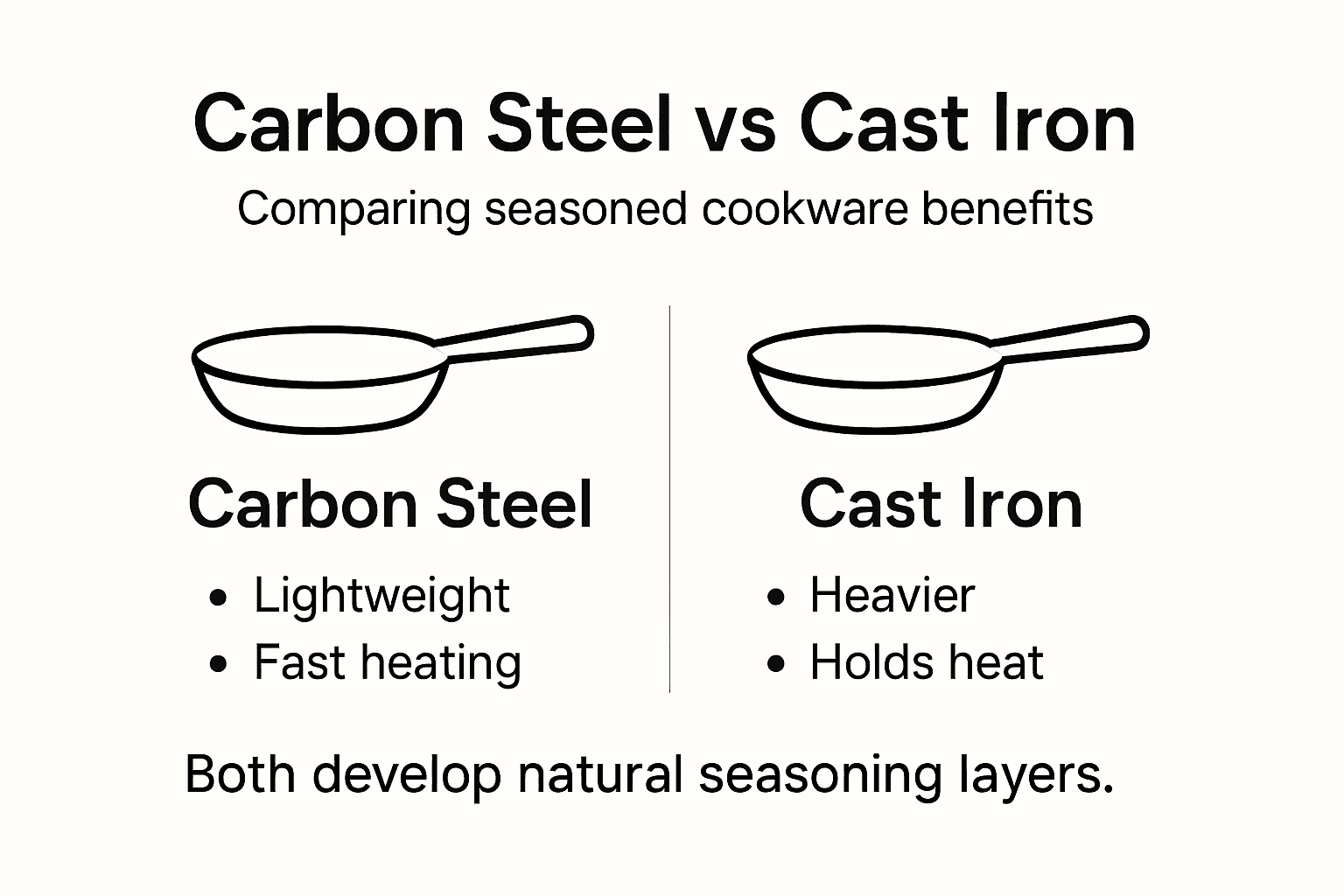
The weight difference matters more than you might think. A cast iron skillet easily weighs 2 to 3 kilograms, whilst a comparably sized carbon steel pan like the Brass & Steel 30 centimetre sauté pan weighs only 3 kilograms despite being thinner. This weight advantage means carbon steel is more manageable for everyday cooking, especially for European cooks who might prepare multiple dishes in succession or cook for extended periods. Your wrist, shoulder, and back will thank you after a week of regular use. Additionally, carbon steel heats up in minutes whilst cast iron requires longer preheating. If you are the type of cook who likes spontaneous meals rather than carefully planned ones, carbon steel’s quick responsiveness suits your workflow better.
Cast iron excels at one particular task that seasoning enthusiasts celebrate: creating a thick, glossy seasoning layer through years of slow cooking. Cast iron’s heat retention encourages the polymerisation process, and many cooks develop extraordinary patinas on vintage cast iron pieces. Carbon steel seasoning develops differently but equally effectively for daily cooking. Your Brass & Steel pan builds a reliable, durable seasoning layer through regular use, but it will never develop the deep, glossy finish that decades of cast iron use produces. That said, carbon steel seasoning is more than adequate for professional and home cooking. The choice ultimately depends on whether you prioritise manoeuvrable, responsive cookware for varied cooking tasks or prefer heavier, slower-heating cookware for specific techniques like steak searing.
Here is a concise comparison between carbon steel and cast iron cookware characteristics:
| Feature | Carbon Steel | Cast Iron |
|---|---|---|
| Weight | Lightweight and manoeuvrable | Heavy and difficult to lift |
| Heat-up Speed | Rapid and responsive | Slow and steady |
| Seasoning Finish | Smooth, functional patina | Thick, glossy surface |
| Best Suited For | Sautéing, stir-frying, quick cooking | Searing, slow braising, heat retention |
Pro tip: If you own both cast iron and carbon steel, use cast iron for long, slow braises and thick steaks where heat retention matters most, and reserve carbon steel for sautéing, stir-frying, and any cooking requiring quick temperature changes.
Common Mistakes and How to Avoid Them
Most seasoning problems stem from one critical error: using too much oil. This is the number one mistake new carbon steel owners make, and it creates a sticky, unpleasant cooking surface instead of a smooth, slippery one. When you apply oil for seasoning, you should use so little that the pan looks almost dry to the naked eye. Think of a barely visible sheen, not a glossy coating. After applying your oil, wipe the pan thoroughly with a clean cloth or kitchen roll until you cannot visibly see any oil remaining. The polymerisation process works with microscopic layers, not thick coatings. Applying excessive oil and failing to remove it properly before heating leaves behind sticky residue that builds up over time, creating a gummy surface that actually repels food rather than releasing it.
Another common mistake is insufficient heat during seasoning. Your oven needs to reach at least 250 degrees Celsius, and ideally closer to 260 degrees Celsius, for the oil to polymerise properly. If you heat the pan at lower temperatures, the oil simply sits on the surface without bonding chemically to the metal. You end up with layers that wash away during normal cooking, requiring you to start over repeatedly. Similarly, many cooks skip the crucial step of multiple seasoning layers. One or two applications will not create durable seasoning. You need at least three to four complete cycles of application, wiping, and heating to establish a foundation that withstands daily cooking. Patience here pays enormous dividends. Building seasoning is not a race. Spread your initial seasoning sessions across two weeks rather than attempting everything in a single afternoon.
Rust prevention requires consistent care, particularly in humid European climates. Thoroughly dry your pan immediately after washing, not leaving it on the dish rack to air dry. Any lingering moisture creates the perfect environment for rust to form. Additionally, avoid cooking highly acidic foods like tomatoes, citrus, or vinegar-based dishes on unseasoned or lightly seasoned pans. Acid strips away the protective seasoning layer, exposing bare metal underneath. Once your seasoning has matured after a month of regular cooking, acidic foods become less problematic, but early on they will damage your developing patina. If you do cook something acidic, apply a light re-seasoning afterwards to restore protection.
Pro tip: If you make the oil-too-much mistake and end up with a sticky pan, scrub the surface thoroughly with coarse salt and a bit of oil on a cloth, then re-season using the correct thin-layer technique to reset your foundation.
Elevate Your Cooking Experience with Expertly Seasoned Carbon Steel
Seasoning your carbon steel pan unlocks exceptional performance and longevity but mastering the perfect seasoning layer can be challenging. Common frustrations like sticky surfaces or premature rust stem from uneven oil application or insufficient heat. At Brass & Steel, we understand these pain points. Our Carbon Steel Collection offers premium forged pans designed specifically to build a natural, durable nonstick patina that improves with every use. Engineered for responsiveness, strength, and seamless heat retention, our pans empower you to unlock the full benefits of natural seasoning with ease.
Ready to transform your cookware and enjoy a health-conscious, PTFE-free alternative that grows better with age? Explore our expertly crafted pans and start your seasoning journey today at Brass & Steel. Discover new arrivals and find the ideal size for your kitchen and lifestyle by visiting our New Arrivals page now.
Frequently Asked Questions
What is the importance of seasoning carbon steel cookware?
Seasoning carbon steel cookware builds up a protective layer that enhances its non-stick properties and prevents rust, making it more durable and reliable for cooking.
How do I properly season my carbon steel pan?
To season your pan, start by cleaning it to remove any factory coating, then apply thin layers of high-smoke-point oil, wipe away excess, and heat it until the oil bonds with the steel. Repeat this process multiple times to build up a strong seasoning layer.
How does seasoning affect the non-stick capability of carbon steel?
As you season carbon steel, the layers of polymerised oil create a tough, non-stick surface that improves with use, allowing for easy food release, unlike synthetic non-stick coatings that can deteriorate over time.
Can I repair a scratched carbon steel pan seasoning?
Yes, if your seasoned carbon steel pan gets scratched, you can easily re-season it by cooking with fatty foods or applying a quick re-seasoning process. The pan can heal itself through normal cooking since the seasoning develops and strengthens with use.
Recommended
- Carbon Steel Seasoning Checklist for Lasting Nonstick Performance – Brass & Steel
- Seasoned Steel Surface: Complete Guide for Cooks – Brass & Steel
- Essential Carbon Steel Care Routines for Lasting Performance – Brass & Steel
- Cooking with Carbon Steel Step by Step: Mastering Techniques – Brass & Steel