Carbon Steel Cookware Explained: Safer Everyday Cooking
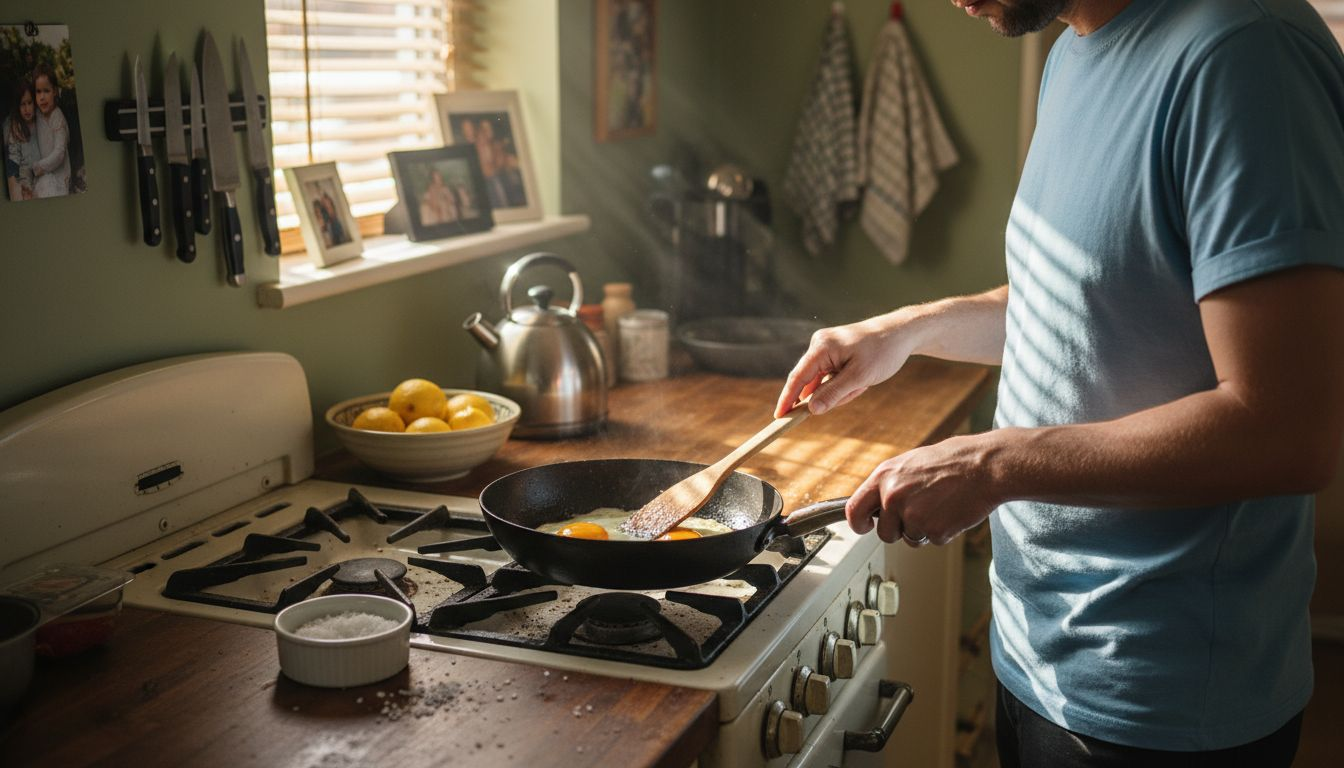
Finding reliable cookware for health-conscious meals can feel challenging when so many pans rely on chemical coatings or compromise on durability. For European home cooks, choosing the right material matters not only for taste but also for peace of mind and long-term value. Carbon steel cookware stands out for its genuine nonstick surface, robust build, and chemical-free safety, offering a practical solution for everyday family kitchens and enthusiasts who want pure cooking without compromise.
Table of Contents
- Defining Carbon Steel Cookware And Myths
- Types, Construction, And Core Qualities
- Safe Cooking: Seasoning, Health, And Compatibility
- Comparing Carbon Steel With Pan Alternatives
- Maintenance, Common Pitfalls, And Longevity
Key Takeaways
| Point | Details |
|---|---|
| Carbon Steel Cookware is Safe and Durable | Unlike modern nonstick options, carbon steel cookware is chemical-free and develops a natural nonstick surface over time through seasoning. |
| Maintenance is Simple and Essential | Proper care involves washing, drying, and applying oil, which keeps the pan in excellent condition and prevents rust. |
| Versatile for Various Cooking Needs | Carbon steel is suitable for all types of cooking, from searing to simmering, and works on all cooktop types without special techniques. |
| Improves with Use | Each cooking session strengthens the seasoning of carbon steel cookware, enhancing its performance and extending its lifetime. |
Defining Carbon Steel Cookware and Myths
Carbon steel is a simple blend of iron and carbon, making it one of the most straightforward cookware materials available. Unlike modern nonstick pans with chemical coatings, carbon steel develops a natural seasoning layer through regular use and cooking with fats.
The material composition is what makes carbon steel so durable and heat-responsive. It sits between cast iron and stainless steel in weight and thickness, giving you the benefits of both without their drawbacks. When you heat carbon steel, it responds quickly to temperature changes, making it perfect for searing steaks or controlling sauce consistency.
Here’s what separates fact from fiction about carbon steel:
- It’s not toxic. Unlike cookware with synthetic nonstick coatings, carbon steel poses no risk from chemical release into your food.
- Iron leaching is safe. Carbon steel can release small amounts of iron into food, which is completely harmless and may even benefit your health.
- Seasoning isn’t complicated. You build it gradually through cooking and simple maintenance, not complex chemical processes.
- It won’t scratch easily. The surface is naturally durable and improves with age and use.
Natural seasoning creates a genuine nonstick surface that strengthens over time, unlike synthetic coatings that degrade.
Many people worry carbon steel requires cast iron level commitment. In reality, maintenance is straightforward. Wash it quickly after cooking, dry it immediately, and apply light oil. That’s it.
Another myth: carbon steel is only for professionals. European home cooks have relied on well-maintained cookware like carbon steel for generations. It’s equally suited to everyday family meals, weeknight dinners, and special occasions. Whether you’re cooking pasta, roasting vegetables, or preparing breakfast, carbon steel handles it all with reliability.
The real advantage? Your pan becomes better with time. Each cooking session strengthens the seasoning, creating a truly nonstick surface without chemicals.
Pro tip: Start with light cooking oils like grapeseed or avocado oil for your initial seasoning, avoiding olive oil, which smokes at lower temperatures and creates a sticky surface.
Types, Construction, and Core Qualities
Carbon steel cookware isn’t all the same. The amount of carbon in the alloy determines how the pan performs, how durable it is, and how it responds to heat. Understanding these differences helps you choose the right pan for your cooking style.
Carbon content ranges from low to medium in cookware applications. Low-carbon steel contains around 0.1 to 0.3 percent carbon, whilst medium-carbon steel sits between 0.3 and 0.6 percent. Higher carbon content creates a harder, more durable surface that holds an edge better and resists wear. For cookware, this balance is crucial, as too much carbon makes the material brittle and prone to cracking under thermal stress.
Beyond carbon, other elements matter. Manganese, silicon, and copper are added in controlled amounts to influence strength, hardness, and corrosion resistance. These alloying elements fine-tune the material’s properties without compromising its food-safety profile or heat conductivity.
Here’s what happens during construction:
- Iron ore is melted in an electric arc furnace at extreme temperatures.
- Carbon is introduced in precise quantities to achieve the desired hardness.
- The molten steel is poured into moulds and cooled in controlled conditions.
- The solidified steel is shaped into pans through forging or stamping.
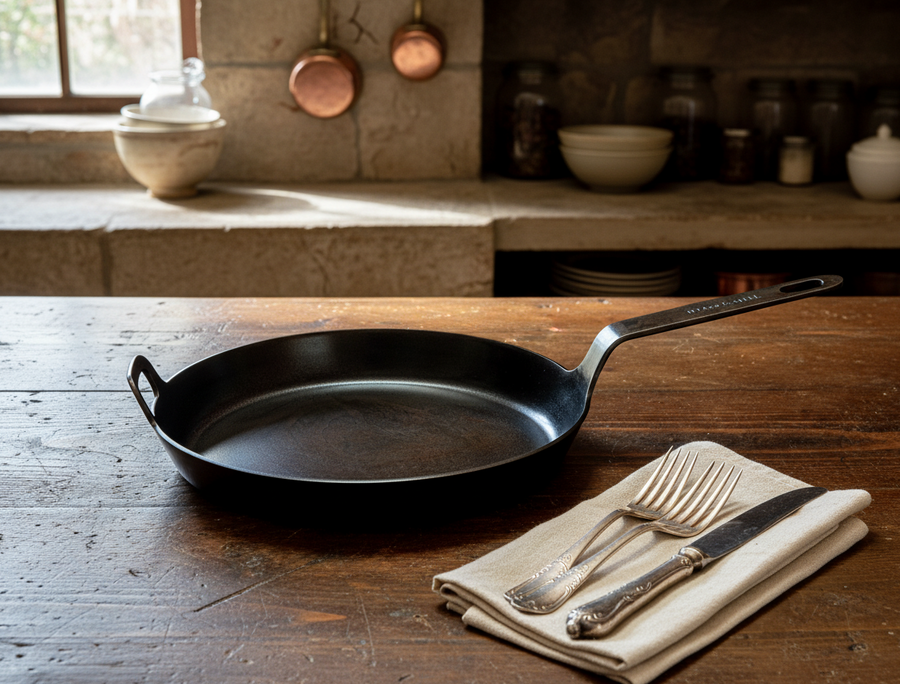
Brass & Steel uses single-piece forging, which means the entire pan, including the handle, is crafted from one continuous sheet of carbon steel. This eliminates weak points where rivets or welds would normally create stress zones. The result is stronger, easier to clean, and built to last decades.
Core qualities of carbon steel cookware include exceptional heat retention and responsiveness. Once heated, the pan maintains temperature beautifully, making it ideal for searing. It cools quickly too, giving you precise control when adjusting heat. Engineering standards for cookware ensure construction methods meet safety benchmarks for thickness, durability, and heat resistance across the industry.
Durability is another defining strength. Carbon steel withstands high temperatures, direct flame, and oven use without degradation. The material doesn’t warp easily when properly maintained, and unlike nonstick coatings, it won’t flake or peel.
Single-piece construction eliminates weak joints, creating a pan that improves with every use rather than deteriorating over time.
Pro tip: Choose a 3mm thickness for everyday cooking and lighter tasks, or opt for 4mm if you cook large meals frequently or prefer maximum heat retention and durability.
Safe Cooking: Seasoning, Health, and Compatibility
Seasoning transforms carbon steel from a bare metal surface into a reliable cooking tool. The process involves coating the pan with oil and heating it until the oil polymerises, creating a protective layer that prevents rust and improves nonstick properties. This isn’t optional. It’s the foundation of safe, effective carbon steel cooking.
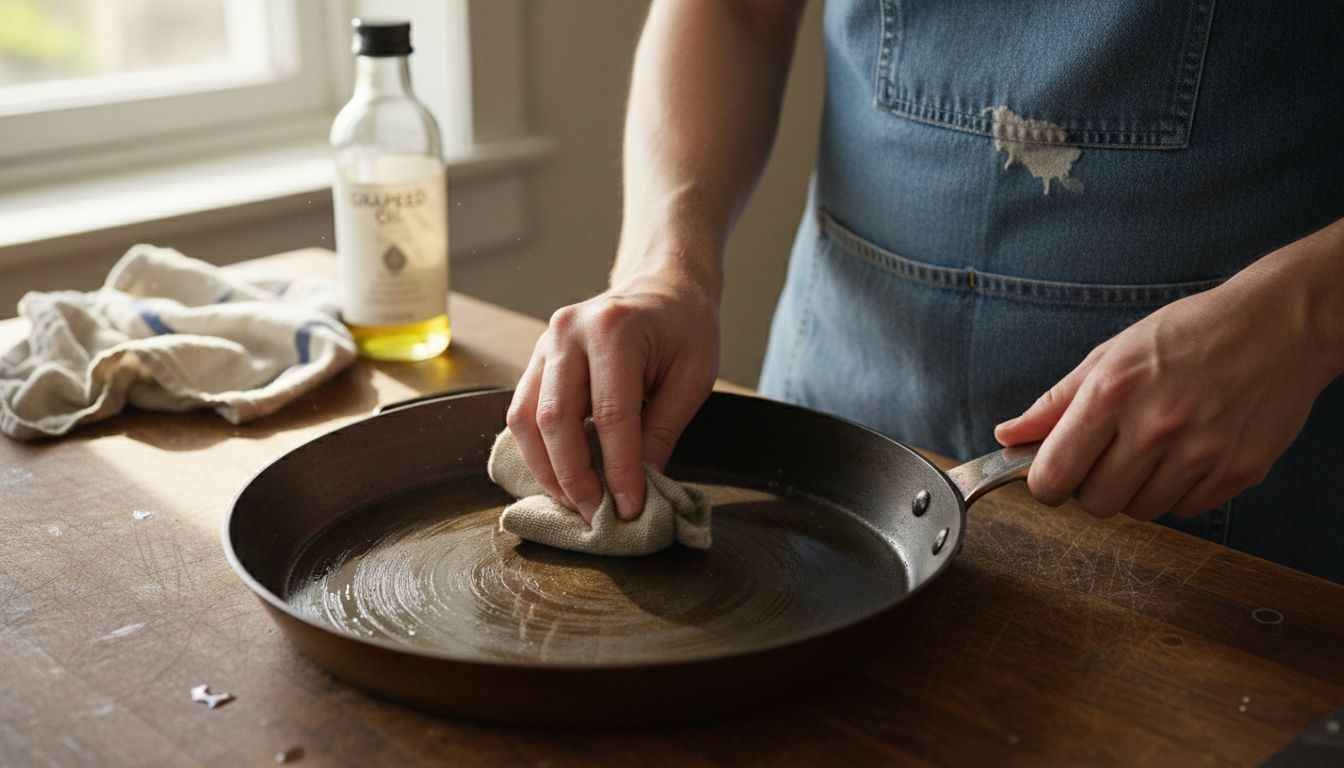
Proper seasoning reduces metal leaching and makes your pan genuinely nonstick. Coating the surface with heated oil) creates a polymerised layer that protects the metal whilst improving cooking performance. Each time you cook with fat, you’re strengthening this seasoning. Over months and years, your pan develops a beautiful dark patina that only improves with use.
Health benefits are real and straightforward. Carbon steel shares safety advantages with cast iron, releasing only small amounts of iron into food at levels that are harmless and potentially beneficial. Unlike modern nonstick pans with synthetic coatings, carbon steel poses no risk from toxic chemical release. You’re cooking with pure metal and natural seasoning, nothing else.
Here’s why seasoning matters for safety:
- It prevents rust formation, which compromises both safety and cooking quality.
- It reduces the tiny amount of iron that leaches into food.
- It creates a genuine nonstick surface without chemicals like PTFE or PFOA.
- It protects the pan’s integrity during high-heat cooking.
Seasoning creates a chemical barrier that makes carbon steel safer, more durable, and genuinely nonstick without synthetic coatings.
Compatibility across cooktops is seamless. Carbon steel works beautifully on gas, electric, and induction hobs without requiring special techniques or equipment. The material’s thermal properties remain consistent regardless of heat source. You can move from a standard electric ring to an induction cooker without adjustment, making carbon steel ideal for European kitchens with mixed appliances.
Temperature flexibility is another advantage. Carbon steel handles everything from gentle simmering to intense searing. The material doesn’t degrade at high temperatures like nonstick coatings do. You can safely use it directly over open flame, in the oven, and on all stovetop types without compromising safety or performance.
The health comparison is clear. Carbon steel cookware avoids the toxic chemical coatings found in conventional nonstick pans, making it a genuinely safer choice for everyday cooking. Proper maintenance means your pan lasts decades, reducing waste and providing reliable cooking for your family.
Pro tip: Season your pan immediately after cooking with fatty foods, whilst the surface is still slightly warm, to build seasoning efficiently and maintain nonstick properties with minimal effort.
Comparing Carbon Steel with Pan Alternatives
Carbon steel occupies a sweet spot in the cookware world. It combines the durability and heat performance of cast iron with the lighter weight and faster heating of modern materials. Understanding how it compares to other options helps you make an informed choice for your kitchen.
Nonstick pans are the obvious comparison point. Modern nonstick coatings rely on PFAS chemicals that release toxic fumes when overheated. Carbon steel avoids this entirely. Once seasoned, it performs like genuine nonstick cookware without chemical coatings, and it lasts decades instead of degrading after a few years of use.
Cast iron is a worthy competitor, but heavier. Cast iron and carbon steel require similar seasoning and maintenance. The difference? Carbon steel heats up faster and weighs significantly less, making it more practical for everyday cooking. Both are safe, durable, and chemical-free, but carbon steel wins on convenience and responsiveness.
Stainless steel cookware presents a different trade-off. Stainless steel is durable and rust-resistant, but it has poor heat retention compared to carbon steel. Food sticks more easily unless you use excess oil or butter. Stainless steel lacks the natural nonstick properties that carbon steel develops through seasoning, making it less forgiving for everyday cooking.
Here’s how carbon steel compares:
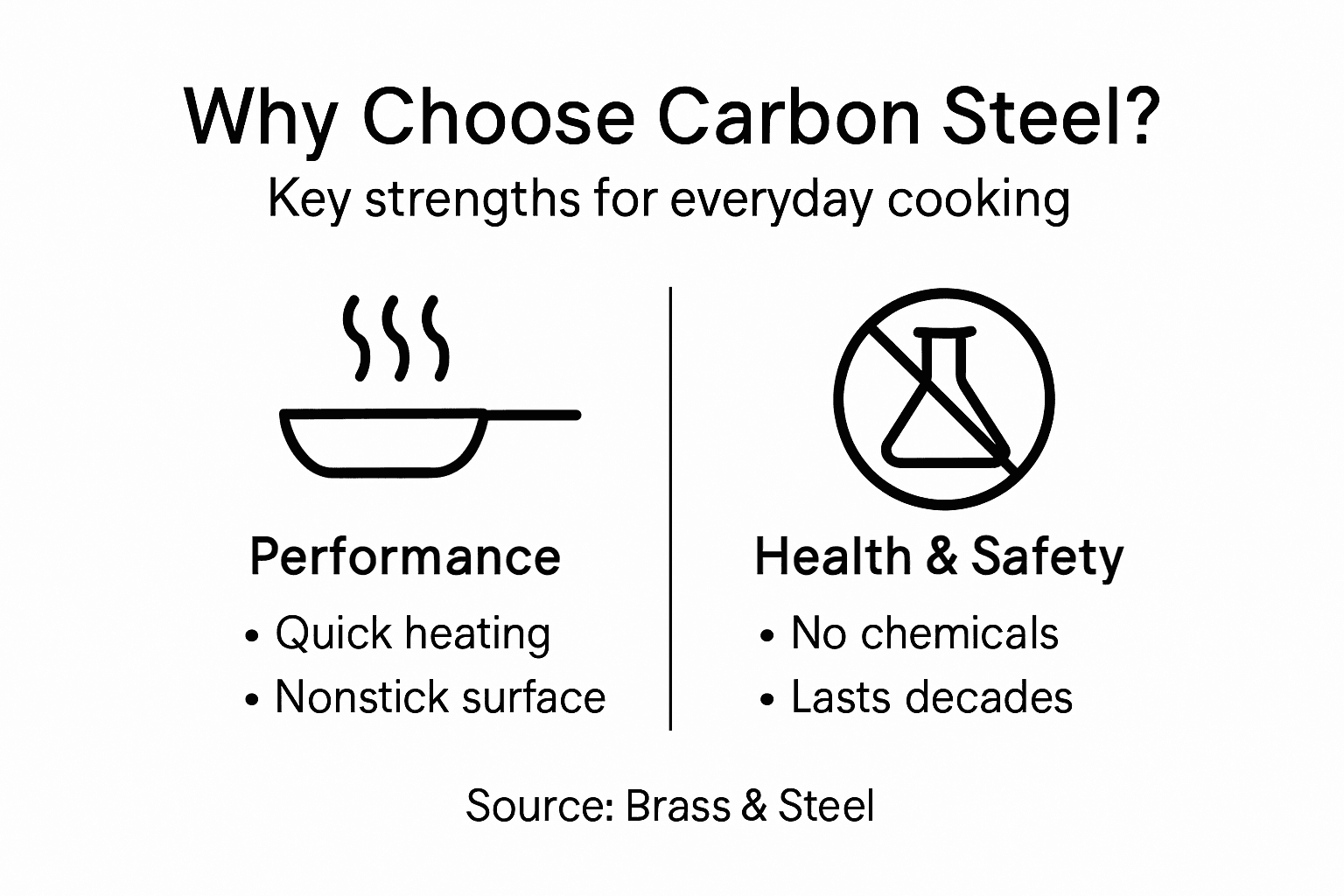
- Nonstick pans: Carbon steel is chemical-free, lasts longer, and avoids toxic coating concerns.
- Cast iron: Carbon steel heats faster, weighs less, and requires identical seasoning and care.
- Stainless steel: Carbon steel retains heat better and develops superior nonstick properties naturally.
Carbon steel delivers professional-grade performance without chemical coatings, toxic fumes, or the weight penalty of cast iron.
Carbon steel offers excellent heat conduction and retention whilst remaining lighter than cast iron alternatives. This balance makes it ideal for serious home cooks who want durability without compromise. You get high-performance cooking with the peace of mind that your pan is genuinely safe.
Here’s a concise overview of how key cookware materials compare for everyday use:
| Material | Heat Responsiveness | Weight | Nonstick Capability | Chemical Safety |
|---|---|---|---|---|
| Carbon Steel | Quick adjustments | Medium-light | Develops with seasoning | Completely chemical-free |
| Cast Iron | Slow to respond | Heavy | Seasoning needed for nonstick | Free from toxic coatings |
| Stainless Steel | Moderate response | Medium | Requires oil or butter | Safe under normal use |
| Nonstick | Fast heating | Lightweight | Factory nonstick coating | Synthetic coatings present |
Durability is another strength. Carbon steel won’t chip, peel, or degrade like nonstick coatings. It withstands high heat, open flame, and oven use indefinitely. With basic care, a single pan serves multiple generations, making it environmentally sensible and economical.
Pro tip: If switching from nonstick cookware, expect a brief adjustment period of three to four uses whilst you develop seasoning; start with fatty foods like bacon or sautéed vegetables to build nonstick properties quickly.
Maintenance, Common Pitfalls, and Longevity
Carbon steel’s durability is legendary, but only when maintained properly. A well-cared-for pan lasts a lifetime. Neglect it, and rust develops quickly. The good news? Maintenance is straightforward and becomes second nature within weeks.
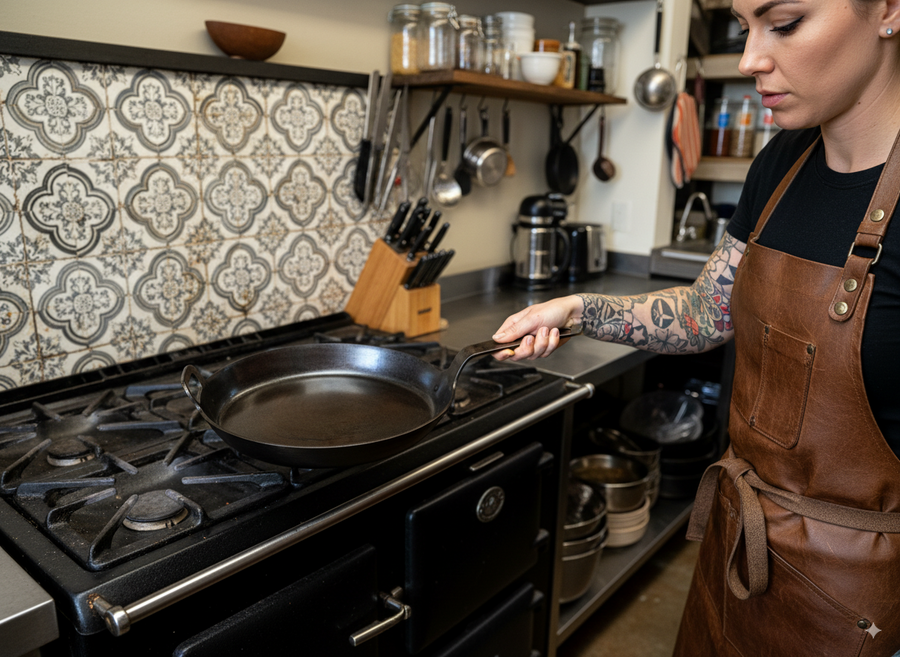
Basic maintenance involves three core steps. Wash your pan with warm water immediately after cooking, dry it thoroughly with a cloth, and apply a light coat of oil whilst still warm. Avoid soap or harsh detergents that strip seasoning. This routine takes ninety seconds and keeps your pan in perfect condition.
Rust formation is the most common pitfall. Leaving your pan wet causes rust, which compromises both safety and cooking performance. Prevention is simple: dry immediately after washing. If rust does appear, scrub it with steel wool and re-season the affected area.
Food sticking happens when seasoning is underdeveloped. This isn’t a defect, it’s a sign your pan needs more use and cooking with fats. After ten to twenty uses with adequate oil or butter, sticking disappears entirely. Patience at the beginning pays dividends for years.
Here are common maintenance mistakes to avoid:
- Soaking your pan in water overnight.
- Using abrasive scouring pads that remove seasoning.
- Storing your pan damp or in humid conditions.
- Cooking acidic foods without enough fat on a new pan.
- Applying excessive oil, which turns sticky and gummy.
With proper care, carbon steel pans outlast multiple generations, becoming kitchen heirlooms that improve with age.
Longevity is where carbon steel truly shines. Well-maintained carbon steel cookware offers exceptional durability and can remain functional for a lifetime or longer. Unlike nonstick pans that degrade after five to ten years, carbon steel strengthens over time. Each season layer you build makes the pan better.
Re-seasoning your pan occasionally keeps it in peak condition. If your pan becomes dull or sticky, simply repeat the initial seasoning process. This takes thirty minutes and completely restores nonstick properties. Think of it as maintenance, not repair.
Temperature changes can warp carbon steel. Avoid plunging a hot pan into cold water. Instead, let it cool naturally or run it under lukewarm water. This simple habit prevents warping and extends your pan’s life indefinitely.
The table below highlights practical maintenance tips to ensure your carbon steel pan lasts for decades:
| Action | Frequency | Impact on Longevity |
|---|---|---|
| Light oil coating | After each use | Prevents rust, preserves seasoning |
| Avoid soaking | Always | Stops corrosion and surface damage |
| Cook fatty foods | Twice weekly | Rapidly builds protective layering |
| Re-seasoning | As needed | Restores nonstick properties |
Pro tip: Keep your seasoning strong by cooking fatty foods like eggs, bacon, or stir-fried vegetables at least twice weekly; this builds protective layers faster than any manual seasoning step.
Discover the Safer Choice for Everyday Cooking with Carbon Steel
If you value durability, health-conscious design, and the unparalleled performance of a genuinely seasoned pan free from toxic coatings then explore our Carbon Steel Collection | Brass&Steel. Brass & Steel offers single-piece forged carbon steel cookware that matches the qualities highlighted in this article: natural nonstick properties, excellent heat responsiveness, and safety without compromise. Whether you are tackling quick weeknight meals or mastering the perfect sear for special occasions these pans grow better and safer with every use.
Elevate your kitchen with cookware designed for lasting heirloom quality and effortless maintenance. Visit Brass & Steel today to choose your ideal pan, learn expert seasoning tips, and embrace a truly safer and healthier cooking experience. Start your journey toward professional-grade carbon steel cookware now and transform everyday meals into culinary achievements.
Frequently Asked Questions
What is carbon steel cookware and how does it differ from other materials?
Carbon steel cookware is made from a simple blend of iron and carbon, offering durability and excellent heat responsiveness. Unlike nonstick pans with chemical coatings, carbon steel develops a natural seasoning, making it akin to cast iron but lighter and quicker to heat.
How should I season my carbon steel pan?
To season your carbon steel pan, coat it with a light layer of oil and heat it until the oil polymerises. This process creates a protective layer that prevents rust and enhances nonstick properties. Regular cooking with fats will further improve the seasoning over time.
Is carbon steel cookware safe for my health?
Yes, carbon steel cookware is safe. It doesn’t contain toxic chemical coatings like modern nonstick pans, and it can release small amounts of iron into food, which is harmless and may even be beneficial for health when consumed in moderation.
How do I maintain my carbon steel cookware to ensure longevity?
Basic maintenance involves washing the pan with warm water immediately after use, drying it thoroughly, and applying a light coat of oil to prevent rust. Avoid soaking the pan and using abrasive cleaners to preserve the seasoning and prolong the pan’s lifespan.