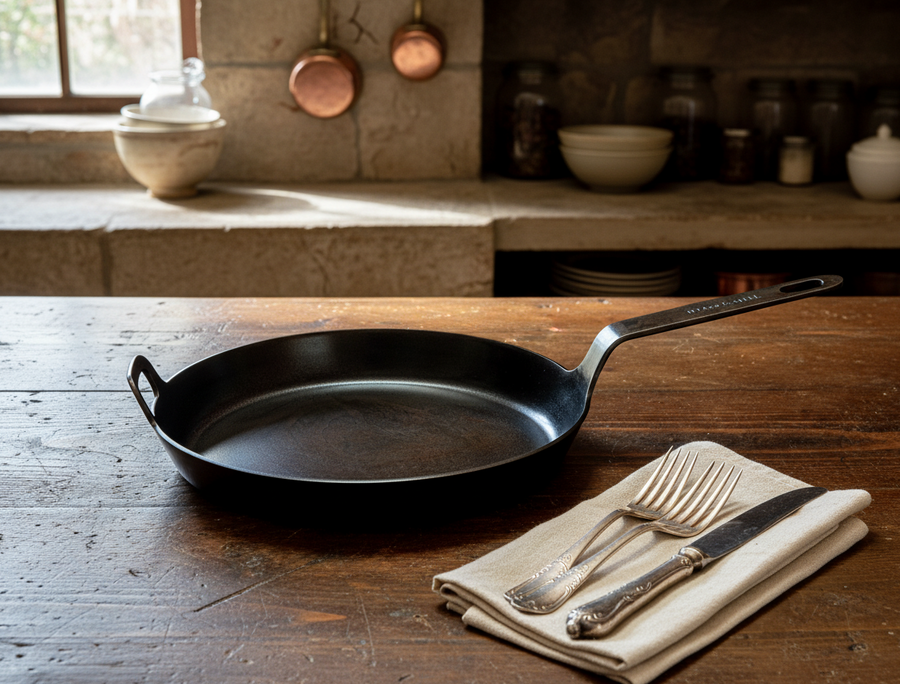
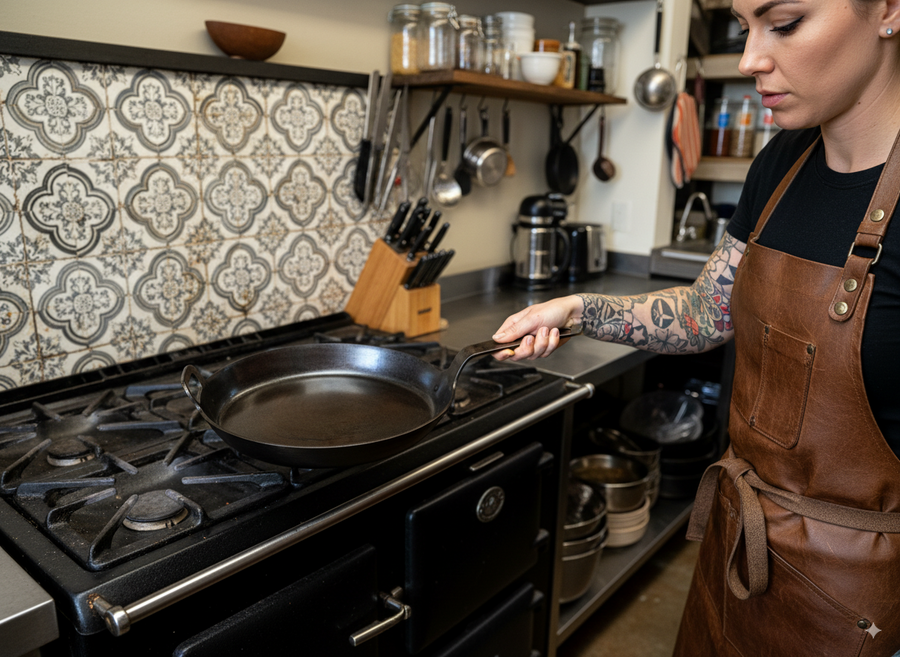
Seasoning a Carbon Steel Pan: Unlocking Natural Nonstick
Selecting cookware that stands up to the demands of a European professional kitchen can feel like an ongoing pursuit. Without the right seasoning, even the finest carbon steel pans are prone to rust and stubborn sticking, jeopardising both efficiency and results. Mastering the art of seasoning unlocks a transformation where polymerised fat forms a corrosion-resistant coating that bonds directly with the steel. This guide provides practical insights into how proper seasoning not only preserves your pan but also elevates culinary performance with every use.
Table of Contents
- What Seasoning Means For Carbon Steel
- Oil Choices And Polymerisation Process
- Step-By-Step Methods For Seasoning Pans
- Common Mistakes And How To Avoid Them
- Comparing Seasoned Pans With Nonstick Alternatives
Key Takeaways
| Point | Details |
|---|---|
| Importance of Seasoning | Seasoning transforms carbon steel into a durable, nonstick surface while providing rust protection and improved cooking performance. |
| Oil Selection Matters | Use high-smoke-point oils like grapeseed or avocado for effective seasoning, avoiding those that leave residues like olive oil. |
| Proper Techniques | Utilise the oven method for initial seasoning to ensure a strong layer, and maintain with stovetop methods for quick touch-ups. |
| Long-lasting Advantages | Unlike synthetic nonstick cookware, seasoned carbon steel pans improve with use and can last a lifetime, with no health concerns associated with chemical coatings. |
What Seasoning Means for Carbon Steel
Seasoning is not some mystical kitchen magic. It’s a straightforward chemical process that transforms raw carbon steel into a durable, naturally nonstick cooking surface. Without it, your pan would rust quickly and stick like a nightmare.
At its core, seasoning involves coating your pan with oil and heating it to create a protective layer. Polymerised fat forms a corrosion-resistant coating) that bonds to the steel itself. This isn’t just a thin film sitting on top—it’s a structural change to the pan’s surface.
Here’s what happens chemically:
- Oil heats beyond its smoke point
- Fatty acids break down into polymers
- These polymers bond with iron atoms on the pan’s surface
- Multiple layers build up over time, creating a stronger finish
X-ray research reveals nanostructures form alongside the polymerised oil layer, making the surface conditionally hydrophobic. This means water beads up when there’s little moisture, but absorbs when there’s more—leading to even cooking and less charring.
The seasoning serves three critical purposes for your carbon steel pan:
- Rust protection – Creates a barrier between steel and oxygen
- Natural nonstick properties – The seasoned surface becomes attractive to oils and fats, helping food release naturally
- Improved cooking performance – Enhances heat distribution and allows better browning
Unlike traditional nonstick coatings, seasoning is completely safe. No PTFE, no synthetic chemicals. Just oil and heat creating something genuine and food-safe.
Your carbon steel pan doesn’t come with a nonstick surface built in—you create it through seasoning, and it improves with every meal you cook.
Each time you cook with fatty foods or re-season, you’re adding to this protective layer. That’s why understanding proper seasoning techniques builds long-term performance. A well-seasoned pan becomes better with age, eventually matching—or surpassing—the performance of modern nonstick cookware.
The difference? Your seasoned carbon steel will last a lifetime. Modern nonstick coatings wear down. Seasoning strengthens.
Pro tip: Use high-smoke-point oils like grapeseed, avocado, or sunflower for seasoning; avoid olive oil and animal fats, which create sticky residue instead of a durable polymerised layer.
Oil Choices and Polymerisation Process
Not all oils are equal when seasoning your carbon steel pan. The oil you choose determines how quickly your seasoning builds and how durable it becomes. This is where smoke point matters.
Smoke point is the temperature at which oil breaks down and starts smoking. Oils heated beyond their smoke point create polymerised layers. This is exactly what you want for seasoning. The heat causes unsaturated fatty acids to break down into monomers that bond into large molecules, forming that protective coating.
The best seasoning oils combine two qualities:
- High smoke point (above 200°C)
- High unsaturated fat content for effective polymerisation
Here are the oils that work best for your Brass & Steel pan:
- Grapeseed oil – Smoke point around 204°C, polymerises well, clean finish
- Avocado oil – Smoke point around 271°C, excellent polymerisation, creates durable layers
- Sunflower oil – Smoke point around 227°C, affordable and reliable
- Canola oil – Smoke point around 200°C, accessible and effective
Flaxseed oil forms particularly hard, durable coatings due to superior polymerisation properties. Vegetable and coconut oils also work, though their smoke points are lower.
Oils to avoid include olive oil and animal fats. These have lower smoke points and don’t polymerise effectively, leaving behind sticky residue rather than a smooth, nonstick surface.
The amount of oil matters too. Many chefs apply too much, thinking more oil equals better seasoning. Wrong. You need only a thin coat that looks almost dry after wiping. Excess oil creates gummy buildup that actually reduces nonstick performance.
High-quality polymerisation requires just enough oil to coat the surface and extreme heat—nothing more.
When you season at the correct temperature with the right oil amount, the polymerised layer bonds directly to the steel. This creates that coveted natural nonstick finish that improves with every cook.
Pro tip: Choose avocado or grapeseed oil for initial seasoning; their higher smoke points ensure complete polymerisation in your oven, creating a stronger foundation than lower-smoke-point alternatives.
Below is a reference table highlighting the best and worst oils for seasoning, along with their smoke points and key properties:
| Oil Type | Smoke Point (°C) | Seasoning Quality | Tendency to Leave Residue |
|---|---|---|---|
| Grapeseed Oil | 204 | Strong, even finish | Low |
| Avocado Oil | 271 | Excellent durability | Very low |
| Sunflower Oil | 227 | Reliable, affordable | Low |
| Canola Oil | 200 | Good for basic seasoning | Low |
| Flaxseed Oil | 225 (approx.) | Very hard layer | May flake if overused |
| Olive Oil | 160 | Poor, sticky coating | High |
| Animal Fats | 150-190 | Weak, uneven finish | High |
Step-by-Step Methods for Seasoning Pans
There’s no single “right” way to season your carbon steel pan. Professional chefs use different methods depending on their kitchen setup and how quickly they want results. All three approaches work well, so choose what suits your workflow.
The Oven Method
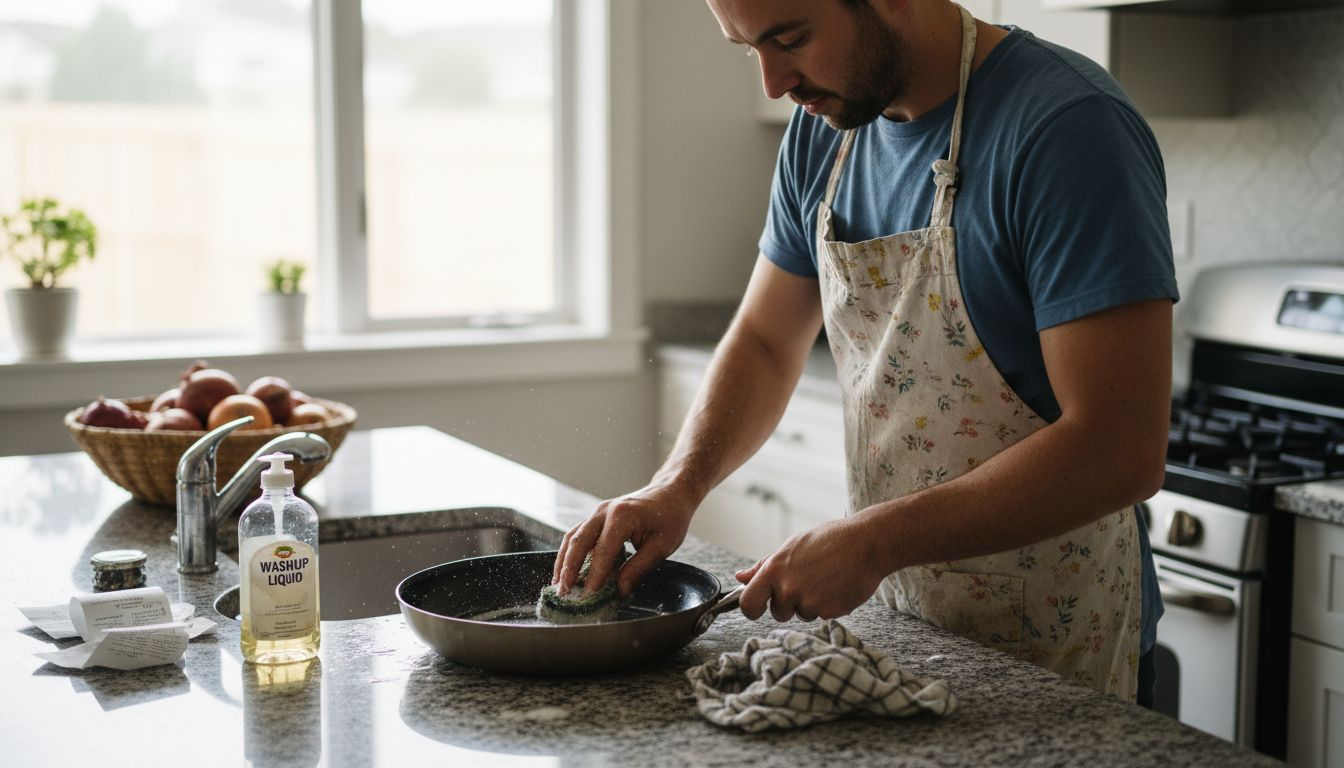
This is the most reliable approach for building a strong base seasoning. Start by washing your new pan with hot soapy water to remove any factory protective coating. Dry it thoroughly with a clean towel.
Preheat your oven to 250°C. Place the dry pan inside for 10 minutes to ensure complete dryness. Apply a very thin coat of oil using a cloth or paper towel. The pan should look almost dry after you wipe it—excess oil creates sticky buildup instead of polymerised layers.
Place the oiled pan upside down on the middle oven rack. Bake for 30 minutes. The oil polymerises and bonds to the steel surface. Allow it to cool completely before removing it.
Repeat this process 2 to 3 times for a solid initial seasoning. Each cycle adds another protective layer.
The Stovetop Method
Three seasoning approaches build durable nonstick finishes, and the stovetop method is fastest for quick touch-ups. Heat your pan on medium-high until it changes colour slightly. Watch carefully—you want blue tones, not black.
Apply a thin layer of oil and let it smoke briefly. The high heat creates immediate polymerisation. Allow the pan to cool naturally. This method works well between uses but builds seasoning more slowly than oven methods.
The Repeated Layering Method
Cleaning the cookware thoroughly and applying thin coats followed by heating builds strong seasoning). Wash your pan, dry it completely, then apply oil. Heat gently until the surface darkens. Cool and repeat multiple times.
This method gives you the most control and is excellent for ongoing maintenance. Each layer strengthens the nonstick surface gradually.
Comparison of methods:
- Oven method – Most reliable, builds quickly, best for initial seasoning
- Stovetop method – Fastest, good for maintenance, requires careful heat control
- Layering method – Most flexible, gradual building, excellent for refinement
Choose the oven method for your initial seasoning. It produces the most consistent, durable results with minimal risk of uneven coating.
Whichever method you select, the key principle remains the same: thin oil, high heat, and patience. Thick coats and impatience create sticky pans.
Pro tip: Use the oven method for your first three seasoning cycles to establish a solid foundation, then maintain with quick stovetop applications during regular cooking.
For clarity, here’s a summary comparing the three main seasoning methods and their ideal usage:
| Method | Ideal For | Speed | Risk of Uneven Coating |
|---|---|---|---|
| Oven Method | Initial seasoning base | Moderate | Very low |
| Stovetop Method | Quick touch-ups | Fast | Moderate |
| Layering Method | Ongoing surface refinement | Slow | Low |
Common Mistakes and How to Avoid Them
Most seasoning failures happen for predictable reasons. Understanding what goes wrong helps you avoid wasting time and oil. The good news? These mistakes are easily preventable.
Too Much Oil
This is the most common error. Chefs think more oil equals better seasoning. It doesn’t. Excess oil creates gummy, sticky surfaces that repel food rather than release it smoothly.
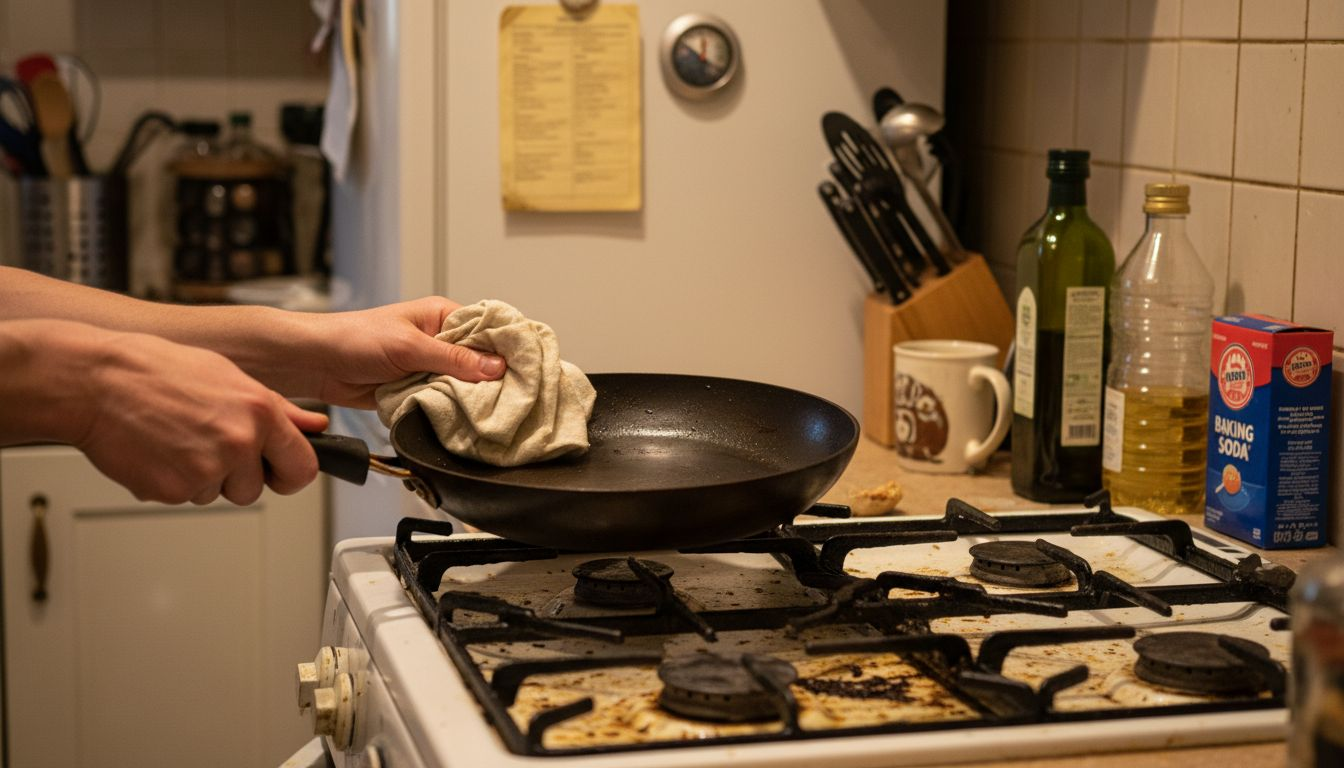
The fix is simple. After applying oil, wipe the pan thoroughly with a clean cloth. It should look almost dry. You want just enough coating to see a slight sheen.
Skipping the Initial Cleaning
Factory protective coatings prevent rust during shipping. If you don’t remove this coating first, your seasoning won’t bond properly to the steel. The new layers sit on top of the coating, not the metal itself.
Thoroughly cleaning the pan before seasoning ensures proper adhesion of polymerised layers). Use hot soapy water and scrub well. Dry immediately to prevent rust.
Insufficient Heat During Seasoning
Oil needs extreme heat to polymerise effectively. If your oven temperature is too low or your stovetop heat insufficient, the oil won’t bond properly. You’ll end up with a tacky surface instead of a hard, protective layer.
Always preheat your oven to 250°C and verify with an oven thermometer. On the stovetop, heat until you see the pan change colour slightly.
Neglecting Regular Maintenance
Common mistakes include failing to season regularly and not maintaining the seasoning through use. Your seasoning doesn’t get stronger by sitting in a cupboard. It improves through cooking, especially with fatty foods.
Use your pan regularly. Cook with oils and fats when possible. These naturally re-season the surface with every meal.
Aggressive Washing
Treating a seasoned carbon steel pan like a dishwasher item damages the seasoning. Harsh scrubbing and soaking remove the protective layer you’ve built.
Instead, wash gently with warm water and minimal soap. Dry immediately with a cloth. A light coating of oil after washing maintains the finish.
Key mistakes to avoid:
- Applying thick oil coats
- Skipping the initial cleaning step
- Using low heat during seasoning
- Ignoring maintenance between uses
- Aggressive washing methods
Thin coats, high heat, and gentle care create seasoning that lasts years and improves with every cook.
Pro tip: After washing, while the pan is still warm, apply a tiny amount of oil and wipe it clean; this micro-maintenance prevents seasoning degradation and adds imperceptible protective layers.
Comparing Seasoned Pans with Nonstick Alternatives
You’ve probably noticed modern kitchens filled with nonstick pans. They’re convenient and popular. But seasoned carbon steel offers something fundamentally different. Understanding the distinction helps you make the right choice for your cooking style.
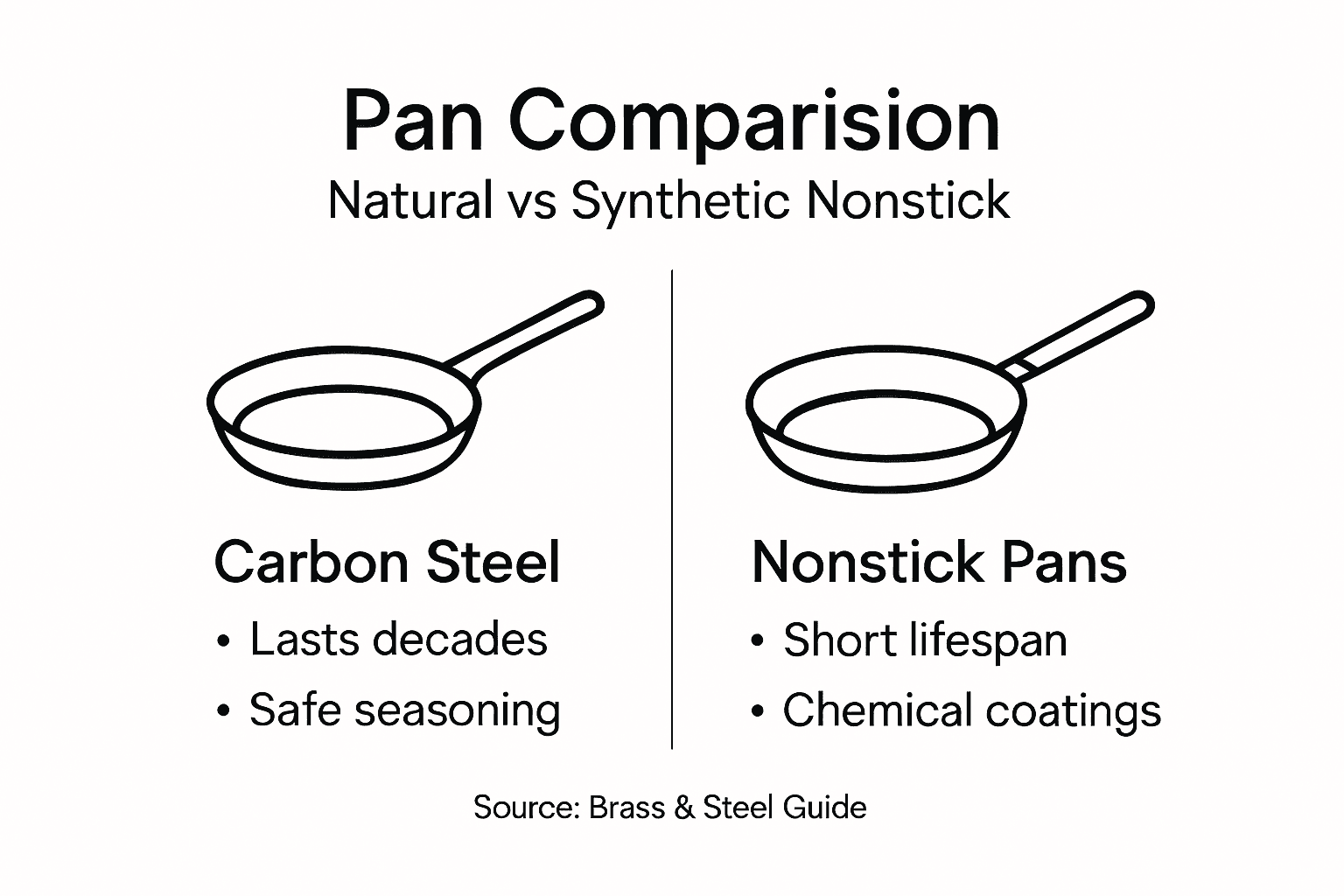
How Synthetic Nonstick Coatings Work
Traditional nonstick pans use fluoropolymer coatings like PTFE, commonly known as Teflon. These create a slick surface by forming a low-energy barrier between food and metal. Food slides around effortlessly, which is why chefs love them initially.
The problem emerges over time. These coatings wear down with use and heat exposure. Once damaged, they can’t be repaired. You’ll need a new pan. Additionally, synthetic coatings raise health concerns that seasoned surfaces simply don’t.
The Seasoned Carbon Steel Advantage
Seasoned carbon steel develops natural polymerised coatings that improve with use), unlike synthetic alternatives that degrade over time. Your pan becomes better the more you cook. After months of use, a well-seasoned carbon steel pan matches or exceeds modern nonstick performance.
The seasoning is completely safe. No chemicals, no coatings that can flake into your food. Just polymerised oil bonded to steel.
Health and Environmental Concerns
PFAS chemicals used in fluoropolymer nonstick coatings persist in the environment and may carry health risks. These “forever chemicals” accumulate in our bodies and the environment. Professional chefs increasingly avoid them.
Seasoned carbon steel pans produce zero chemical exposure. You’re cooking with oil and steel, nothing more.
Key Differences at a Glance
| Feature | Seasoned Carbon Steel | Synthetic Nonstick |
|---|---|---|
| Durability | Improves with age | Degrades over time |
| Nonstick performance | Gets better | Weakens gradually |
| Chemical concerns | None | PFAS exposure risk |
| Repairability | Can re-season | Cannot repair |
| Heat capability | Extremely high | Limited |
| Lifespan | Decades or longer | 3-5 years typical |
For professional kitchens, the choice is clear. Carbon steel pans work harder, last longer, and perform better as they age. They require more skill initially, but that’s precisely why serious chefs prefer them.
Synthetic nonstick coatings offer convenience today but come with hidden costs tomorrow. Seasoned carbon steel improves every single day you use it.
Making the switch demands patience during the first few weeks. Your seasoning layer isn’t perfect yet. But within months, you’ll have nonstick performance that rivals any modern pan, with none of the chemical baggage.
Pro tip: If you’re transitioning from nonstick, start with lower-oil cooking tasks and gradually progress to higher-heat searing as your seasoning builds; this accelerates your adaptation and strengthens the surface simultaneously.
Elevate Your Cooking Experience with Expertly Seasoned Carbon Steel Pans
Mastering the art of seasoning your carbon steel pan transforms everyday cooking into a journey of flavour, durability, and performance. If you have faced challenges like sticky coatings or uneven seasoning, you are not alone. Achieving that natural nonstick surface requires the right techniques, quality materials, and cookware designed to support this chemical bonding process.
At Brass & Steel, we craft each pan with single-piece construction using premium carbon steel to ensure unmatched strength and longevity. Our Carbon Steel Collection | Brass&Steel offers pans perfectly suited for proper seasoning methods described in this article. Experience the difference of high-smoke-point oil polymerisation on cookware engineered to improve with every use and free from harmful coatings.
Discover how your kitchen skills can shine with a pan that responds to high heat, develops an authentic patina, and stands the test of time. Visit our main site to explore top-quality carbon steel cookware designed for passionate cooks demanding heirloom quality and natural nonstick excellence. Begin your seasoning journey today and unlock new levels of cooking satisfaction.
Frequently Asked Questions
What is the process of seasoning a carbon steel pan?
Seasoning a carbon steel pan involves coating it with oil and heating it to create a protective, naturally nonstick layer through polymerisation. This process not only prevents rust but also enhances cooking performance by improving heat distribution.
What oils are best for seasoning a carbon steel pan?
High-smoke-point oils like grapeseed, avocado, and sunflower oil are ideal for seasoning carbon steel pans. These oils have a high unsaturated fat content, allowing for effective polymerisation without leaving a sticky residue.
How often should I season my carbon steel pan?
You should season your carbon steel pan initially 2 to 3 times to establish a strong base. After that, regular maintenance through cooking with fatty foods and occasional re-seasoning will enhance its protective layer and nonstick properties.
Can I use soap to clean my seasoned carbon steel pan?
While you can use a small amount of soap if necessary, it’s best to wash your seasoned carbon steel pan gently with warm water. Avoid aggressive scrubbing, as this can damage the seasoning. After washing, applying a light coat of oil can help maintain the finish.
Recommended
- How to Repair Seasoning on a Carbon Steel Pan Easily – Brass & Steel
- How to Re-Season a Carbon Steel Pan for Perfect Cooking – Brass & Steel
- How to Season Carbon Steel Pan in Oven for Lasting Nonstick – Brass & Steel
- Ultimate Carbon Steel Pan Seasoning Guide for Perfect Results – Brass & Steel
- Unlock the Power of Effortless, High-Protein Cooking with Two Chicks and Eazy Egg Free Range Liquid Egg Whites – MyGymSupplements