Carbon Steel vs Cast Iron – Which Is Best for Cooking?

Updated guide: for the complete, current version of this topic read Carbon Steel vs Cast Iron vs Stainless Steel.
Most British kitchens still rely on cookware made from metals with unique strengths, yet many home cooks remain unaware that cast iron contains up to twice the carbon found in carbon steel. This difference shapes everything from heat performance to maintenance routines. Understanding how carbon steel and cast iron compare helps you confidently choose cookware that truly fits your cooking style and matches the demands of a modern British home.
Table of Contents
- Carbon Steel And Cast Iron Defined
- Material Properties And Construction Methods
- Cooking Performance And Heat Response Compared
- Seasoning, Maintenance And Longevity Differences
- Health, Safety And Cost Implications
Key Takeaways
| Point | Details |
|---|---|
| Material Composition | Carbon steel contains 0.05–2.0% carbon, making it versatile, while cast iron has 2.0–4.0% carbon, leading to brittleness but excellent heat retention. |
| Manufacturing Differences | Carbon steel is pressed and rolled for a lighter, smoother finish, whereas cast iron is poured into moulds, resulting in thicker, rough-textured cookware. |
| Heat Performance | Cast iron excels in maintaining consistent heat for slow cooking, while carbon steel heats quickly, ideal for techniques requiring fast temperature changes. |
| Maintenance and Longevity | Cast iron requires strict care for seasoning and can last generations, while carbon steel has simpler maintenance and offers responsive cooking performance. |
Carbon Steel and Cast Iron Defined
When exploring cookware materials, carbon steel and cast iron are two robust metal options with fascinating metallurgical compositions. Carbon steel composition typically contains 0.05–2.0% carbon, creating a versatile cooking surface that balances strength and performance.
Cast iron, by contrast, has a higher carbon content ranging between 2.0–4.0%, which significantly impacts its physical characteristics. This elevated carbon percentage makes cast iron more brittle but simultaneously provides exceptional heat retention and durability. The silicon content around 1–3% further contributes to its unique metallurgical properties, enabling remarkable heat distribution across cooking surfaces.
The key differences between these materials emerge through their manufacturing processes and carbon concentrations. Carbon steel offers a lighter, more responsive cooking experience with quicker heat responsiveness, while cast iron provides substantial thermal mass and near-legendary durability. Professional chefs often appreciate carbon steel for its precision and adaptability, whereas home cooks frequently favour cast iron’s traditional robustness and remarkable heat-holding capabilities.
Understanding these fundamental material characteristics helps cooks select the most appropriate cookware for their specific culinary techniques and cooking styles. Whether preparing delicate sauces or searing robust meats, knowing the metallurgical nuances of carbon steel and cast iron empowers more informed kitchen equipment choices.
Material Properties and Construction Methods
The manufacturing processes for carbon steel and cast iron significantly influence their performance in the kitchen. Professional cookware manufacturing reveals distinct differences in how these materials are formed and their resulting characteristics. Cast-iron pans are traditionally created by pouring molten iron and carbon alloys into moulds, which produces thick-walled cookware with high, steep sides and a distinctively rough, grainy texture.
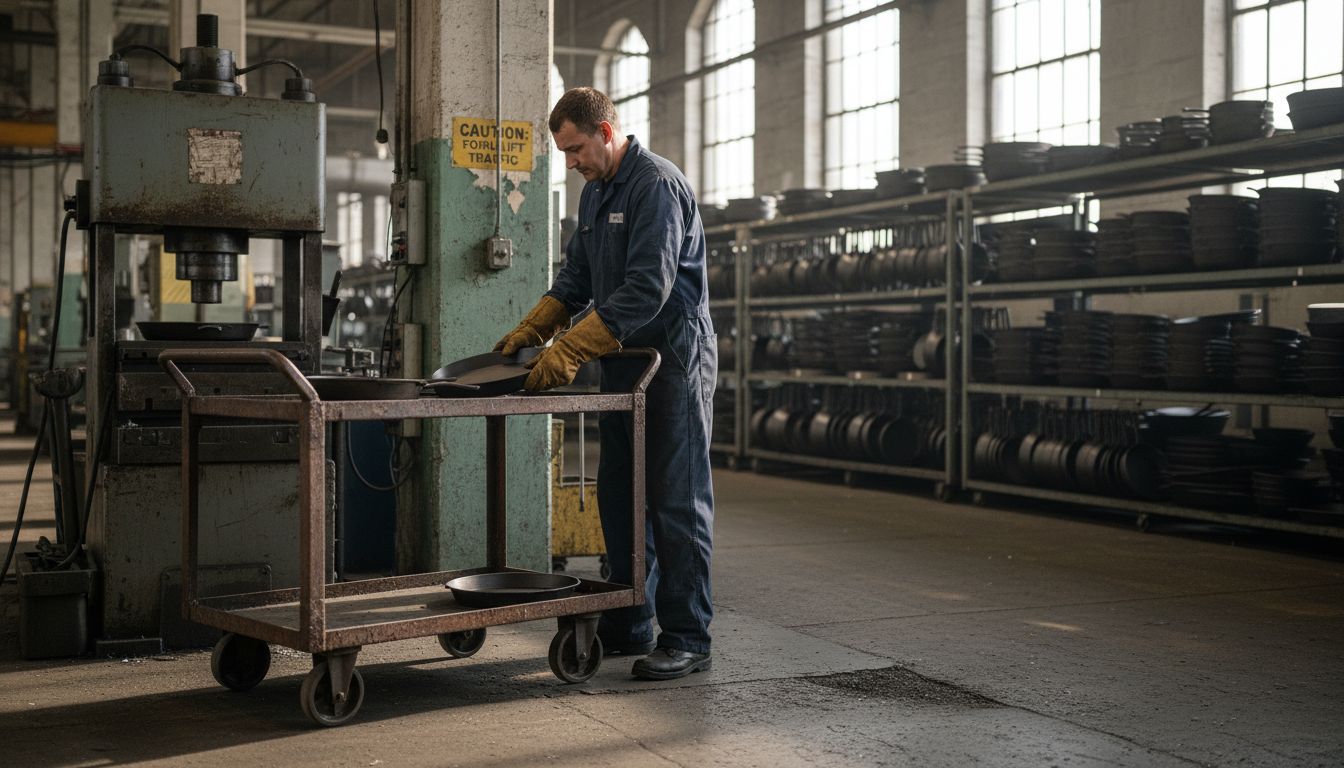
Carbon steel, in contrast, undergoes a precision manufacturing process of pressing and rolling steel into shape. This method creates lighter cookware with sloping sides and a smoother surface. The construction technique directly impacts the pan’s weight, heat responsiveness, and overall durability. Chefs appreciate carbon steel for its quick heat adaptation and professional-grade precision, while home cooks often favour cast iron’s substantial thermal mass and traditional robustness.
The metallurgical nuances extend beyond manufacturing techniques. Cast iron’s higher carbon content (2.0–4.0%) contributes to its remarkable heat retention capabilities, making it ideal for slow, even cooking. Carbon steel’s lower carbon percentage (0.05–2.0%) allows for more responsive temperature control, enabling chefs to adjust cooking techniques with greater immediacy. These subtle material properties determine not just how a pan performs, but how it interacts with different cooking methods and ingredient types.
Ultimately, understanding the material properties and construction methods empowers cooks to select cookware that matches their culinary style. Whether preparing delicate sauces that require precise temperature management or searing robust meats that demand sustained heat, the choice between carbon steel and cast iron depends on understanding their unique manufacturing characteristics and performance attributes.
Cooking Performance and Heat Response Compared
Understanding the nuanced heat performance of cookware materials is critical for culinary success. Carbon steel cookware performance reveals fascinating differences in how these materials interact with heat. Cast iron demonstrates remarkable thermal characteristics, heating slowly but maintaining temperature consistency, which makes it exceptional for techniques requiring prolonged, steady heat distribution such as braising, roasting, and slow-cooking delicate dishes.
Carbon steel, by contrast, offers significantly more responsive heat dynamics. Its lighter construction and lower thermal mass enable rapid temperature changes, making it supremely adaptable for techniques demanding quick heat modulation. Chefs appreciate carbon steel’s ability to heat up swiftly and respond immediately to flame adjustments, rendering it perfect for high-intensity cooking methods like sautéing, stir-frying, and creating precise sear marks on proteins.
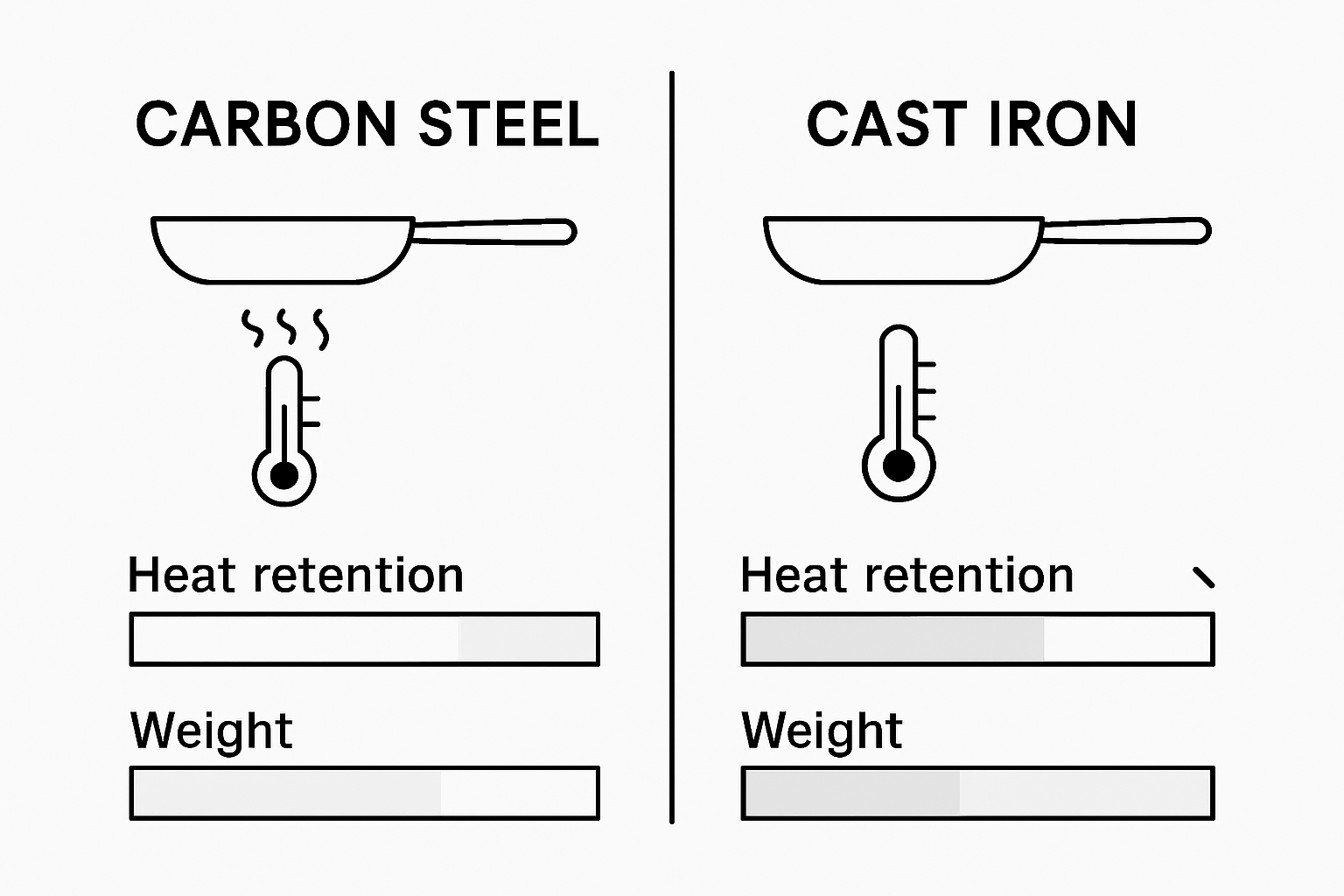
The thermal conductivity differences extend beyond mere heating speed. Cast iron’s substantial heat retention means it continues radiating warmth even after being removed from direct heat source, which can be advantageous for keeping food warm or finishing cooking through residual heat. Carbon steel provides more immediate temperature control, allowing for more nuanced cooking techniques that require precise, moment-to-moment heat management. This makes carbon steel particularly suited to delicate preparations requiring rapid temperature shifts and immediate responsiveness.
Ultimately, selecting between carbon steel and cast iron depends on understanding your specific culinary needs. Professional kitchens often employ both, leveraging each material’s unique thermal properties for different cooking techniques. Whether you require sustained, consistent heat or rapid, responsive temperature management, comprehending these materials’ distinct performance characteristics empowers more sophisticated and controlled cooking approaches.
Seasoning, Maintenance and Longevity Differences
The seasoning and maintenance processes for carbon steel and cast iron reveal fascinating distinctions in their care requirements and durability. Carbon steel maintenance demonstrates that while both materials require careful treatment, their approaches differ significantly. Cast iron’s highly porous surface absorbs oils more extensively, creating a robust seasoning layer that develops slowly but becomes incredibly resilient over time.
Carbon steel offers a more straightforward seasoning journey, with its smoother surface allowing for quicker non-stick patina development. Unlike cast iron’s intensive maintenance regime, carbon steel permits gentle cleaning with mild detergents without compromising its seasoned surface. This characteristic makes carbon steel more forgiving for home cooks who might find cast iron’s strict cleaning protocols intimidating. Cast iron demands absolute avoidance of water and soap, requiring meticulous drying and immediate oiling to prevent rust formation.
Longevity for these materials is directly linked to proper maintenance practices. Cast iron’s potential for multi-generational use is legendary, with well-maintained pans potentially lasting decades or even centuries. Carbon steel matches this durability but offers more responsive performance and easier maintenance. The key difference lies in their seasoning characteristics: cast iron develops a deeper, more entrenched seasoning layer that becomes almost impenetrable with age, while carbon steel maintains a more consistent, adaptable non-stick surface that can be more readily restored or refreshed.
Ultimately, choosing between carbon steel and cast iron depends on your willingness to invest time in maintenance and your specific cooking preferences. Both materials offer exceptional longevity when treated with respect, understanding, and consistent care. The magic lies not just in the material itself, but in the relationship a cook develops with their cookware through patient seasoning and mindful maintenance.
Health, Safety and Cost Implications
Navigating the health and safety considerations of cookware requires careful understanding of material properties and potential risks. Carbon steel cookware performance highlights critical insights into the metallurgical characteristics that impact food preparation safety. Both carbon steel and cast iron require diligent maintenance to prevent corrosion and potential health hazards, with proper seasoning serving as a crucial protective barrier against rust and potential metal leaching.
The financial investment represents another significant consideration for home cooks and professional chefs. Cast iron generally offers a more budget-friendly option, with lower initial purchase prices that make it accessible to a wide range of culinary enthusiasts. Carbon steel, while slightly more expensive, provides superior performance characteristics such as lighter weight and more responsive heat management, potentially justifying its higher upfront cost through enhanced cooking precision and longer-term durability.
Health safety extends beyond mere material composition. Carbon steel and cast iron both require meticulous care to maintain their protective seasoned surfaces, which act as natural non-stick barriers preventing direct metal interaction with food. Improper maintenance can lead to rust formation and potential contamination, making consistent seasoning and careful cleaning paramount. The absence of synthetic coatings means these materials offer a more natural cooking experience, free from potential chemical leaching associated with traditional non-stick surfaces.
Ultimately, the choice between carbon steel and cast iron transcends simple cost comparisons. Discerning cooks must weigh initial investment against long-term performance, maintenance requirements, and personal cooking styles. Both materials offer unique advantages, with carbon steel providing more responsive cooking dynamics and cast iron delivering exceptional heat retention. The most successful approach often involves understanding each material’s strengths and selecting cookware that aligns with individual culinary preferences and maintenance capabilities.
Elevate Your Kitchen with Expertly Crafted Carbon Steel Cookware
Choosing between carbon steel and cast iron often boils down to your cooking style and maintenance preferences Carbon steel offers unique advantages like rapid heat responsiveness and easier seasoning — perfect for cooks seeking precision and versatility while avoiding the heaviness of cast iron Discover the craftsmanship behind each pan by exploring our Carbon Steel Collection | Brass&Steel where every pan is forged from a single piece of premium carbon steel for durability and seamless performance
Ready to experience the perfect balance of tradition and innovation in your kitchen Visit our main site Brass & Steel today and select a carbon steel pan designed to enhance your cooking precision and last a lifetime Take control of your culinary creations with cookware engineered for serious cooks who demand both performance and simplicity
Frequently Asked Questions
What is the difference between carbon steel and cast iron cookware?
Carbon steel has a lower carbon content (0.05–2.0%) than cast iron (2.0–4.0%), resulting in lighter, more responsive cookware. Cast iron is heavier and offers better heat retention, making it ideal for slow cooking.
How do I maintain carbon steel and cast iron cookware?
Carbon steel requires lighter maintenance, with gentle cleaning and less stringent seasoning methods. Cast iron demands a more rigorous maintenance routine to prevent rust and maintain its seasoning, including avoiding soap and thorough drying after washing.
Which type of cookware is better for high-heat cooking?
Carbon steel is better suited for high-heat cooking due to its quick heat responsiveness and lighter construction. It allows for rapid adjustment in temperature, making it ideal for sautéing and stir-frying.
Can I use metal utensils with carbon steel and cast iron pans?
Yes, you can use metal utensils with both carbon steel and cast iron cookware. However, care should be taken with cast iron to prevent scratching the seasoned surface. Carbon steel’s smoother surface is generally more forgiving with metal utensils.