Advantages of Forged Pans for Professional Chefs
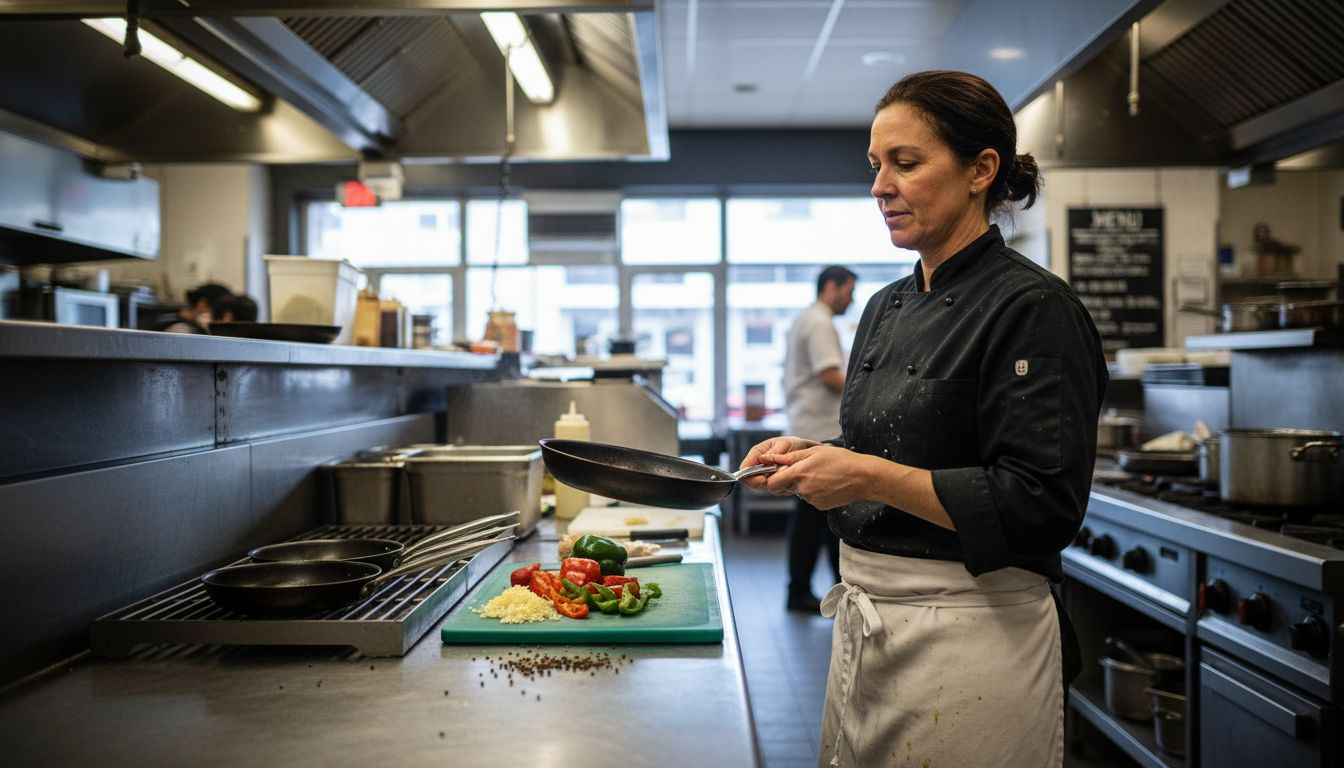
Every professional kitchen across Europe faces the constant test of equipment enduring relentless daily use without compromise. For chefs and passionate home cooks, cookware must deliver more than just style, prioritising resilience and safety for health-focused cooking. Forged cookware offers unmatched durability and structural integrity, outperforming stamped or cast alternatives for lasting culinary precision. This guide unveils what defines a true forged pan, highlighting why it remains a trusted choice for those who demand performance and peace of mind.
Table of Contents
- What Defines A Forged Pan In Cookware
- How Single-Piece Forging Enhances Performance
- Seasoning, Nonstick, And Health Advantages
- Heat Conductivity And Cooking Applications
- Comparing Forged Pans With Other Materials
- Maintenance, Care, And Common Mistakes
Key Takeaways
| Point | Details |
|---|---|
| Forged Cookware Design | Single-piece forging eliminates weak points, ensuring superior durability and heat distribution. |
| Natural Seasoning Benefits | Forged pans develop a natural nonstick surface through seasoning, enhancing performance without synthetic chemicals. |
| Heat Conductivity Advantages | Exceptional thermal characteristics allow for rapid temperature adjustments and consistent cooking results. |
| Maintenance Practices | Proper care involves hand washing, regular seasoning, and avoiding extreme temperature changes to preserve longevity. |
What Defines a Forged Pan in Cookware
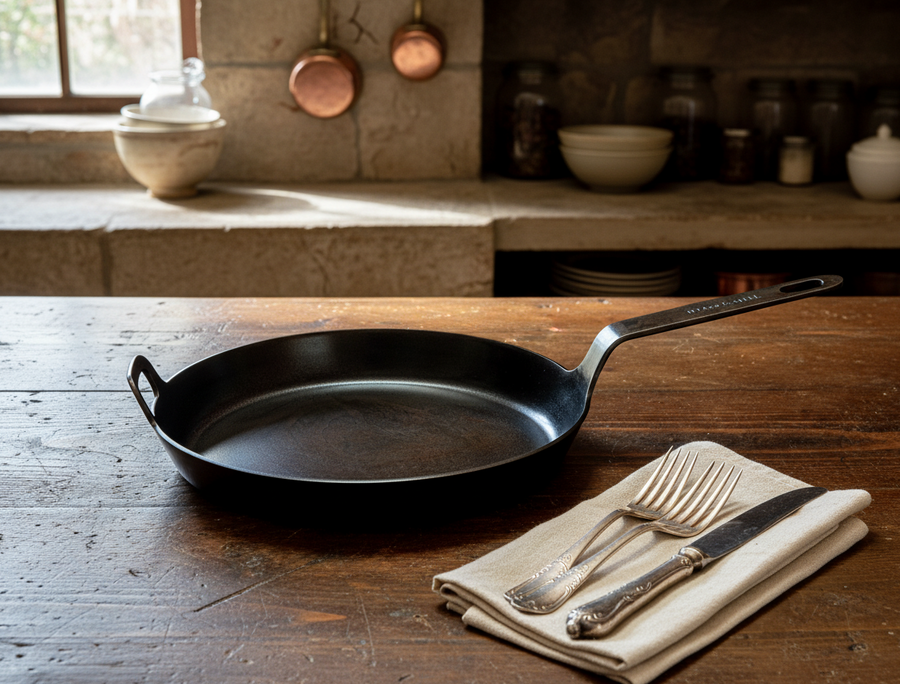
Forged cookware represents a sophisticated manufacturing technique that transforms metal into precision cookware through an intricate process of heating and reshaping. Forged cookware’s unique creation method involves applying extreme heat and substantial mechanical pressure to transform metal sheets into seamless, robust cooking instruments.
The forging process distinguishes itself through several critical characteristics:
- Single-piece construction that eliminates weak points like rivets or welds
- Enhanced molecular density achieved through intense mechanical compression
- Superior structural integrity compared to stamped or cast alternatives
- Increased resistance to warping, scratching, and corrosion
Professional chefs value forged pans primarily because the manufacturing technique fundamentally alters the metal’s internal structure. By subjecting metal to extreme temperatures and concentrated pressure, manufacturers create cookware with remarkable strength and durability. The hammering and shaping process compresses the metal’s grain structure, producing a more uniform and resilient material that can withstand intense culinary environments.
Manufacturing precision transforms raw metal sheets into cookware through several sophisticated steps. Initially, high-grade metal is heated until malleable, then strategically hammered or pressed using specialised machinery. This method ensures that each pan maintains consistent thickness and structural integrity across its entire surface, resulting in exceptional heat distribution and long-term performance.
Pro tip: When selecting forged cookware, examine the pan’s surface carefully - a true forged pan will demonstrate an incredibly smooth, uniform finish with no visible seams or inconsistencies.
How Single-Piece Forging Enhances Performance
Single-piece forging represents a pinnacle of cookware engineering, transforming metal into an extraordinary culinary instrument. Microscopic metal structure improvements enable professional chefs to experience unprecedented performance through advanced manufacturing techniques that fundamentally alter metal’s physical properties.
The single-piece forging process delivers remarkable advantages:
- Elimination of structural weak points like welds or rivets
- Enhanced molecular density through mechanical compression
- Superior heat distribution across the entire cooking surface
- Increased durability and resistance to mechanical stress
- Improved thermal conductivity compared to multi-piece cookware
Professional kitchens demand cookware that can withstand intense culinary environments, and single-piece forged pans meet this challenge through their unique manufacturing approach. By applying concentrated mechanical pressure and heat, manufacturers compress the metal’s internal grain structure, creating a more uniform and resilient material that maintains structural integrity under extreme cooking conditions.
The mechanical deformation process fundamentally transforms the cookware’s performance characteristics. Unlike stamped or cast alternatives, single-piece forged pans feature a continuous molecular structure that distributes heat more evenly and resists warping. This engineering technique ensures that professional chefs can rely on consistent cooking results, with pans that respond quickly to temperature changes and provide exceptional thermal management.
Pro tip: When evaluating a single-piece forged pan, examine its surface carefully - a high-quality forged pan will demonstrate an exceptionally smooth finish with no visible seams or irregularities.
Seasoning, Nonstick, and Health Advantages
Forged cookware offers professional chefs a remarkable combination of health-conscious performance and exceptional cooking capabilities. Culinary safety through even cooking ensures minimal formation of harmful compounds, providing chefs with a reliable and health-friendly cooking solution.
The natural seasoning process of forged pans delivers multiple advantages:
- Develops a progressively improved nonstick surface
- Eliminates need for synthetic chemical coatings
- Enhances pan’s durability and performance
- Creates a protective layer against rust
- Improves food release characteristics
Unlike traditional nonstick cookware with synthetic coatings, forged pans develop a natural seasoning layer that becomes more effective with repeated use. This organic nonstick surface forms through a careful process of polymerisation, where cooking oils bond with the pan’s metal surface, creating a smooth, protective layer that prevents food from sticking while simultaneously improving the pan’s overall performance.
Health-conscious professional kitchens appreciate forged cookware’s inherent safety features. Nonstick alternatives that avoid synthetic chemicals provide chefs with peace of mind, knowing their cooking equipment does not release potentially harmful substances during high-temperature cooking. The natural seasoning process creates a cooking surface that becomes more effective with each use, offering improved food release and easier cleaning without compromising nutritional integrity.
Pro tip: Maintain your pan’s seasoning by cooking fatty foods occasionally and avoiding harsh detergents that can strip away the protective layer.
Heat Conductivity and Cooking Applications
Professional chefs demand precision cooking tools, and forged aluminum cookware’s heat performance delivers exceptional thermal characteristics that transform culinary techniques. The dense, homogeneous structure enables rapid temperature responsiveness and unparalleled cooking control.
Key advantages of superior heat conductivity include:
- Lightning-fast temperature adjustments
- Consistent heat distribution across entire cooking surface
- Minimal temperature fluctuations during cooking
- Reduced risk of hotspots and uneven cooking
- Enhanced ability to sear, fry, and sauté with precision
Unlike traditional cookware, forged pans create a remarkable thermal environment that responds instantaneously to temperature changes. This means professional chefs can execute delicate cooking techniques with unprecedented accuracy, whether crafting a perfect French omelette or achieving a restaurant-quality sear on premium cuts of meat.
Cooking applications span a remarkable range of culinary disciplines. From high-heat searing to gentle sauce reduction, essential cookware materials like forged aluminum demonstrate extraordinary versatility. The pan’s ability to distribute heat evenly ensures that every ingredient receives consistent thermal energy, transforming complex cooking methods into predictable, repeatable processes.
For a clearer overview, here are key factors influencing forged pan performance:
| Factor | Impact on Cooking | Chef’s Benefit |
|---|---|---|
| Single-Piece Design | Avoids weak spots | Consistent long-term use |
| Dense Metal Structure | Rapid heat response | Precise temperature control |
| Natural Seasoning | Improved food release | Healthier cooking, easy clean |
| Seamless Surface | Even thermal distribution | Uniform results, no hotspots |
Pro tip: Preheat your forged pan gradually and test its temperature by sprinkling water droplets - they should dance and evaporate quickly, indicating the perfect cooking surface.
Comparing Forged Pans With Other Materials
Professional cookware selection demands a nuanced understanding of material performance. Forged aluminum’s superior mechanical properties distinguish it from traditional manufacturing techniques, offering chefs a remarkable cooking instrument with unparalleled durability and thermal characteristics.
Key comparative advantages of forged pans include:
- Significantly higher structural strength
- Enhanced resistance to mechanical deformation
- More uniform molecular grain structure
- Superior heat distribution capabilities
- Longer operational lifespan compared to cast alternatives
Unlike cast iron, stainless steel, or pressed aluminum cookware, forged pans demonstrate exceptional resilience. The manufacturing process fundamentally transforms the metal’s internal structure, creating a seamless, robust cooking surface that withstands intense professional kitchen environments. Where traditional materials might warp or develop hot spots, forged pans maintain consistent performance across countless cooking cycles.
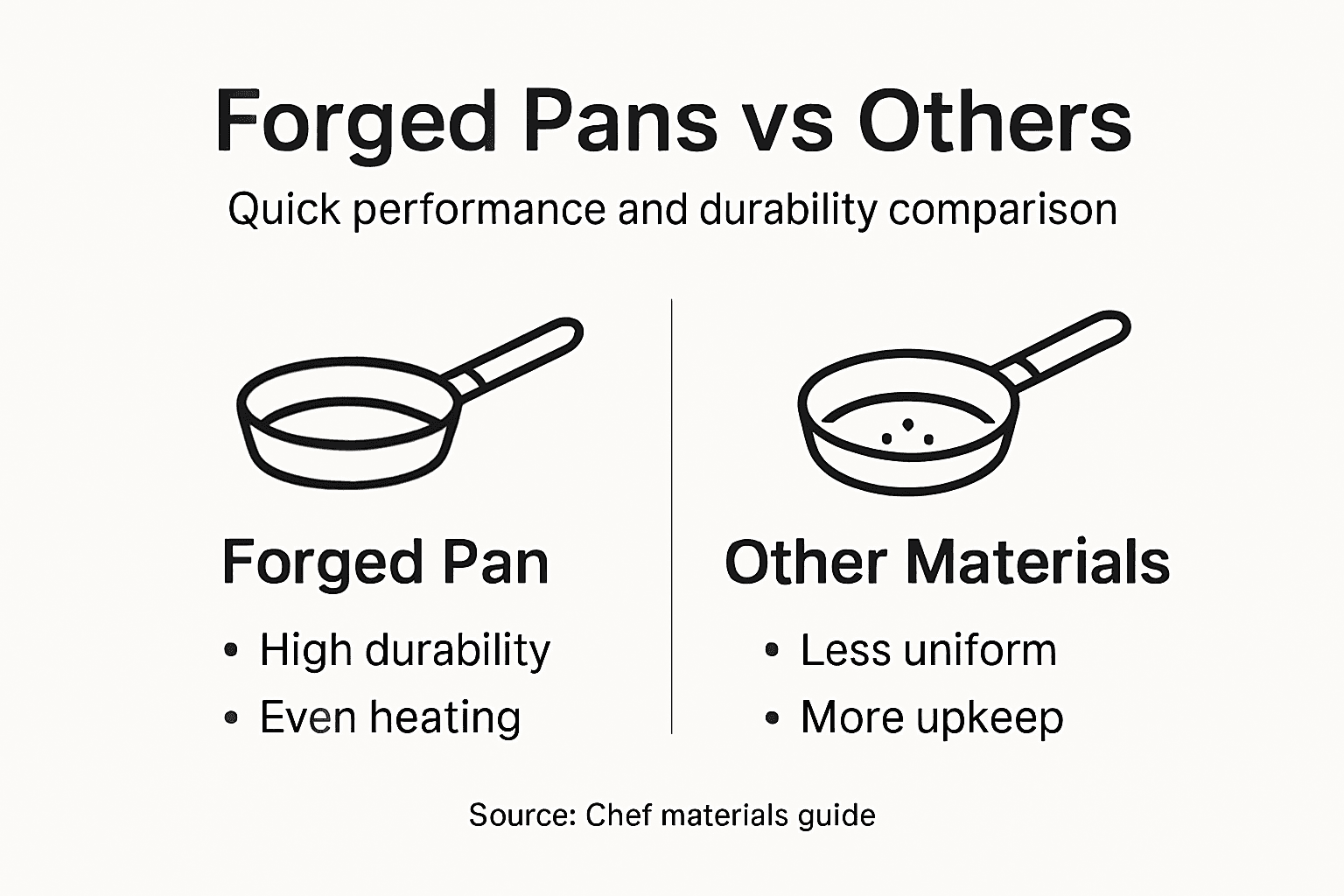
Cookware material comparisons reveal that forged pans excel in critical performance metrics. Their dense, compressed molecular structure provides advantages traditional manufacturing cannot replicate, offering professional chefs a tool that combines durability, thermal efficiency, and precise cooking control in a single, elegant design.
Here’s how forged pans compare with other common cookware materials:
| Material Type | Heat Conductivity | Durability | Maintenance Required |
|---|---|---|---|
| Forged Aluminium | Excellent, very even | Highly resistant | Occasional seasoning, mild cleaning |
| Cast Iron | Good but uneven | Extremely robust | Frequent seasoning, careful drying |
| Stainless Steel | Moderate, needs layer | Very durable | Little maintenance, avoid abrasives |
| Pressed Aluminium | Moderate, can warp | Less durable | Minimal care, prone to damage |
Pro tip: When evaluating cookware, assess the pan’s weight, surface smoothness, and heat responsiveness - these are telltale indicators of superior forged construction.
Maintenance, Care, and Common Mistakes
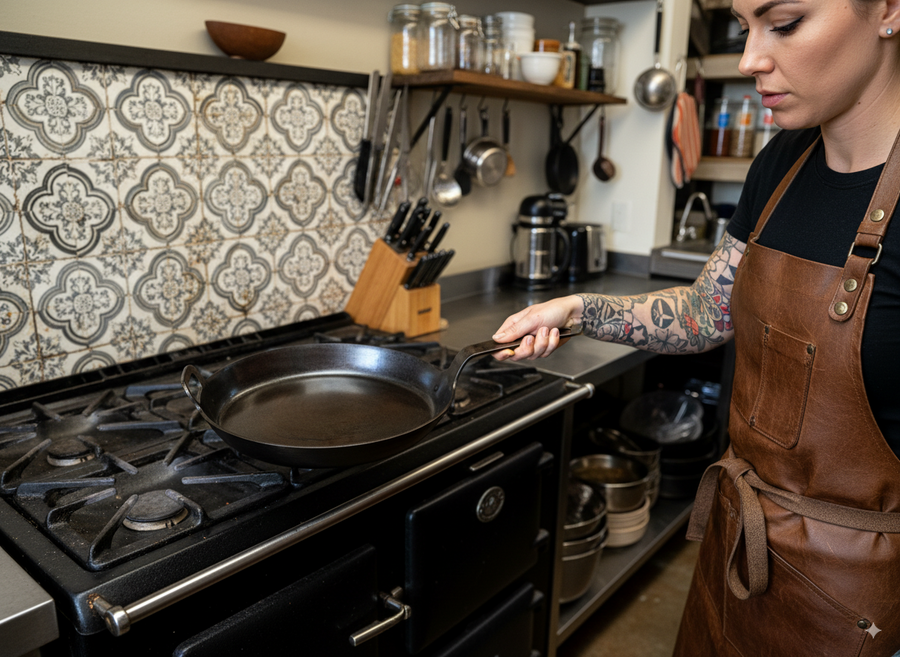
Professional chefs understand that cookware maintenance is an art form in itself. Forged cookware maintenance techniques require precision and understanding to preserve the pan’s exceptional performance and longevity.
Critical maintenance practices include:
- Hand washing with mild, non-abrasive detergents
- Immediate thorough drying after cleaning
- Avoiding sudden temperature changes
- Regular seasoning for uncoated surfaces
- Storing in dry, temperature-controlled environments
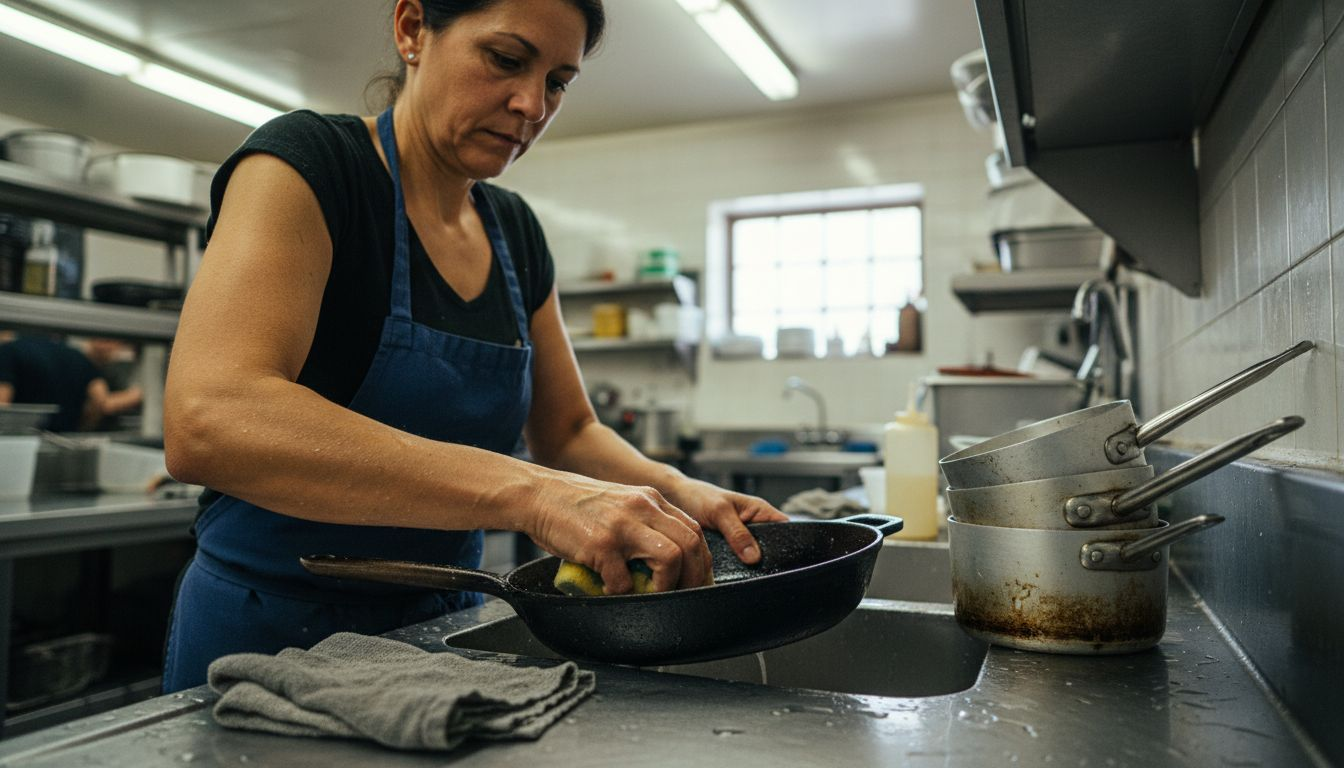
Common mistakes can dramatically reduce a forged pan’s performance and lifespan. Professional kitchens must vigilantly avoid practices like using metal utensils, subjecting pans to extreme thermal shock, or employing harsh cleaning materials that can compromise the pan’s delicate surface structure. Unlike other cookware, forged pans demand a nuanced approach to maintenance that respects their sophisticated manufacturing.
Carbon steel maintenance principles emphasise the importance of understanding each pan’s unique characteristics. Proper care involves recognising that these precision instruments are living tools that improve with thoughtful handling, developing a natural patina that enhances cooking performance with each careful use.
Pro tip: Always store your forged pan in a dry environment and apply a light coat of oil after cleaning to maintain its protective seasoning layer.
Elevate Your Culinary Craft with Forged Carbon Steel Cookware
For professional chefs seeking unparalleled durability and performance, the advantages of forged pans are clear. Forged carbon steel cookware offers a seamless design that eliminates weak spots such as rivets or welds. This single-piece construction ensures exceptional heat distribution, rapid responsiveness, and a naturally developing nonstick surface that enhances with every use. If you aim to master your craft with heirloom-quality, health-conscious cookware, our Carbon Steel Collection | Brass&Steel is crafted precisely for your needs.
Experience the premium quality forged craftsmanship rooted in engineering precision from Jarocin, Poland, and designed in Italy. Act now to enjoy cookware that combines minimalist design with high heat performance. Explore our full range of professional carbon steel pans and start transforming your cooking techniques today at Brass & Steel. Don’t miss our New arrivals – Brass & Steel for the latest innovations tailored to serious cooks like you.
Frequently Asked Questions
What are the main benefits of using forged pans for cooking?
Forged pans offer superior heat distribution, exceptional durability, and a seamless single-piece construction that eliminates weak points. This results in even cooking, quick temperature adjustments, and a longer lifespan compared to other cookware types.
How do forged pans compare to cast iron cookware?
Unlike cast iron, forged pans have a more uniform molecular structure, resulting in better heat distribution and less risk of warping. They also typically require less maintenance and develop a natural seasoning that enhances their nonstick properties, making them easier to use.
What should I consider when maintaining forged cookware?
To maintain forged cookware, it’s essential to hand wash with mild detergents, dry immediately, avoid sudden temperature changes, and regularly season the surface for optimal performance and longevity.
Can forged pans handle high-heat cooking methods?
Yes, forged pans are designed to withstand high-heat cooking methods such as searing, frying, and sautéing. Their robust construction and excellent thermal conductivity ensure that they perform efficiently in intense culinary environments.
Recommended
- What is Forged Cookware? Understanding its Benefits and Use – Brass & Steel
- Understanding Forged Cookware Explained for Chefs & Enthusiasts – Brass & Steel
- Forged Cookware Benefits: Complete Guide for Cooks – Brass & Steel
- 10 Essential Items for Your Professional Kitchen Cookware List – Brass & Steel