How to Choose Carbon Steel Pan for Serious Cooks
More british home cooks are embracing carbon steel pans for their lighter weight and trusted results in busy kitchens. With over 60 percent of cookware buyers now considering pan construction and materials before purchase, choosing the right pan can revolutionise your daily meal preparation. This guide will help you navigate size, weight, finish, and balance so you can confidently find the ideal carbon steel pan for everything from induction hobs to classic stovetops.
Table of Contents
- Step 1: Identify Your Ideal Pan Size And Weight
- Step 2: Compare Single-Piece Construction Benefits
- Step 3: Assess Natural Nonstick And Finish Quality
- Step 4: Check Compatibility With Cooking Surfaces
- Step 5: Test Pan Balance And Handling
Quick Summary
| Essential Insight | Detailed Explanation |
|---|---|
| 1. Choose the Right Size | Opt for a 27 cm to 30 cm pan for cooking meals for 2 to 4 people effectively. |
| 2. Prefer Single-Piece Pans | Single-piece construction offers durability and better heat distribution for precise cooking. |
| 3. Maintain Nonstick Surface | Season your pan to develop a natural nonstick finish, avoiding soap to preserve it. |
| 4. Ensure Cooking Surface Compatibility | Carbon steel pans fit all cooking surfaces; check magnetic properties for induction. |
| 5. Test Pan Balance and Handling | Handle the pan to ensure comfortable weight and balance before complex cooking tasks. |
Step 1: Identify your ideal pan size and weight
Selecting the right carbon steel pan requires understanding how size and weight impact your cooking performance. As Consumer Reports explains, carbon steel pans are lighter than cast iron while offering similar exceptional cooking benefits, making them versatile for various cooking styles.
When choosing your pan, consider your typical meal preparation. For home cooks preparing meals for 2 to 4 people, a 27 cm to 30 cm pan provides excellent flexibility. These mid sized pans allow sufficient cooking surface without becoming unwieldy. The weight matters significantly too: a pan around 2 to 3 kilogrammes provides enough substance for proper heat distribution without causing strain during handling.
Pro tip: Always leave some space around your pan in the cooking area. Much like roasting pans that require 1 to 2 inches of air space, your carbon steel pan needs room for proper heat circulation. This ensures even cooking and prevents potential warping or uneven heating. Remember that your pan will become an extension of your culinary skills, so choose a size that feels comfortable and matches your typical cooking requirements.
Ready to learn about pan materials and construction? Our guide on choosing between carbon steel and cast iron pans will help you make an informed decision.
Step 2: Compare single-piece construction benefits
Understanding the advantages of single-piece construction can dramatically improve your cooking experience. As Consumer Reports highlights, carbon steel pans crafted in a single piece offer remarkable durability and versatility across different cooking environments.
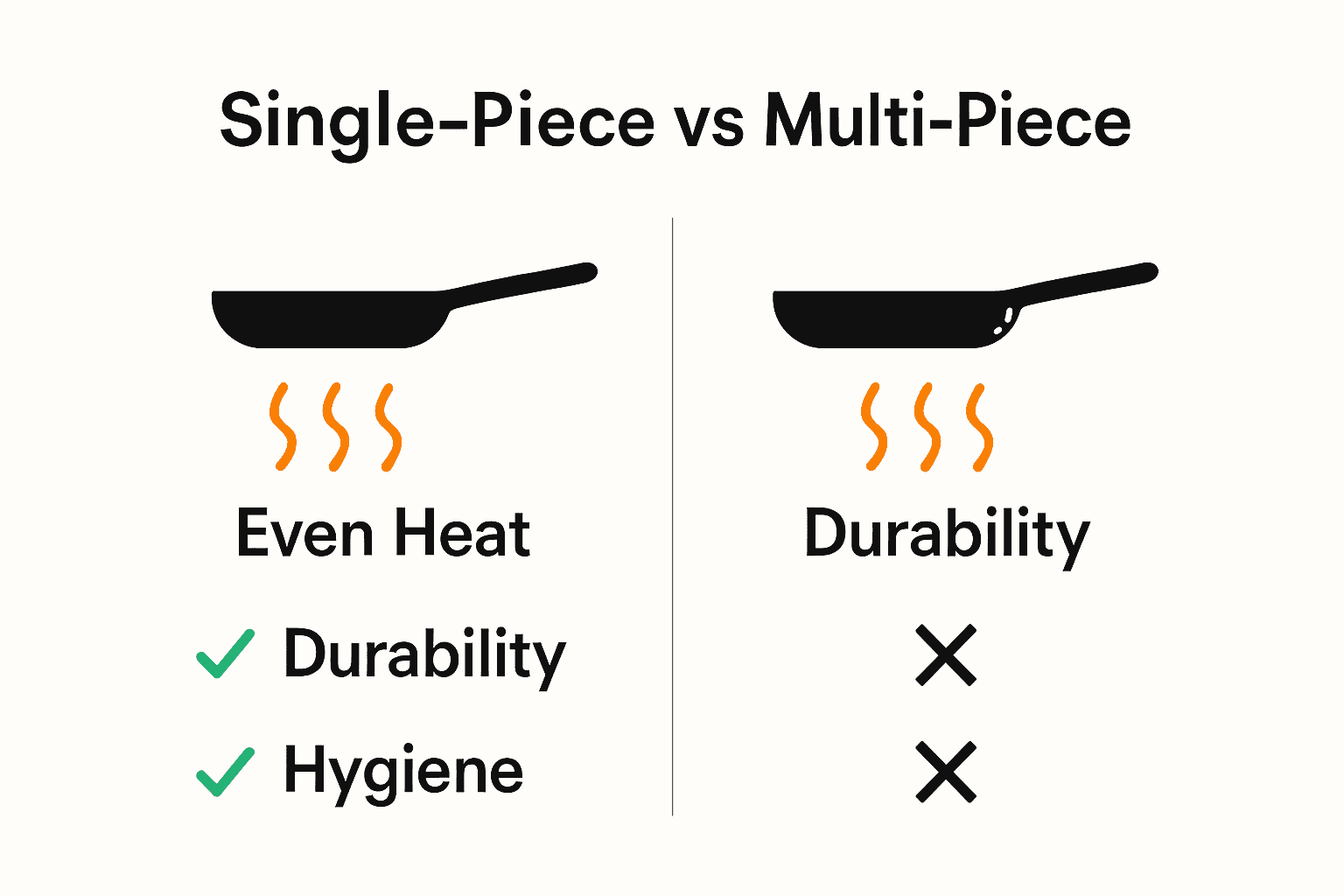
Single-piece construction eliminates weak points like rivets and welds that can trap food particles and compromise pan performance. This seamless design means more hygienic cooking surfaces and easier cleaning. Splendid Table emphasises that heavy single-piece constructions ensure superior durability and safety, reducing potential accidents while providing consistent heat distribution.
The benefits extend beyond just construction. A single-piece pan transfers heat more evenly, responds faster to temperature changes, and maintains structural integrity longer than multi-part cookware. This means more precise cooking control and a pan that will potentially last generations.
 Professional chefs particularly appreciate how these pans can transition seamlessly from stovetop to oven without compromising performance.
Ready to explore more about cookware design? Our guide to cooking pans by shape and usage will provide additional insights into selecting the perfect cookware.
Step 3: Assess natural nonstick and finish quality
Consumer Reports reveals that carbon steel pans develop an incredible natural nonstick surface through proper seasoning, transforming your cooking experience over time. This unique characteristic means your pan actually improves with use, unlike traditional nonstick cookware that degrades.
The key to achieving a superior nonstick finish lies in consistent maintenance and understanding how seasoning works. When you cook with oils at high temperatures, a polymer layer gradually builds up on the pan surface, creating a naturally slick cooking area. As Splendid Table suggests, choosing a pan with a nonreactive metal interior prevents discolouration and ensures your cookware maintains its quality through repeated use.
Pro tip: Avoid using soap when cleaning your seasoned pan, as this can strip away the protective layer you have carefully developed. Instead, use hot water and a soft cloth or brush to maintain the nonstick surface. With proper care, your carbon steel pan will become more nonstick and more reliable with each meal you prepare.
Ready to master the art of pan seasoning? Check out our ultimate carbon steel pan seasoning guide for perfect results every time.
Step 4: Check compatibility with cooking surfaces
Consumer Reports confirms that carbon steel pans offer exceptional versatility across cooking surfaces. These remarkable pans work brilliantly on gas, electric, ceramic, and induction cooktops, making them an ideal choice for home cooks and professional chefs who value adaptable cookware.
When assessing compatibility, pay close attention to your pan’s magnetic properties. Induction cooktops require cookware with magnetic bases that can conduct heat efficiently. Carbon steel passes this test perfectly, creating a seamless connection with induction technology. Like Splendid Table suggests about proper cooking equipment sizing, ensuring your pan fits well on your chosen cooking surface is crucial for optimal performance.
Pro tip: Always start cooking on a moderate heat setting when using your carbon steel pan on an induction cooktop. This approach helps prevent potential warping and ensures even heat distribution. Remember that your pan’s thickness and construction will significantly impact its heat conductivity and overall cooking performance.
Want to dive deeper into carbon steel and induction cooking? Our guide on using carbon steel pans on induction cooktops offers comprehensive insights for perfect results.
Step 5: Test pan balance and handling
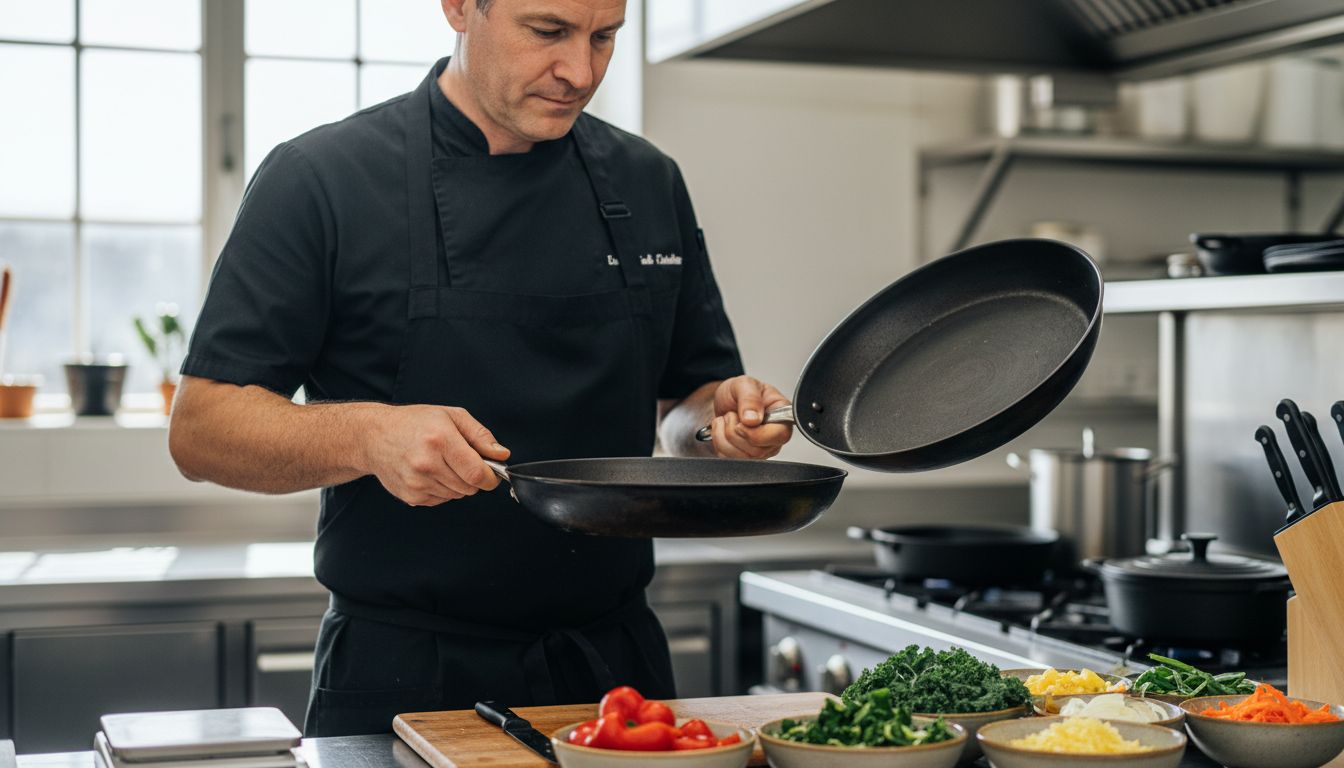
Consumer Reports highlights that carbon steel pans are significantly lighter than cast iron, offering remarkable manoeuvrability without compromising cooking performance. This weight advantage means you can handle your pan with greater ease and confidence during complex cooking techniques.
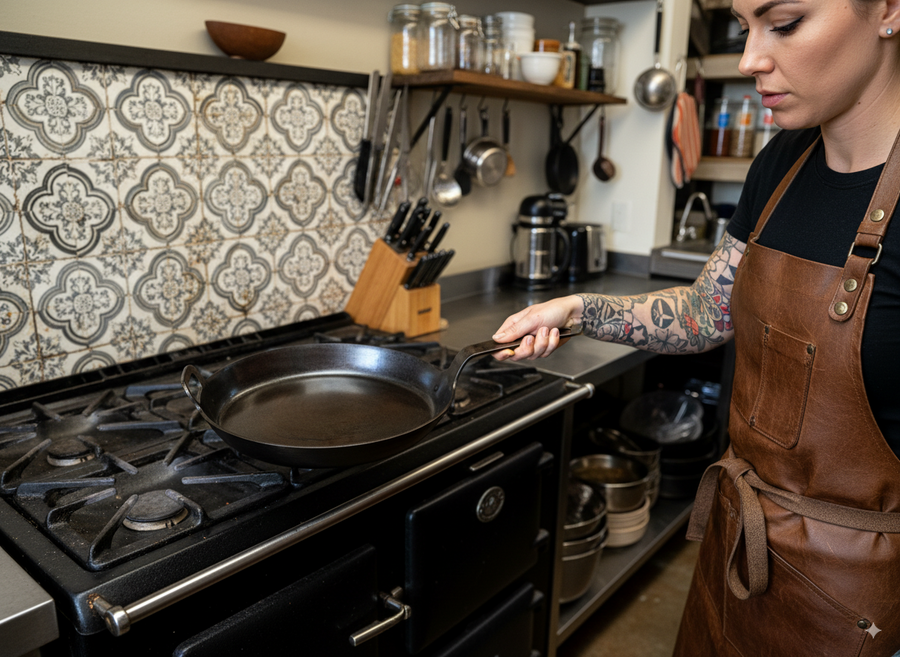
When testing balance, pay close attention to the handle design and weight distribution. As Splendid Table recommends, look for handles that provide a secure grip and enough clearance for protection. Lift the pan and assess how it feels in your hand consider whether the weight feels comfortable and balanced when moving from stovetop to oven or transferring between cooking surfaces.
Pro tip: Always grip the handle firmly near its base to maximise control and minimise strain. Practice picking up and manoeuvring the pan while empty to get a feel for its balance before attempting more complex cooking techniques. Your comfort and control are paramount in creating exceptional culinary results.
Curious about maintaining your new carbon steel companion? Our guide on maintaining a carbon steel pan will help you keep your cookware in pristine condition.
Discover the Perfect Carbon Steel Pan for Serious Cooks
Choosing the right carbon steel pan means balancing size, weight, construction, and seasoning qualities for top cooking performance. If you are seeking durable, single-piece forged pans that develop a natural nonstick patina and work seamlessly on all cooktops including induction you have come to the right place. Brass & Steel specialises in crafting heirloom-quality carbon steel cookware designed for serious cooks who demand precision and lasting performance.
Explore our Carbon Steel Collection | Brass&Steel to find your ideal 27 cm or 30 cm sauté pan with natural nonstick surfaces and PTFE-free designs. Experience cookware that improves with every use while delivering professional-grade heat retention and responsiveness. Act now to elevate your culinary skills with cookware engineered in Jarocin, Poland with roots in Italian design. Visit us at https://brass-steel.com and start your journey towards exceptional cooking every day.
Frequently Asked Questions
How do I choose the right size carbon steel pan?
Selecting the right size carbon steel pan involves considering the number of people you typically cook for. For meals serving 2 to 4 people, a pan with a diameter of 27 cm to 30 cm is ideal, as it provides adequate cooking surface while remaining manageable in size.
What are the advantages of a single-piece carbon steel pan?
A single-piece carbon steel pan offers enhanced durability and uniform heat distribution. Choose a pan without rivets or welds for easier cleaning and greater longevity, ensuring it can deliver consistent cooking results over time.
How can I achieve a natural nonstick surface on my carbon steel pan?
To develop a natural nonstick surface, regularly season your carbon steel pan by applying oil and heating it. As you cook, a polymer layer builds up on the surface, leading to improved nonstick properties; maintain this by avoiding soap during cleaning.
Is a carbon steel pan compatible with induction cooktops?
Yes, carbon steel pans work on induction cooktops, provided they have magnetic bases that can effectively conduct heat. Start cooking on a moderate heat setting to ensure even heat distribution and prevent warping.
How do I assess the balance and handling of a carbon steel pan?
To test balance and handling, lift the pan and evaluate its weight distribution while holding the handle. Ensure the handle feels secure and comfortable in your grip, as this will enhance control during cooking and reduce strain during use.
What maintenance is required for a carbon steel pan?
Maintain your carbon steel pan by avoiding soap and using hot water with a soft cloth or brush for cleaning. Regular seasoning will enhance its nonstick properties and prevent rust, helping to keep your cookware in excellent condition.