Best non stick pan material: why carbon steel excels

TL;DR:
- Carbon steel pans are highly durable, improving with regular use and lasting for decades.
- They develop a natural, nonstick patina through oil seasoning, eliminating coatings that degrade.
- Carbon steel is a safe, versatile, and long-lasting choice suitable for all European stovetops.
Most home cooks assume that Teflon or ceramic nonstick pans are the obvious choice. They’re convenient, widely available, and seem to do the job. Yet professional chefs and serious culinary enthusiasts across Europe are increasingly reaching for something older, tougher, and far more rewarding: the carbon steel pan. Carbon steel has been a staple in professional kitchens for generations, and it’s now gaining well-deserved favour in home kitchens too. This guide cuts through the noise, compares the most popular nonstick pan materials side by side, and explains exactly why carbon steel stands apart from the rest.
Table of Contents
- What makes a non stick pan material ‘best’?
- Carbon steel vs PTFE and ceramic: performance and durability compared
- How natural nonstick develops on carbon steel
- Safety, maintenance, and everyday advantages for European kitchens
- The real reason carbon steel wins for passionate home cooks
- Explore premium carbon steel pans for your kitchen
- Frequently asked questions
Key Takeaways
| Point | Details |
|---|---|
| Natural nonstick wins | Carbon steel pans develop a durable nonstick surface through seasoning instead of a chemical coating. |
| Durability over coatings | Carbon steel lasts for decades while ceramic and PTFE coatings degrade after just a few years. |
| Chef-approved benefits | Professional kitchens favour carbon steel for its heat tolerance and responsive cooking. |
| Safe for your food | No synthetic chemicals like PFAS are used in carbon steel, making it a safe choice with proper care. |
What makes a non stick pan material ‘best’?
With the importance of choosing the right nonstick pan clear, let’s define what ‘best’ really means in your kitchen. The word ‘nonstick’ is thrown around loosely in cookware marketing, but not all nonstick surfaces are created equal. For a material to genuinely earn that label, it needs to perform across several dimensions that matter in real, everyday cooking.
Here are the core characteristics that separate a truly great nonstick pan material from a merely adequate one:
- Nonstick performance: Food should release cleanly, whether you’re frying eggs on a Sunday morning or searing a chicken breast at high heat.
- Durability: The surface should hold up over years of regular use, not degrade after a few months.
- Heat handling: A good pan must cope with a wide range of temperatures, from gentle sautéing to oven finishing.
- Safety: The material should not release harmful chemicals under normal cooking conditions.
- Maintenance: Upkeep should be manageable for a home cook, not require specialist equipment or constant re-coating.
When you apply these criteria honestly, the picture shifts. Carbon steel pan essentials reveal a material that performs exceptionally across all five categories, particularly for cooks who want a pan that genuinely improves with use.
“Carbon steel is the best durable nonstick alternative for home cooks and culinary enthusiasts seeking high-quality cookware.”
Think about what this means in practice. A pan that gets better the more you cook with it is a fundamentally different proposition from one that slowly loses its nonstick ability every time you wash it. For eggs, delicate fish, or caramelised vegetables, the surface you cook on matters enormously. The right material gives you confidence at the hob, not anxiety about scratching a fragile coating.
Setting these benchmarks also helps you cut through clever marketing. Many pans labelled ‘ceramic’ or ‘stone-coated’ are simply aluminium pans with a thin sprayed-on layer. That layer may perform well initially, but it tells you nothing about longevity or safety under sustained heat. Knowing what to look for puts you in control.
Carbon steel vs PTFE and ceramic: performance and durability compared
Now that the ideal features are defined, it’s time for a close look at how leading materials stack up. The three most common nonstick pan materials on the European market are carbon steel, PTFE (commonly known as Teflon), and ceramic. Each has genuine strengths, but their long-term performance tells very different stories.
| Feature | Carbon steel | PTFE (Teflon) | Ceramic nonstick |
|---|---|---|---|
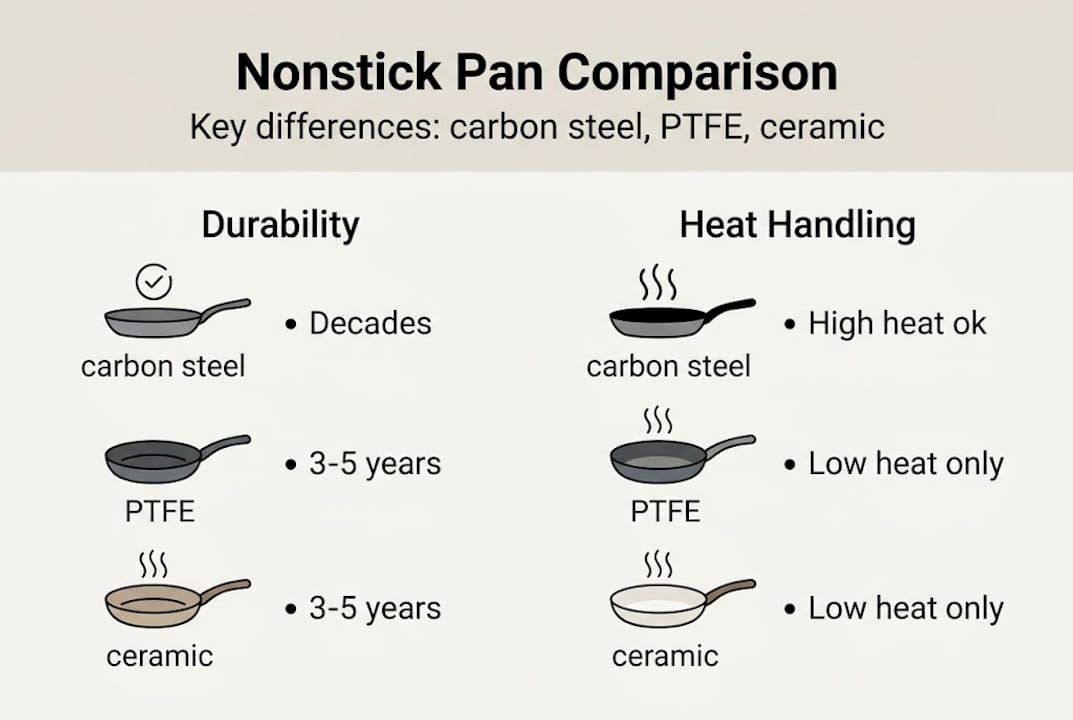
| Nonstick longevity | Decades, improves with use | 3 to 5 years | 1 to 3 years |
| Heat tolerance | Up to 1,200°F | Medium heat only | Medium heat only |
| Chemical coatings | None | PTFE coating | Ceramic spray layer |
| Induction compatible | Yes | Depends on base | Depends on base |
| Improves over time | Yes | No | No |
The numbers here are striking. Ceramic coatings last 1 to 3 years, PTFE coatings last 3 to 5 years, while carbon steel can last decades and actually improves with each use. That is not a marginal difference. It is the difference between a pan you replace every few years and one you pass down to the next generation.
Understanding how carbon steel pans are made helps explain this durability. There is no coating to chip, flake, or degrade. The pan itself is the cooking surface, and it grows more capable as a polymerised oil layer builds up over time. PTFE and ceramic pans, by contrast, start at their best and decline from day one.
For high-heat cooking, the gap widens further. PTFE coatings begin to break down at temperatures above 260°C, which rules them out for serious searing. Ceramic fares slightly better but still has limits. Carbon steel, meanwhile, handles the full range of cooking tasks, from a gentle butter sauce to a screaming-hot steak sear, without compromise. You can also read an aluminium vs ceramic comparison if you want to understand how other common materials compare.
Pro Tip: For the first few uses on a new carbon steel pan, cook fatty foods like bacon or fried eggs. These help build the seasoning layer quickly and naturally, giving you a noticeably more nonstick surface within a week.
How natural nonstick develops on carbon steel
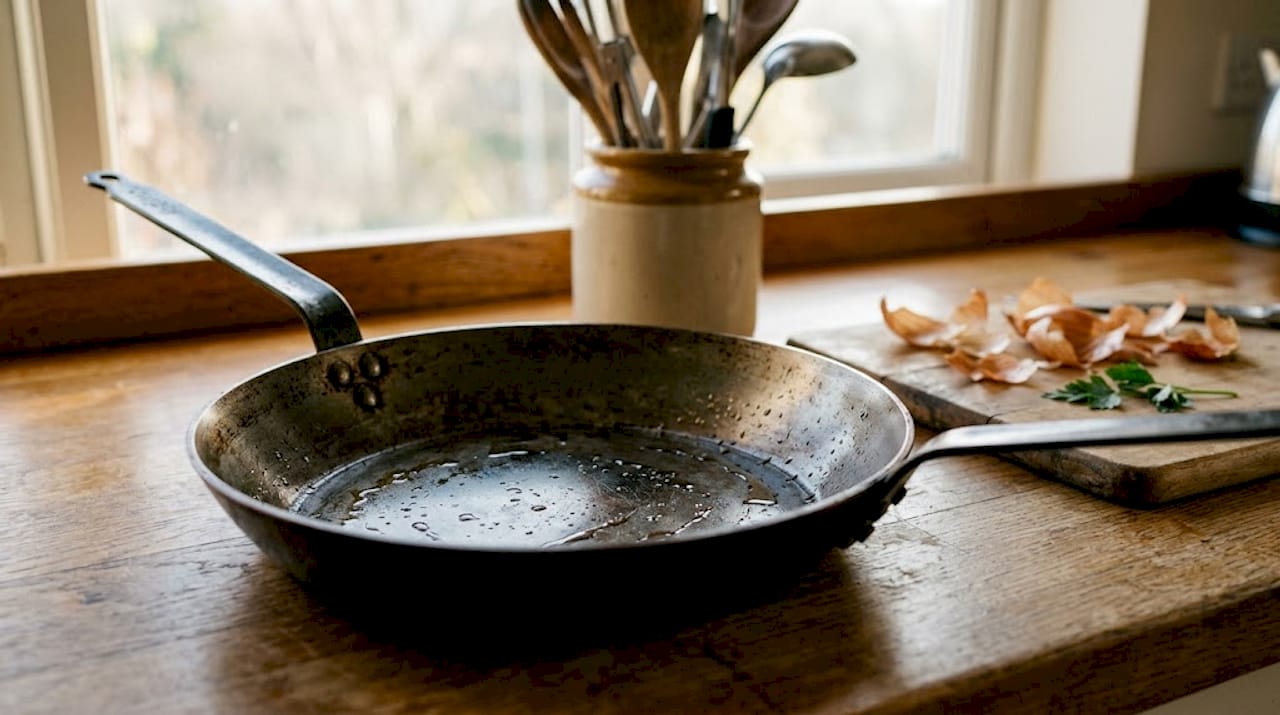
With the strengths of carbon steel established, it’s essential to understand how its nonstick magic develops. The process is called seasoning, and it is simpler than most people expect. When you apply a thin layer of oil to a carbon steel pan and heat it, the oil undergoes a chemical change called polymerisation. The oil molecules bond together and adhere to the steel surface, forming a hard, slick layer called a patina.
This is not a coating applied in a factory. It is a surface you build yourself, through cooking. And through oil polymerisation, carbon steel achieves genuine nonstick performance within 5 to 6 uses. Here is how to build that base at home:
- Wash the new pan with warm, soapy water and dry it completely.
- Preheat your oven to 250°C.
- Place the pan in the oven for 10 minutes to ensure it is fully dry.
- Apply a very thin coat of high-smoke-point oil such as grapeseed, avocado, or sunflower oil.
- Wipe off the excess so the pan looks almost dry.
- Bake the pan upside down for 30 minutes.
- Repeat this process two to three times to build a strong base layer.
For a detailed walkthrough, our guide on seasoning a carbon steel pan covers every step with practical tips. You can also follow a seasoning checklist guide to make sure nothing is missed.
| Stage | Typical timeline | What to expect |
|---|---|---|
| After first seasoning | Day 1 | Surface darkens slightly, some sticking normal |
| After 3 to 5 uses | Week 1 to 2 | Noticeably more release, patina forming |
| Established patina | 1 to 2 months | Reliably nonstick for most foods |
| Mature seasoning | 6 months+ | Smooth, dark, genuinely nonstick surface |
If the seasoning ever looks dull or sticky, do not panic. Our guide on repairing pan seasoning explains how to restore it quickly.
Pro Tip: Always use the thinnest possible oil layer when seasoning. Too much oil creates a sticky, gummy surface rather than a hard patina. If the pan feels tacky after baking, you have used too much.
Safety, maintenance, and everyday advantages for European kitchens
With your pan seasoned, it’s important to know how safety, upkeep, and practical benefits play out daily. One of the most compelling reasons European home cooks are switching to carbon steel is what it doesn’t contain. Unlike PTFE-coated pans, carbon steel has no synthetic chemicals or PFAS, making it a genuinely safe choice for families when properly maintained.
Concern about PFAS (per- and polyfluoroalkyl substances) in cookware coatings has grown significantly across Europe in recent years. Regulatory bodies are tightening restrictions, and many cooks are proactively choosing non-toxic cookware choices before legislation forces the issue. Carbon steel sidesteps this concern entirely.
“Carbon steel contains no synthetic chemicals or PFAS and is a safe cookware choice, though it does require consistent maintenance including seasoning and avoiding acidic foods in the early stages.”
Here is what routine maintenance looks like in practice:
- Rinse with warm water after cooking. Avoid soaking.
- Dry the pan immediately, either with a cloth or briefly on the hob.
- Apply a very light coat of oil after each wash.
- Cook fatty foods regularly to strengthen the seasoning.
- Avoid cooking highly acidic foods such as tomatoes or citrus until the seasoning is well established.
For European kitchens specifically, carbon steel offers a practical advantage that often goes unmentioned. It is fully compatible with induction hobs, which are now standard in many modern European homes. How to use carbon steel pans on induction is straightforward: start on moderate power when the pan is cold, and increase gradually. It also works perfectly on gas, electric, and ceramic hobs, making it one of the most versatile pieces of cookware you can own. Research into
The real reason carbon steel wins for passionate home cooks
Having explored the science and practicality, here is an honest perspective that rarely gets discussed. The cookware industry sells convenience above all else. Nonstick out of the box, no effort required, ready to use immediately. And for many people, that is genuinely fine. But for cooks who care, who find satisfaction in the process as much as the result, that model has a hidden cost.
When you buy a PTFE or ceramic pan, you are renting a surface. You use it until it degrades, then replace it. There is no relationship between you and the pan. Carbon steel is different. The seasoning you build is yours. It reflects how you cook, what you cook, and how carefully you maintain it. That is not a burden. It is a form of mastery.
We have seen cooks who were initially frustrated by the learning curve become genuinely attached to their carbon steel pan within a month. The pan that was once a challenge becomes the one they reach for every single day. And unlike carbon steel vs iron cookware debates, which often focus on weight and heat-up time, the real advantage of carbon steel is that it rewards engagement. Those willing to invest a small amount of care end up with the most satisfying cookware experience available at any price point.
Explore premium carbon steel pans for your kitchen
If you feel inspired to start your own carbon steel journey, here is how to take the next step. At Brass & Steel, we craft our pans from a single piece of carbon steel, forged without rivets or welds, designed to last a lifetime in your kitchen.
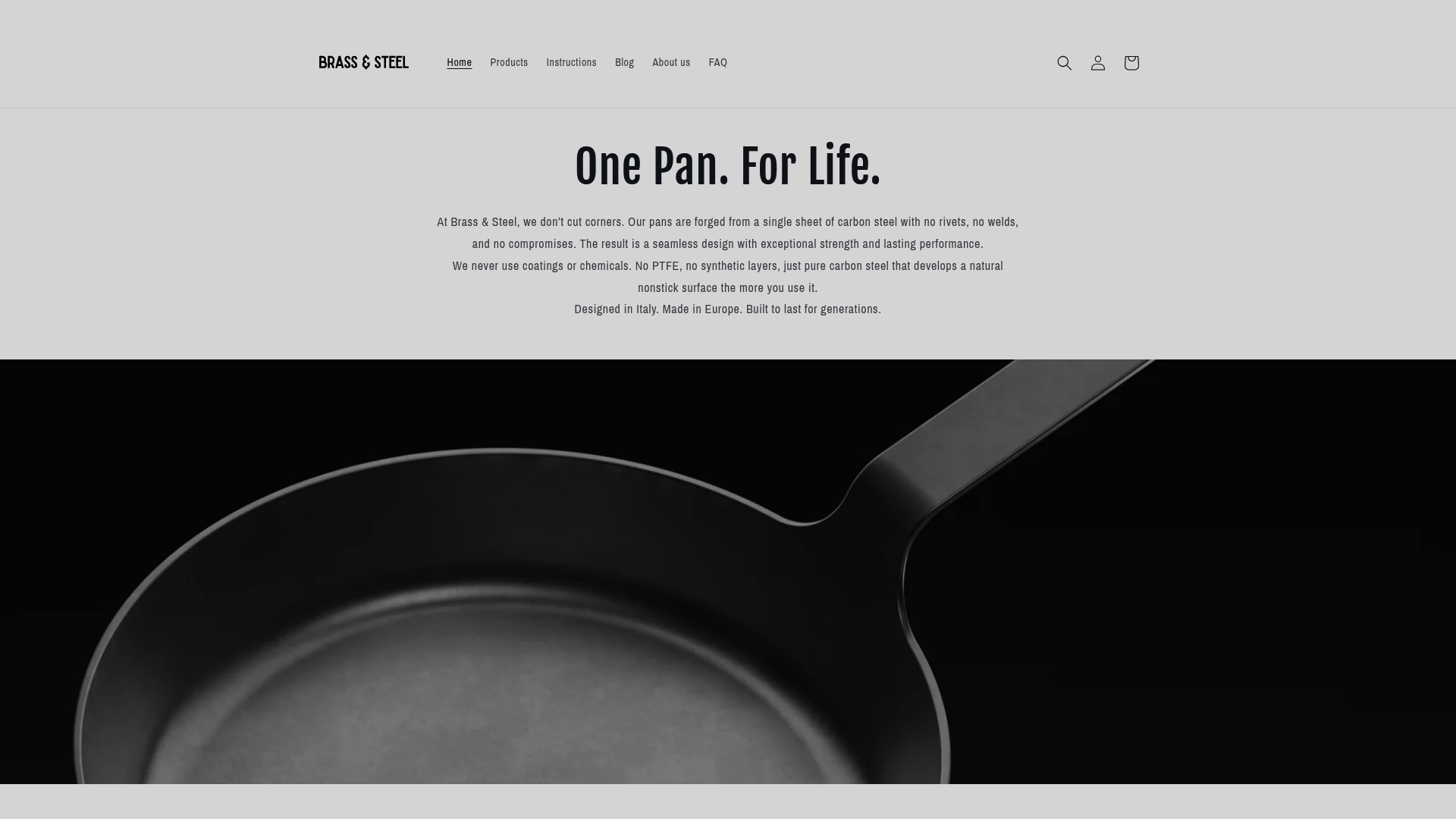
Our premium carbon steel pans are available in 27 cm and 30 cm sizes, priced at €99 and €119 respectively, and are compatible with every hob type including induction. Whether you are cooking for two or feeding a family, there is a size that fits your kitchen. Before your first cook, follow our first use steps to season your pan correctly and get the best possible start. The right beginning makes all the difference.
Frequently asked questions
Is carbon steel truly non stick?
Carbon steel becomes naturally nonstick after seasoning and regular use, rivalling traditional coated pans. The nonstick surface develops through oil polymerisation, building a durable patina that improves over time rather than degrading.
How long does a carbon steel pan last compared to ceramic or Teflon?
Properly cared for, carbon steel can last decades, while ceramic may last 1 to 3 years and Teflon 3 to 5 years. Unlike coated pans, carbon steel improves with each use rather than declining from day one.
Are carbon steel pans safe for all types of stovetops in Europe?
Yes, most modern carbon steel pans are induction-compatible as well as suitable for gas and electric stoves. Research into cookware stovetop compatibility confirms carbon steel works reliably across all common European hob types.
Do carbon steel pans contain any synthetic chemicals or PFAS?
No, carbon steel is entirely free from synthetic nonstick chemicals and PFAS, making it a safe choice when properly maintained. Unlike coated alternatives, there is no chemical breakdown risk at high temperatures.