Carbon Steel vs Iron: What Matters for Cookware
Every british kitchen holds a story shaped by the materials behind its cookware. With more than 60 percent of chefs preferring carbon steel or iron for daily tasks, the choice between these metals carries real weight. Understanding how carbon steel’s agility compares to iron’s durability can help you pick cookware that elevates every meal, blending British culinary heritage with modern cooking performance.
Table of Contents
- Defining Carbon Steel and Iron Materials
- Key Differences in Alloy Composition
- Performance in Cookware: Heat, Weight, Safety
- Seasoning and Longevity in Daily Use
- Choosing Between Carbon Steel and Iron
Key Takeaways
| Point | Details |
|---|---|
| Material Composition | Carbon Steel contains up to 2.5% carbon, making it lighter and more malleable than Cast Iron, which has a carbon content of 2% to 3.5%. |
| Heat Dynamics | Cast Iron heats slowly but retains heat well, whereas Carbon Steel offers rapid heating and precise temperature control suited for quick cooking techniques. |
| Seasoning Importance | Both materials require seasoning for optimal non-stick performance and durability, with Carbon Steel developing its protective layer more quickly than Cast Iron. |
| Selection Criteria | Choosing between Carbon Steel and Cast Iron depends on cooking style and requirements, with Carbon Steel favouring quick cooking and Cast Iron excelling in slow cooking. |
Defining Carbon Steel and Iron Materials
Carbon steel and iron are foundational materials in cookware manufacturing, each offering unique characteristics that dramatically impact cooking performance. Understanding their molecular composition reveals why professional chefs carefully select their kitchen tools.
At the most fundamental level, carbon steel is an alloy containing up to 2.5% carbon, which gives it remarkable versatility. Unlike traditional cast iron, carbon steel contains less carbon and offers superior malleability. This means carbon steel pans can be thinner, lighter, and more responsive to heat changes.
The manufacturing process further distinguishes these materials. Cast iron is produced by pouring molten metal directly into moulds, creating thick, heavy cookware with substantial thermal mass. In contrast, carbon steel is crafted through precision rolling and shaping techniques, resulting in sleeker, more agile cooking surfaces. These differences translate into distinct cooking experiences:
- Cast Iron: Heavy, slow to heat, excellent heat retention
- Carbon Steel: Lighter, faster heating, more responsive temperature control
Professional chefs appreciate carbon steel for its nuanced performance, particularly when precise temperature management matters most.
Key Differences in Alloy Composition
The metallic composition of cookware materials reveals fascinating nuances that dramatically impact cooking performance. Cast iron contains a significantly higher carbon percentage of 2% to 3.5%, creating substantial variations in material characteristics compared to carbon steel.
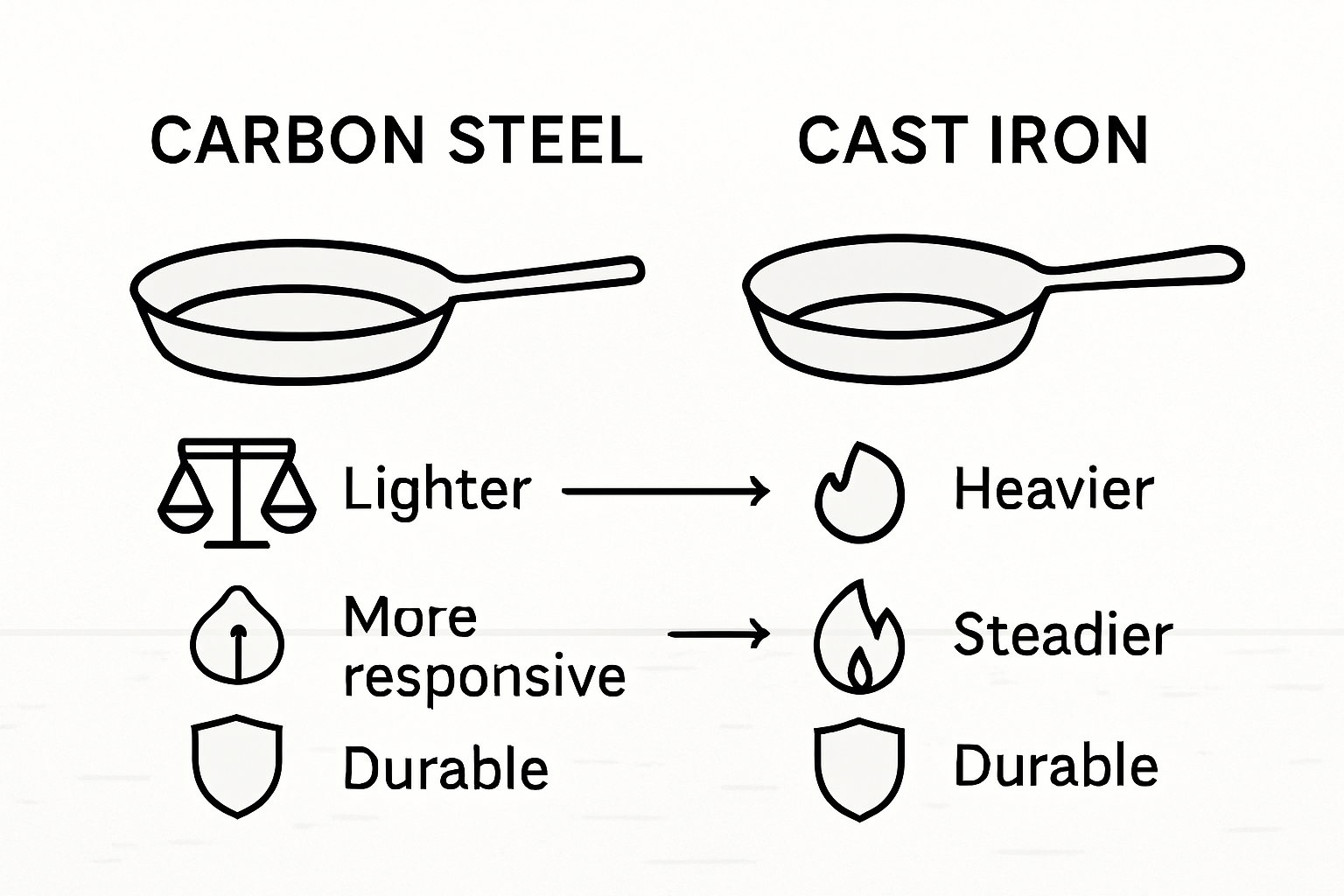
These compositional differences produce remarkable variations in material properties. The higher carbon content in cast iron results in a rougher, more brittle metal structure, while carbon steel’s lower carbon percentage creates a smoother and more malleable material. This fundamental variation explains why professional chefs and home cooks experience different cooking dynamics with each material.
Key compositional differences include:
-
Cast Iron: 2% to 3.5% carbon content
- Rough surface texture
- Higher thermal mass
- More brittle structure
-
Carbon Steel: Less than 2% carbon content
- Smoother surface
- More responsive heat distribution
- Greater malleability
The subtle molecular engineering behind these materials transforms seemingly simple cookware into sophisticated culinary tools, each offering unique performance characteristics for discerning cooks.
Performance in Cookware: Heat, Weight, Safety
Cookware performance hinges on nuanced material characteristics that dramatically influence cooking outcomes. Carbon steel pans demonstrate remarkable versatility in heat responsiveness and weight management, offering professional chefs and home cooks unprecedented cooking control.

Heat distribution and thermal properties represent critical differentiators between carbon steel and cast iron. Cast iron heats slowly but maintains temperature exceptionally well, making it ideal for prolonged cooking methods like braising and baking. Carbon steel, by contrast, provides faster heat response and more precise temperature modulation, perfect for techniques requiring rapid adjustment such as sautéing and stir-frying.
Key performance considerations include:
-
Heat Responsiveness
- Cast Iron: Slow heating, excellent heat retention
- Carbon Steel: Rapid heating, precise temperature control
-
Weight Characteristics
- Cast Iron: Heavy, substantial thermal mass
- Carbon Steel: Lighter, more manoeuvrable
-
Cooking Technique Suitability
- Cast Iron: Best for slow cooking, searing, baking
- Carbon Steel: Optimal for quick cooking, delicate techniques
Ultimately, understanding these material nuances empowers cooks to select the most appropriate cookware for specific culinary applications, transforming cooking from mere technique to true gastronomic artistry.
Seasoning and Longevity in Daily Use
Seasoning transforms cookware from mere metal into a culinary treasure, creating a protective layer that enhances performance and durability. Both carbon steel and cast iron require dedicated seasoning processes to develop non-stick properties and prevent rust, with proper maintenance enabling these remarkable materials to potentially last generations.
The seasoning journey begins with a thin layer of oil polymerised onto the pan’s surface, creating a naturally non-stick coating that improves with each cooking session. Carbon steel develops this protective layer more quickly than cast iron, responding faster to cooking oils and developing a smooth, black patina that becomes increasingly non-stick over time. This process not only prevents rust but also imparts subtle flavour characteristics unique to well-seasoned cookware.
Key considerations for maintaining seasoned cookware include:
-
Seasoning Fundamentals
- Initial seasoning creates protective layer
- Repeated cooking with oils strengthens coating
- Avoid soap-based cleaning that strips seasoning
-
Maintenance Strategies
- Dry immediately after washing
- Apply light oil after each use
- Avoid cooking acidic foods in early seasoning stages
-
Longevity Indicators
- Smooth, dark surface
- Consistent non-stick performance
- No visible rust or degradation
Mastering the art of seasoning transforms these cookware materials from simple kitchen tools into cherished culinary companions that improve with every meal prepared.
Choosing Between Carbon Steel and Iron
Selecting the right cookware requires understanding nuanced material characteristics that impact cooking performance. Carbon steel offers significant advantages in weight and heating dynamics compared to traditional cast iron, presenting a compelling alternative for discerning home cooks and professional chefs.
The selection process involves carefully evaluating specific cooking needs and kitchen requirements. Carbon steel’s lighter construction and faster heat responsiveness make it ideal for techniques demanding precise temperature control, such as delicate sautéing and rapid stir-frying. Cast iron, with its substantial thermal mass, excels in slow-cooking methods, perfect for creating deep, rich flavours in braises, roasts, and baked dishes.
Key decision factors include:
-
Cooking Style Considerations
- Carbon Steel: Quick cooking, responsive heat
- Cast Iron: Slow cooking, consistent temperature
-
Weight and Handling
- Carbon Steel: Lightweight, easy manoeuvring
- Cast Iron: Heavy, requires more strength
-
Price and Durability
- Carbon Steel: Higher initial cost
- Cast Iron: More affordable, extremely long-lasting
Ultimately, the choice between carbon steel and cast iron depends on individual cooking preferences, physical capabilities, and the specific culinary techniques most frequently employed in your kitchen.
Discover Superior Cooking Control with Carbon Steel Cookware
Choosing between carbon steel and cast iron involves balancing weight, heat responsiveness and cookware maintenance. If you value lightweight durability, fast heating and a naturally nonstick surface perfected through seasoning, our Carbon Steel Collection | Brass&Steel offers the perfect solution. Each pan is forged from a single sheet of carbon steel to ensure exceptional strength and responsiveness for precise cooking.
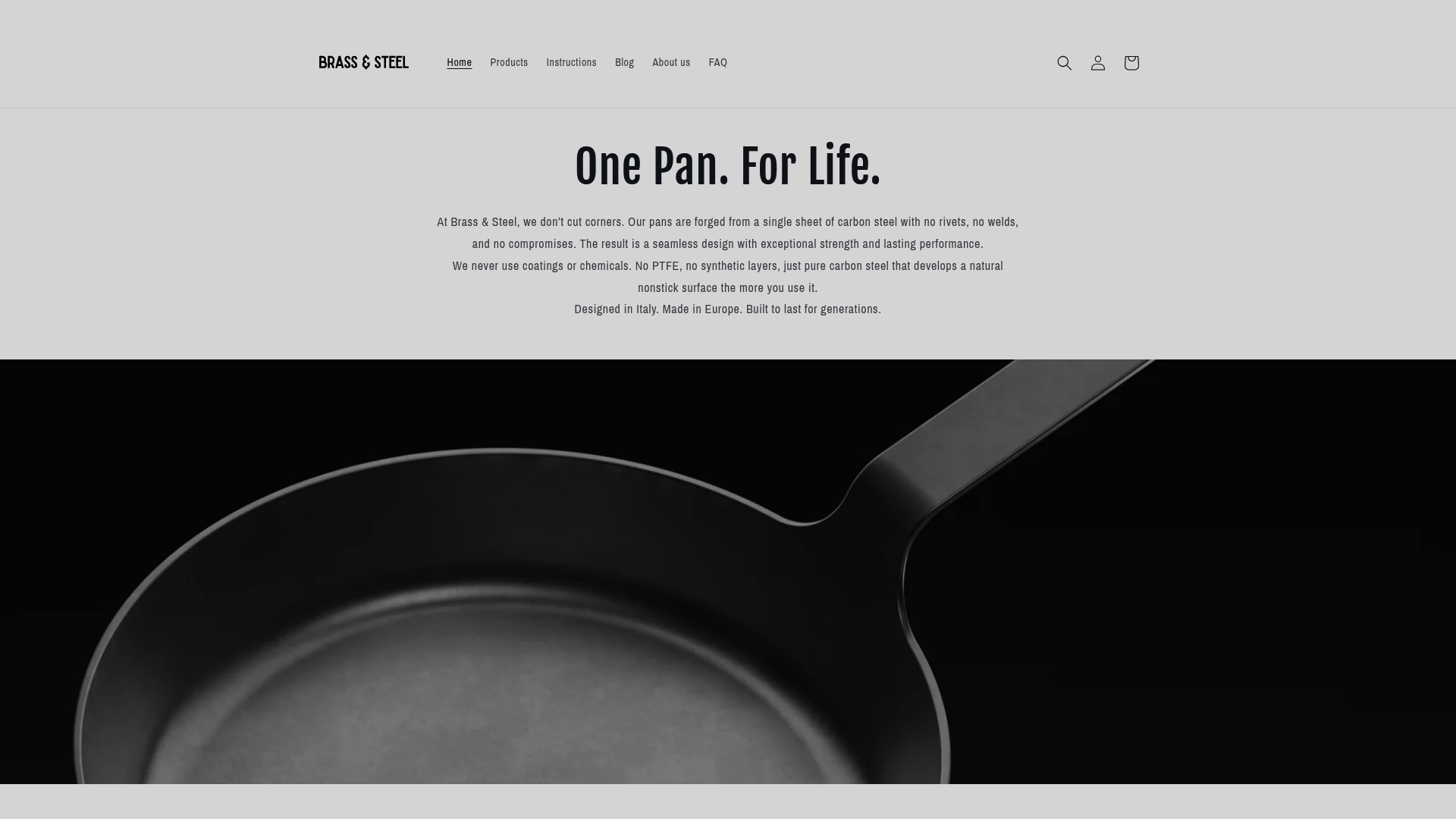
Explore our heirloom-quality carbon steel pans at Brass & Steel and experience cookware designed for serious cooks who demand both performance and durability. Elevate your kitchen now by choosing a carbon steel sauté pan that delivers superior heat control and health-conscious design. Act today to enjoy cookware built to last and crafted with engineering precision.
Frequently Asked Questions
What is the main difference between carbon steel and cast iron cookware?
Carbon steel contains up to 2.5% carbon and is lighter and more responsive to heat changes, making it ideal for techniques requiring quick heat adjustments. In contrast, cast iron has a higher carbon content (2% to 3.5%), is heavier, and excels in heat retention, making it suitable for slow cooking methods.
How do I properly season carbon steel and cast iron cookware?
Both materials require a seasoning process to develop a protective, non-stick coating. Start with a thin layer of oil, heat the pan to polymerise the oil, and repeat this process over time. For maintenance, avoid soap-based cleaning and ensure the pans are dried immediately after washing, applying a light layer of oil after each use.
Which type of cookware is better for sautéing and stir-frying?
Carbon steel is generally preferred for sautéing and stir-frying due to its rapid heating and precise temperature control. Its lighter construction allows for easier manoeuvrability during these quick cooking techniques.
Can carbon steel cookware last as long as cast iron?
Yes, with proper maintenance and seasoning, carbon steel cookware can last a long time, potentially even generations. Both materials can develop a durable patina over time, enhancing their non-stick properties and overall performance.