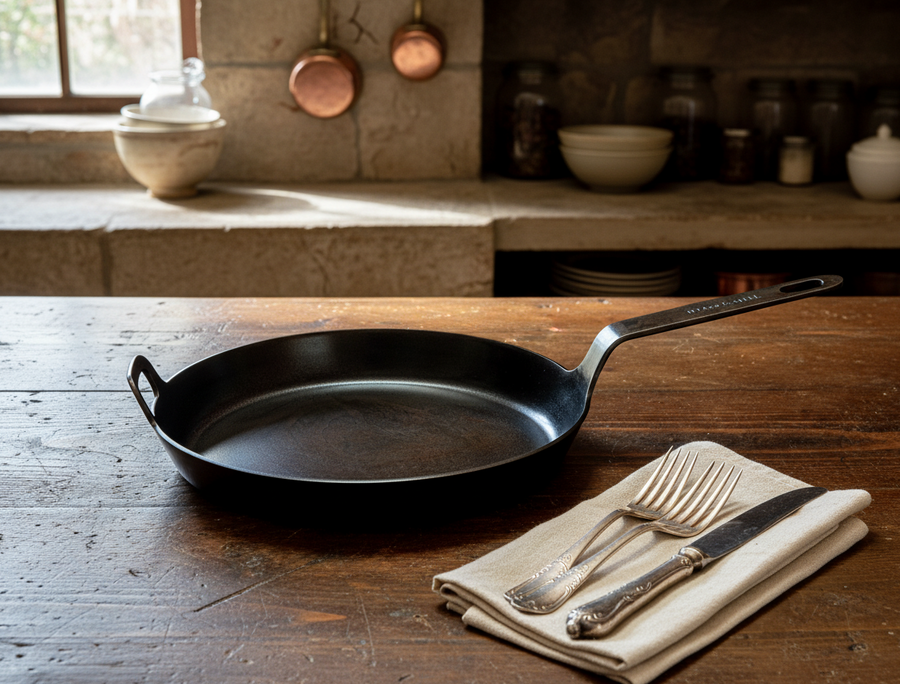
How to Repair Seasoning on a Carbon Steel Pan Easily
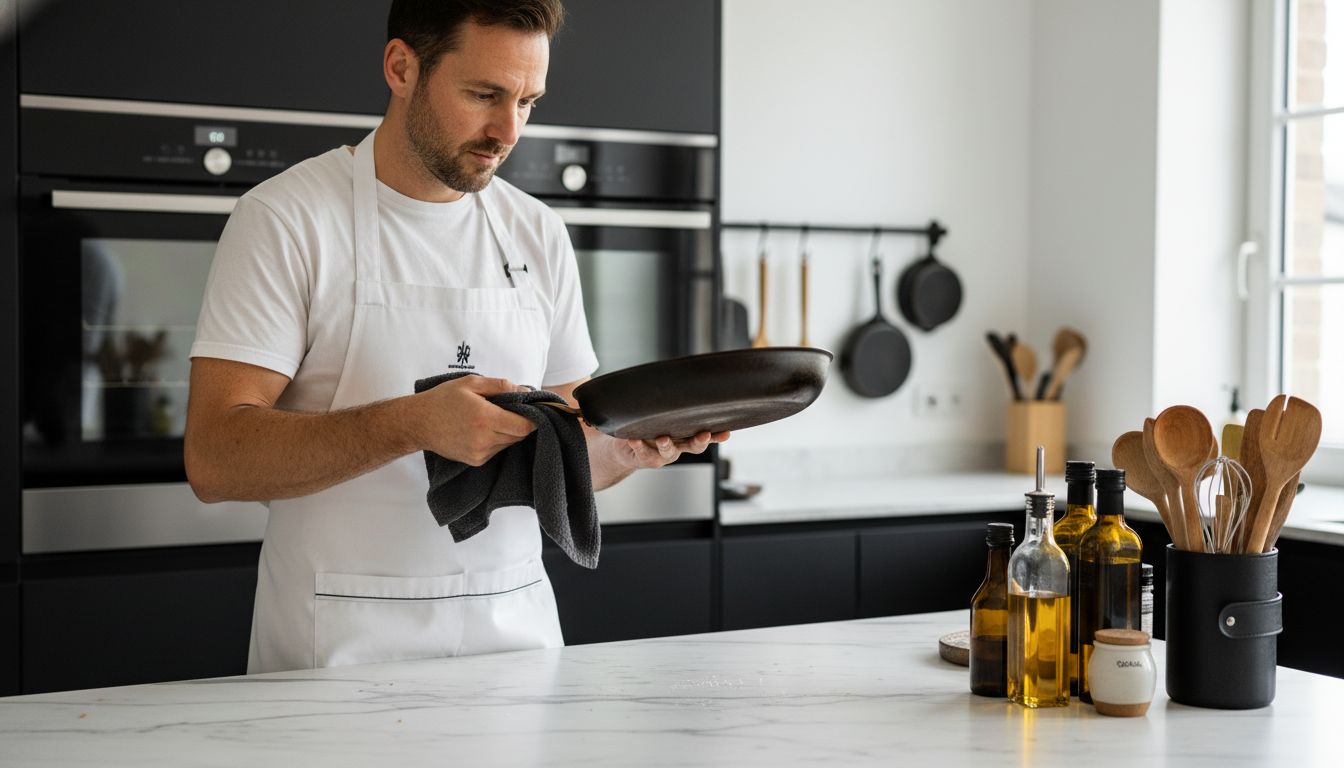
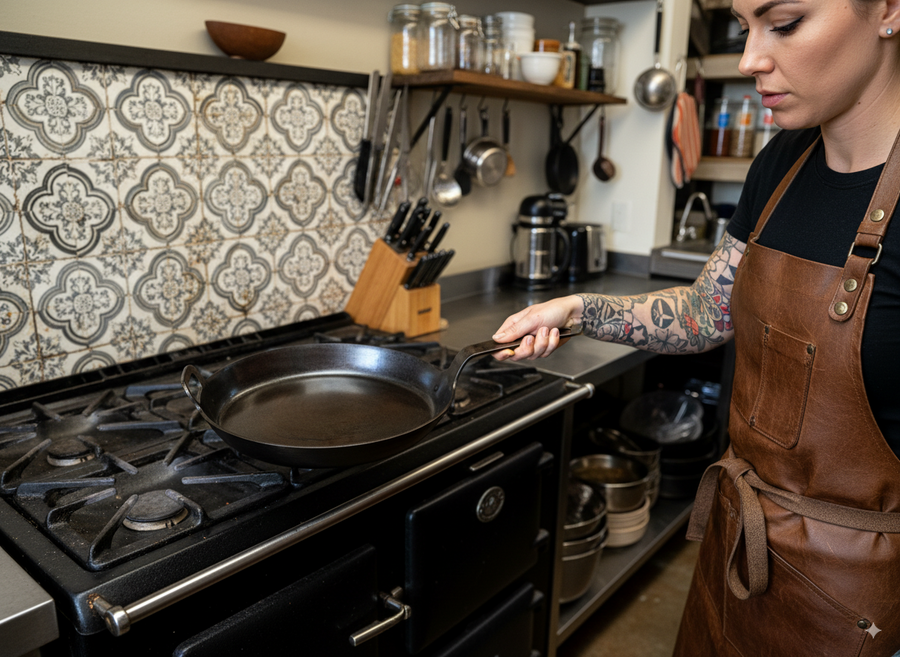
Most home cooks do not realize that a well-seasoned carbon steel pan can outperform even expensive nonstick cookware. Over time, though, improper care and cooking mistakes leave pans with stubborn rust, patchy residue, or sticky surfaces that sabotage every meal. Restoring your pan’s seasoning not only revives its natural nonstick qualities but also protects it for years of reliable use. Learn how simple steps can bring your favorite pan back to life and make clean-up effortless.
Table of Contents
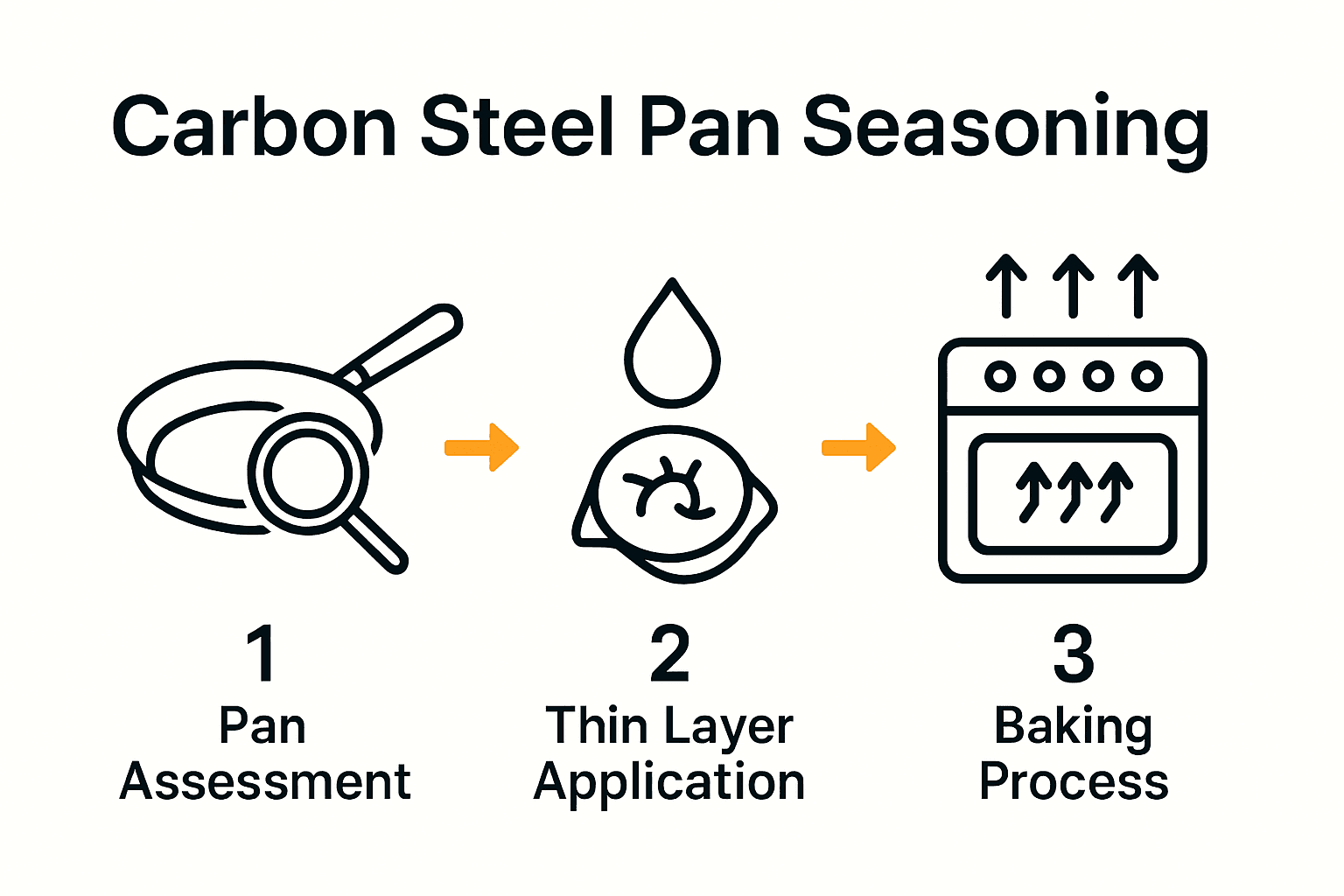
- Step 1: Assess Pan Condition And Remove Old Seasoning
- Step 2: Clean And Dry The Carbon Steel Pan Thoroughly
- Step 3: Apply Thin Layer Of High-Smoke-Point Oil Evenly
- Step 4: Bake The Pan To Build A New Nonstick Seasoning
- Step 5: Inspect Patina And Repeat Seasoning If Needed
Quick Summary
| Key Point | Explanation |
|---|---|
| 1. Assess pan condition meticulously | Examine your pan for discoloration, rust, or residue to determine cleaning needs before restoration. |
| 2. Clean and dry thoroughly | Use warm water and mild soap, followed by complete drying to prevent rust. Avoid air drying. |
| 3. Apply a thin, even oil layer | Use high smoke-point oil sparingly to create a nonstick surface without stickiness. Gently buff to achieve a uniform layer. |
| 4. Bake for durable seasoning | Heat the pan upside down at 250°F for 2 to 3 hours, repeating if necessary, to ensure a strong protective layer. |
| 5. Inspect patina regularly | Check for a smooth, dark surface after seasoning; repeat the process if uneven or sticky patches appear. |
Step 1: Assess Pan Condition and Remove Old Seasoning
Repairing the seasoning on your carbon steel pan requires a careful assessment of its current condition before beginning any restoration work. This crucial first step will help you understand exactly what treatment your pan needs to return to its optimal cooking surface.
Start by thoroughly examining your pan under good lighting. Look for areas of significant discoloration, rust spots, sticky residue or uneven seasoning patches. According to University of Maine Extension, when removing stubborn residues you should avoid abrasive scrubbers like steel wool which can strip away the protective seasoning layer. Instead, use a nonabrasive scrub pad or stiff brush with hot water to gently clean the surface.
If your pan has substantial buildup or damage, you might need to strip the entire existing seasoning and start fresh. For this process, create a paste using coarse salt and a small amount of oil, then gently rub it across the pan surface to remove old seasoning. Rinse thoroughly and dry completely. As Virginia Tech recommends, after cleaning and drying, rub the pan down with a thin layer of oil to prepare it for re-seasoning. This initial preparation sets the stage for building a new protective cooking surface that will enhance your pan’s performance and longevity.
Warning: Never soak your carbon steel pan or leave it wet, as this can quickly lead to rust and undo all your careful restoration work.
Step 2: Clean and Dry the Carbon Steel Pan Thoroughly
After assessing your pan’s condition, the next critical step is thoroughly cleaning and drying it to prepare for successful seasoning restoration. Proper cleaning removes old residue while preventing potential rust formation.
According to Virginia Tech, you should rinse your pan with warm water and use mild soap if necessary. Avoid harsh scrubbing that might damage the existing seasoning. Use a soft sponge or nonabrasive scrub pad to gently remove stuck food particles. For University of Maine Extension, the key is using a stiff brush or soft pad with hot water to clean without stripping away protective layers.
Drying is absolutely crucial to prevent rust. As the University of Maine Extension recommends, use a paper towel or clean cloth to dry the pan completely. Alternatively, you can place the pan on your stovetop or in the oven to ensure all moisture evaporates. Pro tip: Heat the pan for a few minutes to guarantee it is 100 percent dry before moving to the next seasoning stage.
Warning: Never let your carbon steel pan air dry or sit with moisture, as this can cause rapid rust development and undo all your careful restoration work. Quick and thorough drying is your best defense against potential damage.
Step 3: Apply Thin Layer of High-Smoke-Point Oil Evenly
Applying the right oil in a thin layer is crucial for creating a durable and protective seasoning on your carbon steel pan. This step transforms your clean pan into a naturally nonstick cooking surface that will improve with each use.
According to Virginia Tech, the type of oil matters significantly. Choose oils with high polyunsaturated composition such as soybean or flaxseed oil that can create a firm protective layer. University of Maine Extension recommends placing your fully dry pan on low stovetop heat and adding a small amount of neutral oil. Use a paper towel to spread the oil evenly across all interior surfaces.
Apply the oil sparingly. A good rule of thumb is to use just enough to create a very thin coat that looks almost transparent. Too much oil will create a sticky surface and prevent proper seasoning. Gently buff the oil into the pan using circular motions with a clean paper towel until the surface looks uniform and slightly shiny. Your goal is a thin layer that will polymerise and create a protective nonstick patina.
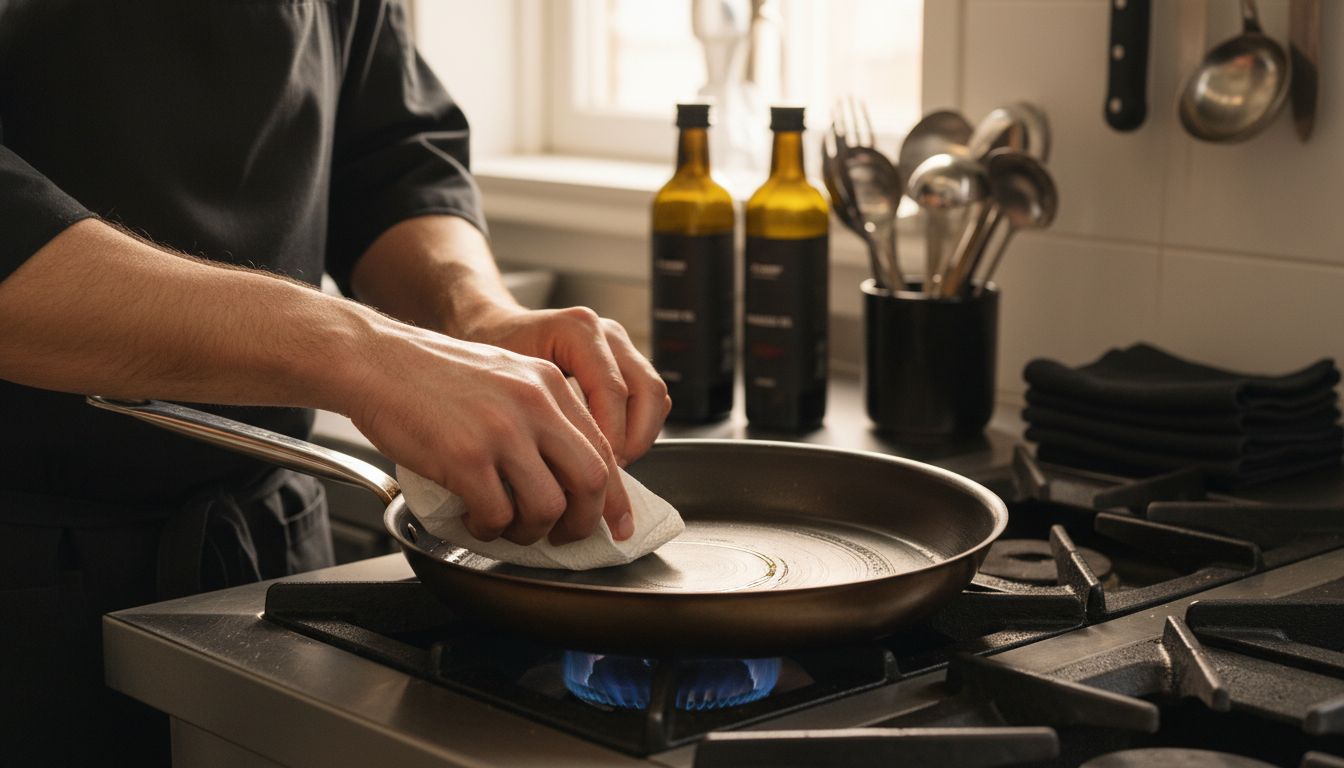
Warning: Always use oils with high smoke points like grapeseed or avocado oil. Avoid olive oil or butter which can turn rancid and create an unpleasant coating on your pan.
Step 4: Bake the Pan to Build a New Nonstick Seasoning
Baking your carbon steel pan is the final crucial step in creating a durable nonstick surface that will protect your cookware and improve your cooking experience. This process transforms the thin oil layer into a permanent protective coating.
According to North Carolina State University Extension, you should season iron pans by heating them in a 250°F oven for 2 to 3 hours. This allows the oil to deeply penetrate the metal pores. As Virginia Tech recommends, repeat this process two to three times to create an impermeable layer of oxidized oil on the surface.
Position your pan upside down in the oven to prevent oil pooling and ensure an even seasoning. Place a sheet of aluminium foil on the bottom rack to catch any potential drips. After the first baking cycle, carefully remove the pan using heat resistant gloves and let it cool completely. Check the surface. If it looks patchy or uneven, apply another thin layer of oil and repeat the baking process.
Warning: Ensure your kitchen is well ventilated during this process. The high heat and oil can create smoke, so open windows and turn on your range hood if possible.
Step 5: Inspect Patina and Repeat Seasoning if Needed
Inspecting your carbon steel pan after seasoning helps ensure you have created a durable protective layer that will enhance your cooking experience. This final step determines whether your seasoning process needs additional attention.
According to Virginia Tech, maintaining your seasoning requires regular care. After each use, rinse the pan with warm water and thoroughly dry it. University of Maine Extension recommends adding a small amount of neutral oil to the pan after drying by placing it on low heat and spreading the oil using a paper towel.
Look for these key indicators when inspecting your patina: A properly seasoned pan should have a smooth dark brown or black surface without any sticky patches or rust spots. If you notice uneven coloration or areas that look pale or mottled, you will need to repeat the seasoning process. Some slight variations in color are normal. Gently run your fingers across the surface the pan should feel smooth and slightly slick.
Warning: A completely smooth or shiny surface might indicate that your seasoning did not polymerise correctly. If your pan looks more like polished metal than a dark protective layer you may need to strip it down and restart the seasoning process completely.
Restore and Elevate Your Carbon Steel Experience with Brass & Steel
Repairing the seasoning of your carbon steel pan can be a challenging task. You want a pan that performs flawlessly and develops a natural nonstick surface that lasts. At Brass & Steel, we understand these concerns and craft heirloom-quality carbon steel pans designed to build and maintain a perfect seasoning with ease. Our pans feature single-piece construction without rivets or welds, making cleaning and seasoning much smoother and more effective compared to other cookware.
Explore our Carbon Steel Collection | Brass&Steel to find pans that are engineered for durability and optimal seasoning, suited for both everyday cooks and professionals. Don’t let uneven or damaged seasoning hold back your cooking—upgrade now to cookware that responds beautifully to your care and routine. Visit Brass & Steel and begin your journey to perfectly seasoned, high-performance carbon steel cookware today.
Frequently Asked Questions
How can I tell if my carbon steel pan needs re-seasoning?
Inspect your pan for signs like discoloration, rust spots, or a sticky residue. If you notice these issues, it’s time to assess the seasoning and proceed with the restoration process.
What type of oil should I use for re-seasoning my carbon steel pan?
Choose oils with high smoke points, such as grapeseed or flaxseed oil, to create a durable nonstick surface. Apply a thin layer evenly to ensure proper seasoning that can withstand repeated heating.
How do I properly clean my carbon steel pan before re-seasoning?
Rinse your pan with warm water, using mild soap if necessary, and scrub gently with a nonabrasive pad. Avoid soaking the pan to prevent rust; instead, dry it thoroughly with a cloth or by heating it on the stovetop.
What temperature should I bake my carbon steel pan for optimal seasoning?
Bake your pan at 250°F for 2 to 3 hours to allow the oil to penetrate the metal pores. Position the pan upside down in the oven to prevent oil pooling and ensure an even coating.
How can I maintain the seasoning on my carbon steel pan after repair?
After each use, rinse your pan with warm water and dry it completely. Add a small amount of neutral oil to the surface while heating it on low to keep the seasoning intact and prevent rust.
What should I do if the seasoning on my carbon steel pan looks uneven?
If your pan has uneven coloration or feels sticky, it may require re-seasoning. Gently rub it down with a paste of coarse salt and oil, rinse, dry, and follow the seasoning steps again for a fresh coat.
Recommended
- Carbon Steel Seasoning Checklist for Lasting Nonstick Performance – Brass & Steel
- Ultimate Carbon Steel Pan Seasoning Guide for Perfect Results – Brass & Steel
- How to Re-Season a Carbon Steel Pan for Perfect Cooking – Brass & Steel
- How to Clean Carbon Steel Pan Naturally: Step-by-Step Guide – Brass & Steel