Why artisan pans matter for serious home cooks
TL;DR:
- Artisan cookware, made from durable natural materials like carbon steel and copper, offers superior heat control and longevity. These pans last for decades, are fully repairable, and have a smaller environmental footprint compared to disposable nonstick options. Using artisan pans encourages mindful cooking and sustainable habits while enabling better culinary results over time.
Artisan cookware is defined as handcrafted kitchenware made from high-quality natural materials, built to last decades rather than years. The term covers carbon steel, copper, and cast iron pans shaped by skilled hands rather than stamped out by automated production lines. Why artisan pans matter comes down to three things: superior cooking performance, genuine durability, and a smaller environmental footprint. Mass-produced nonstick pans are convenient, but they degrade quickly and end up in landfill. Artisan pans, by contrast, get better with every use.
Why artisan pans matter: performance starts with the material
The material a pan is made from determines everything about how it cooks. Copper conducts heat approximately 25 times better than stainless steel. That gap means the difference between a sauce that scorches in a hot spot and one that reduces evenly across the whole base.
Carbon steel sits in a similarly strong position. It heats up fast, responds immediately when you turn the flame down, and builds a natural nonstick patina over time that is free from PTFE and PFOA. That patina is not a coating applied in a factory. It is polymerised oil bonded to the steel through repeated use and heat. The more you cook with it, the better it performs.
Mass-produced pans are typically made from thin-gauge aluminium with a sprayed-on nonstick layer. They heat unevenly and the coating degrades within a year or two of regular use. Artisan materials do not work that way. They reward patience and care with better results every time.
| Feature | Artisan carbon steel | Mass-produced nonstick |
|---|---|---|
| Heat responsiveness | High | Moderate |
| Nonstick surface | Natural patina, improves with use | Factory coating, degrades over time |
| Oven safe | Yes, to very high temperatures | Often limited by coating |
| Repairability | Re-season at home | Not repairable |
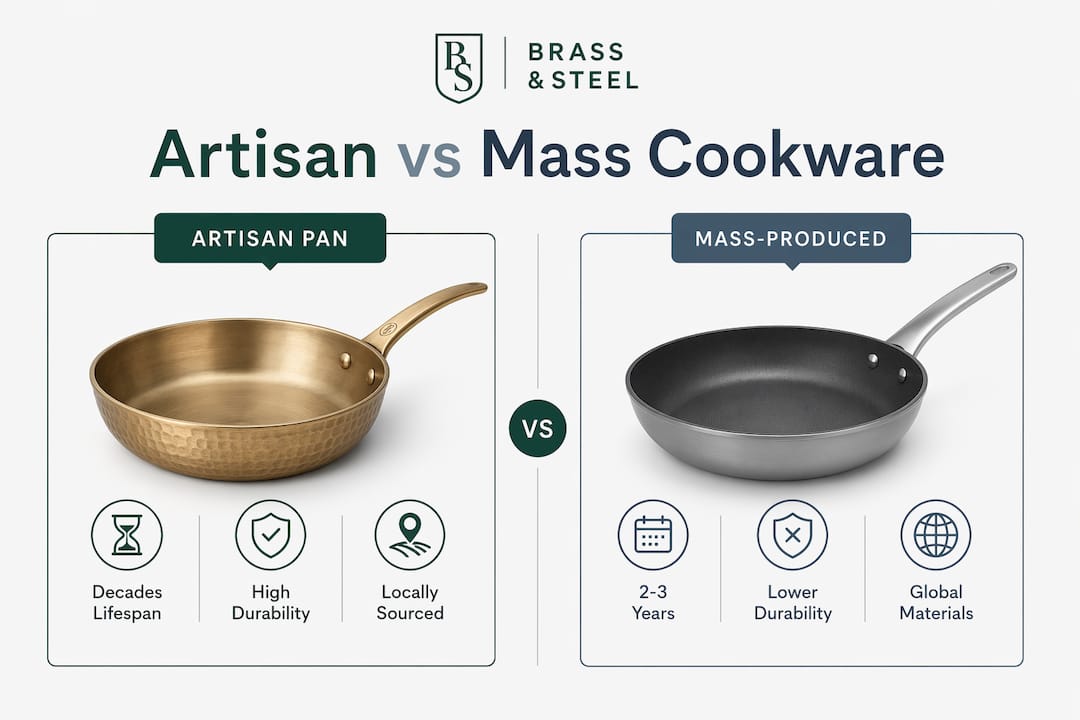
| Lifespan | Decades to generations | Typically 2–3 years |
Pro Tip: Season your carbon steel pan with grapeseed or avocado oil. Both have high smoke points and bond well to the steel, building a stronger patina faster than lower-smoke-point oils like olive oil.
How long do artisan pans actually last?
Artisan pans last decades or even generations with proper care. Mass-produced nonstick pans typically need replacing every 2–3 years. That difference is not marginal. Over a decade, a home cook might buy four or five nonstick pans in the time one artisan carbon steel pan is still going strong.
The reason artisan pans last so long comes down to construction. Brass-steel forges its carbon steel pans from a single sheet of steel, with no rivets or welds to fail over time. A pan built this way has no weak points. It can be dropped, used on high heat, and moved from hob to oven without the structure compromising.
When an artisan pan does show wear, it is almost always fixable. Carbon steel can be re-seasoned indefinitely, restoring its nonstick surface without any specialist tools or professional help. A scratched nonstick pan, by contrast, is finished. Once the coating is damaged, it sheds particles into food and the pan goes in the bin.
Key reasons artisan pans outlast mass-market alternatives:
- Single-piece or heavy-gauge construction with no weak joints
- Natural surfaces that improve rather than degrade with use
- Full repairability through re-seasoning or re-lining at home
- No synthetic coatings that crack, peel, or scratch
Pro Tip: If your carbon steel pan looks dull or starts to stick, do not replace it. Scrub it back to bare metal with coarse salt and a little oil, then re-season from scratch. It will cook like new.
Learn more about forged pan durability and what makes this construction method so reliable over time.
Do artisan pans actually change how you cook?
They do, and the change is measurable. A 2022 survey by the Artisan Kitchen Collective found that 68% of cooks reported cooking more attentively after switching to handcrafted cookware. That is not a coincidence. It is a direct result of how artisan pans work.
A nonstick pan forgives inattention. You can walk away, come back, and the food is usually fine. An artisan carbon steel pan asks more of you. Without a chemical coating to act as a buffer, you learn to read heat through sound and oil behaviour. The sizzle of oil tells you when the pan is ready. The colour of butter tells you when the temperature is right. These are real cooking skills, and artisan pans teach them naturally.
“Artisan cookware imposes a kind of productive friction that slows cooking down and increases presence and satisfaction. Cooks who use it report a deeper connection to the process, not just the result.”
Artisan Kitchen Collective survey findings
Artisan pans also guide physical technique. The weight and balance of a well-made carbon steel pan encourages a natural rocking motion when sautéing, which distributes food evenly and reduces wrist strain over time. A flimsy pan with a poorly balanced handle does the opposite. It makes cooking feel like a chore rather than a skill.
Are artisan pans better for the environment?
The environmental case for artisan cookware is straightforward. A pan that lasts 30 years produces far less waste than ten pans that last three years each. The maths is simple, but the implications go further than just volume of waste.
Artisan cookware production typically uses locally sourced, natural materials and craft-based methods with smaller energy footprints than large-scale factory production. The materials themselves, carbon steel and copper, are fully recyclable at end of life. Synthetic nonstick coatings are not.
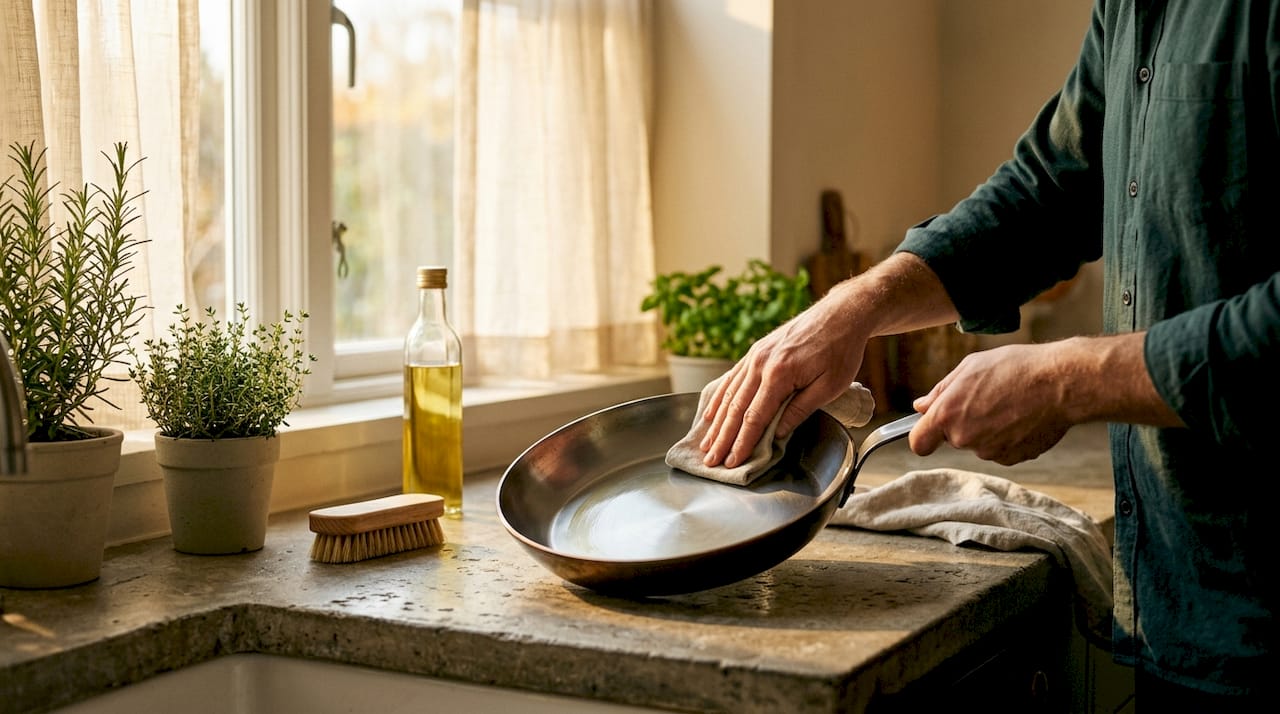
The care rituals that come with artisan pans also reinforce sustainable habits. Hand-washing, drying, and oiling a carbon steel pan after each use creates a stewardship relationship with the object. You stop thinking of cookware as disposable and start treating it as something worth preserving. That shift in mindset is part of what makes artisan cookware a cultural anchor against throwaway consumerism.
| Sustainability factor | Artisan pan | Mass-produced nonstick |
|---|---|---|
| Lifespan | Decades to generations | 2–3 years |
| End-of-life recyclability | Fully recyclable (steel, copper) | Limited (synthetic coatings) |
| Repairability | Yes, at home | No |
| Production method | Small-scale, craft-based | High-volume factory |
| Waste generated over 30 years | One pan | Up to 15 pans |
Choosing artisan cookware aligns with the right-to-repair movement and the broader principle of buying fewer, better things. A futureproof cookware choice is one you never have to make again.
Key takeaways
Artisan pans outperform mass-market cookware on every measure that matters: cooking results, lifespan, repairability, and environmental impact.
| Point | Details |
|---|---|
| Material performance | Copper and carbon steel deliver superior heat control compared to thin-gauge nonstick alternatives. |
| Longevity | Artisan pans last decades. Mass-produced nonstick pans typically need replacing every 2–3 years. |
| Repairability | Carbon steel can be re-seasoned at home indefinitely, making replacement unnecessary. |
| Mindful cooking | Artisan pans teach heat management and technique, with 68% of users reporting more attentive cooking. |
| Sustainability | Long lifespan, natural materials, and full recyclability make artisan cookware the lower-waste choice. |
What I have learned from cooking with artisan pans
A perspective from Davide
The first time I cooked with a carbon steel pan, I burnt the onions. Not because the pan was bad, but because I treated it like a nonstick pan and walked away. That was the lesson. Artisan cookware does not let you be lazy, and that is exactly why it makes you a better cook.
The learning curve is real, but it is short. After a few weeks of regular use, reading a carbon steel pan becomes second nature. You hear the sizzle change pitch and you know to turn the heat down. You see the oil shimmer and you know it is ready. These are not difficult skills. They are just skills you never had to develop with a nonstick pan, because the pan was doing the thinking for you.
What surprised me most was how much I started to enjoy the care routine. Washing the pan by hand, drying it on the hob, rubbing in a thin coat of oil. It takes two minutes. But it changes your relationship with the tool. You stop seeing it as equipment and start seeing it as something worth looking after.
My honest advice: do not wait until your nonstick pan is scratched and sad before making the switch. Start with a single carbon steel pan for searing and sautéing. Give it three months. By then, you will not want to go back. The ergonomic design of a well-made pan also makes a real difference to how comfortable cooking feels over a long session.
— Davide
Brass-steel carbon steel pans: built to last a lifetime
Brass-steel makes carbon steel sauté pans forged from a single piece of steel in Jarocin, Poland. There are no rivets, no welds, and no synthetic coatings. Just clean, durable steel that gets better the more you cook with it.
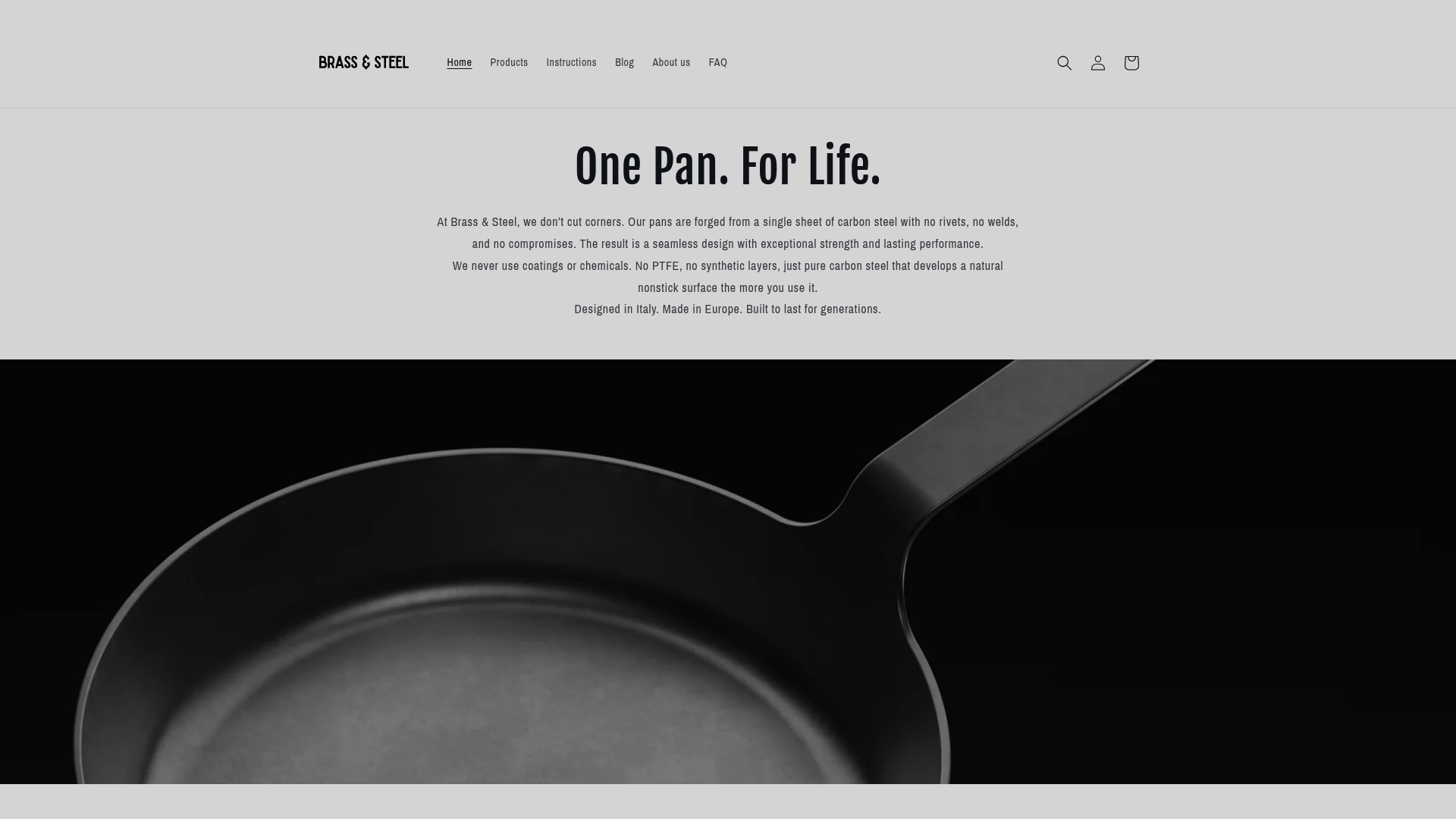
The 27 cm pan (€99) handles everyday cooking from searing to sautéing. The 30 cm pan (€119) suits larger meals and family cooking. Both are free from PTFE and PFOA, work on all cooktops including induction, and are built to the standard of heirloom quality cookware that you pass on rather than throw away. If you are ready to cook with something that rewards care and skill, visit brass-steel.com to see the full range.
FAQ
Why do artisan pans outperform mass-produced cookware?
Artisan pans use high-quality materials like carbon steel and copper that offer superior heat control and durability. They build natural nonstick surfaces through use, rather than relying on factory-applied coatings that degrade quickly.
How long does a carbon steel pan last?
A well-maintained carbon steel pan lasts decades or generations. Mass-produced nonstick pans typically need replacing every 2–3 years, making artisan cookware the more cost-effective choice over time.
Can I restore an artisan pan if it gets damaged?
Carbon steel pans can be re-seasoned at home indefinitely. Scrub back to bare metal, apply a thin coat of high-smoke-point oil, and bake in the oven to rebuild the nonstick surface from scratch.
Are artisan pans better for the environment?
Artisan pans produce significantly less waste over their lifetime due to their long lifespan and full repairability. Carbon steel and copper are both fully recyclable, unlike synthetic nonstick coatings.
Do artisan pans work on induction hobs?
Carbon steel pans are fully compatible with induction hobs. Use moderate power when the pan is cold or empty to avoid warping, then increase heat gradually as the pan warms up.