Aluminium vs Stainless Steel vs Ceramic – Choosing Cookware Wisely

Most british and European chefs know that cookware choice can shape every service, yet material myths still cloud even experienced kitchens. Studies show that cookware performance can impact final dish quality by up to 30 percent, making this a critical decision. Whether you rely on trusted carbon steel, consider classic stainless steel, or weigh the appeal of lightweight aluminum, understanding material science helps professionals choose tools that match high standards and safety concerns.
Table of Contents
- Cookware Materials Defined And Misunderstood
- Heat Distribution And Cooking Performance
- Durability, Lifespan And Maintenance Needs
- Health, Safety And Non-Toxic Properties
- Comparing Practical Costs And Professional Applications
Key Takeaways
| Point | Details |
|---|---|
| Cookware Material Impact | Selecting the right cookware material enhances cooking performance, durability, and food safety. Understanding material properties is crucial for optimal results. |
| Thermal Properties Matter | Heat distribution varies significantly among materials, impacting cooking outcomes. Choose materials that align with your cooking techniques. |
| Durability and Care | Investing in high-quality cookware ensures longevity, while maintenance differs across materials. Proper care extends the life of your cookware. |
| Health Considerations | Evaluate the potential health implications of cookware materials. Opt for options with minimal chemical coatings to ensure food safety. |
Cookware Materials Defined And Misunderstood
Understanding cookware materials requires more than surface-level knowledge. Each material brings unique characteristics that dramatically influence cooking performance, durability, and food safety. Professional chefs recognise that cookware material properties extend far beyond basic cooking functionality.
Three primary materials dominate modern cookware: aluminium, stainless steel, and ceramic. Aluminium offers exceptional heat conductivity but can potentially leach trace amounts into food. Stainless steel provides robust durability and resistance to corrosion. Ceramic presents a non-reactive surface with excellent heat distribution but can be more fragile compared to metal alternatives.
Ceramic cookware represents a fascinating intersection of traditional craftsmanship and modern engineering. Its non-porous surface prevents chemical interactions with food, making it an attractive option for health-conscious cooks. Stainless steel, by contrast, offers professional-grade resilience. Its multi-layered construction typically includes an aluminum or copper core surrounded by stainless steel, creating superior heat management.
Pro tip: Always match your cookware material to specific cooking techniques and heat requirements to maximise performance and longevity.
Here is a quick comparison of key cookware materials and their optimal uses:
| Material | Optimal For | Main Drawback |
|---|---|---|
| Aluminium | Rapid, even heating | Can leach, less durable |
| Stainless steel | Searing, everyday cooking | Poor solo conductivity |
| Ceramic | Gentle, uniform cooking | Fragility, needs care |
Heat Distribution And Cooking Performance
Understanding heat distribution in cookware is crucial for achieving exceptional culinary results. Different materials conduct and retain heat with varying efficiency, directly impacting cooking performance. Thermal conductivity principles reveal how cookware materials significantly influence cooking outcomes.
Aluminium demonstrates remarkable heat conductivity, rapidly transferring thermal energy across its surface. This characteristic allows for quick and even heating, making it ideal for techniques requiring precise temperature control. Stainless steel, while less conductive, compensates through multi-layered construction that often includes aluminum or copper cores, creating a balanced heat distribution mechanism.

Ceramic cookware presents unique thermal properties. Its dense material structure provides slow, consistent heat radiation, making it excellent for dishes requiring gentle, uniform cooking. Professional chefs appreciate ceramic’s ability to maintain stable temperatures, preventing hot spots that can cause uneven cooking or potential food burning. The material’s thermal mass allows it to absorb and release heat gradually, creating a more controlled cooking environment.
Pro tip: Select cookware materials based on specific cooking techniques, understanding how thermal conductivity directly impacts your culinary results.
Durability, Lifespan And Maintenance Needs
Cookware durability represents a critical investment for professional and home chefs alike. Cookware material characteristics dramatically influence longevity, maintenance requirements, and overall performance. Understanding these nuanced differences enables informed purchasing decisions that balance initial cost with long-term utility.
Stainless steel emerges as the most durable material, offering exceptional resistance to corrosion, scratching, and mechanical wear. Its robust construction allows for aggressive cooking techniques and provides remarkable longevity when properly maintained. Aluminium cookware requires additional protective treatments like anodising to enhance scratch resistance, making it less inherently durable compared to stainless steel alternatives.
Ceramic cookware presents the most fragile option among these materials. While prized for its non-toxic surface and aesthetic appeal, ceramic is prone to chipping and has a comparatively shorter lifespan. Professional chefs typically reserve ceramic for specific cooking tasks that require gentle heat distribution, understanding its delicate nature necessitates more careful handling and maintenance. The material’s vulnerability means replacement occurs more frequently than with metal-based cookware.
Pro tip: Invest in high-quality cookware and follow manufacturer-recommended maintenance procedures to maximise your cookware’s durability and performance.
This table summarises maintenance and longevity factors to consider for each cookware type:
| Material | Typical Lifespan | Maintenance Priority |
|---|---|---|
| Aluminium | Medium (with care) | Avoid harsh abrasives |
| Stainless steel | Long-lasting | Clean promptly, avoid salt stains |
| Ceramic | Shorter | Prevent knocks and shocks |
Health, Safety And Non-Toxic Properties
Understanding the health implications of cookware materials is paramount for conscientious cooks. Cookware safety considerations reveal complex interactions between cooking surfaces and food quality that extend far beyond basic utility. Each material presents unique health profiles that demand careful evaluation.
Stainless steel emerges as a robust, relatively inert option with minimal health concerns. Its composition includes chromium and nickel, which create a protective layer preventing metal leaching. However, individuals with specific metal sensitivities might need to exercise caution. Ceramic cookware stands out as potentially the most health-friendly material, offering a non-reactive surface that prevents chemical interactions with food during cooking.
Aluminium presents more nuanced health considerations. Uncoated aluminum can potentially leach metal ions into food, particularly when cooking acidic dishes. Modern manufacturing techniques like anodising create protective barriers that significantly reduce metal transfer. Professional chefs and health-conscious home cooks increasingly prefer cookware with advanced surface treatments that minimise potential contamination risks while maintaining excellent thermal performance.
Pro tip: Choose cookware with minimal chemical coatings and prioritise materials that maintain structural integrity at high temperatures.
Comparing Practical Costs And Professional Applications
Cookware selection involves a complex balance between initial investment and long-term performance. Cookware material cost analysis reveals nuanced trade-offs between price, durability, and professional utility that extend beyond simple price tags.
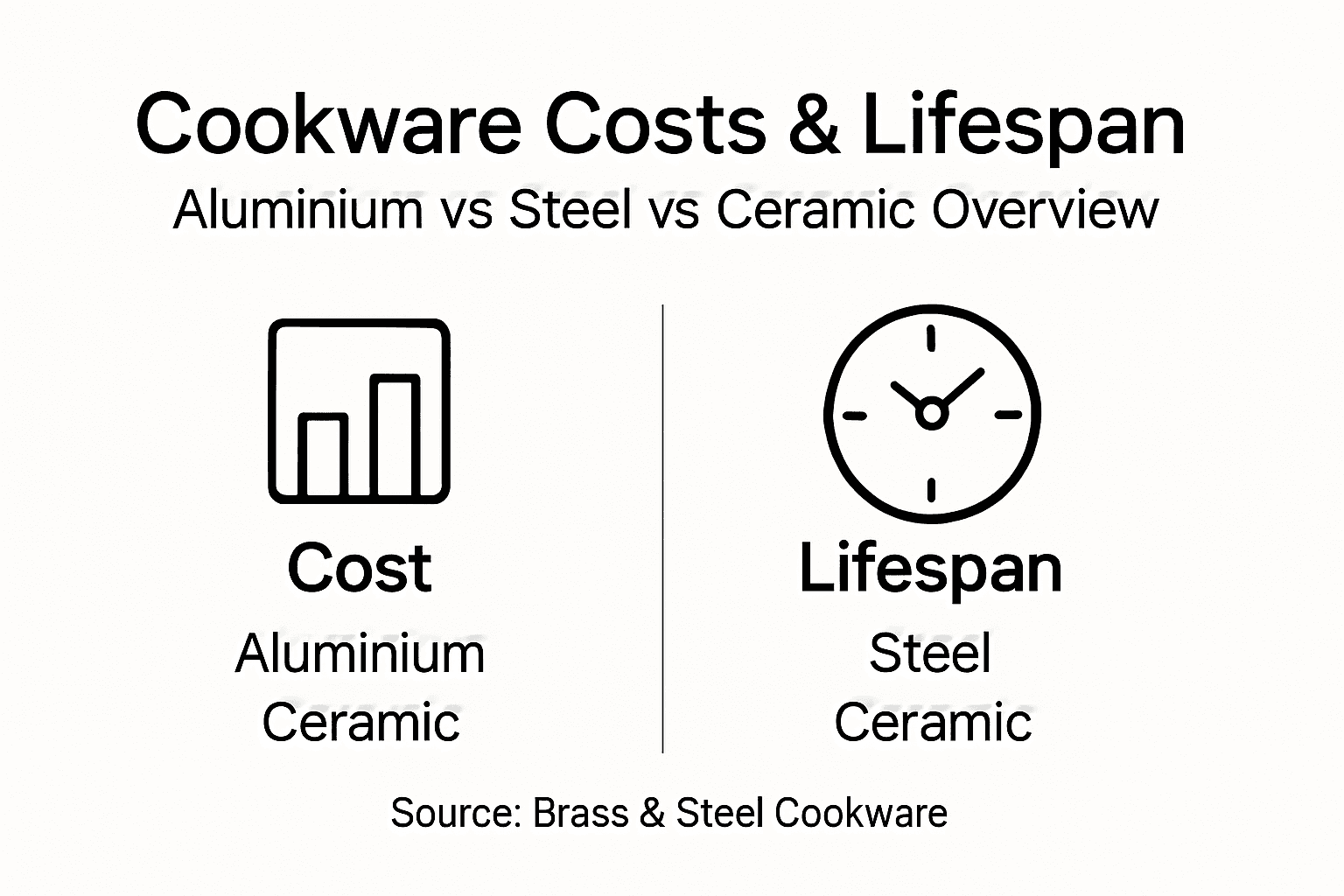
Aluminium cookware represents the most economical initial investment. Its lightweight construction and excellent thermal conductivity make it attractive for home cooks seeking affordable options. Professional kitchens, however, often prioritise stainless steel despite higher upfront costs. The material’s superior durability means reduced long-term replacement expenses, with robust performance that withstands intensive daily use across multiple cooking techniques.
Ceramic cookware occupies a unique market position, typically priced between aluminum and stainless steel. While aesthetically pleasing and offering excellent non-reactive properties, ceramic requires more careful handling. Professional chefs typically view ceramic as a specialised tool rather than an all-purpose solution. The material’s higher fragility and potential for chipping mean increased replacement costs, making it less economically viable for high-volume cooking environments.
Pro tip: Calculate cookware costs based on expected lifespan and usage intensity, not just initial purchase price.
Discover Durability and Performance with Carbon Steel Cookware
Choosing between aluminium, stainless steel and ceramic cookware means balancing heat conductivity, durability and health safety. If you seek cookware that combines excellent heat response with long-lasting quality and a natural nonstick surface, our Carbon Steel Collection | Brass&Steel offers the perfect solution. Crafted from a single piece of carbon steel, these pans provide exceptional searing ability and build a safe, chemical-free patina that improves over time.
Experience cookware designed for serious cooks who value minimalist, heirloom-quality tools. Visit Brass & Steel to explore our range and learn how you can switch to durable, PTFE-free, induction-compatible pans that excel in everyday and professional cooking. Take the next step in mastering your kitchen by browsing our latest innovations in the New arrivals – Brass & Steel. Your perfect carbon steel sauté pan awaits.
Frequently Asked Questions
What are the main differences between aluminium, stainless steel, and ceramic cookware?
Aluminium offers excellent heat conductivity and rapid heating but can leach into food. Stainless steel provides durability and corrosion resistance with multi-layered construction for balanced heat distribution. Ceramic features a non-reactive surface ideal for health-conscious cooking but is more fragile than metal options.
How should I choose the right cookware material for specific cooking techniques?
Consider matching your cookware material to the cooking technique; for example, use aluminium for rapid heating and precise temperature control, stainless steel for searing and everyday cooking, and ceramic for gentle, uniform cooking of delicate dishes.
Is ceramic cookware safe for health compared to aluminium and stainless steel?
Yes, ceramic cookware is generally considered the most health-friendly due to its non-reactive surface, preventing chemical interactions with food. Stainless steel is also a safe option with minimal leaching, while uncoated aluminium can pose potential health risks, especially with acidic foods unless treated for safety.
What is the typical lifespan of each cookware type and their maintenance needs?
Stainless steel has the longest lifespan, requiring prompt cleaning to prevent salt stains. Aluminium has a medium lifespan with careful use, while ceramic tends to have a shorter lifespan and requires careful handling to avoid chipping.
Recommended
- Ceramic vs Aluminium Cookware – Performance and Safety Explained – Brass & Steel
- Stainless Steel vs Ceramic Cookware – Which Suits Serious Cooks? – Brass & Steel
- Ceramic vs Nonstick Cookware: Safety, Longevity, and Performance – Brass & Steel
- Nonstick vs Stainless Steel vs Ceramic – Which Pan Lasts Longer? – Brass & Steel