What oil to season a carbon steel pan: the best picks
TL;DR:
- Grapeseed, canola, and refined avocado oils are the best choices for seasoning a carbon steel pan due to their ideal smoke points and fat compositions. Proper application involves applying a thin layer of oil, wiping off excess, and baking in multiple cycles to build a durable, nonstick surface. Using oils like flaxseed or olive is discouraged because they produce brittle coatings or do not reach proper polymerisation temperatures.
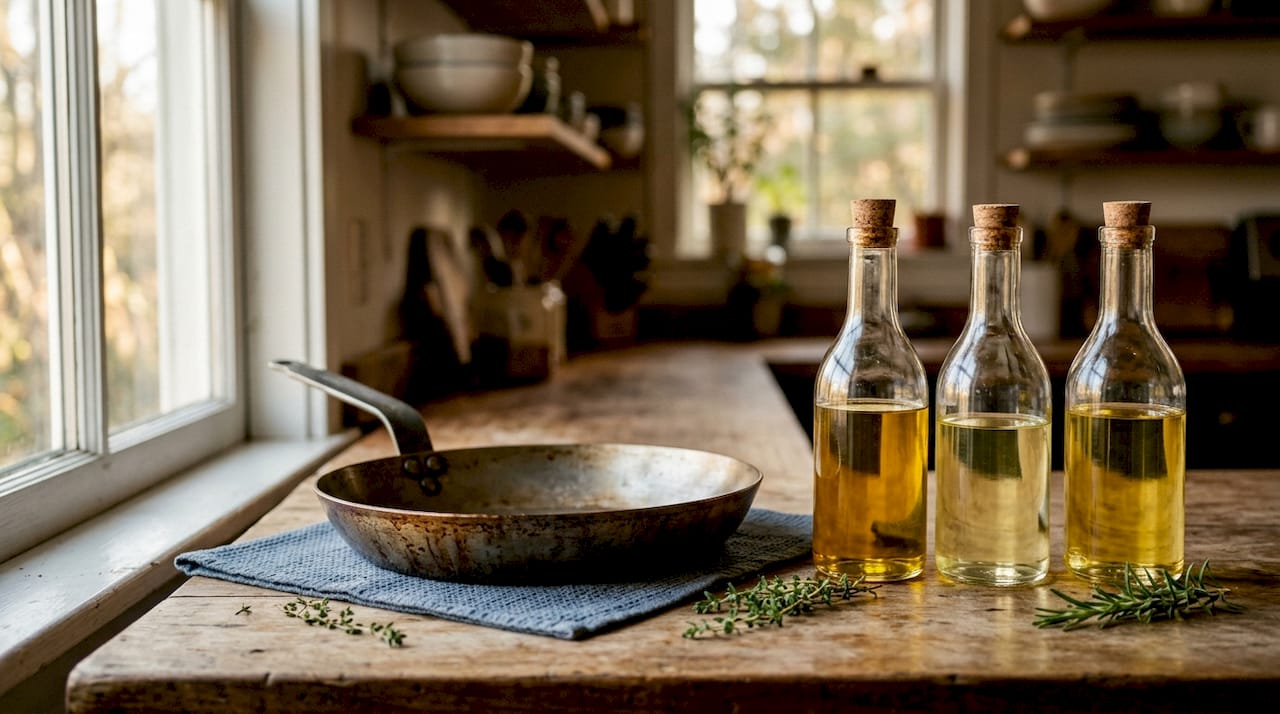
Grapeseed oil, canola oil, and refined avocado oil are the best oils to season a carbon steel pan. They share the right balance of smoke point and fat composition to create a strong, flexible, nonstick surface through a process called polymerisation. Knowing what oil to season a carbon steel pan with is not just a preference. It directly determines whether your seasoning lasts for years or flakes off after a few uses. This guide covers the science in plain terms, profiles the top oils, walks you through the process, and flags the mistakes that trip most cooks up.
What oil characteristics make a good seasoning oil?
The right seasoning oil needs two things: a moderate to high smoke point and the right fat composition. Without both, the oil either burns before it polymerises or forms a coating that cracks under heat.
Polymerisation is what seasoning actually is. When you heat oil on a carbon steel surface, the fat molecules bond together and bond to the metal, forming a hard, slick polymer layer. Balancing smoke point and fat content matters more than chasing the absolute highest smoke point available. An oil that is too volatile burns off before it can bond. An oil that is too stable never fully polymerises.
Fat type plays a big role here. Oils fall into three categories: polyunsaturated, monounsaturated, and saturated. Polyunsaturated fats polymerise most readily because their molecular structure is reactive under heat. Monounsaturated fats are slower to react. Saturated fats barely polymerise at all, which is why butter and coconut oil make poor seasoning choices.
The seasoning layer also needs to flex. Carbon steel expands and contracts with heat, and a brittle coating will crack and flake. Oils that create elastomer-like polymer matrices produce coatings that move with the metal rather than against it. This is why the best seasoning oils are moderately polyunsaturated, not maximally so.
- Smoke point: Aim for 400°F (205°C) or above for oven seasoning.
- Fat type: Moderately polyunsaturated oils polymerise well and stay flexible.
- Iodine value: A mid-range iodine value means the oil cross-links enough to harden but not so much that it becomes brittle.
- Avoid: Saturated fats, very low smoke point oils, and oils with extreme iodine values.
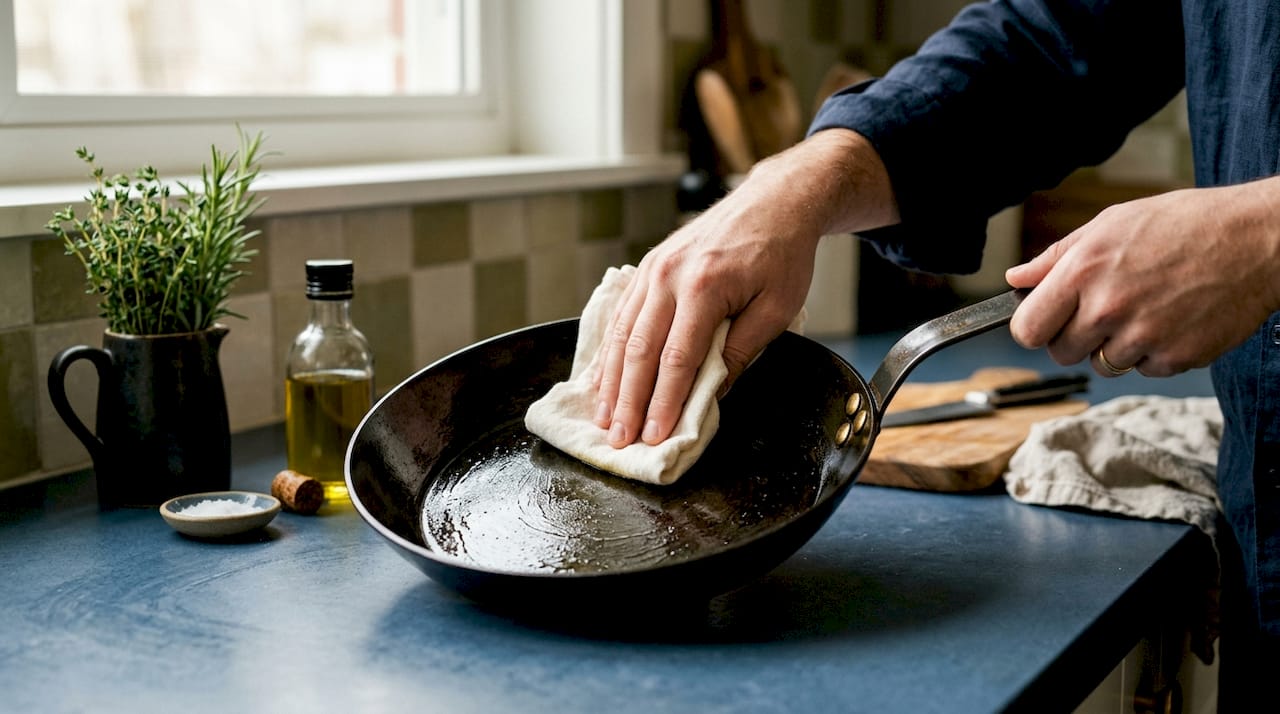
Pro Tip: Rub the oil in with a lint-free cloth, then wipe it back off until the pan looks almost dry. The layer you want is thinner than you think.
Which oils are best for seasoning a carbon steel pan?
Not all oils perform equally. Here is how the top choices compare.
| Oil | Smoke point | Fat type | Seasoning result |
|---|---|---|---|
| Grapeseed | ~420°F (215°C) | Polyunsaturated | Flexible, durable, dark patina |
| Canola | ~400°F (205°C) | Mixed (mostly mono) | Reliable, affordable, good base |
| Refined avocado | ~520°F (270°C) | Monounsaturated | Excellent for high-heat cooking |
| Sunflower (refined) | ~440°F (225°C) | Polyunsaturated | Good alternative to grapeseed |
| Flaxseed | ~225°F (107°C) | Highly polyunsaturated | Brittle, prone to flaking |
Grapeseed oil
Grapeseed oil is the top pick for most home cooks. Its smoke point of around 420°F sits right in the ideal range for oven seasoning. It is moderately polyunsaturated, which means it polymerises well without over-cross-linking. The result is a dark, flexible patina that builds reliably over multiple seasoning cycles. It is also widely available and reasonably priced.
Canola oil
Canola oil is the most accessible option. It has a smoke point of around 400°F and a mixed fat profile that leans monounsaturated. The seasoning it produces is slightly lighter in colour than grapeseed but equally effective as a base layer. For cooks who want a fuss-free starting point, canola is a solid choice.
Refined avocado oil
Refined avocado oil has a smoke point of around 520°F, making it the best option if you cook frequently at very high heat. It is more expensive than grapeseed or canola, but it holds up well under repeated high-temperature use. Use it if you sear steaks regularly or cook on a very hot hob.
Why flaxseed oil fails
Flaxseed oil became popular online because of its very high iodine value, which was thought to mean faster, harder seasoning. The problem is that flaxseed oil produces a brittle, glass-like coating that chips and flakes after regular use. Its excessive cross-linking creates a hard polymer with no flexibility. Avoid it entirely.
Pro Tip: Extra virgin olive oil is a common mistake. Its smoke point of 325–375°F is too low for oven seasoning. Save it for cooking, not for building your initial patina.
How to apply oil and season your carbon steel pan
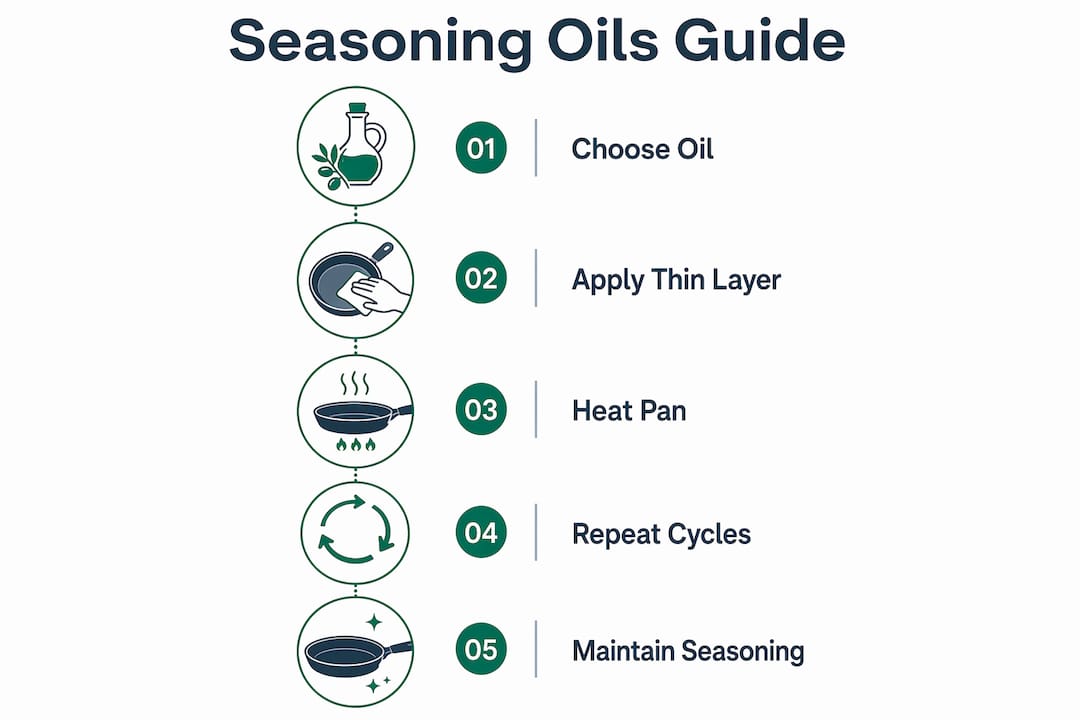
The technique matters as much as the oil you choose. Follow these steps for a reliable base seasoning.
- Wash the pan first. New carbon steel pans often have a light protective oil coating from the factory. Wash with warm, soapy water, rinse well, and dry completely before you begin.
- Preheat the oven to 250°C (480°F). Place the empty pan in the oven for 10 minutes to drive off any remaining moisture. A dry surface bonds better with oil.
- Apply a very thin coat of oil. Use a lint-free cloth or kitchen paper to rub a small amount of grapeseed, canola, or refined avocado oil across the entire surface, including the outside and handle.
- Wipe off the excess. This step is where most cooks go wrong. Wipe the surface until it looks almost dry, not glossy. A thin molecular film is what polymerises correctly. A visible oil layer will turn sticky.
- Bake upside down for 30 minutes. Placing the pan face-down lets any excess oil drip away rather than pool. Seasoning temperatures between 420°F and 475°F give the best results for grapeseed and canola.
- Let it cool in the oven. Do not rush the cooling. Sudden temperature changes can cause warping.
- Repeat 2 to 3 times. One cycle builds a thin layer. Two or three cycles build a proper base. Each layer bonds on top of the last, gradually darkening the surface.
Pro Tip: Cook fatty foods like bacon or fried eggs in the first few uses after seasoning. Cooking naturally reinforces the patina and fills any thin spots.
You can find a full step-by-step seasoning guide on the Brass-steel website if you want to go deeper on each stage.
Common seasoning mistakes and how to fix them
Most seasoning problems come down to two causes: too much oil or the wrong oil. Knowing what to look for makes repairs straightforward.
- Sticky surface after seasoning. This almost always means too much oil was applied. Thick oil layers trap liquid oil underneath and never fully polymerise. Scrub the pan with coarse salt and a stiff brush, rinse, dry, and start again with a thinner coat.
- Flaking or peeling patches. Flaking usually points to flaxseed oil or another high-iodine oil that over-cross-linked. It can also happen if the oven temperature was too low and the oil never fully bonded. Use a bench scraper and coarse salt to remove the loose patches, then re-season the affected area. Full bare-metal stripping is not necessary for a partial repair.
- Uneven colour or thin spots. This happens when oil is applied unevenly or wiped off inconsistently. Add another seasoning cycle, paying close attention to even application.
- Burnt smell or dark smoke during seasoning. The oven temperature exceeded the oil’s smoke point. Drop the temperature slightly and use a higher smoke point oil like refined avocado next time.
- Animal fats going rancid. Bacon grease and lard can build a good cooking patina, but animal fats may go rancid if the pan sits unused for weeks. Stick to plant-based oils for your base seasoning layers.
For a detailed repair walkthrough, the Brass-steel guide on fixing damaged seasoning covers every scenario clearly.
Key takeaways
The best oil for seasoning a carbon steel pan is grapeseed, canola, or refined avocado oil, applied in a thin layer and baked at 420–475°F for a flexible, durable, nonstick coating.
| Point | Details |
|---|---|
| Best oils to use | Grapeseed, canola, and refined avocado oil offer the right smoke point and fat balance. |
| Thin layers are critical | Wipe off excess oil until the surface looks dry, not glossy, before baking. |
| Avoid flaxseed oil | Its high iodine value creates a brittle coating that flakes off with regular use. |
| Repeat seasoning cycles | Two to three oven cycles build a reliable base before you start cooking. |
| Fix sticky seasoning fast | Scrub with coarse salt, remove the excess, and re-season with a thinner coat. |
My honest view on seasoning oils after years of testing
I have tried most of the oils people recommend online, and the results are not all equal. Grapeseed oil is the one I keep coming back to. It is affordable, easy to find in any supermarket, and it builds a dark, even patina faster than canola in my experience. The seasoning it produces feels genuinely slick after three or four cycles, not just “less sticky.”
The flaxseed oil phase was a real lesson. I followed the advice enthusiastically, did six careful seasoning cycles, and the coating started lifting within two weeks of regular cooking. Scraping it off and starting again with grapeseed took an afternoon I would rather not have spent. Save yourself the trouble.
One thing I would tell any beginner: the wipe-off step is where most people fail. You will feel like you are removing too much oil. You are not. The layer that stays behind after a thorough wipe is exactly what you need. A glossy surface going into the oven is a sticky surface coming out.
For ongoing maintenance, I lightly oil the pan after every wash with a tiny amount of grapeseed on a folded piece of kitchen paper. It takes ten seconds and keeps the surface in good condition between uses. The natural nonstick surface that builds up over months of cooking is genuinely better than anything a factory coating can produce.
— Davide
Brass-steel’s resources for seasoning your carbon steel pan
Getting your seasoning right from the start saves a lot of time and frustration later. Brass-steel has put together a full set of guides covering oil selection, application technique, and long-term maintenance, written specifically for carbon steel cookware.
The Brass-steel carbon steel seasoning checklist walks you through every stage in a clear, practical format. If you want to understand the science behind which oils work and why, the guide on cookware seasoning oils goes into the detail that most articles skip. Both the 27 cm and 30 cm Brass-steel carbon steel sauté pans are designed to build a strong, lasting patina with the oils covered in this article. You can explore the full range at brass-steel.com.
FAQ
What is the best oil to season a carbon steel pan?
Grapeseed oil is the best all-round choice for most home cooks. It has a smoke point of around 420°F and a fat profile that produces a flexible, durable seasoning layer.
Can I use olive oil to season a carbon steel pan?
Extra virgin olive oil is not suitable for oven seasoning. Its smoke point of 325–375°F is too low to reach the temperatures needed for proper polymerisation.
How many times should I season a carbon steel pan?
Two to three seasoning cycles build a solid base. Each cycle adds a thin polymer layer, and the patina continues to develop with regular cooking over time.
Why is my carbon steel pan sticky after seasoning?
A sticky surface means too much oil was applied before baking. Scrub the pan with coarse salt, wipe it clean, and re-season with a much thinner coat of oil.
Does oil type really matter for seasoning?
Yes. The oil’s fat composition determines whether the seasoning layer is flexible or brittle, and its smoke point determines whether it polymerises correctly at oven temperatures.
Recommended
- Seasoning a Carbon Steel Pan: Unlocking Natural Nonstick – Brass & Steel
- How to Season Carbon Steel Pan in Oven for Lasting Nonstick – Brass & Steel
- Ultimate Carbon Steel Pan Seasoning Guide for Perfect Results – Brass & Steel
- What is seasoning oil? Essential guide for carbon steel pans – Brass & Steel