Carbon Steel vs Stainless Steel Pan: Which Cooks Best?

Most British kitchens rely on pans that withstand daily wear and deliver precise culinary results. Choosing between carbon steel and stainless steel is more than a matter of preference. Carbon steel pans rise in popularity among home cooks and professional chefs across Europe, thanks to their impressive heat conductivity and a cooking surface that naturally improves over time. Discover how carbon steel’s unique properties can shape your cooking experience and why it often outperforms stainless steel in demanding kitchen environments.
Table of Contents
- Defining Carbon Steel and Stainless Steel Pans
- Material Properties and Cooking Performance
- Nonstick Qualities and Seasoning Explained
- Durability, Health, and Safety Factors
- Choosing the Right Pan for Your Kitchen
Key Takeaways
| Point | Details |
|---|---|
| Material Composition | Carbon steel is primarily iron and carbon, while stainless steel includes chromium, influencing their cooking properties. |
| Heat Conductivity | Carbon steel offers excellent heat responsiveness, making it ideal for high-heat cooking, while stainless steel provides more stable and even heat distribution. |
| Maintenance Needs | Carbon steel requires careful seasoning and maintenance to prevent rust, whereas stainless steel is easier to clean and maintain. |
| Cooking Applications | Choose carbon steel for searing and flavour development, and stainless steel for sauces and general cooking versatility. |
Defining Carbon Steel and Stainless Steel Pans
Carbon steel and stainless steel represent two distinct yet fascinating metal alloys used extensively in cookware manufacturing. Steel is fundamentally an alloy of iron and carbon with varying elemental compositions that dramatically influence their performance characteristics. While they might seem similar at first glance, these materials have unique properties that significantly impact cooking results.
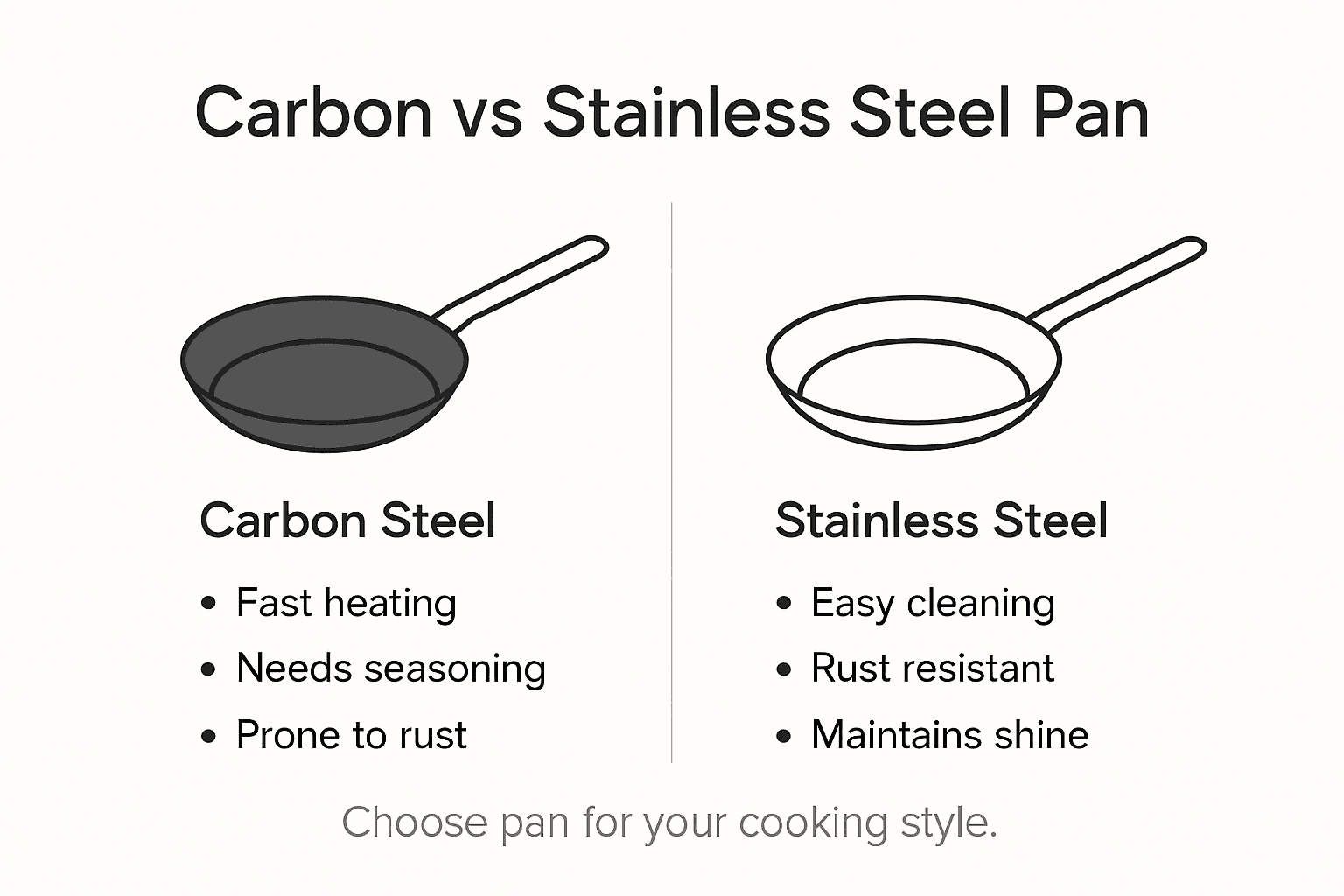
Carbon Steel is primarily composed of iron and carbon, containing between 0.05% to 2% carbon content. This composition provides exceptional heat conductivity and strength, making it popular among professional chefs who value rapid temperature responsiveness. Carbon steel pans develop a natural nonstick seasoning over time, creating a unique cooking surface that improves with regular use. Unlike stainless steel, carbon steel requires specific maintenance to prevent rusting and maintain its performance.
Stainless Steel, by contrast, is more complex. It contains at least 10.5% chromium, which creates a protective layer preventing corrosion and rust. This additional chromium content makes stainless steel significantly more resistant to environmental damage and easier to maintain. Professional kitchens often prefer stainless steel for its durability, consistent performance, and minimal maintenance requirements.
Pro tip: When selecting between carbon steel and stainless steel pans, consider your cooking style, maintenance willingness, and desired cooking characteristics to make the best choice for your kitchen.
The following table presents a clear comparison of carbon steel and stainless steel pans, focusing on their core characteristics and maintenance needs:
| Property | Carbon Steel | Stainless Steel |
|---|---|---|
| Main Alloy Elements | Iron, low carbon | Iron, chromium, nickel |
| Heat Conductivity | Excellent, rapid changes | Moderate, slower response |
| Corrosion Resistance | Low, prone to rust | High, highly resistant |
| Seasoning Requirement | Essential for nonstick | Not required |
| Maintenance Effort | High, needs attentive care | Low, simple cleaning |
| Typical Chefs’ Usage | Searing, stir-frying, flavour focus | Sauces, universal cooking |
Material Properties and Cooking Performance
When comparing material properties, carbon steel and stainless steel offer distinctly different cooking experiences. Carbon steel provides exceptional thermal conductivity with high strength and hardness/12%3A_Solids_and_Modern_Materials/12.02%3A_Materials_for_Structure/12.2.02%3A_Steel), making it a favourite among professional chefs who require rapid and even heat distribution. Its lower alloy content allows for faster temperature changes, enabling precise cooking techniques that demand immediate heat responsiveness.
Stainless steel, conversely, boasts superior corrosion resistance and mechanical toughness, which translates to remarkable durability in kitchen environments. While its thermal conductivity is lower than carbon steel, stainless steel compensates with exceptional resistance to pitting, microbial contamination, and environmental damage. This makes it particularly suitable for professional kitchens where hygiene and long-term performance are paramount.
The key differences emerge in cooking performance: carbon steel develops a natural nonstick surface through seasoning, offering unique flavour development and excellent heat retention. Stainless steel provides a more neutral cooking surface with consistent performance, making it versatile across various cooking methods. Chefs must weigh these characteristics against their specific culinary requirements, considering factors like maintenance, heat responsiveness, and intended cooking techniques.
Pro tip: Select your cookware by matching its material properties to your specific cooking style and maintenance preferences, understanding that each metal brings unique advantages to your kitchen.
Nonstick Qualities and Seasoning Explained
Carbon steel and stainless steel pans offer dramatically different nonstick experiences that fundamentally transform cooking performance. Understanding carbon steel’s seasoning process reveals a unique approach to developing natural nonstick surfaces through careful oil polymerisation and careful maintenance.
With carbon steel, the nonstick quality emerges through a deliberate seasoning process where repeated cooking with oils creates a protective molecular layer on the pan’s surface. This polymerised coating develops gradually, becoming increasingly nonstick with each use. Professional chefs appreciate how this seasoning not only prevents food from sticking but also imparts subtle flavour nuances that enhance culinary results. The process requires patience and specific techniques: using high smoke point oils, applying thin layers, and avoiding soap during cleaning.
Stainless steel, in contrast, lacks this natural seasoning mechanism. Its nonstick properties depend entirely on cooking technique, fat usage, and surface preparation. Cooks must meticulously control pan temperature and oil distribution to prevent ingredients from adhering. While stainless steel offers consistent performance, it demands more technical skill to achieve the same nonstick results that carbon steel develops inherently through seasoning.
Pro tip: Invest time in properly seasoning your carbon steel pan, understanding that each cooking session contributes to building a superior nonstick surface that improves with consistent, mindful use.
Durability, Health, and Safety Factors
Durability and safety represent critical considerations when selecting cookware materials, with each metal presenting unique characteristics. Stainless steel demonstrates superior corrosion resistance and chemical stability, making it exceptionally reliable in food preparation environments where moisture and acidic ingredients pose potential contamination risks.
Carbon steel, while incredibly robust, requires more meticulous maintenance to preserve its structural integrity. Its natural susceptibility to oxidation means home cooks must implement deliberate preservation strategies, including thorough drying after washing and periodic seasoning. Unlike stainless steel’s inherent resistance, carbon steel demands proactive care to prevent rust formation and maintain its cooking performance. Professional kitchens often choose carbon steel for its exceptional heat conductivity, understanding that proper maintenance compensates for its less stable material composition.
From a health perspective, both materials offer significant advantages when used correctly. Stainless steel provides a non-reactive surface that prevents metal leaching, while carbon steel’s seasoned surface creates a natural protective barrier. The key distinction lies in their maintenance: stainless steel offers more forgiving care requirements, whereas carbon steel necessitates a more engaged approach to preserving its cooking surface and preventing potential health risks associated with inadequate maintenance.
Pro tip: Regularly inspect your cookware for signs of wear, rust, or surface degradation, and address maintenance promptly to ensure long-term safety and performance.
Choosing the Right Pan for Your Kitchen
Selecting the ideal cookware requires understanding your specific culinary needs and cooking style. Professional chefs recommend having multiple pan types for versatile kitchen performance, with carbon steel and stainless steel each offering distinct advantages that suit different cooking techniques.
Carbon steel pans excel in high-heat searing, rapid temperature changes, and developing complex flavour profiles through seasoning. They are perfect for home cooks who enjoy precise cooking methods like stir-frying, creating restaurant-quality seared meats, and developing rich, caramelised surfaces. Professional kitchens often favour carbon steel for its responsiveness and ability to create stunning culinary results, though they require more attentive maintenance and a willingness to develop seasoning over time.
Stainless steel pans represent the more versatile, low-maintenance option ideal for everyday cooking. They shine in techniques requiring consistent heat distribution, such as making sauces, gentle sautéing, and preparing delicate proteins. Their non-reactive surface ensures minimal flavour interference and easier cleaning, making them an excellent choice for home cooks seeking reliability and simplicity. While they might lack the nuanced heat responsiveness of carbon steel, stainless steel pans offer predictable performance across a wide range of cooking styles.
Pro tip: Consider purchasing both carbon steel and stainless steel pans to maximise your cooking versatility, allowing you to select the most appropriate pan for each specific culinary task.
This table summarises the most suitable use cases for each type of pan:
| Cooking Scenario | Best With Carbon Steel | Best With Stainless Steel |
|---|---|---|
| High-heat searing | Creates caramelised crust | Maintains heat, reliable |
| Delicate sauces | Risk of sticking | Even temperature, safe |
| Stir-frying | Fast heat adjustments | Less responsive |
| Easy cleaning | Requires seasoning care | Quick wash, minimal effort |
| Hygienic environments | Oxidises easily | Resistant to contaminants |
Discover the Best Pan for Your Cooking Style with Brass & Steel
Choosing between carbon steel and stainless steel pans is a challenge many cooks face as they seek the perfect balance of heat performance, nonstick qualities and long-term durability. This article highlights how carbon steel offers exceptional heat responsiveness and develops a natural nonstick surface through seasoning while stainless steel provides easier maintenance and corrosion resistance. If you want cookware that embraces the dynamic, flavour-enhancing qualities of carbon steel but also focuses on durability and health-conscious design, Brass & Steel has the solution.
Explore our Carbon Steel Collection | Brass&Steel for high-quality pans forged from a single piece of premium carbon steel. Our heirloom-quality pans deliver excellent heat retention and a naturally forming nonstick patina without any toxic coatings. Whether you choose the 27 cm sauté pan for everyday cooking or the larger 30 cm for professional-grade results, you invest in cookware that improves with every use. Visit https://brass-steel.com now to learn how our pans transform cooking into a precise, joyful experience built to last.
Also, stay updated with our latest innovations by checking our New arrivals – Brass & Steel. Take the next step to elevate your kitchen with cookware designed for serious cooks who demand more than just a pan.
Frequently Asked Questions
What is the main difference between carbon steel and stainless steel pans?
Carbon steel pans are made primarily of iron and carbon, providing excellent heat conductivity and developing a natural nonstick surface through seasoning. In contrast, stainless steel pans contain chromium, which makes them highly resistant to corrosion and easier to maintain, but with less immediate heat responsiveness.
Do carbon steel pans require special maintenance compared to stainless steel?
Yes, carbon steel pans require more attention as they need to be seasoned regularly to maintain their nonstick surface and prevent rusting. In contrast, stainless steel pans are more forgiving and mainly require simple washing to keep them clean.
Can carbon steel pans perform as well as stainless steel pans for all cooking methods?
Carbon steel pans excel in high-heat cooking methods such as searing and stir-frying due to their rapid heat responsiveness. However, for techniques like making sauces or cooking delicate proteins, stainless steel pans tend to offer more consistent performance.
Is it safe to use carbon steel and stainless steel pans for cooking?
Yes, both carbon steel and stainless steel pans are safe for cooking. Stainless steel is non-reactive, preventing metal leaching, while carbon steel creates a protective seasoned surface. Proper maintenance is crucial, especially for carbon steel, to ensure safety and performance.
Recommended
- Carbon Steel vs Stainless Steel Pans, which one is best? – Brass & Steel
- Carbon Steel vs Stainless Steel Cookware – What Every Chef Needs to Kn – Brass & Steel
- Carbon Steel Fry Pan vs Stainless Steel: Essential Differences for Ser – Brass & Steel
- Carbon Steel Pan vs Nonstick: Choosing the Best Fit – Brass & Steel