Top carbon steel cookware for chefs: professional picks
TL;DR:
- Professional-grade carbon steel pans should be at least 3mm thick for optimal heat retention and searing.
- Proper seasoning and ongoing care are essential for maintaining natural nonstick properties and longevity.
- The choice of pan depends on specific tasks, with heavier pans suited for high-volume searing and lighter ones for delicate tasks.
Professional kitchens leave no room for cookware that hesitates. You need pans that sear at blistering heat, respond instantly to temperature changes, and hold up through hundreds of covers without warping or shedding chemical coatings. Carbon steel sits at the intersection of all these demands, yet choosing the right pan is harder than it looks. Thickness, weight, seasoning potential, and sustainability credentials all pull in different directions. This guide cuts through the noise, establishing clear selection criteria and reviewing the top chef-approved carbon steel options so you can make a confident, informed decision.
Table of Contents
- Key criteria for selecting professional carbon steel cookware
- Matfer Bourgeat Black Steel pan: the high-heat workhorse
- Top alternatives: Mauviel M’Steel and de Buyer
- Chef cookware comparison: heat retention, handling, and sustainability
- Our take: what truly matters when choosing professional cookware
- Find your next performance pan
- Frequently asked questions
Key Takeaways
| Point | Details |
|---|---|
| Heat retention matters | A thicker pan keeps steady heat in busy kitchens, improving searing and consistency. |
| Lightweight means agility | Lighter pans like Mauviel help chefs sauté, toss, and plate without fatigue during service. |
| Seasoning is essential | Proper seasoning creates lasting nonstick performance and pan longevity. |
| Eco-friendly and durable | Carbon steel pans are PFAS-free, fully recyclable, and can last a lifetime with care. |
Key criteria for selecting professional carbon steel cookware
Before comparing specific pans, it pays to understand what separates a professional-grade carbon steel pan from a consumer-grade one. The wrong choice costs you time, money, and performance during service.
Thickness and weight are the first things to assess. A 3mm gauge pan retains heat far better than a 1.5mm or 2mm alternative, which means your sear stays consistent even when cold protein hits the surface. Heavier pans are less prone to warping under sustained high heat. That said, a 3kg pan used for tossing vegetables through a long service will fatigue your wrist. Matching thickness to task is essential.
Heat retention and responsiveness work in tension. Cast iron retains heat brilliantly but responds slowly to changes in flame. Stainless steel responds quickly but retains poorly. Carbon steel sits between the two, and as Serious Eats confirms, it excels in high-heat tasks like searing steaks because it combines strong heat retention with genuine responsiveness, all while being lighter than cast iron.
Natural nonstick from seasoning is what makes carbon steel genuinely special. With each use and proper care, polymerised oil builds a patina that rivals synthetic coatings without any PTFE or PFOA. A well-seasoned pan releases eggs, fish, and delicate proteins cleanly. Follow a structured seasoning checklist guide to build that patina correctly from day one.
Eco-friendliness and longevity are increasingly non-negotiable for chefs who care about sustainable kitchens. Carbon steel is PFAS-free, fully recyclable, and built to last generations. Unlike coated nonstick pans that degrade and require replacement every few years, a carbon steel pan maintained properly becomes a permanent fixture in your batterie de cuisine.
Upkeep requirements deserve honest consideration. Carbon steel rewards discipline. Dry it immediately after washing, apply a light coat of oil after each use, and avoid prolonged contact with acidic ingredients early in its life. Refer to this seasoning step-by-step guide to build a reliable care routine.
Key selection criteria at a glance:
- Gauge: 3mm minimum for high-volume searing
- Weight: balance retention needs against handling comfort
- Seasoning potential: look for uncoated, bare carbon steel
- PFAS-free certification
- Induction compatibility for modern kitchen flexibility
Pro Tip: Always season a new pan at least three times before using it for service. A single seasoning layer is fragile; three or more layers create a resilient, genuinely nonstick surface.
Having established the key decision criteria, let’s examine the top chef favourites in the current market.
Matfer Bourgeat Black Steel pan: the high-heat workhorse
Few pans carry the professional pedigree of the Matfer Bourgeat Black Steel. This is not a pan that arrived recently on the back of a social media trend. Matfer Bourgeat has been manufacturing in France since 1814, and the Black Steel range reflects over two centuries of refinement for professional kitchen demands.
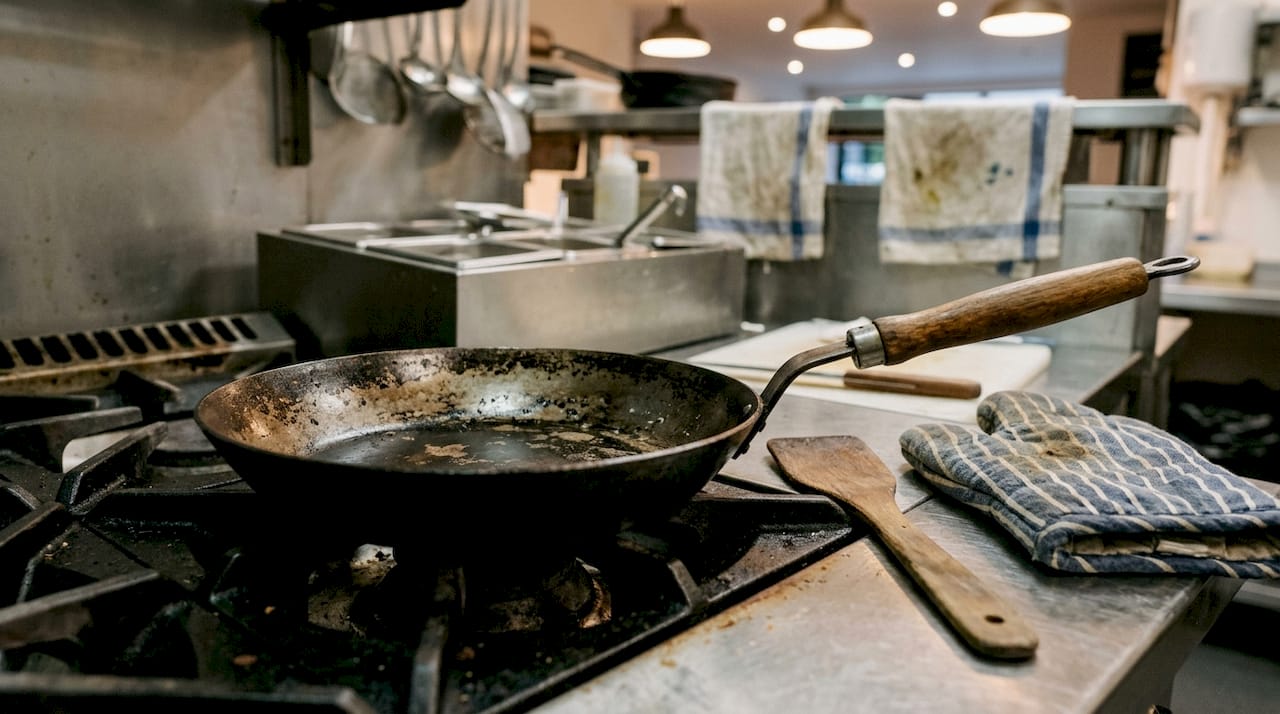
The 30cm model weighs approximately 2.5kg and is forged from 3mm carbon steel. That gauge gives it a heat mass that lighter competitors simply cannot match. When you place a cold steak on this pan mid-service, the surface temperature drops briefly and then recovers fast, giving you consistent Maillard reaction results cover after cover. That consistency is why it is found in Michelin-starred kitchens across Europe.
Key specifications:
- Thickness: 3mm carbon steel
- Weight: approximately 2.5kg
- Diameter: 30cm
- Coating: none, PFAS-free bare steel
- Origin: France
“Matfer’s heavy gauge gives it legendary searing power in high-volume service. Once seasoned properly, it becomes one of the most reliable tools in a professional kitchen.”
The pan’s weight is its main trade-off. For searing proteins or building fond for sauces, it is exceptional. For rapid tossing or delicate egg work, you may find the mass works against you. Understanding the importance of seasoning is critical here because the Matfer’s performance ceiling is only reached once the patina is properly established.
One important note: the handle on the Matfer runs long and stays relatively cool on the stovetop, which is practical during busy service. In the oven, use a cloth or glove without exception.
With Matfer Bourgeat setting a gold standard, let’s move to other chef favourites offering distinct advantages.
Top alternatives: Mauviel M’Steel and de Buyer
Not every task in a professional kitchen demands the thermal mass of the Matfer. Two alternatives stand out for specific applications: the Mauviel M’Steel and the de Buyer Mineral B.
Mauviel M’Steel earned the top position in Serious Eats’ rigorous test of 15 carbon steel pans. Its lighter construction and wide, flat cooking surface make it the go-to choice for egg work, crêpes, and any task where food release and gentle handling matter more than raw searing power. After proper seasoning, eggs and crêpes release with almost no effort, which is exactly what you need during a busy brunch service.
The M’Steel heats quickly and evenly, which reduces the risk of hot spots burning delicate proteins. Its lighter weight also means less fatigue when tossing vegetables or sautéing through multiple covers. If your kitchen handles high volumes of egg-based dishes or requires frequent pan tossing, this is the more ergonomic choice.
de Buyer Mineral B occupies a compelling middle ground. It is lighter than the Matfer but delivers excellent results for the Maillard reaction and steak searing. The beeswax coating on new pans requires a specific initial seasoning approach, but once established, the patina is robust and responsive. Refer to this seasoning guide for the correct approach with wax-coated pans.
Key comparisons:
- Mauviel M’Steel: lightweight, fast to heat, superior for eggs and delicate tasks
- de Buyer Mineral B: responsive, excellent Maillard results, versatile across tasks
- Both are PFAS-free and built to last with consistent care
Pro Tip: Choose Mauviel for stations focused on nonstick performance and delicate food release. Choose de Buyer when searing power and versatility across proteins are the priority. Review this chef pan comparison for a deeper breakdown.
Having explored individual strengths, chefs often need to compare these options head-to-head for specific kitchen roles.
Chef cookware comparison: heat retention, handling, and sustainability
The table below gives you a direct comparison across the criteria that matter most in professional kitchens.
| Feature | Matfer Bourgeat | Mauviel M’Steel | de Buyer Mineral B |
|---|---|---|---|
| Thickness | 3mm | 2mm | 2.5mm |
| Weight (30cm) | ~2.5kg | ~1.8kg | ~2.1kg |
| Heat retention | Excellent | Good | Very good |
| Responsiveness | Good | Excellent | Excellent |
| Nonstick (seasoned) | Very good | Excellent | Very good |
| Best use | High-volume searing | Eggs, crêpes, tossing | All-round versatility |
| PFAS-free | Yes | Yes | Yes |
| Sustainability | Generations | Generations | Generations |
As testing confirms, thicker pans retain heat better during high-volume service but demand more from the cook physically. Lighter options ease tossing and sautéing. All three are PFAS-free and genuinely sustainable alternatives to disposable nonstick cookware.
Three numbered recommendations for making your final decision:
- Assess your service volume. High-volume searing stations benefit most from the Matfer’s thermal mass. Lower-volume or brunch-focused kitchens gain more from Mauviel’s agility.
- Prioritise handling comfort. A pan that fatigues your team reduces speed and precision. Factor in the weight difference across a full service shift.
- Commit to pan care and lifespan. Review surface care tips and care best practices before purchasing. The pan that receives consistent care will always outperform a neglected premium model.
With a clear comparison established, let’s tie together expert advice so you can make the right pick for your kitchen’s unique demands.
Our take: what truly matters when choosing professional cookware
Here is something most cookware guides will not tell you: the brand name on the pan matters far less than what you do with it after it arrives. Chefs spend hours researching gauge, origin, and surface finish, then season the pan once and call it done. That is where performance quietly erodes.
The real differentiator between a pan that lasts a decade and one that rusts in a corner is the care routine built around it. A 3mm Matfer neglected after service will underperform a well-maintained 2mm Mauviel every time. Seasoning is not a one-time task. It is an ongoing relationship between cook and tool.
We also see chefs reach for the heaviest, most prestigious option without asking whether it suits their specific station. A pastry section does not need the same pan as a grill station. Matching the pan to the task, then committing to a disciplined seasoning oil guide and care routine, is what separates good kitchens from great ones. Buy for your task. Season with discipline. The pan will do the rest.
Find your next performance pan
If this guide has helped clarify what your kitchen actually needs, the next step is straightforward. At Brass & Steel, we design and forge carbon steel pans from a single piece of steel, eliminating rivets and welds for cleaner performance and easier maintenance.
Our range includes a 27cm sauté pan at €99 and a 30cm sauté pan at €119, both PFAS-free, induction-compatible, and built for professional use. Alongside the pans, you will find detailed care guides, seasoning tutorials, and a top chef pans compared resource to help you make the right choice for your kitchen. Explore the full range and start building cookware that lasts a lifetime.
Frequently asked questions
How do you properly season a carbon steel pan for professional use?
Clean the pan thoroughly, heat it until completely dry, apply a very thin layer of high-smoke-point oil, and bake or burnish until a dark patina forms. Repeat the process two to three times for a reliable nonstick base before using the pan in service.
What is the main difference between Matfer, Mauviel, and de Buyer pans?
Matfer is heavier and holds heat better for sustained high-volume searing, Mauviel excels in nonstick food release and is the lightest of the three, while de Buyer offers fast responsiveness and is well suited to searing across a range of proteins. As testing shows, Matfer outperforms lighter brands for consistent high-heat browning.
Why do chefs prefer carbon steel over nonstick or stainless pans?
Carbon steel offers superior searing performance over stainless, develops natural nonstick through seasoning, is entirely PFAS-free, and lasts for decades with proper care, making it a far more sustainable and capable long-term investment.
How sustainable is carbon steel cookware for professional kitchens?
Carbon steel is highly sustainable. It is PFAS-free, endlessly recyclable, and designed to remain in service for generations, unlike coated nonstick pans which degrade and require regular replacement.