What pans do chefs use: expert guide to carbon steel in 2026
Choosing the right carbon steel pan challenges even seasoned professionals. Balancing construction quality, size and maintenance demands clarity. This guide cuts through the noise, equipping you with criteria to select pans that meet professional standards. You’ll learn what separates exceptional cookware from mediocre alternatives, ensuring every purchase delivers durability, performance and safety.
Table of Contents
- How To Choose The Perfect Carbon Steel Pan: Selection Criteria For Professionals
- Top Chef-Used Carbon Steel Pans: Sizes, Thickness And Use Cases
- Understanding Carbon Steel Pans: Construction, Durability And Longevity
- Seasoning And Maintenance: How To Keep Your Carbon Steel Pan Performance-Ready
- Performance On Modern Cooktops: Induction Compatibility And Heat Responsiveness
- Carbon Steel Vs Cast Iron: Key Differences And Which To Choose
- Price And Accessibility: What Chefs Can Expect In Europe
- Situational Picks: Choosing The Right Carbon Steel Pan For Your Kitchen Needs
- Explore Premium Carbon Steel Pans At Brass-Steel.Com
- What Pans Do Chefs Use: Frequently Asked Questions
Key takeaways
| Point | Details | |-------|---------|| | Single-piece forged construction eliminates rivets, delivering superior durability and hygiene for professional kitchens. | | 27cm pans with 3mm thickness suit everyday cooking; 30cm pans with 4mm thickness excel in high-volume professional settings. | | Proper seasoning with high-smoke-point oils creates a natural nonstick surface that rivals synthetic coatings without health risks. | | Carbon steel pans are fully induction compatible but demand careful heat management to prevent warping and maintain longevity. | | Carbon steel offers 25-40% lighter weight and 30% faster heating than cast iron, enabling finer temperature control. |
How to choose the perfect carbon steel pan: selection criteria for professionals
Selecting carbon steel cookware demands evaluating four foundational factors. First, construction method determines lifespan and hygiene. Single-piece forged pans eliminate rivets entirely, removing weak points and bacteria traps that compromise cleanliness. Riveted designs may cost less initially but fail faster under professional heat cycles.
Second, pan size and thickness dictate heat retention and cooking control. Thicker steel stores more thermal energy, stabilising temperature during high-volume service. However, heavier pans fatigue wrists during extended shifts. Balance thickness against your kitchen’s typical dish sizes and service pace.
Third, induction compatibility matters if you cook on magnetic cooktops. Carbon steel’s natural magnetic properties work seamlessly with induction, though carbon steel pans are induction-compatible but require moderate heat settings when heating empty or cold to avoid warping. Gas and electric ranges pose no such limitations.
Fourth, health and safety benefits of carbon steel pans stem from their seasoning layer. This natural patina contains no PTFE, PFOA or synthetic polymers. You build nonstick properties through oil polymerisation, creating a safe cooking surface that improves with use.
Pro Tip: Test a pan’s weight before committing. Hold it at arm’s length for 30 seconds. If your wrist aches, choose a lighter model to prevent fatigue during busy service periods.
Key selection factors:
- Construction: Single-piece forged beats riveted for durability and hygiene
- Thickness: 3mm for agility, 4mm for heat stability
- Size: Match to your most frequent dish volumes
- Cooktop: Verify magnetic base for induction compatibility
- Health: Seasoned surface eliminates synthetic coating risks
Top chef-used carbon steel pans: sizes, thickness and use cases
Professional kitchens favour two carbon steel pan profiles. The 27cm pan with 3mm thickness weighs approximately 2kg, offering versatility for everyday tasks. Its lighter mass enables quick temperature adjustments, perfect for delicate proteins and vegetable sautés. Chefs appreciate its manoeuvrability during plating and sauce reductions.
The 30cm pan with 4mm thickness weighs around 3kg, preferred in high-volume settings. Extra thickness stabilises heat during back-to-back orders, maintaining consistent searing temperatures. Larger diameter accommodates family-style portions and whole fish preparations. Weight becomes an advantage here, anchoring the pan during vigorous stirring.
| Pan size | Thickness | Weight | Ideal use case |
|---|---|---|---|
| 27cm | 3mm | ~2kg | Everyday cooking, delicate proteins, quick sautés, home kitchens |
| 30cm | 4mm | ~3kg | Professional service, large dishes, consistent heat retention, family meals |
Thickness directly affects heat retention and recovery. A 4mm pan returns to temperature faster after adding cold ingredients, crucial when searing multiple steaks consecutively. Thinner 3mm pans heat rapidly but lose thermal energy quicker, better suited for recipes requiring frequent temperature changes.
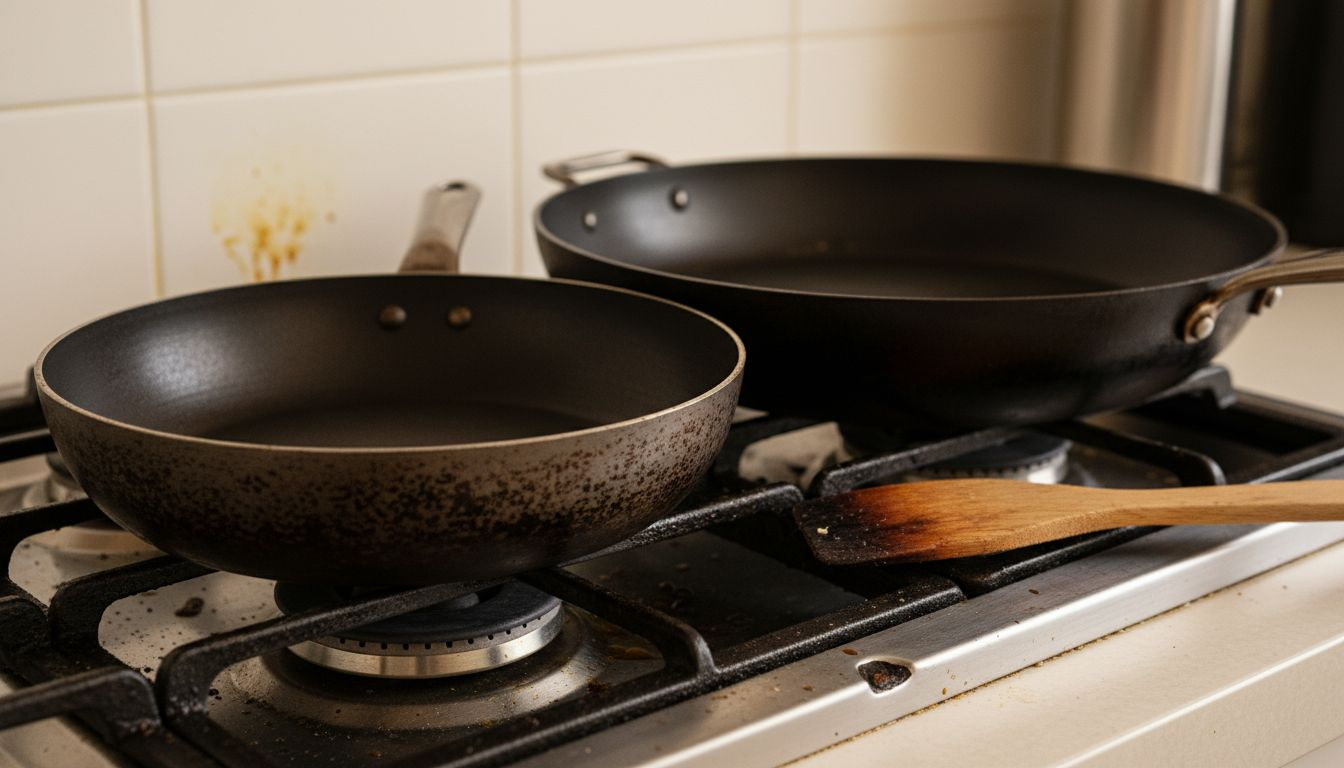
Chef preferences split by cooking style. Sauté specialists lean toward lighter 27cm pans for wrist comfort and responsiveness. Grill and roasting chefs prefer heavier 30cm models for their thermal stability and oven versatility. Both sizes deliver excellent results when matched to technique.
Pro Tip: If you cook solo, start with a 27cm pan. Its lighter weight reduces fatigue whilst building seasoning skills. Upgrade to 30cm once you master maintenance and regularly cook for groups.
Size selection guidelines:
- 27cm: Solo cooking, quick meals, precise temperature control, limited storage
- 30cm: Batch cooking, professional kitchens, entertaining, ample heat capacity
- Thickness impacts handling comfort and thermal performance equally
- Match diameter to your most common ingredient volumes
Understanding carbon steel pans: construction, durability and longevity
Single-piece forging transforms flat steel sheets into seamless pans through hydraulic pressing. This manufacturing eliminates joints, creating a continuous structure that withstands decades of thermal stress. No rivets mean no loosening, no bacterial hiding spots, no premature failures.
Properly maintained carbon steel pans last 30-plus years, often becoming kitchen heirlooms. The material’s simplicity enables easy restoration. Stripped seasoning rebuilds in hours, bent handles straighten with patience, rust scrubs away completely. Compare this to coated pans requiring replacement every 2-3 years.
Thicker construction enhances stability but adds weight. A 4mm pan resists warping better than 3mm variants when exposed to uneven heat or rapid temperature changes. However, extra thickness increases thermal mass, slowing initial heat-up and cool-down cycles. Choose based on your priority: stability or responsiveness.
Carbon steel’s durability stems from its elemental composition. Unlike stainless steel with chromium and nickel, carbon steel contains 99% iron and 1% carbon. This simplicity creates predictable behaviour under heat, easy maintenance and straightforward repairs. Complex alloys often fail in ways you cannot fix at home.
Durability factors:
- Single-piece forging eliminates mechanical weak points entirely
- 30-year-plus lifespan with routine maintenance and care
- Thickness trades responsiveness for warp resistance
- Simple composition enables home restoration and repairs
- Heirloom quality surpasses disposable coated cookware economics
Seasoning and maintenance: how to keep your carbon steel pan performance-ready
Initial seasoning creates the foundation for your pan’s nonstick properties. Follow this sequence for optimal results:
- Wash the new pan with warm soapy water to remove factory protective oil coating
- Dry completely using a towel and brief stovetop heating
- Preheat your oven to 250°C whilst the pan dries fully
- Apply an extremely thin coat of grapeseed, avocado, sunflower or canola oil
- Wipe excess oil until the surface appears almost dry and streak-free
- Place pan upside down in oven and bake for 30 minutes
- Repeat steps 4-6 two or three times to build durable base seasoning
Ongoing maintenance preserves your seasoning investment. Dry immediately after washing to prevent rust formation. Never soak carbon steel pans, as prolonged water exposure damages seasoning and promotes oxidation. Instead, clean with warm water and a soft brush whilst the pan remains slightly warm.
Cooking fatty foods naturally enhances patina. Bacon, duck confit and oil-rich stir-fries deposit polymerised layers that strengthen nonstick performance. Between uses, apply a thin oil coat after drying. This habit prevents rust and gradually builds seasoning thickness.
Re-seasoning becomes necessary when pans appear dull or develop sticky patches. Strip old seasoning using oven cleaner or high-heat burn-off, then repeat initial seasoning steps. Most professionals re-season annually or after cooking acidic foods that strip patina. For detailed guidance, consult our carbon steel seasoning checklist.
Pro Tip: Store carbon steel pans in dry locations with paper towels between stacked pans. Moisture trapped between nested cookware causes rust spots that require tedious removal and re-seasoning.
Maintenance essentials:
- Season with high-smoke-point oils only; avoid olive oil and animal fats initially
- Dry within seconds of washing to prevent rust formation
- Cook fatty dishes regularly to strengthen patina naturally
- Re-season when surface appears sticky or dull
- Store in dry environments with protective layers between pans
- Reference carbon steel care best practices for advanced techniques
- Learn re-seasoning a carbon steel pan procedures when restoration becomes necessary
Performance on modern cooktops: induction compatibility and heat responsiveness
Carbon steel’s magnetic properties ensure seamless induction cooktop performance. The material’s iron content interacts directly with electromagnetic fields, generating rapid heat without flame or electric coil. However, moderate heat settings when heating empty prevent warping from thermal shock.
Induction demands different technique than gas cooking. Start with medium power settings and increase gradually as food enters the pan. Empty pans on high induction power can warp within minutes, permanently damaging flat-bottom geometry. This cautious approach extends pan lifespan significantly.
Carbon steel heats approximately 30% faster than cast iron on any cooktop. Thinner gauge responds almost instantly to burner adjustments, enabling precise temperature control. This responsiveness benefits sauces requiring exact heat levels and proteins demanding quick sears followed by gentle finishing.
High-heat cooking suits carbon steel perfectly. The material tolerates temperatures exceeding 260°C without degrading, unlike nonstick coatings that release fumes above 230°C. Proper heat management means preheating gradually and avoiding empty-pan overheating that causes warping regardless of cooktop type.
Cooktop performance notes:
- Fully compatible with induction due to magnetic iron composition
- Moderate power prevents warping during empty-pan heating
- 30% faster heat-up than cast iron enables quicker service
- Responsive temperature control suits delicate technique requirements
- High-heat capability exceeds 260°C for professional searing applications
Carbon steel vs cast iron: key differences and which to choose
Weight separates these materials immediately. Carbon steel pans weigh 25-40% less than equivalent cast iron, reducing wrist fatigue during extended cooking sessions. A 30cm carbon steel pan at 3kg feels manageable; the same-size cast iron approaches 4.5kg, exhausting even strong cooks.
Heating speed favours carbon steel decisively. Thinner gauge enables 30% faster temperature rise, crucial when kitchen timing matters. Cast iron’s thick walls store tremendous heat but require patience reaching target temperatures. Choose carbon steel when speed matters, cast iron when heat retention trumps responsiveness.
| Factor | Carbon steel | Cast iron |
|---|---|---|
| Weight | 25-40% lighter | Significantly heavier |
| Heat-up time | 30% faster | Slower but steady |
| Temperature control | Highly responsive | Retains heat longer |
| Maintenance | Similar seasoning needs | Similar seasoning needs |
| Durability | Decades with care | Generations with care |
| Price | €80-€150 typical | €60-€120 typical |
Temperature control differs markedly. Carbon steel responds quickly to burner adjustments, allowing precise heat management. Cast iron’s thermal mass resists temperature changes, maintaining steady heat through ingredient additions but responding slowly to adjustment attempts. This inertia suits braising and baking but complicates delicate sautéing.
Maintenance requirements remain nearly identical. Both demand seasoning, immediate drying and rust prevention. Neither tolerates dishwashers or prolonged soaking. The real difference emerges in handling comfort and cooking technique rather than care complexity.
Material comparison:
- Carbon steel: lighter, faster, more responsive, better for sautéing and quick cooking
- Cast iron: heavier, slower, steadier heat, superior for braising and baking
- Both require identical seasoning and maintenance protocols
- Choose based on cooking style and physical comfort priorities
Price and accessibility: what chefs can expect in Europe
Premium carbon steel pans span €80 to €150 across European markets. Price correlates directly with thickness and diameter. A 27cm, 3mm pan typically costs €90-€110, whilst 30cm, 4mm models reach €120-€150. Single-piece forged construction commands premium pricing but delivers superior value through extended lifespan.
Riveted carbon steel pans cost 20-30% less initially but compromise durability and hygiene. Rivets loosen after 5-7 years of professional use, creating wobble and bacterial harbourage. Single-piece designs eliminate these failure points, justifying higher initial investment through decades of reliable service.
European availability concentrates in specialist cookware retailers and premium kitchenware suppliers. Online marketplaces offer broader selection but limit hands-on evaluation before purchase. Physical shops enable weight testing and construction inspection, critical factors when selecting professional-grade cookware.
Professional buyers should budget for multiple pans. Most chefs maintain 2-3 carbon steel pieces in rotation: a lightweight 27cm for daily use and a heavy 30cm for high-volume service. Home cooks often find a single well-chosen pan sufficient, making the €100-€120 investment extremely cost-effective over decades of use.
Pricing considerations:
- Expect €80-€150 depending on size and thickness specifications
- Single-piece forged offers better long-term value than riveted alternatives
- Professional kitchens benefit from 2-3 pan rotation systems
- Specialist retailers provide quality assurance and expert guidance
- Per-year cost drops below €5 when amortised over 30-year lifespan
Situational picks: choosing the right carbon steel pan for your kitchen needs
Everyday home cooking demands the 27cm, 3mm pan. Its 2kg weight balances perfectly for single-cook meals without fatiguing wrists. Versatility covers breakfast eggs through dinner proteins, handling 80% of typical home recipes. Price point around €100 makes it accessible for serious home cooks building foundational cookware collections.
Professional kitchens require the 30cm, 4mm pan’s robust construction. Extra thickness maintains temperature consistency during back-to-back orders, whilst larger diameter accommodates restaurant portion sizes. The 3kg weight becomes an asset rather than burden when pans remain on ranges throughout service.
Maintenance commitment applies universally. Regular seasoning with high-smoke-point oils maximises pan lifespan and cooking performance regardless of size. Budget 10 minutes monthly for touch-up seasoning and inspection. This minimal investment protects your initial purchase for decades.
Cooking volume dictates size selection ultimately. Chefs preparing meals for 2-3 people thrive with 27cm pans. Those feeding 4-6 or running commercial kitchens need 30cm capacity. Technique preferences matter less than practical portion requirements when choosing diameter.
Selection recommendations:
- Solo/couple cooking: 27cm, 3mm for agility and everyday versatility
- Family/professional cooking: 30cm, 4mm for capacity and heat stability
- Maintenance: monthly touch-up seasoning preserves performance
- Budget: €100-€120 delivers professional-grade quality for decades
Explore premium carbon steel pans at brass-steel.com
After mastering selection criteria, explore expertly forged carbon steel pans designed for professional and serious home cooks. Each pan features single-piece construction eliminating rivets, delivering the durability and hygiene standards this guide emphasises. Browse varied sizes and thicknesses tailored to specific culinary needs, from nimble 27cm everyday pans to robust 30cm professional models.
Detailed product specifications align directly with this guide’s selection framework. Thickness, weight and diameter information enables confident decisions matching your kitchen requirements. Discover premium carbon steel pans that transform cooking technique whilst lasting generations. Benefit from manufacturing precision combining Polish engineering with Italian design sensibility, creating cookware that performs flawlessly under professional heat demands.
What pans do chefs use: frequently asked questions
How often should I season my carbon steel pan?
Season initially before first use, then perform touch-up seasoning monthly or as needed after cooking fatty foods. Avoid over-oiling, which creates sticky residue requiring removal and re-seasoning. Regular light seasoning maintains nonstick properties better than infrequent heavy applications. Consult our carbon steel seasoning checklist for detailed timing guidance based on cooking frequency.
Can carbon steel pans be safely used on induction cooktops?
Yes, fully compatible due to magnetic properties. However, avoid high heat on empty pans to prevent warping from thermal shock. Use moderate power settings and preheat gradually, especially when pans are cold or empty. Once food enters the pan, increase power as needed for proper searing and cooking performance.
What size carbon steel pan is best for professional cooking?
The 30cm pan with 4mm thickness suits professional kitchens best for larger dishes and superior heat retention during high-volume service. Its 3kg weight provides stability whilst accommodating restaurant portion sizes. However, 27cm pans excel for versatile everyday cooking and smaller portion preparation, making them ideal for home professionals and prep stations.
How does carbon steel compare to cast iron for cooking performance?
Carbon steel heats 30% faster and weighs 25-40% less, offering greater temperature control and reduced wrist fatigue. Cast iron retains heat longer through its greater thermal mass but responds slowly to temperature adjustments. Both require identical seasoning protocols. Choose carbon steel for responsive technique-driven cooking, cast iron for steady-heat applications like braising. Reference our detailed carbon steel care tips for maintenance guidance applicable to both materials.