Professional Cookware Checklist for Chefs: The Complete Guide

British chefs working in European fine dining environments know that every cookware choice shapes precision and consistency on the plate. Carbon steel pans last up to 40 percent longer than many standard alternatives, providing exceptional value for professional kitchens focused on long-term performance. For chefs demanding versatility, durability, and perfect results across complex techniques, understanding the role of each pan and its material is the first step toward selecting the tools that match your culinary ambitions.
Table of Contents
- Step 1: Assess Your Cooking Requirements
- Step 2: Select Durable Carbon Steel Pans
- Step 3: Verify Compatibility For All Cooktops
- Step 4: Prepare Pans With Proper Seasoning
- Step 5: Maintain Cookware For Peak Performance
- Step 6: Inspect And Update Your Cookware Regularly
Quick Summary
| Key Point | Explanation |
|---|---|
| 1. Assess Your Cooking Needs | Understand your culinary practices and choose cookware that matches your cooking styles and methods for optimal performance. |
| 2. Select Quality Carbon Steel Pans | Opt for durable carbon steel pans with robust construction and a good weight for effective heat distribution and usability. |
| 3. Ensure Compatibility Across Cooktops | Test your carbon steel cookware with a magnet to confirm it works on induction, gas, and electric stoves for versatility. |
| 4. Properly Season Your Pans | Season carbon steel pans correctly to create a non-stick surface, enhance longevity, and improve cooking performance over time. |
| 5. Regularly Maintain and Inspect Cookware | Establish a maintenance routine to clean, oil, and inspect pans regularly to prolong their lifespan and performance in professional settings. |
Step 1: Assess your cooking requirements
Selecting the right professional cookware begins with a thorough understanding of your unique culinary needs. Professional chefs recognise that cookware material significantly impacts cooking outcomes across different cooking techniques and gastronomic styles.
To effectively assess your cooking requirements, start by evaluating your specific culinary practices. Consider the types of dishes you frequently prepare, your preferred cooking methods, and the heat management techniques essential to your style. Professional kitchens typically require versatile cookware that can transition seamlessly between stovetop and oven, withstand high temperatures, and provide consistent heat distribution. Some chefs prefer cast iron for exceptional heat retention, while others lean towards stainless steel for its remarkable versatility and durability.
Your cookware collection should reflect the complexity and diversity of your cooking repertoire. Account for factors such as pan weight, handle comfort, material conductivity, and maintenance requirements. Understanding how different cookware materials interact with various cooking techniques will help you build a strategic collection that enhances your culinary performance.
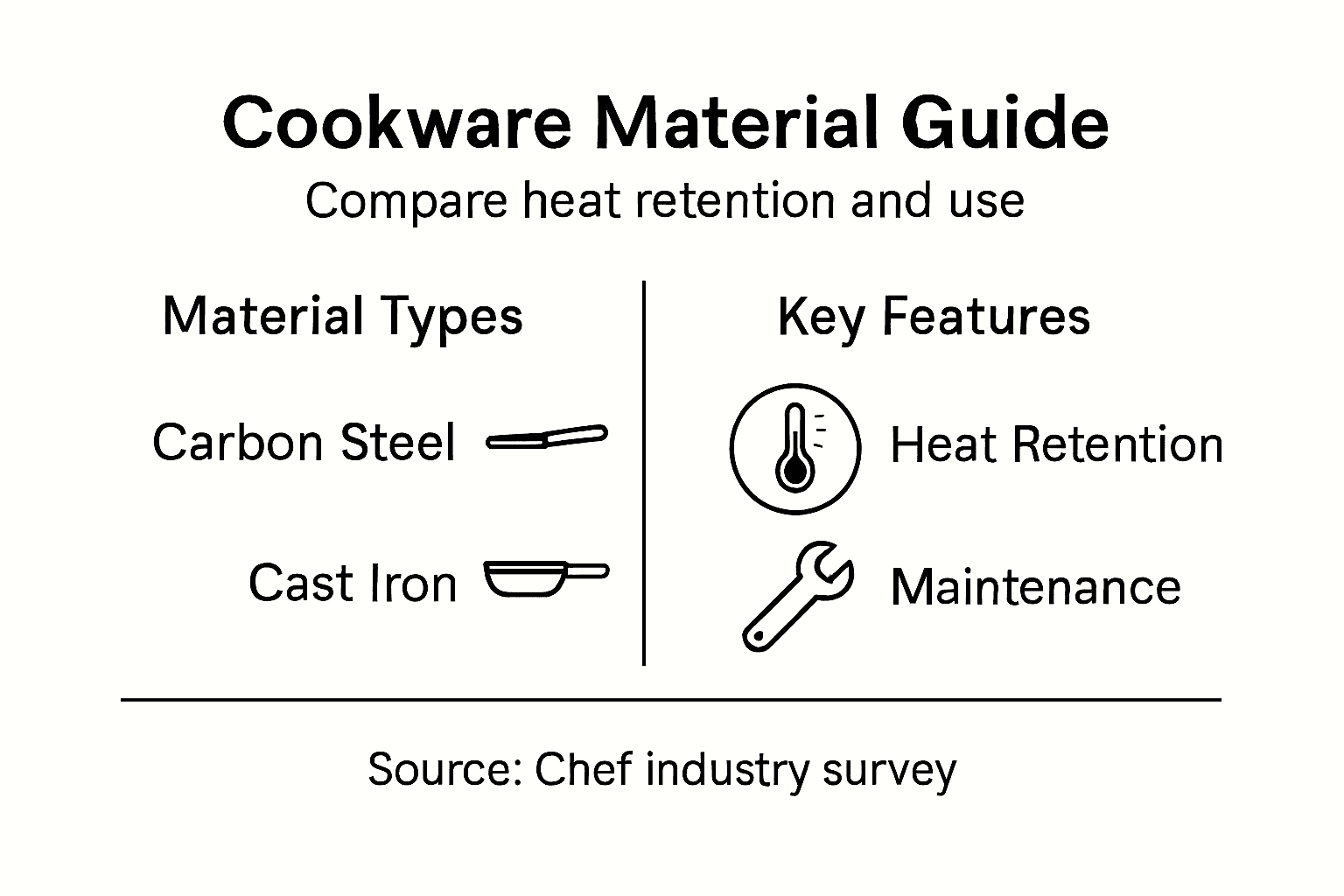
Here is a comparison of common cookware materials and their professional kitchen applications:
| Material | Heat Retention | Typical Uses | Maintenance Demand |
|---|---|---|---|
| Carbon steel | High, fast response | Searing, frying, sautéing | Regular seasoning needed |
| Stainless steel | Moderate, very even | Boiling, simmering, deglazing | Simple, dishwasher safe |
| Cast iron | Very high, slow | Slow cooking, baking, roasting | Frequent seasoning needed |
| Non-stick | Low, rapid heating | Eggs, delicate foods | No seasoning, gentle care |
Insider Tip: Create a detailed inventory of your most frequent cooking methods before investing in professional cookware to ensure each piece serves a specific and valuable purpose in your kitchen.
Step 2: Select durable carbon steel pans
Choosing high-performance carbon steel pans requires understanding their unique characteristics and how they complement professional cooking techniques. Professional chefs value carbon steel for its exceptional durability and remarkable cooking versatility.
When selecting carbon steel cookware, prioritise pans with robust construction and consistent heat distribution. Look for pans manufactured from high-grade carbon steel with a thickness between 2 to 4 millimetres, which provides optimal heat retention and resistance to warping. Professional kitchens typically require pans that can withstand high temperatures, transition smoothly between stovetop and oven, and develop a natural non-stick surface through careful seasoning. Consider the pan’s weight, handle design, and overall balance to ensure comfortable handling during extended cooking sessions.
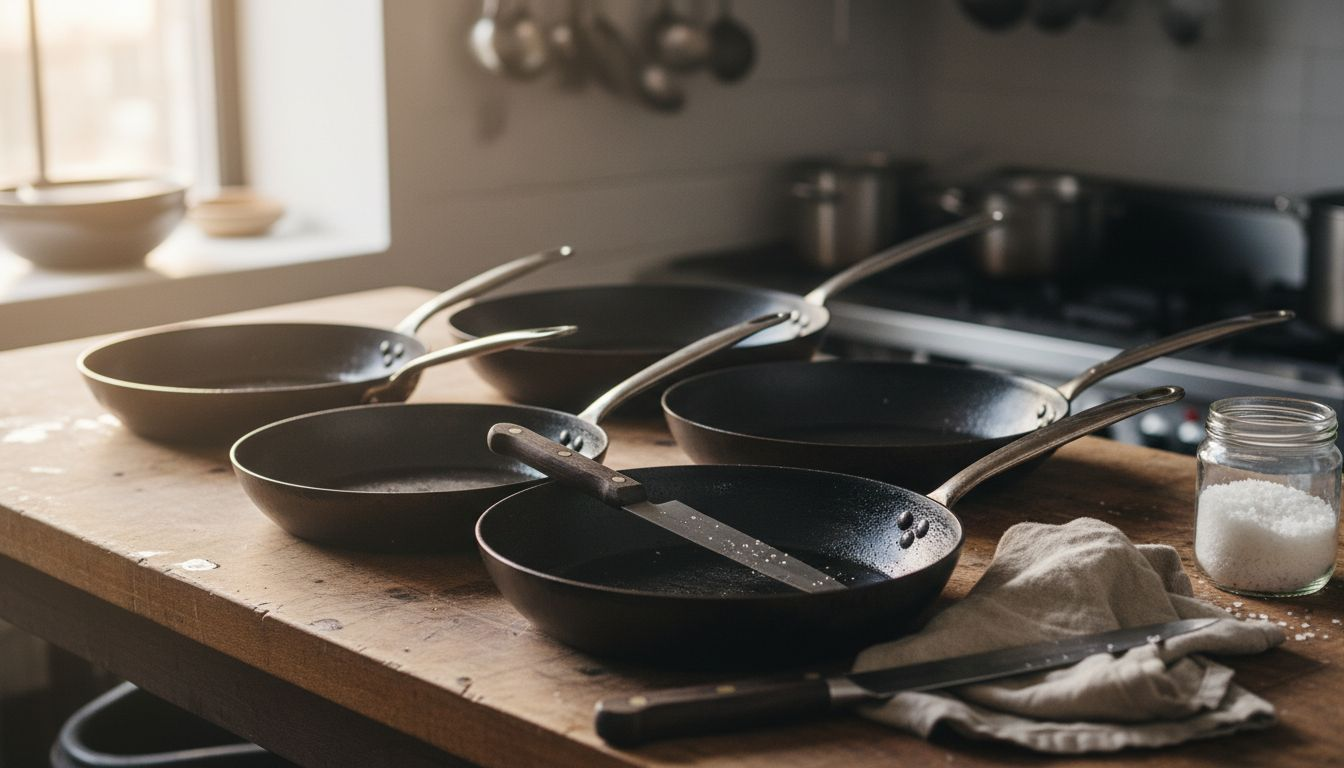
Evaluate each pan’s specific performance attributes. Some carbon steel pans excel at searing meats, while others are ideal for delicate sautéing techniques. Brands like de Buyer and Matfer Bourgeat are renowned for producing professional grade carbon steel cookware that meets rigorous culinary standards. Pay attention to the pan’s construction quality, checking for seamless design, comfortable ergonomic handles, and a smooth cooking surface that will develop an excellent seasoning over time.
Insider Tip: Invest in versatile carbon steel pans with single piece construction to ensure maximum durability and simplified maintenance.
Step 3: Verify compatibility for all cooktops
Ensuring your carbon steel cookware works seamlessly across different cooking surfaces is crucial for professional chefs who require versatile kitchen equipment. Determining cookware compatibility involves understanding specific stovetop requirements and recognising the materials that conduct heat effectively.
To verify your carbon steel pans are compatible with various cooktops, start by conducting a simple magnetic test. Carbon steel contains ferromagnetic properties that make it ideal for induction, gas, and electric ranges. Check the pan’s base by placing a strong magnet against it. If the magnet adheres firmly, your cookware will function perfectly on induction cooktops. Professional kitchens demand cookware that transitions effortlessly between different heat sources, so prioritise pans with universal compatibility. Look for manufacturer markings that indicate stovetop suitability, paying special attention to symbols representing induction, gas, and electric range compatibility.
Consider the specific performance characteristics of your carbon steel cookware across different cooking surfaces. Some pans perform exceptionally well on gas ranges due to their rapid heat responsiveness, while others excel on induction cooktops with their precise temperature control. Inspect the pan’s construction, focusing on a flat base that ensures maximum contact with the cooking surface and even heat distribution. Professional chefs understand that versatility is key when selecting high performance cookware that can adapt to various cooking environments.
Insider Tip: Always keep a small magnet in your kitchen toolkit to quickly test cookware compatibility before making a purchase.
Step 4: Prepare pans with proper seasoning
Seasoning carbon steel pans is a critical process that transforms raw metal into a high performance cooking surface. Seasoning creates a natural non stick protective layer that prevents rust and enhances cooking performance.
To begin seasoning, thoroughly clean your new carbon steel pan using warm water and a soft cloth. Ensure the pan is completely dry before applying a thin layer of high smoke point oil such as grapeseed or sunflower oil. Use a paper towel to distribute the oil evenly across the entire surface including the exterior and handle. Professional chefs recommend heating the pan in an oven preheated to 250 degrees Celsius, placing it upside down to allow excess oil to drip away. This process causes the oil to polymerise and bond with the metal pores creating a durable protective coating that improves with each subsequent use.
Consistent seasoning maintenance is key to preserving your carbon steel cookware. After each cooking session, clean the pan with minimal water and a soft cloth. Apply a light coat of oil to maintain the non stick surface and prevent moisture accumulation. Over time your pan will develop a smooth dark patina that indicates a well seasoned and cared for cooking surface. Professional kitchens understand that proper seasoning not only protects the pan but also enhances its cooking performance and longevity.
Insider Tip: Always use oils with high smoke points and avoid washing seasoned pans with soap to preserve the carefully developed non stick surface.
Step 5: Maintain cookware for peak performance
Maintaining professional carbon steel cookware requires strategic care and consistent attention to preserve its exceptional cooking capabilities. Professional chefs prioritise cookware maintenance to extend lifespan and performance under intense kitchen conditions.
Develop a comprehensive maintenance routine that begins immediately after cooking. Always clean your carbon steel pan while it is still warm using minimal water and a soft cloth or brush. Avoid using harsh detergents or abrasive cleaning materials that could strip away the carefully developed seasoning. After cleaning, dry the pan thoroughly and apply a thin layer of high smoke point oil to protect the surface from moisture and prevent rust formation. Store your cookware in a cool dry place with adequate air circulation to maintain its pristine condition.
Regular inspection is crucial for identifying potential issues before they become significant problems. Check your carbon steel pans for signs of uneven seasoning, rust spots, or surface irregularities. Address these concerns promptly by gently removing rust with a mild abrasive pad and re-seasoning the affected area. Professional kitchens understand that proactive maintenance prevents performance degradation and ensures cookware remains a reliable culinary tool.
Insider Tip: Create a dedicated maintenance schedule and record for each piece of carbon steel cookware to track its seasoning history and performance.
Step 6: Inspect and update your cookware regularly
Professional chefs understand that maintaining a high performance kitchen requires consistent evaluation of their cookware collection. Routine inspection helps identify potential issues before they compromise cooking quality and ensures safety standards are continuously met.
Conduct a comprehensive assessment of your carbon steel cookware at least quarterly. Examine each pan meticulously for signs of wear including surface irregularities, handle stability, potential warping, and seasoning condition. Pay special attention to the pan base for flatness and check for any rust spots or areas where the seasoning has deteriorated. Professional kitchens treat cookware inspection as a critical maintenance ritual that prevents unexpected equipment failure and maintains consistent culinary performance.
When evaluating your cookware collection, develop a systematic approach to replacement and repair. Consider factors such as cooking frequency, visible damage, and overall performance degradation. Some indicators that suggest a pan requires updating include persistent rust spots that cannot be restored, significant warping that prevents even heat distribution, handle looseness, or coating deterioration that affects cooking results. By proactively managing your cookware inventory, you ensure your kitchen remains equipped with tools that meet the highest professional standards.
The following table summarises main cookware maintenance tasks by frequency:
| Task | After Each Use | Weekly | Quarterly |
|---|---|---|---|
| Clean with soft cloth | Essential for all | Not applicable | Not applicable |
| Apply thin oil layer | Strongly recommended | Not required | Not required |
| Dry thoroughly | Every use | Not required | Not required |
| Inspect for defects | Not required | Brief check | Detailed inspection |
| Photographic record | Not required | Not required | Useful for tracking |
Insider Tip: Photograph your cookware during inspections to create a visual maintenance log and track its condition over time.
Elevate Your Professional Cookware Collection with Brass & Steel
If you are striving to master the art of professional cooking, the challenge lies in selecting durable, high-performance cookware that matches your culinary ambitions. This guide highlights the importance of choosing cookware designed to deliver consistent heat retention, seamless compatibility with all cooktops, and a natural nonstick surface through proper seasoning — all essential aspects of achieving kitchen excellence. To meet these exacting standards, explore the Carbon Steel Collection | Brass&Steel where every pan is forged from a single piece of premium carbon steel for unmatched durability and performance.
Investing in Brass & Steel cookware means you gain heirloom-quality pans that excel at heat responsiveness and develop a safe, naturally seasoned surface that enhances flavour and cooking precision over time. Designed to be PTFE free and fully compatible with induction cooktops, our pans offer professional chefs and dedicated home cooks alike a trusted solution. Do not wait to upgrade your kitchen tools — visit Brass & Steel now to discover new arrivals and essential accessories that will complete your cookware set and propel your cooking skills forward.
Frequently Asked Questions
How do I assess my cooking requirements for professional cookware?
To assess your cooking requirements, evaluate the types of dishes you frequently prepare and your preferred cooking methods. Create a detailed inventory of your common cooking techniques to guide your professional cookware selection based on your culinary needs.
What should I look for when selecting carbon steel pans?
When selecting carbon steel pans, prioritise those with robust construction and optimal heat distribution. Choose pans that are made from high-grade carbon steel, are between 2 to 4 millimetres thick, and offer ergonomic handles for comfortable handling during extended cooking sessions.
How can I verify if my carbon steel cookware is compatible with my cooktop?
To confirm that your carbon steel cookware is compatible with your cooktop, conduct a simple magnetic test. Place a strong magnet against the base of the pan; if it adheres firmly, the cookware is suitable for induction, gas, and electric ranges.
What are the steps to properly season carbon steel pans?
To season carbon steel pans, start by cleaning the pan with warm water and a soft cloth. Apply a thin layer of high smoke point oil, heat it upside down in an oven at 250 degrees Celsius to polymerise the oil, and repeat this process regularly after each use for optimal performance.
How should I maintain my carbon steel cookware for peak performance?
Develop a maintenance routine by cleaning your carbon steel cookware while it is still warm using minimal water and soft cloths. After cleaning, dry the pan and apply a thin layer of oil to prevent moisture and rust, ensuring your cookware remains in excellent condition.
How often should I inspect and update my cookware collection?
Inspect your cookware collection at least quarterly for signs of wear or damage. Look for rust spots, surface irregularities, or handle instability, and update any pans showing significant wear to maintain high cooking standards.