What pots and pans do professional chefs use in 2026
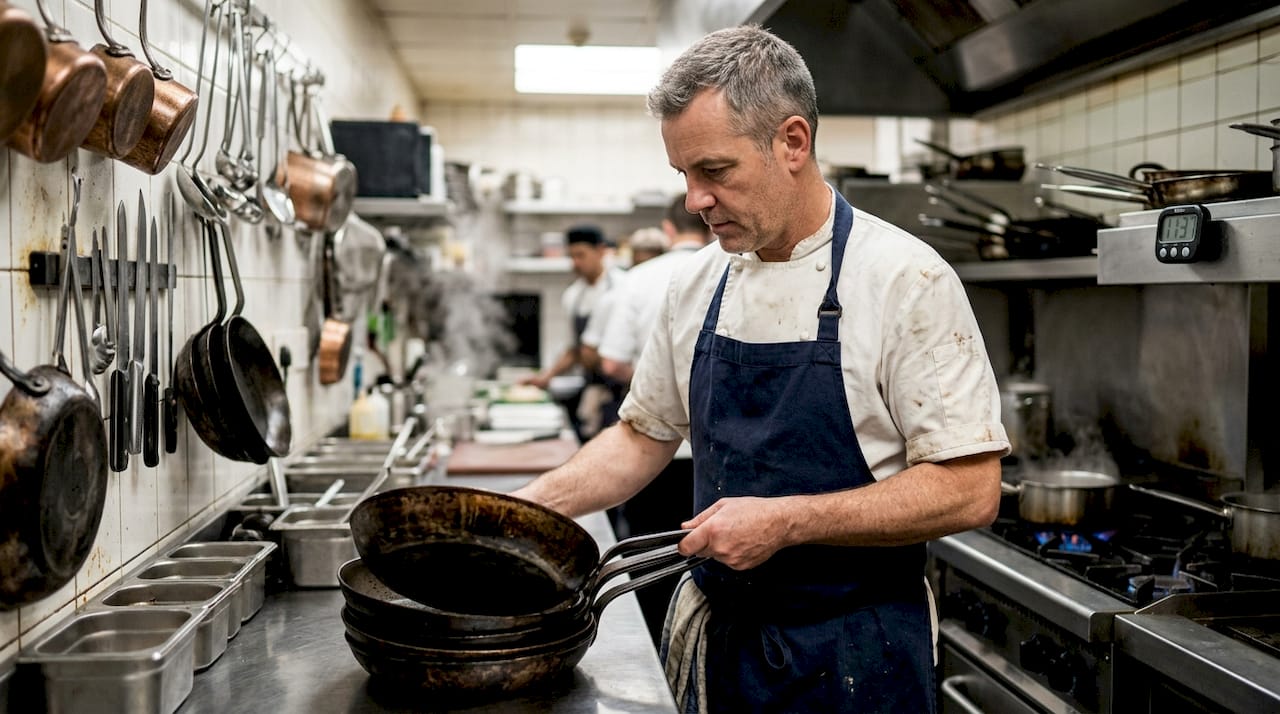
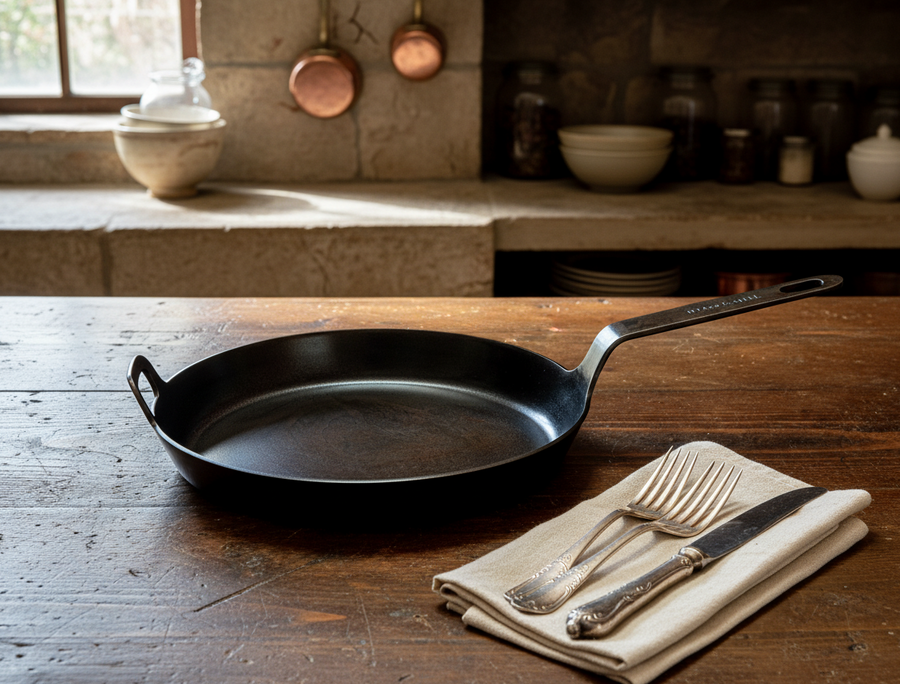
Most people assume professional kitchens rely on stainless steel or non-stick pans, yet walk into any serious European restaurant and you’ll find carbon steel dominating the line. Professional chefs favour carbon steel cookware for its unmatched heat responsiveness, natural non-stick properties, and durability that outlasts coated alternatives. This guide reveals why carbon steel has become the preferred choice in professional kitchens across Europe in 2026, and how you can make informed decisions about your own cookware investments.
Table of Contents
- Understanding The Cookware Choices Of Professional Chefs
- The Unique Benefits Of Carbon Steel Cookware For Pro Chefs
- Comparing Professional Cookware: Carbon Steel Versus Alternatives
- How To Choose And Maintain Your Carbon Steel Cookware
- Enhance Your Kitchen With Premium Carbon Steel Cookware
- Frequently Asked Questions
Key takeaways
| Point | Details |
|---|---|
| Carbon steel dominates professional kitchens | Chefs prefer carbon steel for superior heat conduction and durability over stainless steel and non-stick options. |
| Material choice impacts cooking precision | Different cookware materials affect heat response, maintenance requirements, and overall cooking performance. |
| Forged construction increases reliability | Single-piece forged pans eliminate weak points and provide consistent performance under professional use. |
| Proper maintenance extends pan lifespan | Regular seasoning and correct cleaning routines prevent rust and maintain natural non-stick properties. |
| Carbon steel suits both professionals and home cooks | The same qualities that benefit restaurant kitchens translate perfectly to serious home cooking environments. |
Understanding the cookware choices of professional chefs
Professional chefs select their tools based on performance under pressure, not marketing claims. The cookware landscape includes four primary materials, each with distinct characteristics that affect daily kitchen operations.
Stainless steel offers durability and resistance to acidic ingredients, making it ideal for sauces and delicate reductions. However, its poor heat distribution creates hot spots that require constant attention. Non-stick coatings provide easy release for delicate items like fish and eggs, but they degrade rapidly under high heat and require frequent replacement in busy kitchens. Cast iron delivers excellent heat retention for consistent cooking temperatures, yet its substantial weight causes fatigue during long service periods.
Carbon steel cookware offers superior heat conduction and durability compared to stainless steel and non-stick varieties. This material combines the best attributes of multiple cookware types whilst minimising their drawbacks. Carbon steel pans heat quickly like stainless steel, develop natural non-stick properties like cast iron, and weigh considerably less than traditional cast iron pieces.
The material composition directly influences cooking outcomes. Carbon steel contains 99% iron and 1% carbon, creating a structure that conducts heat rapidly whilst maintaining structural integrity. This precise balance allows chefs to adjust temperatures instantly, crucial for techniques requiring split-second timing. When you sear a steak or flash-fry vegetables, the pan’s ability to recover temperature after adding cold ingredients determines whether you achieve proper caramelisation or end up steaming your food.
Professional kitchens demand cookware that withstands daily abuse. Carbon steel pans endure metal utensils, high-heat cooking, and frequent cleaning without degrading. Unlike non-stick surfaces that chip and peel, or stainless steel that develops permanent discolouration, carbon steel actually improves with use as seasoning layers build up naturally.
Key material considerations for professional cookware include:
- Heat conductivity and temperature recovery speed
- Weight and manoeuvrability during extended service
- Resistance to warping under thermal stress
- Compatibility with all cooking surfaces including induction
- Maintenance requirements and long-term durability
- Cost-effectiveness over the pan’s lifespan
Exploring 7 types of cookware materials explained reveals how each option performs in real kitchen conditions. Carbon steel consistently ranks highest for versatility and reliability, explaining its prevalence in European professional kitchens throughout 2026.
The unique benefits of carbon steel cookware for pro chefs
Carbon steel’s dominance in professional settings stems from specific performance characteristics that directly address the demands of high-volume cooking. Understanding these benefits explains why experienced chefs consistently choose this material over alternatives.
Heat responsiveness separates adequate cookware from exceptional tools. Carbon steel heats up in seconds and cools down just as quickly when removed from heat. This immediate response gives chefs precise control over cooking temperatures, essential for techniques like deglazing or creating pan sauces. When you need to drop temperature rapidly to prevent burning, carbon steel reacts instantly whilst stainless steel continues radiating stored heat.
Forged carbon steel pans combine strength and heat responsiveness, making them ideal for professional kitchens. The forging process compresses the metal’s grain structure, creating a denser material that distributes heat evenly across the entire cooking surface. This eliminates hot spots that cause uneven cooking and burnt patches.
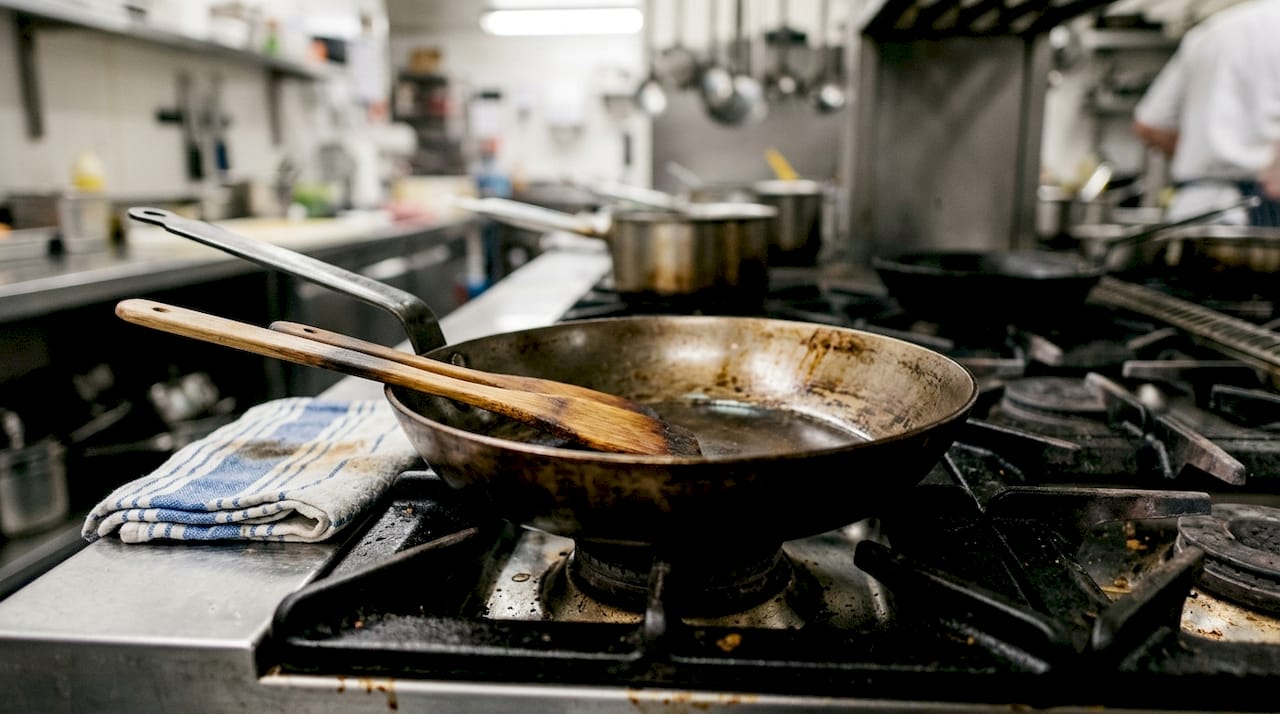
Durability in professional environments means surviving thousands of service cycles without performance degradation. Carbon steel pans withstand temperatures exceeding 260°C, far beyond what non-stick coatings tolerate. You can move them directly from stovetop to oven to broiler without concern. The material won’t warp under thermal shock, crack from impact, or delaminate like multi-layer constructions.
The natural non-stick surface develops through proper seasoning, creating a polymerised oil layer that releases food effortlessly. Unlike synthetic coatings that deteriorate over time, seasoning actually strengthens with use. Each cooking session adds microscopic layers that fill in the metal’s surface irregularities, producing a smoother finish than factory coatings achieve. This natural patina contains no PTFE, PFOA, or other chemicals, addressing health concerns that plague synthetic non-stick options.
Weight considerations matter during extended cooking sessions. A 30 cm carbon steel pan weighs approximately 3 kg, substantially lighter than an equivalent cast iron piece at 4.5 kg. This difference reduces arm fatigue when flipping ingredients or transferring pans repeatedly throughout service. Professional chefs appreciate tools that don’t exhaust them before the evening rush ends.
Carbon steel’s advantages for professional use include:
- Instant heat adjustment for precise temperature control
- Natural non-stick properties that improve over time
- Lightweight construction compared to cast iron alternatives
- Compatibility with metal utensils without surface damage
- Oven-safe up to maximum temperatures for finishing dishes
- Single-piece construction eliminating rivet failure points
Pro Tip: Season your carbon steel pan after every third use during the first month to accelerate patina development. Heat the clean, dry pan until it just begins smoking, add a thin layer of grapeseed oil, wipe thoroughly with a paper towel, then heat for two minutes. This routine builds seasoning faster than cooking alone, establishing a robust non-stick surface that rivals synthetic coatings.
The advantages forged carbon steel pans offer extend beyond basic cooking performance. These tools become extensions of the chef’s technique, responding predictably to every adjustment and maintaining consistency across countless meals. This reliability explains why carbon steel remains the professional standard in 2026.
Comparing professional cookware: carbon steel versus alternatives
Direct comparison reveals how carbon steel stacks up against competing materials in real-world professional applications. Each cookware type excels in specific scenarios, but carbon steel offers the broadest utility.
| Material | Heat Response | Durability | Weight | Maintenance | Cost |
|---|---|---|---|---|---|
| Carbon Steel | Excellent | Very High | Light | Moderate | Medium |
| Stainless Steel | Poor | High | Medium | Low | High |
| Cast Iron | Moderate | Very High | Heavy | Moderate | Low |
| Non-Stick | Good | Low | Light | Low | Low |
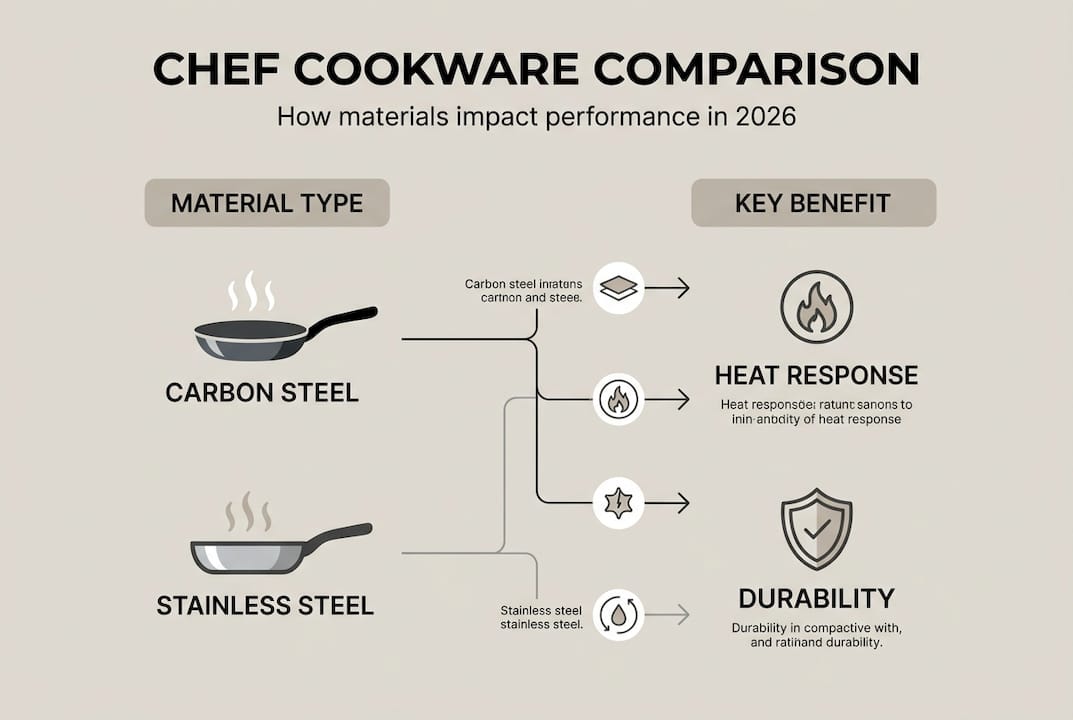
Heat response determines cooking precision. Carbon steel adjusts temperature within seconds, matching the responsiveness chefs need for delicate sauces and precise searing. Stainless steel requires preheating and maintains hot spots that complicate temperature management. Cast iron retains heat exceptionally but takes minutes to adjust temperature, limiting its use for techniques requiring rapid changes. Non-stick pans respond quickly but can’t tolerate the high temperatures professional cooking demands.
Durability affects long-term value. Professional chefs select cookware based on durability, heat retention, maintenance, and cooking style. Carbon steel and cast iron both last decades with proper care, whilst non-stick coatings degrade within 12 to 18 months under professional use. Stainless steel endures but develops permanent staining and heat damage that affects performance.
Weight impacts usability during extended service. Carbon steel provides the ideal balance, offering substantial construction without the fatigue-inducing heft of cast iron. Professional kitchens often stock multiple pan sizes, and lighter weight allows chefs to manage several pans simultaneously without strain. A 27 cm carbon steel pan at 2 kg handles comfortably throughout a busy dinner service, whilst a comparable cast iron pan causes noticeable arm fatigue.
Maintenance requirements influence daily workflow. Carbon steel demands seasoning and immediate drying but rewards this care with improved performance. Stainless steel tolerates neglect but never develops non-stick properties. Cast iron requires similar maintenance to carbon steel but its weight makes handling during cleaning more cumbersome. Non-stick pans need gentle treatment and frequent replacement, creating ongoing costs.
Situations favouring each material:
- Carbon steel excels for searing, sautéing, stir-frying, and oven finishing
- Stainless steel suits acidic sauces, deglazing, and extended simmering
- Cast iron works best for slow braises, baking, and dishes requiring prolonged heat retention
- Non-stick handles delicate items like fish and eggs in low-heat applications
Carbon steel’s versatility makes it the primary workhorse in professional kitchens. You can accomplish 80% of cooking tasks with a single carbon steel pan, whilst other materials require multiple pieces to cover the same range. This efficiency explains why line cooks reach for carbon steel first and reserve specialised materials for specific applications.
Expert recommendations consistently favour carbon steel for professional environments. The material’s combination of performance, durability, and practicality addresses the full spectrum of professional cooking demands. When chefs invest in professional cookware types for every chef, carbon steel forms the foundation of their collection.
How to choose and maintain your carbon steel cookware
Selecting quality carbon steel cookware requires understanding specific construction features that separate professional-grade pieces from consumer alternatives. These factors directly impact performance and longevity.
Thickness determines heat distribution and structural integrity. Professional-grade pans use 3mm to 4mm carbon steel, providing the mass needed for even heating whilst remaining manoeuvrable. Thinner pans heat quickly but warp under high temperatures and develop hot spots. The 27 cm pan at 3mm thickness suits everyday cooking tasks, whilst the 4mm 30 cm pan handles larger volumes and professional kitchen demands.
Forging method affects durability and performance. Single-piece forged construction eliminates rivets and welds, creating seamless strength that withstands decades of use. Rivets create crevices that trap food particles and eventually loosen, whilst welded handles separate under thermal stress. Forged pans distribute heat uniformly because the metal maintains consistent thickness throughout.
Handle design impacts safety and control. Professional carbon steel pans feature handles that stay cool on stovetops but tolerate oven temperatures. The handle should balance the pan’s weight, allowing controlled flipping and pouring without wrist strain. Avoid hollow handles that conduct heat rapidly or decorative elements that compromise grip.
Proper maintenance preserves carbon steel’s performance characteristics:
-
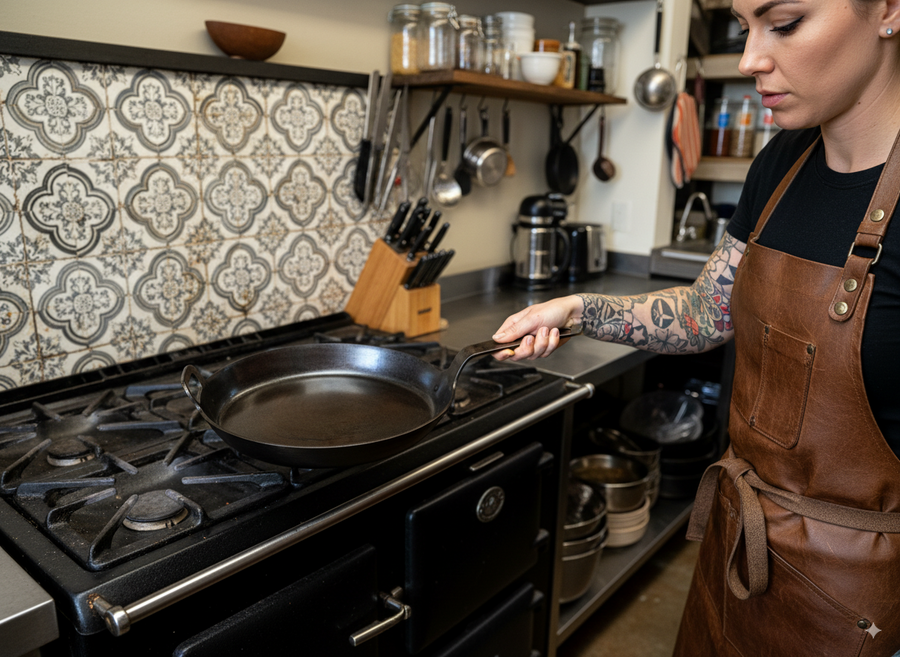
Initial seasoning establishes the foundation for natural non-stick properties. Wash the new pan with warm, soapy water to remove the protective oil coating. Dry completely, then preheat your oven to 250°C. Place the pan in the oven for 10 minutes to ensure absolute dryness. Apply a thin layer of high-smoke-point oil like grapeseed or avocado oil, wiping away excess until the pan appears nearly dry. Bake upside down for 30 minutes. Repeat this process two to three times for a robust base seasoning.
-
Daily cleaning maintains seasoning integrity. After cooking, rinse the warm pan with hot water whilst scrubbing with a stiff brush or chainmail scrubber. Avoid soap for routine cleaning, as it strips seasoning layers. For stubborn residue, add coarse salt and scrub with a paper towel, using the salt as a gentle abrasive. Rinse thoroughly and dry immediately over low heat to prevent rust.
-
Post-cleaning protection prevents oxidation. Once dry, apply a thin layer of cooking oil whilst the pan remains warm. Wipe away excess with a clean cloth. This routine takes 30 seconds and maintains the seasoning between cooking sessions.
-
Re-seasoning addresses deterioration. If the pan develops a dull, sticky surface or food begins sticking, strip the old seasoning and start fresh. Scrub with steel wool to remove degraded layers, then follow the initial seasoning process. This restoration typically occurs once or twice yearly in professional settings.
-
Storage prevents damage. Stack pans with paper towels between them to protect seasoning. Store in a dry location with good air circulation. Moisture causes rust, whilst enclosed storage traps humidity.
Pro Tip: Never soak carbon steel pans or leave them wet. Even five minutes of water exposure initiates surface oxidation that damages seasoning. If rust appears, scrub it away with steel wool, dry thoroughly, and re-season immediately. Prevention through immediate drying eliminates this issue entirely.
Proper care and seasoning maintain performance and prevent rust in carbon steel cookware. These maintenance routines become automatic with practice, requiring minimal time whilst preserving your investment for decades. Professional chefs view this care as essential tool maintenance, no different from knife sharpening or equipment calibration.
Understanding these selection criteria and maintenance practices ensures you choose cookware that meets professional standards. The professional cookware checklist complete guide provides additional details for building a comprehensive collection that addresses every cooking scenario.
Enhance your kitchen with premium carbon steel cookware
Transitioning to professional-grade carbon steel cookware transforms your cooking capabilities, whether you operate a commercial kitchen or pursue culinary excellence at home. Brass & Steel specialises in forged carbon steel cookware that meets the exacting standards professional chefs demand.
Our single-piece forged pans eliminate the weak points that plague riveted and welded constructions. Each pan undergoes precision manufacturing in Jarocin, Poland, combining Italian design sensibility with Polish engineering expertise. The 27 cm and 30 cm sauté pans represent our commitment to creating heirloom-quality tools that improve with use rather than deteriorate.
Every Brass & Steel pan arrives ready for seasoning, with detailed guidance helping you establish the natural non-stick surface that rivals synthetic coatings. Our carbon steel cookware works on all cooktops including induction, tolerates oven temperatures up to maximum settings, and withstands the daily demands of professional cooking. The PTFE-free, PFOA-free construction addresses health concerns whilst delivering superior performance.
Explore our complete range at Brass & Steel, where you’ll find expert resources covering everything from initial seasoning to advanced cooking techniques. Our cookware represents an investment in tools that last decades, not seasons, supporting your culinary journey with the same reliability professional chefs trust.
Frequently asked questions
What material is best for professional pans?
Carbon steel offers the optimal balance of heat responsiveness, durability, and weight for professional cooking. It heats quickly, develops natural non-stick properties, and withstands high temperatures whilst remaining light enough for extended use. Most professional chefs maintain a carbon steel collection as their primary cookware, supplemented by stainless steel for specific acidic preparations.
How do professional chefs maintain their cookware?
Professional chefs clean carbon steel pans immediately after use with hot water and a stiff brush, avoiding soap for routine maintenance. They dry pans over low heat and apply a thin oil layer whilst warm. Re-seasoning occurs as needed when surfaces become dull or sticky, typically once or twice yearly under heavy professional use.
Why choose carbon steel over stainless steel?
Carbon steel provides superior heat conduction and develops natural non-stick properties that stainless steel never achieves. Whilst stainless steel resists acidic ingredients better, carbon steel offers more versatile everyday performance with instant temperature adjustment and improved food release. The weight difference also favours carbon steel for extended cooking sessions.
Are carbon steel pans suitable for home cooks?
Carbon steel pans suit serious home cooks perfectly, offering the same performance benefits professional chefs value. The maintenance requirements remain manageable for home use, typically requiring just immediate drying and occasional re-seasoning. Home cooks appreciate how carbon steel improves cooking results whilst lasting decades with proper care.
How often should professional cookware be replaced?
Quality carbon steel cookware lasts 20 to 30 years or longer with proper maintenance, never requiring replacement unless physically damaged. Non-stick pans need replacement every 12 to 18 months in professional settings, whilst stainless steel and cast iron also provide decades of service. The key factor is construction quality rather than material alone.