How to spot true oven-safe pan features for healthy cooking
TL;DR:
- The label “oven-safe” varies widely in meaning, depending on materials, construction, and usage habits. Understanding specific temperature limits and design features helps ensure safe, healthy, and durable cooking with the right pans for your needs. Proper maintenance, awareness of material properties, and following safety guidelines are essential for optimal oven performance and longevity.
Most home cooks assume that any pan labelled “oven-safe” will perform reliably at high heat. That assumption has wrecked more than a few meals and, in some cases, released unwanted chemicals into food. The truth is that “oven-safe” is a marketing phrase as much as it is a technical specification, and not every pan carrying that label behaves the same way once the oven door closes. This guide cuts through the confusion, explaining precisely what to look for in terms of materials, construction, and design so you can make informed choices for healthier, safer everyday cooking.
Table of Contents
- What does oven-safe really mean?
- Choosing reliable oven-safe materials: what to look for
- Design features that set true oven-safe pans apart
- Practical health and safety tips for oven pan use
- Why healthy oven cooking means understanding more than just labels
- Discover professional-grade oven-safe pans for your kitchen
- Frequently asked questions
Key Takeaways
| Point | Details |
|---|---|
| Oven-safe means tested durability | True oven-safe pans endure stated temperatures including all parts, not just the base. |
| Material makes the difference | Stainless steel, cast iron, and carbon steel offer reliable performance for high-temperature oven cooking. |
| Non-stick needs extra care | PTFE pans are safe when used strictly below recommended temperatures and always with food or liquid. |
| Design details matter | Handles, lids, and construction quality are as important as the pan material itself for safe oven use. |
| Habit over hype | Good kitchen habits and awareness of pan limitations ensure long-lasting health and safety more than any label. |
What does oven-safe really mean?
The phrase “oven-safe” sounds reassuringly definitive, but it covers an enormous range of performance. In European cookware contexts, it typically means a pan can withstand stated temperatures without structural damage, warping, or coating failure during normal use. The problem is that “normal use” is rarely defined on a box.
Temperature limits vary dramatically by material. A bare cast iron pan can handle a full 260°C or beyond without complaint. A non-stick pan with a PTFE coating, on the other hand, has a much narrower safe window. The German Federal Institute for Risk Assessment, known as BfR, makes this explicit: PTFE cookware should not be overheated and must never be heated empty. At temperatures above 360°C, PTFE begins to break down, releasing polymer fumes that can cause flu-like symptoms in humans and are potentially lethal to pet birds. Even below that threshold, an empty non-stick pan on a preheating hob can reach dangerous temperatures faster than most people realise.
The key temperature figures every cook should know:
- PTFE non-stick pans: Safe up to approximately 260°C; degradation begins above 300°C; serious breakdown above 360°C
- Carbon steel and cast iron: Routinely withstand 250°C to 300°C and beyond in professional and home ovens
- Stainless steel: Generally safe at all domestic oven temperatures, typically up to 260°C or higher depending on the handle
- Ceramic-coated pans: Usually safe up to 250°C but check individual ratings; coatings can crack if overheated repeatedly
Understanding ceramic vs Teflon safety is particularly useful here because many cooks conflate the two. Ceramic coatings and PTFE are chemically distinct, with different heat tolerances and different failure modes. Similarly, if you are curious about what makes cookware nonstick at a fundamental level, the answer shapes how you should treat each type in the oven.
The takeaway: an “oven-safe” badge tells you almost nothing on its own. The material, the coating, the handle, and whether the pan is empty or filled all determine whether that label holds up in reality.
Choosing reliable oven-safe materials: what to look for
With the definition clarified, it is time to weigh up actual materials against each other. The differences are meaningful, and understanding them makes buying decisions considerably easier.
Stainless steel is valued for durability and non-reactivity, whilst cast iron is valued for heat retention and even high-temperature oven cooking. Both are excellent all-round choices for oven use. Carbon steel sits neatly between the two: lighter than cast iron, more responsive to heat changes, and beloved by professional chefs for searing, roasting, and finishing dishes in a hot oven.
| Material | Max oven temp (approx.) | Health considerations | Weight | Best for |
|---|---|---|---|---|
| Carbon steel | 250°C+ | No coatings; natural seasoning | Medium | Searing, roasting, everyday use |
| Cast iron | 260°C+ | No coatings; naturally nonstick when seasoned | Heavy | Slow cooking, deep roasting |
| Stainless steel | 260°C+ (all-metal) | Non-reactive, no coatings | Medium | Sauces, roasting, oven finishing |
| PTFE non-stick | Up to 260°C (filled) | Coating degrades if overheated; never heat empty | Light | Low-heat cooking; limited oven use |
| Ceramic coated | Up to 250°C | No PTFE; can crack with thermal shock | Light to medium | Moderate oven use |
When comparing cast iron vs stainless steel pans for oven cooking, the choice often comes down to weight versus reactivity. Cast iron retains heat exceptionally well and is almost indestructible, but it is heavy and can react with acidic foods if unseasoned. Stainless steel is lighter and easy to maintain. Carbon steel offers a compelling third path: it builds a natural, PTFE-free nonstick surface through seasoning, handles very high heat, and is substantially lighter than cast iron. For a thorough breakdown, it is worth reading how to compare carbon steel vs stainless steel to see which suits your cooking style. And if you are moving away from coated cookware entirely, the carbon steel vs Teflon comparison covers the health and performance differences in detail.
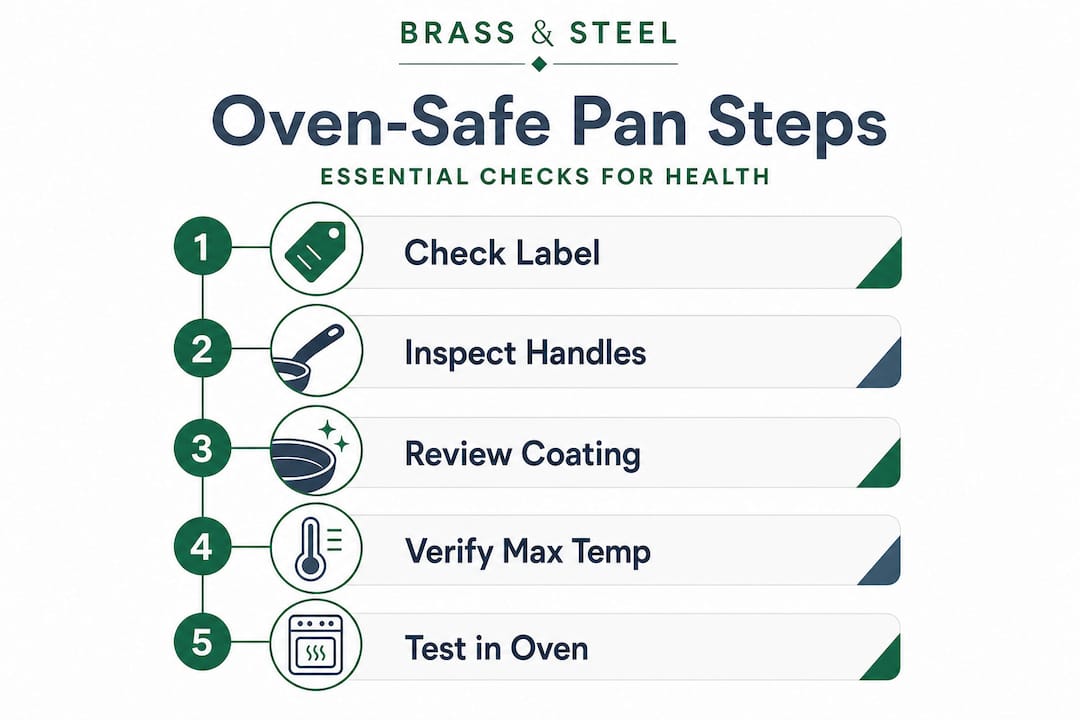
How to verify that a pan is genuinely certified for oven use:
- Check the base or underside of the pan for a stamped temperature rating, not just the word “oven-safe.”
- Read the product manual or manufacturer’s website for precise maximum temperatures.
- Confirm that the handle material is included in the stated temperature rating, not just the pan body.
- Look for European safety markings or certification from recognised testing bodies.
- Contact the manufacturer directly if the documentation is ambiguous.
Pro Tip: Always check the manufacturer’s stated maximum temperature for every component of the pan, not just the pan body. A stainless steel pan with a plastic handle knob is not truly oven-safe at high heat, regardless of how it is marketed.
Design features that set true oven-safe pans apart
After material comparisons, the finer details of construction and design become crucial. Two pans made from the same steel can perform very differently in the oven depending on how they are built.
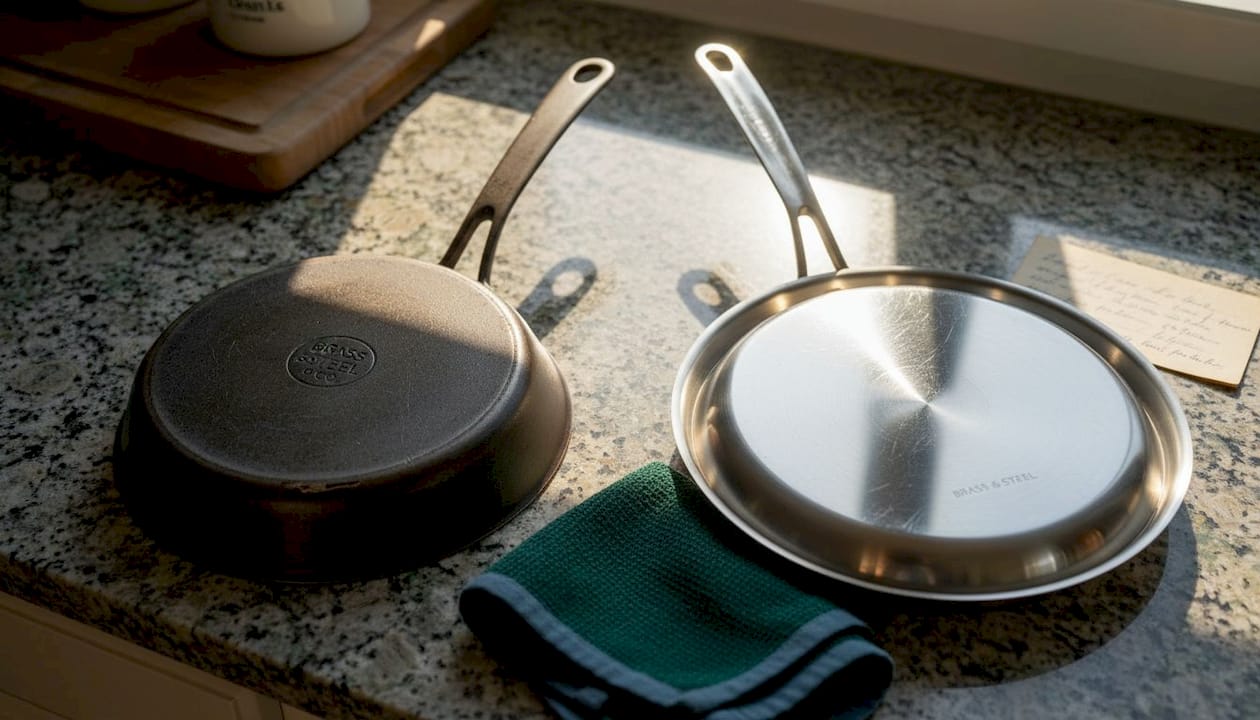
Design details like sturdy handles and tight-fitting lids matter enormously for oven transfers. A wobbly handle on a heavy, hot pan is a serious safety risk, and it is one of the most common causes of kitchen accidents.
Key design features to assess before buying:
- Handles: Solid, one-piece or securely riveted metal handles are the gold standard for oven use. Wood and unrated silicone handles will char or melt. Some silicone handles are rated to 200°C or 220°C, which is sufficient for moderate oven use but not for very high temperatures.
- Rivets versus seamless construction: Rivets can accumulate food debris and are potential weak points over time. A seamlessly forged pan, milled from a single sheet of steel, eliminates this problem entirely and makes cleaning straightforward.
- Lids: Glass lids rated for oven use are fine up to their stated temperature. Plastic or rubber knobs on oven lids are a common design flaw; at 200°C or above they will degrade or melt. All-metal lids are the safest choice.
- Pan weight and thickness: A thicker pan (3mm to 4mm steel, for example) distributes heat more evenly and is less prone to warping under rapid temperature changes. It also retains heat longer when removed from the oven, which is useful for table presentation but requires caution when handling.
- Base flatness: A flat, unwarped base ensures stable heat distribution both on the hob and in the oven. Always inspect secondhand pans for a rocking base before purchasing.
Comparing cast iron vs nonstick pans in terms of design also reveals why cast iron and carbon steel tend to outlast coated alternatives: there is simply less to go wrong. No coating to flake, no plastic to melt, no rivets to loosen over years of heavy use.
Pro Tip: Before your first proper oven session with any new pan, place it empty in a medium oven at around 180°C for ten minutes, then remove it and inspect handles and any joints for any signs of heat stress, looseness, or discolouration. This simple check identifies weak points before they become a safety issue mid-cooking.
Practical health and safety tips for oven pan use
With the technical specifics covered, the focus now shifts to the practical habits that keep you and your family safe every time you use an oven-safe pan.
Follow this sequence for safe oven cooking every time:
- Inspect the pan before use. Check for a warped base, loose handles, or any flaking coating. Do not use a damaged pan in the oven.
- Add oil or food before heating. Never place an empty non-stick pan in a preheating oven or on a hot hob. Carbon steel and cast iron can take brief dry preheating, but a light oil coat is still best practice.
- Preheat gradually. For carbon steel and cast iron especially, bring the temperature up steadily rather than blasting it with maximum heat immediately. This prevents thermal shock and the warping that follows.
- Use appropriate oven mitts. Even a pan with a metal handle becomes dangerously hot in a 250°C oven after 20 minutes. Treat every oven transfer as a full heat-management task.
- Place the hot pan on a trivet or wooden board. Putting a 260°C pan directly onto a cold stone countertop can crack the surface and risks thermal shock to the pan base itself.
- Cool gradually. Submerging a very hot pan in cold water to clean it can cause irreversible warping. Let it cool naturally before washing.
“PTFE-coated cookware should not be overheated and never be heated empty, as overheating may cause the release of decomposition products.” — BfR FAQ on PTFE-coated cookware
Major health agencies advise not overheating PTFE pans and always ensuring pans are filled before heating. This is not a fringe concern; it is the established guidance from food safety bodies across Europe and beyond. Choosing PTFE-free materials removes this risk category entirely.
Signs a pan needs replacing:
- Warped or rocking base
- Loose, wobbly, or cracked handle
- Flaking or peeling coating inside the cooking surface
- Deep scratches or pitting in coated pans
- Any discolouration suggesting the handle has been overheated
For a more detailed look at carbon steel vs cast iron in terms of durability and long-term health safety, the comparison highlights why both materials remain popular with professional kitchens despite the availability of more “modern” alternatives.
Why healthy oven cooking means understanding more than just labels
Here is the honest reality that most cookware guides avoid saying plainly: labels protect manufacturers more than they protect cooks.
An “oven-safe” stamp tells you that a pan met a minimum threshold under standardised test conditions. It does not tell you how the pan behaves after two years of daily use. It does not tell you what happens if you accidentally preheat it empty on a busy weeknight. It does not account for the fact that your gas oven runs 20°C hotter than the dial suggests.
European cookware regulations are, genuinely, some of the best in the world. The BfR and equivalent agencies in France, the Netherlands, and elsewhere require honest warnings and set evidence-based limits. But as the BfR notes, PTFE is safe under correct usage but presents real risks at higher heats and out-of-spec use. “Correct usage” in a real kitchen, with distracted cooks and varying heat sources, is harder to guarantee than laboratory conditions.
The cooks who avoid pan problems are not the ones who spend the most on cookware. They are the ones who understand their materials, check their equipment regularly, and build good habits around heating and handling. A well-seasoned carbon steel vs stainless steel pan debate becomes almost irrelevant when you know the basics: no coating means no coating failure, and simple materials maintained with care outlast complex ones maintained poorly.
True oven safety is less a purchasing decision and more an ongoing kitchen practice. Buy quality, understand your materials, and treat every high-heat session as something that deserves a moment of attention before you close the oven door.
Discover professional-grade oven-safe pans for your kitchen
If this guide has prompted you to rethink the cookware in your kitchen, the most logical next step is choosing pans built around the very principles covered here: no PTFE coatings, robust single-piece construction, and verified performance at genuine oven temperatures.
At Brass & Steel, our carbon steel oven-safe pans are forged from a single sheet of steel, eliminating rivets and the weak points that come with them. Both the 27 cm and 30 cm carbon steel sauté pans are completely free from PTFE, PFOA, and synthetic coatings, building instead a natural seasoned patina that improves with use. They are designed to move from hob to oven without compromise, work on all cooktops including induction, and are built to last decades rather than years. For cooks who want reliability, health-conscious materials, and genuine oven performance, our range is a straightforward choice.
Frequently asked questions
How can I check if my pan is truly oven-safe?
Look for an official temperature rating stamped on the base or stated in the manual, verify that all parts including handles and lids are metal or clearly rated for oven use, and consult the manufacturer’s guidelines for precise limits rather than relying on the label alone.
Can non-stick pans really go in the oven?
Non-stick pans with PTFE coatings can enter the oven if kept below 260°C to 300°C and never heated empty, but PTFE cookware degradation above 360°C is well documented, so always follow both agency and manufacturer guidance.
What is the healthiest oven-safe pan material?
Stainless steel, cast iron, and carbon steel are all excellent choices because they carry no synthetic coatings; PTFE non-stick is safe under correct limits but requires stricter temperature discipline and should never be heated empty.
What are signs my oven-safe pan is wearing out?
A warped or rocking base, loose or cracked handles, and any flaking or peeling coating inside the pan are all clear signs the pan should be replaced before its next oven session.