Cast Iron vs Nonstick: Choosing the Healthier Pan
Most British home cooks and professional chefs know that the type of pan you use can make or break your kitchen results. Choosing between cast iron and nonstick cookware is not just about convenience or tradition because these materials affect heat performance and long-term health outcomes. With over 60 percent of European culinary experts recommending natural alternatives like carbon steel, this guide will help you understand what sets classic cast iron apart from modern nonstick pans and why carbon steel is becoming the top choice for health-conscious kitchens.
Table of Contents
- Defining Cast Iron and Nonstick Cookware
- Material Construction and Cooking Performance
- Health Impacts and Safety Factors
- Maintenance, Longevity and Ease of Use
- Comparing Suitability for Everyday Cooking
Key Takeaways
| Point | Details |
|---|---|
| Material Differences | Cast iron offers superior heat retention and versatility, while nonstick cookware prioritises convenience and easy cleaning. |
| Health Implications | Cast iron can provide nutritional benefits but requires proper maintenance to avoid excess iron leaching, whereas nonstick pans may pose health risks due to synthetic coatings. |
| Maintenance Requirements | Cast iron demands a commitment to seasoning and care for long-lasting durability, while nonstick pans are easier to clean but typically have a shorter lifespan. |
| Cooking Flexibility | Combining both cookware types allows for maximised versatility in preparing a wide range of dishes and cooking techniques. |
Defining Cast Iron and Nonstick Cookware
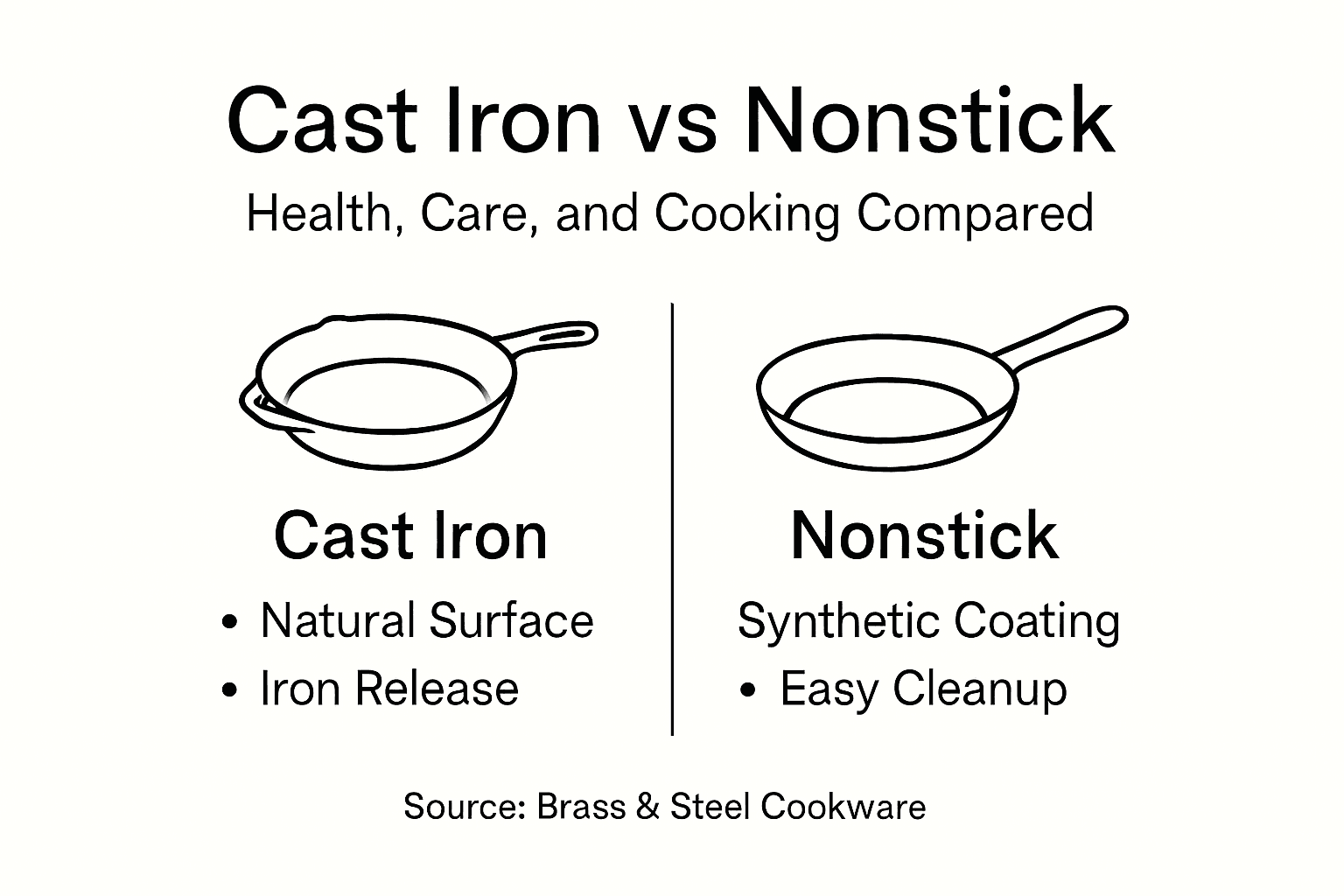
Cookware materials significantly impact cooking performance, health, and culinary experience. Cast iron and nonstick pans represent two distinct cookware categories with unique characteristics that appeal to different cooking styles and preferences. Cast iron vs carbon steel cookware demonstrates the nuanced differences between traditional cooking surfaces.
Cast iron cookware is a heavy, durable material made from molten iron and carbon alloy, known for exceptional heat retention and even heat distribution. These pans develop a natural seasoned surface over time, creating a near nonstick cooking environment through polymerised oils. Professional chefs and home cooks appreciate cast iron for its versatility, allowing stovetop and oven cooking techniques with remarkable heat management.
Nonstick cookware, by contrast, features a synthetic coating designed to prevent food from adhering to the pan’s surface. Typically manufactured with materials like polytetrafluoroethylene (PTFE) or ceramic, these pans offer convenient cooking and easy cleaning. However, concerns about potential chemical leaching and coating durability have prompted many consumers to explore alternative cookware options.
Pro tip: When selecting cookware, consider your cooking style, maintenance preferences, and long-term health considerations to choose the most suitable pan for your kitchen.
Material Construction and Cooking Performance
Material construction plays a critical role in determining a pan’s cooking performance, durability, and overall culinary effectiveness. Understanding cookware material insights reveals the nuanced characteristics that differentiate various cooking surfaces.
Cast iron’s robust construction offers exceptional heat retention and distribution, making it ideal for techniques requiring consistent temperatures. Cooking performance research demonstrates that cast iron skillets can withstand high temperatures, enabling perfect searing, frying, and even baking. The material’s density allows it to absorb and radiate heat evenly, creating a uniform cooking environment that professional chefs appreciate.
Nonstick cookware, conversely, features a synthetic coating designed for low-fat cooking and delicate food preparation. These pans prioritise easy food release and simple cleaning over high-heat performance. The coating’s composition limits its temperature tolerance, making it less versatile compared to cast iron. Repeated use and high-temperature cooking can gradually degrade the nonstick surface, reducing its effectiveness over time.

Comparing the two materials reveals distinct advantages and limitations. Cast iron develops a natural seasoned surface through repeated use, improving its nonstick properties without synthetic coatings. Nonstick pans offer immediate convenience but require more careful maintenance to preserve their protective layer.
Pro tip: Select cookware based on your primary cooking techniques, understanding that each material offers unique benefits for different culinary approaches.
Health Impacts and Safety Factors
Health considerations play a pivotal role when selecting cookware, with material composition directly influencing potential risks and nutritional outcomes. Cookware health research highlights the critical importance of understanding each material’s unique safety profile.
Cast iron presents a nuanced health profile that offers both advantages and potential concerns. The material naturally releases small amounts of iron during cooking, which can be beneficial for individuals with iron deficiencies. However, excessive iron leaching may occur if the pan is not properly seasoned or maintained, potentially impacting food quality and taste. The natural seasoning process creates a protective layer that minimises direct metal contact with food, reducing potential health risks associated with metal ion transfer.
Nonstick cookware raises more significant health concerns due to its synthetic coating. Traditional nonstick surfaces often contain perfluoroalkyl substances (PFAS), which have been linked to potential health risks when heated at high temperatures. These synthetic chemicals can potentially degrade and release harmful compounds, especially when the coating becomes scratched or worn. Consumers increasingly seek alternatives that minimise exposure to these synthetic materials, driving interest in more natural cookware options.
Comparing the two materials reveals complex health considerations. Cast iron offers a more natural cooking surface that can actually contribute nutritional benefits, while nonstick pans prioritise convenience at the potential cost of long-term health safety. The choice becomes a balance between cooking convenience and potential chemical exposure.
Pro tip: Prioritise cookware maintenance and choose materials with minimal synthetic treatments to reduce potential health risks during cooking.
Maintenance, Longevity and Ease of Use
The durability and maintenance requirements of cookware significantly impact a home cook’s long-term culinary experience. Cast iron versus nonstick performance reveals fascinating insights into how different materials age and perform over time.
Cast iron cookware represents an exceptional investment in longevity, capable of lasting generations when properly maintained. These robust pans require a dedicated maintenance routine involving regular seasoning, careful cleaning, and mindful storage. The seasoning process not only prevents rust but also develops a natural nonstick surface that improves with each use. Professional chefs appreciate cast iron’s ability to become more resilient and responsive over time, transforming from a raw cooking surface into a cherished kitchen heirloom.
Nonstick cookware offers dramatically different maintenance characteristics. These pans prioritise convenience with easy cleaning and lightweight design but suffer from significantly shorter lifespans. The synthetic coating is delicate, susceptible to scratching and degradation, typically requiring replacement every two to five years. Careful users must avoid metal utensils, use soft cleaning tools, and maintain moderate cooking temperatures to preserve the nonstick surface.
Comparing maintenance approaches highlights the fundamental differences between these materials. Cast iron demands more initial effort but rewards long-term commitment, while nonstick pans offer immediate convenience at the cost of frequent replacement. The choice depends on individual cooking styles, maintenance willingness, and long-term kitchen investment philosophy.
Here is a quick reference guide on maintenance practices for each cookware type:
| Care Method | Cast Iron | Nonstick |
|---|---|---|
| Cleaning | Hand wash, avoid soap, dry immediately | Mild soap, avoid abrasive tools |
| Seasoning | Regular oil-based seasoning | Not required |
| Utensil Compatibility | Metal, wood, silicone utensils | Only wood or silicone recommended |
| Storage | Keep dry, sometimes oiled | Store gently to prevent scratches |
Pro tip: Invest time in proper pan maintenance to extend cookware life and enhance your cooking performance.
Comparing Suitability for Everyday Cooking
Evaluating cookware requires understanding each material’s unique strengths and limitations for daily culinary tasks. Comprehensive cooking performance insights reveal the nuanced capabilities of cast iron and nonstick pans in everyday kitchen scenarios.
Cast iron excels in versatility, offering exceptional heat retention and distribution that makes it ideal for a wide range of cooking techniques. From searing steaks to baking cornbread, these pans can transition seamlessly between stovetop and oven. The natural seasoning develops a robust cooking surface that improves with each use, making cast iron particularly suited for recipes requiring high heat or prolonged cooking times. Home cooks appreciate its durability and ability to create restaurant-quality sears on meats and vegetables.
Nonstick cookware specialises in delicate cooking tasks that demand minimal oil and easy food release. These pans shine when preparing eggs, pancakes, fish, and other ingredients prone to sticking. Everyday cooking recommendations suggest that nonstick pans are perfect for quick meals and low-fat cooking techniques. Their lightweight design and effortless cleaning make them attractive for those seeking convenience and minimal kitchen maintenance.
Ultimately, many serious home cooks find value in maintaining both pan types. Cast iron handles high-heat, robust cooking methods, while nonstick pans provide precision for delicate dishes. The combination allows for comprehensive cooking flexibility, enabling chefs to select the most appropriate tool for each specific culinary task.
The following table summarises key differences in everyday use between cast iron and nonstick cookware:
| Aspect | Cast Iron | Nonstick |
|---|---|---|
| Heat Tolerance | Withstands very high temperatures | Sensitive to overheating; best for low to medium heat |
| Cooking Flexibility | Suitable for searing, baking, roasting | Ideal for eggs, pancakes, delicate fish |
| Weight & Handling | Heavy, requires careful handling | Lightweight, easy to manoeuvre |
| Lifespan Potential | Lasts decades with care | Typically replaced every 2-5 years |
Pro tip: Invest in both cast iron and nonstick pans to maximise your cooking versatility and tackle any recipe with confidence.
Discover a Healthier Cookware Alternative with Brass & Steel
Choosing between cast iron and nonstick pans often means balancing health risks and cooking performance. If you want to avoid synthetic coatings like PTFE found in many nonstick options, while still enjoying a naturally nonstick surface that improves with use, Brass & Steel offers a premium solution. Our seamless carbon steel pans combine durability, excellent heat retention, and a seasoned natural nonstick surface that supports healthier cooking without chemical concerns.
Explore our Carbon Steel Collection | Brass&Steel and experience cookware forged in one piece for superior strength and longevity. Designed for serious cooks who seek PTFE free cookware compatible with all cooktops including induction, our pans deliver professional-grade performance and a safer, more natural cooking environment. Visit Brass & Steel main site now and upgrade to an heirloom-quality pan that will serve your kitchen for decades.
Frequently Asked Questions
What are the key differences between cast iron and nonstick cookware?
Cast iron cookware is known for its durability, heat retention, and ability to develop a natural nonstick surface over time. Nonstick cookware features a synthetic coating that prevents food from sticking but has a limited lifespan and requires careful maintenance.
Is cast iron cookware safe for health?
Yes, cast iron can be safe for health as it releases small amounts of iron during cooking, which can be beneficial for those with iron deficiencies. However, improper seasoning and maintenance can lead to excessive iron leaching.
Are there any health concerns associated with nonstick cookware?
Yes, traditional nonstick coatings may contain perfluoroalkyl substances (PFAS), which can release harmful compounds when heated at high temperatures or if the coating is scratched. This raises health concerns about chemical exposure.
How can I maintain my cast iron and nonstick pans?
Cast iron requires regular seasoning, careful hand washing, and proper storage to prevent rust. Nonstick pans should be cleaned with mild soap and non-abrasive tools, avoiding high temperatures to preserve the coating.
Recommended
- 7 Best Alternatives to Teflon Pans for Healthier Cooking – Brass & Steel
- Nonstick Alternatives Explained: Understanding Safe Options – Brass & Steel
- Healthy Cookware Explained: Essential Guide to Safe Choices – Brass & Steel
- Ceramic vs Nonstick Cookware: Safety, Longevity, and Performance – Brass & Steel