Top natural nonstick pans for healthier cooking 2026
Choosing a truly natural nonstick pan has never felt more confusing. Supermarket shelves and online stores are packed with cookware making bold claims about safety and performance, yet few explain what is actually in the coating. For health-conscious home cooks, that lack of transparency matters. The material your pan is made from directly affects what ends up in your food, how long the pan lasts, and how much effort it takes to maintain. This article cuts through the noise, explains what genuinely qualifies as a natural nonstick pan, and walks you through the best options available to European home cooks today.
Table of Contents
- How to evaluate natural nonstick pans
- Top natural nonstick pans: Our recommended picks
- Comparing natural nonstick pans: Features and performance
- Which natural nonstick pan fits your kitchen?
- Why most cooks overlook the best natural nonstick solutions
- Upgrade your cooking with natural nonstick essentials
- Frequently asked questions
Key Takeaways
| Point | Details |
|---|---|
| Criteria matter most | Evaluating materials and coatings is essential when choosing a truly natural nonstick pan. |
| Best natural options | Carbon steel and cast iron pans are the top choices for safe, durable, nonstick cooking. |
| Seasoning unlocks nonstick | Proper seasoning makes natural pans perform like premium nonstick cookware. |
| Match to your needs | Choose a pan based on your cooking style, budget, and maintenance preferences. |
How to evaluate natural nonstick pans
The word “natural” gets used loosely in cookware marketing. To cut through the confusion, it helps to define it clearly. A truly natural nonstick pan achieves its slick surface through the properties of the metal itself or through a seasoning process, not through a synthetic chemical coating applied on top. That distinction matters enormously for both health and longevity.
When evaluating any pan, consider these key criteria:
- Material: Is the base metal free from synthetic coatings? Carbon steel, cast iron, and uncoated stainless steel all qualify.
- Coating process: Does the nonstick surface develop naturally through use and seasoning, or is it sprayed on in a factory?
- Durability: Can the pan be restored if the surface degrades, or does it need replacing?
- Ease of maintenance: How much effort does daily upkeep require?
- Health impact: Is the pan free from PTFE, PFOA, and other synthetic compounds?
Pans with synthetic coatings such as PTFE (commonly known as Teflon) or PFOA-based finishes fail the natural test immediately. These coatings can degrade at high temperatures and raise legitimate health concerns. You can explore examples of non-toxic pans to see how different materials stack up from a safety standpoint. For a deeper look at the natural pan materials worth considering, the differences become clear quickly. As nonstick pan safety research confirms, naturally nonstick materials such as cast iron and carbon steel can be seasoned for a true nonstick surface.
Pro Tip: Look for pans that can be seasoned naturally over time. Each cooking session builds the surface further, meaning the pan actually improves with age rather than wearing out.
Top natural nonstick pans: Our recommended picks
With the selection criteria clear, here are the standout natural nonstick pans available for European home cooks. These options cover a range of budgets, cooking styles, and maintenance preferences.
- Carbon steel pan – The top choice for serious home cooks. Lightweight compared to cast iron, highly responsive to heat changes, and capable of building an impressive nonstick patina over time. Works on all hob types including induction.
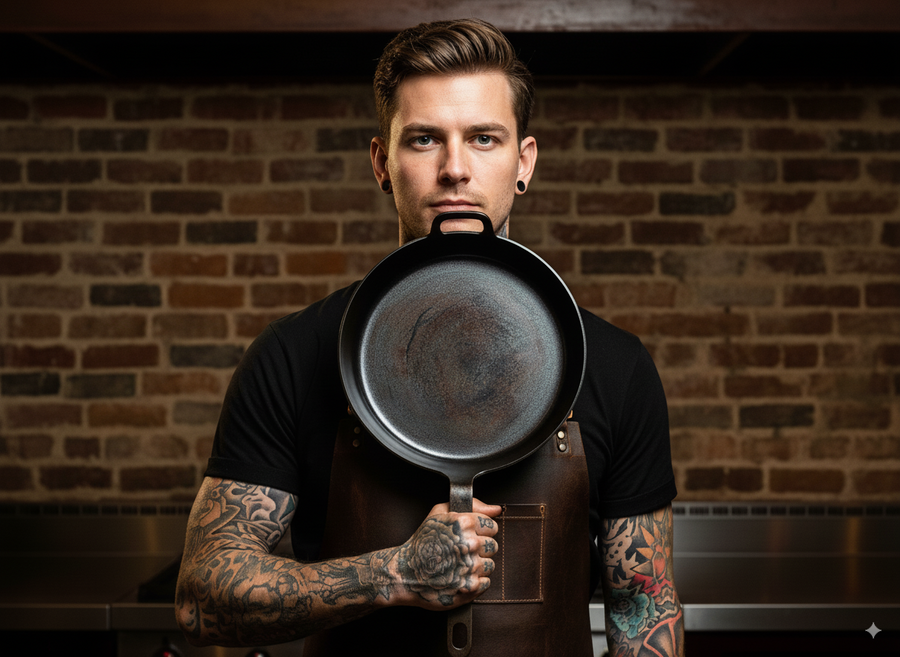
- Cast iron pan – Exceptionally durable and excellent at retaining heat. Heavier than carbon steel, but a well-seasoned cast iron skillet is a genuine kitchen workhorse.
- Ceramic-coated pan – A popular middle ground. Uses a mineral-based coating rather than synthetic chemicals, making it a safer option than PTFE alternatives.
- Seasoned stainless steel pan – Less common but effective when used correctly. Requires more technique to achieve a nonstick result but offers outstanding durability.
As seasoning carbon steel guides confirm, carbon steel and cast iron develop a natural nonstick surface via seasoning and are highly durable. For a broader view of healthy nonstick alternatives across all categories, the options are more varied than most cooks realise. Independent pan reviews consistently place carbon steel and cast iron at the top for long-term performance.
Carbon steel pros and cons:
- Pros: Lightweight, fast heat response, builds natural patina, induction-safe, PTFE-free
- Cons: Requires initial seasoning effort, reacts to acidic foods until fully seasoned
Cast iron pros and cons:
- Pros: Exceptional heat retention, virtually indestructible, very affordable
- Cons: Heavy, slow to heat up, can rust if not dried properly
Pro Tip: Consider how often you cook and what you cook most. A carbon steel pan suits daily use and varied recipes, while cast iron excels for slow-cooked dishes and high-heat searing.
Comparing natural nonstick pans: Features and performance
Now, let’s see how these pans compare side by side to help you decide.
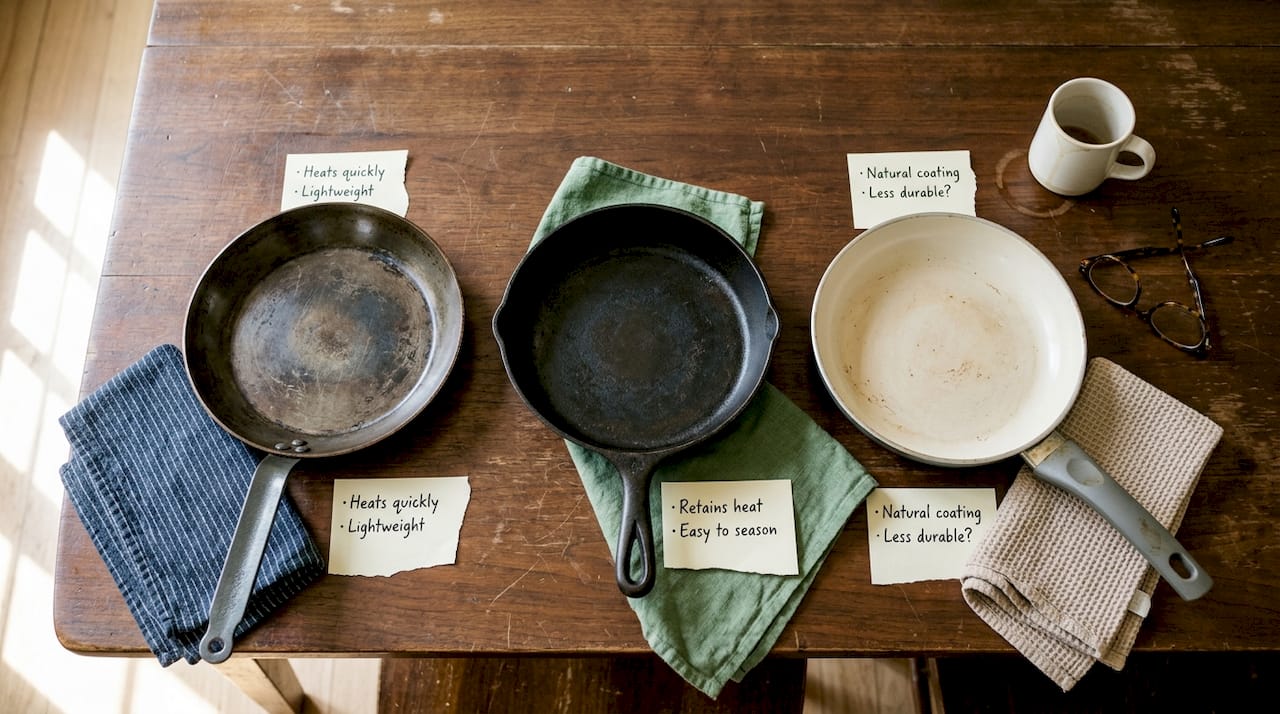
| Pan type | Material | Nonstick quality | Maintenance | Weight | Induction compatible | Price range |
|---|---|---|---|---|---|---|
| Carbon steel | Carbon steel | Excellent (with seasoning) | Moderate | Light to medium | Yes | €80 to €150 |
| Cast iron | Cast iron | Very good (with seasoning) | Moderate | Heavy | Yes | €30 to €120 |
| Ceramic coated | Mineral coating | Good (fades over time) | Low | Light | Most models | €40 to €100 |
| Seasoned stainless steel | Stainless steel | Moderate | Low to moderate | Medium | Yes | €60 to €200 |
As what makes cookware nonstick research shows, carbon steel and cast iron offer the best combination of durability, value, and natural nonstick performance. When comparing stainless steel vs non-stick options, the trade-offs become especially clear for everyday home cooking. For a thorough external view, best nonstick pans roundups consistently highlight seasoned metals as the most reliable long-term choice.
“The best pan is the one you use every day. A well-seasoned carbon steel pan becomes a record of every meal you have cooked, building character and performance simultaneously.”
Ideal use scenarios:
- Best for searing meat: Carbon steel or cast iron
- Best for eggs and delicate foods: Well-seasoned carbon steel
- Best for beginners: Ceramic coated (low maintenance to start)
- Best for oven-to-hob cooking: Carbon steel or cast iron
- Best for longevity: Carbon steel (can last generations with proper care)
Which natural nonstick pan fits your kitchen?
Having compared the options, it is time to identify which pan matches your unique cooking routine. Choosing the right pan depends on both cooking style and health priorities, so a one-size-fits-all answer rarely works.
Here are scenario-based pairings to guide your decision:
- Frequent everyday cook: A carbon steel sauté pan handles searing, sautéing, and oven use with ease. It rewards regular use by building a stronger nonstick surface over time.
- Budget-conscious cook: Cast iron delivers outstanding value. A quality cast iron skillet can cost under €40 and last a lifetime with basic care.
- Eco-conscious cook: Both carbon steel and cast iron are made without synthetic chemicals and can last for decades, reducing waste significantly.
- Health-prioritising cook: Carbon steel is free from PTFE, PFOA, and any factory-applied coating. The nonstick surface is entirely your own, built through cooking.
- Versatile pan seeker: Carbon steel wins here. It moves from hob to oven, works on induction, and handles everything from a fried egg to a seared steak.
For a full breakdown of nonstick alternative options across different cooking styles, the range of choices is broader than many expect. Understanding the natural cookware benefits beyond just surface performance also helps frame the decision in a more meaningful way. External best carbon steel pan guides from trusted sources consistently recommend carbon steel for its versatility and health credentials.
Pro Tip: Seasoning and consistent care can transform even a modest pan into a long-term kitchen essential. The effort you put in during the first few weeks pays dividends for years.
Why most cooks overlook the best natural nonstick solutions
Here is something worth saying plainly: most cooks do not avoid carbon steel and cast iron because they dislike them. They avoid them because the initial learning curve feels intimidating compared to the instant convenience of a synthetic nonstick pan straight from the box.
Marketing plays a significant role in this. Synthetic nonstick cookware is sold on ease, and that message lands effectively. What it rarely mentions is that the coating degrades, the pan needs replacing every few years, and the long-term cost is higher than it appears at first glance.
A natural nonstick approach, built through seasoning and regular use, delivers something synthetic coatings simply cannot: a surface that gets better over time rather than worse. The natural nonstick patina that develops on a well-used carbon steel pan is not just functional, it is genuinely superior for flavour development and heat control. The upfront effort is real, but it is also a one-time investment that pays off for years, even decades.
Upgrade your cooking with natural nonstick essentials
If you are ready to move beyond synthetic coatings and invest in cookware that genuinely improves with use, the right starting point makes all the difference.
At Brass & Steel, we craft carbon steel sauté pans forged from a single piece of steel, with no rivets, no synthetic coatings, and no compromises. Our 27 cm pan at €99 is ideal for everyday cooking, while the 30 cm pan at €119 suits larger meals and family cooking. Both are induction-compatible, PTFE-free, and built to last a lifetime. Alongside our pans, you will find detailed guides on seasoning, maintenance, and getting the most from natural nonstick cookware. Explore the full range and start building a kitchen you can rely on.
Frequently asked questions
What is the safest natural nonstick pan material?
Seasoned carbon steel and cast iron are widely considered the safest natural nonstick materials for home cooking. Both are free from synthetic coatings and can be seasoned for a true nonstick surface.
How do you season a natural nonstick pan?
Coat the clean pan with a very thin layer of high-smoke-point oil and heat it until the oil polymerises, forming a slick, durable surface. Repeating this process two to three times builds a strong base, and seasoning improves nonstick qualities and durability with every use.
Are ceramic nonstick pans truly natural?
Ceramic pans use a mineral-based coating but often include small amounts of binders, making them more natural than synthetic options but not purely metal. They are a safer coating relative to PTFE or PFOA-based alternatives.
Do natural nonstick pans require special care?
Yes, regular seasoning and gentle cleaning with warm water help maintain their natural nonstick surface and extend longevity significantly. Proper seasoning and maintenance are essential for long-lasting nonstick performance.