Healthy Cookware Explained: Essential Guide to Safe Choices

Over 70 percent of home cooks are not aware that some pans can release harmful chemicals into food during everyday use. Choosing safe cookware is about much more than taste or convenience. The materials in your pots and pans can impact your health for years to come. If you want to protect your family while enjoying delicious meals, understanding what truly makes cookware healthy—and recognizing the common myths—can help you shape a safer, smarter kitchen.
Table of Contents
- Defining Healthy Cookware And Common Myths
- Types Of Cookware Materials Compared
- Health Benefits Of Carbon Steel Cookware
- Common Risks With Nonstick And Coated Pans
- Proper Care And Maintenance For Healthy Use
Key Takeaways
| Point | Details |
|---|---|
| Healthy Cookware Matters | Investing in non-toxic cookware is crucial for wellness, minimizing exposure to harmful chemicals like PFAS that can leach into food. |
| Carbon Steel Advantages | Carbon steel cookware offers a natural nonstick surface, durability, and high heat performance without synthetic coatings, making it an ideal choice for health-conscious cooks. |
| Risks of Nonstick Surfaces | Nonstick cookware poses health risks due to chemical leaching and toxin exposure at high temperatures, highlighting the need for safer alternatives. |
| Maintenance is Key | Proper care and maintenance of cookware enhance safety and longevity, ensuring healthier cooking practices and better food quality. |
Defining Healthy Cookware and Common Myths
When it comes to cooking, the tools we use can be just as important as the ingredients. Healthy cookware goes beyond simply preparing food - it represents a crucial investment in your long-term wellness and safety. According to Consumer Notice, certain cooking surfaces can introduce significant health risks, particularly through chemical compounds like PFAS that may leach into food.
Many home cooks remain unaware of the potential dangers lurking in their kitchen cabinets. Discover Magazine highlights that some nonstick cookware can emit harmful chemical emissions when heated to high temperatures, potentially compromising both food quality and personal health. The primary concerns revolve around several key issues:
- Chemical coatings that break down under heat
- Potential metal leaching from inferior materials
- Environmental sustainability of manufacturing processes
- Long-term health impacts of repeated exposure
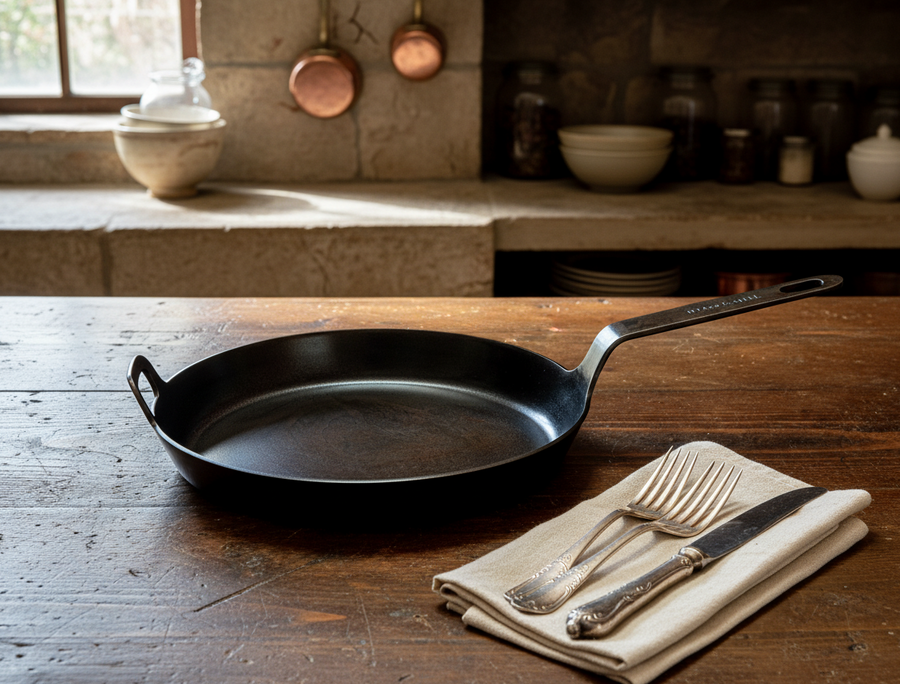
Healthy cookware should prioritize materials that are non-reactive, durable, and free from potentially harmful synthetic coatings. This means looking beyond traditional nonstick surfaces and considering alternatives like non-toxic pan options that offer both performance and peace of mind. Carbon steel, for instance, provides a natural nonstick surface that develops over time through proper seasoning, eliminating the need for synthetic chemical treatments.
Understanding the nuances of cookware selection isn’t just about avoiding risks - it’s about making informed choices that support your culinary creativity and personal wellness. By demystifying common myths and recognizing the potential health implications of different cooking surfaces, you can transform your kitchen into a safer, more conscious cooking environment.
Types of Cookware Materials Compared
Choosing the right cookware material is more complex than simply picking a pan that looks good. Home Science Journal highlights that the material of your cookware can significantly impact nutritional security, cooking performance, and long-term health. Each material brings unique characteristics that can dramatically influence your cooking experience.
Traditional and modern cookware materials each have distinct advantages and potential drawbacks. According to Intecamp, the primary cookware materials can be categorized as follows:
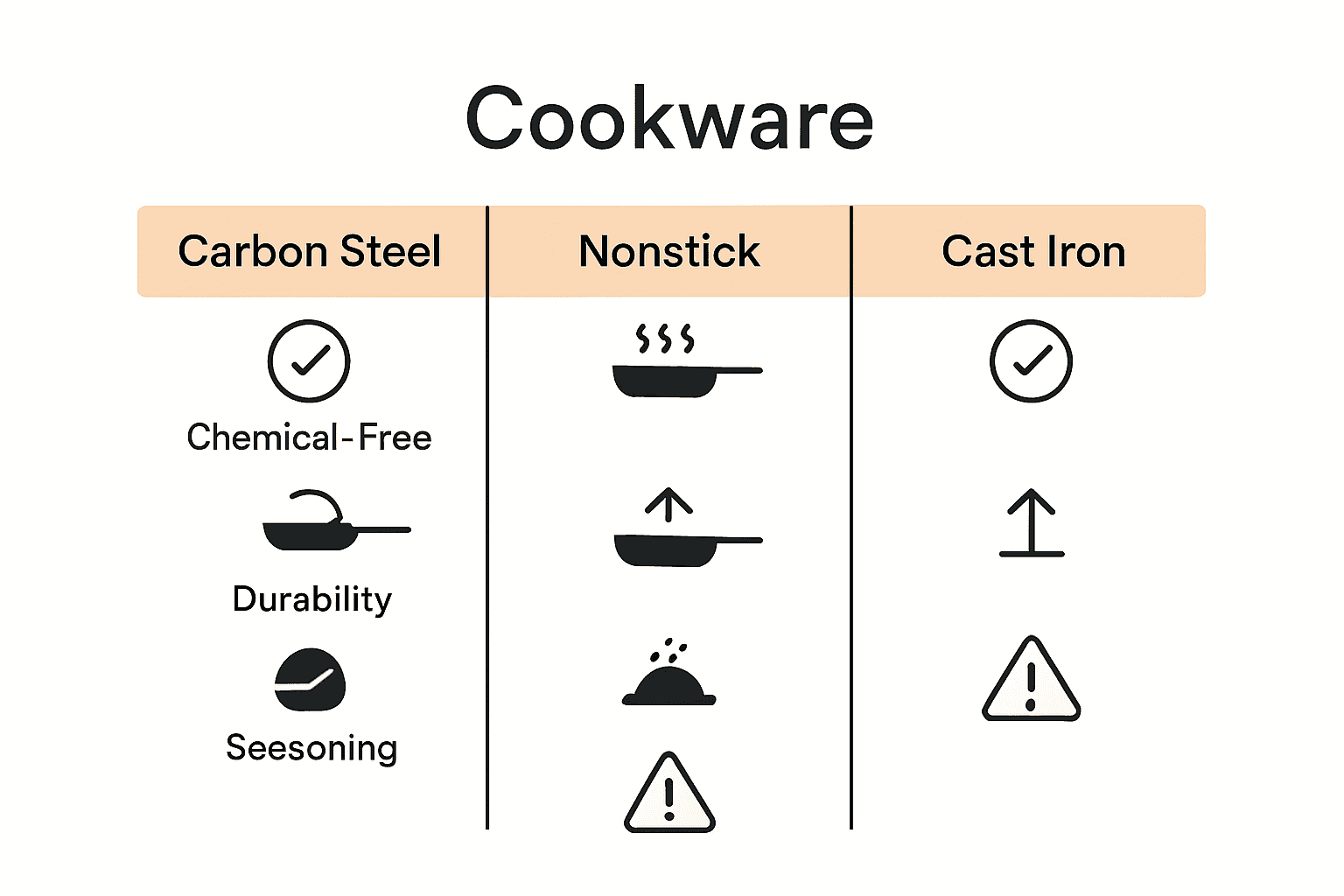
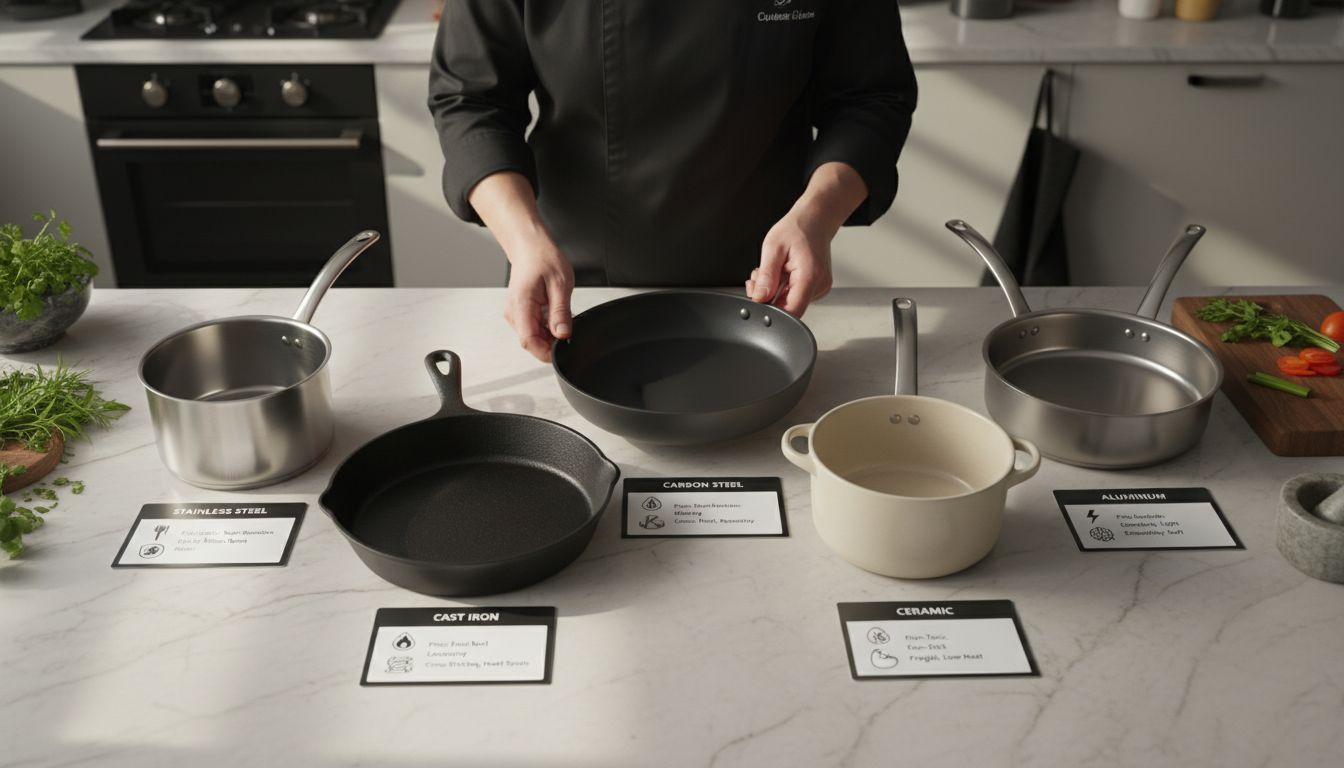
- Stainless Steel: Durable and non-reactive, excellent for high-heat cooking
- Cast Iron: Superior heat retention, naturally develops nonstick properties
- Ceramic: Lightweight, aesthetically pleasing, often with non-toxic coatings
- Carbon Steel: Professional-grade, naturally nonstick when properly seasoned
- Aluminum: Lightweight and excellent heat conductor
For those seeking comprehensive insights into cookware comparisons, our guide on different cookware materials offers an in-depth exploration of these options. Understanding the nuanced differences between materials allows you to make informed decisions that balance cooking performance, health considerations, and personal preferences.
Ultimately, the best cookware material depends on your specific cooking style, maintenance commitment, and health priorities. While each material has its strengths, carbon steel stands out for professional and home cooks who value durability, natural nonstick properties, and minimal chemical interventions.
 By understanding these material characteristics, you can transform your cooking experience and invest in cookware that supports both your culinary creativity and wellness goals.
Health Benefits of Carbon Steel Cookware
Carbon steel cookware represents a remarkable intersection of culinary performance and health consciousness. Practically Low Tox highlights that this material offers a unique combination of durability and non-toxic cooking properties when properly maintained, making it an exceptional choice for health-aware home cooks.
Discover Magazine emphasizes that carbon steel’s natural properties make it stand out among cookware materials. The key health benefits include:
- Chemical-Free Cooking: No synthetic coatings or harmful treatments
- Natural Non-Stick Surface: Develops a protective seasoning layer over time
- High Heat Performance: Allows for precise cooking without releasing toxins
- Minimal Metal Leaching: Unlike some alternatives, carbon steel remains stable
- Long-Term Durability: Reduces waste and environmental impact
For those interested in diving deeper into the advantages, our guide on carbon steel health benefits provides comprehensive insights into why professional chefs and health-conscious home cooks are increasingly choosing this material.
Ultimately, carbon steel cookware represents more than just a cooking tool. It’s a commitment to healthier cooking practices, sustainable kitchen choices, and culinary excellence. By understanding its unique properties and proper maintenance, you can transform your cooking experience into a safer, more mindful approach to nutrition and wellness.
Common Risks With Nonstick and Coated Pans
Nonstick cookware might seem convenient, but it comes with significant health risks that many home cooks are unaware of. Consumer Notice reveals alarming connections between nonstick coatings and potential long-term health complications, particularly through chemicals known as PFAS (per- and polyfluoroalkyl substances).
Discover Magazine highlights the most critical risks associated with nonstick and coated pans:
- Chemical Leaching: Potential release of harmful substances at high temperatures
- Toxin Exposure: PFAS linked to cancer and other serious health conditions
- Environmental Contamination: Long-lasting chemical residues
- Coating Degradation: Nonstick surfaces break down over time
- Heat Sensitivity: Increased chemical emission at high cooking temperatures
For those seeking safer alternatives, our guide to nonstick alternatives provides comprehensive insights into healthier cooking solutions that don’t compromise on performance.
Understanding these risks is more than a health precaution - it’s about making informed choices for your kitchen. While nonstick pans might offer temporary convenience, the potential long-term health impacts far outweigh their short-term benefits. By choosing cookware with natural, non-toxic surfaces like carbon steel, you can protect your health, enhance your cooking experience, and contribute to a safer, more sustainable kitchen environment.
Proper Care and Maintenance for Healthy Use
Cookware maintenance is more than just keeping your kitchen tools clean - it’s a critical step in ensuring safe, healthy cooking. Consumer Reports emphasizes that proper care can significantly reduce potential health risks associated with different cooking surfaces.
Discover Magazine highlights essential maintenance practices to preserve your cookware’s integrity and safety:
- Regular Cleaning: Remove food residues immediately
- Careful Drying: Prevent moisture buildup to avoid rust
- Proper Seasoning: Maintain natural protective layers
- Temperature Management: Avoid extreme heat fluctuations
- Gentle Handling: Use non-abrasive cleaning tools
For those seeking detailed guidance, our guide to carbon steel maintenance offers comprehensive insights into keeping your cookware in optimal condition.
Ultimately, maintaining your cookware is an investment in your health and culinary experience. By understanding and implementing proper care techniques, you transform your cooking tools from simple kitchen equipment into long-lasting, safe companions in your culinary journey. Thoughtful maintenance not only extends the life of your cookware but also ensures that every meal you prepare is as healthy and delicious as possible.
Elevate Your Kitchen with Truly Healthy Cookware
Understanding the risks hidden in many cookware materials can be worrying but it opens the door to safer, healthier cooking choices. This article highlighted the challenges of chemical coatings, PFAS contamination and the importance of selecting natural nonstick surfaces without harmful synthetic treatments. If you aim to avoid toxic leaching and enjoy durable, professional cookware with excellent heat performance, carbon steel is the answer.
Explore our Carbon Steel Collection | Brass&Steel for thoughtfully forged pans designed to last a lifetime. Each pan is forged from a single piece of carbon steel ensuring seamless strength and easy cleaning. With no PTFE or PFOA coatings, our cookware builds a safe, natural, nonstick seasoning that improves with every meal. Make the switch now for a healthier kitchen and discover how our heirloom quality pans support your wellness journey and cooking performance. Visit https://brass-steel.com to browse and take the first step toward safer, smarter cooking today.
Frequently Asked Questions
What is healthy cookware?
Healthy cookware refers to cooking tools made from non-reactive and durable materials that are free from harmful synthetic coatings, ensuring safer cooking and better health outcomes.
Why is carbon steel considered a healthy cookware option?
Carbon steel cookware is seen as a healthy option due to its chemical-free cooking properties, natural nonstick surface, high heat performance without releasing toxins, and minimal metal leaching when properly maintained.
What are the risks associated with nonstick cookware?
Nonstick cookware may pose risks such as chemical leaching at high temperatures, exposure to PFAS linked to serious health conditions, environmental contamination, and degradation of the nonstick surface over time.
How should I maintain my cookware for safe use?
To maintain cookware safely, regularly clean it to avoid food residues, dry it properly to prevent rust, follow seasoning guidelines, manage cooking temperatures, and handle it gently with non-abrasive tools.
Recommended
- 7 Top Examples of Non-Toxic Pans for Pro Cooks – Brass & Steel
- Nonstick Alternatives Explained: Understanding Safe Options – Brass & Steel
- 10 Essential Items for Your Professional Kitchen Cookware List – Brass & Steel
- 7 Essential Professional Cookware Types Every Chef Needs – Brass & Steel
- Raw vs Cooked Dog Food: Complete Expert UK Guide
- Job Hazards for Cooks: Complete Safety Guide Canada - Probe IT