How to Season Carbon Steel Pan in Oven for Lasting Nonstick
Every new carbon steel pan brings promise and excitement, but getting that perfectly nonstick finish starts long before the first meal. Many home cooks in Poland find that factory coatings and hidden moisture can lead to disappointment if not addressed during seasoning. By following steps that focus on thorough cleaning, precise drying, and careful oiling, you set the foundation for years of reliable cooking. This guide gives you simple, trusted methods to unlock outstanding results and lasting performance from your carbon steel cookware.
Table of Contents
- Step 1: Wash And Dry The Carbon Steel Pan
- Step 2: Preheat Oven And Heat Pan To Remove Moisture
- Step 3: Apply And Buff High Smoke Point Oil
- Step 4: Bake Upside Down For Lasting Seasoning
- Step 5: Repeat Seasoning Cycles For Strong Patina
- Step 6: Check Nonstick Layer And Store Properly
Quick Summary
| Key Point | Explanation |
|---|---|
| 1. Clean the Pan Thoroughly | Use hot, soapy water and a soft brush to remove factory coatings and ensure a clean surface for seasoning. |
| 2. Preheat Oven Before Baking | Preheat to 230-250°C, allowing the pan inside to eliminate any hidden moisture before seasoning. |
| 3. Apply Thin Oil Layer | Use a high smoke point oil, applying a very thin, even layer to avoid sticky seasoning. |
| 4. Bake Upside Down | Bake the pan upside down for 60 minutes to ensure even heat distribution and prevent oil pooling. |
| 5. Maintain the Seasoning | Regularly check and apply a light oil layer before storing to preserve the non-stick patina. |
Step 1: Wash and Dry the Carbon Steel Pan
Preparing your carbon steel pan for seasoning starts with a thorough cleaning. You’ll want to remove any factory residues, protective coatings, and potential manufacturing oils to create a perfect surface for seasoning.
Begin by using hot, sudsy water and a soft brush or cloth to clean the pan thoroughly. Focus on removing any factory coatings or dirt that might interfere with the seasoning process. Use a non-abrasive sponge or soft-bristled brush to gently scrub the entire surface, including the handle and exterior.
After washing, rinse the pan completely with warm water, ensuring no soap residue remains. Drying is critical to prevent rust. Use a clean, lint-free cloth to dry the pan thoroughly, or place it on a stovetop at low heat to drive away any remaining moisture. Carbon steel is prone to oxidation, so eliminating all moisture is key.
- Use hot, sudsy water
- Scrub gently with soft brush
- Rinse completely
- Dry immediately and thoroughly
Moisture is the enemy of carbon steel - always dry your pan completely before seasoning.
Pro tip: Use a clean, lint-free microfibre cloth for drying to avoid leaving any fibres or residue on your pan’s surface.
Step 2: Preheat Oven and Heat Pan to Remove Moisture
Removing moisture from your carbon steel pan is a critical step in the seasoning process. You’ll want to prepare both your oven and pan to ensure a completely dry surface that’s ready for seasoning.
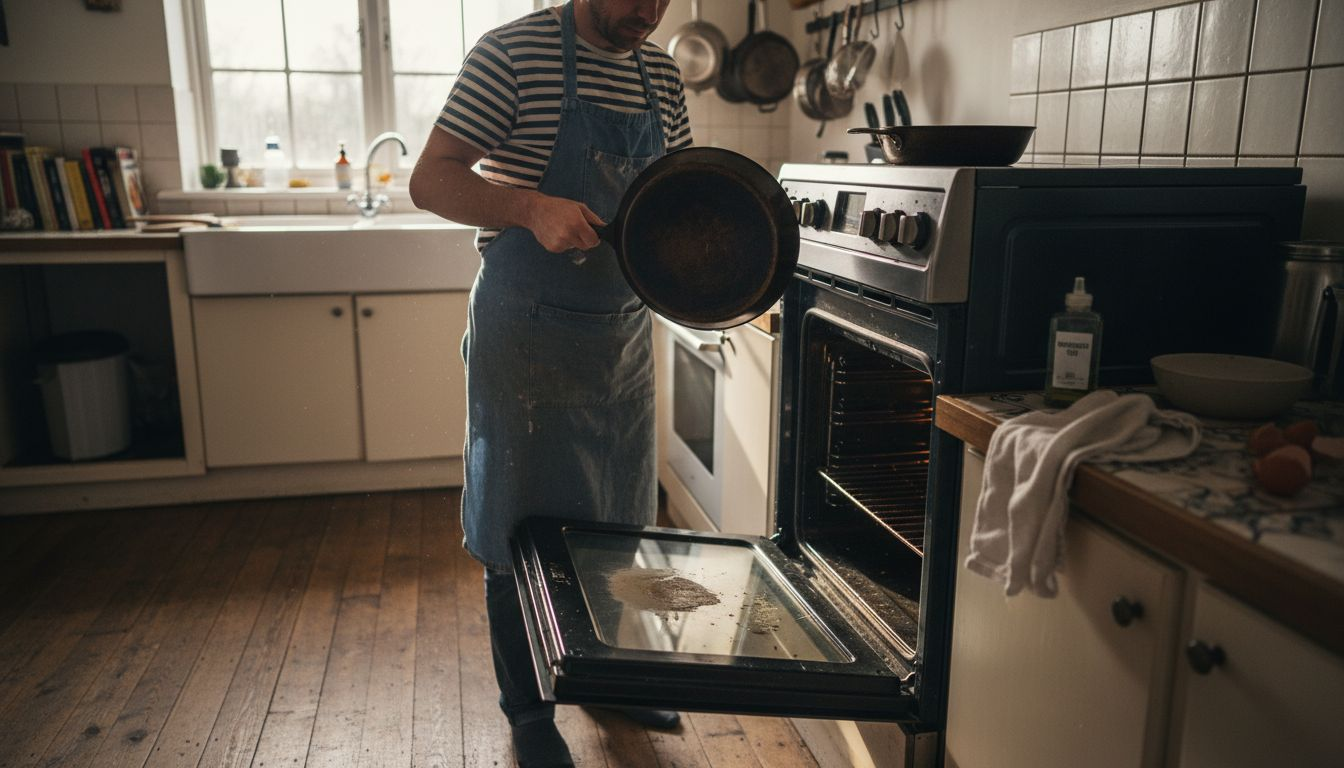
Start by preheating your oven thoroughly to the appropriate temperature, typically around 230-250°C (450-480°F). Most ovens require 10-15 minutes to reach the designated temperature. While the oven is heating, place your clean and dried carbon steel pan inside to eliminate any remaining surface moisture. Heating eliminates hidden moisture that could interfere with the seasoning process and potentially cause rust.
The goal is to completely dry the pan and prepare its surface for oil application. Carbon steel is particularly sensitive to moisture, so this step is crucial in creating a durable, non-stick seasoning layer.
- Preheat oven to 230-250°C
- Allow 10-15 minutes for complete heating
- Place pan inside during preheating
- Ensure pan is completely dry
Moisture is the enemy of proper pan seasoning - thorough drying is essential for success.
Pro tip: Use an oven thermometer to confirm the exact temperature, as some oven dials can be less accurate than you might expect.
Step 3: Apply and Buff High Smoke Point Oil
Seasoning your carbon steel pan requires precise oil application to create a durable, non-stick surface. You’ll need to choose the right oil and apply it meticulously to ensure a smooth, even coating.
Select a high smoke point oil like grapeseed, canola, or sunflower oil. Apply a very thin, even layer across the entire pan surface, including the exterior and handle. Use a clean, lint-free cloth to spread the oil, ensuring complete coverage while removing any excess. The key is to create such a thin layer that the pan almost looks dry – too much oil will result in a sticky, uneven seasoning.
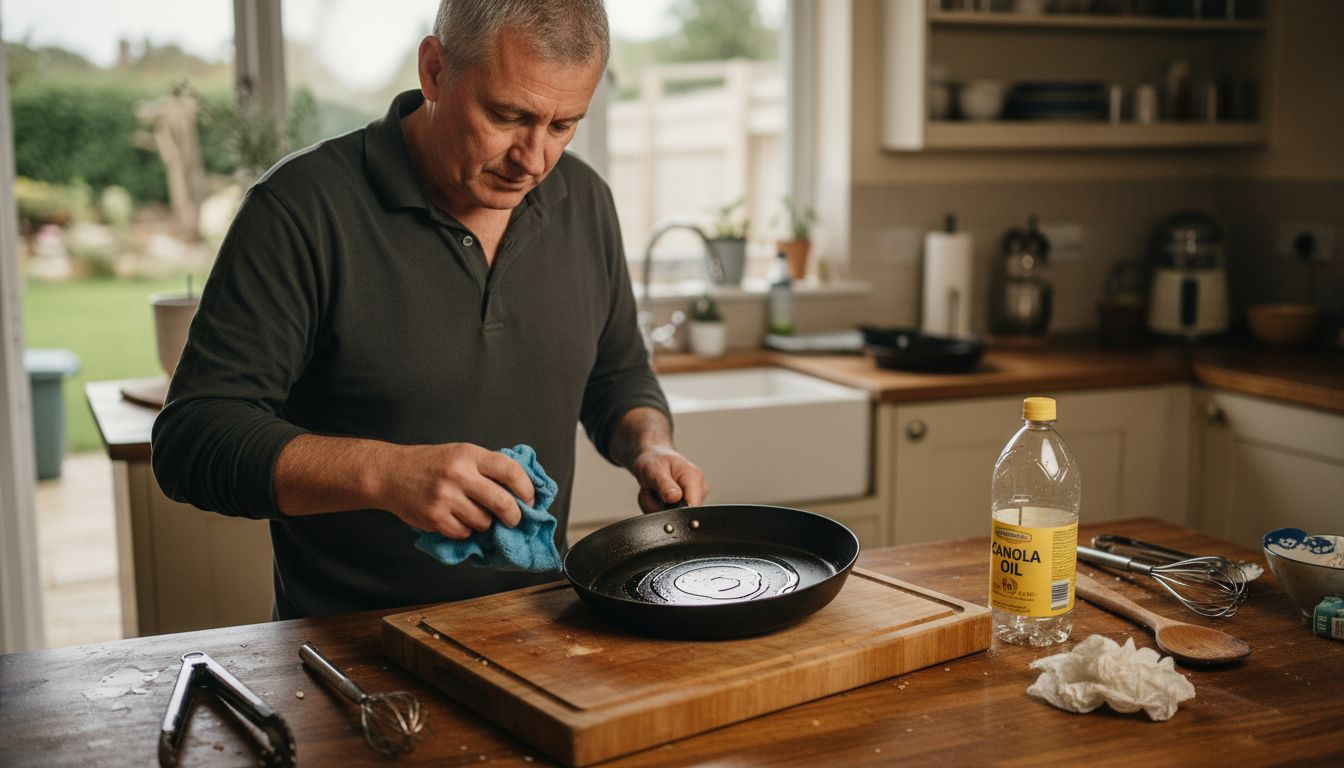
The oil application process transforms the pan’s surface through polymerization. When heated, the oil molecules bond with the metal, creating a hard, protective layer that becomes increasingly non-stick with each cooking session.
Here is a comparison of common oils used for seasoning carbon steel pans:
| Oil Type | Smoke Point (°C) | Seasoning Effect | Availability |
|---|---|---|---|
| Grapeseed | 220 | Creates hard, smooth layer | Widely available in supermarkets |
| Canola | 204 | Forms strong, durable coating | Easily found in most shops |
| Sunflower | 232 | Produces even, glossy finish | Common in grocery stores |
| Olive (not recommended) | 160 | Prone to sticky layer, poor durability | Very common but suboptimal |
- Choose oils with high smoke points
- Use grapeseed, canola, or sunflower oil
- Apply extremely thin, even layer
- Buff off excess oil completely
A proper seasoning is about precision: less oil is always better than too much.
Pro tip: Wear disposable gloves while applying oil to prevent uneven application and protect your hands from potential oil residue.
Step 4: Bake Upside Down for Lasting Seasoning
Creating a perfect seasoning layer requires strategic baking that ensures even heat distribution and prevents oil pooling. Your goal is to transform the thin oil layer into a durable, protective coating that will enhance your carbon steel pan’s performance.
Bake the pan upside down on the middle oven rack, placing a sheet of aluminium foil on the bottom rack to catch any potential drips. Position the pan at a 45-degree angle to allow any minimal excess oil to drain while preventing complete oil runoff. The recommended baking temperature is between 230-250°C, and you’ll want to maintain this heat for approximately 60 minutes to ensure complete polymerization.
Multiple seasoning cycles will progressively build a more robust non-stick surface. Each subsequent baking session deepens the pan’s protective patina, improving its cooking performance and resistance to sticking.
- Preheat oven to 230-250°C
- Place pan upside down on middle rack
- Use foil on bottom rack to catch drips
- Bake for 60 minutes
- Repeat seasoning 2-3 times for best results
Patience and precision are key: proper seasoning is a gradual process of layering and heat transformation.
Pro tip: Wear heat-resistant gloves when handling the hot pan, and always use oven mitts to protect your hands during the seasoning process.
Step 5: Repeat Seasoning Cycles for Strong Patina
Developing a robust, long-lasting seasoning on your carbon steel pan requires patience and multiple baking cycles. Your goal is to gradually build a protective, non-stick layer that will improve with each cooking session.
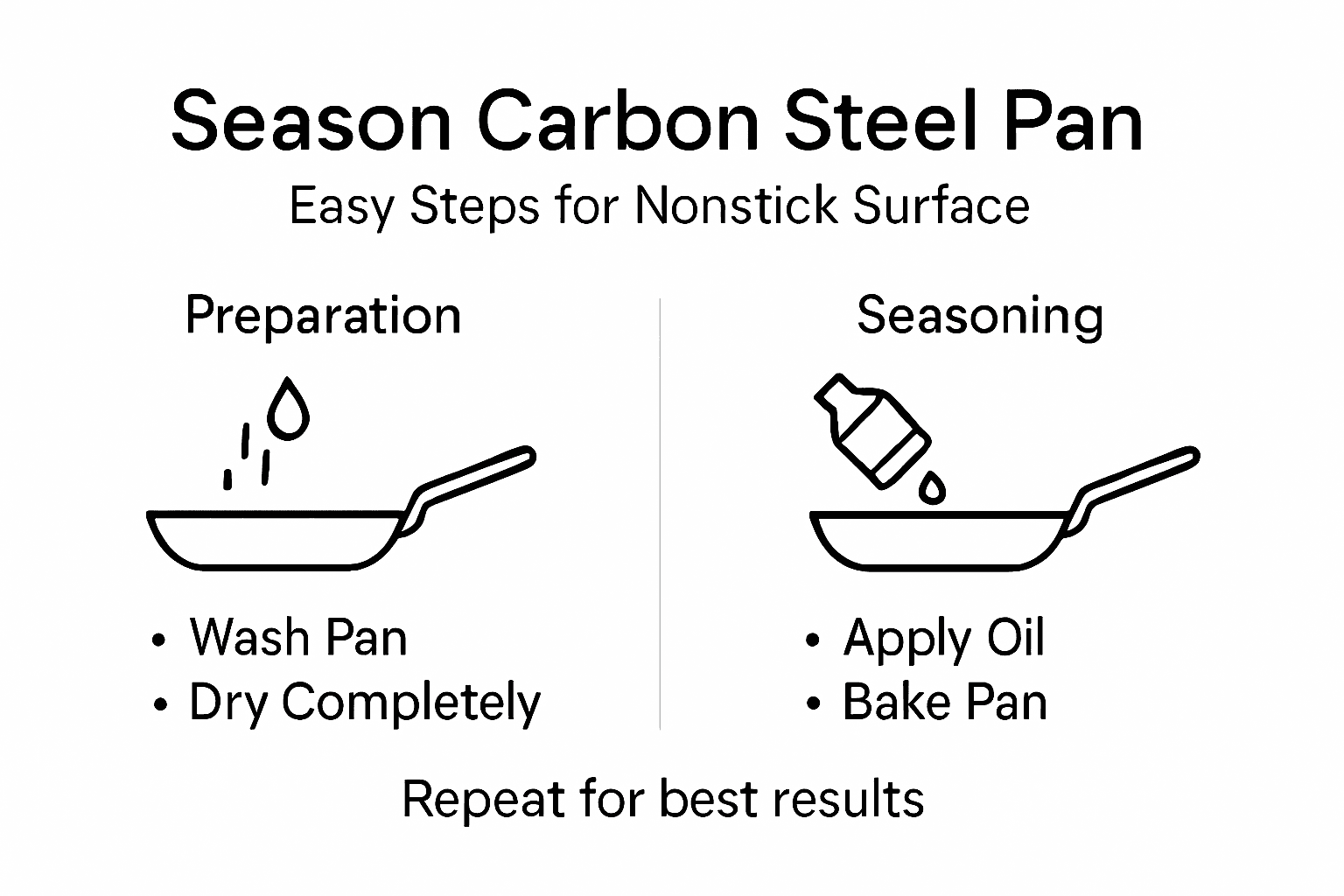
Multiple seasoning applications create a progressively darker and more durable patina. Apply a thin oil layer after each initial seasoning cycle, repeating the baking process 2-3 times. Each subsequent layer will polymerise more completely, hardening the protective coating and enhancing the pan’s non-stick properties.
The seasoning process is not a one-time event but a continuous journey. As you cook fatty foods and repeatedly heat the pan, the protective layer will naturally darken and become more resilient, transforming your carbon steel pan into a truly non-stick cooking surface.
- Repeat seasoning 2-3 times
- Apply very thin oil layers
- Bake at 230-250°C each time
- Allow pan to cool between cycles
- Observe patina developing gradually
A perfect patina takes time: each cooking session strengthens your pan’s protective layer.
Pro tip: Cook fatty foods like bacon or sear meats in the early stages to help accelerate and deepen the pan’s seasoning naturally.
Step 6: Check Nonstick Layer and Store Properly
After completing your seasoning process, it’s crucial to evaluate the pan’s surface and ensure proper long-term storage. Your goal is to maintain the hard-earned protective layer and prevent any potential rust or degradation.
Examine the pan’s surface thoroughly for a smooth, dark patina that indicates successful seasoning. Look for an even, glossy finish without any patchy or bare metal areas. The surface should feel slightly slick but not sticky, with a uniform dark brown or black colour that signals a well-polymerised protective layer.
Proper storage is key to maintaining your pan’s seasoning. After each use, clean the pan, dry it completely, and apply a whisper-thin layer of oil to protect against moisture and rust. Store the pan in a dry, well-ventilated area, ideally hanging or placed on a rack to ensure air circulation.
The following table summarises common carbon steel pan issues and how to address them:
| Issue | Cause | Solution |
|---|---|---|
| Sticky residue | Too much oil applied | Buff oil thoroughly, bake again |
| Patchy patina | Uneven oil distribution | Reapply oil, repeat seasoning |
| Rust spots | Inadequate drying or oiling | Remove rust, reseason pan |
| Dull surface | Insufficient seasoning cycles | Repeat seasoning 2-3 more times |
- Check for smooth, dark patina
- Ensure even colour coverage
- Verify non-sticky surface
- Dry thoroughly after cleaning
- Apply light oil layer before storage
- Store in dry, ventilated space
A well-maintained carbon steel pan will improve with every cooking session.
Pro tip: Place a paper towel between stacked pans to absorb moisture and prevent seasoning damage.
Master Your Seasoning With Professional Carbon Steel Cookware
Seasoning your carbon steel pan in the oven for a lasting nonstick finish is essential to unlock its full cooking potential. However, applying the right techniques and oils can be challenging without the perfect pan designed to enhance every step of this process. If you want a pan that responds flawlessly to seasoning and develops a durable natural nonstick patina, explore the exceptional craftsmanship behind our Carbon Steel Collection | Brass&Steel.
Unlock the benefits of pans forged from a single sheet of carbon steel, engineered with no rivets or welds to ensure even heat distribution and optimal seasoning results. Our pans are precision crafted for superb heat retention and performance on all cooktops including induction. Begin your journey with a pan made to last a lifetime and season beautifully with our expert guide found at Brass & Steel. Start today by upgrading your cookware and experience how truly satisfying cooking with a naturally nonstick, durable carbon steel sauté pan can be. Discover new arrivals and special selections at New arrivals – Brass & Steel and transform your kitchen with heirloom quality cooking tools.
Frequently Asked Questions
How do I clean my carbon steel pan before seasoning?
To clean your carbon steel pan before seasoning, use hot, soapy water and a soft brush to remove any factory residues or oils. Make sure to rinse thoroughly and dry the pan completely to prevent rust.
What temperature should I bake my carbon steel pan for seasoning?
For seasoning your carbon steel pan, preheat your oven to a temperature between 230-250°C. Bake the pan at this heat for approximately 60 minutes to ensure proper polymerisation of the oil layer.
How can I ensure an even oil coating when seasoning?
To ensure an even oil coating, apply a very thin layer of high smoke point oil using a clean, lint-free cloth. Aim for a coating so thin that the pan appears almost dry, as excess oil can lead to a sticky surface.
How many times should I repeat the seasoning process?
You should repeat the seasoning process 2-3 times to build a strong patina on your carbon steel pan. Each cycle will enhance the non-stick properties and durability of the seasoning layer.
What should I do if I notice rust on my carbon steel pan?
If you notice rust on your carbon steel pan, remove it using a mild abrasive, then reseason the pan to restore its protective layer. After cleaning, ensure to dry the pan completely and apply a thin layer of oil before storage.
How do I store my seasoned carbon steel pan properly?
To store your seasoned carbon steel pan properly, ensure it is completely dry after each use and apply a light layer of oil to protect against moisture. Store it in a dry, well-ventilated area, preferably hanging or on a rack to allow for air circulation.