What makes cookware truly heirloom quality and durable
TL;DR:
- Most inexpensive cookware fails within a decade, while true heirloom pieces are defined by durable materials and construction. Selecting cookware based on thickness, construction quality, and finish durability ensures longevity beyond brand reputation. Investing in well-engineered, resilient pieces, like forged carbon steel pans, provides reliable performance for generations.
Most cooks assume that a hefty price tag is the best predictor of a pan that will outlast them. It is not. Plenty of expensive cookware lines fail within a decade, their coatings flaking, their handles loosening, their rims chipping under normal kitchen conditions. Genuine heirloom-quality cookware is defined not by what it costs, but by its material, the engineering behind its construction, and how it holds up under years of real cooking. This article unpacks the framework serious cooks need to identify cookware that is genuinely worth passing on to the next generation.
Table of Contents
- Core components of heirloom-quality cookware
- Material focus: Cast iron, enamelled cast iron and copper
- Critical construction and resilience tests for longevity
- Applying the framework: Choosing your own heirloom piece
- Why most cookware fails the heirloom test
- Explore heirloom-quality cookware options
- Frequently asked questions
Key Takeaways
| Point | Details |
|---|---|
| Material and build matter | Heirloom cookware relies on robust materials and expert construction for long-lasting use. |
| Durability over brand | Chip resistance, impact durability, and thick layers matter more than manufacturer branding. |
| Practical tests reveal quality | Real-world resilience tests, like enamel chipping and handle checks, show true heirloom status. |
| Choose for usage style | Pick cookware that’s suited for your cooking habits—clanging, moving, or metal utensil use. |
| Framework for selection | Use a clear checklist for material, construction, and finish when choosing heirloom cookware. |
Core components of heirloom-quality cookware
Now that you know not all cookware is created equal, let’s break down the essential ingredients for true heirloom cookware. The foundation comes down to three pillars: material, construction, and finish durability. Get all three right and you have a pan that can easily outlive its owner.
According to Serious Eats’ testing criteria, heirloom-quality cookware is defined by longevity drivers that survive years of heat cycling: durable base materials, robust construction such as clad layers, and finishes that resist wear and damage. That is the expert benchmark, and it is a useful lens for everything that follows.
The most commonly discussed materials are uncoated cast iron, enamelled cast iron, copper, stainless steel, and carbon steel. Each has a different relationship with heat, weight, and maintenance. The question is not which one is best in isolation, but which one suits your cooking style and will remain functional across decades of use.
| Material | Heat retention | Responsiveness | Maintenance demand | Heirloom potential |
|---|---|---|---|---|
| Uncoated cast iron | Excellent | Low | Moderate (seasoning) | Very high |
| Enamelled cast iron | Excellent | Low | Low | High (if enamel holds) |
| Copper | Moderate | Very high | High (polishing) | High (thick layers only) |
| Stainless steel | Good | Moderate | Low | High (clad construction) |
| Carbon steel | Very good | High | Moderate (seasoning) | Very high |
Construction is where many cookware manufacturers cut corners. A pan can be made from a superb material and still fail because of a weak handle attachment, a thin rim, or insufficient layering. Serious Eats’ best stainless steel criteria frame this well: a good working framework for heirloom quality includes a material system appropriate for your cooking style, construction engineered for even heating and stiffness to resist warping, and a durable surface that resists impact, wear, and maintenance damage.
Key construction details to examine before buying:
- Handle attachment: Riveted handles can loosen; welded or fully integrated handles are typically stronger
- Rim reinforcement: A rolled or reinforced rim resists chips and cracks, especially in cast iron
- Wall thickness: Thicker walls heat more evenly and resist warping under high temperatures
- Clad layers: Multi-ply construction bonds different metals together, improving both performance and structural integrity
Pro Tip: When assessing a pan in a shop, grip the handle and twist gently. Any flex or movement between handle and body is a red flag for long-term durability.
Material focus: Cast iron, enamelled cast iron and copper
We have established the components of heirloom worthiness. Let’s now look at how specific materials measure up against those criteria.
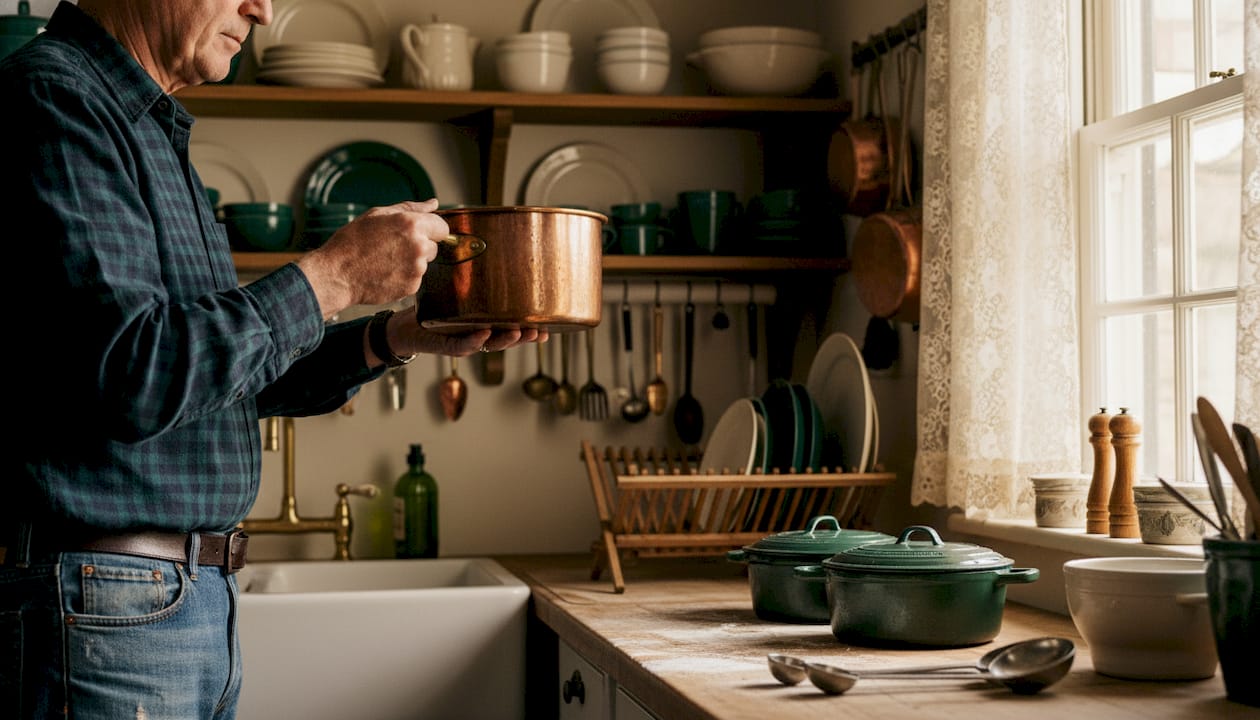
Enamelled cast iron is one of the most popular choices for heirloom cookware, and it deserves its reputation, but with caveats. Serious Eats’ enamel durability checks make clear that heirloom quality for enamelled cast iron heavily depends on enamel durability, specifically chip resistance, and on internal properties that remain cooking-friendly without relying on removable or fragile coatings. In other words, the enamel itself must be thick, hard, and well bonded to the iron beneath it. Thin or poorly applied enamel will chip with ordinary use, and once the underlying iron is exposed, rust follows.
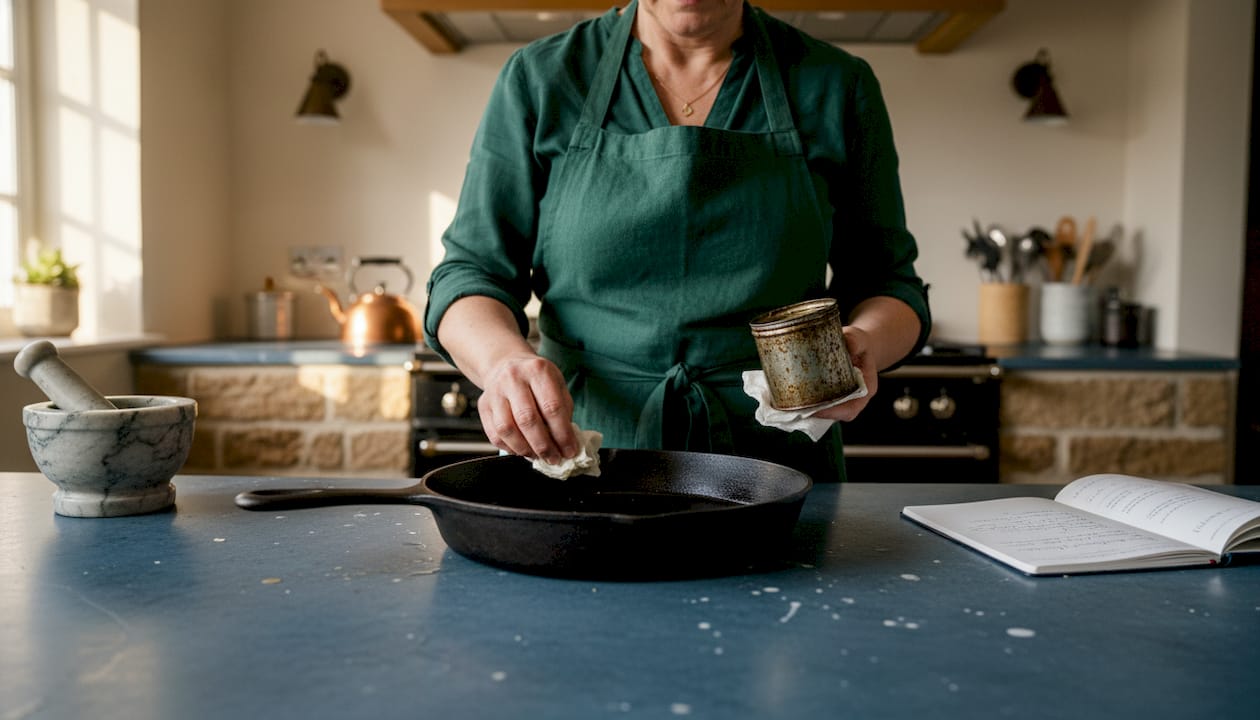
Uncoated cast iron is a different beast. Its heirloom quality is built over time rather than manufactured in a factory. According to Serious Eats’ cast iron testing, cast iron’s durability centres on the ability to build and maintain a seasoning-driven cooking surface over years of use. Unlike enamelled cast iron, the surface of an uncoated pan genuinely improves with every cook, provided it is cared for correctly. This is exactly the kind of performance trajectory that defines heirloom use.
“The best cookware you can own is the kind that rewards you for using it. A well-seasoned cast iron or carbon steel pan does not deteriorate with age; it becomes better.”
Copper is in a category of its own when it comes to heat responsiveness. A skilled cook can raise and lower temperatures almost instantly, which matters enormously for sauces, caramel, and delicate proteins. However, copper cookware’s heirloom quality is strongly tied to construction methodology. Serious Eats’ copper testing specifically ties copper responsiveness to sufficient copper layering, noting that meaningful thickness, tri-ply or five-ply construction rather than a thin copper veneer, and balanced handles and rims define genuinely durable copper pieces.
Here are the three criteria that distinguish true heirloom copper from decorative cookware:
- Copper layer must be thick enough to conduct heat meaningfully, not merely cosmetic
- Handles must be securely attached and ergonomically balanced for a heavy pan
- The interior lining, typically stainless or tin, must be bonded thoroughly and free of pinholes
It is also worth understanding how cast iron compares to stainless steel in terms of long-term maintenance demands. Stainless steel is low-maintenance and resists corrosion well, but its nonstick behaviour depends on technique rather than seasoning. For cooks who want a pan that improves with use rather than just enduring, uncoated cast iron and carbon steel have a clear edge.
Critical construction and resilience tests for longevity
Understanding material is just the start; here is why build quality and resilience to everyday use define heirloom status.
Most cookware fails not because the metal breaks down, but because the vulnerable points of construction give way. Rims crack. Handles work loose. Enamel chips during a routine bump against a tap or another pan. These are the failure modes that separate a well-marketed pan from one with genuine staying power.
Serious Eats’ rim and handle durability tests confirm that heirloom quality includes practical edge-case resilience: rim robustness, handle attachment durability, and resistance to enamel chipping from impacts, because these are failure points that appear even in short-term testing. If a pan cannot survive a few months of normal kitchen use without showing damage at these points, it will not survive twenty years.
The practical advice for home cooks is equally direct. Serious Eats’ enamel chipping research notes that if your kitchen habits include clanging tools or frequent handling of heavy Dutch ovens, or if you regularly use metal utensils, then durability testing around enamel chipping and impact becomes especially relevant to any heirloom claim.
What to look for when assessing real-world durability:
- Rim profile: A wide, well-reinforced rim is far less likely to chip than a thin-edged one
- Handle security: No movement whatsoever when the handle is stressed laterally or rotationally
- Enamel smoothness: Bubbles, rough patches, or uneven coverage in new enamel predict early chipping
- Base flatness: A perfectly flat base on a new pan resists warping far better than one with even a slight bow
Pro Tip: For enamelled pieces, examine the rim under good lighting before you buy. Tiny surface imperfections or uneven enamel thickness at the lip are early signs that the piece will not hold up under real use.
Understanding how carbon steel compares to stainless steel in construction resilience also matters here. Carbon steel panels forged from a single piece of steel, with no rivets or welds, eliminate the most common construction failure points entirely. There are no joints to work loose and no seams to trap food or corrode over time.
Applying the framework: Choosing your own heirloom piece
With all this insight, here is how you can confidently choose heirloom cookware for your own kitchen.
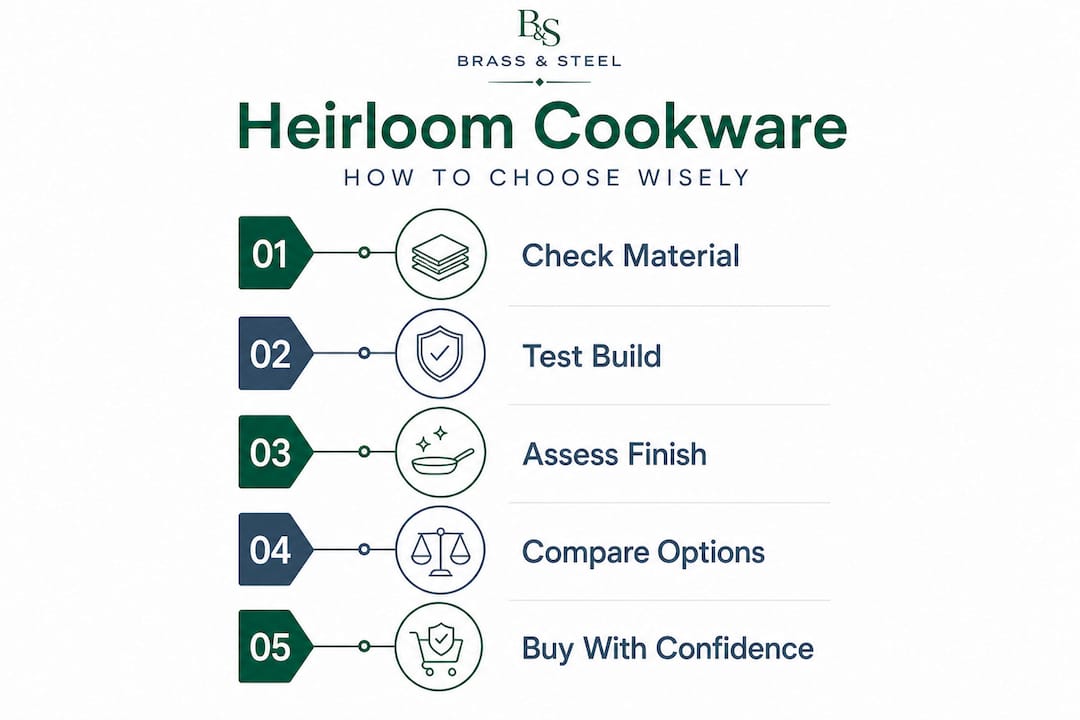
One of the most important lessons from expert testing is that brand name alone is a poor guide. Serious Eats copper cookware evaluation makes this explicit: construction thickness and layering, along with real heat behaviour, matter far more than brand prestige, and the same logic applies across all heirloom materials. A lesser-known brand that uses genuine tri-ply construction and thick, well-finished materials will outlast a famous name with thin walls and decorative copper veneers.
Use this checklist when evaluating any cookware claiming heirloom credentials:
- Check the material specification: Is the copper layer thick enough? Is the cast iron heavy and even? Does the carbon steel meet professional-grade thickness?
- Examine construction at the joints: Handles, rims, and bases are where durability either holds or fails first
- Assess the finish quality: For enamel, look for uniform colour, no bubbling, and a smooth rim. For uncoated metals, check for consistent surface texture
- Research real-world reviews: Look specifically for long-term reviews and independent durability testing, not just first impressions
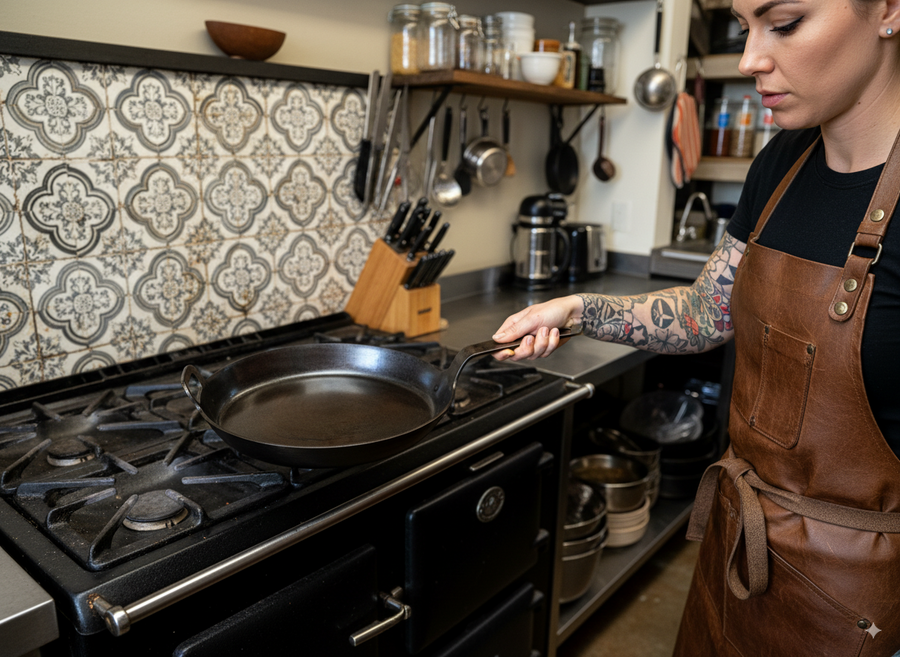
- Match the material to your cooking habits: A copper pan rewards precision and patience; a carbon steel pan rewards high-heat cooking and regular use
When choosing cookware wisely, consider how the material behaves across your cooktop, oven, and serving style. A pan that cannot go in the oven, or cannot handle induction, is a pan with limited longevity in a kitchen that evolves.
| Feature | What to look for | Why it matters |
|---|---|---|
| Thickness | Minimum 3mm for steel, heavier for cast iron | Prevents warping, improves heat distribution |
| Handle attachment | Integrated or welded, no movement | Loose handles are a safety hazard and a durability failure |
| Finish condition | Uniform, no imperfections | Predicts how the surface will age |
| Cooktop compatibility | Induction-safe, oven-safe | Versatility extends the pan’s useful life |
| Surface type | Uncoated or chip-resistant enamel | Coatings that wear off defeat the heirloom purpose |
Comparing copper versus ceramic cookware or stainless clad versus carbon steel is a useful exercise because it forces you to think about what your kitchen actually demands, rather than what marketing suggests you should want.
Why most cookware fails the heirloom test
Stepping back, here is the uncomfortable truth about how most cookware is marketed versus what really sets heirloom pieces apart.
The cookware industry is built on aspiration. Beautiful photography, celebrity endorsements, and heritage brand stories sell a vision of a perfect kitchen. Very few of those stories are backed by the kind of rigorous, long-term durability testing that would actually tell you whether a pan is worth passing on to your children.
What testing consistently reveals is that heirloom-quality cookware is defined by longevity drivers that survive years of heat cycling: durable base materials, robust construction, and finishes that genuinely resist wear and damage. The key phrase is “survive years of heat cycling.” Marketing cannot replicate that. Only material science and honest construction can.
Here is the contrarian truth: many of the most expensive, most recognisable cookware names produce pieces that fail basic durability benchmarks. Enamel that chips after light impacts. Handles that loosen within a year. Copper veneers so thin they offer no meaningful heat benefit. The prestige name on the box is not a warranty against poor construction choices.
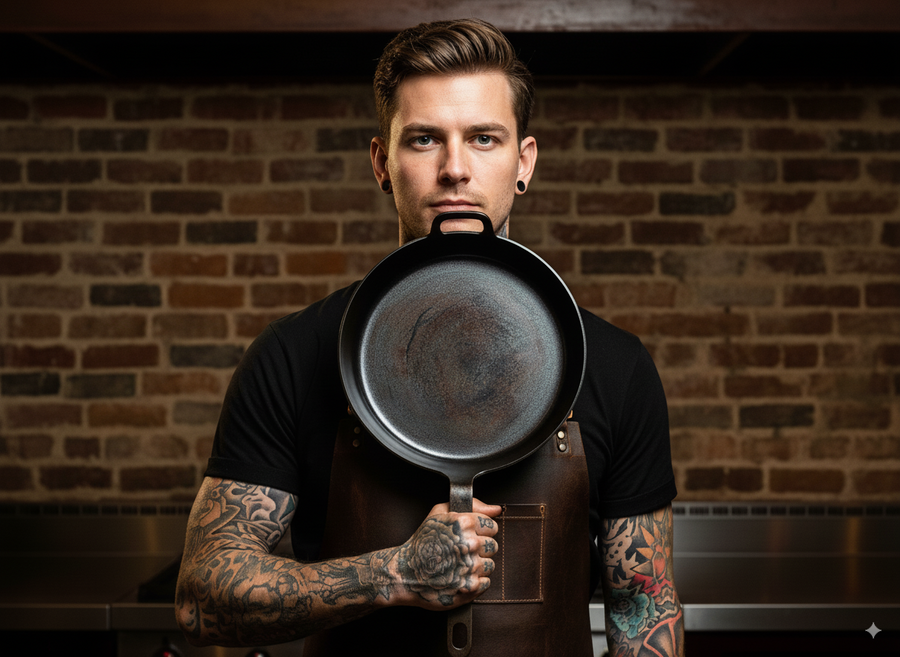
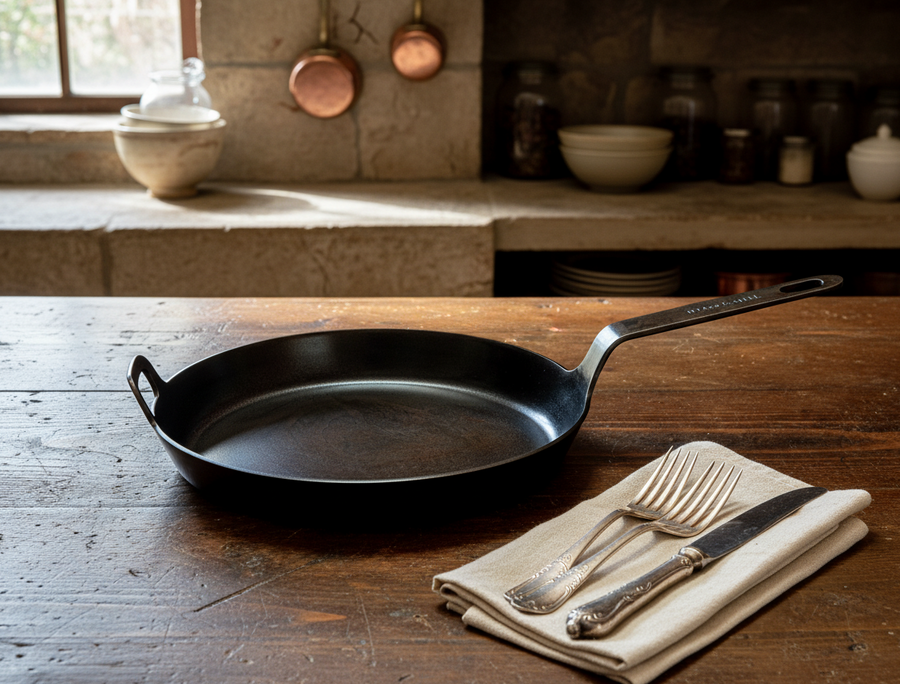
By contrast, a pan made from a single forged piece of carbon steel, with no rivets, no coatings, and no welds, addresses heirloom failure modes at the engineering level. There are simply fewer components to fail. The surface improves with use rather than degrading. And the material, steel, is so fundamentally stable that it will outlast nearly every other option in your kitchen, provided it is cared for.
For serious cooks, the lesson is this: chase construction details and verified durability, not brand stories. Visit cast iron versus stainless comparisons with a critical eye, ask what the pan is actually made of and how it is built, and ignore the heritage narrative unless it is backed by real material specifications.
Explore heirloom-quality cookware options
If this article has shifted how you think about cookware, the next step is finding pieces that actually deliver on these principles. At Brass & Steel, every pan begins with a single sheet of carbon steel, forged without rivets or welds, built to the kind of specification that withstands decades of serious cooking.
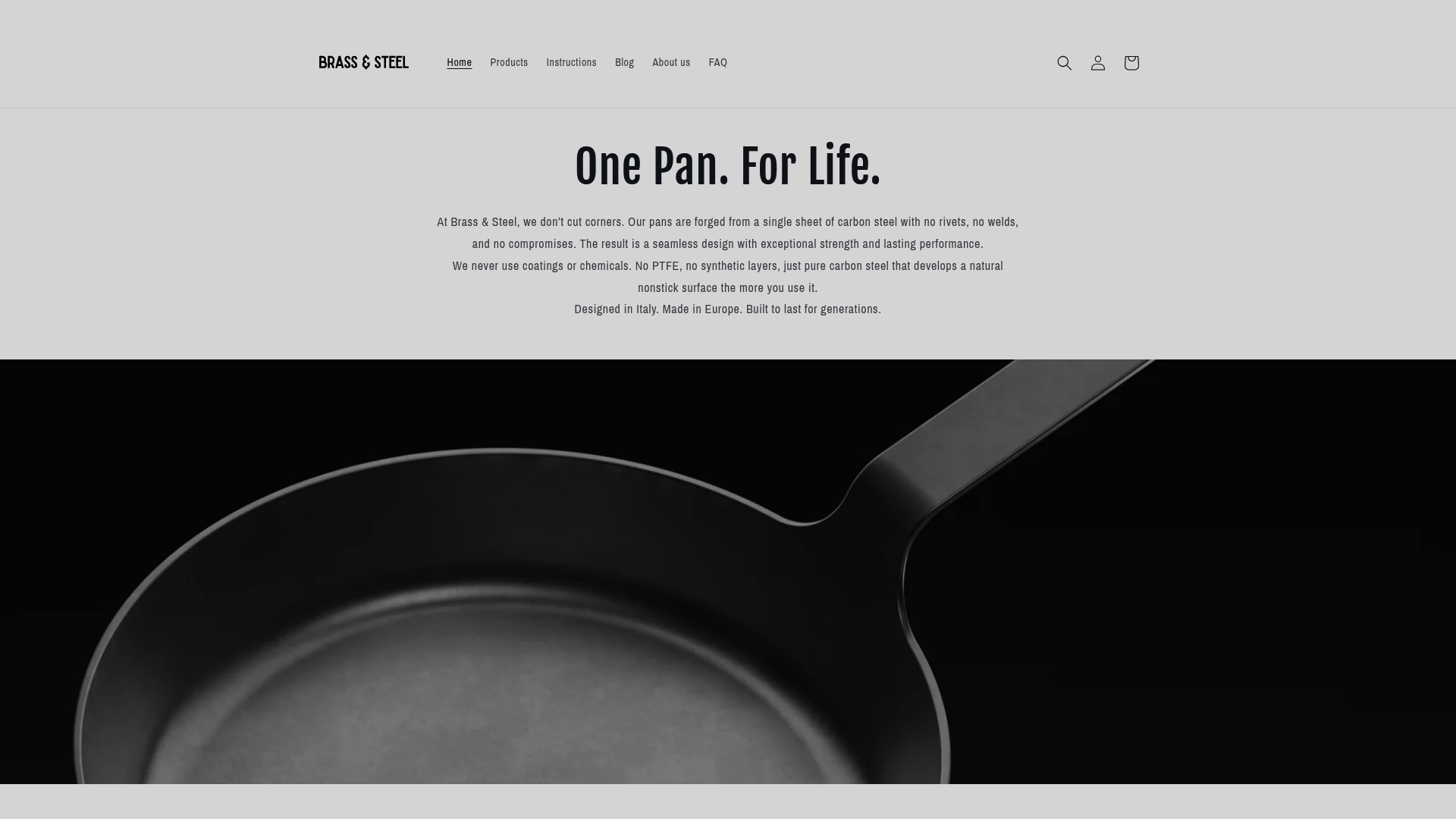
Our professional carbon steel pans are available in 27 cm and 30 cm sizes, forged to 3mm and 4mm thickness respectively, and designed to build a natural nonstick patina that improves over time. No PTFE, no PFOA, no coatings to flake or chip. Fully induction compatible. Oven safe. Engineered to meet the same heirloom criteria this article has laid out, not just described. If you are ready to invest in a pan that will still be performing at its best when your kitchen looks very different from today, this is where to start.
Frequently asked questions
What does ‘heirloom quality’ mean in cookware?
It means cookware built to endure decades of use, featuring durable materials, robust construction, and finishes that resist wear or chipping. Serious Eats’ testing criteria define it as cookware with longevity-focused construction that survives years of heat cycling.
Is enamelled cast iron truly heirloom quality?
Yes, but only if the enamel is highly chip-resistant and maintains its cooking surface without fragile coatings. According to Serious Eats enamel testing, heirloom quality for enamelled cast iron depends primarily on enamel durability and chip resistance.
How do I test cookware for heirloom potential?
Check for robust construction, thick materials, secure handles, and impact-resistant finishes, then examine actual durability reviews. Serious Eats’ handle and rim tests show that rim and handle durability are among the most telling indicators of long-term quality.
Does brand name guarantee heirloom quality?
No; build quality and material thickness matter far more than brand for lasting performance. Serious Eats copper testing confirms that construction thickness and real heat behaviour are the true drivers of quality.
Can all types of cookware become heirloom pieces?
Not all cookware is designed for heirloom use; it depends on material, construction, and surface durability. The Serious Eats stainless framework outlines that material, construction, and finish must all meet a high standard for a piece to qualify.