How forged carbon steel pans achieve lasting durability

TL;DR:
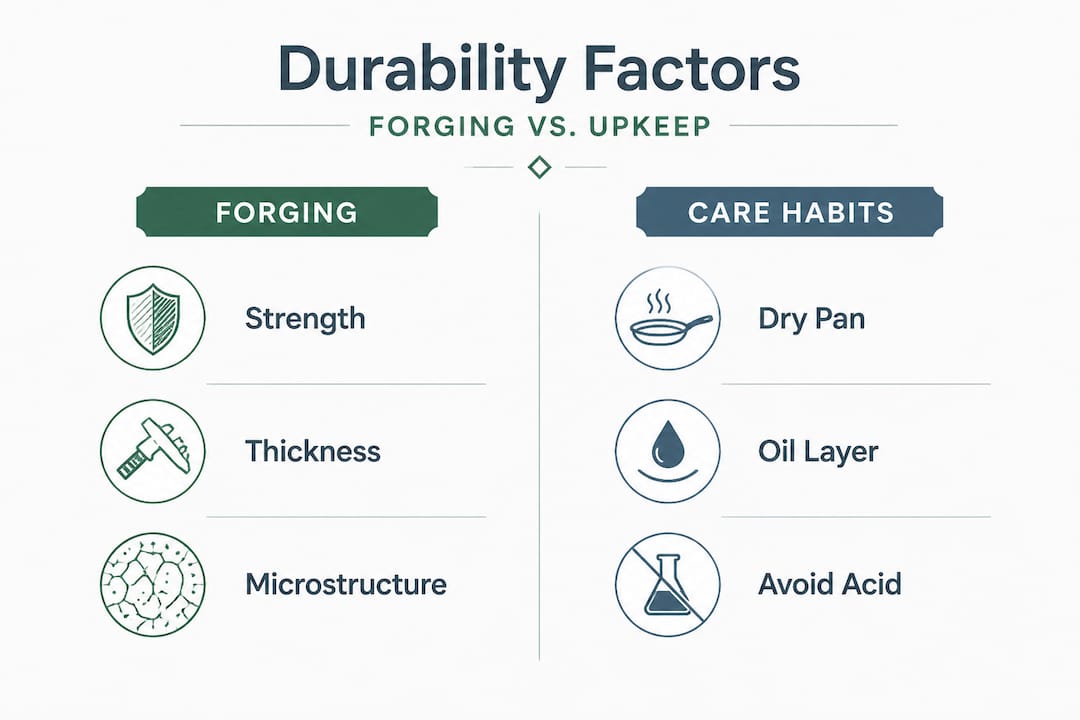
- Forged carbon steel pans are stronger and more dense than stamped ones, but their durability depends largely on proper care. The pan’s microstructure and thickness influence its resistance to warping and deformation, while seasoning and moisture control are crucial for long-term performance. Consistent maintenance, such as dry washing, oiling, and avoiding acids, ensures these pans become heirloom-quality tools passed through generations.
There is a tempting assumption among many home cooks: buy a forged pan and it will last forever. The word “forged” conjures images of blacksmiths hammering indestructible metal, and that feeling of solidity when you first pick up a carbon steel pan does nothing to discourage the myth. But forged pan durability is mostly about construction, microstructure, and thickness rather than an inherent guarantee that any pan will last indefinitely. This guide explains what forging actually does to the metal, why seasoning and corrosion control matter just as much as manufacturing quality, and which everyday habits will either extend or shorten your pan’s working life.
Table of Contents
- What makes a forged carbon steel pan different
- Seasoning, patina, and corrosion: The true durability factors
- Heat treatment and thickness: Balancing strength and toughness
- Avoiding common pitfalls: Real-world durability edge cases
- Our take: Durability is a partnership between design and user
- Discover professional-grade carbon steel pans
- Frequently asked questions
Key Takeaways
| Point | Details |
|---|---|
| Forged structure matters | Strength and thickness from forging contribute greatly to pan lifespan. |
| Seasoning is crucial | A well-maintained seasoning layer prevents rust and ensures smooth cooking. |
| Heat affects durability | Proper heat treatment and careful cooking habits help pans endure for years. |
| Avoid common mistakes | Overheating, simmering acids, and improper drying are biggest threats to longevity. |
| Care routines are essential | Regular care, drying, and seasoning practices turn a forged pan into a lifetime tool. |
What makes a forged carbon steel pan different
Forging is not simply a marketing term. When a carbon steel pan is forged, the steel is shaped under high pressure, which compresses the metal’s grain structure and eliminates the internal voids that can weaken sheet-formed pans. The result is a denser, stronger piece of metal that resists cracking and bending better than a pan simply stamped from a flat sheet.
However, forged pan durability is mostly about this improved microstructure and thickness, not a blanket promise of invincibility. Two forged pans made from different thicknesses of steel will behave very differently under the same cooking conditions. A 3 mm pan, for example, will respond to heat more quickly but can be more susceptible to warping if placed over a very concentrated heat source without gradual warming. A 4 mm pan will take slightly longer to heat through but offers considerably more resistance to deformation.
Here is how forged construction compares to standard stamped pans across the key factors that affect longevity:
| Factor | Forged carbon steel | Stamped carbon steel |
|---|---|---|
| Grain structure | Compressed, dense | Less uniform |
| Warp resistance | High (especially at 4 mm) | Moderate |
| Weight distribution | Even across surface | Can vary |
| Base thickness | Consistent | Can thin at edges |
| Long-term strength | Excellent with care | Good with care |
Beyond the table, there are a few qualities that make forged pans particularly well suited to everyday kitchens:
- No rivets or welds. A pan forged from a single piece of steel has no attachment points to loosen over time. This keeps the pan structurally sound and makes cleaning considerably easier.
- Uniform heat contact. Because the base is pressed evenly, forged pans sit flat on the hob, which is especially important for induction compatibility.
- Better seasoning adhesion. The compressed surface of a forged pan tends to hold seasoning layers more consistently than pans with uneven or porous surfaces.
Proper upkeep for carbon steel pans is still essential, regardless of how the pan was made. Forging sets the foundation, but it cannot do the daily work for you.
Seasoning, patina, and corrosion: The true durability factors
Once you understand what forging provides at the manufacturing stage, the next question is what keeps a carbon steel pan performing well over years of use. The honest answer is seasoning and corrosion control. These are the mechanisms home cooks notice most directly, and they matter far more on a daily basis than the grain structure of the steel.
Seasoning improves release over time, while poor drying leads to rust. This is the single most useful summary of carbon steel durability from a practical standpoint. Seasoning is not a one-time treatment. It is a living layer of polymerised oil that builds gradually with each use, becoming harder, more nonstick, and more protective as the months pass.
Here is how to build a strong seasoning foundation from the very first use:
- Wash the new pan with warm, soapy water to remove the light protective oil applied during shipping.
- Dry the pan completely, including placing it on a low hob for a few minutes to drive off all moisture.
- Preheat your oven to 250°C.
- Place the empty pan in the oven for ten minutes to ensure it is bone dry.
- Apply a very thin layer of a high-smoke-point oil such as grapeseed, avocado, sunflower, or canola. The pan should look almost dry after wiping away the excess.
- Place the pan upside down in the oven and bake for thirty minutes.
- Repeat this process two or three times before cooking with the pan for the first time.
Following a reliable carbon steel seasoning checklist takes the guesswork out of this process and ensures you are building a durable layer from the start.
What damages this layer? Acidic foods are among the most common culprits. Tomato-based sauces, citrus reductions, and wine-heavy braises will strip seasoning if left in the pan for extended periods. This does not mean you can never cook acidic food in carbon steel, but it does mean you should avoid leaving these foods sitting in the pan for long periods after cooking. Prolonged exposure to water is equally damaging. Leaving a wet pan on the draining board overnight is one of the fastest routes to rust.
| Risk factor | Effect on pan | Recommended action |
|---|---|---|
| Acidic foods (tomatoes, wine) | Strips seasoning | Cook briefly, rinse promptly |
| Prolonged soaking in water | Causes rust | Dry immediately after washing |
| Dishwasher use | Destroys seasoning | Always hand wash |
| Metal scourers | Scratches surface | Use a soft brush or chain mail scrubber |
| Storing without oiling | Allows surface rust | Apply a thin oil coat before storage |
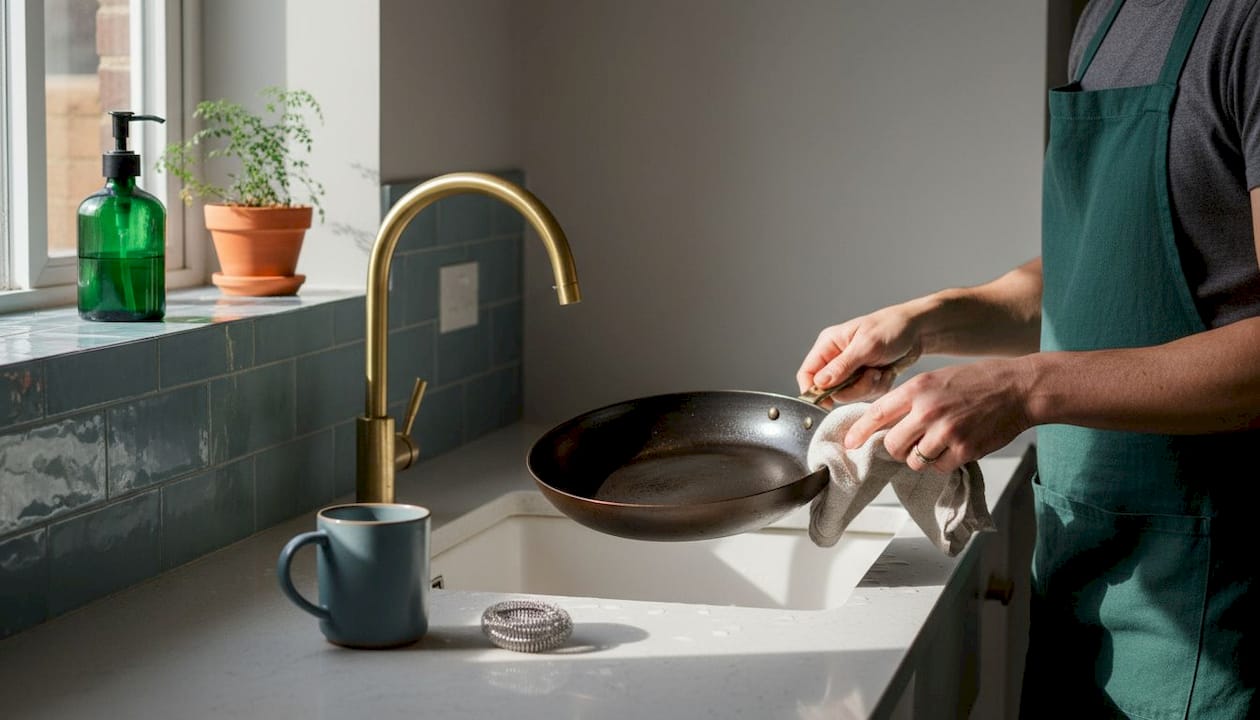
Preventing rust on cookware comes down to one consistent habit: dry the pan thoroughly every single time. Run it over a medium hob flame for sixty seconds after washing and the residual moisture evaporates completely. Then apply the thinnest possible film of oil before putting it away.
Pro Tip: Cook bacon, sausages, or any fatty meat as one of your first meals in a new carbon steel pan. The rendered fat works into the surface and accelerates seasoning development faster than multiple oven treatments alone.
Heat treatment and thickness: Balancing strength and toughness
The manufacturing decisions made before a pan reaches your kitchen have a lasting impact on how it performs and how long it lasts. Heat treatment, which refers to the controlled heating and cooling of steel during production, is one of the most significant variables in this process.
Heat treatment strongly affects the durability trade-off between hardness and toughness in steel. Increase hardness too aggressively and the material becomes brittle, prone to cracking under thermal shock. Retain too much softness and the pan may deform under sustained high heat. The goal in cookware production is to achieve a steel that is hard enough to resist wear and retain shape, yet tough enough to absorb the thermal cycles that occur every time a pan is placed on a hot hob and then cooled in a sink.
Thickness interacts with this balance in a very practical way. Consider the two pans in Brass & Steel’s current range:
- 27 cm sauté pan at 3 mm thickness. This weight and thickness combination makes the pan nimble and highly responsive. It heats quickly and is well suited to everyday tasks like searing fish, sautéing vegetables, and making omelettes. At around 2 kg, it is manageable for extended use.
- 30 cm sauté pan at 4 mm thickness. The additional millimetre of steel makes a substantial difference to warp resistance, particularly on induction hobs where heat can be concentrated in a smaller zone. At roughly 3 kg, this pan is designed for larger meals and more demanding cooking environments.
The thicker the steel, the more thermal mass it holds. More thermal mass means the pan recovers its temperature more quickly after cold ingredients are added, which is exactly what you want when searing a steak or achieving a proper crust on chicken thighs. It also means the pan is far less likely to develop a warped base from repeated thermal stress.
A key metric worth knowing: a 1 mm increase in carbon steel thickness can reduce warp risk significantly under concentrated heat sources such as induction rings, because the additional mass distributes localised heat more evenly across the cooking surface.
Good carbon steel cookware care also means avoiding thermal shock, which occurs when a very hot pan is plunged into cold water. Even the best heat-treated steel can warp or crack if subjected to sudden extreme temperature changes, so always allow the pan to cool naturally before washing.
Avoiding common pitfalls: Real-world durability edge cases
Knowing the theory is useful. Knowing where home cooks most often go wrong is more useful still. Three practical situations reduce real-world durability: overheating thin pans and causing warping (which is more noticeable on electric or induction hobs where heat is concentrated), repeatedly simmering acidic sauces for long periods and stripping seasoning, and leaving the pan wet after washing and allowing rust to form.
Here are the most important mistakes to avoid, ranked by how often they cause lasting damage:
- Overheating an empty pan on high. Carbon steel heats very efficiently. Blasting an empty pan on maximum induction power for several minutes before adding food is not only unnecessary but risks warping the base and scorching any existing seasoning. Preheat on medium and increase from there.
- Simmering tomato sauce for thirty minutes. A brief deglaze with wine or a splash of lemon juice will not ruin your seasoning. But using a carbon steel pan as your regular vessel for long, acidic braises will strip the protective layer steadily, use after use.
- Leaving the pan in the drying rack overnight. Water is the primary enemy of bare carbon steel. Even a small amount of residual moisture is enough to form surface rust within a few hours, particularly in a humid kitchen.
- Using too much oil during seasoning. This is a surprisingly common error. Excess oil pools and polymerises unevenly, creating a sticky, gummy surface that is difficult to cook on. Always wipe away almost all the oil before baking the pan.
- Storing the pan without any protective coating. After cleaning, always apply the lightest possible film of oil before storage. This does not need to be a full seasoning session; a quick wipe with an oiled cloth is sufficient.
Pro Tip: If your pan develops light surface rust, do not panic. Scrub the affected area with a coarse sponge or fine steel wool, rinse, dry thoroughly over heat, and re-season immediately. A small rust spot treated promptly will not affect long-term performance.
“A carbon steel pan is not fragile, but it is not forgiving of neglect either. The cooks who keep their pans for decades are simply the ones who dry them every time.”
Good habits around avoiding rust on pans do not require significant time or effort. They require only consistency. A pan dried and lightly oiled after every use will outlast one that is treated carelessly, regardless of how well it was forged.
Our take: Durability is a partnership between design and user
At Brass & Steel, we hear a version of the same story regularly. Someone invests in a quality forged pan, uses it enthusiastically for a few weeks, leaves it wet one night, and then discovers rust and assumes the pan was defective. It was not defective. It was carbon steel, behaving exactly as carbon steel always will without proper care.
The uncomfortable truth about heirloom-quality cookware is that heirloom status is earned through use, not simply through purchase. A pan that passes from one generation to the next does so because someone, across many years, dried it, seasoned it, and treated it with the low-level attention it requires. The design sets the ceiling for what a pan can achieve. The daily habits of the person using it determine whether that ceiling is ever reached.
This is why we believe the real conversation about carbon steel durability should not focus exclusively on forging techniques or steel composition. Those things matter, and we have invested significantly in the engineering of our single-piece construction to eliminate the weak points that rivets and welds introduce. But the most durable pan we have ever produced will still rust within a week if it is left sitting in water.
The expert carbon steel care routines we recommend are not complicated. They are simply consistent. Dry the pan. Oil the pan. Build the seasoning through regular cooking. Avoid prolonged contact with acids and water. Follow these principles and a well-forged carbon steel pan genuinely can become a tool you pass on.
Discover professional-grade carbon steel pans
Understanding what makes a carbon steel pan last is the first step. Choosing one built to meet that standard is the second.
At Brass & Steel, we forge our pans from a single piece of carbon steel, eliminating rivets and welds entirely. Our 27 cm sauté pan at 3 mm thickness and our 30 cm sauté pan at 4 mm thickness are designed to handle everything from daily breakfasts to ambitious dinner parties, with no synthetic coatings and no compromise on performance. Both are induction compatible and free from PTFE and PFOA. Explore the full range of carbon steel pans and find the pan that suits your kitchen, your cooking style, and your commitment to cookware that genuinely lasts.
Frequently asked questions
Are forged carbon steel pans always more durable than regular pans?
Forged pans often have greater strength and density due to their compressed grain structure, but true durability depends on proper care and pan design rather than forging alone.
What can cause a forged carbon steel pan to rust?
Leaving the pan wet after cleaning or losing the seasoning layer through contact with acidic foods are the most common causes, as corrosion drivers like water and acids break down the protective surface over time.
Can overheating or using high heat harm the durability of a forged pan?
Yes. Overheating thin pans causes warping, particularly on induction hobs where heat concentrates in a smaller area, and can also scorch the seasoning layer permanently.
Does seasoning really help prevent rust and increase durability?
Seasoning acts as a physical barrier between the steel and moisture, and seasoning improves release over time while also preventing the surface corrosion that would otherwise shorten the pan’s lifespan considerably.
Recommended
- Essential Upkeep for Carbon Steel Pans for Lasting Performance – Brass & Steel
- Advantages of Forged Pans for Professional Chefs – Brass & Steel
- Ultimate Carbon Steel Pan Seasoning Guide for Perfect Results – Brass & Steel
- Carbon Steel Seasoning Checklist for Lasting Nonstick Performance – Brass & Steel
- 8 Reliable Camping Cookware Reviews for 2026