Cast Iron vs Stainless – Choosing Your Kitchen Essential
Most British kitchens feature a mix of classic and contemporary cookware, yet choosing between carbon steel and cast iron leaves many chefs debating which material truly performs best. With over 60 percent of European culinary professionals prioritising cookware that supports both health and durability, understanding the unique strengths and care demands of these materials is crucial. This guide highlights how carbon steel and cast iron compare in everyday cooking, helping you select options that match your creativity and maintenance preferences.
Table of Contents
- Defining Cast Iron and Stainless Steel Cookware
- Notable Differences in Material Construction
- Heat Performance and Cooking Applications
- Cleaning, Care, and Lifespan Realities
- Health, Safety, and Common Misconceptions
- Cast Iron, Stainless, or an Alternative?
Key Takeaways
| Point | Details |
|---|---|
| Material Characteristics | Cast Iron offers exceptional heat retention and improves iron intake in food, while Stainless Steel is praised for its durability and non-reactivity with acidic ingredients. |
| Maintenance Needs | Cast Iron requires regular seasoning and specific cleaning protocols, whereas Stainless Steel is low-maintenance and dishwasher safe. |
| Cooking Applications | Cast Iron excels in slow cooking and searing, while Stainless Steel is ideal for precise temperature control and quick cooking methods. |
| Health Implications | Cast Iron can increase dietary iron, beneficial for some, while Stainless Steel maintains food integrity without risk of metal leaching. |
Defining Cast Iron and Stainless Steel Cookware
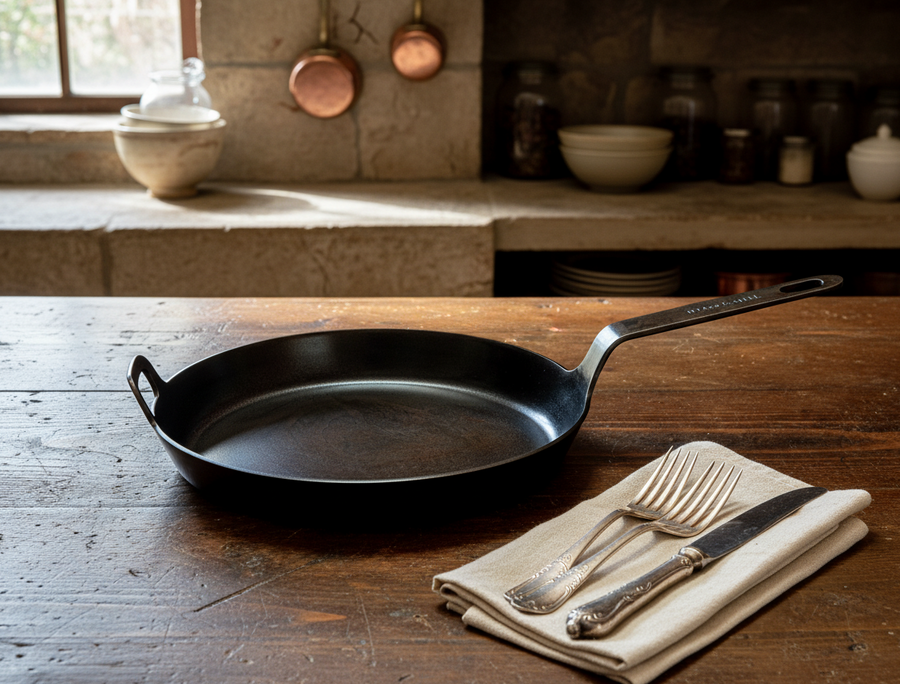
Cookware materials are the unsung heroes of every kitchen, with cast iron and stainless steel representing two distinctive approaches to culinary preparation. Cast iron cookware is a traditional iron-carbon alloy renowned for its exceptional heat retention and durability. Manufactured by melting iron with carbon and silicon, this heavyweight material creates cookware that develops a natural non-stick surface through careful seasoning.
Stainless steel, by contrast, represents a more modern cooking solution. Composed of multiple metals including iron, chromium, and nickel, it offers superior corrosion resistance and versatility. Its layered construction often incorporates aluminium or copper cores, which provide remarkably even heat distribution. Unlike cast iron, stainless steel remains non-reactive with acidic ingredients, making it ideal for preparing a broader range of dishes.
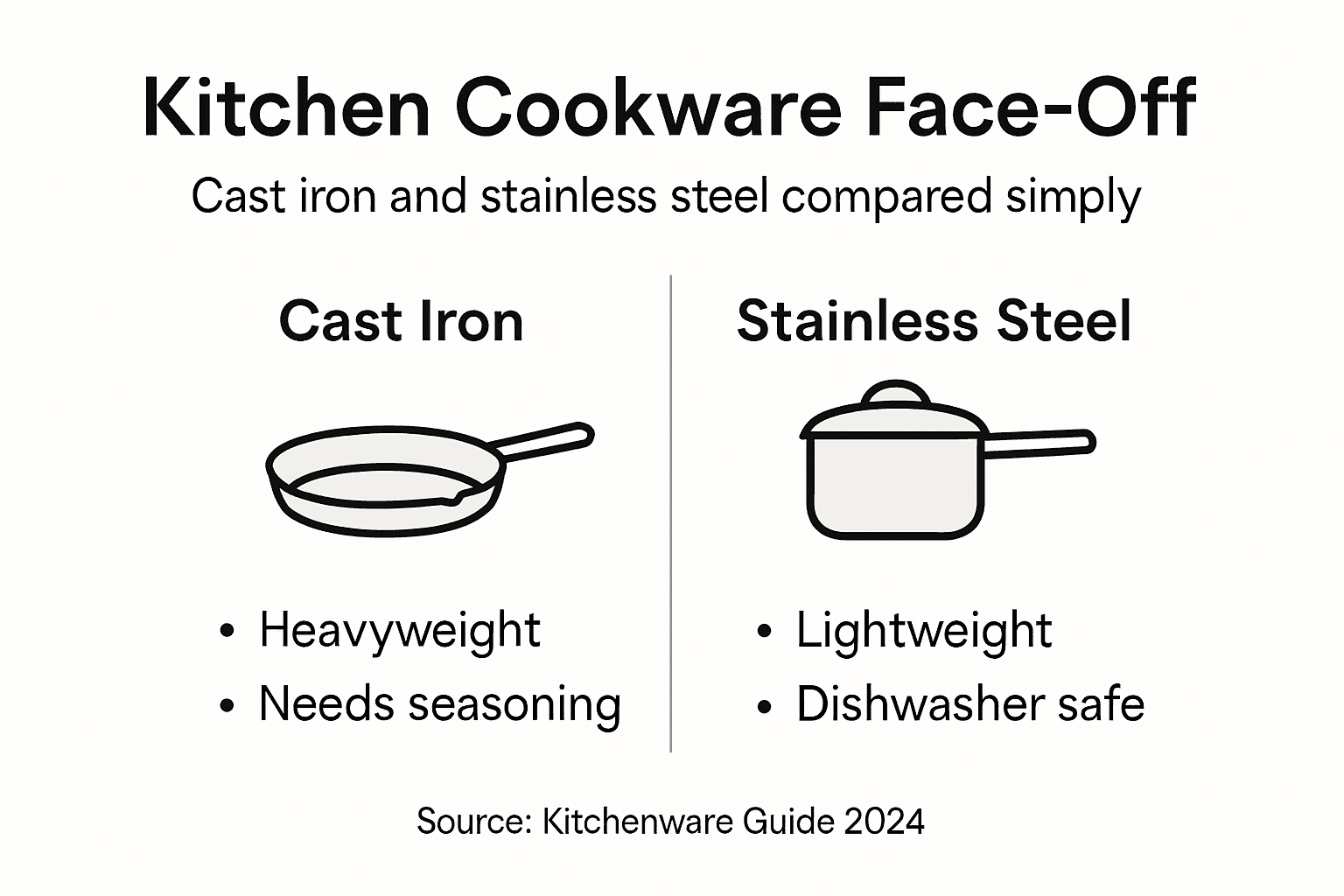
The core differences between these materials extend beyond basic composition. Cast iron requires significant maintenance to prevent rusting and maintain its seasoned surface, demanding careful cleaning and occasional re-seasoning. Stainless steel cookware presents a more low-maintenance alternative, being dishwasher safe and resistant to corrosion. Each material brings unique strengths: cast iron excels in heat retention and creating beautifully seared meats, while stainless steel offers precision, versatility, and ease of use.
Pro tip: When selecting between cast iron and stainless steel, consider your cooking style, maintenance willingness, and the specific dishes you most frequently prepare.
Here’s a concise comparison of key properties of cast iron and stainless steel cookware:
| Property | Cast Iron | Stainless Steel |
|---|---|---|
| Heat Retention | Excellent; ideal for slow cooking | Moderate; rapid heat changes |
| Reactivity with Food | Can react with acids | Non-reactive with acidic ingredients |
| Maintenance Required | Needs regular seasoning and drying | Dishwasher safe, minimal upkeep |
| Food Nutrient Impact | Increases dietary iron | Maintains food purity |
| Lifespan Potential | Multi-generational with care | Several decades with proper use |
Notable Differences in Material Construction
Cast iron and stainless steel represent two dramatically different approaches to cookware engineering, each with distinctive material characteristics. Cast iron’s metallurgical composition includes a high carbon content ranging between 2-4%, along with silicon, which creates a hard but inherently brittle metal. The unique structure allows carbon to form as graphite flakes or nodules, providing exceptional heat retention and remarkable wear resistance.
Stainless steel, in contrast, emerges as a more complex alloy engineered for versatility and durability. Its fundamental composition requires a minimum of 10.5% chromium, which forms a protective oxide layer preventing corrosion. Manufacturers often incorporate nickel to enhance toughness, creating a material with remarkable chemical resistance. The production process typically involves rolling sheets or employing sophisticated cladding techniques that integrate multiple metals like aluminum and copper to optimise heat distribution.
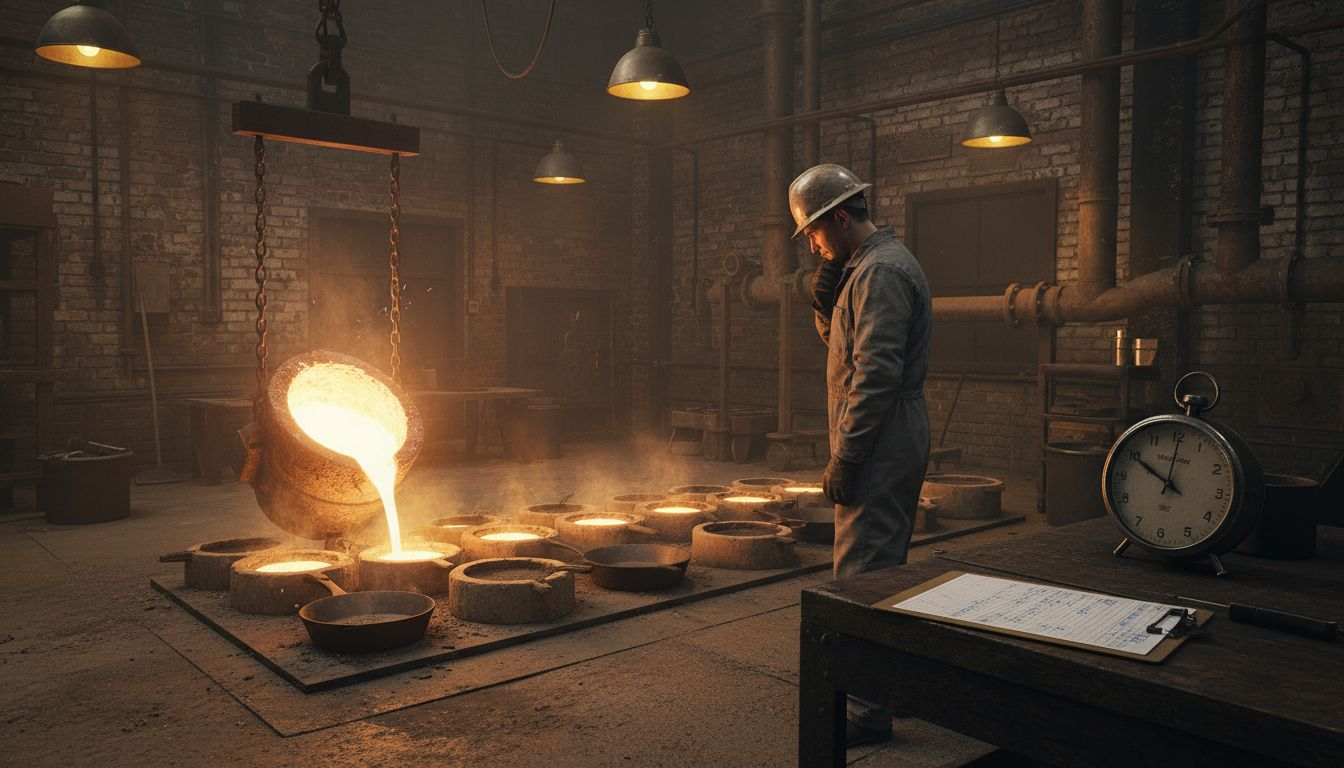
The manufacturing processes for these materials differ significantly. Cast iron is traditionally produced by pouring molten metal into dense, thick moulds, creating cookware with substantial thermal mass. Stainless steel production involves more intricate metalworking techniques, allowing for thinner, more precisely engineered cookware with multi-layered constructions designed to provide superior performance across various cooking environments.
Pro tip: When examining cookware, look beyond surface appearances and investigate the underlying metallurgical composition to understand its true cooking potential.
Heat Performance and Cooking Applications
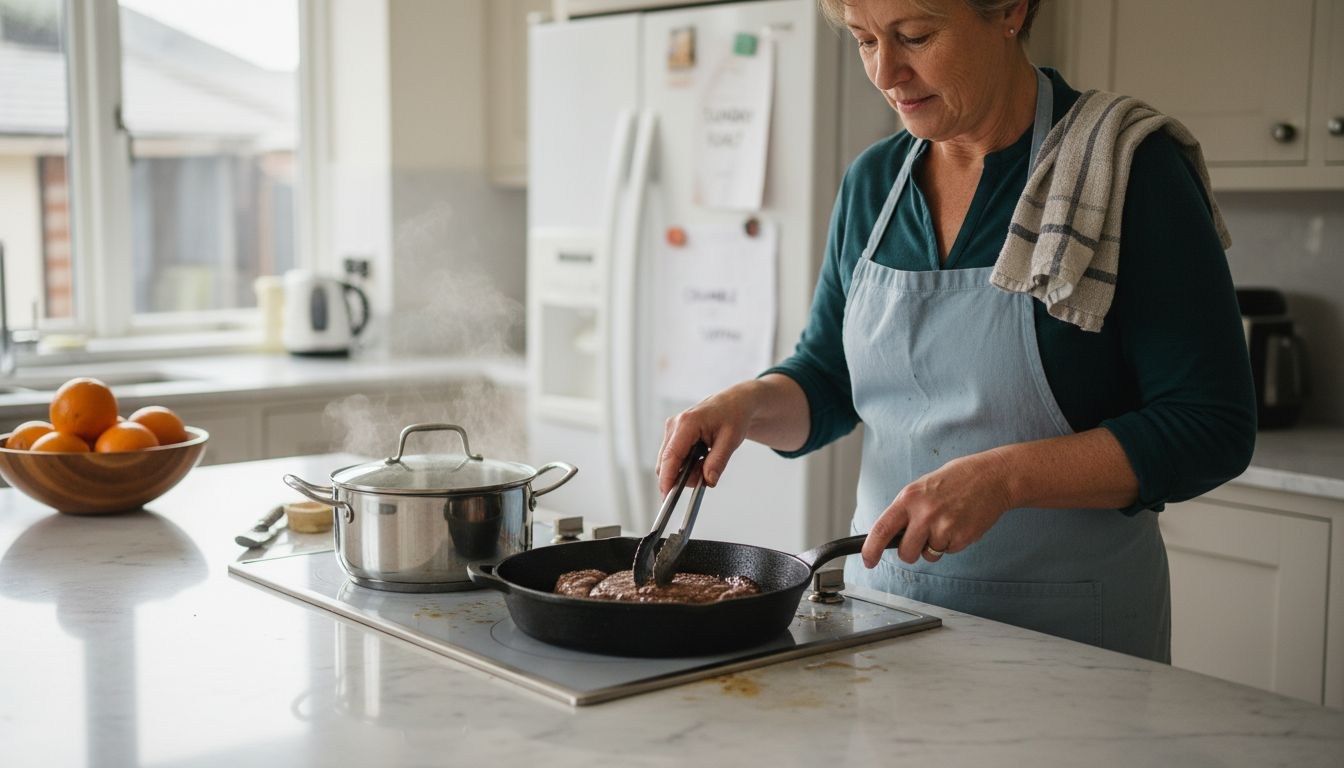
Cast iron and stainless steel showcase remarkably different heat performance characteristics that significantly impact cooking outcomes. Cast iron’s heat retention capabilities are exceptional, allowing for steady, consistent temperatures ideal for slow-cooking techniques like braising, frying, and baking. Its substantial thermal mass means once heated, the pan maintains temperature remarkably well, creating perfect conditions for achieving deep, even sears on meats and creating rustic, golden-brown crusts.
Stainless steel, in contrast, offers superior heat distribution and rapid temperature responsiveness. This makes it an excellent choice for techniques requiring precise temperature control, such as delicate sauce preparations, quick sautéing, and cooking ingredients that demand immediate heat adjustments. The material’s multi-layered construction enables quick heating and uniform temperature spread, reducing hot spots that might compromise cooking quality. Stainless steel particularly excels with acidic ingredients, where cast iron would potentially impart unwanted metallic flavours or react chemically.
Interestingly, each material brings unique advantages to different cooking scenarios. Cast iron increases iron content in food and develops a natural non-stick seasoning over time, while stainless steel remains inert and provides a pristine cooking surface. Professional chefs often recommend having both in your kitchen arsenal, selecting the appropriate pan based on specific recipe requirements and desired culinary outcomes.
Pro tip: Match your cookware to your cooking technique: use cast iron for slow, high-heat methods and stainless steel for precise, quick-cooking applications.
Below is a summary matrix illustrating optimal cooking applications for each material:
| Cooking Technique | Cast Iron Best For | Stainless Steel Best For |
|---|---|---|
| Searing Meat | Deep, even browning | Quick temperature control |
| Sauce Preparation | Thick, hearty reductions | Delicate, precise sauces |
| Baking | Rustic breads, pies | Light pastries |
| Sautéing | Crisp vegetables | Fast, adjustable heat |
| Acidic Dishes | Less suitable | Highly suitable |
Cleaning, Care, and Lifespan Realities
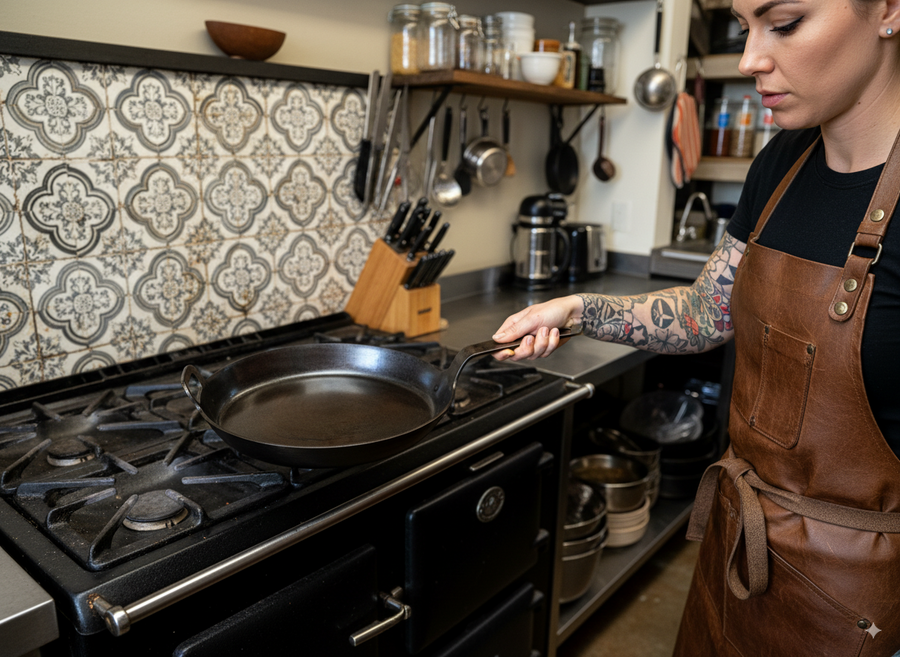
Cast iron and stainless steel cookware represent two dramatically different maintenance philosophies, each demanding unique care strategies. Cast iron maintenance requires meticulous attention to preserve its exceptional cooking surface. Unlike other materials, cast iron demands a specific cleaning protocol that avoids harsh detergents, prolonged water exposure, and abrasive scrubbing. The seasoning process is crucial, involving careful oil application and heat treatment to build a protective, naturally non-stick patina that improves with each cooking session.
Stainless steel, by contrast, offers significantly more forgiving maintenance. This material tolerates standard dishwasher cleaning, resists staining, and does not require the elaborate seasoning ritual of cast iron. However, achieving consistently excellent cooking results demands understanding its specific care nuances. Proper preheating, using appropriate cooking oils, and avoiding dramatic temperature changes can prevent food sticking and maintain the pan’s pristine cooking surface. While stainless steel is inherently more resistant to corrosion, it still benefits from careful handling and occasional deep cleaning.
Both materials share a remarkable potential for longevity when treated correctly. A well-maintained cast iron skillet can literally become a family heirloom, potentially lasting generations with proper seasoning and storage. Stainless steel cookware similarly offers decades of reliable service, provided users understand its specific performance characteristics. The key difference lies in the level of ongoing maintenance required. Cast iron demands a more hands-on approach, while stainless steel provides a more low-maintenance cooking experience.
Pro tip: Invest time in understanding your cookware’s specific care requirements, as proper maintenance determines not just performance, but the potential lifespan of your kitchen investment.
Health, Safety, and Common Misconceptions
Cookware health considerations extend far beyond simple material selection, with both cast iron and stainless steel offering unique nutritional and safety profiles. Cast iron cookware provides surprising health benefits, notably its ability to naturally increase dietary iron intake. This characteristic makes it particularly beneficial for individuals with iron deficiencies, offering a subtle nutritional boost during meal preparation. However, those with iron overload conditions should exercise caution, as prolonged cooking can incrementally increase iron content in food.
Stainless steel presents a different health narrative, characterised by its remarkable chemical stability. The chromium oxide layer inherent in high-quality stainless steel creates a non-reactive surface that prevents significant metal leaching. This makes it an exceptional choice for individuals with sensitivities to nickel or concerns about heavy metal contamination. Unlike some non-stick alternatives laden with synthetic coatings, stainless steel provides a clean, inert cooking surface that maintains food’s natural integrity without introducing potentially harmful substances.
Numerous misconceptions surround both cookware materials, often stemming from incomplete understanding or outdated information. Cast iron myths typically revolve around fears of rust or potential toxicity, while stainless steel misconceptions frequently challenge its durability and health safety. In reality, both materials have extensive, well-documented histories of safe culinary use. Proper maintenance, understanding each material’s specific characteristics, and using appropriate cooking techniques can mitigate most perceived risks, transforming these concerns into unfounded apprehensions.
Pro tip: Consult healthcare professionals about your specific dietary needs and potential metal sensitivities before making definitive cookware choices.
Cast Iron, Stainless, or an Alternative?
Cookware selection represents a nuanced decision involving multiple performance factors beyond basic material characteristics. Cookware material choices involve balancing heat performance, maintenance requirements, and personal cooking techniques. Cast iron remains unparalleled for heat retention and traditional cooking methods, offering exceptional thermal mass that creates beautifully seared dishes and gradually releases nutritional iron into food. Its heavyweight construction demands committed maintenance but rewards patient cooks with remarkable cooking versatility.
Stainless steel emerges as the pragmatic alternative, providing remarkable durability and chemical stability. This material excels in precision cooking, offering rapid heat distribution and non-reactivity with acidic ingredients. Unlike cast iron’s specific maintenance regime, stainless steel welcomes diverse cooking techniques with minimal preparation. Its smooth surface facilitates quick temperature adjustments, making it ideal for delicate sauces, quick sautéing, and recipes requiring nuanced heat control.
Non-stick and alternative materials present additional considerations for contemporary kitchens. While offering convenient cleanup and low-fat cooking potential, these options frequently compromise on durability and heat tolerance. Professional chefs and serious home cooks increasingly recognise that combining multiple cookware materials creates a more adaptable kitchen arsenal. Understanding each material’s strengths allows strategic selection, ensuring optimal cooking performance across different culinary applications.
Pro tip: Invest in versatile cookware pieces that complement each other, creating a balanced collection that meets diverse cooking requirements.
Discover Your Perfect Cooking Companion with Brass & Steel
Choosing between cast iron and stainless steel often leaves serious cooks wanting something that combines durability, high heat performance and easy maintenance. If you want the best of both worlds but with a modern twist, explore our expert-crafted carbon steel pans. Forged in a single piece, our pans deliver excellent heat retention and build a natural nonstick surface through seasoning without the fuss of heavy upkeep cast iron demands. Carbon steel pans offer versatility for searing, sautéing or baking and a health-conscious design free from synthetic coatings.
Ready to master your kitchen with cookware that truly performs? Visit our Carbon Steel Collection to find heirloom-quality pans designed for precision cooking and lasting beauty. For the latest innovations, check out our New Arrivals or start your journey with the trusted craftsmanship at Brass & Steel. Elevate your cooking experience today with sustainable, induction-compatible cookware made to meet all your culinary needs.
Frequently Asked Questions
What are the main differences between cast iron and stainless steel cookware?
Cast iron is known for its exceptional heat retention and the ability to develop a natural non-stick surface through seasoning. In contrast, stainless steel is designed for versatility, offering superior corrosion resistance and even heat distribution, making it ideal for a wider range of cooking techniques.
How do I care for cast iron cookware?
Cast iron requires specific care, including avoiding harsh detergents and prolonged exposure to water. Regular seasoning with oil is essential to maintain its non-stick surface and prevent rusting. It should be cleaned with gentle scrubbing and thoroughly dried after use.
Can I use stainless steel cookware for acidic dishes?
Yes, stainless steel is non-reactive with acidic ingredients, making it suitable for preparing dishes that contain tomatoes, citrus, or vinegar. This is one of its key advantages over cast iron, which can react with acids and impart unwanted flavours.
What cooking techniques are best suited for cast iron vs stainless steel?
Cast iron excels in slow-cooking techniques, searing meat, and baking due to its heat retention capabilities. Stainless steel is best for quick cooking methods requiring precise temperature control, such as sautéing, making sauces, and cooking delicate dishes.
Recommended
- Carbon Steel vs Stainless Steel Cookware – What Every Chef Needs to Kn – Brass & Steel
- Cast Iron vs Carbon Steel: Choosing Durable Cookware – Brass & Steel
- Carbon Steel vs Iron: What Matters for Cookware – Brass & Steel
- 7 Essential Insights on Different Cookware Materials – Brass & Steel
- Kook Gooseneck Pour Over Kettle with Thermometer, 27 oz – House Coffee