Cast Iron vs Carbon Steel: Choosing Durable Cookware

Every professional chef in a British kitchen knows the right pan can make all the difference. With over 80% of British households owning either cast iron or carbon steel cookware, the debate between these two metals is far from settled. Both offer a unique balance of durability, heat performance, and versatility that influences daily cooking. If you want to choose cookware that aligns with your culinary style, understanding the distinctions between cast iron and carbon steel is the key to unlocking consistently delicious results.
Table of Contents
- Cast Iron And Carbon Steel Defined
- Material Properties And Cooking Performance
- Heat Retention, Responsiveness, And Versatility
- Care, Maintenance, And Seasoning Requirements
- Comparison Of Longevity, Safety, And Use Cases
Key Takeaways
| Point | Details |
|---|---|
| Material Composition | Cast iron contains 2-4% carbon, while carbon steel has up to 2.5%, resulting in different cooking performances and maintenance needs. |
| Heating Characteristics | Cast iron retains heat exceptionally well, making it suitable for slow cooking, whereas carbon steel heats quickly, ideal for precise cooking techniques. |
| Care and Maintenance | Cast iron requires extensive seasoning and care to prevent rust, while carbon steel develops its patina quickly and is generally easier to maintain. |
| Versatility in Cooking | Cast iron excels in slow-cooking applications, while carbon steel is preferred for high-heat tasks like searing and sautéing. |
Cast Iron and Carbon Steel Defined
Cast iron and carbon steel represent two remarkable metal cookware options with intriguing material characteristics that fascinate professional chefs and home cooking enthusiasts. Both materials share fundamental similarities yet possess distinct properties that significantly impact their culinary performance. Cast iron is an iron alloy containing 2-4% carbon, typically characterised by a rough surface texture and notable brittleness.
Carbon steel, by comparison, contains up to 2.5% carbon and presents a harder, more refined material profile. The lower carbon content allows for increased strength and a smoother matte finish compared to traditional cast iron. Professional kitchens often favour carbon steel for its superior heat conductivity and lighter weight, which enables more precise cooking control and easier handling.
The primary differences between these two metal cookware types emerge through their manufacturing processes, carbon content, and thermal properties. Cast iron tends to be heavier and more slow to heat, creating excellent heat retention once warmed. Carbon steel, conversely, responds more rapidly to temperature changes, making it ideal for techniques requiring quick heat adjustment like searing meats or quickly sautéing vegetables.
Pro Chef’s Tip: When selecting between cast iron and carbon steel, consider your specific cooking techniques and maintenance preferences. Carbon steel requires less initial seasoning and offers more responsive heat management, while cast iron provides exceptional heat retention for slow-cooking methods.
The carbon steel versus cast iron comparison reveals nuanced differences that can transform your cooking experience. Understanding these materials empowers you to select the perfect cookware for your culinary adventures.
Here is a concise comparison of cast iron and carbon steel cookware characteristics:
| Characteristic | Cast Iron | Carbon Steel |
|---|---|---|
| Typical Carbon Content | 2–4% | Up to 2.5% |
| Surface Finish | Rough texture | Smooth matte finish |
| Weight | Heavier, more cumbersome | Lighter, easier to handle |
| Heating Speed | Slow to heat | Heats rapidly |
| Heat Retention | Excellent, holds heat for long time | Moderate, responds quickly to changes |
| Seasoning Requirement | Extensive initial seasoning needed | Develops patina more quickly |
| Typical Culinary Uses | Braising, roasting, stews | Searing, sautéing, pan sauces |
| Professional Preference | Favoured for slow-cooking | Favoured for precise temperature tasks |
Material Properties and Cooking Performance
The thermal characteristics and material composition of cookware significantly influence cooking performance, with cast iron and carbon steel presenting fascinating differences in heat management and culinary responsiveness. Cast iron’s higher carbon content creates inherent challenges in heat conductivity, resulting in longer heating times but exceptional heat retention capabilities that make it ideal for slow-cooking techniques.
Carbon steel, by contrast, offers superior heat responsiveness and faster temperature adjustment. Its lower carbon percentage enables more efficient thermal transfer, allowing chefs to rapidly change cooking temperatures without significant thermal lag. This characteristic makes carbon steel particularly well-suited for techniques requiring precise heat control, such as searing meats, quickly sautéing vegetables, or creating delicate pan sauces that demand immediate temperature modifications.
The material properties of cookware can transform cooking techniques, with each metal presenting unique advantages. Cast iron’s heavyweight construction provides remarkable thermal stability, creating an environment where food continues cooking even after removing the pan from direct heat. Carbon steel delivers a more dynamic cooking experience, responding instantaneously to temperature adjustments and providing chefs with greater immediate control over their culinary creations.
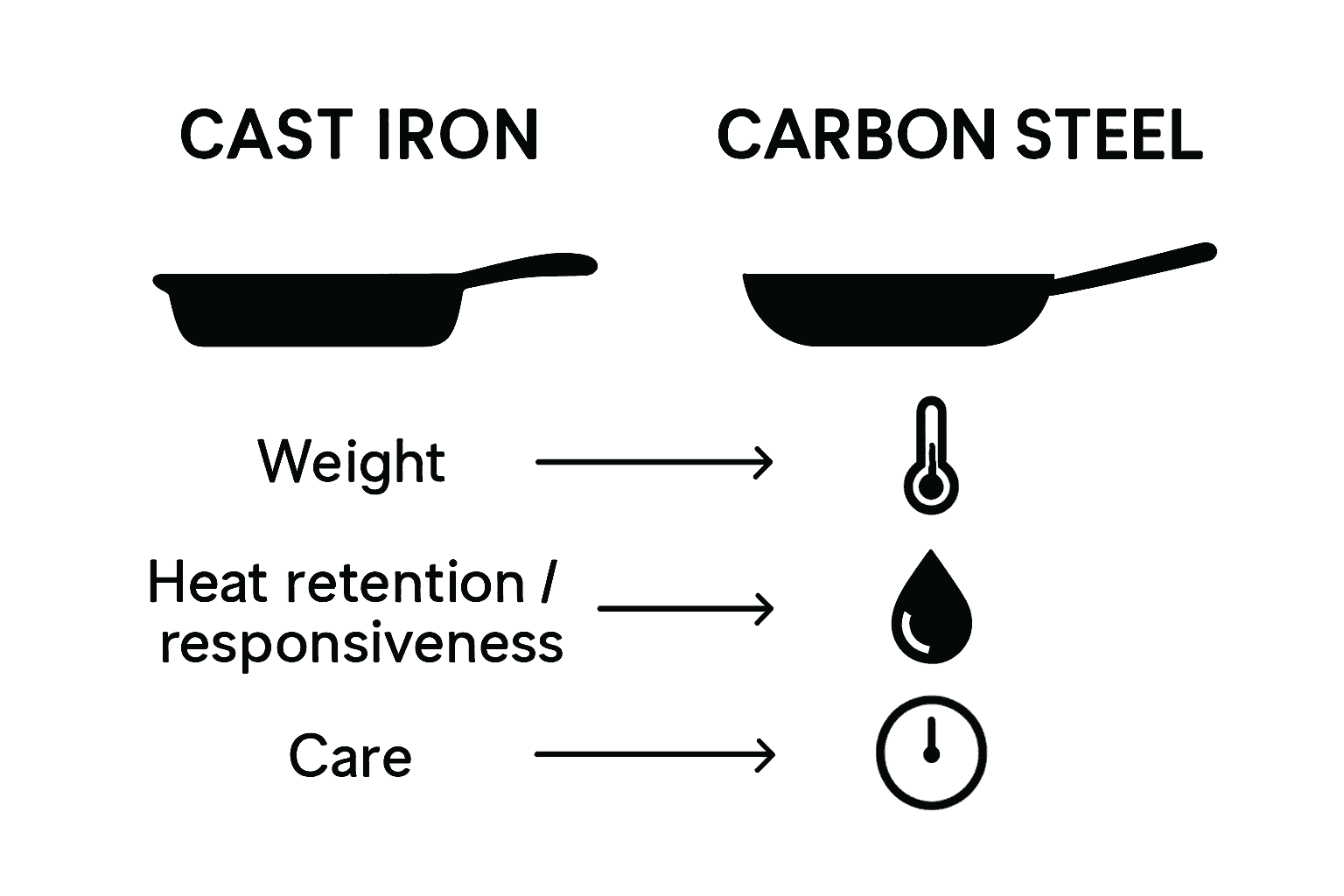
Both materials develop natural nonstick properties through seasoning, though their approaches differ markedly. Cast iron requires more extensive initial seasoning and maintenance, while carbon steel develops a protective patina more quickly and with less intensive effort.
Pro Chef’s Tip: When selecting between cast iron and carbon steel, consider your primary cooking methods. Choose cast iron for slow, steady cooking and carbon steel for techniques requiring rapid heat responsiveness and precise temperature management.
Heat Retention, Responsiveness, and Versatility
Cast iron and carbon steel demonstrate remarkable differences in thermal performance, each offering unique advantages for culinary professionals and home cooks. Cast iron’s distinctive thermal characteristics make it a champion of slow, consistent cooking, with an extraordinary ability to maintain steady temperatures over extended periods. This remarkable heat retention means dishes continue cooking gently even after the pan is removed from direct heat source, creating an ideal environment for dishes requiring uniform temperature management.
Carbon steel, in contrast, provides exceptional heat responsiveness that transforms cooking dynamics. Its superior thermal conductivity allows chefs to make rapid temperature adjustments, making it perfect for techniques demanding precise heat control. Sautéing delicate vegetables, quickly searing meats, or creating intricate pan sauces become significantly more manageable with carbon steel’s immediate thermal feedback and lightning-fast heat distribution.
The versatility of these materials extends beyond mere thermal properties. Cast iron’s heavyweight construction creates a thermal reservoir that maintains consistent temperatures, while carbon steel offers a more dynamic cooking experience. Carbon steel’s rapid heating capabilities make it ideal for quick-cooking techniques, allowing chefs to transition seamlessly between high-heat searing and gentle reduction techniques.
Both materials develop natural nonstick properties through seasoning, though their approaches differ substantially. Cast iron requires more methodical seasoning and maintenance, developing its protective layer over extended periods of use. Carbon steel, however, develops a protective patina more rapidly and with less intensive effort, making it increasingly appealing for cooks seeking efficiency without compromising performance.
Pro Chef’s Tip: When choosing between cast iron and carbon steel, consider your primary cooking style. Select cast iron for slow, consistent cooking methods and carbon steel for techniques requiring immediate heat responsiveness and precise temperature control.
Care, Maintenance, and Seasoning Requirements
Cast iron and carbon steel both require meticulous seasoning to maintain their protective surfaces, though their maintenance approaches differ significantly. Cast iron’s porous structure demands more intensive care, with a greater tendency to accumulate rust and require deeper seasoning processes. Carbon steel, by contrast, offers a smoother surface that develops and maintains its protective layer with greater ease and efficiency.
The seasoning process involves creating a natural nonstick surface by polymerising oil onto the metal, forming a protective patina that prevents rust and enhances cooking performance. Cast iron typically requires multiple seasoning layers and more frequent maintenance, often needing comprehensive re-seasoning after intense cleaning or acidic cooking. Carbon steel maintenance can be streamlined with more straightforward seasoning techniques, allowing cooks to develop and maintain their cookware’s protective layer with less intensive effort.
Specific maintenance protocols differ between these materials. Cast iron demands careful drying after each use, minimal soap exposure, and regular oil applications to prevent rust formation. Carbon steel requires similar care but tolerates slightly more aggressive cleaning techniques and develops its protective layer more rapidly. Professional chefs often prefer carbon steel for its quicker seasoning process and more responsive maintenance requirements.
Both materials benefit from consistent, gentle care practices. Avoiding sudden temperature changes, using gentle cleaning methods, and applying thin layers of high-smoke-point oils during seasoning are universal principles that extend the life of these remarkable cookware materials.
Below is a reference for care and longevity factors of both cookware types:
| Aspect | Cast Iron Care Approach | Carbon Steel Care Approach |
|---|---|---|
| Seasoning Pace | Slow, requires repeated steps | Quick, easier to season |
| Rust Prevention | Needs thorough drying & oil | More tolerant, quicker upkeep |
| Suitability | Multi-generational use | Highly versatile, modern use |
| Safety Note | Adds dietary iron | Minimal iron transfer |
Pro Chef’s Tip: Always dry your cookware immediately after washing and apply a light coat of oil to maintain the seasoning, preventing rust and preserving the pan’s nonstick properties.
Comparison of Longevity, Safety, and Use Cases
Cast iron and carbon steel represent extraordinary culinary investments with remarkable longevity and performance characteristics, each material offering distinct advantages across various cooking scenarios. Cast iron’s legendary durability stems from its ability to develop increasingly robust seasoning layers over decades of consistent use, potentially becoming a treasured family heirloom passed through generations of home cooks.
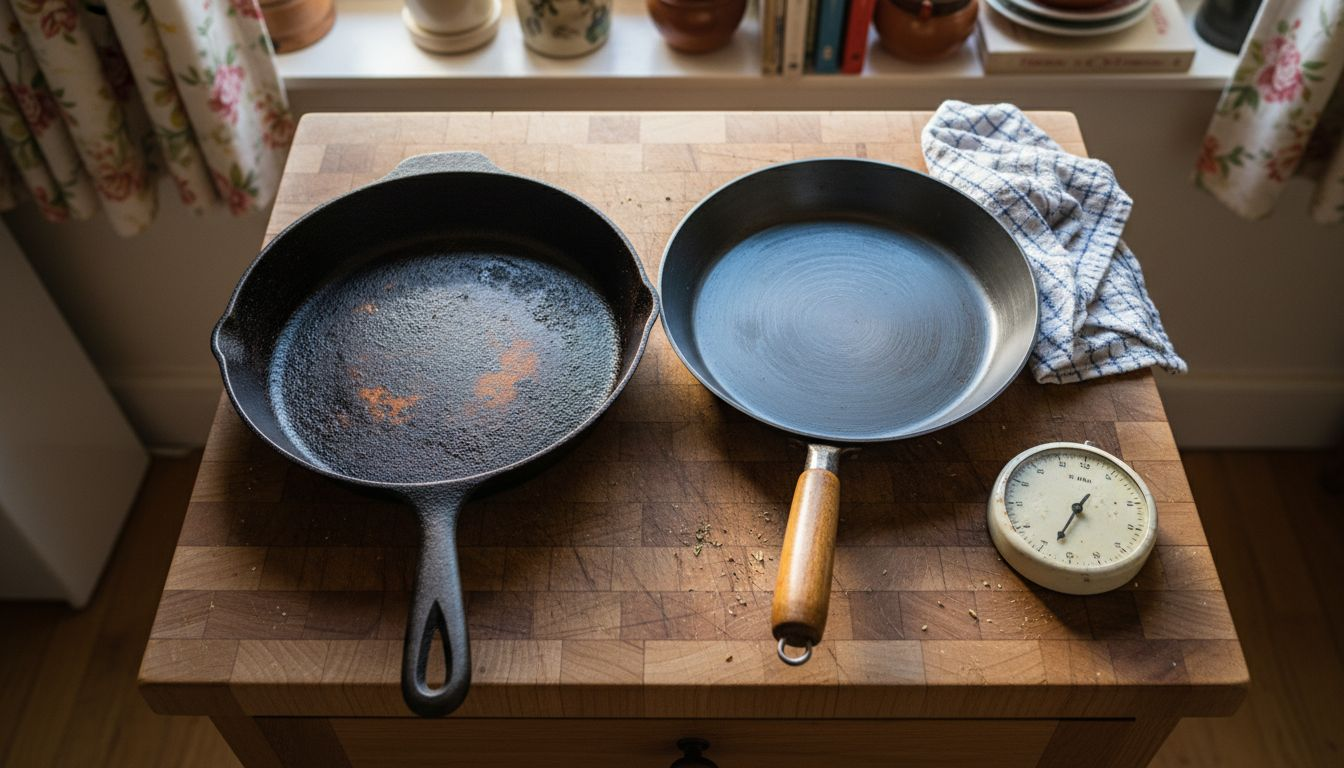
Carbon steel distinguishes itself through exceptional versatility and adaptive performance across different cooking techniques. Professional kitchens frequently prefer carbon steel for its rapid heat responsiveness and consistent cooking performance, making it ideal for techniques requiring precise temperature control. Its lighter weight and smoother surface allow for more nuanced cooking approaches compared to traditional cast iron, while maintaining similar durability and nonstick properties.
Safety considerations reveal fascinating differences between these materials. Both are naturally chemical-free, eschewing synthetic nonstick coatings that potentially release harmful compounds during high-temperature cooking. Cast iron provides supplementary dietary iron benefits, gradually releasing small quantities of iron into foods, while carbon steel offers a cleaner cooking surface with minimal mineral transfer. These materials represent superior alternatives to contemporary nonstick cookware, providing health-conscious cooks with reliable, long-lasting cooking solutions.
Use case variations highlight each material’s unique strengths. Cast iron excels in slow-cooking methods, preserving consistent temperatures for braising, roasting, and preparing one-pot meals. Carbon steel shines in high-heat applications like searing meats, quickly sautéing vegetables, and creating delicate pan sauces that demand immediate temperature responsiveness.
Pro Chef’s Tip: Select your cookware based on your primary cooking techniques, understanding that both cast iron and carbon steel offer exceptional longevity when maintained with consistent, thoughtful care.
Discover the Power of Durable Carbon Steel Cookware
Choosing between cast iron and carbon steel cookware can be challenging, especially when durability, heat responsiveness, and ease of maintenance are top priorities. This article highlights the core differences in material properties, heat retention, and seasoning requirements that impact your cooking experience. If you are looking for cookware that offers high heat performance, natural nonstick surfaces, and health-conscious design, Brass & Steel provides the perfect solution.
Explore our Carbon Steel Collection | Brass&Steel to experience high-quality pans forged from a single piece of carbon steel. Designed for passionate cooks seeking professional-grade performance combined with minimalist elegance, our pans ensure seamless heat distribution, faster seasoning, and superior durability without rivets or welds. Visit https://brass-steel.com now to upgrade your kitchen with heirloom-quality cookware built to last a lifetime.
Frequently Asked Questions
What is the main difference between cast iron and carbon steel cookware?
Cast iron cookware typically contains 2-4% carbon, resulting in heavier, more brittle products with excellent heat retention. Carbon steel, containing up to 2.5% carbon, is lighter, has a smoother finish, and offers superior heat responsiveness, making it ideal for precise cooking techniques.
How do I maintain cast iron and carbon steel cookware?
Cast iron requires more extensive seasoning and careful drying to prevent rust, needing oil after each use. Carbon steel develops its protective layer more quickly and tolerates more aggressive cleaning, making maintenance simpler.
Can I use both cast iron and carbon steel for high-heat cooking?
Yes, both materials can handle high heat, but carbon steel excels in rapid temperature adjustments, making it better suited for techniques such as searing and sautéing. Cast iron shines in slow-cooking methods where steady heat retention is essential.
Are there any health benefits associated with using cast iron cookware?
Yes, cooking with cast iron can provide dietary iron benefits as small amounts of iron may leach into food, which can be beneficial for those who require additional iron in their diet.