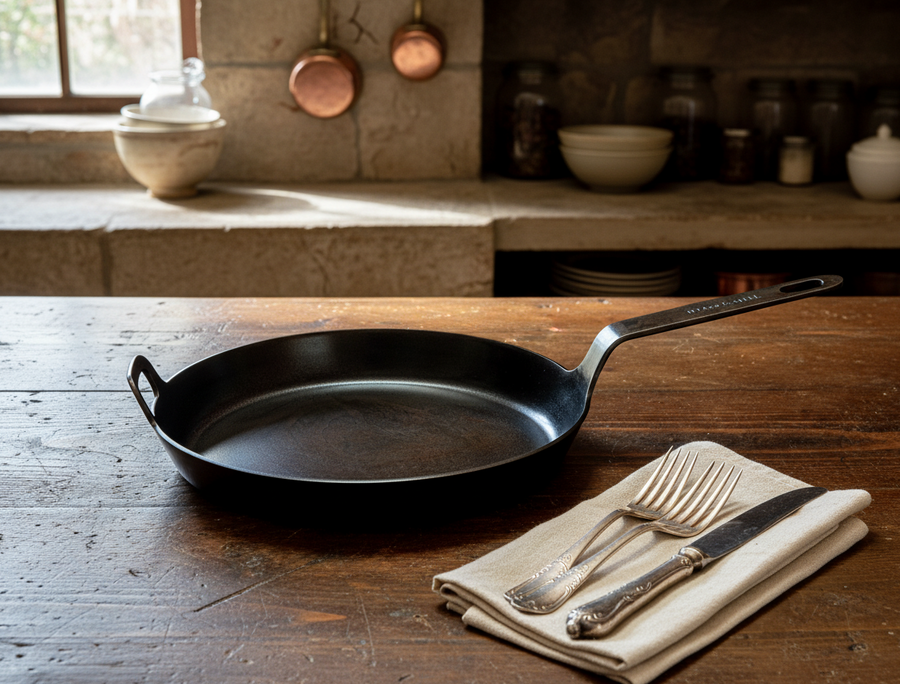
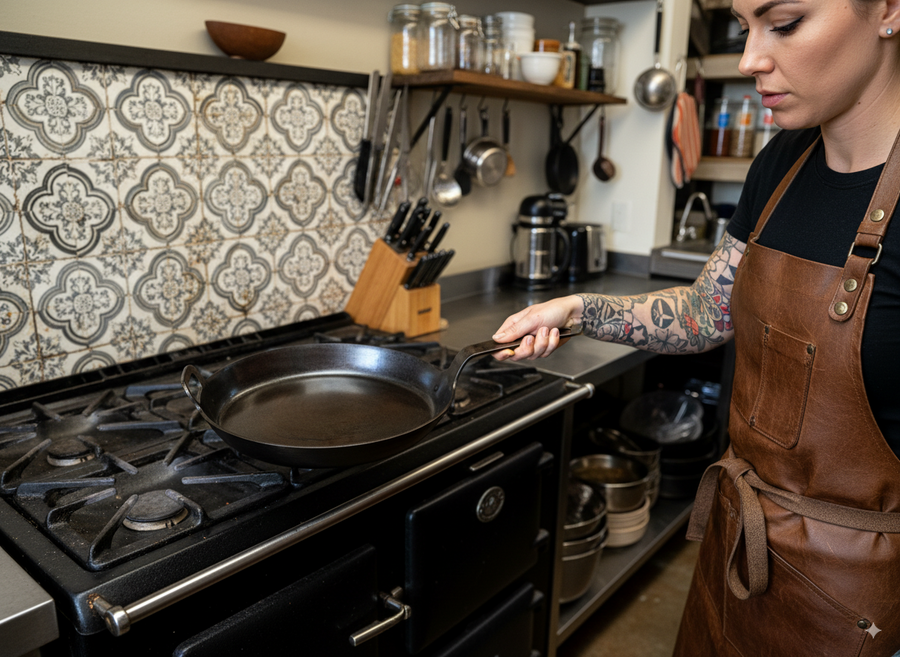
How your pan shapes recipe outcomes and results
TL;DR:
- The material and surface condition of a pan fundamentally influence cooking results by affecting heat responsiveness, food release, and flavor development. Proper seasoning, maintenance, and selecting the right pan geometry are essential for consistent, high-quality cooking outcomes, especially with carbon steel cookware. Understanding these factors helps cooks optimize technique, reduce failures, and achieve predictable results in European-style recipes.
Most cooks obsess over sourcing the finest ingredients, memorising temperatures, and refining timing. Yet in professional kitchens across Europe, experienced chefs know an uncomfortable truth: the pan you reach for can undo a perfect recipe before a single ingredient hits the surface. Carbon steel cookware sits at the centre of this conversation, not because it is fashionable, but because its physical and surface properties actively change how heat behaves, how food releases, and how flavours develop. Understanding that relationship puts you in genuine control.
Table of Contents
- Why pan material changes cooking technique
- How pan surface and seasoning alter outcomes
- “Edge cases”: When pan type requires special handling
- Pan geometry and handling: What pros account for
- Choosing and adjusting for the right pan: A practical framework
- What most home cooks and even chefs overlook
- Find your perfect pan for European recipe success
- Frequently asked questions
Key Takeaways
| Point | Details |
|---|---|
| Material drives technique | Choosing carbon steel, stainless, or cast iron directly impacts heat control and when food releases. |
| Seasoning is transformative | Well-seasoned carbon steel pans behave nearly nonstick, changing recipe possibilities and workflow. |
| Some recipes require swaps | For acidic or slow-cooked dishes, stainless steel or cast iron might be more reliable than carbon steel. |
| Shape shapes outcomes | Pan dimensions, weight, and handle design decide how efficiently you sauté, toss, or sear. |
| Testing gets best results | Treat pan selection as you would ingredient testing—match pan to recipe for professional results every time. |
Why pan material changes cooking technique
With the importance of pan selection introduced, let’s break down the real contribution material makes to technique and result.
Pan material is not simply about durability or appearance. It directly governs how quickly heat moves from the source to your food, how evenly it spreads, and how fast the pan responds when you turn the flame up or down. These factors dictate your technique at every stage of a recipe.
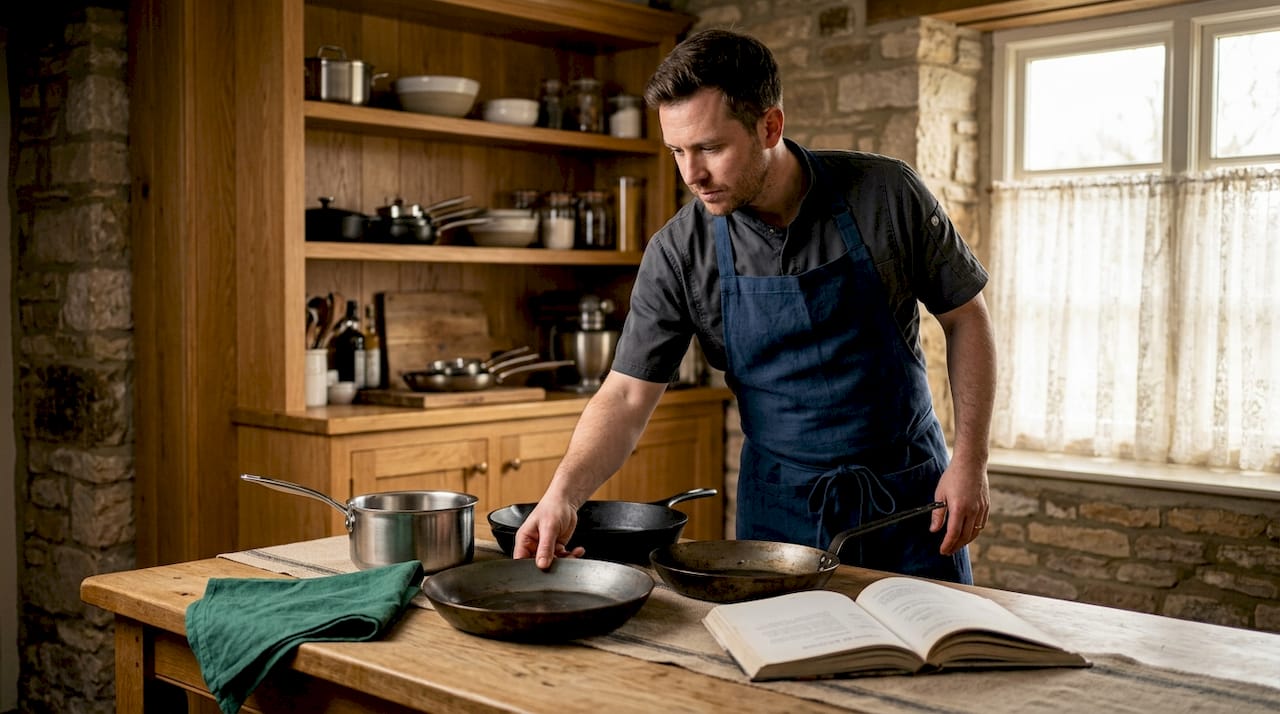
Carbon steel, stainless steel, and cast iron each handle heat differently. Here is a direct comparison across the properties that matter most in the kitchen:
| Property | Carbon steel | Stainless steel | Cast iron |
|---|---|---|---|
| Heat-up speed | Fast | Moderate | Slow |
| Heat retention | Medium-high | Low-medium | Very high |
| Thermal responsiveness | Excellent | Good | Poor |
| Surface character | Seasoned, evolving | Reactive, smooth | Seasoned, heavy |
| Weight (typical 28 cm) | ~2 kg | ~1.5 kg | ~3 kg+ |
Carbon steel pan performance stands apart because of its remarkable thermal responsiveness. When you reduce heat mid-sear, the pan reacts almost immediately, giving you precise control over browning without overcooking the interior of a piece of fish or duck breast. This is the kind of feedback a cook depends on when timing matters by the second.
Carbon steel vs stainless steel comparisons often focus on sticking behaviour, but the deeper difference is in heat management. Stainless requires careful preheat and oil timing to prevent sticking, while carbon steel’s seasoned layer changes the entire dynamic of how food interacts with the surface.
The practical result? As Serious Eats notes, carbon steel pans significantly influence recipe outcomes through heat responsiveness and through how their seasoned surface behaves as a cook-until-nonstick layer. This means your sauté does not stew in trapped steam, your sear develops a true Maillard crust, and your deglazing lifts fond cleanly because heat correction happens in real time.
Key techniques that shift with pan material:
- Searing: Carbon steel’s fast heat-up means you reach the threshold for crust formation quickly without burning oil.
- Sautéing: Responsiveness lets you toss and adjust flame in the same motion, keeping vegetables vibrant rather than soft.
- Deglazing: Rapid cool-down after adding liquid protects fond without scorching.
- Oven finishing: Carbon steel’s low mass heats through quickly, allowing seamless stovetop-to-oven transitions.
“After proper seasoning, carbon steel pans can release eggs and delicate foods as well as or better than most nonstick skillets.” — Serious Eats
How pan surface and seasoning alter outcomes
Knowing that material is vital, the state of your cookware’s surface fundamentally shifts how you cook, especially with carbon steel.
A brand-new carbon steel pan is reactive and bare. With each use and deliberate seasoning session, layers of polymerised oil build up, forming a patina that becomes progressively more nonstick. This is not a static property; it evolves with your cooking habits and the care you give the pan.
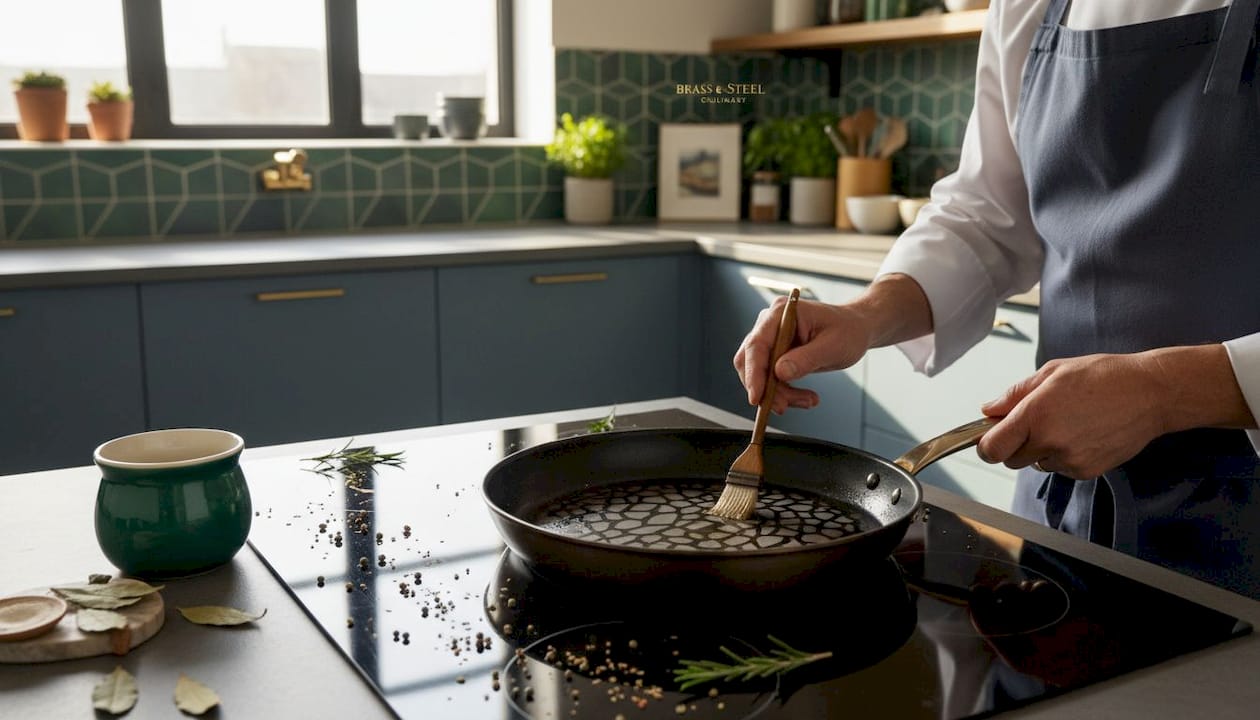
According to Bon Appétit, the pan’s surface chemistry changes sticking behaviour, which then changes how you should execute techniques like searing, sautéing, deglazing, and releasing food for crust development. In other words, the same pan at different stages of seasoning requires different technique.
Here is how carbon steel seasoning compares to other surfaces across common recipe types:
| Recipe type | Carbon steel (well-seasoned) | Cast iron | Stainless steel |
|---|---|---|---|
| Fried eggs | Excellent release | Good release | Requires technique |
| Seared steak | Outstanding crust | Outstanding crust | Good crust |
| Pancakes | Excellent release | Good, heavy to manoeuvre | Sticks without technique |
| Sautéed vegetables | Very good | Adequate | Good with oil |
| Braised dishes | Not ideal (acidic risk) | Good | Ideal |
Building and maintaining a strong seasoning layer follows a clear process:
- Wash the new pan thoroughly with warm soapy water to remove the protective shipping oil.
- Dry fully over low heat on the hob for several minutes.
- Preheat your oven to 250°C and bake the pan for ten minutes to ensure complete dryness.
- Apply an extremely thin coat of grapeseed, avocado, or sunflower oil. Wipe away nearly all of it; the pan should look almost dry.
- Bake upside down for thirty minutes, then allow to cool in the oven.
- Repeat this process two to three times before the first use to establish a strong base layer.
For ongoing seasoning strength, professional cooks rely on visual cues when seasoning carbon steel for nonstick use, watching for the surface to shift from raw grey to a deep, even brown or black. A dull or patchy appearance is the pan telling you it needs attention.
Pro Tip: After washing, hold the pan over a low flame for sixty seconds before applying any oil. Even a thin film of residual moisture disrupts polymerisation and leads to uneven seasoning. Dry heat is your best ally here.
Professional kitchen teams monitor seasoning state as a routine part of prep, the same way they check knife edges before service. A well-maintained patina means eggs slide, fish lifts cleanly, and sauces do not stick at the fond. Reviewing your guide to pan seasoning gives you a reliable process to follow regardless of the recipe in front of you.
“Edge cases”: When pan type requires special handling
Yet, even when seasoned, some conditions push carbon steel and the cook to their limits, demanding a pan swap or workflow tweak.
Carbon steel excels in a wide range of tasks, but it has genuine weaknesses that every serious cook should understand. Knowing these limits is not a criticism of the material; it is simply part of mastering your kit.
The main edge cases where carbon steel demands extra thought:
- Acidic ingredients: Tomato-based sauces, citrus reductions, and dishes with significant wine deglazing can strip seasoning over time. A single short deglaze with white wine is unlikely to cause damage, but a forty-minute tomato braise will erode the patina and leave a metallic flavour in the dish.
- Long simmering: Carbon steel is not designed for extended liquid cooking. Prolonged exposure to water, especially salted water, invites surface oxidation and damages seasoning.
- Shallow frying with high moisture foods: Battered foods that release substantial steam can cause localised seasoning breakdown if oil temperature is not carefully maintained.
- Soaking: Even brief soaking after use causes rust formation on exposed steel, particularly on younger pans with thinner seasoning.
As Tom’s Guide points out, carbon steel’s sensitivity to mishandling changes workflow versus stainless steel (less reactive) or cast iron (more heat retention), affecting timing for recipes with acidic ingredients, long simmering, or shallow-fry demands. Understanding these distinctions is what separates good cooking from great cooking.
Statistic callout: Industry surveys of professional European kitchen brigades consistently show that misidentifying the right pan for an acidic or braised recipe is among the top three reasons for unexpected flavour defects in sauced dishes.
When comparing carbon steel and stainless steel for acidic or wine-heavy recipes, stainless remains the neutral, lower-maintenance choice. It requires no seasoning and does not react with acid, making it the more forgiving option for pan sauces and braises.
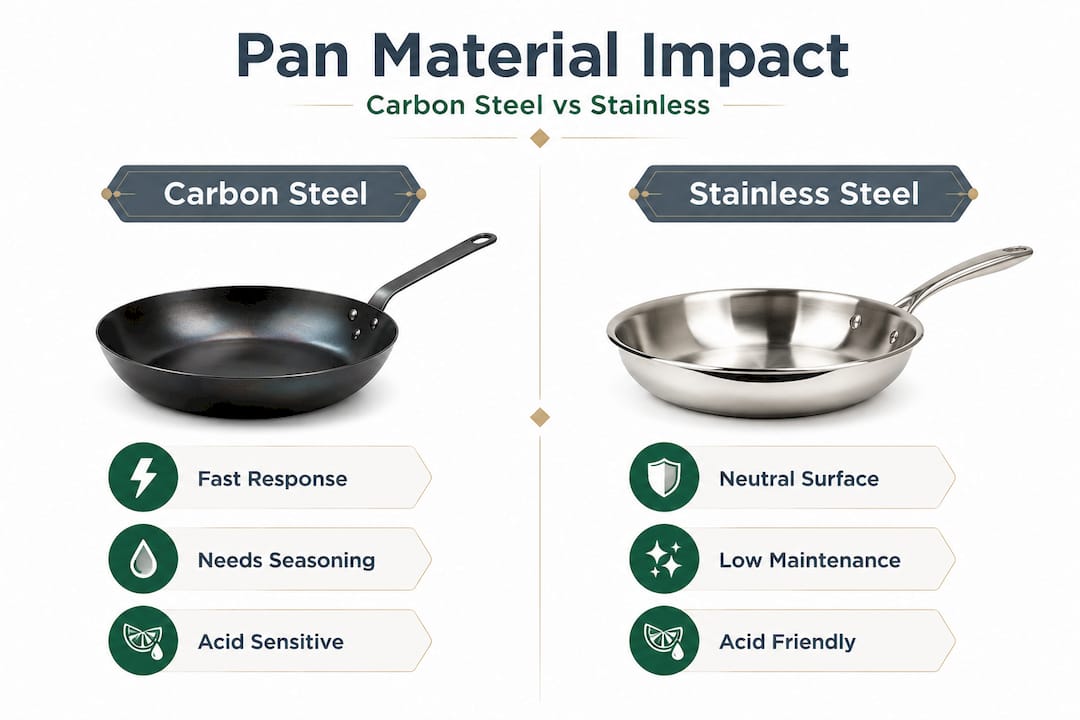
Pro Tip: Keep a stainless steel pan alongside your carbon steel on every station. Use carbon steel for the sear, then transfer to stainless for deglazing and sauce-building. You get the best crust and the cleanest, most neutral sauce in the same dish, without sacrificing either pan’s strengths.
Pan geometry and handling: What pros account for
It is not just the material. How the pan is shaped and balanced has a direct influence on technique and consistency.
A pan’s geometry is as much a cooking variable as its material. Pan geometry affects recipe method execution: tossability, preheat time, and even batch size can change how stirring, sautéing, and searing are performed in practice.
| Feature | 27 cm / 3 mm pan (~2 kg) | 30 cm / 4 mm pan (~3 kg) |
|---|---|---|
| Preheat time | Fast (~2 min) | Slightly longer (~3 min) |
| Tossability | High, easy wrist motion | Moderate, requires more effort |
| Batch capacity | Ideal for 1 to 2 portions | Ideal for 3 to 4 portions |
| Heat retention | Good | Excellent |
| Oven transition | Very quick | Quick |
Practical geometry considerations for professionals:
- Flared sides allow steam to escape efficiently during sautéing, keeping vegetables and proteins from stewing in their own moisture.
- Straight or taller sides are better suited for shallow frying, where oil depth and containment matter more than tossability.
- Long handles improve leverage for tossing, particularly when the pan is loaded with a full batch.
- Single-piece construction (as found in Brass & Steel pans) removes the weak point created by rivets, which accumulate food residue and can loosen under high-heat cycling.
For a deeper discussion on the design choices that affect carbon steel cooking precision, pan thickness deserves particular attention. A thicker gauge (4 mm) offers more thermal mass, which recovers heat faster when cold food lands in the pan. This matters enormously when searing in batches: a thin-gauged pan will drop temperature noticeably after the second or third batch, resulting in grey, steamed meat rather than a properly seared crust.
Choosing and adjusting for the right pan: A practical framework
With material, finish, geometry, and handling considered, here is a clear system for matching the right pan to the right recipe quickly.
A practical benchmark approach treats cookware selection as a variable in testing: choose the right material for the technique, then execute with pan-appropriate workflow, whether that means checking seasoning state for carbon steel or getting preheat and oil timing right for stainless steel.
Follow this sequence before starting any recipe:
- Identify the dominant technique: Is this a high-heat sear, a gentle sauté, a long braise, or an acidic pan sauce? Each answer points to a different material.
- Check your pan’s current seasoning state: A visually patchy or sticky surface means performance will be inconsistent. Correct it before service, not during.
- Assess portion size against pan diameter: Overcrowding drops surface temperature and prevents browning. Use the 30 cm pan for larger batches.
- Plan oil and preheat sequencing: Carbon steel rewards a proper preheat before oil is added. Stainless requires oil in a warm (not screaming hot) pan. These are different sequences, and confusing them causes sticking.
- Decide early on any pan transitions: If the recipe moves from sear to acid deglaze, plan the swap before you start rather than improvising mid-cook.
Understanding the culinary benefits of carbon steel is not simply about choosing a fashionable material. It is about building a decision framework that reduces variables and produces predictable, repeatable results.
Pro Tip: When testing a new recipe or cooking with a newly seasoned pan, cook a small batch first. Use it to check oil quantity, heat level, and release behaviour. Adjust before committing the full portion. This single habit prevents the majority of crust failures and sticking problems.
What most home cooks and even chefs overlook
After considering all these frameworks, it is worth stepping back and reflecting on a reality that professional kitchens and home enthusiasts both encounter regularly.
The most persistent recipe failures we see are not caused by inferior ingredients, imprecise timings, or even poor knife skills. They stem from a mismatch between the pan selected and the demands of the recipe. A beautifully marinated duck leg will not sear properly in a stainless pan that was not preheated correctly. A delicate sole fillet will stick and tear in a carbon steel pan that has not been properly seasoned. The ingredients are irrelevant when the surface behaviour is wrong.
There is also what we call the pan feedback loop. The results from your first batch in any pan should actively inform how you cook the second. Did the crust develop evenly, or were there pale patches? Did food release cleanly, or did it drag? These signals tell you whether to adjust heat, increase oil, or address seasoning before the next attempt. Most cooks move on to plating without reading those signals, then wonder why results are inconsistent across services.
Understanding how carbon steel pans are made also shapes how you treat them. When you know that a single-piece forged pan has no weak structural points and is designed to build character through use, you approach maintenance differently. You invest in the seasoning process because you understand that the surface you are building is a genuine cooking variable, not just a cosmetic feature.
Treat pan selection and pan condition with the same rigour you apply to ingredient sourcing. Test your cookware as deliberately as you would test a new supplier. The cooks who do this consistently are the ones whose results hold up under pressure.
Find your perfect pan for European recipe success
Ready to apply what you have learned about pan selection and technique? Brass & Steel designs carbon steel pans specifically for serious cooks who understand that the pan is part of the recipe.
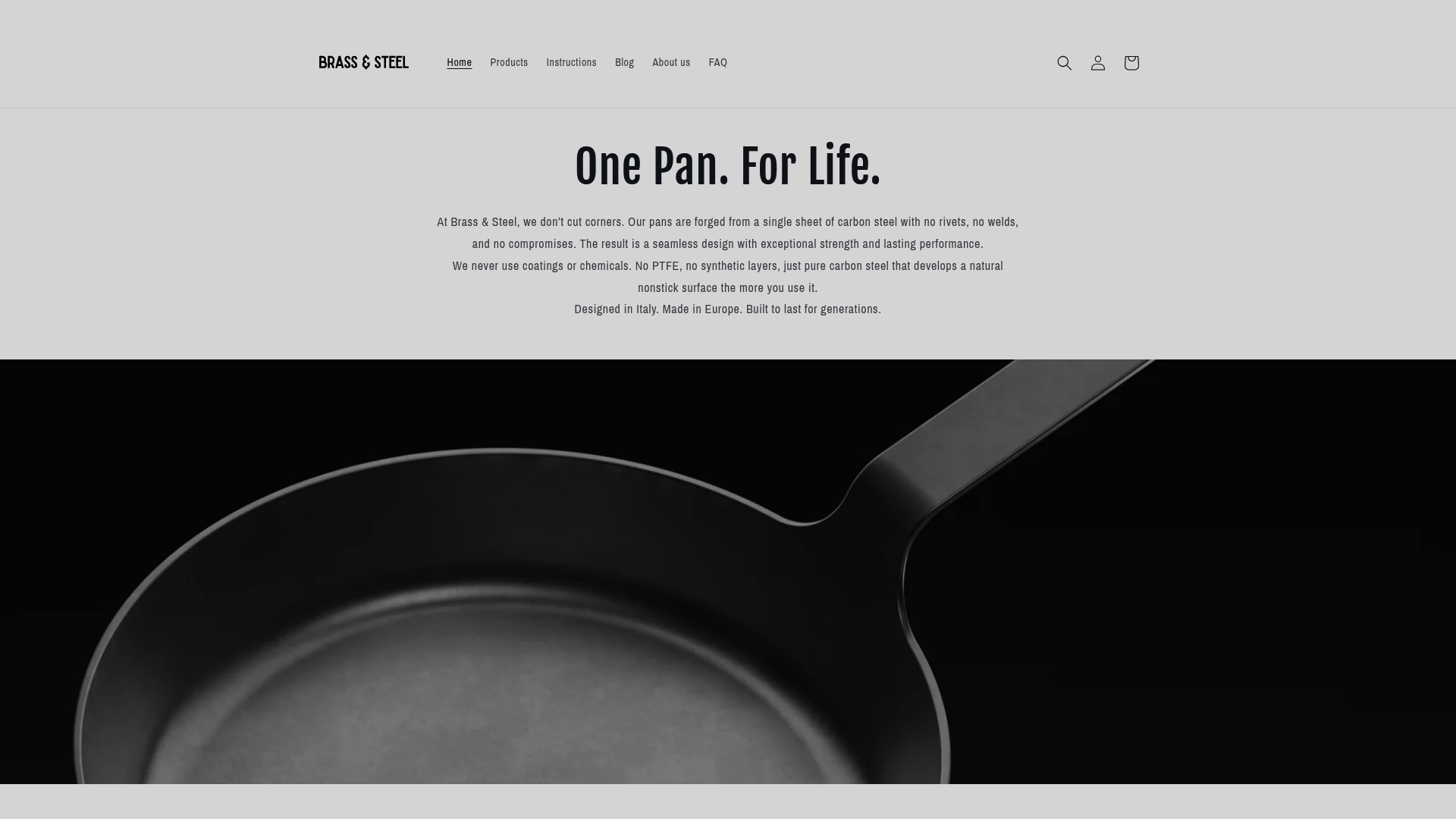
Both the 27 cm and 30 cm sauté pans are forged from a single piece of carbon steel, meaning no rivets, no welds, and no weak points. The 3 mm and 4 mm gauges deliver the thermal responsiveness and heat retention this article describes in real cooking conditions. Free from PTFE and PFOA, they work on every cooktop including induction, and they are built to develop a stronger, more reliable nonstick surface with every use. Explore the full range and the supporting care guides at Brass & Steel to take the next step with confidence.
Frequently asked questions
How does the pan’s material affect cooking temperatures and timing?
Carbon steel heats and cools rapidly, allowing very precise temperature control. As noted by Serious Eats, this responsiveness means faster, more uniform heating and faster correction when you adjust heat, which directly improves timing precision in demanding recipes.
What recipes are not ideal for carbon steel pans?
Highly acidic dishes such as tomato sauces or long wine reductions are not well suited to carbon steel, as they erode the seasoning layer over time. For these recipes, stainless steel is the more appropriate choice, as noted in research on the best stainless steel skillets.
Does seasoning carbon steel make much difference for everyday recipes?
Yes, significantly. Proper seasoning allows carbon steel to release eggs, fish, and delicate foods easily, while also developing a richer crust on proteins than most coated surfaces can achieve.
How do pan shape and weight influence results?
Lighter pans with sloped sides improve tossability and speed up searing, while heavier, thicker pans retain heat through large batches. As Serious Eats explains, pan geometry affects tossability, preheat time, and batch size, all of which directly change how sautéing and searing are performed in practice.