Blue carbon steel pans: Benefits, care and expert tips
Not all carbon steel pans are created equal. Whilst traditional carbon steel has long been a kitchen staple, blue carbon steel differs from traditional carbon steel due to its initial protective blue layer, aiding in seasoning and rust resistance. This article explains what blue carbon steel is, why European home cooks favour it, how it compares to alternatives, and how to care for it properly. By the end, you’ll know whether blue carbon steel fits your cooking style and how to maintain it for years of safe, high-performance cooking.
Table of Contents
- What is blue carbon steel?
- Why home cooks choose blue carbon steel
- How blue carbon steel compares to other cookware
- Caring for blue carbon steel: Dos, don’ts and long-term tips
- Is blue carbon steel right for your kitchen?
- Upgrade your kitchen with quality carbon steel
- Frequently asked questions
Key Takeaways
| Point | Details |
|---|---|
| Unique blue finish | Blue carbon steel starts with a protective blue layer that gives an edge for seasoning and rust resistance. |
| Health-focused cookware | It contains no chemical coatings and becomes naturally non-stick with use. |
| Lightweight and responsive | Blue carbon steel pans are lighter and quicker to heat than cast iron, perfect for varied cooking. |
| Simple, regular care | Season and maintain your pan with ease for lasting performance and non-stick results. |
| Accessible for home cooks | It’s affordable, easy to use, and suitable for nearly all European kitchens. |
What is blue carbon steel?
Blue carbon steel is regular carbon steel that has been heat-treated until a thin oxide layer forms, creating a distinctive blue finish. This blue layer is temporary and wears off with use, transitioning to black as seasoning develops. The blue finish provides initial rust resistance and creates a smoother foundation for seasoning, making it particularly helpful for cooks new to carbon steel.
The blue layer serves a practical purpose beyond aesthetics. It protects the pan during shipping and storage, then gradually disappears as you cook, replaced by the natural black patina that develops through proper seasoning. This makes blue carbon steel more forgiving than raw carbon steel, which requires immediate, careful seasoning to prevent rust.
Here’s how blue carbon steel compares to other carbon steel variants:
| Feature | Blue Carbon Steel | Raw Carbon Steel | Premium Carbon Steel |
|---|---|---|---|
| Weight | 2-3 lbs | 2-3 lbs | 3-5 lbs |
| Thickness | 2-3mm | 2-3mm | 3-4mm |
| Initial Finish | Blue oxide layer | Bare steel | Beeswax coating |
| Best For | New users | Experienced cooks | Professional use |
Key characteristics of blue carbon steel include:
- Lighter than cast iron, easier to manoeuvre
- Responsive heat control for precise cooking
- Natural non-stick surface develops with use
- Compatible with all hob types, including induction
- Entry-level price point for carbon steel cookware
For more detail on manufacturing processes, explore how carbon steel pans are made. Understanding the differences between variants helps when comparing blue steel vs carbon steel options. The Serious Eats carbon steel overview provides additional technical context for those interested in the science behind these pans.
Why home cooks choose blue carbon steel
Health-conscious European cooks increasingly choose blue carbon steel because it contains no chemical coatings, being completely PFOA and PTFE-free. The naturally non-stick surface develops through seasoning, improving with each use rather than degrading like synthetic coatings.
Blue carbon steel excels in versatility. You can sear steaks at high heat, fry eggs gently, finish dishes in the oven, or even make delicate crepes. The pan transitions seamlessly between cooking methods, making it ideal for European kitchens where space is often limited.
The performance advantages are measurable. Blue carbon steel pans retain heat evenly, making them ideal for various cooking methods, with 15-20% better heat distribution than some alternatives. This responsiveness means you can adjust temperature quickly, preventing overcooking and giving you precise control over delicate sauces or high-heat sears.
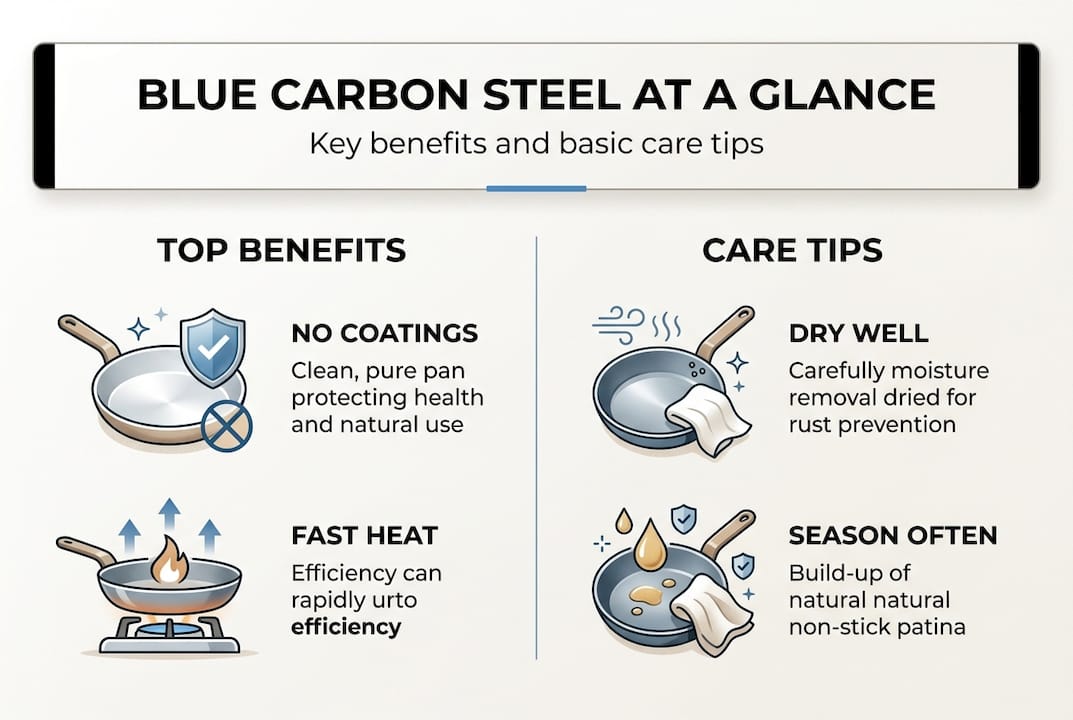
Pro Tip: Choose blue carbon steel if you want professional-level performance without chemical coatings and the cumbersome weight of cast iron. At 2-3 lbs, these pans are significantly lighter than cast iron’s 5-8 lbs, reducing wrist strain during everyday cooking.
The benefits extend beyond performance:
- Safe for high-heat cooking without toxic fume concerns
- Naturally non-stick surface improves over time
- Quick heating saves energy and cooking time
- Lightweight design reduces fatigue during meal preparation
- Induction-compatible for modern European hobs
Discover more about the culinary benefits of carbon steel to understand why professional chefs and home cooks alike favour this material.
How blue carbon steel compares to other cookware
Choosing between cookware types depends on your cooking style, experience level, and priorities. Blue carbon steel occupies a unique position, offering advantages over both traditional carbon steel and cast iron whilst remaining more accessible than premium options.
| Cookware Type | Weight | Heat Response | Rust Resistance | Best Use Case |
|---|---|---|---|---|
| Blue Carbon Steel | Light | Fast | Good (initial) | Daily cooking, new users |
| Raw Carbon Steel | Light | Fast | Requires care | Experienced cooks |
| Cast Iron | Heavy | Slow | Excellent | Long braises, oven use |
| Premium Carbon Steel | Medium-Heavy | Moderate | Good | Professional kitchens |
Blue carbon steel heats faster and responds more quickly to temperature changes than cast iron, making it superior for tasks requiring precision. Cast iron retains heat longer, which benefits slow-cooking methods but makes it less versatile for everyday use.
Premium carbon steel options like de Buyer’s Mineral B or Pro lines are thicker, offering superior heat capacity for intensive professional use, but they’re heavier and pricier. Blue carbon steel provides an entry point with faster heat-up times and greater manoeuvrability.
“Some view ‘blue’ as marketing (temporary tint), but it provides real initial protection vs raw steel; outperforms cast iron in lightness and responsiveness.” — Serious Eats
When to choose each option:
- Blue carbon steel: You’re new to carbon steel, want lightweight versatility, prioritise health-conscious cooking, or need quick heat response for daily meals
- Raw carbon steel: You’re experienced with seasoning, want complete control over patina development, or prefer traditional cookware without any initial treatment
- Cast iron: You frequently braise, need exceptional heat retention, primarily cook in the oven, or want minimal maintenance after initial seasoning
- Premium carbon steel: You cook professionally, regularly prepare large batches, need maximum heat capacity, or want the thickest, most durable option available
For detailed comparisons, review blue carbon steel vs carbon steel differences. Learning to prevent rust on carbon steel applies across all variants.
Caring for blue carbon steel: Dos, don’ts and long-term tips
Proper care transforms blue carbon steel from a simple pan into a kitchen heirloom. The initial setup requires attention, but ongoing maintenance becomes second nature.
- Wash the new pan with warm, soapy water to remove factory oils
- Dry completely with a clean towel
- Preheat your oven to 250°C
- Place the dry pan in the oven for 10 minutes
- Remove and apply a very thin coat of high-smoke-point oil (grapeseed, avocado, sunflower, or canola)
- Wipe away excess oil until the pan looks almost dry
- Place the pan upside down in the oven for 30 minutes
- Repeat steps 5-7 two to three times for a strong foundation
Daily cleaning is straightforward. Wash with warm water immediately after cooking, dry thoroughly, and apply a light coat of oil. Never use the dishwasher, avoid soaking, and limit acidic foods during the first few uses whilst the patina develops.
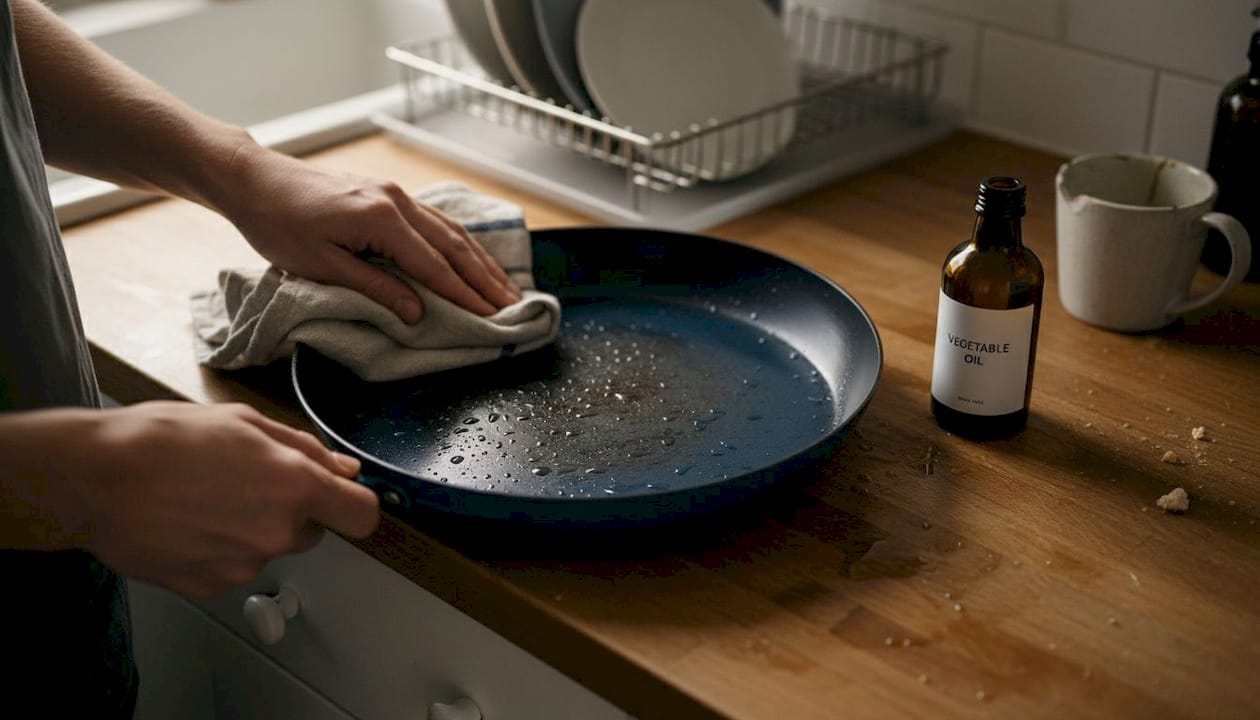
Pro Tip: Searing fatty foods like bacon or duck accelerates non-stick patina development. The rendered fat seasons the pan naturally whilst you cook.
If rust appears or food starts sticking, re-season every 3-6 months or at the first signs of trouble. Remove rust with a scrub pad, wash, dry completely, and repeat the seasoning process.
Common mistakes to avoid:
- Soaking the pan in water (causes rust)
- Air-drying instead of towel-drying (moisture remains)
- Using too much oil when seasoning (creates sticky residue)
- Skipping re-seasoning when the surface dulls
- Cooking acidic foods before the patina is established
- Exposing the pan to sudden temperature changes
For comprehensive guidance, consult the carbon steel seasoning checklist and carbon steel surface care resources.
Is blue carbon steel right for your kitchen?
Blue carbon steel offers affordable quality entry to carbon steel, with manageable care routines for European cooks. It’s perfect for health-minded home cooks seeking non-toxic, versatile pans that work on induction or gas hobs, both common in European kitchens.
The pan suits those willing to invest minimal effort in maintenance for long-term performance gains. If you enjoy cooking and want equipment that improves with use rather than degrades, blue carbon steel delivers exceptional value.
Drawbacks exist. The pan isn’t truly dishwasher-safe, requires proactive care to prevent rust, and demands patience during the initial seasoning period. Those seeking zero-maintenance cookware should consider alternatives.
Professionals or home cooks who regularly batch-cook large quantities may prefer thicker Mineral B lines for superior heat capacity. However, for most European home kitchens, blue carbon steel’s combination of performance, weight, and price proves ideal.
Who should try blue carbon steel:
- Health-conscious cooks avoiding chemical coatings
- Home cooks wanting professional-level performance
- Those using induction or gas hobs
- Cooks willing to learn basic seasoning and maintenance
- Anyone seeking lightweight, versatile cookware
Who should consider alternatives:
- Those wanting completely maintenance-free cookware
- Cooks who frequently use dishwashers
- People uncomfortable with seasoning processes
- Those needing maximum heat retention for long braises
For additional maintenance insights, explore carbon steel kitchenware care tips to ensure your investment lasts.
Upgrade your kitchen with quality carbon steel
Ready to experience the benefits of blue carbon steel? Brass & Steel offers curated, high-quality carbon steel pans forged in one piece for durability and performance. Our collection combines engineering precision with culinary excellence, providing European home cooks with heirloom-quality cookware.
Every pan comes with comprehensive care guides and expert support to help you master seasoning and maintenance. Whether you’re switching from non-stick or expanding your cookware collection, our resources ensure you get the most from your investment. Explore the culinary benefits of carbon steel and discover why serious cooks choose carbon steel for its natural non-stick properties, superior heat control, and chemical-free cooking surface.
Frequently asked questions
Does blue carbon steel leach chemicals into food?
No, blue carbon steel contains no chemical coatings and is safe for high-heat cooking after proper seasoning.
How do you fix rust on a blue carbon steel pan?
Remove rust with a scrub pad, wash, thoroughly dry, and re-season every 3-6 months using oil and heat.
Can you use blue carbon steel pans on induction hobs?
Yes, blue carbon steel is magnetic and excels in quick, high-heat tasks on induction, gas and electric stoves.
How often should you season blue carbon steel?
Season when new, then every 3-6 months or if food starts sticking or rust appears.
Is blue carbon steel dishwasher safe?
No, avoid dishwasher and prolonged water exposure; handwashing and immediate drying are essential to protect the patina.