Blue Carbon Steel vs Carbon Steel – Performance Decoded

Most British kitchens in upscale European restaurants still rely on stainless steel, yet carbon steel is gaining momentum for its performance and health benefits. Professionals are discovering that blue carbon steel, treated for enhanced durability, offers sharper edges and improved corrosion resistance. In fact, scientific studies show it maintains blade sharpness up to twice as long as standard grades. This introduction explores the unique properties and major benefits of blue carbon steel in high-level culinary environments.
Table of Contents
- Defining Blue Carbon Steel And Carbon Steel
- How The Bluing Process Changes Steel
- Comparing Heat Performance And Durability
- Corrosion Resistance And Maintenance Needs
- Choosing The Right Steel For Professional Chefs
Key Takeaways
| Point | Details |
|---|---|
| Blue Carbon Steel vs. Carbon Steel | Blue carbon steel features a specialised heat treatment that enhances its corrosion resistance and edge retention compared to standard carbon steel. |
| Bluing Process Benefits | The bluing process creates a protective magnetite layer, improving aesthetics and providing a barrier against oxidation. |
| Maintenance Importance | Both blue and standard carbon steel require diligent maintenance to prevent corrosion, with blue carbon steel needing more attention due to its surface properties. |
| Professional Applications | Chefs should consider the balance between performance and maintenance when choosing between blue carbon steel and standard carbon steel for their culinary needs. |
Defining Blue Carbon Steel and Carbon Steel
Carbon steel represents a fundamental metal alloy composed primarily of iron and carbon, with carbon content ranging from 0.05% to 2.0%. Unlike standard carbon steel, blue carbon steel undergoes a specialised heat treatment process that transforms its surface characteristics and performance capabilities.
The key distinguishing feature of blue carbon steel is its unique surface treatment, which creates a protective blue-black magnetite layer through precise heat application. This process not only enhances the steel’s aesthetic appeal but also significantly improves its oxidation resistance and durability. While traditional carbon steel exists in low, medium, and high carbon grades with varying properties, blue carbon steel represents a refined variant engineered for superior performance.
Materials science reveals that blue carbon steel incorporates additional alloying elements like chromium, tungsten, and vanadium, which contribute to enhanced edge retention and wear resistance. These subtle metallurgical modifications create a material that outperforms standard carbon steel in demanding applications, particularly where precision and long-term durability are paramount.
Pro tip: When selecting between blue carbon steel and standard carbon steel, consider the specific environmental conditions and performance requirements of your intended application to make the most appropriate choice.
The following table highlights the main differences between blue carbon steel and standard carbon steel in professional applications:
| Characteristic | Blue Carbon Steel | Standard Carbon Steel |
|---|---|---|
| Surface Appearance | Blue-black, semi-gloss finish | Matte grey, unfinished look |
| Key Alloying Elements | Iron, carbon, chromium, vanadium, tungsten | Primarily iron and carbon |
| Edge Retention | Maintains sharpness longer | Dulls more quickly |
| Corrosion Resistance | Improved, but still requires maintenance | More susceptible to rust |
| Fabrication Complexity | Often harder to shape | Easier to machine and weld |
| Best Use Case | Precision knives, fine tools | Structural components, general tools |
How the Bluing Process Changes Steel
Bluing represents a sophisticated electrochemical passivation technique) that fundamentally transforms steel’s surface properties without compromising its core structural integrity. This specialised process creates a protective magnetite layer through controlled oxidation, generating a distinctive blue-black finish that serves both aesthetic and functional purposes.
The bluing mechanism involves an intricate surface transformation where ferrous metals undergo a precise chemical reaction. By immersing steel in heated salts or applying specific chemical treatments, manufacturers generate a thin iron oxide layer that dramatically enhances the material’s corrosion resistance. This conversion coating is microscopically thin yet remarkably effective, providing an initial barrier against environmental degradation while maintaining the underlying steel’s mechanical properties.
Technical research reveals that bluing is not a uniform process but encompasses multiple methodologies, including hot bluing, cold bluing, and rust bluing. Each technique offers nuanced approaches to surface oxidation, with hot bluing considered the most comprehensive method. The process is particularly critical in industries requiring high-precision metal components, such as firearms manufacturing, engineering equipment, and specialised cookware production.
Pro tip: For optimal bluing results, always ensure thorough surface preparation and consider applying a light protective oil layer to extend the magnetite coating’s durability and corrosion resistance.
Here is a summary of common bluing techniques and their typical uses:
| Bluing Method | Process Description | Common Application Area |
|---|---|---|
| Hot Bluing | Immersion in heated salt baths | Firearms, high-grade cutlery |
| Cold Bluing | Chemical solution at room temp | Home repairs, touch-ups |
| Rust Bluing | Controlled rust/boiling cycles | Heritage knives, restoration |
Comparing Heat Performance and Durability
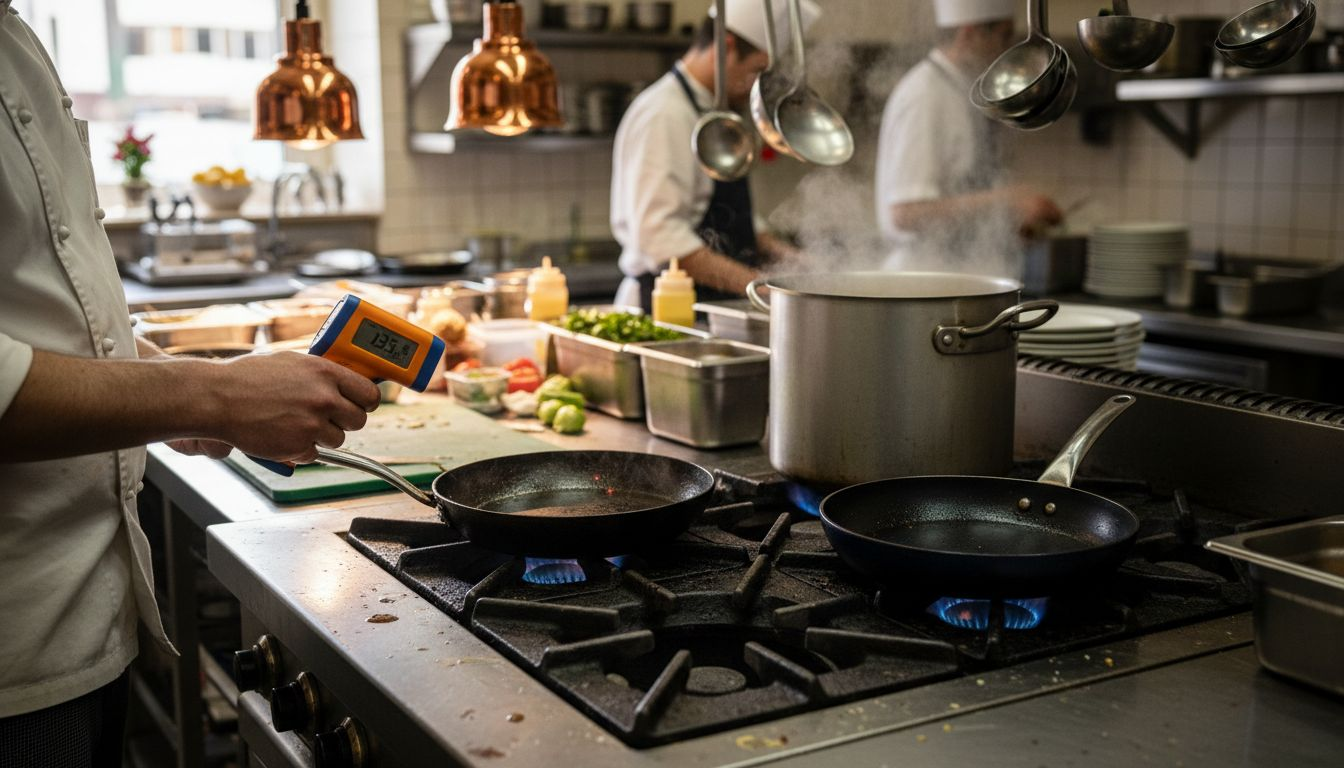
Heat performance and durability represent critical considerations when evaluating blue carbon steel and standard carbon steel, with nuanced differences emerging from their metallurgical compositions. Blue carbon steel demonstrates superior edge retention and hardness, primarily due to its carefully engineered alloying elements like chromium, tungsten, and vanadium, which enhance its structural resilience.
The bluing process itself introduces a fascinating dimensional complexity to steel’s thermal characteristics. While the blue oxide layer might suggest significant performance variations, scientific research indicates that core heat conductivity remains fundamentally consistent between blue and standard carbon steel. The surface treatment primarily influences corrosion resistance and aesthetic appearance rather than dramatically altering the material’s intrinsic thermal transfer properties.
Technical investigations reveal that durability differences stem more from alloy composition than surface treatment, with blue carbon steel offering enhanced wear resistance across high-precision applications. Standard carbon steel remains more malleable and easier to fabricate, making it suitable for broader industrial applications where absolute hardness is less critical. The grade of carbon steel—whether low, medium, or high—plays a more substantial role in determining ultimate performance than the bluing process itself.
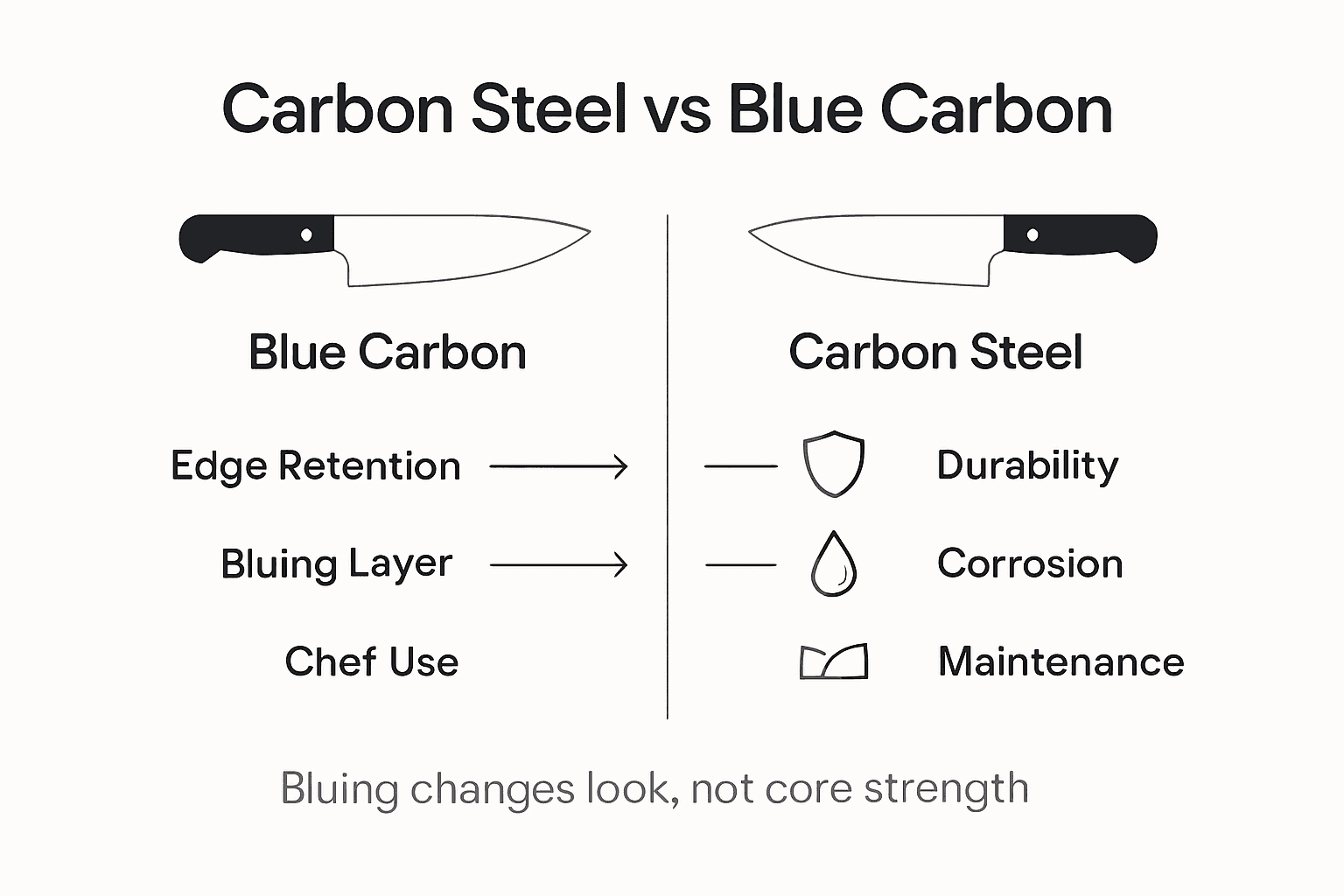
Pro tip: When selecting between blue carbon steel and standard carbon steel, prioritise your specific application requirements, considering factors like edge retention, corrosion resistance, and ease of fabrication rather than relying solely on surface treatments.
Corrosion Resistance and Maintenance Needs
Corrosion resistance represents a critical performance metric for carbon steel variants, with blue carbon steel offering marginal advantages through its distinctive magnetite surface layer. This protective oxide coating provides a temporary barrier against oxidation, creating a nuanced defence mechanism that distinguishes it from standard carbon steel’s more vulnerable surface.
Advanced surface analysis reveals that corrosion protection depends significantly on maintenance protocols rather than inherent material properties. The bluing process generates a thin protective layer that temporarily enhances surface resistance, but environmental conditions and mechanical interactions ultimately determine long-term durability. Both blue and standard carbon steel require meticulous care, including regular oiling, careful cleaning, and strategic storage to mitigate oxidation risks.
Professional metallurgists emphasise that neither blue carbon steel nor standard carbon steel approaches the corrosion resistance of stainless steel, particularly in challenging environments with high humidity or acidic exposure. The key differentiator lies not in the surface treatment but in comprehensive maintenance strategies. Blue carbon steel’s slightly improved initial resistance offers minimal protection without consistent, careful upkeep, making regular maintenance an absolute necessity for preserving the material’s structural integrity and aesthetic qualities.
Pro tip: Implement a consistent maintenance routine involving light oiling, immediate drying after use, and storage in low-humidity environments to maximise your carbon steel’s corrosion resistance and longevity.
Choosing the Right Steel for Professional Chefs
Professional chefs navigate complex trade-offs when selecting between blue carbon steel and standard carbon steel, with performance nuances determining their ultimate choice. The decision hinges on critical factors such as edge retention, maintenance requirements, and specific culinary techniques that demand precision cutting and heat management.
Blue carbon steel emerges as a superior option for chefs seeking exceptional edge longevity and razor-sharp precision. Its heat-treated surface provides remarkable hardness that enables intricate cutting techniques, particularly in high-end Japanese culinary traditions. Expert knife selection guides emphasise the delicate balance between performance capabilities and maintenance demands, noting that blue carbon steel requires significantly more attentive care compared to stainless steel alternatives.
The selection process involves evaluating specific kitchen environments and cooking styles. High-volume professional kitchens might prioritise ease of maintenance, whereas fine dining establishments often favour the precision and performance of blue carbon steel. Understanding the material’s characteristics enables chefs to make informed decisions that align with their culinary philosophies, cooking techniques, and workplace demands.
Pro tip: Conduct a thorough assessment of your kitchen’s specific requirements, considering factors like cutting frequency, maintenance time availability, and desired blade performance before committing to blue carbon steel cookware or knives.
Discover the Best Carbon Steel Cookware for Lasting Performance
Choosing between blue carbon steel and standard carbon steel means weighing edge retention, durability and maintenance needs. If you seek cookware that offers high heat performance and natural nonstick properties without complicated upkeep, Brass & Steel’s trusted Carbon Steel Collection provides an excellent solution. Our pans are forged from a single piece of carbon steel designed for exceptional strength and seamless cooking performance, making them perfect for serious cooks aiming to elevate their culinary craft.
Explore our heirloom-quality pans that deliver superb heat retention and develop a safe, natural seasoning for lasting protection. Whether you want a versatile 27 cm carbon steel pan or a larger 30 cm option for professional kitchens, Brass & Steel offers cookware built for precision and durability. Take the next step now at https://brass-steel.com and equip your kitchen with cookware engineered for excellence and designed to perform beautifully every day.
Frequently Asked Questions
What is blue carbon steel?
Blue carbon steel is a refined variant of carbon steel that undergoes a specialised heat treatment process, creating a unique blue-black magnetite layer that enhances its corrosion resistance and durability.
How does blue carbon steel differ from standard carbon steel?
The main differences between blue carbon steel and standard carbon steel include their surface appearance, corrosion resistance, edge retention, and the presence of additional alloying elements that enhance performance.
What maintenance does blue carbon steel require?
Blue carbon steel requires regular maintenance, including light oiling, immediate drying after use, and storage in low-humidity environments, to maximise its corrosion resistance and preserve its aesthetic qualities.
In which applications is blue carbon steel most beneficial?
Blue carbon steel is particularly beneficial in high-precision applications, such as professional kitchen knives and fine tools, where edge retention and durability are critical for performance.