Expert Carbon Steel Care in Restaurants: Full Guide
More than 60 percent of European fine dining kitchens rely on carbon steel pans for their unmatched heat control and durability. Whether you source your cookware from a British supplier or a Parisian atelier, proper care techniques make the difference between a resilient nonstick patina and early rust. This guide delivers step-by-step instructions to help professional chefs and kitchen managers across Europe safeguard their investment and keep every carbon steel pan performing at its best.
Table of Contents
- Step 1: Prepare New Pans For Safe Initial Use
- Step 2: Apply And Build An Even Seasoning Layer
- Step 3: Maintain The Nonstick Patina After Each Service
- Step 4: Restore Seasoning And Prevent Damage
- Step 5: Verify Pan Performance For Professional Cooking
Quick Summary
| Key Point | Explanation |
|---|---|
| 1. Thoroughly Clean Before Seasoning | Remove the factory coating with hot, soapy water and a non-abrasive sponge to prepare the pan for seasoning. |
| 2. Use High Smoke Point Oils | Select oils like grapeseed or canola for seasoning to create a durable, nonstick layer without burning. |
| 3. Consistent Maintenance is Crucial | After each use, gently clean and apply a thin oil layer to preserve the nonstick patina and prevent rust. |
| 4. Address Seasoning Issues Immediately | Check for rust or damage regularly, and perform necessary cleaning and reseasoning to maintain performance. |
| 5. Regularly Test Pan Performance | Conduct heat distribution tests to ensure even cooking and assess the overall effectiveness of the seasoning. |
Step 1: Prepare New Pans for Safe Initial Use
When you receive a new carbon steel pan for your restaurant kitchen, you need to remove the protective factory coating and prepare it for its first use. Factory coatings protect pans during shipping) and must be completely removed before cooking.
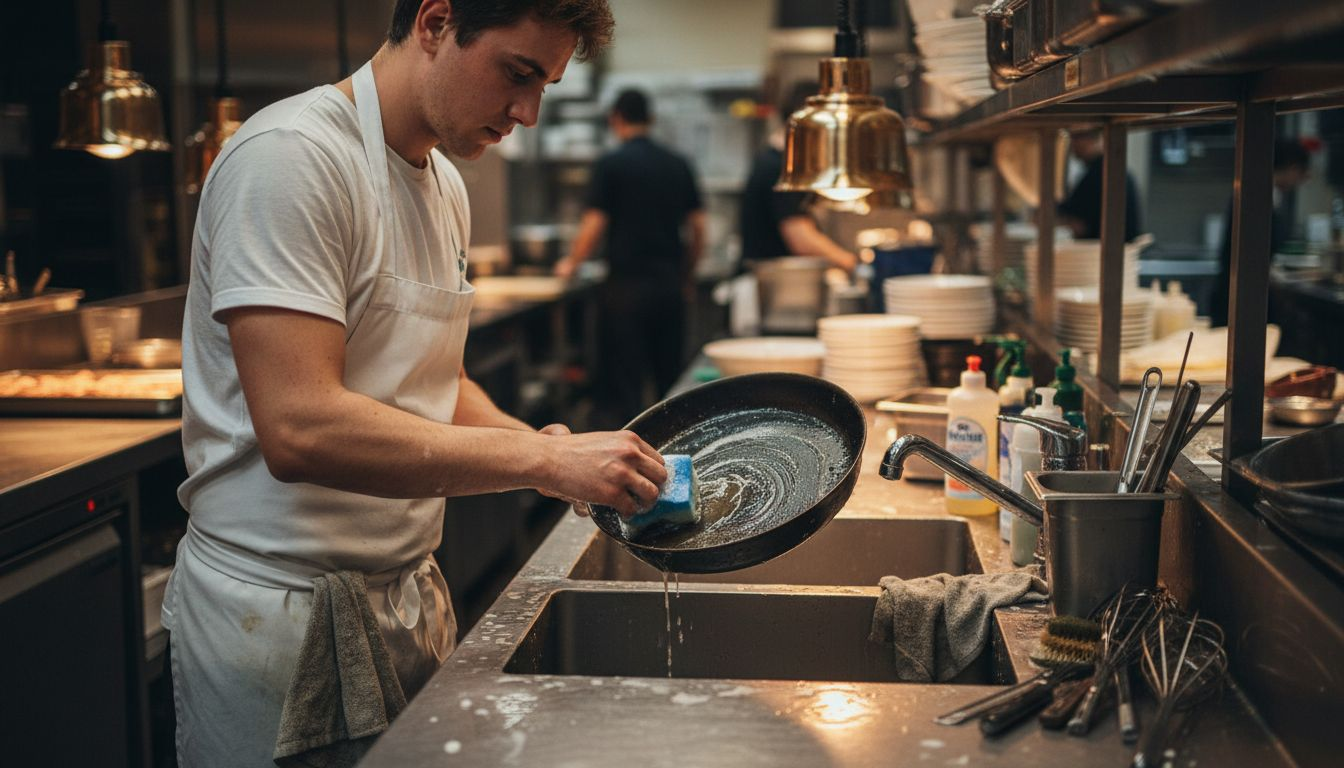
Begin by thoroughly washing the pan with hot soapy water using a non abrasive sponge. Scrub away the protective wax or shellac coating completely, ensuring no residue remains. Once cleaned, dry the pan immediately and comprehensively with a clean kitchen towel. Moisture can cause rapid rusting in carbon steel, so pay special attention to drying every surface and crevice.
The next stage prepares your pan for its initial seasoning. Heat the pan gently to remove any remaining moisture and open the metal’s pores. This step ensures the pan will accept the seasoning layer effectively and begin developing its natural nonstick surface. Proper initial cleaning exposes the bare metal necessary for building a protective cooking surface.
Kitchen Tip: Use paper towels to dry your pan if you want a streak-free finish and to absorb every trace of moisture.
Step 2: Apply and Build an Even Seasoning Layer
Seasoning is the critical process that transforms your bare carbon steel pan into a reliable cooking surface. Polymerising oil creates a durable protective layer) that prevents rust and develops natural nonstick properties for your restaurant kitchen.
Select a high smoke point oil like grapeseed or canola and pour a small amount into the pan. Using a clean lint-free cloth or paper towel, spread the oil in an extremely thin layer across the entire surface area including sides and handle. Ensure complete coverage without pooling or excess oil. Heat the pan on a medium to high stovetop setting or place it in an oven preheated to 250 degrees Celsius. Repeated heating cycles build a resilient cooking surface that becomes more effective with each use.
As the oil heats, it will begin to smoke and change colour becoming darker. This indicates the oil is polymerising and bonding with the metal surface. After approximately 30 minutes, remove the pan and let it cool completely. Repeat this process three to four times to establish a robust initial seasoning that will protect your cookware and improve its performance.
Kitchen Tip: Always use an oil with a high smoke point to prevent burning and ensure a smooth seasoning process.
Here’s a summary of recommended oils for seasoning and their benefits:
| Oil Type | Smoke Point | Impact on Seasoning | Typical Uses in Kitchens |
|---|---|---|---|
| Grapeseed | High | Builds durable coating | Searing, frying |
| Canola | High | Creates resilient layer | General cooking |
| Sunflower | Moderate | Achieves even coverage | Light sautéing |
| Flaxseed | Very High | Tough but may flake | Specialist applications |
Step 3: Maintain the Nonstick Patina After Each Service
Preserving your carbon steel pan’s nonstick surface requires gentle, consistent care after every restaurant service. Maintaining the seasoning protects the polymerised fat layer) that prevents rust and maintains cooking performance.
Immediately after cooking, remove food residue using hot water and a soft cloth or kitchen brush. Avoid harsh detergents or abrasive scrubbing that could strip away the protective seasoning. Dry the pan thoroughly with a clean towel to prevent moisture buildup. Gentle cleaning helps maintain the cooking surface and prevents corrosion.
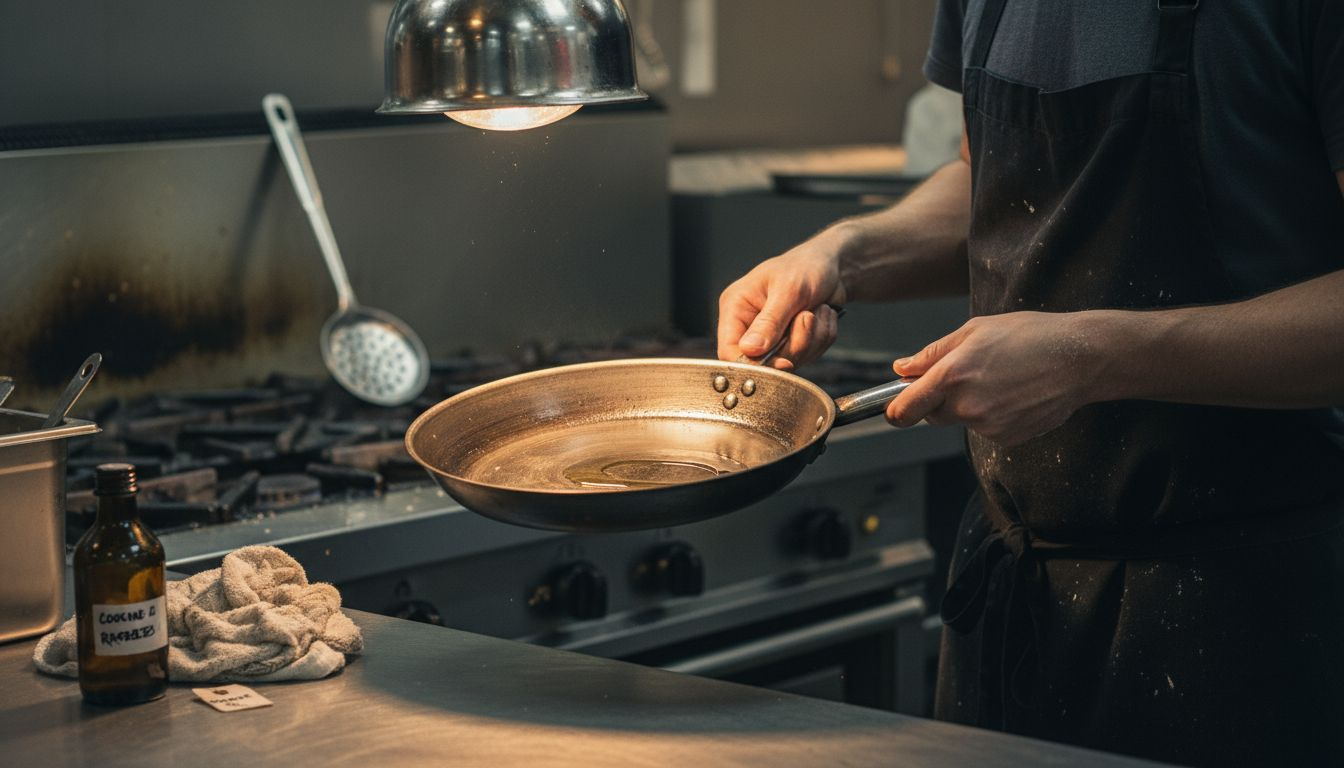
Once dry, apply a whisper-thin layer of high smoke point oil like grapeseed or canola using a lint-free cloth. This process replenishes the seasoning and creates a protective barrier against moisture. In a professional kitchen, consistent maintenance ensures your carbon steel cookware remains a reliable tool for creating exceptional dishes.
Kitchen Tip: Store your carbon steel pan in a dry environment and consider hanging it to promote air circulation and prevent moisture retention.
Step 4: Restore Seasoning and Prevent Damage
Carbon steel pans require strategic intervention when their seasoning becomes compromised. Damage restoration involves careful stripping and reseasoning) to return the pan to its optimal cooking condition.
Begin by thoroughly examining the pan for signs of rust or seasoning breakdown. For minor issues, use a scrubbing pad with fine steel wool to gently remove discoloured patches without damaging the underlying metal. For extensive rust or damaged seasoning, you may need more aggressive cleaning techniques. Complete restoration requires systematic cleaning and reapplication of protective oil layers.
After cleaning, dry the pan completely and apply a thin layer of high smoke point oil. Heat the pan in an oven at 250 degrees Celsius for approximately one hour to polymerise the oil and recreate a robust protective surface. Repeat this process two or three times to ensure a consistent and durable seasoning that will protect your cookware from future damage.
Kitchen Tip: Always inspect your carbon steel pans after intense cooking services and address any seasoning issues immediately to prevent long term damage.
Compare approaches for pan maintenance and restoration:
| Task | Routine Maintenance | Full Restoration |
|---|---|---|
| Cleaning Method | Hot water, soft brush | Steel wool, deep scrubbing |
| Oil Application | Thin layer after drying | Multiple layers, high heat |
| Frequency | After each use | When rust/seasoning fails |
| Time Investment | Few minutes | 1-2 hours per session |
Step 5: Verify Pan Performance for Professional Cooking
In a professional kitchen, your carbon steel pan’s performance is critical to culinary excellence. Professional cooking performance depends on precise heat management and consistent seasoning quality.
To evaluate your pan, start by conducting a comprehensive heat distribution test. Sprinkle a thin layer of flour across the pan surface and heat it gently. Uniform browning indicates excellent heat distribution while uneven patches suggest potential seasoning or structural issues. Look for consistent searing capabilities, smooth food release, and minimal sticking as primary performance indicators.
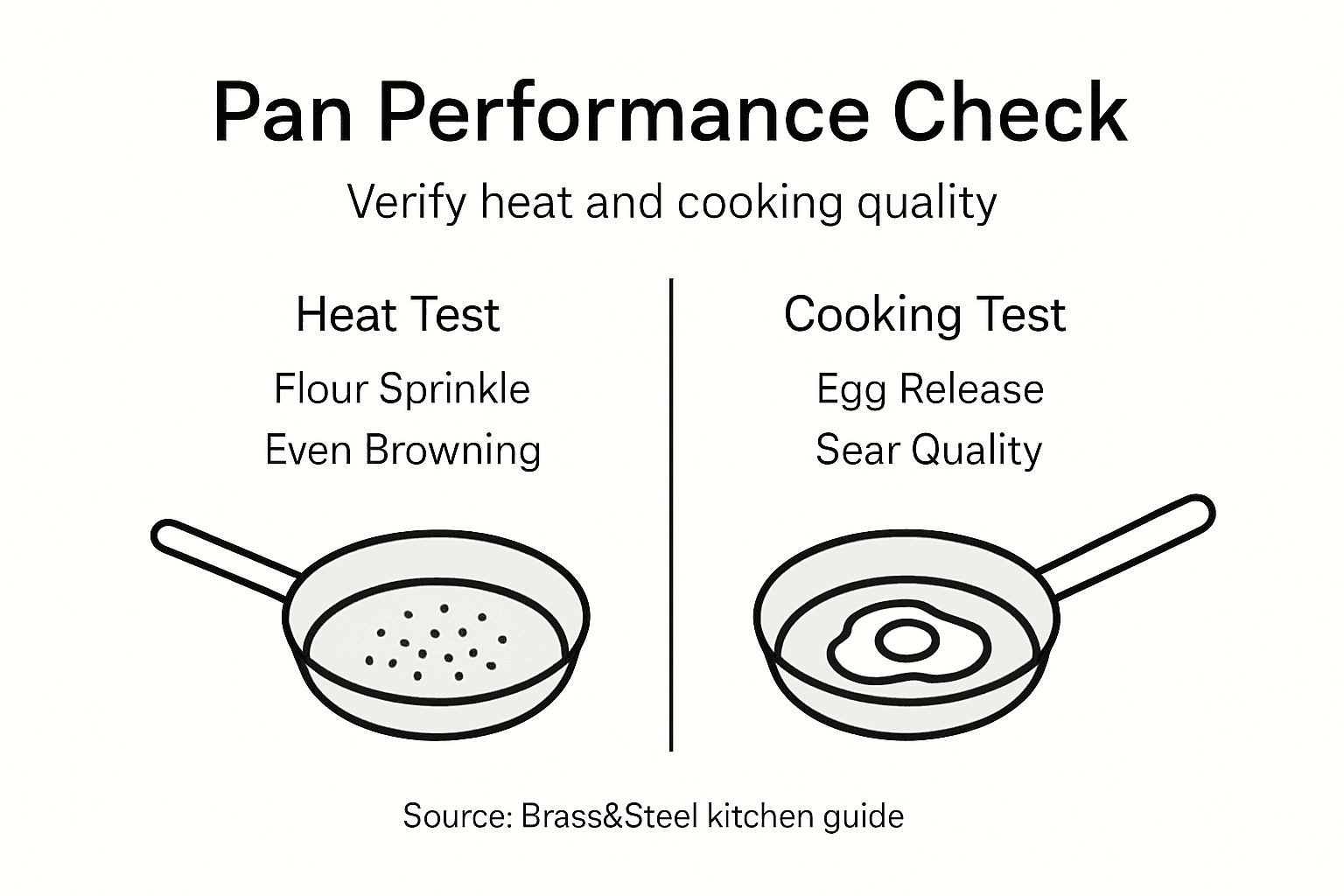
Carefully observe how your pan responds during different cooking techniques. A high performing carbon steel pan will demonstrate remarkable heat responsiveness, develop rich flavours during searing, and maintain consistent nonstick properties through proper maintenance. Regular assessment ensures your cookware remains a reliable tool in demanding professional environments.
Kitchen Tip: Maintain a professional log documenting your pan’s performance characteristics after each major cooking service to track its long term reliability.
Elevate Your Restaurant Kitchen with Expertly Crafted Carbon Steel Pans
If you have been navigating the challenges of preparing, seasoning and maintaining carbon steel pans in your professional kitchen this guide has shown how crucial each step is for optimal performance and durability. At Brass & Steel we understand the pain points you face such as ensuring a natural nonstick patina, preventing rust, and achieving reliable heat responsiveness — all essential for consistent high-quality cooking.
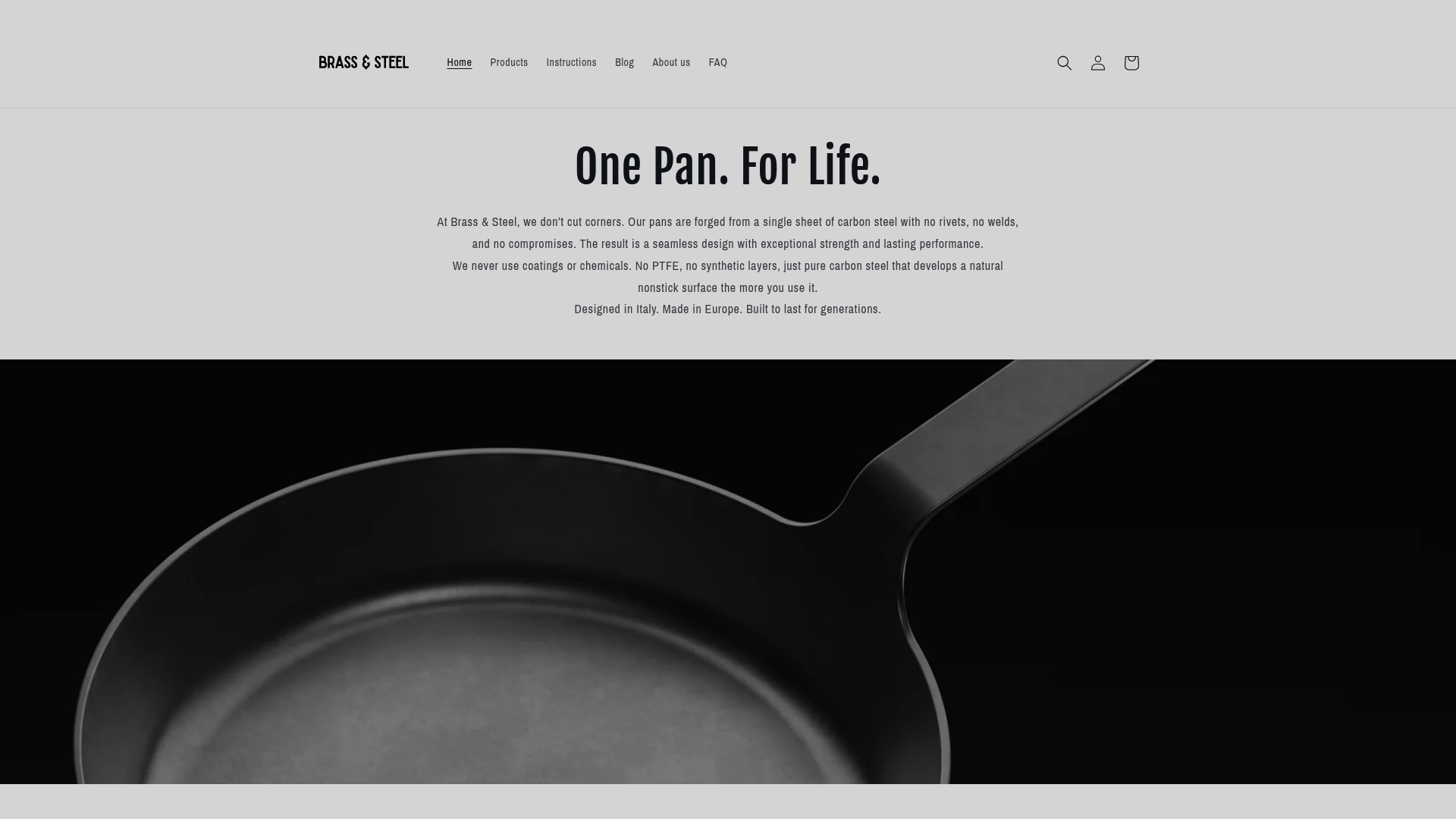
Explore our Carbon Steel Collection | Brass&Steel where each pan is forged in one seamless piece for lasting strength and engineered for perfect seasoning build-up. Our pans combine minimalist Italian design with Polish precision manufacturing offering a health-conscious alternative free from PTFE or coatings and compatible with all cooktops including induction. Visit https://brass-steel.com today to discover how our heirloom quality cookware can transform your kitchen workflow and deliver the professional performance your restaurant demands. Don’t wait to invest in cookware designed for ultimate durability and culinary excellence. Learn more about our innovative solutions on our New arrivals – Brass & Steel page and take the first step to mastering carbon steel care.
Frequently Asked Questions
How do I prepare a new carbon steel pan for initial use in my restaurant?
To prepare a new carbon steel pan for initial use, thoroughly wash it with hot soapy water using a non-abrasive sponge to remove the factory coating. Dry the pan completely with a clean towel to prevent rusting, then gently heat it to remove any remaining moisture.
What oils are recommended for seasoning carbon steel pans, and why?
Use high smoke point oils such as grapeseed or canola for seasoning carbon steel pans. These oils create a durable protective layer that prevents rust and develops nonstick properties; ensure the oil is applied in a very thin layer to avoid pooling.
How can I maintain the nonstick surface of my carbon steel pan after cooking?
To maintain the nonstick surface, clean the pan immediately after use with hot water and a soft cloth or kitchen brush. Apply a thin layer of oil to the surface after drying to replenish the seasoning and protect against moisture.
What steps should I take to restore a carbon steel pan if the seasoning is damaged?
Inspect the pan for rust or discolouration, and for minor issues, use steel wool to remove the damaged areas. For severe damage, clean and reapply oil, then heat the pan in an oven to polymerise the oil for a robust seasoning, repeating the process two to three times if necessary.
How can I test the performance of my carbon steel pan in a professional kitchen?
Conduct a heat distribution test by sprinkling flour on the pan’s surface and heating it gently; look for uniform browning to assess heat distribution. Ensure that the pan shows minimal sticking during cooking, indicating effective seasoning and performance.