What Is Re-Seasoning? Restoring Carbon Steel Performance

Burnt-on food and rusty patches can turn even the most cherished carbon steel pan into a source of frustration for cooks across Europe. Over time, seasoning naturally wears down, leaving your pan more prone to sticking and corrosion. Proper re-seasoning restores the non-stick surface and protection from rust, bringing your pan back to life quickly, without harsh chemicals or complicated steps. With the right approach, your pan can deliver reliable performance and last for decades.
Table of Contents
- Re-seasoning Defined And Common Myths
- Why Carbon Steel Pans Need Re-seasoning
- Key Steps And Best Oils For Re-seasoning
- Signs Of Wear And When To Re-season
- Re-seasoning Risks And What To Avoid
Key Takeaways
| Point | Details |
|---|---|
| Re-seasoning is essential | Regular re-seasoning of your carbon steel pan maintains its non-stick properties and prevents rust. Aim to re-season every few months or as soon as signs of wear appear. |
| Common myths clarified | You do not need to strip your pan or use special equipment; a simple process involving oil and baking will suffice. |
| Choosing the right oil | Use high smoke-point oils such as grapeseed or avocado for best results, avoiding olive oil and animal fats which can lead to poor seasoning. |
| Signs it’s time to re-season | Watch for food sticking and dullness; these are clear indicators that your pan requires immediate attention to maintain its performance. |
Re-seasoning Defined and Common Myths
Re-seasoning is the process of restoring your carbon steel pan’s natural non-stick surface and rust protection when the existing seasoning starts to wear thin. Over time, cooking, cleaning, and everyday use gradually wear down the protective patina you’ve built up. Think of it like refreshing a wooden cutting board that has lost its finish. The good news is that re-seasoning isn’t complicated, and your pan will perform like new again.
The confusion around re-seasoning often comes from myths that circulate among home cooks. One common myth is that you need to strip your pan completely before re-seasoning, which would require harsh chemicals or steel wool scrubbing. This simply isn’t true. Re-seasoning a carbon steel pan involves a straightforward process: clean, dry, apply a thin coat of oil, and bake. You’re building on what’s already there, not starting from scratch.
Another myth suggests that re-seasoning takes hours or requires special equipment. In reality, the actual hands-on time is roughly ten minutes, and the baking happens in your standard kitchen oven. A third misconception is that all oils work equally well for re-seasoning. They don’t. High smoke-point oils like grapeseed, avocado, or sunflower are your best choices. Olive oil and animal fats will create a sticky, gummy surface instead of a smooth patina.
Some people believe their pan is beyond saving once it develops rust spots or a dull appearance. Wrong again. Even pans with visible wear can be brought back to their full potential. The key is understanding that re-seasoning isn’t a rare emergency procedure. It’s simply maintenance, like oiling a wooden spoon or conditioning a leather apron.
The truth is that your carbon steel pan wants to work for you. Regular use and occasional re-seasoning keep it performing brilliantly for decades. It becomes better with age, not worse, when you understand how seasoning actually works.
Pro tip: Re-season your pan every few months if you notice it becoming dull or food starting to stick, rather than waiting until problems develop, and you’ll maintain peak cooking performance year-round.
Why Carbon Steel Pans Need Re-Seasoning
Your carbon steel pan’s seasoning isn’t a permanent coating that lasts forever. It’s a living, breathing layer that gradually wears down through normal cooking, washing, and exposure to moisture. Think of it like a patina on a favourite pair of boots, it needs occasional maintenance to stay strong. Without re-seasoning, your pan loses the very thing that makes it perform brilliantly in the kitchen.
The seasoning layer naturally deteriorates because you’re constantly using your pan. Every time you cook acidic foods like tomatoes or wine, you’re slightly breaking down the protective patina. When you wash the pan with water and soap, you’re removing oils. Over months of regular use, these small losses add up until you notice food starting to stick where it once glided effortlessly across the surface.
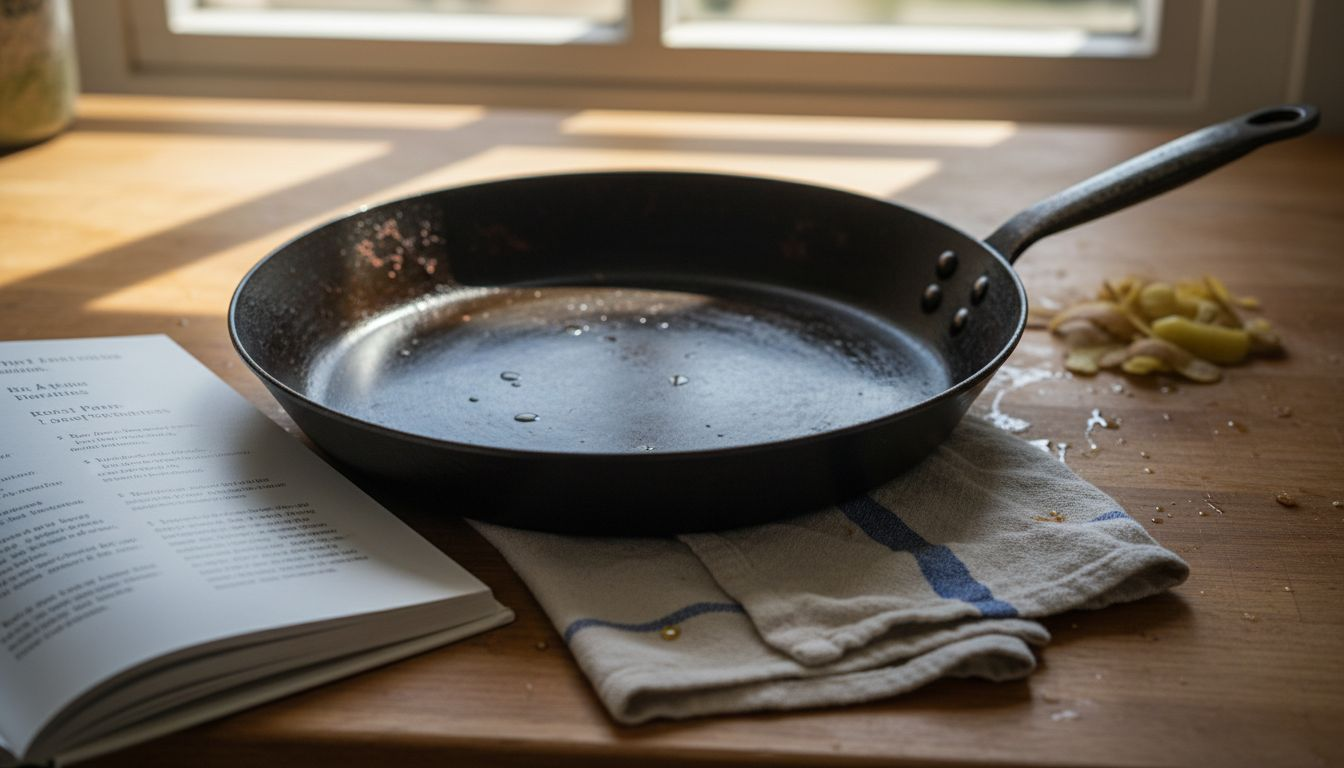
Moisture is another culprit. Carbon steel is prone to rust when exposed to water without proper protection, which is why that seasoning layer matters so much. The protective coating acts as a barrier between the steel and moisture in the air. Once this barrier thins out, rust and corrosion become real concerns, transforming a beloved pan into a frustrating cooking experience.
Re-seasoning restores the protective coating and brings back the non-stick properties you originally had. It’s not complicated, and you don’t need to wait until problems develop. A quick refresh every few months keeps your pan in peak condition and extends its lifespan significantly. Your carbon steel pan can last decades, but only if you give it this simple maintenance.
The alternative is watching your investment deteriorate. A pan that was once a joy to cook with becomes sticky and unreliable. Rust spots appear, and suddenly you’re dealing with damage control instead of prevention. Regular re-seasoning keeps your pan performing like it did on day one, year after year.
Pro tip: After noticing your pan becoming slightly dull or food sticking more than usual, re-season immediately rather than waiting, as addressing wear early prevents rust and keeps your cooking performance consistent.
Key Steps and Best Oils for Re-Seasoning
Re-seasoning your carbon steel pan follows a straightforward process that takes roughly thirty minutes from start to finish. The key is getting the basics right. Start by washing your pan thoroughly with warm soapy water to remove any food residue or old oil buildup. Dry it completely with a clean cloth, then place it in your oven at 250°C for ten minutes to ensure all moisture is gone. Any water left behind will prevent proper seasoning.
Once your pan is bone dry, it’s time to apply oil. This is where many cooks make their first mistake by using too much. Apply a very thin coat of your chosen oil, then wipe away roughly 90 percent of what you just applied. The pan should look almost dry to the naked eye. This restraint separates a successful seasoning from a sticky, gummy mess that will frustrate you endlessly.
The oil you choose matters tremendously. High-smoke-point oils like grapeseed, avocado, sunflower, or canola are your best options because they polymerise effectively when heated, creating a durable nonstick coating. Avoid olive oil and animal fats entirely. They have lower smoke points and will create a tacky surface instead of a smooth patina.
Here’s a quick comparison of suitable and unsuitable oils for re-seasoning carbon steel pans:
| Oil Type | Smoke Point | Seasoning Result | Best Use For |
|---|---|---|---|
| Grapeseed | Very high | Durable, non-stick coating | Re-seasoning, everyday use |
| Sunflower | High | Smooth, reliable patina | Re-seasoning, frying |
| Avocado | Very high | Strong, even finish | Re-seasoning, high-heat use |
| Canola | High | Consistent, smooth coating | General cooking, re-seasoning |
| Olive Oil | Low to medium | Sticky, uneven surface | Salad dressings, low-heat |
| Animal Fats | Medium to low | Gummy, unreliable finish | Flavour only, not seasoning |
Place your oiled pan upside down in the oven at 200°C for thirty minutes. The upside-down position prevents oil pooling at the bottom. When the timer goes off, let the pan cool completely in the oven before removing it. This slow cooling creates a stronger bond between oil and steel.
Repeat this process two or three times for a robust base seasoning. Each layer builds upon the last, creating that beautiful dark patina that makes seasoning so effective. After your final layer cools, your pan is ready to cook with and will perform brilliantly.
Pro tip: Wipe your pan with a barely damp cloth immediately after cooking and apply a micro-thin layer of oil while still warm, and you’ll maintain seasoning strength between full re-seasons.
Signs of Wear and When to Re-Season
Your carbon steel pan will tell you when it needs re-seasoning if you pay attention. The most obvious sign is when food starts sticking where it previously slid around effortlessly. Eggs that once cooked without sticking suddenly grip the surface. Pancakes leave patches behind instead of releasing cleanly. This change happens gradually, so you might not notice until cooking becomes noticeably more frustrating.
Look at your pan’s surface under good lighting. A well-seasoned pan has a dark, glossy appearance that almost looks wet even when completely dry. As seasoning wears away, the surface becomes dull and patchy, sometimes with lighter streaks where the seasoning has worn thin. This visual change is your first warning sign that maintenance is due. The patchy appearance means uneven protection, leaving vulnerable spots exposed to rust.
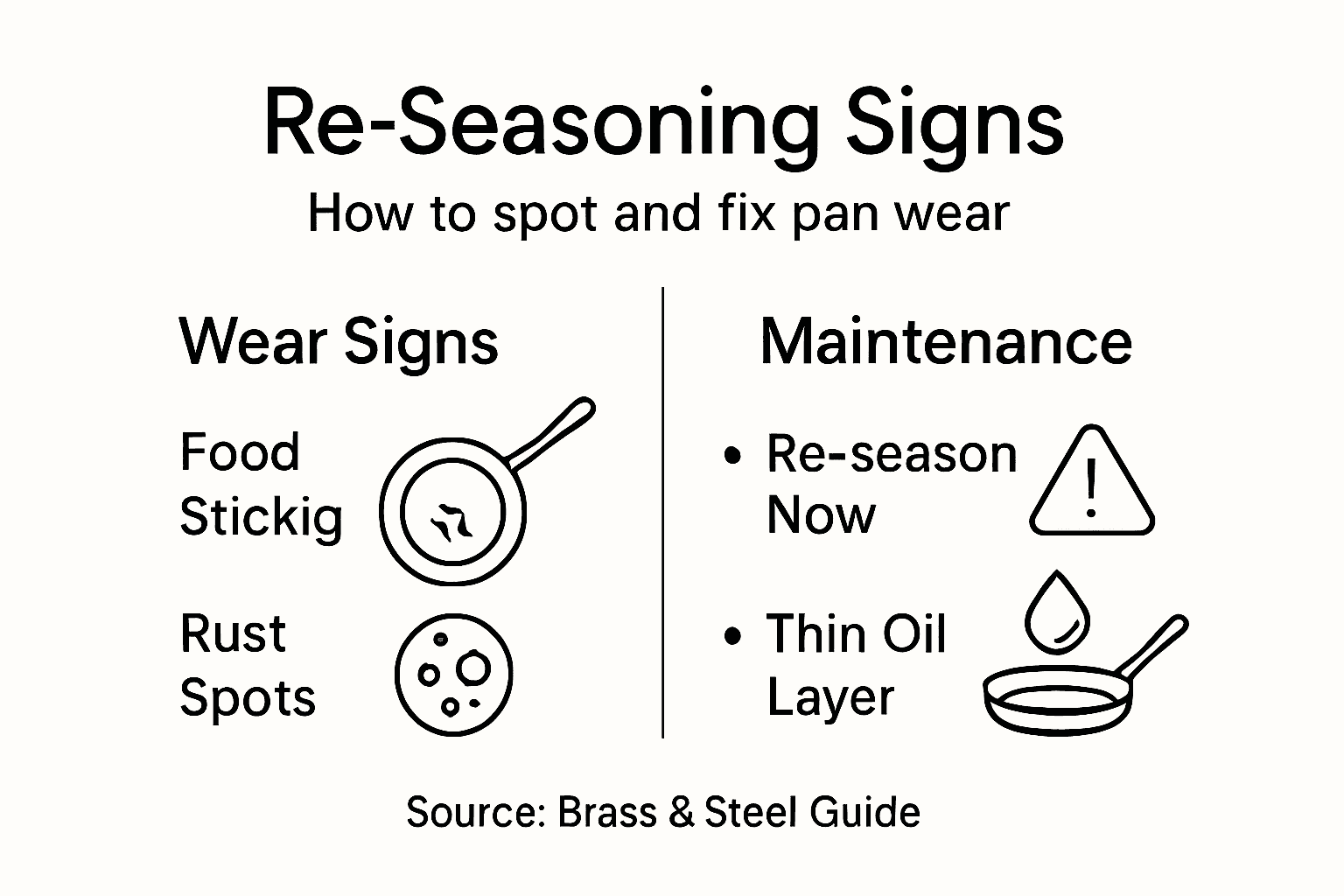
Rust spots are another clear indicator. If you spot tiny reddish or brown marks on the cooking surface, your seasoning layer has deteriorated enough to expose bare metal. Don’t panic. These spots indicate you should monitor your pan’s condition and address seasoning degradation promptly. Catching rust early means a simple re-seasoning will resolve it before the problem deepens.
After washing your pan, run your hand across it. A properly seasoned surface feels smooth and slightly slick. If it feels sticky, rough, or develops a grainy texture, seasoning has broken down. Some oils have oxidised unevenly, creating an unpleasant cooking experience rather than the smooth glide you expect.
Timing matters too. Rather than waiting for obvious problems, re-season your pan every three to six months if you cook regularly. This preventative approach keeps your pan in peak condition year-round and prevents the frustration of dealing with food sticking or rust spots.
Pro tip: Keep a simple log of your cooking over a month, noting when food sticks or doesn’t glide easily, and use these observations to schedule re-seasoning before problems worsen.
Re-Seasoning Risks and What to Avoid
Re-seasoning is straightforward, but mistakes can derail your efforts. The most common pitfall is choosing the wrong oil. Using low smoke-point oils like olive oil or coconut oil means they’ll burn during the heating process instead of polymerising into a smooth coating. You’ll end up with a sticky, gummy surface that feels unpleasant and performs poorly. Unsuitable oils result in sticky seasoning that flakes off, undoing all your work.
Applying too much oil is equally destructive. Many cooks think more oil means better seasoning, but the opposite is true. Excess oil pools and oxidises unevenly, creating a tacky, uneven finish instead of a smooth patina. This is why the golden rule is to apply oil then wipe away roughly 90 percent of it. Your pan should look almost dry. If it looks oily, you’ve applied too much.
Abrasive scrubbing damages your seasoning layer unnecessarily. Steel wool and harsh scouring pads wear down the protective coating you’ve worked to build. Warm soapy water and a soft cloth are all you need for daily cleaning. Save aggressive scrubbing for situations where rust has truly developed, not routine maintenance.
Timing mistakes matter too. Insufficient heating prevents the oil from polymerising properly, leaving you with a weak, flaky coating. Your oven temperature should be accurate, and heating time should be sufficient. If you rush through re-seasoning or skip proper heating, you’ll notice the seasoning failing within weeks.
One surprising mistake is washing your pan with soap immediately after seasoning. This strips away the newly applied layer before it bonds properly to the steel. After seasoning, simply wipe your pan clean with a dry cloth. Wait at least 24 hours before using soap for a thorough wash.
Below is a summary of common re-seasoning mistakes and the impact on your carbon steel pan:
| Mistake | Immediate Effect | Long-term Outcome |
|---|---|---|
| Using too much oil | Sticky, uneven surface | Flaking, poor performance |
| Wrong oil type | Gummy, tacky finish | Accelerated seasoning loss |
| Insufficient heating | Weak, unbonded coating | Seasoning wears quickly |
| Abrasive scrubbing | Thinned protective layer | Increased rust risk |
| Washing with soap too soon | Strip newly formed layer | Need to re-season again |
Pro tip: Keep a checklist of your re-seasoning steps on your phone and work through it methodically, checking off each stage to avoid rushing through critical steps that determine success.
Keep Your Carbon Steel Pan Performing Like New with Brass & Steel
The challenge of maintaining that perfect, natural non-stick surface on your carbon steel pan is clear. Re-seasoning is essential to restore the patina worn down through cooking and cleaning. If you are tired of sticky surfaces, rust spots, or uneven seasoning, it is time to explore cookware designed for durability and ease of maintenance. With Brass & Steel’s seamless, forged carbon steel sauté pans, made to endure and build seasoning beautifully over time, you get heirloom-quality performance that responds to your care rather than resists it.
Experience the difference with premium carbon steel cookware that combines precise engineering with natural nonstick benefits. Visit Brass & Steel today to discover our 27 cm and 30 cm carbon steel pans specially crafted for excellent heat retention and lasting durability. Learn more about our care & maintenance guide to optimise your pan’s seasoning and enjoy cooking with a reliable, PTFE free, induction compatible pan. Don’t just reseason your pan — elevate your entire cooking experience now.
Frequently Asked Questions
What does re-seasoning a carbon steel pan involve?
Re-seasoning a carbon steel pan involves cleaning, drying, applying a thin coat of high smoke-point oil, and then baking the pan in an oven. This process restores the pan’s non-stick surface and rust protection.
How often should I re-season my carbon steel pan?
It’s advisable to re-season your carbon steel pan every three to six months if you cook regularly, or whenever you notice that food starts to stick or the pan appears dull.
What type of oil is best for re-seasoning carbon steel pans?
High smoke-point oils such as grapeseed, avocado, or sunflower oil are ideal for re-seasoning carbon steel pans, as they polymerise effectively without leaving a sticky residue.
Can I still use my carbon steel pan if it has rust spots?
Yes, even if your carbon steel pan develops rust spots, you can still restore it by re-seasoning. Cleaning the rust and applying a new seasoning layer will bring the pan back to its optimal performance.