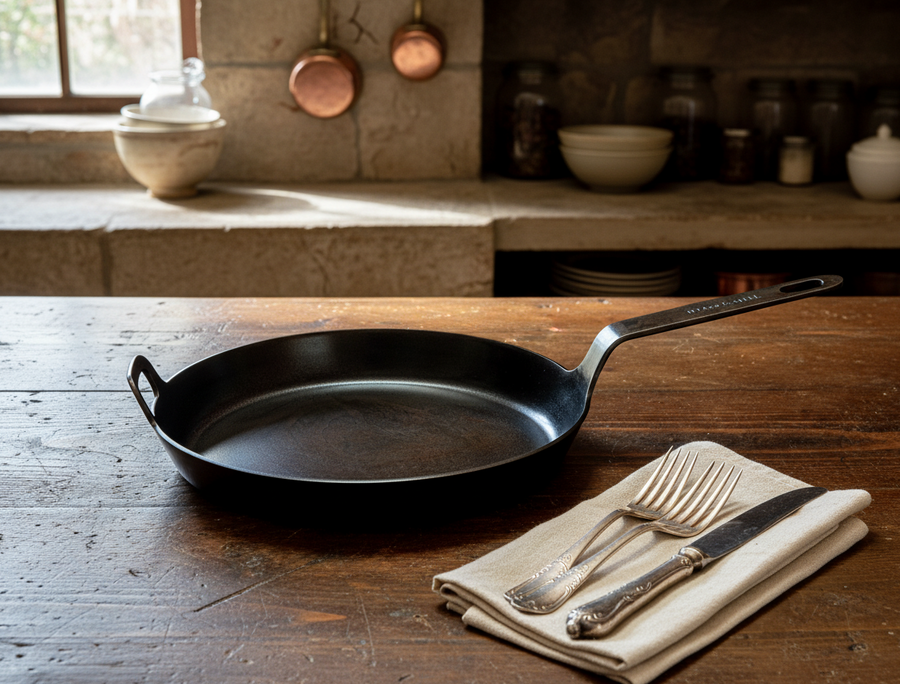
Essential Upkeep for Carbon Steel Pans for Lasting Performance

Seasoned chefs and passionate home cooks across Europe know a well-maintained carbon steel pan can transform everyday cooking into a true pleasure. Without the right care, even the finest pan can lose its edge or fall victim to rust. This guide breaks down the essential steps of proper cleaning, seasoning, and daily upkeep so you can achieve reliable results and enjoy the benefits of a robust, natural nonstick surface for years to come.
Table of Contents
- Step 1: Prepare and Clean Your Carbon Steel Pan
- Step 2: Apply Initial Seasoning for Lasting Protection
- Step 3: Maintain Daily with Proper Use and Cleaning
- Step 4: Strengthen Nonstick Surface Through Regular Use
- Step 5: Inspect and Re-Season for Optimal Results
Quick Summary
| Important Insight in English | Explanation in English |
|---|---|
| 1. Thoroughly Clean Your Pan Pre-Use | Wash your new carbon steel pan with warm, soapy water to remove residues, then dry completely to avoid rust. |
| 2. Apply a Thin Layer of Oil for Seasoning | Use a high-smoke-point oil and apply a microscopic layer before baking to create a strong nonstick surface. |
| 3. Maintain Your Pan with Gentle Care | Clean immediately after cooking using warm water, avoid abrasive cleaners, and apply light oil to enhance the seasoning. |
| 4. Monitor for Signs to Re-Season | Regularly check for rust, uneven seasoning, or sticking food, and refresh the seasoning as needed to maintain quality. |
| 5. Use Fatty Foods to Enhance Nonstick Qualities | Cook with fatty ingredients early on; consistent use helps build a superior nonstick surface on your pan. |
Step 1: Prepare and Clean Your Carbon Steel Pan
Getting your carbon steel pan ready for cooking involves proper initial preparation and cleaning. Understanding the right techniques will help you create a robust seasoning layer and maintain your pan’s performance.
Start by thoroughly washing your new pan with warm, soapy water to remove any manufacturing residues. Unlike other cookware, carbon steel requires a specific cleaning approach that preserves its natural characteristics. Use a soft sponge or cloth to gently clean the surface, avoiding abrasive scrubbers that could damage the pan’s delicate finish.
Next, you’ll want to dry the pan completely to prevent rust formation. Here are some key steps:
- Use a clean, lint-free kitchen towel to dry the pan immediately after washing
- Place the pan on low heat for 1-2 minutes to eliminate any remaining moisture
- Inspect the pan’s surface to ensure it is completely dry
Moisture is your pan’s primary enemy - always dry thoroughly after cleaning.
Pro tip: When drying your carbon steel pan, use a paper towel to absorb excess moisture, then finish with a soft cloth to prevent water spots and potential rust development.
This summary shows the differences between carbon steel and common pan materials:
| Pan Material | Heat Responsiveness | Nonstick Potential | Maintenance Needed |
|---|---|---|---|
| Carbon steel | Very fast | Develops naturally | High (seasoning) |
| Stainless steel | Moderate | Lacks nonstick | Low |
| Cast iron | Slow | Develops naturally | High (seasoning) |
| Nonstick | Immediate | Permanent coating | Very low |
Step 2: Apply Initial Seasoning for Lasting Protection
Applying the initial seasoning to your carbon steel pan is crucial for creating a protective layer that prevents rust and develops natural nonstick properties. This process transforms your pan from a raw metal surface into a culinary workhorse with exceptional performance.
To begin, you’ll want to select a high-smoke-point oil like grapeseed or avocado oil. The goal is to create a thin, even layer of polymerized fat) that bonds with the pan’s surface. Here’s a detailed approach:
- Ensure the pan is completely dry and free from moisture
- Apply a microscopic layer of oil using a lint-free cloth
- Wipe away excess oil until the pan looks almost dry
- Heat the pan in an oven preheated to 250°C (480°F)
- Bake the pan upside down for approximately 30 minutes
- Allow the pan to cool completely in the oven
The key to perfect seasoning is applying an extremely thin oil layer - less is definitely more.
Repeat this process 2-3 times to build a robust, protective seasoning that will develop a beautiful dark patina over time.
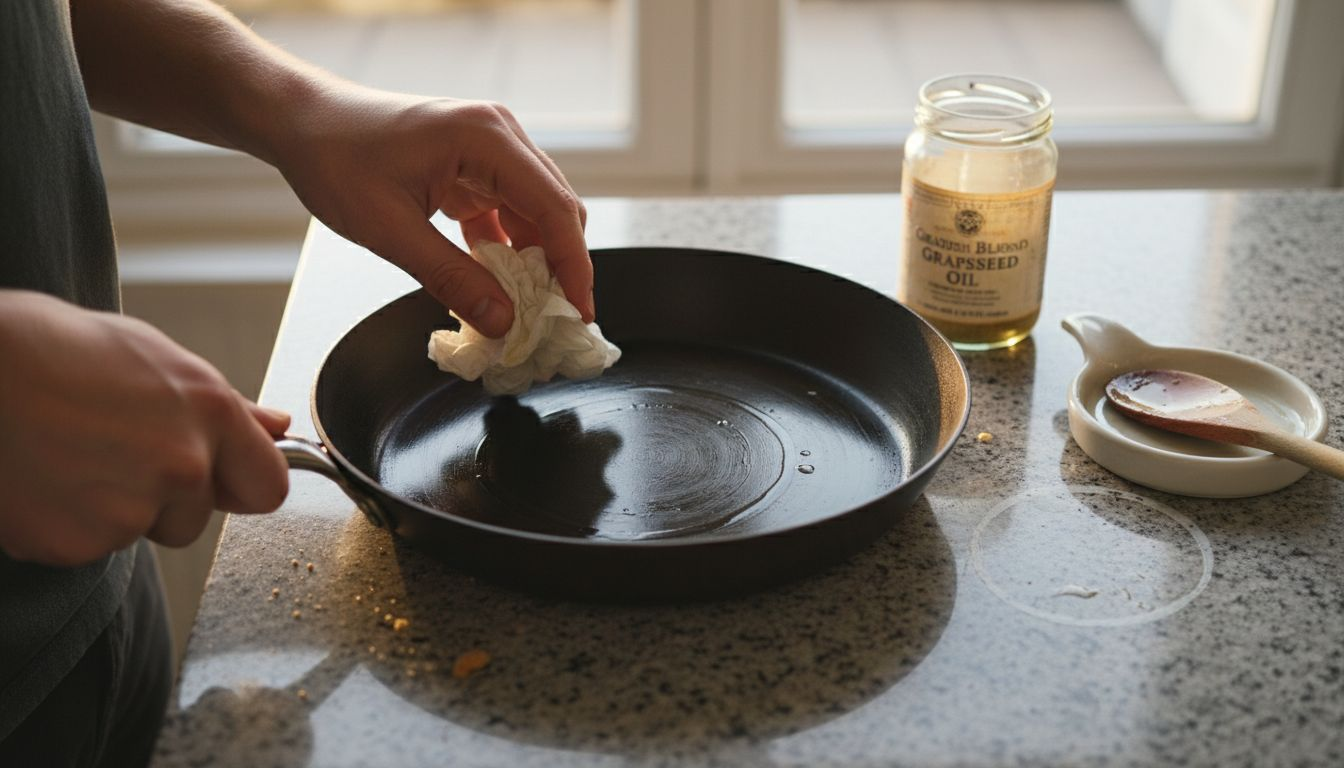
Pro tip: Always choose unsaturated oils with high smoke points for seasoning, as they polymerise more effectively and create a more durable nonstick surface.
Here’s a quick reference for selecting the best oil to season your carbon steel pan:
| Oil Type | Smoke Point (°C) | Polymerisation Quality | Recommended For Seasoning |
|---|---|---|---|
| Grapeseed oil | 215 | Excellent | Yes |
| Avocado oil | 270 | Very Good | Yes |
| Flaxseed oil | 225 | Exceptional | Sometimes |
| Olive oil | 190 | Fair | No (low smoke point) |
| Vegetable oil | 205 | Good | Yes |
Step 3: Maintain Daily with Proper Use and Cleaning
Daily maintenance of your carbon steel pan is essential for preserving its performance and extending its lifespan. Proper care ensures your pan remains a reliable cooking companion that develops a beautiful, functional seasoning over time.
After each cooking session, clean your pan using gentle washing techniques that protect its seasoning. Here are the key steps for daily maintenance:
- Use warm water and a soft cloth or sponge
- Avoid harsh detergents or abrasive scrubbers
- Clean immediately after cooking to prevent food residue hardening
- Dry thoroughly with a clean kitchen towel
- Apply a light coat of cooking oil after drying
Consistent, gentle care is the secret to a perfectly seasoned carbon steel pan.
Pay special attention to removing any food particles without scrubbing away your hard-earned seasoning. For stubborn bits, use a soft silicone scraper or gentle wooden utensil to preserve the pan’s surface.
Pro tip: Create a dedicated drying and oiling station in your kitchen with a clean cloth and neutral oil, making post-cooking maintenance a quick and effortless routine.
Step 4: Strengthen Nonstick Surface Through Regular Use
Developing a superior nonstick surface in your carbon steel pan is an art that comes with consistent, mindful cooking. The more you use your pan, the more naturally nonstick it becomes.
Your pan’s surface gradually transforms through a process of polymerisation and surface development, creating a remarkable cooking companion. Here are strategies to enhance your pan’s nonstick properties:
- Cook with fatty foods during initial uses
- Use moderate heat to prevent burning
- Avoid cooking acidic foods in new pans
- Use cooking oils generously during early cooking sessions
- Clean gently after each use to preserve developing seasoning
The secret to a perfect nonstick surface is patience and consistent use.
Fatty foods like bacon, sausages, and well-oiled meats are particularly effective at building a robust seasoning layer. These foods help fill microscopic pores in the metal, creating a smoother, more hydrophobic surface that naturally resists sticking.
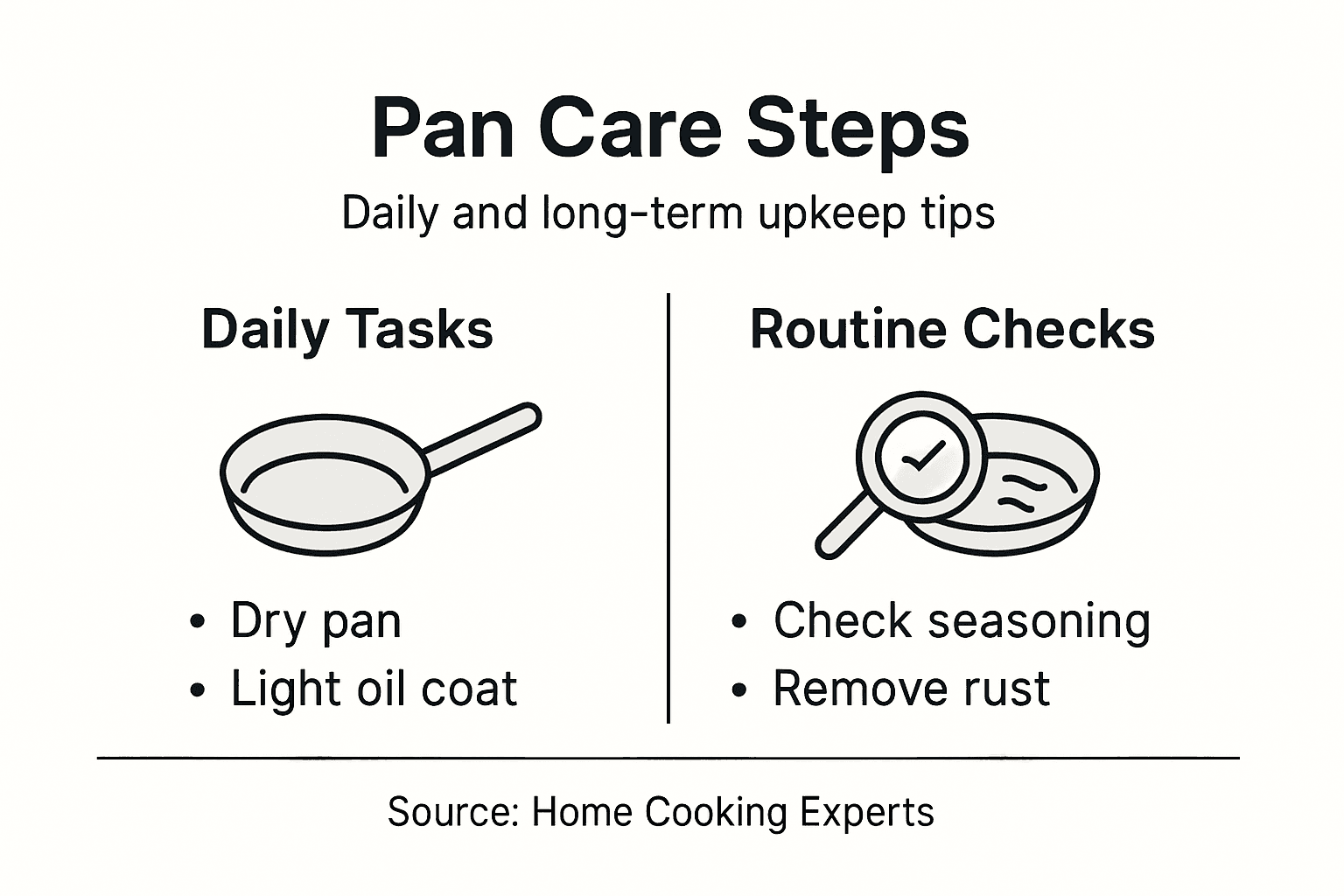
Pro tip: Rotate between different types of fatty foods during your pan’s early cooking stages to develop a more comprehensive and durable seasoning layer.
Step 5: Inspect and Re-Season for Optimal Results
Periodic inspection and re-seasoning are critical to maintaining your carbon steel pan’s performance and preventing potential damage. Understanding when and how to refresh your pan’s protective layer will ensure its long-term cooking excellence.
To determine if your pan needs re-seasoning, carefully evaluate its surface characteristics) for signs of wear or deterioration. Look for these key indicators:
- Visible rust spots or discolouration
- Patchy or uneven seasoning layer
- Food starting to stick more frequently
- Dull or dry-looking surface
- Areas where the black seasoning has worn away
A well-maintained pan tells a story of countless delicious meals and careful preservation.
When you notice these signs, it’s time to strip the old seasoning and start fresh. Clean the pan thoroughly using coarse salt or steel wool to remove any damaged seasoning, then dry completely and apply a new protective layer of high-smoke-point oil.
Pro tip: Always perform re-seasoning in a well-ventilated area and wear heat-resistant gloves to protect yourself during the process.
Elevate Your Cooking Experience with Expertly Crafted Carbon Steel Pans
Maintaining your carbon steel pan to achieve lasting performance can be a challenge that requires patience, proper seasoning, and careful cleaning. If you are seeking a cookware solution that not only meets these needs but excels in durability and natural nonstick qualities, explore our Carbon Steel Collection | Brass&Steel. Our pans are forged from a single piece of carbon steel to ensure seamless strength and exceptional heat responsiveness, perfect for the artisan cook looking to build and maintain an heirloom-quality tool.
Discover how investing in premium cookware simplifies daily maintenance while enhancing your pan’s natural nonstick surface. Visit Brass&Steel today to find the ideal 27 cm or 30 cm carbon steel sauté pan for your kitchen. Act now to transform your cooking routine with professional-quality pans designed for lasting performance and a lifetime of delicious meals.
Frequently Asked Questions
How do I prepare my carbon steel pan before its first use?
To prepare your carbon steel pan, wash it thoroughly with warm, soapy water to remove any manufacturing residues. Dry the pan completely using a lint-free towel before applying a thin layer of high-smoke-point oil for seasoning.
What is the best oil to use for seasoning my carbon steel pan?
Select an oil with a high smoke point, such as grapeseed or avocado oil, for seasoning your carbon steel pan. Apply a microscopic layer of oil and heat the pan in the oven at 250°C (480°F) for about 30 minutes to create a durable seasoning layer.
How should I clean my carbon steel pan after cooking?
Clean your carbon steel pan using warm water and a soft cloth or sponge immediately after cooking. Avoid harsh detergents and abrasive scrubbers to preserve the seasoning, and dry the pan thoroughly before applying a light coat of oil.
How do I know when to re-season my carbon steel pan?
Re-season your carbon steel pan when you notice rust spots, uneven seasoning, or if food begins to stick more frequently. If the surface looks dull or dry, it’s time to refresh the seasoning by stripping the old layer and applying a new coat of oil.
Can I use acidic foods when cooking in my new carbon steel pan?
Avoid cooking acidic foods in your new carbon steel pan, especially during the initial uses. Acidic ingredients can break down the seasoning layer, so wait until the pan has developed a robust patina through continued use before introducing these foods.