Daily care for carbon steel pans: keep your cookware flawless
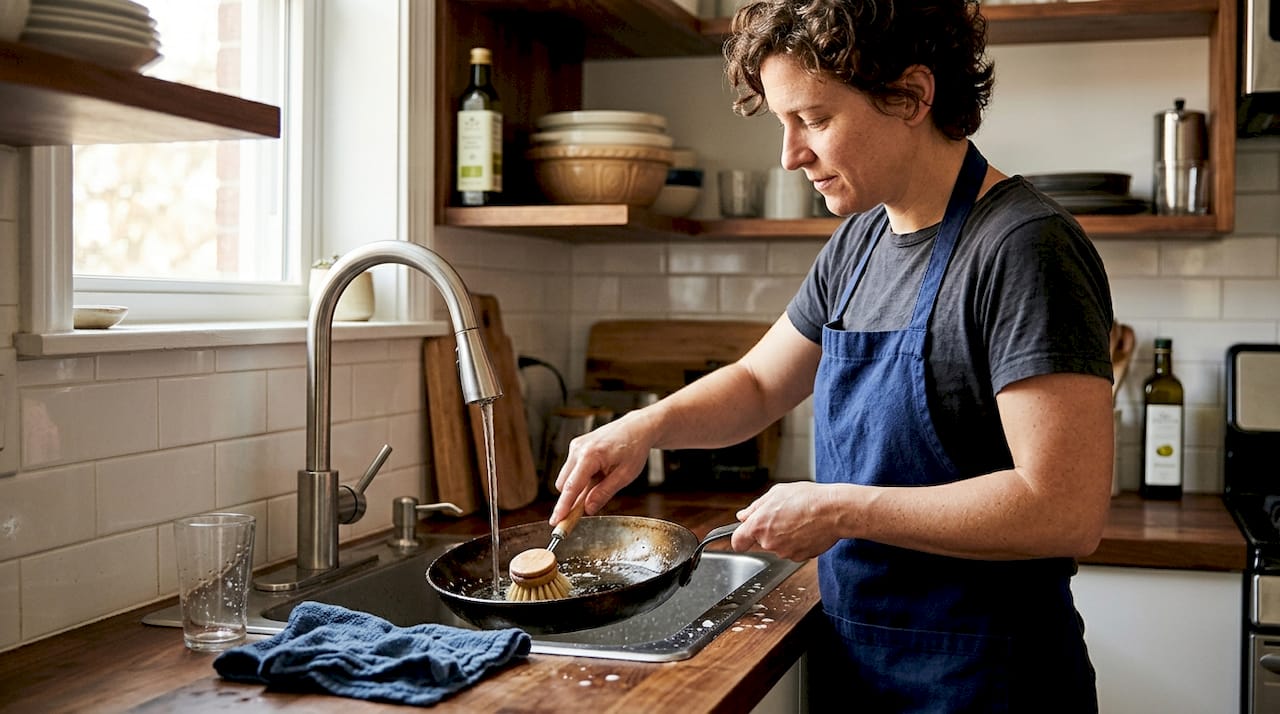
A sticky surface or a patch of rust on your carbon steel pan can feel like a disaster, but it rarely is. The truth is that most problems come down to a handful of skipped steps after cooking. Carbon steel is one of the most rewarding materials in the kitchen precisely because it responds so directly to how you treat it. Get the daily routine right and your pan will cook better every single month, building a natural nonstick surface that no synthetic coating can match. This guide covers everything: the right tools, the exact steps, the mistakes to avoid, and how to fix problems when they arise.
Table of Contents
- Understanding carbon steel pans and why daily care matters
- Tools and essentials for daily care
- Step-by-step daily routine for carbon steel pans
- Common mistakes and pitfalls to avoid
- Troubleshooting: dealing with rust, sticky spots, and uneven patina
- How daily care pays off: what to expect over time
- Find the right tools and pans for your kitchen
- Frequently asked questions
Key Takeaways
| Point | Details |
|---|---|
| Consistent daily care | Simple daily routines keep carbon steel pans nonstick and rust-free. |
| The right tools help | A handful of basic items make cleaning easy without damaging seasoning. |
| Avoid common errors | Skipping proper drying or using harsh chemicals can cause rust and loss of patina. |
| Easy troubleshooting | Most rust or stickiness problems can be quickly fixed at home with basic steps. |
| Long-lasting results | Maintained pans develop a beautiful patina and last for generations. |
Understanding carbon steel pans and why daily care matters
Carbon steel sits in a fascinating middle ground between cast iron and stainless steel. It heats up faster than cast iron, responds more quickly to temperature changes, and develops a natural nonstick patina through a process called seasoning. Seasoning is simply polymerised oil, layers of fat that have bonded to the steel surface through heat, creating a smooth, dark coating that improves with every cook.
Understanding carbon steel pan basics helps set realistic expectations. The patina does not appear overnight. It builds gradually, and daily care is what keeps it intact between uses. Without that care, moisture causes rust, acidic foods strip the layers, and the surface becomes uneven and sticky.
Here is what a well-maintained carbon steel pan offers:
- Exceptional heat retention and responsiveness on any hob, including induction
- A natural nonstick surface free from PTFE and PFOA
- Durability that outlasts most other cookware materials
- Flavour-neutral cooking with no chemical off-tastes
- A surface that genuinely improves the more you cook with it
As Serious Eats notes, seasoning builds naturally with use, and daily care maintains the patina far better than full re-seasoning each time. Pans improve over years, becoming progressively more nonstick. Following carbon steel care best practices from the start means you spend less time fixing problems and more time cooking.
“A carbon steel pan is not a piece of equipment you maintain. It is a surface you cultivate. Every meal adds to it.”
Tools and essentials for daily care
Knowing why daily care makes such a difference, the next step is assembling your cleaning kit. The good news is that you need very little, and most of it is already in your kitchen.
| Tool | Purpose | Essential? |
|---|---|---|
| Chainmail scrubber | Removes stuck food without stripping seasoning | Highly recommended |
| Coarse salt | Gentle abrasive for stubborn residue | Optional but useful |
| Paper towels or lint-free cloth | Drying and oiling the surface | Essential |
| High-smoke-point oil | Protecting the surface after each clean | Essential |
| Soft sponge | Light daily cleaning | Essential |
| Stiff brush | Loosening food debris | Optional |
What you should avoid is just as important. Dishwashers strip seasoning completely and expose bare steel to prolonged moisture. Soaking the pan in water, even for a few minutes, invites rust. Harsh detergents and steel wool (except for rust removal) damage the patina you have worked to build.
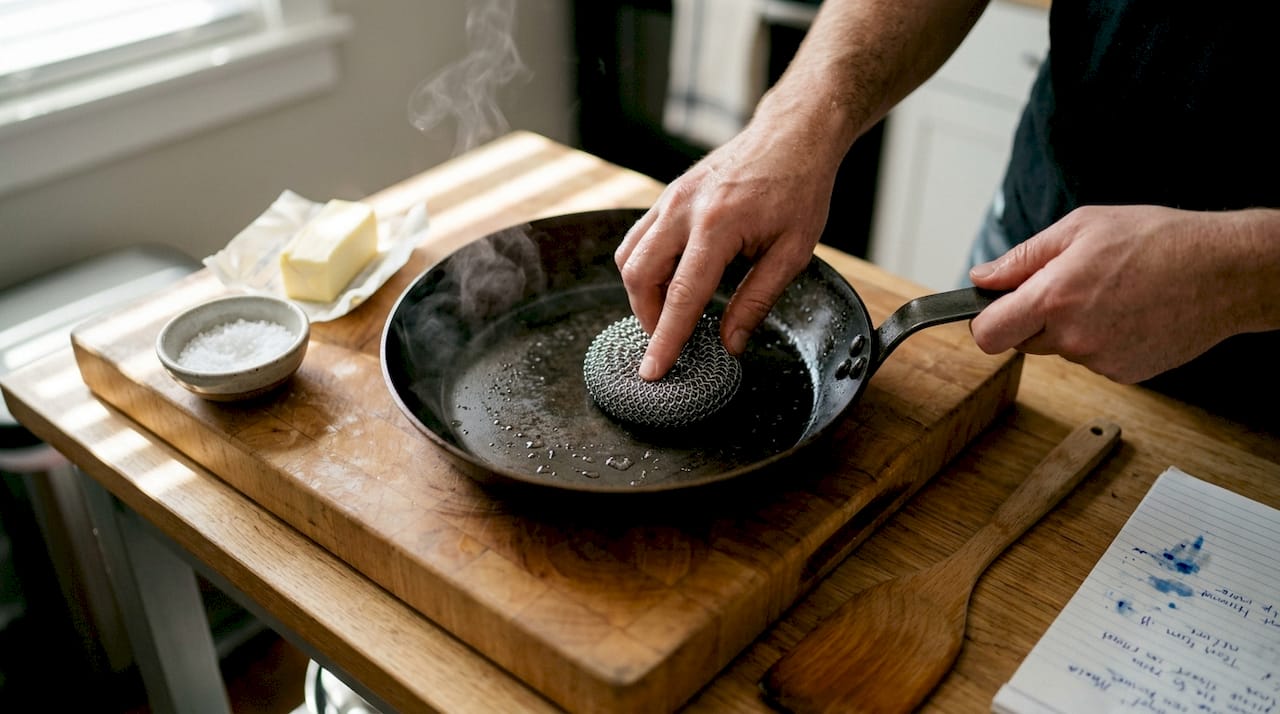
For stuck-on food, the safest approach is to clean a carbon steel pan while it is still warm, using hot water and a chainmail scrubber or coarse salt. According to Serious Eats, daily cleaning involves rinsing with hot water while warm, scrubbing gently, drying thoroughly, and applying a thin layer of high-smoke-point oil. That is the entire routine. Before you start, check our seasoning checklist to make sure your pan’s base layers are solid enough to handle regular cooking.
Step-by-step daily routine for carbon steel pans
With supplies ready, let’s walk through the practical daily routine. The key is consistency. Five minutes after every cook is all it takes.
- Rinse while warm. As soon as you finish cooking, rinse the pan under hot water. Do not let it sit.
- Scrub gently. Use a chainmail scrubber, soft sponge, or coarse salt for any stuck bits. Work in circular motions.
- Rinse again. Make sure all food particles and salt are gone.
- Dry with a towel. Pat the pan dry immediately. Do not leave it to air dry.
- Heat on the hob. Place the pan on a medium flame for one to two minutes to evaporate any remaining moisture. You will see it stop steaming.
- Apply a thin oil coat. Remove from heat, add a few drops of high-smoke-point oil, and wipe it across the entire surface with a paper towel. The pan should look almost dry, not greasy.
- Store in a dry place. Hang it or store it away from moisture.
For stuck-on food that resists scrubbing, add a small amount of water to the pan and bring it to a gentle boil on the hob. The residue will loosen within a minute or two. Drain, scrub, and continue with the routine above.
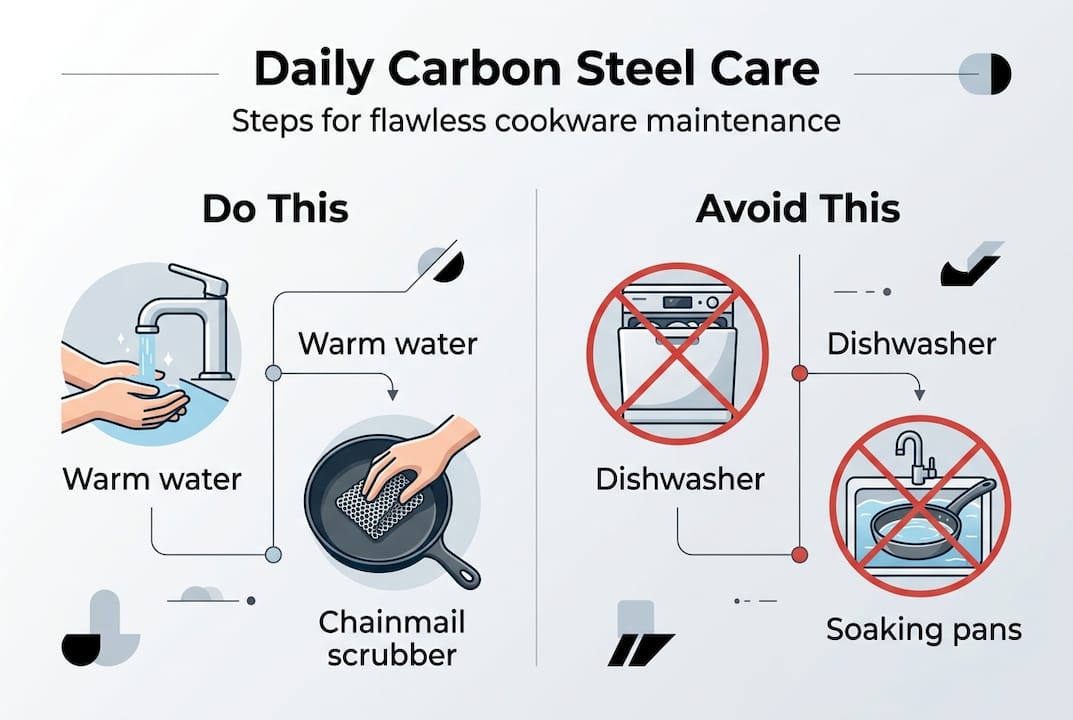
Pro Tip: Perform the entire routine while the pan is still warm from cooking. Warm steel releases food more easily, dries faster, and absorbs oil more evenly. It also makes the whole process feel effortless rather than a chore.
Regarding soap: occasional soap use is safe, but manufacturers like de Buyer and Made In advise avoiding it after the initial wash to prevent seasoning degradation. For most daily cleans, hot water and a scrubber are all you need. When you do use soap, use a small amount and rinse thoroughly. Also, preheat gradually on medium-low for two to three minutes before adding oil or food to avoid thermal shock and sticking. For full guidance on keeping your pan in top condition, our carbon steel pan upkeep guide goes deeper on every step.
Common mistakes and pitfalls to avoid
Even with good intentions, it is easy to stumble. Here is what to watch for and fix fast.
The most common mistakes:
- Leaving the pan to air dry instead of towel drying and heating it
- Putting it in the dishwasher, even once
- Storing the pan while still damp or with the lid on in a humid cupboard
- Using too much oil after cleaning, which leads to a sticky, gummy surface
- Cooking acidic foods like tomatoes or citrus in a new or poorly seasoned pan
- Soaking the pan after cooking instead of cleaning it immediately
Acidic ingredients are a particular trap for new carbon steel owners. Tomato sauces, wine reductions, and lemon-based dishes are all acidic enough to strip seasoning from a pan that has not yet built up several solid layers. Avoid prolonged water exposure and acidic foods in new or poorly seasoned pans, as these strip seasoning or cause rust. Once your pan has a deep, dark patina after several months of regular use, it handles acidic foods much better.
“Even a few drops of water left on bare steel overnight can spark rust by morning. Drying is not optional.”
If you have already made one of these mistakes, do not panic. A sticky surface usually means too much oil was applied. Scrub it back with a chainmail scrubber and re-season with a thinner coat. Rust spots can be scrubbed away and the pan re-seasoned. Our guide on how to prevent rust tips covers recovery steps in detail.
Troubleshooting: dealing with rust, sticky spots, and uneven patina
If you do encounter issues, most are quickly handled at home. Here is a practical reference:
| Issue | Symptoms | Likely cause | Best fix |
|---|---|---|---|
| Surface rust | Orange or brown spots | Stored wet or air dried | Scrub with steel wool or salt, dry, re-season |
| Sticky surface | Food clings, gummy feel | Too much oil applied | Scrub hard, re-season with thinner coat |
| Uneven patina | Blotchy dark and light areas | Normal early-stage use | Continue cooking, patina evens out over time |
| Flaking coating | Dark bits in food | Seasoning applied too thick | Strip and re-season from scratch |
For rust, the fix is straightforward. Scrub with steel wool, a salt scrub, or a 50/50 vinegar and water solution, then dry thoroughly and re-season. Rust is cosmetic and easily fixed. It does not mean your pan is ruined.
Uneven patina is one of the most misunderstood aspects of carbon steel. New pans often look blotchy, with dark patches where you cook most and lighter areas around the edges. This is completely normal. It reflects how heat distributes across your specific hob. Over time, the patina evens out and deepens across the whole surface.
Pro Tip: If you live in a humid European climate, apply a slightly more generous oil coat before storing your pan, particularly in summer. Humidity accelerates rust on any exposed steel. Our guides on how to maintain pan from rust and how to repair seasoning walk through every scenario.
How daily care pays off: what to expect over time
Once you master maintenance and troubleshooting, the transformation of your pan will speak for itself. The rewards of consistent daily care are tangible and cumulative.
- Months one to three: The patina begins to darken. Foods start releasing more easily. You will notice eggs and fish stick less than they did at first.
- Months four to twelve: The surface becomes noticeably smoother and more uniform. Cooking fatty foods like bacon or sausages accelerates the process significantly.
- Year one and beyond: The pan performs like a natural nonstick surface. Re-seasoning becomes rare. The patina is robust enough to handle occasional acidic dishes without damage.
- Long term: Well-maintained pans last 100+ years, and professional-grade carbon steel cookware from brands like Matfer Bourgeat and de Buyer is favoured by chefs precisely for this longevity.
The pan also becomes more forgiving over time. Early on, every mistake shows. After a year of regular cooking and proper care, the seasoning is thick enough to absorb minor lapses without losing performance. That resilience is the real reward. For a structured approach to building that resilience, our step-by-step rust avoidance guide is a useful companion.
Find the right tools and pans for your kitchen
Building a daily care habit is far easier when you start with a pan that is designed to be maintained. Brass & Steel crafts carbon steel sauté pans forged from a single piece of steel, with no rivets or welds to trap food or complicate cleaning. The 27 cm pan at €99 suits everyday cooking, while the 30 cm pan at €119 handles larger family meals with ease.
Both pans are induction compatible, free from PTFE and PFOA, and built to develop a rich, natural nonstick patina with exactly the kind of daily care this guide describes. When the pan itself is engineered for longevity, the routine becomes second nature. Explore our range of high-quality carbon steel pans and find the right fit for your kitchen and cooking style. The right pan, cared for properly, is the last pan you will ever need to buy.
Frequently asked questions
Can I use soap to clean my carbon steel pan every day?
Occasional soap use is safe, but frequent use may gradually strip your seasoning. For most daily cleans, hot water and a scrubber preserve the patina far better.
What oil should I use after cleaning?
Apply a thin layer of a high-smoke-point oil such as grapeseed, sunflower, or avocado oil after each clean. Avoid olive oil and animal fats, which can turn rancid.
How can I fix rust on my carbon steel pan?
Scrub with steel wool or a salt and vinegar solution, dry the pan completely on the hob, and re-season with several thin oil layers. Rust is cosmetic and no cause for alarm.
Is uneven seasoning or patina a problem?
No. Uneven patina is normal in the first year and simply reflects how heat distributes across your hob. It evens out naturally with continued use.
How long will a well-cared-for carbon steel pan last?
Well-maintained pans last 100+ years and can genuinely be passed down through generations. Consistent daily care is the only investment required.
Recommended
- Essential Upkeep for Carbon Steel Pans for Lasting Performance – Brass & Steel
- Carbon Steel Surface Care: Enhancing Pan Durability – Brass & Steel
- Essential Carbon Steel Care Routines for Lasting Performance – Brass & Steel
- Avoiding Rust on Pans: Step-by-Step Care for Carbon Steel – Brass & Steel
- Hardware Care & Maintenance: Metal Polish & Restoration Products