Best carbon steel pans: expert picks for European kitchens
Selecting the ideal carbon steel pan can feel overwhelming when faced with dozens of options across European retailers. You want cookware that delivers professional heat responsiveness, builds a lasting nonstick surface, and handles daily cooking without excessive weight. This guide cuts through the confusion by presenting essential selection criteria and reviewing the top carbon steel pans available to European home cooks. We will examine thickness, weight, seasoning types, and brand performance to help you choose a pan that suits your kitchen and cooking style for years to come.
Table of Contents
- Key takeaways
- How to choose the best carbon steel pan
- Top picks: leading carbon steel pans for your kitchen
- Comparing the top carbon steel pans side by side
- Which carbon steel pan suits your cooking style?
- Enhance your kitchen with premium carbon steel pans from Brass & Steel
- What are the best carbon steel pans for European home cooks?
Key Takeaways
| Point | Details |
|---|---|
| Excellent heat responsiveness | Carbon steel pans respond quickly to temperature changes, delivering precise heat control for delicate proteins. |
| Thickness two to three millimetres | A wall thickness of two to three millimetres offers balanced heat response without excessive weight. |
| Weight under 1.6 kilograms | Keeping the pan under 1.6 kg aids manoeuvrability during extended cooking and makes tossing easier. |
| Flared sides improve control | Pans with flared edges enhance sauteing, stirring and plate transfer with less spillage. |
| Induction friendly base | Ensure the base is flat and magnetic for reliable heating on induction hobs. |
How to choose the best carbon steel pan
Choosing the right carbon steel pan begins with understanding the specifications that influence daily performance. Thickness matters significantly. Carbon steel pans (2-3mm thick) outperform cast iron for home cooks with better weight and heat response. Pans in this range heat quickly, distribute warmth evenly, and respond immediately when you adjust the temperature. Thinner pans heat faster but may develop hot spots, whilst thicker options retain heat longer but feel heavier and slower to respond.
Weight directly affects how you cook. A pan under 1.6 kg allows you to toss vegetables, flip crêpes, and manoeuvre comfortably during extended cooking sessions. Heavier pans tire your wrist and make quick adjustments difficult. Look for pans with flared sides rather than straight walls. Flared edges improve sautéing, stir-frying, and sliding food onto plates without spills. The angle makes tossing easier and gives you better control over ingredients.
Seasoning type shapes your initial experience and long-term maintenance. Pre-seasoned pans arrive with a factory-applied patina that provides immediate nonstick properties. You can start cooking right away without spending hours building layers. Traditional unseasoned pans require you to season a carbon steel pan through multiple oven cycles before first use. This extra effort pays off with a more durable, resilient surface that improves over time. Unseasoned pans also let you control the seasoning process precisely, ensuring each layer bonds correctly.
Pro Tip: Avoid cooking acidic foods like tomatoes or citrus for longer than 15 minutes in your carbon steel pan. Acids break down seasoning and can impart metallic flavours. Save these dishes for stainless steel or enamel cookware.
Consider how you will use the pan daily. If you cook on induction hobs, verify the pan base is flat and magnetic. Most carbon steel pans work beautifully on induction, but warped or uneven bases cause poor contact and inefficient heating. Check the heat responsiveness of carbon steel pans to understand how quickly your chosen model reacts to temperature changes. Fast response prevents overcooking delicate proteins and gives you precise control over searing.
Handle design affects comfort and safety. Look for handles that stay cool on the stovetop but remember they will heat up in the oven or over open flames. Riveted handles can trap food particles, making cleaning harder. Seamless, welded handles offer smoother surfaces and easier maintenance. Finally, follow a carbon steel seasoning checklist to maintain your pan properly. Regular seasoning after each use builds layers that protect against rust and improve nonstick performance.
Top picks: leading carbon steel pans for your kitchen
Mauviel M’Steel stands out as a top recommendation for European home cooks seeking professional performance without excessive weight. Mauviel M’Steel is top recommended for wide surface, even heating, light weight and excellent food release. At approximately 1.5 kg for a 28 cm model, the pan feels balanced and comfortable during extended cooking. The broad cooking surface accommodates multiple chicken breasts or a generous portion of vegetables. The 2.5mm steel thickness heats rapidly whilst maintaining enough mass to hold temperature when you add cold ingredients. Users consistently report smooth seasoning results and reliable nonstick performance after just a few cooking sessions.
De Buyer Mineral B series has earned a loyal following among professional chefs and serious home cooks across Europe. De Buyer Mineral B series excels in professional kitchens with superior patina build, durable and slightly heavier for heat retention. The 3mm steel construction feels more substantial than lighter competitors, delivering exceptional heat retention for high-temperature searing. The beeswax finish protects the pan during shipping and provides a head start on seasoning. Cooks appreciate how the thicker steel prevents warping even after years of hard use. The slightly heavier weight (around 1.8 kg for a 28 cm pan) trades some manoeuvrability for superior heat stability.
Merten & Storck Pre-Seasoned pans offer excellent value for European buyers who want quality without premium pricing. These pans arrive with a factory seasoning that lets you cook immediately. The 2mm steel feels lighter than De Buyer models, making them ideal for cooks who prioritise easy handling. The pre-seasoned surface performs well with eggs and delicate fish from the first use. Availability across UK and European retailers makes purchasing and warranty support straightforward. The slightly thinner construction heats faster but requires more attention to prevent hot spots.
Mauviel M’Steel provides the best balance of weight, surface area, and seasoning ease for most home cooks. De Buyer Mineral B suits those willing to manage extra weight for superior heat retention and professional-grade durability. Merten & Storck Pre-Seasoned appeals to beginners and budget-conscious cooks who want immediate nonstick performance without extensive seasoning work.
“For home cooks seeking versatility and longevity, Mauviel and De Buyer represent the gold standard in carbon steel cookware. Both brands deliver consistent heating, durable construction, and surfaces that improve with proper care.”
All three options work beautifully on carbon steel pans on induction hobs when used with moderate heat settings. Check the Mauviel M’Steel features and De Buyer Mineral B durability to understand how each pan performs under different cooking conditions.
Comparing the top carbon steel pans side by side
Understanding the specific differences between leading carbon steel pans helps you match features to your cooking priorities and budget. The table below compares key specifications that affect daily performance and long-term satisfaction.
| Brand | Thickness | Weight (28cm) | Seasoning Type | Price Range | Induction Compatible |
|---|---|---|---|---|---|
| Mauviel M’Steel | 2.5mm | 1.5 kg | Pre-seasoned | €80-€120 | Yes |
| De Buyer Mineral B | 3mm | 1.8 kg | Beeswax coating | €60-€90 | Yes |
| Merten & Storck | 2mm | 1.3 kg | Pre-seasoned | €50-€70 | Yes |
| Matfer Bourgeat | 2.5mm | 1.6 kg | Unseasoned | €55-€85 | Yes |
Thickness directly influences how the pan heats and retains warmth. Thicker pans like De Buyer hold temperature better when you add cold ingredients, making them excellent for searing multiple steaks consecutively. Thinner options like Merten & Storck heat faster and feel lighter, which benefits cooks who frequently toss ingredients or work with delicate foods requiring quick temperature adjustments.
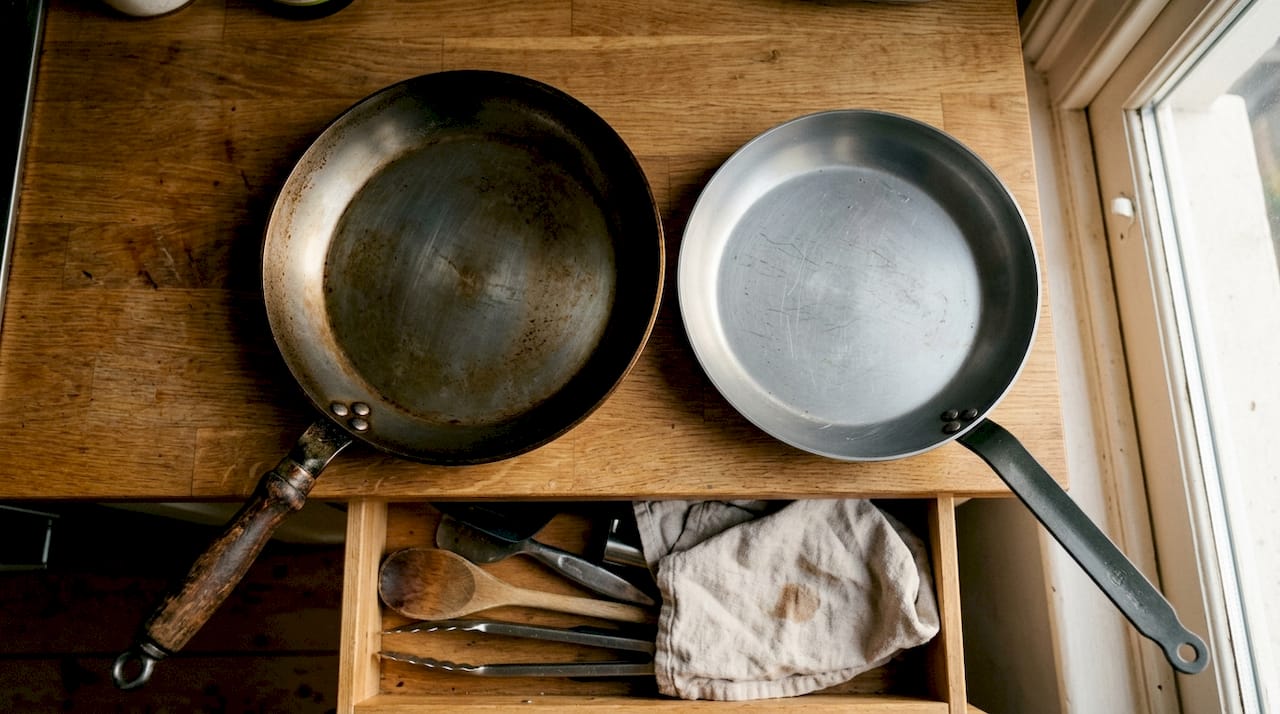
Weight affects comfort during cooking. If you regularly prepare dishes that require flipping or tossing, lighter pans reduce wrist fatigue. Heavier models provide stability on the hob and resist tipping when you press down on handles. Pre-seasoned pans preferred by novices whilst traditional pans favour long-term patina and durability despite learning curve. Pre-seasoned options let you start cooking immediately, whilst unseasoned pans give you complete control over building your seasoning layers.
Pro Tip: Thickness and weight create a trade-off between heat retention and manoeuvrability. Choose thicker pans (3mm) if you prioritise searing and heat stability. Select thinner options (2-2.5mm) if you value easy handling and quick temperature response.
Price differences reflect manufacturing quality, brand reputation, and included features. Mauviel commands premium pricing due to French craftsmanship and consistently smooth surfaces. De Buyer offers professional performance at mid-range prices. Merten & Storck and Matfer Bourgeat provide excellent value for cooks who want reliable performance without luxury branding.
All models listed work on induction hobs, but performance varies based on base flatness and thickness. Thicker bases maintain better contact with induction elements, improving efficiency and even heating. Follow seasoning a carbon steel pan perfectly to ensure your chosen pan develops proper nonstick properties regardless of initial seasoning type. Understanding pre-seasoned versus traditional pans helps you set realistic expectations for initial performance and maintenance requirements.
Which carbon steel pan suits your cooking style?
Your cooking habits and kitchen setup should guide your final pan selection. Consider how often you toss ingredients, what types of dishes you prepare most frequently, and whether you cook on induction hobs. These factors determine which pan specifications will serve you best.
Pan weight and size directly affect your cooking experience. If you regularly prepare stir-fries, crêpes, or dishes requiring frequent tossing, prioritise pans under 1.6 kg. Lighter models reduce wrist strain during extended cooking sessions and give you better control over ingredient movement. Heavier pans excel when you need stable heat retention for searing thick steaks or cooking dishes that sit undisturbed on the hob.
Seasoning type shapes your initial experience and ongoing maintenance. Pre-seasoned pans suit beginners who want to start cooking immediately without spending hours building seasoning layers. The factory-applied patina provides decent nonstick properties from day one, though it may not match the durability of a well-maintained traditional seasoning. Traditional unseasoned pans reward patience with stronger, more resilient surfaces that improve continuously over months and years. For versatility and longevity, pairing a 25-30 cm pan with proper care is ideal.
Induction compatibility matters significantly in European kitchens where induction hobs have become standard. Most carbon steel pans work on induction, but base flatness affects performance. Warped or uneven bases create poor contact with induction elements, leading to inefficient heating and hot spots. Check that your chosen pan has a flat, smooth base before purchasing. Start with moderate power settings on induction to prevent warping from thermal shock.
Avoid pans over 1.6 kg if you plan frequent tossing or have limited upper body strength. The extra weight becomes noticeable quickly during active cooking. Conversely, if you primarily sear proteins or prepare dishes that simmer undisturbed, heavier pans provide better heat stability and more even cooking. Review caring for your carbon steel pan to understand the maintenance commitment each option requires. Proper care transforms any quality carbon steel pan into a lifetime cooking companion.
Enhance your kitchen with premium carbon steel pans from Brass & Steel
Having explored the criteria and options for choosing your ideal carbon steel pan, you may wonder where to find quality cookware backed by expert guidance. Brass & Steel offers a curated collection of high-quality carbon steel pans sourced from Europe, designed specifically for serious home cooks who value performance and durability. Each pan in our range undergoes rigorous quality control to ensure it meets professional standards for thickness, flatness, and construction.
Our shop premium carbon steel pans features models optimised for induction hobs, which dominate modern European kitchens. You will find detailed specifications, care instructions, and honest comparisons to help you select the right pan for your cooking style. Beyond products, we provide comprehensive resources on carbon steel pan seasoning guide to help you build and maintain the perfect nonstick surface. Whether you are new to carbon steel or looking to upgrade your current cookware, our expert guidance ensures you get the most from your investment.
What are the best carbon steel pans for European home cooks?
How do I season a new carbon steel pan properly?
Wash your new pan with warm soapy water, dry it completely, then apply a thin layer of high-smoke-point oil like grapeseed or avocado. Heat the pan in a 250°C oven for 30 minutes, wipe away excess oil, and repeat this process two to three times to build a strong base seasoning.
Why does my carbon steel pan feel sticky after seasoning?
Stickiness indicates you applied too much oil during seasoning. The excess oil polymerises into a tacky layer rather than a smooth patina. Scrub the pan with hot water and a stiff brush, dry it thoroughly, then re-season using a much thinner oil layer.
Can I cook acidic foods in my carbon steel pan?
You can cook acidic foods briefly, but limit exposure to under 15 minutes. Prolonged contact with tomatoes, citrus, or vinegar breaks down seasoning and can impart metallic flavours. Use stainless steel or enamel cookware for dishes requiring extended acidic cooking.
Will my carbon steel pan work on an induction hob?
Yes, carbon steel pans work excellently on induction hobs due to their magnetic properties. Start with moderate power settings when the pan is cold or empty to prevent warping from rapid temperature changes. Ensure the pan base is flat for optimal contact with the induction element.
How do I restore seasoning if my pan develops rust spots?
Scrub away rust with steel wool or a stiff brush, wash and dry the pan completely, then follow the full seasoning process again. Apply thin layers of oil and bake at high temperature multiple times. Prevent future rust by drying your pan immediately after washing and applying a light oil coat. Check our guide on repair seasoning carbon steel pan for detailed restoration steps.