Master ways to season a pan for perfect cooking in 2026

If your pan sticks to every egg or develops rust spots after a week, you’re not alone. Many home cooks struggle with carbon steel pans that seem impossible to maintain. The secret lies in proper seasoning, a process that transforms bare metal into a naturally non-stick surface. This guide walks you through proven techniques to season your pan correctly, avoid common mistakes, and enjoy effortless cooking for years. Whether you’re new to carbon steel or looking to improve your technique, you’ll find practical methods that work.
Table of Contents
- What You Need To Season A Carbon Steel Pan
- Step-By-Step Methods To Season Your Pan
- Common Mistakes To Avoid And Troubleshooting Tips
- How To Tell If Your Pan Is Properly Seasoned
- Discover More About Carbon Steel Pans
- FAQ
Key takeaways
| Point | Details |
|---|---|
| Seasoning creates protection | A polymerised oil layer prevents rust and provides natural non-stick properties |
| Multiple methods work | Oven and stovetop techniques both deliver excellent results when done properly |
| Thin coats matter most | Applying very thin oil layers prevents sticky residue and builds durable seasoning |
| Maintenance extends lifespan | Regular light oiling and proper cleaning preserve seasoning for decades |
| Visual cues confirm success | A smooth, dark, matte finish indicates proper seasoning development |
What you need to season a carbon steel pan
Before you start seasoning, gathering the right materials makes the process straightforward and effective. Seasoning requires specific types of oils and suitable equipment for best results, so choosing wisely saves time and frustration.
Your oil selection directly impacts seasoning quality. High smoke point oils polymerise better under heat, creating stronger bonds with the metal surface. Grapeseed oil works brilliantly at 216°C, whilst avocado oil handles temperatures up to 271°C. Sunflower and canola oils also perform well for seasoning. Avoid olive oil and animal fats, which smoke at lower temperatures and create uneven, sticky coatings.
Essential equipment checklist:
- Carbon steel pan (clean and dry)
- High smoke point oil (grapeseed, avocado, sunflower, or canola)
- Kitchen towel or lint-free cloth
- Oven or stovetop heat source
- Oven mitts for safe handling
- Mild washing-up liquid for initial cleaning
Preparing your pan properly sets the foundation for successful seasoning. New pans often arrive with a light protective coating that must be removed. Wash thoroughly with warm, soapy water and a non-abrasive sponge. Dry completely with a towel, then place on low heat for two minutes to evaporate any remaining moisture. This step prevents water from interfering with oil adhesion.
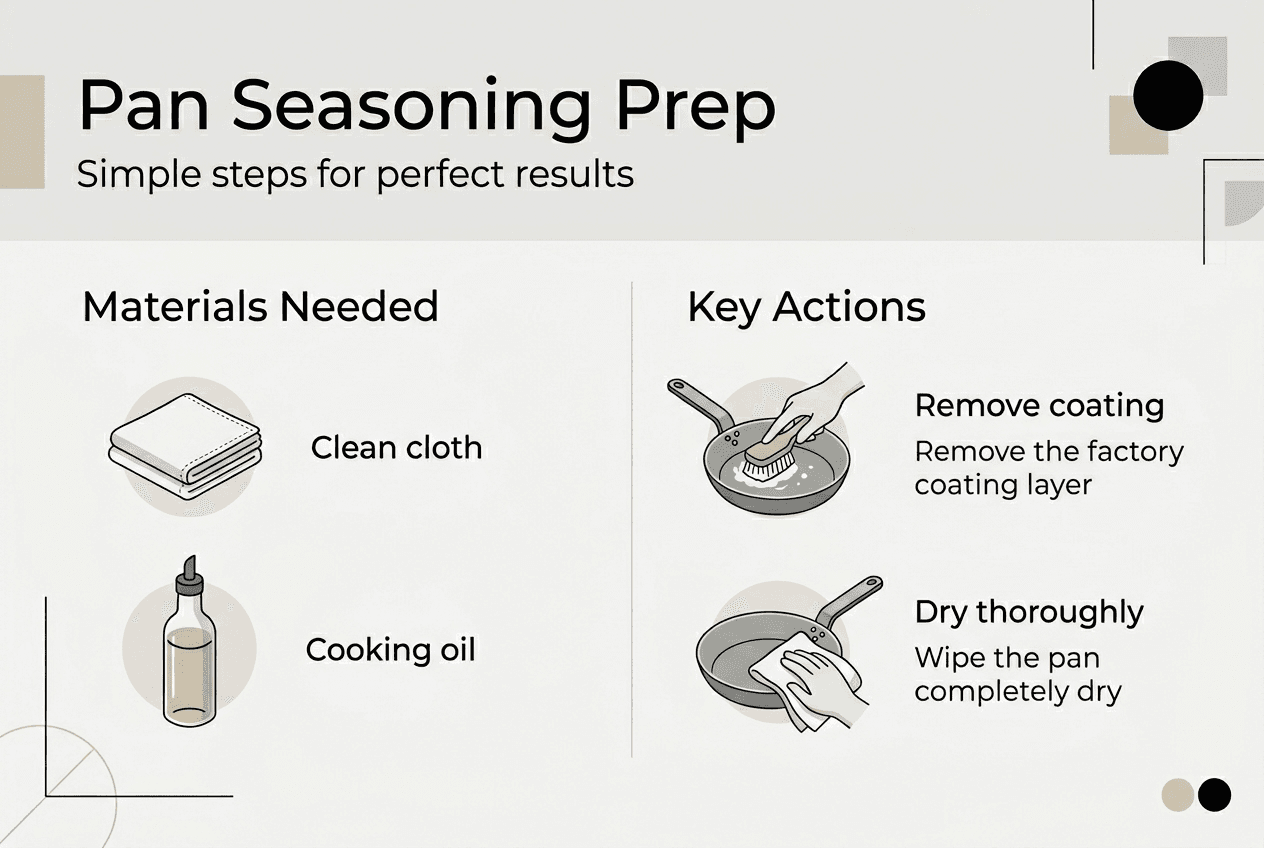
Ventilation matters during seasoning because oils release smoke at high temperatures. Open windows, turn on your extractor fan, or work outdoors if possible. The process isn’t dangerous, but proper airflow keeps your kitchen comfortable. Understanding the differences between carbon steel and stainless steel pans helps you appreciate why carbon steel requires this special treatment whilst stainless does not.
| Material | Smoke Point | Seasoning Quality | Cost |
|---|---|---|---|
| Grapeseed oil | 216°C | Excellent | Moderate |
| Avocado oil | 271°C | Outstanding | Higher |
| Sunflower oil | 232°C | Very good | Budget |
| Canola oil | 204°C | Good | Budget |
Pro Tip: Pour a small amount of oil onto kitchen paper rather than directly onto the pan. This technique gives you better control over application thickness and prevents pooling.
Step-by-step methods to season your pan
Two reliable techniques deliver professional results at home. Both methods work brilliantly, so choose based on your available equipment and time.
Oven seasoning method:
- Preheat your oven to 250°C (480°F) and place the clean, dry pan inside for 10 minutes to ensure complete dryness.
- Remove the pan carefully with oven mitts and let it cool slightly until comfortable to handle.
- Apply a few drops of high smoke point oil to the entire surface, including the handle and exterior.
- Wipe thoroughly with kitchen paper until the pan looks almost dry with just a whisper of oil remaining.
- Place the pan upside down on the middle oven rack with foil or a baking tray on the lower rack to catch drips.
- Bake for 30 minutes, then turn off the oven and let the pan cool inside completely.
- Repeat this process 2 to 3 times for a strong initial seasoning layer.
Oven seasoning provides even heat distribution to develop a strong seasoning layer. The surrounding heat creates uniform polymerisation across the entire surface, including hard-to-reach areas like the pan’s exterior and handle junction.
Stovetop seasoning method:
- Place your clean, dry pan on the hob over medium heat for 3 to 4 minutes.
- Add a small amount of oil and spread it across the cooking surface with folded kitchen paper held with tongs.
- Heat until the oil begins to smoke lightly, then wipe away excess oil with fresh kitchen paper.
- Continue heating for another 2 minutes as the oil polymerises and darkens.
- Remove from heat and let cool completely before repeating the process 3 to 4 times.
Stovetop seasoning offers speed and convenience when you need results quickly. The direct heat concentrates on the cooking surface where you need protection most. This method suits those without oven access or preferring hands-on control throughout the process.
Pro Tip: Apply very thin coats of oil to avoid sticky build-up. If you can see oil pooling or dripping, you’ve used too much. The goal is an almost invisible layer that bonds with the metal.
Always handle hot pans with proper oven mitts and keep flammable materials away from your work area. Hot oil can splatter, so work carefully and never leave seasoning pans unattended. If oil begins smoking excessively, reduce heat immediately.
Knowing how to re-season a carbon steel pan becomes valuable as your cookware ages. Seasoning isn’t permanent, but maintenance keeps it strong for decades.
Common mistakes to avoid and troubleshooting tips
Even experienced cooks make seasoning errors that compromise results. Recognising these pitfalls helps you maintain excellent pan performance.
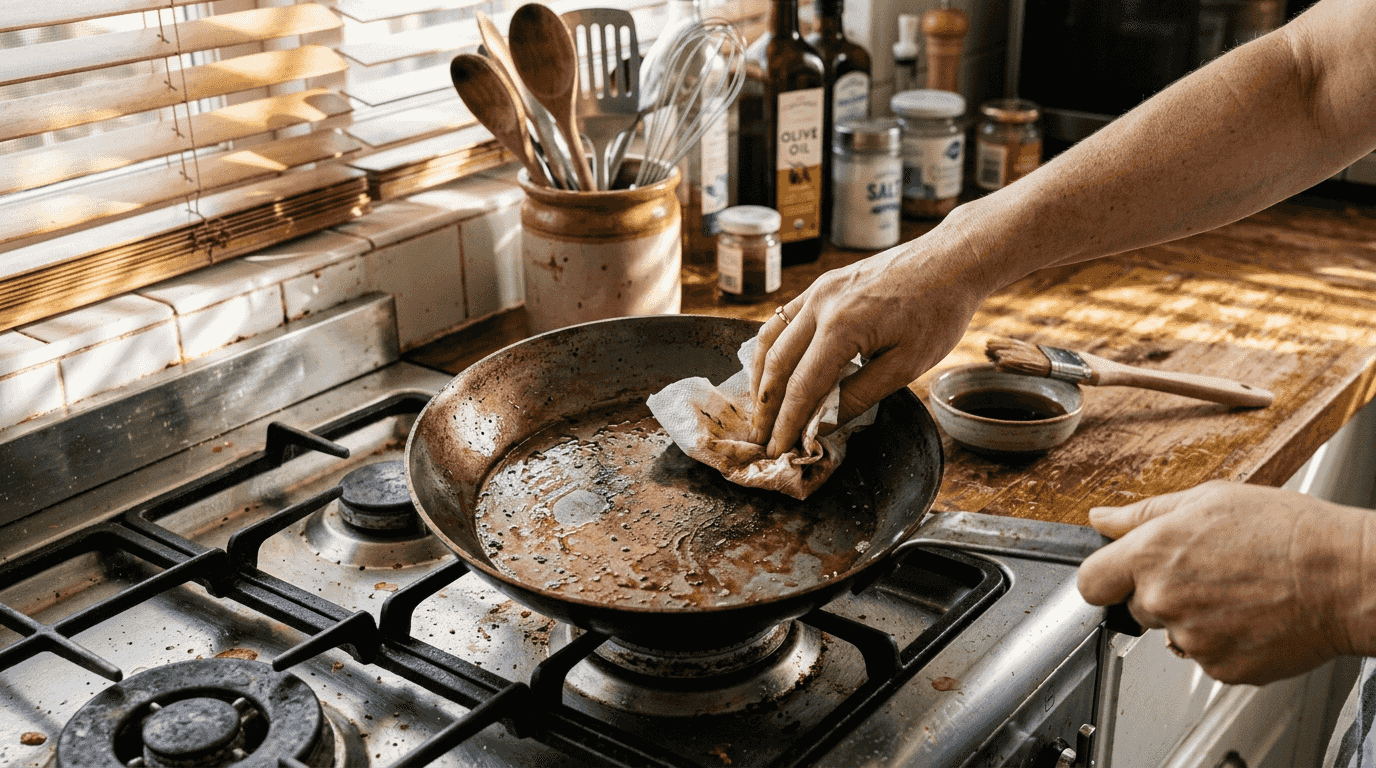
Using too much oil ranks as the most frequent mistake. Thick oil layers don’t polymerise properly, leaving sticky, tacky residue that attracts food particles. The coating should be so thin it’s barely visible. If your pan feels sticky after seasoning, you’ve applied excess oil. Strip it with hot water and washing-up liquid, dry thoroughly, and reseason with less oil.
Overheating damages both seasoning and pan structure. Whilst carbon steel handles high temperatures brilliantly during cooking, seasoning requires controlled heat. Exceeding 260°C can burn off developing layers before they bond properly. Watch for excessive smoking, which indicates temperatures too high for effective polymerisation.
Frequent seasoning pitfalls:
- Skipping the initial deep cleaning, leaving factory coatings that prevent oil adhesion
- Rushing the cooling process, which interrupts polymerisation
- Using low smoke point oils that break down before bonding
- Inadequate drying before oil application, trapping moisture under seasoning
- Seasoning only the cooking surface whilst neglecting edges and exterior
Avoiding rust requires proper care and seasoning maintenance. Rust appears when moisture contacts bare metal, typically after seasoning wears thin or chips away. If you spot rust, scrub it off with steel wool, wash and dry the pan completely, then reseason the affected area.
Uneven seasoning creates blotchy appearance and inconsistent cooking performance. This usually results from uneven oil application or heat distribution. Rotate your pan during stovetop seasoning or use the oven method for more uniform results. Dark and light patches don’t affect function significantly, but they indicate areas needing attention.
Troubleshooting common issues:
- Sticky surface: Strip with hot soapy water, dry completely, reseason with thinner oil coats
- Flaking seasoning: Usually caused by too-thick initial layers; strip and start fresh with proper technique
- Rust spots: Remove rust with steel wool, clean, dry, and reseason affected areas immediately
- Dull appearance: Normal with use; light stovetop seasoning restores lustre
- Food sticking: Build up seasoning gradually through cooking fatty foods and occasional maintenance seasoning
When seasoning fails completely, don’t despair. Learning how to repair seasoning restores your pan to excellent condition. Strip everything back to bare metal if necessary, then follow proper seasoning steps from the beginning.
Timing matters for reseasoning. If food begins sticking where it didn’t before, or if the surface looks dull and grey rather than dark and glossy, add a maintenance layer. Quick stovetop seasoning after cooking takes just minutes and prevents major problems.
How to tell if your pan is properly seasoned
Recognising successful seasoning helps you maintain optimal cooking performance. Several clear indicators confirm your efforts have paid off.
Visually, proper seasoning results in a smooth, dark finish and improved non-stick cooking. The surface should appear nearly black with a subtle sheen, not shiny like glass but with a soft, matte glow. Colour develops gradually, starting as bronze or brown and deepening to dark chocolate or black with repeated use and seasoning.
Touch reveals seasoning quality too. Run your finger across the cooking surface. It should feel smooth and slightly slick, not rough or sticky. Well-seasoned carbon steel has a texture similar to polished stone, with no tacky residue or obvious texture variations.
| Pan Condition | Visual Appearance | Touch Test | Cooking Performance |
|---|---|---|---|
| Unseasoned | Bare grey metal, matte | Rough, dry texture | Everything sticks badly |
| Poorly seasoned | Patchy bronze/grey, uneven | Sticky or rough patches | Inconsistent sticking |
| Properly seasoned | Dark brown to black, even | Smooth, slightly slick | Excellent non-stick properties |
| Well-developed | Deep black, subtle sheen | Glassy smooth surface | Rivals PTFE non-stick performance |
Cooking performance provides the ultimate test. Fry an egg with minimal oil. If it slides around freely and releases easily with a gentle nudge, your seasoning works brilliantly. Slight sticking during initial uses is normal, but food should release with reasonable ease.
Signs your seasoning needs attention:
- Food sticks persistently despite adequate cooking fat
- Surface appears grey or dull rather than dark
- Water doesn’t bead up and roll off when sprinkled on the warm pan
- You notice rust spots or discolouration
- The pan feels rough or sticky to touch
Water beading offers a quick check. Sprinkle a few drops onto your warm (not hot) seasoned pan. Properly seasoned surfaces repel water, causing droplets to ball up and dance across the surface. If water spreads and soaks in, your seasoning needs reinforcement.
Expect seasoning to evolve with use. New seasoning looks lighter and performs adequately. After months of regular cooking, especially with fatty foods like bacon or seared meats, your pan develops a deep, glossy patina that performs extraordinarily well. This natural progression rewards patience and proper care.
Benefits become obvious in daily cooking. Eggs release effortlessly. Delicate fish fillets lift cleanly. Vegetables caramelise without welding themselves to the surface. You’ll use less oil, clean up faster, and enjoy more consistent results across all your recipes.
Discover more about carbon steel pans
Mastering seasoning techniques opens up a world of exceptional cooking performance and lasting durability. Your carbon steel pan, when properly maintained, becomes a treasured kitchen companion that improves with every use.
Explore our range of carbon steel cookware and accessories designed for serious home cooks who value quality and performance. Each pan is forged from a single piece of carbon steel, eliminating rivets and weak points whilst delivering superior heat distribution. Our 27 cm and 30 cm sauté pans provide versatile options for everyday cooking and larger family meals.
Deepen your knowledge with our comprehensive carbon steel pan seasoning guide, which covers advanced techniques and answers common questions. Learn specific carbon steel pan care tips that keep your cookware performing brilliantly for decades. Whether you’re new to carbon steel or looking to refine your technique, our detailed resources support your culinary journey every step of the way.
FAQ
How often should I season my carbon steel pan?
Seasoning frequency depends entirely on how often you cook and what you prepare. If you use your pan daily, a light maintenance seasoning every few months keeps the surface strong. Re-seasoning your carbon steel pan becomes necessary when food begins sticking or the surface looks dull. Cooking fatty foods like bacon naturally reinforces seasoning, reducing the need for separate maintenance sessions.
Is it possible to use any cooking oil for seasoning?
Not all oils work equally well for seasoning carbon steel. Best oils for pan seasoning include grapeseed, avocado, sunflower, and canola because their high smoke points allow proper polymerisation. Olive oil and butter smoke at lower temperatures, creating sticky residue rather than durable seasoning. Animal fats can work but tend to produce uneven results and may turn rancid if the pan sits unused for extended periods.
Can I repair a damaged seasoning layer myself?
Absolutely, and it’s simpler than you might think. Following the correct repair seasoning guide restores your pan to excellent condition. For minor damage, clean the affected area, dry thoroughly, and apply 2 to 3 thin seasoning layers using your preferred method. Severe damage may require stripping all seasoning with steel wool or oven cleaner, then building fresh layers from scratch. Most repairs take under an hour and dramatically improve cooking performance.
What should I do if my seasoning turns sticky?
Sticky seasoning results from applying too much oil during the seasoning process. The excess oil doesn’t polymerise properly and remains tacky. Wash the pan with hot water and washing-up liquid to remove the sticky layer, scrubbing gently with a non-abrasive sponge. Dry completely, then reseason using much thinner oil coats. Remember, the oil layer should be almost invisible before heating. This simple adjustment prevents stickiness and creates smooth, durable seasoning.
Does seasoning make my pan completely non-stick like PTFE?
Well-developed seasoning provides excellent non-stick properties but works differently than chemical coatings. Your carbon steel pan releases food beautifully when properly seasoned and preheated, but it requires a small amount of cooking fat for best results. Eggs, fish, and delicate foods slide freely once seasoning matures through regular use. The natural non-stick surface improves continuously over months and years, eventually rivalling PTFE performance whilst remaining completely safe and chemical-free. Patience and proper technique reward you with a pan that performs brilliantly for decades.