How to use carbon steel pans on induction in 2026
Cooking with carbon steel pans on induction stovetops delivers exceptional results when done correctly, yet many home cooks struggle with warping, sticking, and uneven heating. These problems stem from misunderstanding how induction technology interacts with ferromagnetic cookware. This guide walks you through proper seasoning, heating techniques, and maintenance practices to unlock your pan’s full potential on induction hobs.
Table of Contents
- Understanding Carbon Steel On Induction Stovetops
- Prerequisites For Using Carbon Steel Pans On Induction
- Preparing And Seasoning Your Carbon Steel Pan
- Heating And Cooking Techniques For Induction Stovetops
- Cleaning And Maintaining Your Pan For Induction Use
- Troubleshooting Common Problems And Mistakes
- Expected Cooking Results And Performance On Induction Stovetops
- Explore Brass & Steel’s Expert Carbon Steel Cookware
- Frequently Asked Questions
Key takeaways
| Point | Details |
|---|---|
| Season properly | Apply thin layers of high-smoke-point oils and bake at 250°C for 30 minutes per cycle, repeating 2-3 times. |
| Heat gradually | Start at medium power (50-60%) when the pan is cold to prevent warping and thermal shock. |
| Clean without soap | Use only warm water, dry immediately, and apply a light oil film after each use. |
| Choose thick pans | Select pans at least 3mm thick for better heat retention and reduced warping risk. |
| Cook fatty foods | Regular use of fats strengthens seasoning and improves nonstick performance over time. |
Understanding carbon steel on induction stovetops
Induction cooktops generate electromagnetic fields that directly heat ferromagnetic materials, making them remarkably efficient. Carbon steel contains enough iron to respond instantly to these magnetic fields, creating rapid, controllable heat. Unlike gas or electric ranges, induction cooktops heat ferromagnetic materials rapidly through magnetic fields, making carbon steel pans highly responsive.
This direct energy transfer means your pan heats faster and more uniformly than on traditional stoves. The quick response demands attention to temperature control. Without proper handling, you risk damaging your seasoning or warping the metal. Understanding this relationship helps you manage power settings effectively.
Carbon steel’s magnetic properties make it ideal for induction cooking in several ways:
- The material responds instantly to power adjustments, giving you precise temperature control
- Heat distributes evenly across the cooking surface when the pan is properly sized for the burner
- The pan retains heat efficiently, maintaining consistent temperatures during cooking
- Proper care preserves the natural nonstick patina that develops with regular use
Grasping these fundamentals prepares you to handle your induction cookware with confidence. You’ll avoid common mistakes and achieve professional results at home.
Prerequisites for using carbon steel pans on induction
Before you start cooking, gather the right tools and knowledge. Select a pan at least 3mm thick to withstand induction’s powerful heating without warping. Thinner pans buckle under rapid temperature changes, losing their flat contact with the cooktop. This thickness provides structural integrity and even heat distribution.
High-smoke-point oils form the foundation of durable seasoning. These oils polymerise properly at baking temperatures without breaking down:
- Grapeseed oil (smoke point 216°C)
- Avocado oil (smoke point 271°C)
- Sunflower oil (smoke point 227°C)
- Canola oil (smoke point 204°C)
Familiarise yourself with your induction hob’s power settings before seasoning or cooking. Most induction cooktops offer 10-20 power levels. Medium settings typically range from 50-60% of maximum power. Learn where these settings fall on your specific model.
Prepare your cleaning supplies with care in mind. You’ll need soft cloths, warm water, and a separate bottle of high-smoke-point oil for post-cooking maintenance. Following the detailed steps in our seasoning guide ensures you start with a properly prepared surface. Review carbon steel compatibility tips to understand how your specific pan interacts with induction technology.
| Essential Item | Purpose | Specification |
|---|---|---|
| Carbon steel pan | Primary cookware | Minimum 3mm thickness |
| High-smoke-point oil | Seasoning and maintenance | Grapeseed, avocado, or sunflower |
| Soft cleaning cloths | Daily care | Non-abrasive material |
| Oven | Initial seasoning | Capable of 250°C |
Preparing and seasoning your carbon steel pan
Proper initial seasoning creates the foundation for years of reliable cooking. Start by washing your new pan thoroughly with hot, soapy water to remove the protective factory coating. This is the only time you’ll use soap on your pan. Dry it completely with a clean towel, ensuring no moisture remains.

Preheat your oven to 250°C whilst the pan dries. Once the oven reaches temperature, place the dry pan inside for 10 minutes. This step eliminates any residual moisture trapped in the metal’s pores. Remove the pan carefully using oven gloves.
Now apply your chosen high-smoke-point oil. Pour a small amount onto a folded paper towel and rub it over every surface, including the handle. The key is using far less oil than you think necessary. Wipe off the excess vigorously until the pan looks almost dry. Seasoning requires 2-3 cycles of applying thin oil coats and baking at 250°C for 30 minutes each to build a durable natural nonstick coating.
Follow these numbered steps for each seasoning cycle:
- Apply oil sparingly with a paper towel
- Wipe away all visible excess until the surface appears nearly dry
- Place pan upside down in the 250°C oven
- Bake for 30 minutes
- Allow to cool completely before the next cycle
- Repeat the entire process 2-3 times
After completing multiple cycles, your pan develops a bronze to dark brown patina. This polymerised oil layer provides natural nonstick properties and protects against rust. The carbon steel seasoning guide offers visual examples of properly seasoned surfaces. If you notice stickiness later, consult our re-seasoning instructions.
Pro Tip: Too much oil creates a sticky, uneven coating that flakes off during cooking. When in doubt, wipe more. The pan should look almost bare before baking.
“The difference between good seasoning and great seasoning lies in the oil quantity. Less is genuinely more when building a durable patina that lasts for years.” — Professional culinary advice from Serious Eats
Heating and cooking techniques for induction stovetops
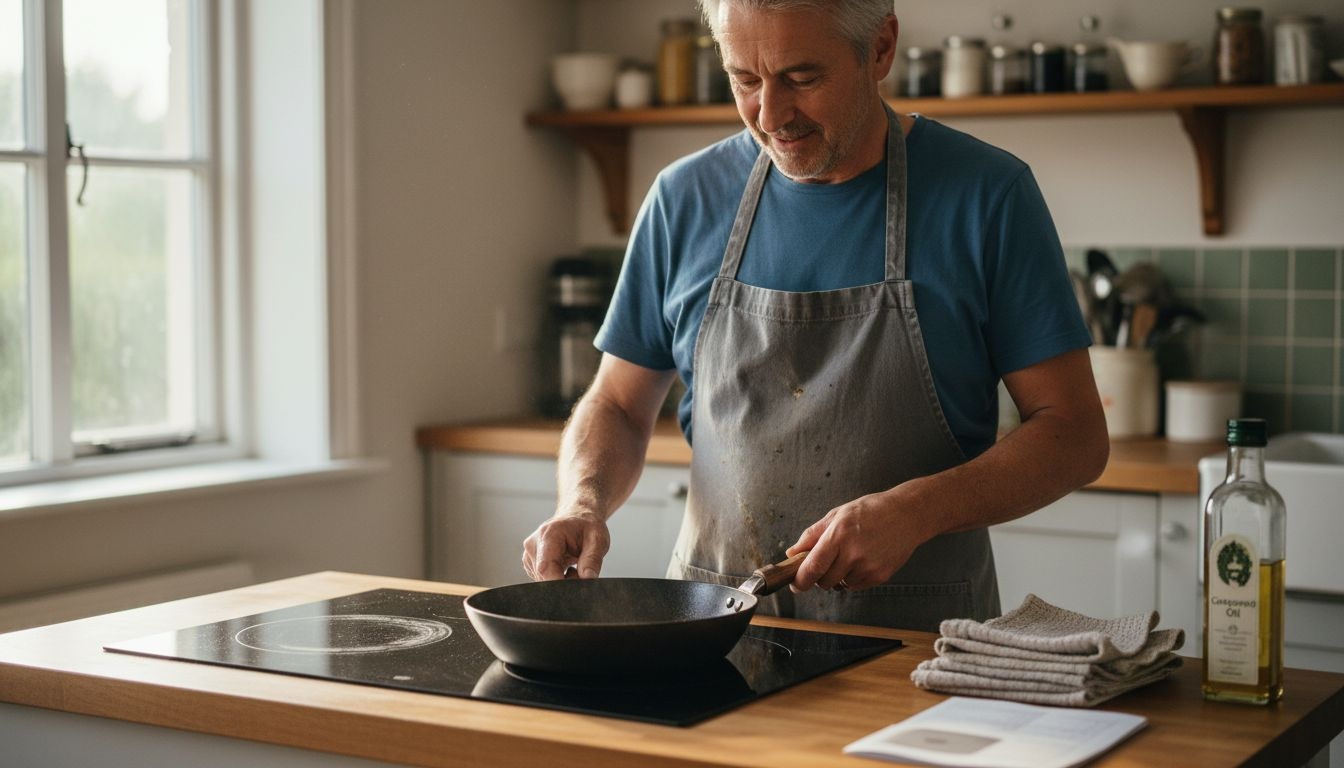
Once your pan is properly seasoned, heating technique determines your cooking success. Always start with your induction hob set to medium power when the pan is cold. Starting heating at medium power (50-60%) when pan is cold prevents warping, and never heating empty at high power protects seasoning. Rushing this process causes thermal shock, leading to permanent warping.
Allow the pan to warm gradually for 2-3 minutes before adding oil or food. You can test readiness by flicking a few water drops onto the surface. If they dance and evaporate within seconds, your pan is ready. This gradual approach preserves both the metal’s shape and your carefully built seasoning.
Avoid these common heating mistakes:
- Never leave an empty pan on high power
- Don’t add cold ingredients directly from the refrigerator to a very hot pan
- Avoid rapid power increases that shock the metal
- Never heat one spot intensely whilst the rest remains cool
Cooking fatty foods regularly strengthens your seasoning naturally. Bacon, sausages, and dishes using butter or oil help build and maintain the nonstick surface. Each cooking session adds another microscopic layer to your patina. This cumulative effect improves performance over months of regular use.
Increase power gradually as you cook. Start proteins on medium, then raise to medium-high once a crust forms. This layered approach to temperature management optimises both food quality and pan longevity. The detailed techniques in our guide on carbon steel induction cooking tips help you master these skills quickly.
Pro Tip: Place a small amount of oil in the pan during preheating. Watch how it moves as the pan warms. When the oil flows freely like water, your cooking surface has reached the ideal temperature for most techniques.
Cleaning and maintaining your pan for induction use
Proper maintenance after each cooking session preserves your seasoning and prevents rust. Clean your pan whilst it’s still warm, using only warm water and a soft cloth or brush. Soap strips away the protective oil layer you’ve worked to build. For stubborn food residue, add water to the warm pan and heat it gently on the cooktop until the stuck bits loosen.
Dry your pan thoroughly within minutes of washing. Water left on carbon steel causes rust spots that damage your seasoning. Use a clean towel first, then place the pan on a warm burner for 30 seconds to evaporate any remaining moisture. This extra step eliminates hidden water in crevices.
After drying, apply a very thin layer of oil whilst the pan is still slightly warm. Use a paper towel to spread a few drops across the entire surface. Wipe away any excess until the pan looks nearly dry. Cleaning with warm water only, drying immediately, and applying a light oil film after use reduces oxidation risk by 80%. This simple routine takes less than two minutes and prevents most maintenance problems.
Single-piece forged pans offer distinct advantages for induction users. Single-piece forged pans are easier to clean and less prone to rusting at rivet points, enhancing durability on induction. Without rivets or welds, there are no crevices where moisture and food particles accumulate. This seamless construction simplifies maintenance considerably.
Regular cooking with fats naturally reinforces your seasoning. Cooking fatty foods helps improve seasoning durability by about 15-25% over three months. Each time you cook bacon, stir-fry with oil, or sear butter-basted steak, you’re adding protective layers. This cumulative maintenance happens automatically as you cook.
Follow these essential maintenance practices:
- Clean immediately after cooking whilst the pan is warm
- Use only warm water and soft materials
- Dry thoroughly within minutes
- Apply oil after every use
- Store in a dry location
- Cook fatty foods regularly
Consult our carbon steel maintenance tips for specific scenarios. Additional guidance on cleaning and care tips addresses common questions. Our induction cookware guide covers storage and long-term preservation.
| Maintenance Task | Frequency | Method | Time Required |
|---|---|---|---|
| Basic cleaning | After each use | Warm water only | 2 minutes |
| Drying | After cleaning | Towel plus heat | 1 minute |
| Oiling | After drying | Thin layer, wipe excess | 1 minute |
| Re-seasoning | When food sticks | Full oven seasoning cycle | 2 hours |
Pro Tip: Keep a dedicated bottle of oil and clean cloth near your cooktop. This makes post-cooking maintenance so convenient that it becomes automatic, ensuring you never skip this crucial step.
Troubleshooting common problems and mistakes
Even with proper technique, you may encounter occasional issues. Recognising problems early and knowing how to fix them keeps your pan performing optimally. Most problems have simple solutions that restore your pan quickly.
Sticky surfaces typically result from excess oil during seasoning or cooking. When you notice tackiness, scrub the affected area gently with warm water and a non-abrasive pad. Dry thoroughly, then complete one or two seasoning cycles following the method described earlier. This resets the surface and eliminates the sticky residue.
Rust develops when pans aren’t dried properly after cleaning. Small rust spots are easily remedied. Scrub them away with fine steel wool or a gentle abrasive, then re-season the entire pan. Prevention is simpler than cure, so always dry your pan within minutes of washing and apply a protective oil layer.
Warping occurs most often due to rapid heating and overheating; gradual heat increases reduce this risk by about 35%. If your pan develops a wobble, it has likely experienced thermal shock from sudden temperature changes. Unfortunately, significant warping cannot be reversed. Prevention through proper heating technique is essential.
Common problems and their solutions:
- Sticky surface: Too much oil used; scrub and re-season with thinner coats
- Rust spots: Inadequate drying; remove rust, then re-season and improve drying routine
- Food sticking: Seasoning degraded; strip and re-season completely
- Warping: Rapid heating or cooling; cannot fix, prevent through gradual temperature changes
- Uneven heating: Pan too thin or burner mismatch; use thicker pan or different burner size
Uneven heating sometimes indicates a pan that’s too thin for induction use. Pans under 3mm thick struggle with hot spots on powerful induction burners. If you experience persistent uneven cooking despite proper technique, consider upgrading to a thicker pan. Our carbon steel cooking troubleshooting guide addresses specific scenarios.
When seasoning degrades and food begins sticking regularly, strip the pan completely and start fresh. Heat the pan until the old seasoning smokes and loosens, scrub it clean, then follow the full seasoning process again. Detailed re-seasoning tips guide you through complete restoration.
| Problem | Cause | Solution | Prevention |
|---|---|---|---|
| Sticky coating | Excess oil | Scrub and re-season | Use less oil when seasoning |
| Rust spots | Poor drying | Remove rust, re-season | Dry immediately after washing |
| Warping | Thermal shock | Cannot reverse | Heat gradually from medium power |
| Food sticking | Degraded seasoning | Strip and re-season | Regular oiling after use |
Expected cooking results and performance on induction stovetops
Understanding realistic performance expectations helps you appreciate your carbon steel pan’s capabilities. Induction heats carbon steel pans 20-30% faster than gas or electric coil stoves, improving cooking speed and response. This efficiency means you’ll notice quicker preheating and more responsive temperature control.
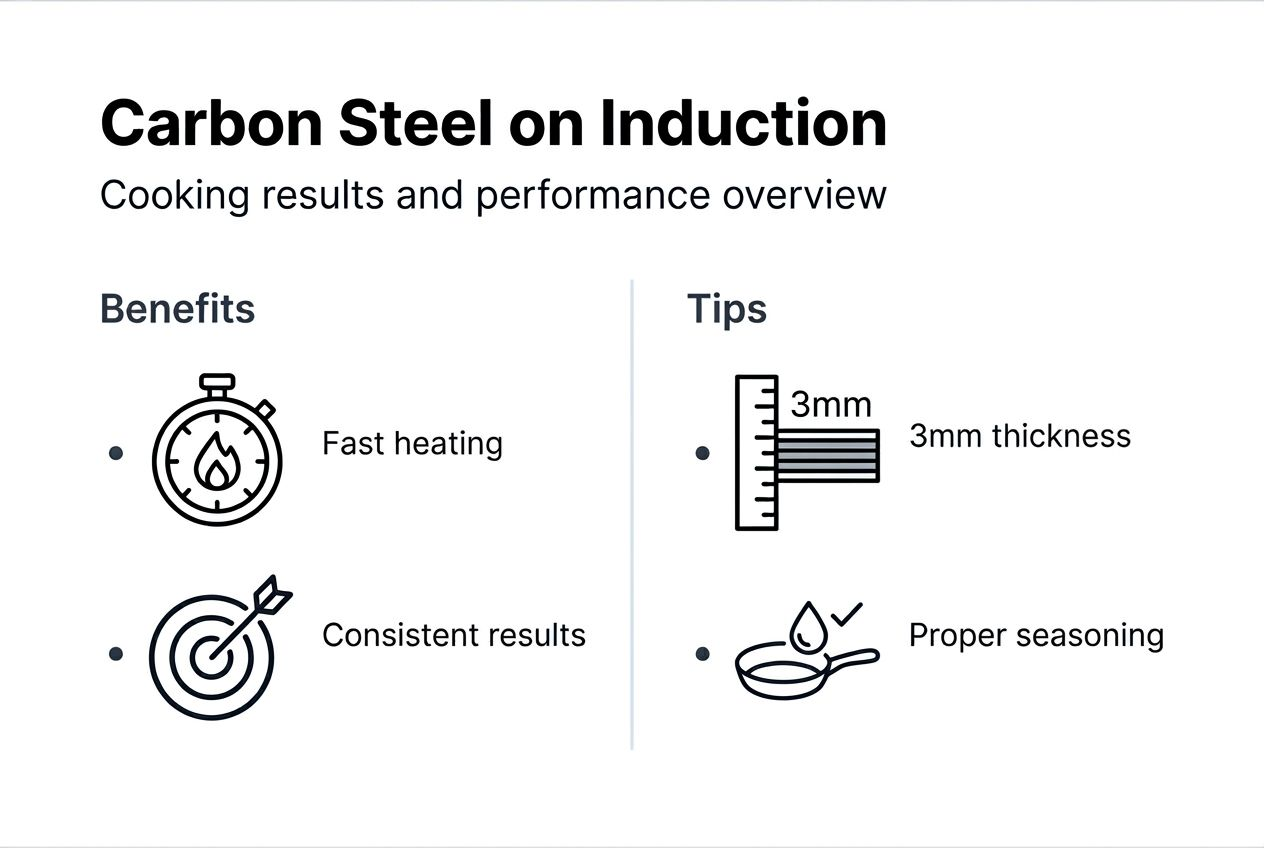
Thicker pans deliver more consistent results on induction cooktops. Pans at least 3mm thick reduce temperature fluctuations and warping risk by approximately 40% compared to thinner alternatives. This thickness provides thermal mass that stabilises cooking temperatures even when you add cold ingredients.
Properly maintained seasoning lasts through dozens of meals before requiring touch-up. Each cooking session actually improves your pan’s nonstick qualities, assuming you follow proper cleaning and oiling procedures. After several months of regular use, you’ll notice that eggs slide freely and proteins release cleanly without excessive oil.
Well-maintained carbon steel pans deliver these performance benefits:
- Rapid heat response allows precise temperature control for delicate techniques
- Even heat distribution produces uniform browning and cooking
- Natural nonstick surface improves continuously with proper care
- Metal construction permits safe oven use at any temperature
- Durability ensures decades of reliable performance with basic maintenance
The cumulative improvement in seasoning quality becomes evident over time. Your pan becomes darker, smoother, and more nonstick with each cooking session. This gradual enhancement is one of carbon steel’s most satisfying characteristics. Explore more about carbon steel cookware benefits to understand long-term performance. Additional carbon steel performance insights detail what to expect at different stages of pan maturity.
| Performance Metric | Induction with Carbon Steel | Gas Cooktop | Electric Coil |
|---|---|---|---|
| Heat-up time | 20-30% faster | Baseline | 15% slower |
| Temperature control | Excellent, instant response | Good, some lag | Moderate, significant lag |
| Energy efficiency | 90% efficient | 40% efficient | 65% efficient |
| Warping risk (3mm+ pan) | Low with proper technique | Very low | Low |
Explore Brass & Steel’s expert carbon steel cookware
Mastering carbon steel on induction opens up a world of culinary possibilities, and having the right tools makes all the difference. Brass & Steel’s single-piece forged carbon steel pans are specifically designed for serious home cooks and professionals who demand both performance and durability on induction cooktops.
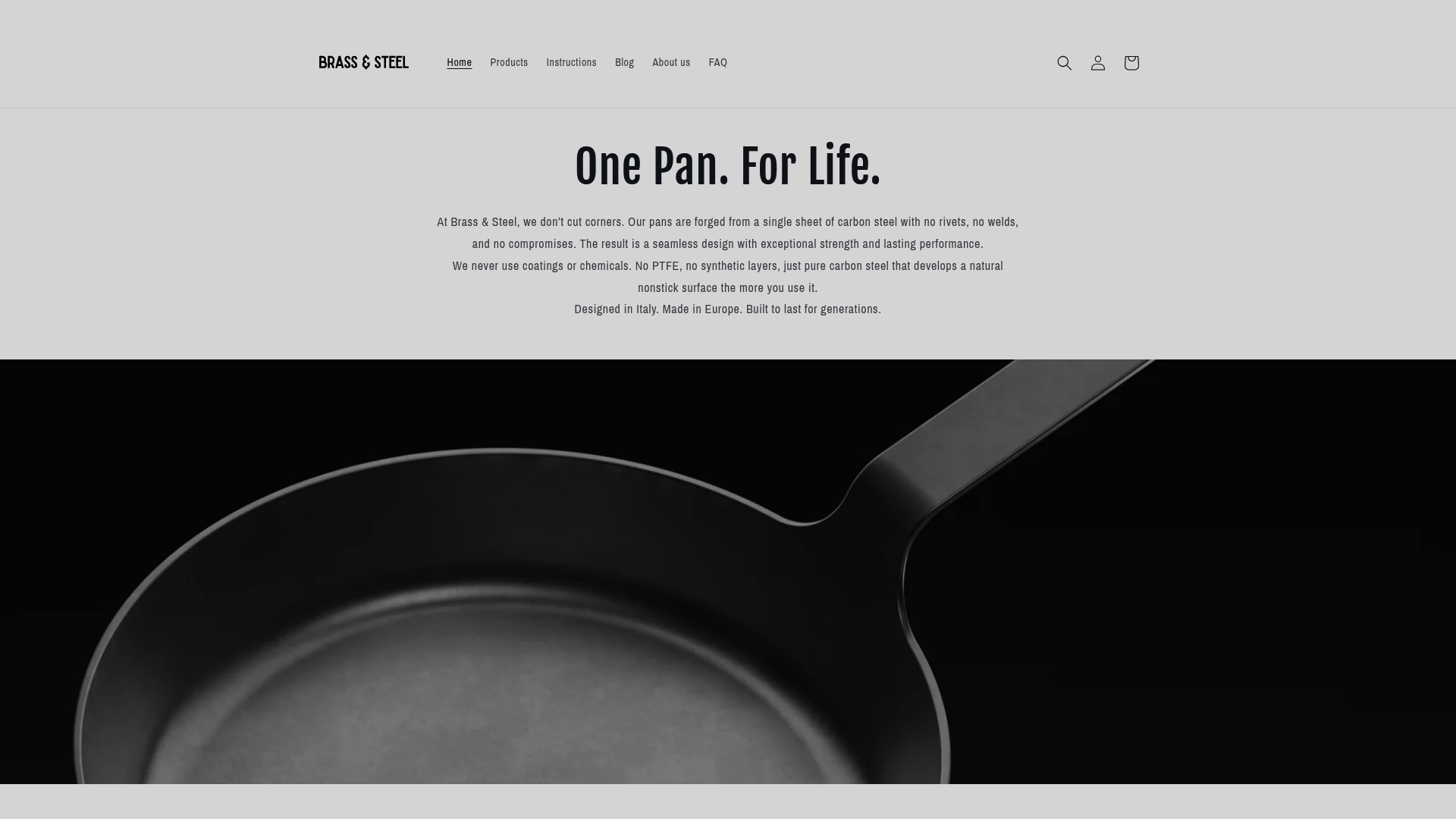
Our comprehensive guides help you master using carbon steel on induction with detailed techniques refined through years of testing. Discover versatile applications in our carbon steel pan uses guide, and learn how proper care unlocks exceptional carbon steel performance and care that improves with age. Each resource provides practical knowledge to elevate your cooking whilst protecting your investment in quality cookware.
Frequently asked questions
How do I prevent warping of my carbon steel pan on induction?
Preventing warping requires gradual heating starting at medium power settings. Never subject a cold pan to high heat immediately, and avoid rapid temperature changes like adding cold water to a hot pan. The metal needs time to expand evenly across its entire surface.
Can I use any oil for seasoning my carbon steel pan on induction?
Only high-smoke-point oils like grapeseed, avocado, or sunflower oil create durable seasoning that withstands induction cooking temperatures. Olive oil and animal fats break down too easily under high heat, producing sticky, uneven coatings that degrade quickly.
What is the best way to clean my carbon steel pan after induction cooking?
Clean with warm water only whilst the pan is still warm, avoiding soap that strips seasoning. Dry thoroughly immediately after washing, then apply a thin layer of oil to protect against rust. This simple routine preserves your seasoning and prevents oxidation.
How thick should my carbon steel pan be for induction cooking?
A minimum thickness of 3mm is recommended for optimal heat retention and reduced warping risk on induction cooktops. Thicker pans provide better temperature stability and structural integrity when exposed to induction’s rapid, intense heating. This thickness balances weight, performance, and durability effectively.