Why carbon steel pans excel: choosing the best cookware
TL;DR:
- Carbon steel pans are lightweight, heat quickly, and develop a natural nonstick surface through seasoning.
- They excel at searing, sautéing, and cooking at high temperatures, making them a versatile, professional-quality choice.
- Proper seasoning and care ensure a long-lasting, eco-friendly pan that can last for decades.
Most home cooks assume carbon steel pans are simply a lighter version of cast iron, or perhaps a tougher cousin of stainless steel. Neither assumption is quite right. Carbon steel occupies a distinct category of its own, one that professional chefs across Europe have relied on for generations, and one that is now earning its rightful place in domestic kitchens too. This article cuts through the confusion, explains exactly what makes carbon steel stand apart from every other material, and gives you the practical knowledge to choose, use, and maintain a pan that could genuinely last a lifetime.
Table of Contents
- What are the main cookware types and why does it matter?
- How does carbon steel perform compared to cast iron and stainless steel?
- Why do professionals and home cooks prefer carbon steel?
- How to maintain and season your carbon steel pan
- Why choosing the right cookware type is more important than ever
- Upgrade your kitchen with premium carbon steel
- Frequently asked questions
Key Takeaways
| Point | Details |
|---|---|
| Best all-round pan | Carbon steel offers professional results, versatility, and long-term durability for home and restaurant cooking. |
| Seasoning is essential | A well-seasoned carbon steel pan gains nonstick performance and lasts a lifetime with simple care. |
| Heirloom sustainability | Quality carbon steel pans outlast disposable nonstick, reducing waste and providing value for decades. |
| Choose reputable brands | Invest in thicker, responsibly manufactured European or professional-grade carbon steel for the best results. |
What are the main cookware types and why does it matter?
To understand why carbon steel stands out, let us first clarify what distinguishes the main types of cookware and how they fit different needs.
Cookware materials each have their own chemistry, weight, and behaviour over heat. Picking the wrong one for your cooking style is not just inconvenient; it can actively work against you in the kitchen.
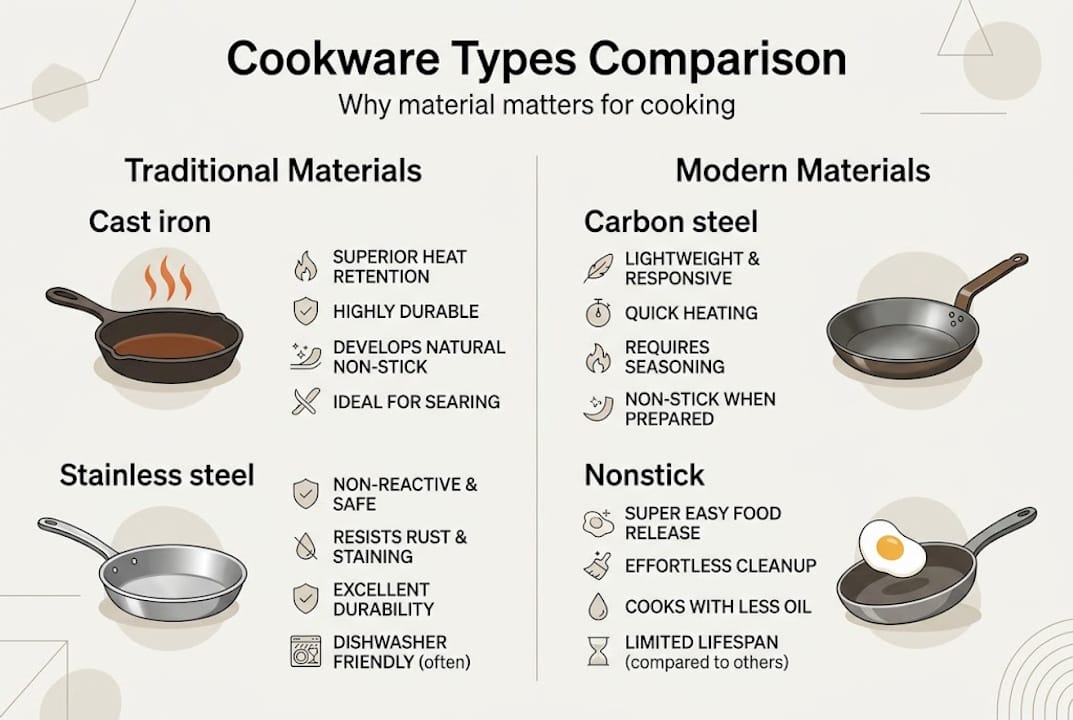
Cast iron is dense, slow to heat, and exceptional at retaining temperature once hot. It is ideal for low-and-slow braises, cornbread, and dishes where heat consistency matters more than speed. Stainless steel is non-reactive and easy to clean, making it popular for sauces, stocks, and anything acidic. However, it browns food poorly unless you work carefully with fat and timing. Nonstick pans coated with PTFE or ceramic are convenient for delicate foods like eggs and fish, but coatings degrade over time and cannot handle high heat. Ceramic pans are positioned as a healthier nonstick option, though their scratch resistance and longevity remain limited.
Then there is carbon steel. Carbon steel pans are composed of roughly 99% iron and 1% carbon, making them lighter and more ductile than cast iron, which contains 2 to 3% carbon. This lower carbon content, combined with a rolling process during manufacturing, produces a uniform grain structure and enables the sloped, flared sides that make carbon steel so practical for sautéing. You can read more about the technical side of this in our guide to carbon steel fabrication.
| Material | Weight | Heat tolerance | Natural nonstick | Typical use | Maintenance |
|---|---|---|---|---|---|
| Cast iron | Heavy | Very high | Yes (seasoned) | Braises, frying | Season regularly |
| Carbon steel | Medium | Very high | Yes (seasoned) | Searing, sautéing, crepes | Season regularly |
| Stainless steel | Medium | High | No | Sauces, stocks | Easy to clean |
| Nonstick (PTFE) | Light | Low to medium | Yes (coated) | Eggs, fish | Avoid high heat |
| Ceramic | Light | Medium | Yes (coated) | Light sautéing | Gentle cleaning |
Here is where each material truly shines:
- Cast iron: Long braises, grilling, baking cornbread or focaccia where steady, stored heat is essential
- Carbon steel: Searing steak, sautéing vegetables, making crepes, frying eggs once seasoned
- Stainless steel: Sauces, deglazing, anything with wine, tomatoes, or citrus
- Nonstick: Delicate fish fillets, scrambled eggs, pancakes at lower temperatures
- Ceramic: Light everyday cooking for those prioritising minimal maintenance
Understanding this landscape stops you from expecting one pan to do everything and instead helps you invest wisely.
How does carbon steel perform compared to cast iron and stainless steel?
Now that you know the basics, let us see how carbon steel stacks up against its main rivals in both professional and home settings.
The numbers tell a convincing story. A typical carbon steel pan weighs around 3 lbs, compared to roughly 5 lbs for an equivalent cast iron pan. That difference might sound minor until you are tossing vegetables mid-sauté or flipping a crêpe. Over a long cooking session, a lighter pan is a genuine advantage. Against stainless steel, carbon steel wins on browning: its seasoned surface delivers far superior Maillard reactions (the chemical process that creates golden, flavourful crusts), while stainless requires precise timing and enough fat to prevent sticking.
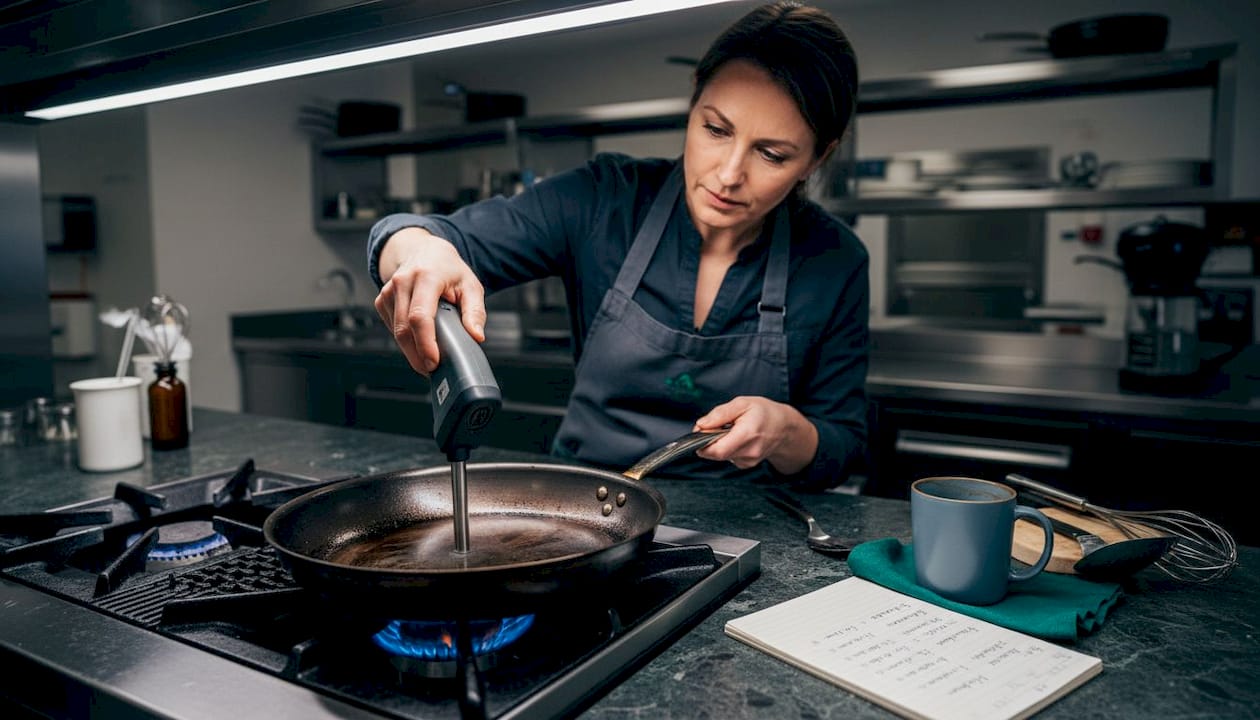
Thermal imaging tests of carbon steel pans, including well-regarded brands such as Matfer, have shown impressively even heat distribution across the cooking surface, outperforming many competitors in consistency.
| Feature | Carbon steel | Cast iron | Stainless steel |
|---|---|---|---|
| Weight | Medium (~3 lbs) | Heavy (~5 lbs) | Medium |
| Heat-up speed | Fast | Slow | Fast |
| Heat retention | Very good | Excellent | Good |
| Seasoning required | Yes | Yes | No |
| Best for | Searing, sautéing | Braises, baking | Sauces, stocks |
| Induction compatible | Yes | Yes | Yes (if magnetic) |
Here is how a carbon steel pan typically performs step by step on the hob:
- Preheating: Carbon steel heats up quickly and evenly, reaching searing temperature in two to three minutes on medium-high heat.
- Searing: The seasoned surface releases minimal steam, allowing direct contact between meat and metal for exceptional browning.
- Sautéing: Sloped sides and lower weight allow easy tossing and control, superior to cast iron’s straight-sided rigidity.
- Deglazing: Unlike nonstick, carbon steel handles deglazing with wine or stock without any risk to its surface.
- Finishing in the oven: The single-piece, rivet-free construction of quality pans like those from Brass & Steel means the entire pan, including the handle, is oven-safe.
You can explore the full breakdown in our guide comparing cast iron vs carbon steel and the separate article on carbon steel vs stainless steel.
Pro Tip: If you are choosing between a 3mm and a 4mm thick carbon steel pan, consider your cooking style. A 3mm pan, such as the Brass & Steel 27cm model, heats faster and suits everyday agile cooking. A 4mm pan retains heat longer and is better for high-volume cooking or when you are cooking larger cuts of meat that would otherwise drop the pan temperature sharply.
Why do professionals and home cooks prefer carbon steel?
Having compared the cookware types, let us focus on why so many cooks, both at home and in top restaurants, are making carbon steel their go-to pan.
Walk into the kitchen of almost any serious restaurant in France, Italy, or Spain and you will find carbon steel pans stacked beside the hob. The reasons are practical. Carbon steel excels in high-heat searing and develops a natural non-stick patina through seasoning, making it suitable for everything from searing steaks to cooking eggs and crepes. It is oven-safe above 680°F (360°C) and works on induction, gas, and electric cooktops. For a professional kitchen, that versatility means one pan can move from the hob to the oven without any hesitation.
At home, the appeal is equally strong, especially once you move past the initial learning curve. Consider these real-world uses:
- Breakfast: A well-seasoned carbon steel pan slides eggs out cleanly, rivalling any nonstick pan without the coating concerns
- Weeknight dinners: Rapid sautéing of chicken thighs, courgette, or mushrooms, benefiting from quick heat response
- Steak night: Carbon steel achieves the kind of deep, caramelised crust that stainless steel struggles to match without proper technique
- Crepes and pancakes: The wide, sloped design and even heat make carbon steel the traditional choice for thin-batter cooking across French cuisine
- Oven finishing: Sear a salmon fillet on the hob and transfer straight to the oven, no pan changes needed
There are also health benefits worth noting. Unlike PTFE-coated nonstick pans, carbon steel carries no risk of coating degradation at high temperatures. You can read more about this in our article on carbon steel pan benefits.
Pro Tip: If you are buying your first carbon steel pan, choose a 27cm to 30cm model that comes pre-seasoned or with a clear seasoning guide. This size covers the vast majority of everyday cooking tasks. For European kitchens, prioritise brands that use single-piece forging without rivets, as this eliminates a common weak point and simplifies cleaning significantly.
For a broader view of what you can cook, our guide on carbon steel pan uses covers everything from shakshuka to roast chicken.
How to maintain and season your carbon steel pan
Maximising your pan’s lifespan goes hand-in-hand with learning how to season and care for it properly. Here is how to ensure your carbon steel performs for decades.
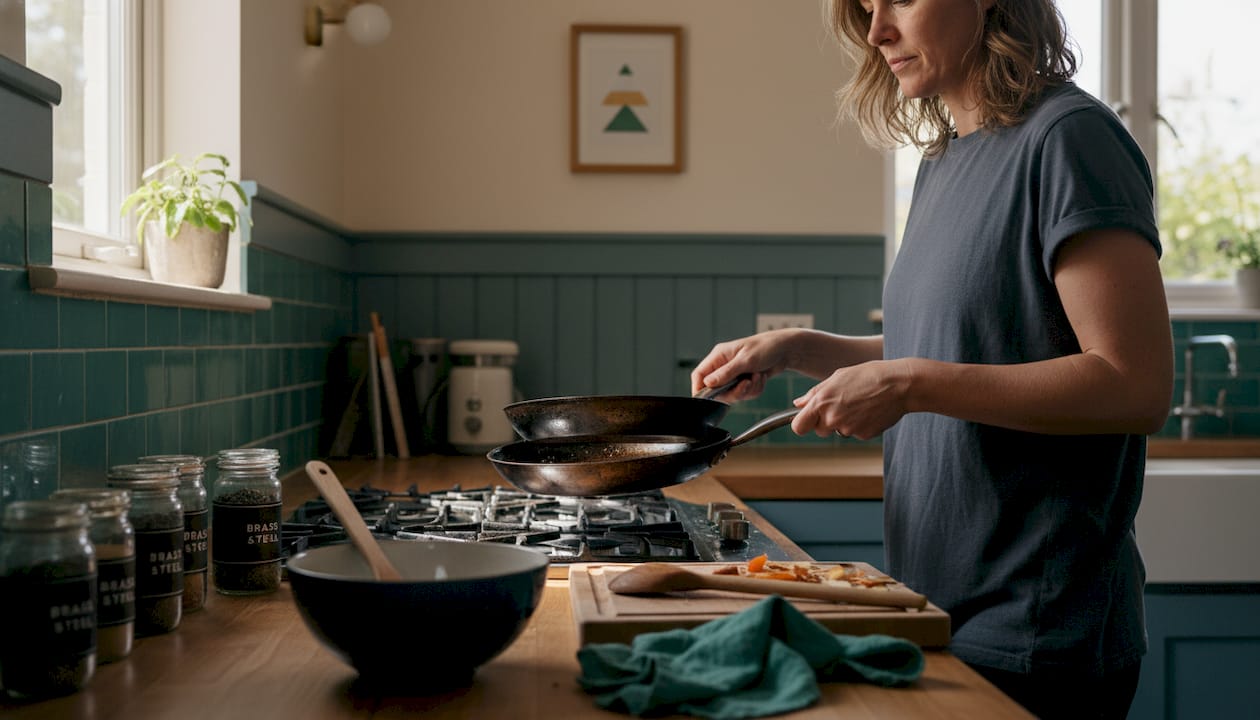
Seasoning is the process of building up thin layers of polymerised oil on the pan’s surface. These layers create a non-stick barrier that strengthens over time. According to testing by cooking publications, applying thin oil layers and baking the pan at 450 to 500°F through multiple rounds builds the most durable base seasoning. Using grapeseed oil or flaxseed oil is recommended because of their high smoke points and excellent polymerisation properties.
Here is the step-by-step seasoning process for a new Brass & Steel pan:
- Wash the pan with warm soapy water to remove the protective oil coating applied during shipping. Rinse thoroughly.
- Dry the pan completely using a clean cloth, then place it on the hob over low heat for two to three minutes to evaporate any residual moisture.
- Preheat your oven to 250°C (480°F).
- Place the empty pan in the oven for ten minutes to ensure it is fully dry.
- Apply an extremely thin coat of high-smoke-point oil such as grapeseed, avocado, or sunflower. Less oil than you think you need is the right amount.
- Wipe away almost all of the oil with a clean cloth so the pan looks nearly dry. This is critical: too much oil leads to sticky, uneven seasoning.
- Place the pan upside down in the oven and bake for 30 minutes.
- Allow to cool slightly, then repeat the process two to three more times for a strong foundational seasoning.
“Initial stickiness in a new carbon steel pan is completely normal. Each time you cook with fat, particularly proteins and fatty meats, you are adding to the seasoning. Within four to six uses, most cooks notice a significant improvement in the surface’s non-stick quality.”
Avoid these common mistakes:
- Never use a dishwasher. The detergent strips seasoning entirely and can cause surface rust.
- Avoid acidic foods early on. Tomatoes, citrus, and wine can strip young seasoning. Wait until your patina is well established before cooking these regularly.
- Do not overheat an empty pan. Thin carbon steel pans are particularly vulnerable to warping when exposed to extreme heat without any food or liquid in them.
Pro Tip: The fastest way to build a strong seasoning is to cook bacon, sausages, or other fatty foods in your pan during the first few uses. The rendered fat continuously reinforces the patina with each cook.
For further guidance, our carbon steel maintenance tips page covers rust prevention, re-seasoning after heavy use, and our cookware longevity guide addresses how to get decades of use from a single pan.
Why choosing the right cookware type is more important than ever
There is a broader point that often gets missed in the conversation about pans. Most home cooks spend enormous energy on ingredients, recipes, and kitchen gadgets, yet underestimate how profoundly the right pan shapes the outcome of a dish. A good piece of cookware is not just a tool; it is an investment in every meal you will cook for the next twenty to thirty years.
The rise of carbon steel in domestic kitchens reflects a quiet but meaningful shift. People are beginning to push back against the disposable nonstick cycle, where a pan works beautifully for eighteen months and then needs replacing as the coating flakes or dulls. Carbon steel breaks that cycle entirely. A well-maintained carbon steel pan is genuinely heirloom-quality: it lasts a lifetime with proper care, making it far more sustainable than disposable nonstick alternatives.
There is also an environmental argument here. Replacing a nonstick pan every two years over a forty-year cooking life means twenty pans in landfill. One carbon steel pan, cared for correctly, replaces all of them. This is not a marketing claim; it is simple arithmetic.
We would argue that the learning curve associated with seasoning and care is not a drawback. It is the point. Understanding your cookware makes you a more attentive, more capable cook. You learn to read heat, manage fat, and develop technique in ways that a coated surface never demands of you. Explore the honest trade-offs in our guide to carbon steel pan pros and cons before making your decision.
Upgrade your kitchen with premium carbon steel
Armed with this knowledge, you are now ready to choose a pan that will genuinely serve you for years to come. Brass & Steel crafts single-piece forged carbon steel pans from our facility in Jarocin, Poland, designed for serious home cooks and professionals across Europe who want performance without compromise.
Our 27cm Carbon Steel Sauté Pan at €99.00 is the ideal starting point for everyday cooking, while the 30cm model at €119.00 suits larger meals and family kitchens. Both are free from PTFE, PFOA, and any synthetic coatings, fully induction-compatible, and backed by a wealth of care guides. Visit Brass & Steel to explore the full range, read our guides, and find the right pan for your kitchen.
Frequently asked questions
What are the main benefits of using carbon steel pans?
Carbon steel pans heat quickly, sear exceptionally well, and develop a natural nonstick surface through seasoning, making them suitable for professional-level results at home on any cooktop, including induction.
Are carbon steel pans difficult to maintain?
Carbon steel requires seasoning and regular care, but following correct seasoning techniques makes maintenance straightforward, and the surface improves meaningfully with every use.
Can carbon steel pans be used on induction hobs?
Yes, carbon steel pans work on induction, gas, and electric cooktops because their high iron content is magnetic, which is what induction hobs require to generate heat.
How does carbon steel compare to nonstick pans?
Carbon steel offers far superior searing and long-term durability; unlike factory nonstick coatings, it never degrades, and benchmarks show carbon steel outperforms ceramic and PTFE nonstick pans for browning and Maillard reaction results.