Complete Guide to How Carbon Steel Is Made
Most british kitchens rely on carbon steel cookware, yet few recognize that this alloy forms the backbone of both industrial engineering and culinary mastery worldwide. With its ability to combine impressive strength, heat conductivity, and durability, carbon steel has revolutionized how british chefs and manufacturers approach daily tasks. Discover what sets this metal apart from other choices, and understand why its defining properties continue to make it a favorite from professional kitchens to manufacturing floors.
Table of Contents
- Defining Carbon Steel And Core Properties
- Key Raw Materials Used In Production
- Step-By-Step Carbon Steel Manufacturing Process
- Major Types And Grades Of Carbon Steel
- Impact On Cookware Performance And Safety
- Comparing Carbon Steel With Alternative Materials
Key Takeaways
| Point | Details |
|---|---|
| Carbon Steel Definition | Carbon steel is an essential alloy known for its strength, durability, and high thermal conductivity, making it ideal for manufacturing and culinary applications. |
| Classification Categories | Carbon steel is categorised into low, medium, and high carbon types, each offering distinct mechanical properties suited to various uses. |
| Cookware Performance | Carbon steel cookware provides high heat conductivity, durability, and a natural nonstick surface when properly maintained, appealing to both chefs and home cooks. |
| Material Comparison | Compared to alternatives, carbon steel strikes a balance between performance and practicality, offering superior heat conductivity and a lighter weight than cast iron. |
Defining Carbon Steel and Core Properties
Carbon steel represents a fundamental alloy with unique metallurgical characteristics that make it essential in modern manufacturing and culinary applications. This versatile material combines iron and carbon in precise proportions, typically ranging between 0.05% to 2.1% carbon content by weight, creating a robust metal with exceptional performance properties.
The core properties of carbon steel distinguish it from other metal alloys. Its fundamental composition enables remarkable strength, durability, and heat conductivity. Understanding carbon steel properties reveals why professional chefs and engineers consistently choose this material for high-performance applications. Carbon steel demonstrates remarkable characteristics:
- High thermal conductivity allowing rapid and even heat distribution
- Excellent strength-to-weight ratio compared to traditional metals
- Natural ability to develop seasoning when used in cookware
- Remarkable durability with proper maintenance
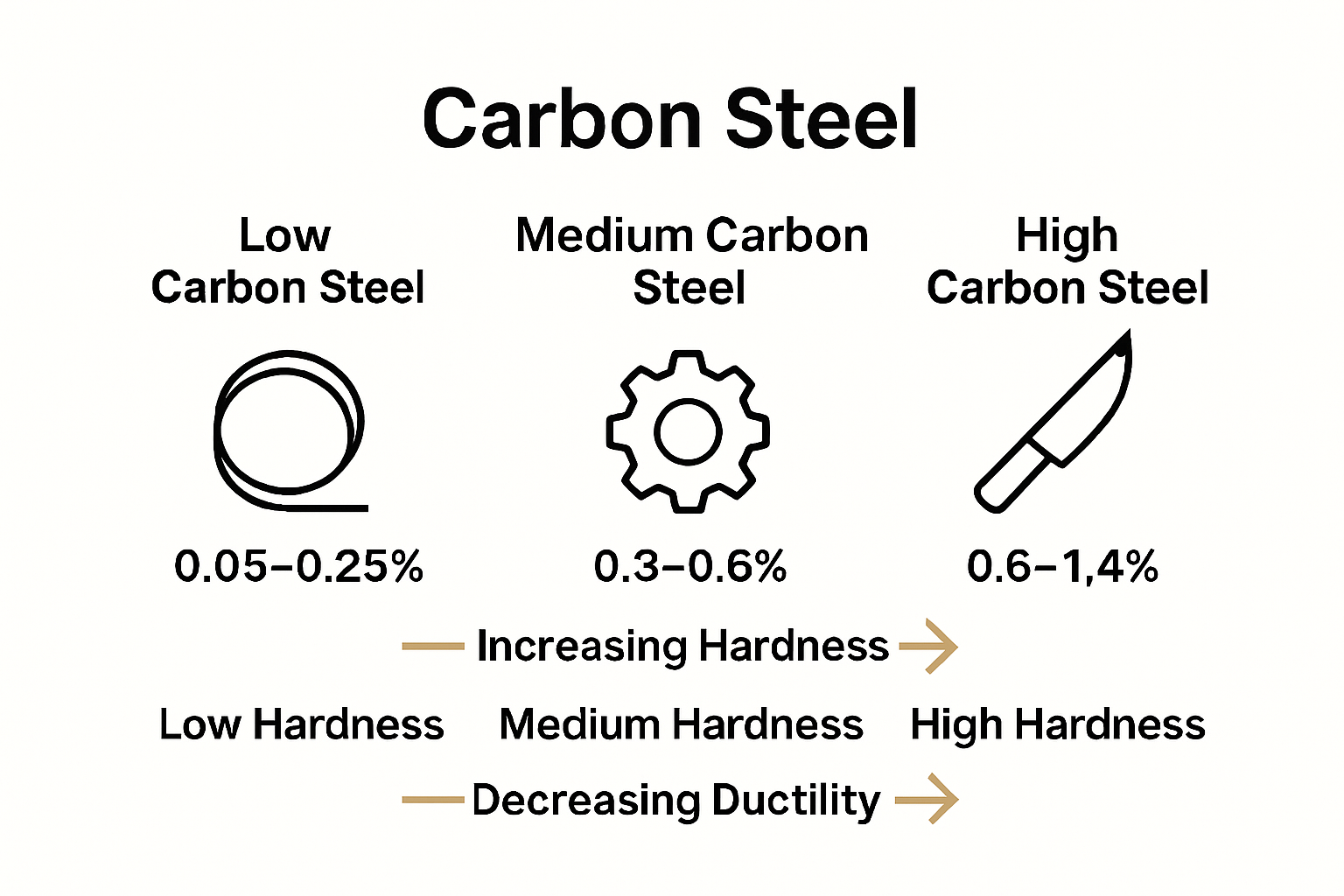
Engineers classify carbon steel into multiple categories based on carbon concentration: low carbon (0.05-0.25%), medium carbon (0.25-0.6%), and high carbon (0.6-2.1%). Each category offers distinct mechanical properties that determine its suitability for specific applications. Carbon steel maintenance techniques become critical in preserving the metal’s intrinsic qualities, ensuring longevity and optimal performance across various industrial and culinary contexts.
Key Raw Materials Used in Production
Iron ore serves as the foundational raw material in carbon steel production, representing the primary source of metallic content. Carbon steel composition relies on a precise combination of iron and carbon, with trace quantities of additional elements that critically influence the metal’s mechanical properties.
The raw material selection process involves multiple critical components:
- Iron ore: The primary metallic base
- Carbon sources: Typically coal or coke
- Alloying elements: Manganese, silicon, phosphorus
- Supplementary minerals: Crucial for refining steel characteristics
Metallurgical research indicates that manganese plays a particularly significant role in carbon steel production. Manganese enhances the steel’s strength and hardness while improving its workability, making it an essential component beyond the primary iron and carbon constituents. The precise balance of these raw materials determines the final steel’s structural integrity, thermal properties, and overall performance across various industrial applications.
The manufacturing process transforms these raw materials through sophisticated metallurgical techniques. High-temperature smelting, precise carbon content management, and careful introduction of alloying elements ensure the creation of carbon steel with specific mechanical characteristics tailored to diverse engineering and culinary requirements. Each raw material contributes unique properties, transforming basic minerals into a versatile and robust metal capable of meeting complex industrial demands.
Step-by-Step Carbon Steel Manufacturing Process
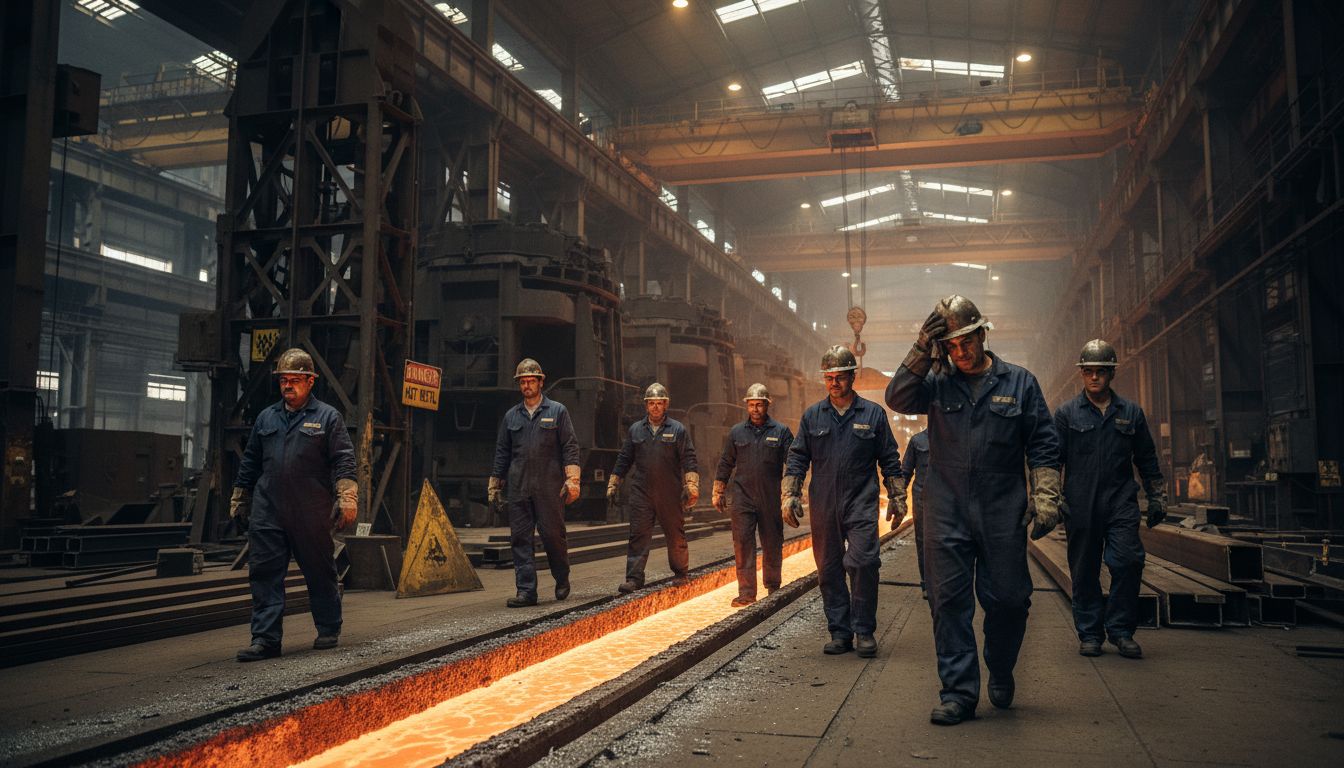
Steel production involves a sophisticated sequence of metallurgical transformations that convert raw materials into a versatile metal. Industrial steel manufacturing begins with the crucial process of iron ore extraction and preparation, setting the foundation for subsequent refinement stages.
The manufacturing process typically follows these primary stages:
-
Iron Ore Preparation
- Mining and extracting raw iron ore
- Crushing and sorting mineral deposits
- Removing impurities through initial processing
-
Smelting and Reduction
- Converting iron ore into molten pig iron
- High-temperature blast furnace processing
- Removing oxygen and additional mineral content
The Bessemer process revolutionised industrial steel production by providing an economical method for mass-producing steel from molten pig iron. This breakthrough technique involves removing impurities through oxidation, dramatically reducing production costs and increasing manufacturing efficiency.

Thermomechanical processing represents a critical stage in steel manufacturing, combining mechanical deformation with precise thermal treatments. This advanced technique allows metallurgists to meticulously control the steel’s microstructure, ensuring optimal mechanical properties. Engineers can manipulate the metal’s strength, ductility, and overall performance by carefully managing temperature and mechanical stress during the production process, transforming raw materials into a precisely engineered final product.
Major Types and Grades of Carbon Steel
Carbon steel classification represents a critical aspect of metallurgical engineering, with each grade offering unique mechanical characteristics. Comprehensive carbon steel types provide insights into the nuanced world of metal composition and performance.
Carbon steel grades are traditionally categorised into three primary classifications based on carbon content:
-
Low-carbon steel (0.05-0.25% carbon)
- Highly ductile
- Excellent weldability
- Used in automotive body panels
-
Medium-carbon steel (0.25-0.6% carbon)
- Enhanced strength
- Better wear resistance
- Commonly used in machinery components
-
High-carbon steel (0.6-2.1% carbon)
- Maximum hardness
- Superior edge retention
- Ideal for cutting tools and specialised applications
Metallurgical research demonstrates that carbon content fundamentally determines a steel’s mechanical properties. The precise percentage of carbon influences characteristics such as tensile strength, hardness, and ductility. Engineers meticulously control these percentages to create materials tailored for specific industrial, culinary, and engineering applications. This nuanced approach allows manufacturers to develop carbon steel products with precisely engineered performance characteristics, ranging from soft and malleable to extremely hard and wear-resistant.
Impact on Cookware Performance and Safety
Carbon steel cookware represents a sophisticated intersection of material science and culinary engineering. Health and safety considerations are paramount when selecting cooking equipment that will directly interact with food.
Carbon steel’s inherent properties contribute significantly to its exceptional performance:
- High heat conductivity for precise temperature control
- Excellent durability ensuring long-lasting kitchen tools
- Natural nonstick surface when properly seasoned
- Chemical-free cooking surface without synthetic coatings
Carbon steel maintenance requires understanding its unique characteristics. While the material offers remarkable strength and hardness, proper care prevents potential safety issues like rust development. Chefs and home cooks must regularly season their cookware, creating a protective layer that enhances both performance and longevity.
The material’s remarkable versatility stems from its ability to withstand extreme temperatures and develop a natural patina that improves cooking performance. Professional kitchens increasingly recognise carbon steel as a superior alternative to traditional nonstick surfaces, appreciating its ability to deliver consistent heat distribution, robust durability, and a completely natural cooking experience without compromising safety or culinary precision.
Comparing Carbon Steel With Alternative Materials
Material selection in cookware represents a critical decision for culinary professionals and home cooks. Carbon steel versus alternative materials reveal nuanced performance characteristics that distinguish this remarkable metal from other cooking surfaces.
Carbon steel’s material properties demonstrate unique advantages compared to traditional cookware materials:
-
Stainless Steel
- Higher corrosion resistance
- More expensive
- Less natural heat conductivity
-
Cast Iron
- Similar heat retention
- Heavier construction
- Slower heat responsiveness
-
Aluminium
- Lightweight
- Rapid heat distribution
- Less durable surface
-
Nonstick Coated Pans
- Synthetic surface
- Limited high-temperature performance
- Shorter functional lifespan
Carbon steel strikes an exceptional balance between performance and practicality. Unlike stainless steel, it offers superior heat conductivity and natural seasoning capabilities. Its strength-to-weight ratio surpasses cast iron, providing professional chefs with a lightweight yet robust cooking surface. The material’s ability to develop a natural nonstick patina distinguishes it from synthetic alternatives, ensuring a healthier and more sustainable cooking experience without compromising thermal performance or durability.
Discover the True Craft of Carbon Steel Cookware for Unmatched Kitchen Performance
Understanding the complex journey of carbon steel from raw materials to polished cookware reveals the true artistry behind durable and high-performance pans. This guide highlights the importance of precise manufacturing and maintenance to achieve cookware that offers exceptional heat conductivity, natural nonstick seasoning, and lasting durability. If you seek cookware that authentically embodies these metallurgical benefits it is time to explore superior options crafted for serious cooks.

Explore our Carbon Steel Collection | Brass&Steel where each pan is forged from a single sheet of carbon steel for seamless strength and superior heat control. Experience our heirloom-quality pans that require simple seasoning to unlock a safe, chemical-free nonstick surface perfect for professionals and home chefs alike. With induction compatibility and minimalist design, these pans are built to transform your culinary skills. Visit Brass & Steel today and take the next step towards elevating your kitchen with cookware engineered for performance and longevity.
Frequently Asked Questions
What are the key raw materials used in carbon steel production?
Carbon steel production primarily relies on iron ore as the foundational material, along with carbon sources like coal or coke, and alloying elements such as manganese, silicon, and phosphorus.
How does the carbon content affect the properties of carbon steel?
The carbon content directly influences the mechanical properties of carbon steel. Low-carbon steel is highly ductile, medium-carbon steel offers enhanced strength and wear resistance, while high-carbon steel provides maximum hardness and superior edge retention.
What is the significance of the Bessemer process in steel manufacturing?
The Bessemer process revolutionised steel production by allowing for the economical mass-production of steel from molten pig iron through oxidation, significantly reducing impurity levels and production costs.
How should carbon steel cookware be maintained for optimal performance?
To maintain carbon steel cookware, it’s essential to regularly season it to create a protective layer against rust, and to avoid prolonged exposure to moisture. Proper care enhances durability and ensures effective cooking performance.