Top uses for carbon steel pans: boost your cooking versatility
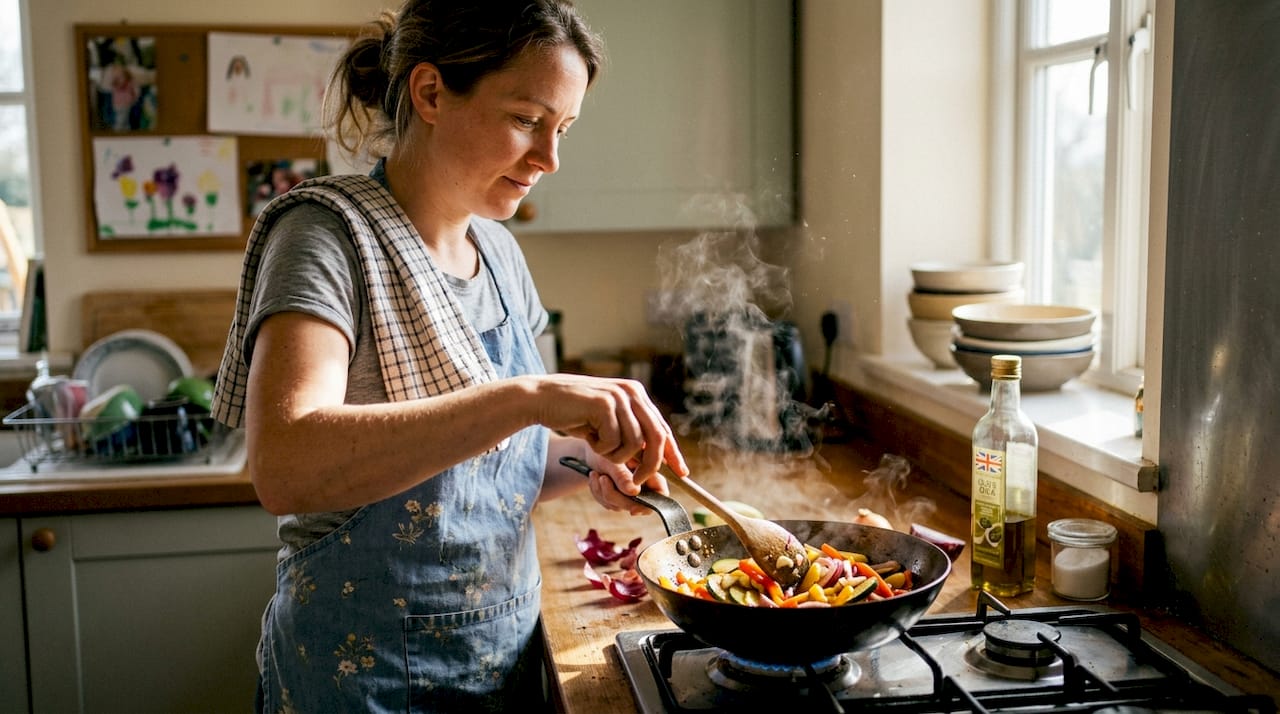
Choosing the right pan for every cooking task is one of those decisions that quietly shapes every meal you make. A carbon steel pan solves this by doing what few other pans can: sear, sauté, roast, and bake with equal confidence. Professional kitchens across Europe have relied on carbon steel for decades, and home cooks are now discovering why. This article walks you through the top uses for a carbon steel pan, so you can get the most from every cook.
Table of Contents
- What makes carbon steel pans so versatile?
- Perfect for searing meats: achieving restaurant-quality results
- Stovetop-to-oven transitions: pan-roasting vegetables and chicken
- Stir-frying and sautéing: fast, crisp, and evenly cooked
- Baking, grilling and other creative uses
- Maintaining performance: longevity tips and common mistakes
- Find your ideal carbon steel pan with Brass & Steel
- Frequently asked questions
Key Takeaways
| Point | Details |
|---|---|
| Versatile for all heat sources | Carbon steel pans function on induction, gas, and electric stovetops and can go in the oven. |
| Searing and sautéing mastery | Home cooks achieve restaurant-quality results when searing meat or sautéing vegetables in carbon steel. |
| Easy handling and quick heating | Compared to cast iron, carbon steel is lighter and heats up faster, making it ideal for frequent, active cooking. |
| Creative options beyond everyday frying | Carbon steel pans excel at baking pizzas, grilling, and inventive recipes when used correctly. |
| Proper care ensures durability | Maintaining the pan’s seasoning and avoiding acidic foods preserves performance and longevity. |
What makes carbon steel pans so versatile?
Carbon steel pans earn their reputation through a combination of properties that few other materials can match. They respond to heat changes almost instantly, which gives you precise control whether you’re searing a steak or gently finishing a sauce. That responsiveness is the foundation of their versatility.
Here’s what sets carbon steel apart from other pan materials:
- Heat responsiveness: The pan heats and cools quickly, giving you real-time control over cooking temperature.
- Lighter weight: Carbon steel is lighter than cast iron, making it easier to handle, toss ingredients, and move between hob and oven.
- Natural nonstick surface: A well-seasoned pan builds a safe, non-toxic patina that improves with every use.
- Universal compatibility: Carbon steel works on gas, electric, ceramic, and induction hobs without any adapters.
- Oven safe: The single-piece construction means there are no plastic handles or rivets to worry about at high temperatures.
French brands such as de Buyer and Matfer are preferred in professional kitchens precisely because of these traits. The good news is that the same performance is available to home cooks. Understanding the carbon steel pan benefits in detail helps you choose the right pan for your kitchen. If you’re curious about production quality, learning how carbon steel pans are made gives useful context on why single-piece forging matters.
Pro Tip: When choosing a carbon steel pan, look for a smooth, even cooking surface. Rough or uneven steel makes it harder to build a consistent seasoning layer, which is what gives you that natural nonstick quality over time.
Perfect for searing meats: achieving restaurant-quality results
Searing is where carbon steel pans genuinely excel. The goal when searing is to create a deep, golden crust through the Maillard reaction, a process where proteins and sugars on the meat’s surface transform under high heat into complex, savoury flavours. Carbon steel handles this brilliantly.
The key advantage is speed. Carbon steel heats up in 2 to 3 minutes, compared to 10 to 15 minutes for cast iron. That means less waiting and more control over when you introduce the meat. Once the pan is hot, it holds that heat steadily enough to produce an even crust without steaming the surface.
Here’s what you can sear confidently in a carbon steel pan:
- Steak: Ribeye, sirloin, and fillet all develop excellent crusts with minimal sticking on a seasoned surface.
- Chicken thighs: Skin-on thighs render beautifully, producing crisp skin without burning.
- Duck breast: The pan handles the fat rendering process well, keeping the skin golden rather than soggy.
- Pork chops: Thick-cut chops benefit from the pan’s ability to maintain high heat throughout the sear.
Brands like Mauviel, Matfer, and de Buyer are cited by professionals as rivals to cast iron for high-heat searing. The difference is that carbon steel gives you more agility. You can read more about the trade-offs in our carbon steel vs cast iron comparison.
Carbon steel pans rival cast iron for high-heat searing and are favoured by professional chefs across Europe for their speed and control.
Pro Tip: Preheat your carbon steel pan for at least 3 minutes over medium-high heat before adding any oil or meat. A cold pan causes sticking and uneven browning. The pan is ready when a drop of water evaporates on contact.
Stovetop-to-oven transitions: pan-roasting vegetables and chicken
One of the most practical features of a carbon steel pan is its ability to move seamlessly from hob to oven. There are no plastic components, no rubber seals, and no coatings that degrade at high temperatures. The pan is simply steel, which means it can handle whatever your oven demands.
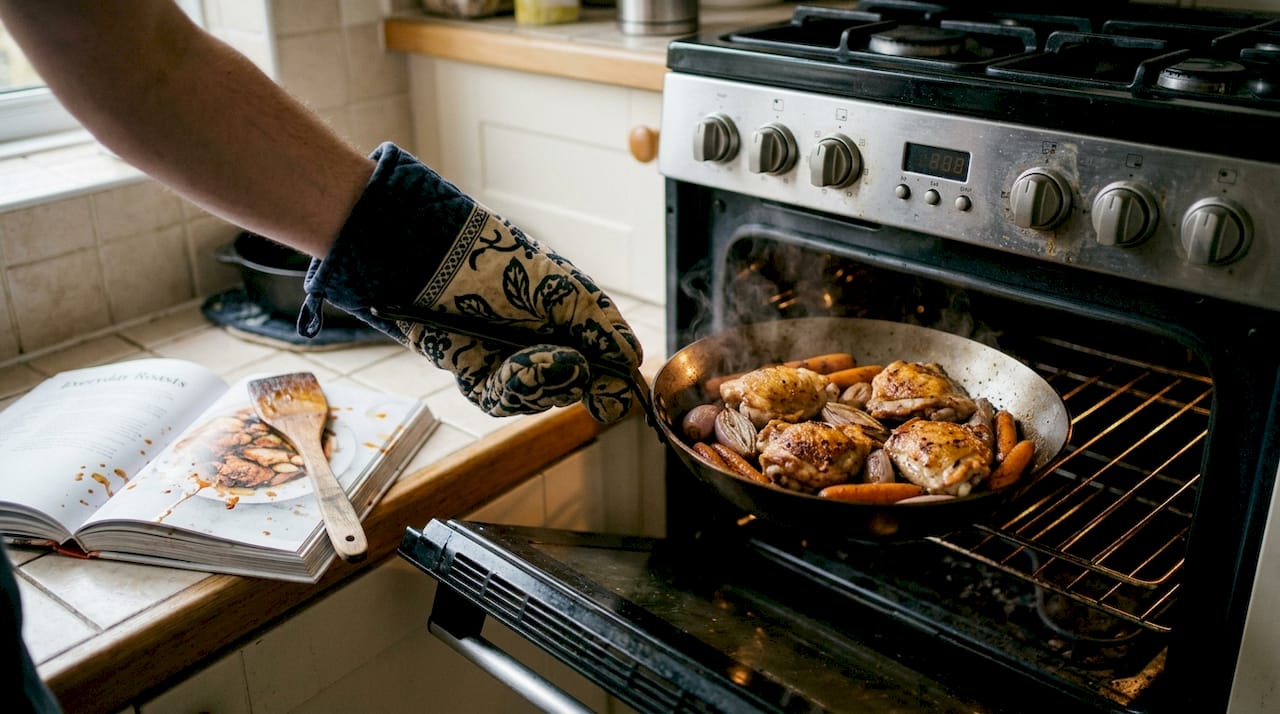
Carbon steel is oven-safe and compatible with all heat sources, making it ideal for pan-roasting techniques where you start on the hob and finish in the oven. This is the method used in professional kitchens for chicken supremes, whole fish, and root vegetables.
Comparison: oven-safe features across pan types
| Pan type | Oven safe | Max temperature | Hob to oven | Weight |
|---|---|---|---|---|
| Carbon steel | Yes | 250°C+ | Yes | Light to medium |
| Cast iron | Yes | 250°C+ | Yes | Heavy |
| Nonstick (PTFE) | Limited | ~180°C | Risky | Light |
| Stainless steel | Yes | 250°C+ | Yes | Medium |
| Ceramic coated | Limited | ~220°C | Sometimes | Medium |
Here’s how to pan-roast chicken thighs using a carbon steel pan:
- Preheat your pan on the hob over medium-high heat for 3 minutes.
- Add a small amount of high-smoke-point oil such as grapeseed or avocado oil.
- Place chicken thighs skin-side down and sear for 4 to 5 minutes until the skin is golden.
- Flip the thighs, then transfer the pan directly to a preheated oven at 200°C.
- Roast for 18 to 22 minutes until cooked through.
- Remove from the oven and rest the chicken in the pan for 5 minutes before serving.
Because carbon steel cools faster than cast iron, food is less likely to overcook once removed from the heat. Proper carbon steel pan maintenance after oven use keeps the seasoning intact. For a full routine, the carbon steel pan upkeep guide covers everything you need.
Stir-frying and sautéing: fast, crisp, and evenly cooked
For quick, high-heat cooking, carbon steel is arguably the best tool available to a home cook. Stir-frying demands a pan that heats fast, responds immediately to temperature changes, and is light enough to toss ingredients without effort. Carbon steel delivers on all three.
The lighter weight compared to cast iron makes a real difference when you’re moving the pan constantly. A 27 cm carbon steel pan weighs around 2 kg, which is manageable even during extended cooking sessions. The 30 cm version at 3 kg still handles well compared to a cast iron skillet of similar size.
Weight and heat-up speed: carbon steel vs other pan types
| Pan type | Approx. weight (30 cm) | Heat-up time | Tossing ease |
|---|---|---|---|
| Carbon steel | 3 kg | 2 to 3 min | Excellent |
| Cast iron | 5 to 6 kg | 10 to 15 min | Difficult |
| Stainless steel | 2 to 3 kg | 2 to 3 min | Good |
| Nonstick | 1 to 2 kg | 1 to 2 min | Excellent |
Ingredients and techniques that work brilliantly in a carbon steel pan:
- Vegetables: Courgette, peppers, broccoli, and green beans all char and crisp without going soggy.
- Prawns: Cook in under 2 minutes on high heat with a beautiful caramelised exterior.
- Noodles: Toss with sauce directly in the pan for even coating and slight char.
- Eggs: A well-seasoned pan handles scrambled eggs and omelettes with ease.
- Tofu: Achieves a firm, golden crust that nonstick pans rarely manage.
For guidance on keeping the cooking surface in top condition, the carbon steel surface care guide is worth bookmarking.
Baking, grilling and other creative uses
Most home cooks think of carbon steel as a hob pan, but its oven compatibility opens up a wider range of uses. Because the pan retains heat well and has no coatings to worry about, it performs surprisingly well for baking and grilling tasks.
Creative uses worth trying:
- Pizza: Preheat the pan in the oven, then add your dough for a crisp base that rivals a pizza stone.
- Flatbreads: Cook directly on the hob over high heat for charred, blistered results.
- Grilled sandwiches: Press down with a weight for even contact and a golden crust.
- Cornbread: Bake directly in the pan for a crisp, caramelised bottom crust.
- Frittata: Start on the hob, finish in the oven for an evenly set result.
There is one important limitation. Acidic foods and long simmers can strip the seasoning from your pan. Tomato-based sauces, wine reductions, and citrus-heavy dishes should be cooked in stainless steel or enamelled cast iron instead. Reserve your carbon steel for dry heat, high-heat cooking, and fat-based sautés.
Pro Tip: Use stainless steel for acidic dishes and keep your carbon steel pan for dry heat cooking. This protects the seasoning you’ve worked hard to build and keeps the surface performing at its best.
Before trying new recipes, check the carbon steel seasoning checklist to make sure your pan is ready. If you need to build seasoning from scratch, the step-by-step seasoning guide walks you through the full process.
Maintaining performance: longevity tips and common mistakes
A carbon steel pan can last a lifetime if you treat it correctly. The seasoning layer, which is the thin polymerised oil coating that builds up over time, is both the pan’s nonstick surface and its protection against rust. Protecting it is straightforward once you know the rules.
Using your pan for acidic foods is one of the most common mistakes. Seasoning strips quickly when the pan is exposed to tomatoes, vinegar, or citrus for extended periods. Another common error is leaving the pan wet after washing, which causes rust to form within hours.
Here’s a simple cleaning and seasoning routine to follow after every use:
- Allow the pan to cool slightly before washing. Never plunge a hot pan into cold water as this can cause warping.
- Rinse with warm water and use a soft brush or cloth to remove food residue. Avoid soap unless absolutely necessary.
- Dry the pan immediately and thoroughly using a clean cloth or by placing it briefly on a warm hob.
- Apply a very thin layer of high-smoke-point oil such as grapeseed or sunflower oil using a folded piece of kitchen paper.
- Wipe off any excess so the surface looks almost dry, not greasy.
- Store in a dry place, ideally with a paper towel inside to absorb any moisture.
For a complete overview of care habits, the best carbon steel care practices guide covers everything from daily cleaning to full re-seasoning. If rust does appear, the avoiding rust on pans guide explains how to remove it and restore the surface quickly.
Find your ideal carbon steel pan with Brass & Steel
If this article has convinced you that a carbon steel pan belongs in your kitchen, the next step is choosing the right one. At Brass & Steel, we make carbon steel pans forged from a single piece of steel, with no rivets, no coatings, and no compromises on performance.
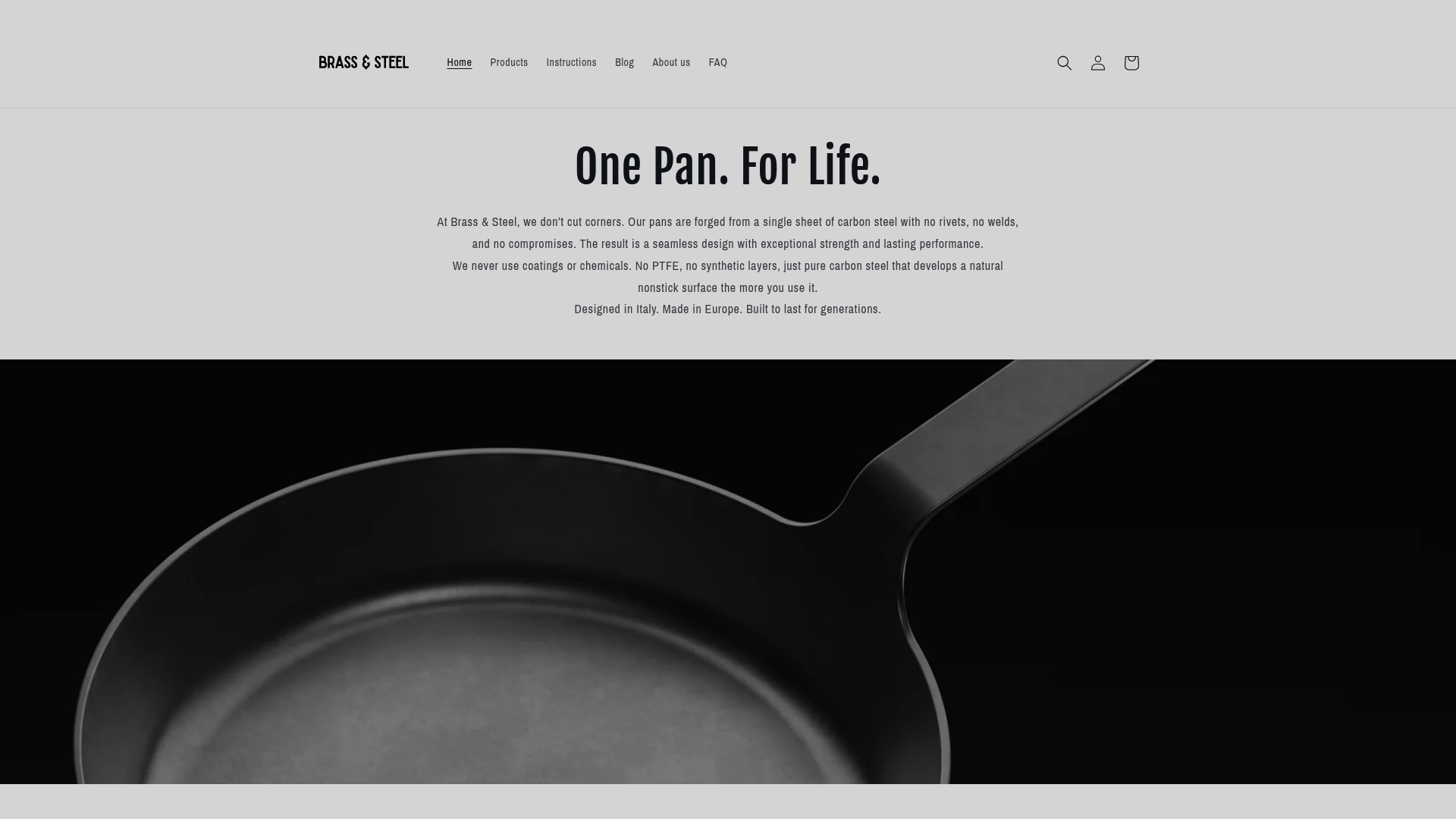
Our carbon steel pan range includes the 27 cm sauté pan at €99 for everyday cooking and the 30 cm sauté pan at €119 for larger meals and family cooking. Both are induction compatible, oven safe, and built to develop a natural nonstick surface over time. Alongside our pans, we offer a full library of guides covering seasoning, maintenance, and technique. Explore the carbon steel pan buying tips to find the right size and thickness for your cooking style.
Frequently asked questions
Can carbon steel pans be used on induction stovetops?
Yes. Carbon steel is magnetic and works on all heat sources, including induction. Use moderate power settings when the pan is cold or empty to avoid thermal shock.
Why are carbon steel pans preferred over cast iron in Europe?
Carbon steel is lighter and heats faster than cast iron, making it easier to handle during active cooking. French brands are favoured by professionals across Europe for precisely these reasons.
How should I clean and season my carbon steel pan?
Rinse with warm water, dry immediately, and apply a thin coat of oil after each use. Regular seasoning prevents rust and maintains the nonstick surface over time.
Are there any foods I should avoid cooking in carbon steel pans?
Yes. Acidic foods strip seasoning from the pan, so avoid tomato-based sauces, wine reductions, and dishes with prolonged exposure to citrus or vinegar.