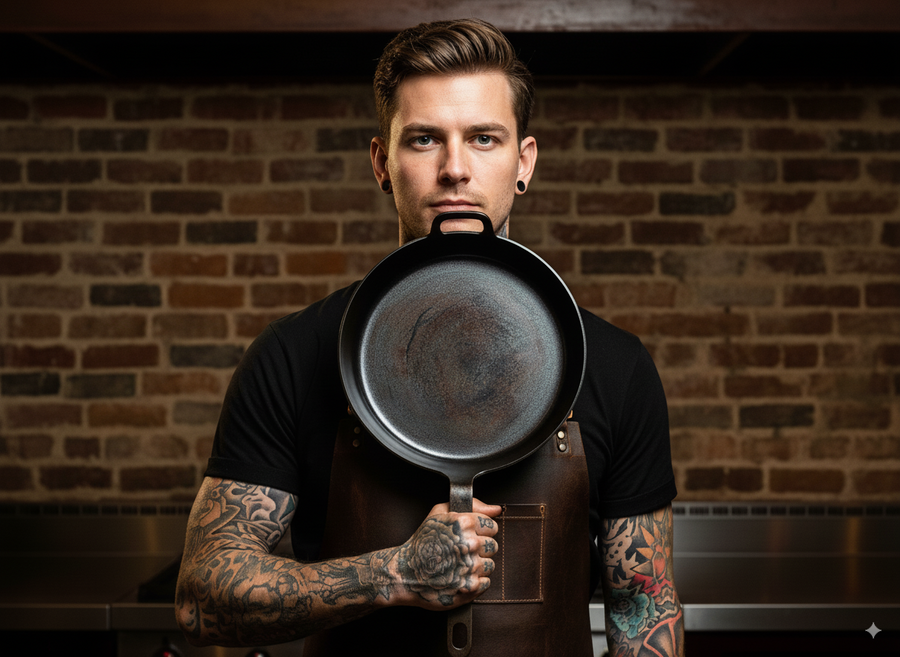
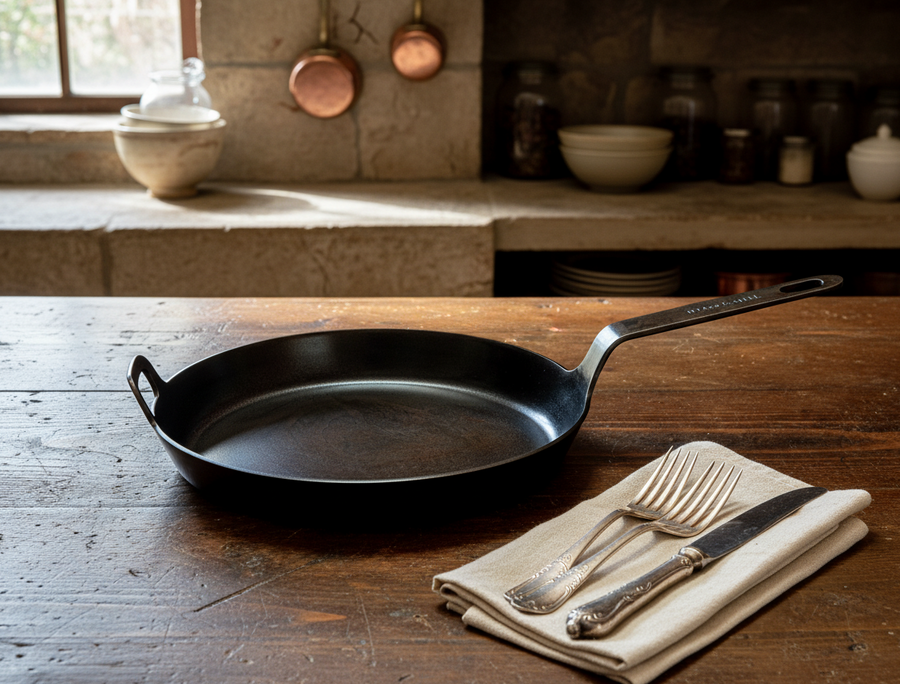
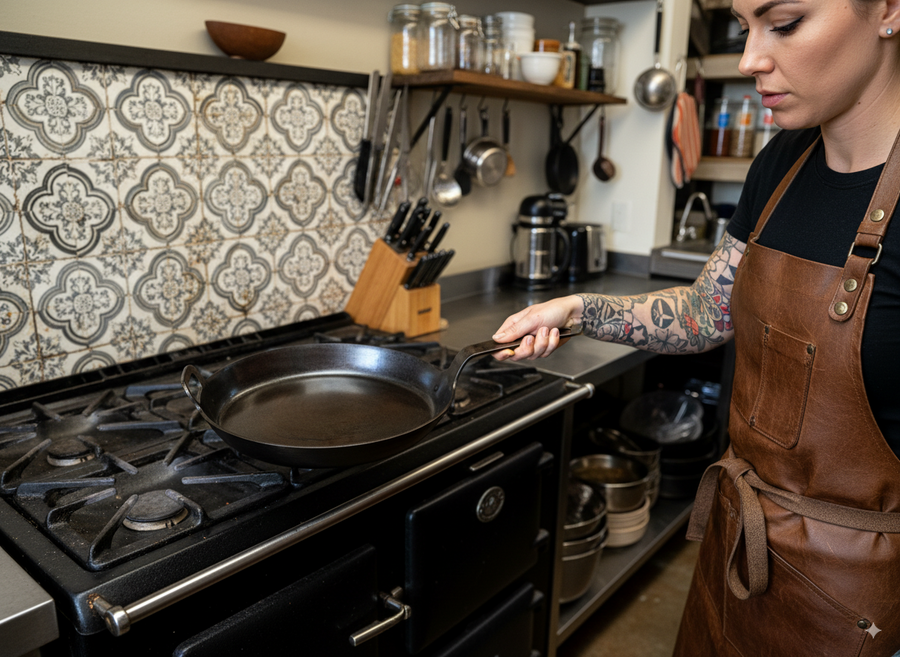
What makes cookware futureproof: a buyer's guide
TL;DR:
- Futureproof cookware lasts over a decade, adapts to new hob technology, and is repairable to reduce waste. Materials like cast iron, carbon steel, and high-quality stainless steel with proper bases are essential for durability and environmental sustainability. Proper maintenance, careful selection, and inspecting handle attachments and base flatness are crucial for long-term performance.
Most people buying cookware focus on price, appearance, or a brand name they recognise. What makes cookware futureproof, though, is a different question entirely, and the answer goes far beyond a trendy eco-label or a nonstick surface that promises the world. Real futureproofing means your cookware survives a decade of hard use, adapts to new hob technology, and does not end up in landfill after three years. This guide breaks down exactly what to look for, why common choices often disappoint, and how to invest wisely in kitchenware that genuinely lasts.
Table of Contents
- Key takeaways
- What makes cookware futureproof: materials and build quality
- Thermal shock, warping, and induction compatibility
- Coatings, safety, and end-of-life considerations
- Practical buying and maintenance advice
- My honest take on futureproof cookware
- Brass-steel carbon steel pans: built to last
- FAQ
Key takeaways
| Point | Details |
|---|---|
| Lifespan drives sustainability | Cast iron and carbon steel pans lasting decades have far lower environmental costs than cheap nonstick replaced every few years. |
| Base construction is non-negotiable | Thick, properly bonded bases resist warping on induction and prevent uneven cooking over time. |
| Coatings need honest scrutiny | A non-toxic label means little if the surface degrades within two years and ends up in the bin. |
| Repairability extends lifespan | Brands offering replacement handles, lids, and knobs let you repair rather than replace. |
| Maintenance habits matter | Seasoning, gradual preheating, and correct cleaning are what separate a 10-year pan from a 2-year one. |
What makes cookware futureproof: materials and build quality
The foundation of any futureproof pan is what it is made from and how it is put together. No amount of marketing changes the physics of a thin base or a poorly fitted handle.
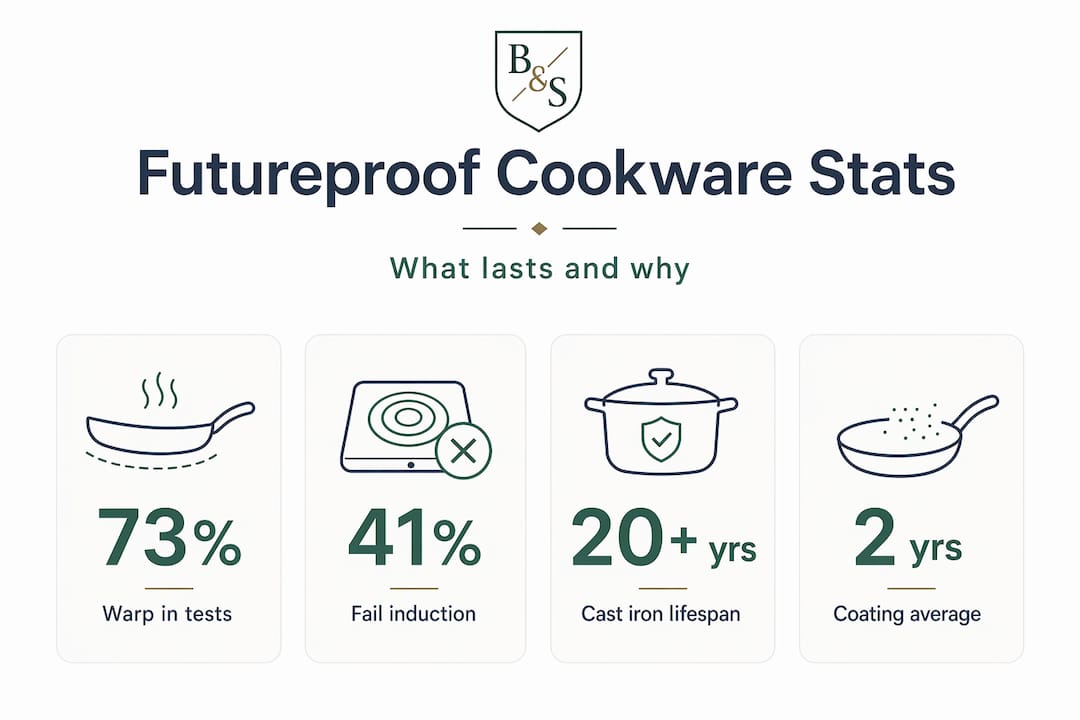
Cast iron, carbon steel, and stainless steel have all demonstrated lifespans of 20 to 50 years with proper care. Compare that to a standard nonstick pan replaced every one to three years, and the environmental and financial case for durable materials becomes obvious. Annualised environmental costs for long-lasting pans sit at roughly £2 to £6, versus significantly more for repeated replacements.
Here are the material properties that matter most:
- Carbon steel builds a natural seasoned patina over time, improving with every use. No synthetic coatings, no PTFE, and no PFOA. It is lighter than cast iron while offering comparable heat retention.
- Cast iron is virtually indestructible but heavy. Excellent for long braises and high-heat searing, though slow to respond to temperature changes.
- Stainless steel resists corrosion and is dishwasher safe, but performs better with a proper aluminium or copper core for heat distribution.
- Cheap coatings such as basic ceramic or thin fluoropolymer layers wear quickly, creating both waste and a performance drop within months.
Base construction is just as telling as the material itself. Tri-ply construction with an aluminium core and stainless steel exterior relieves thermal stress through lateral heat distribution, preventing base deformation far better than simple disc-bonded bottoms. A thick, single-material base, as found in quality carbon steel pans, offers a similar advantage by expanding uniformly.
Handle attachment is an area most buyers overlook entirely. Riveted handles loosen gradually over time, which gives you a warning before failure. Welded handles, when well-made, are cleaner and easier to maintain, but a poor weld can fail suddenly. For pans over 2 kg, the quality of that joint matters enormously.
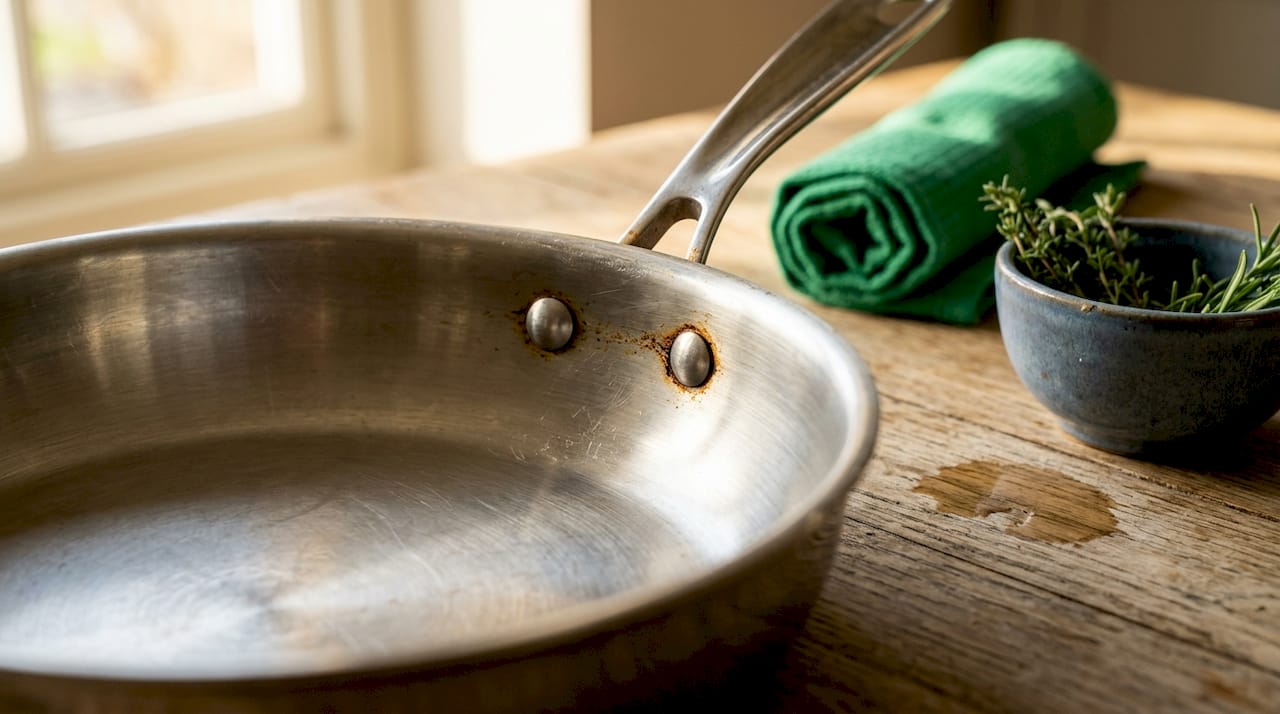
Pro Tip: Run your finger around any rivet heads before buying. Raised or uneven rivets collect food residue and are a sign of lower manufacturing standards.
| Feature | What to look for | What to avoid |
|---|---|---|
| Base material | Carbon steel, stainless, cast iron | Thin aluminium only |
| Base construction | Tri-ply or single-piece forging | Glued disc bottoms |
| Surface | Seasoned metal or quality enamel | Thin ceramic or PTFE coatings |
| Handle attachment | Quality welds or tight rivets | Loose rivets, plastic fittings |
| Weight and balance | Proportionate to pan size | Handle too heavy for pan body |
Thermal shock, warping, and induction compatibility
This is where a lot of “induction-ready” cookware quietly fails. A magnetic base sticker does not make a pan induction-compatible in any meaningful sense.
Induction hobs can apply up to 5000W instantly, causing metal atoms to vibrate at a rate that thin or poorly bonded bases simply cannot handle. When layers in a composite base expand at different rates, the base crowns, warps, and loses contact with the hob. Your food cooks unevenly, and the hob surface can be scratched or damaged.
Lab testing makes the scale of this problem clear. 73% of ceramic nonstick pans develop micro-warping after 180 thermal cycles, while copper-infused stainless steel shows zero warping under the same conditions. That gap in performance is what separates genuinely durable cookware features from those that just sound good on a box.
The fix is molecular-level bonding. High-pressure impact bonding fuses metallic layers under more than 1,600 tonnes of force, so they expand and contract as a single unit. Single-piece forged carbon steel works on the same principle because there are no separate layers to delaminate. A carbon steel pan forged from one sheet has no joints to stress under heat.
How does warping happen in real kitchens? The most common cause is cold water on a hot pan. Running a screaming hot pan under the tap causes the metal to contract unevenly in seconds. The base distorts slightly each time, and after a dozen such incidents, you have a pan that rocks on the hob.
Here is what to check before buying:
- Place a ruler flat across the base. Any gap over 1 mm signals a manufacturing problem.
- Hold a magnet to the base. It should grip strongly across the entire surface, not just the centre.
- Check the manufacturer’s base thickness specification. Below 3 mm in carbon steel or stainless steel is a red flag for induction use.
- Ask whether the pan has been tested specifically for induction at high settings, not just “compatible.”
41% of 112 induction-compatible pots failed base flatness and magnetic continuity tests within 90 days in consumer testing. That is not a small problem. That is nearly half of what is sold.
Pro Tip: Preheat your pan gradually on induction. Start on a medium setting for 60 to 90 seconds before raising the heat. This gives the base time to expand evenly and dramatically reduces warping risk over the pan’s life.
Coatings, safety, and end-of-life considerations
“Non-toxic” has become a marketing shorthand that does not tell you much on its own. A coating can be safe to cook on and still be a sustainability failure if it only lasts 18 months.
Enamel coatings offer a durable, inert surface and are a solid choice for those who want a safe cooking surface without seasoning. The catch is that enamel chips under thermal shock, and once chipped, the pan typically cannot be repaired. You need to handle it carefully and avoid rapid temperature changes. For the right cook, it is an excellent long-term option. For someone who routinely moves pans from hob to cold water, it is not.
Plant-based and biodegradable coatings are a growing category. Some perform well initially, but many degrade faster than traditional options under regular high-heat cooking. If a coating advertises itself as biodegradable, that is also a description of its durability under heat.
Repairability is an underrated factor in sustainable cookware choices. Brands that supply replacement parts such as lids, knobs, and handles allow you to repair rather than replace. This single factor can double or triple the working life of a pan. Before buying, check whether the brand stocks spare parts and how long they commit to doing so.
End-of-life matters too. Carbon steel and cast iron are recyclable. Most polymer-coated cookware is not, because separating the coating from the metal base is not commercially viable at scale. If you care about what happens to your cookware at the end of its life, material choice at the point of purchase determines your options decades later.
Pro Tip: Before choosing a brand, search their website for spare parts and warranty terms. If they do not stock replacement handles or lids, that is a signal about how they view product longevity.
Practical buying and maintenance advice
Knowing what to look for is one thing. Applying it in a shop or online is another. Here is a working approach to choosing cookware that genuinely lasts.
- Test the base before buying. Bring a small ruler and a magnet to the shop. Check flatness and magnetic coverage. For online purchases, check the specifications for base thickness and read reviews specifically mentioning performance after 12 months of use.
- Match the pan to your hob. Carbon steel and thick stainless steel perform best on induction. Copper is responsive on gas but loses its edge on induction without a bonded steel base.
- Assess handle quality for your pan size. A 30 cm pan weighs around 3 kg empty. The handle needs a joint that can support that weight comfortably in a single hand. Check whether the handle is integrated or attached, and how securely.
- Check warranty length and scope. A meaningful warranty covers manufacturing defects for at least five years. Lifetime warranties that exclude “normal wear” often cover very little in practice. Read the terms.
- Build a maintenance habit from day one. For carbon steel, season before first use and re-season periodically. After each cook, rinse with warm water, dry immediately, and apply a very light coat of oil. Avoid soaking at all costs.
- Avoid thermal shocks in daily use. Do not pour cold liquid into a screaming hot pan. Do not put a hot pan under cold water. These habits alone will extend your pan’s functional life by years.
- Cook fatty foods regularly on carbon steel. Eggs, bacon, and sautéed vegetables all contribute to building a stronger seasoned layer. A well-used carbon steel pan actually improves over years of cooking.
Following these steps is what cookware longevity looks like in practice. The pan does not do it alone.
My honest take on futureproof cookware
I have seen kitchens where a single carbon steel pan has been cooking daily for 15 years, and kitchens where a brand-new nonstick set is already halfway to the bin after 18 months. The difference is almost never about which pan was more expensive at purchase. It is about construction quality, material honesty, and whether the cook learned how to maintain what they bought.
What frustrates me most is the number of “eco-friendly” labels applied to cookware that will not survive two years of real cooking. A plant-based coating that degrades under high heat is not a sustainable cookware choice. It is a marketing story. True sustainability in the kitchen comes from a pan that outlasts several rounds of its cheaper competitors.
Induction compatibility claims deserve particular scepticism. I have cooked on pans that passed their own brand’s “induction ready” test and were visibly warped within a few months. A solid, thick base with proper magnetic coverage across its full surface is the only version of induction-ready that means anything.
Handle attachment quality is the sleeper issue nobody talks about in buying guides. I would rather have a pan with slightly less impressive heat retention than one with a handle that starts wobbling after a year. Check that joint before anything else.
My advice is to think in decades, not years. One good pan bought once, maintained well, costs less, performs better, and produces less waste than three mediocre ones bought in sequence.
— Davide
Brass-steel carbon steel pans: built to last
If the principles above describe what you are looking for, Brass-steel builds carbon steel pans that tick every one of those boxes.
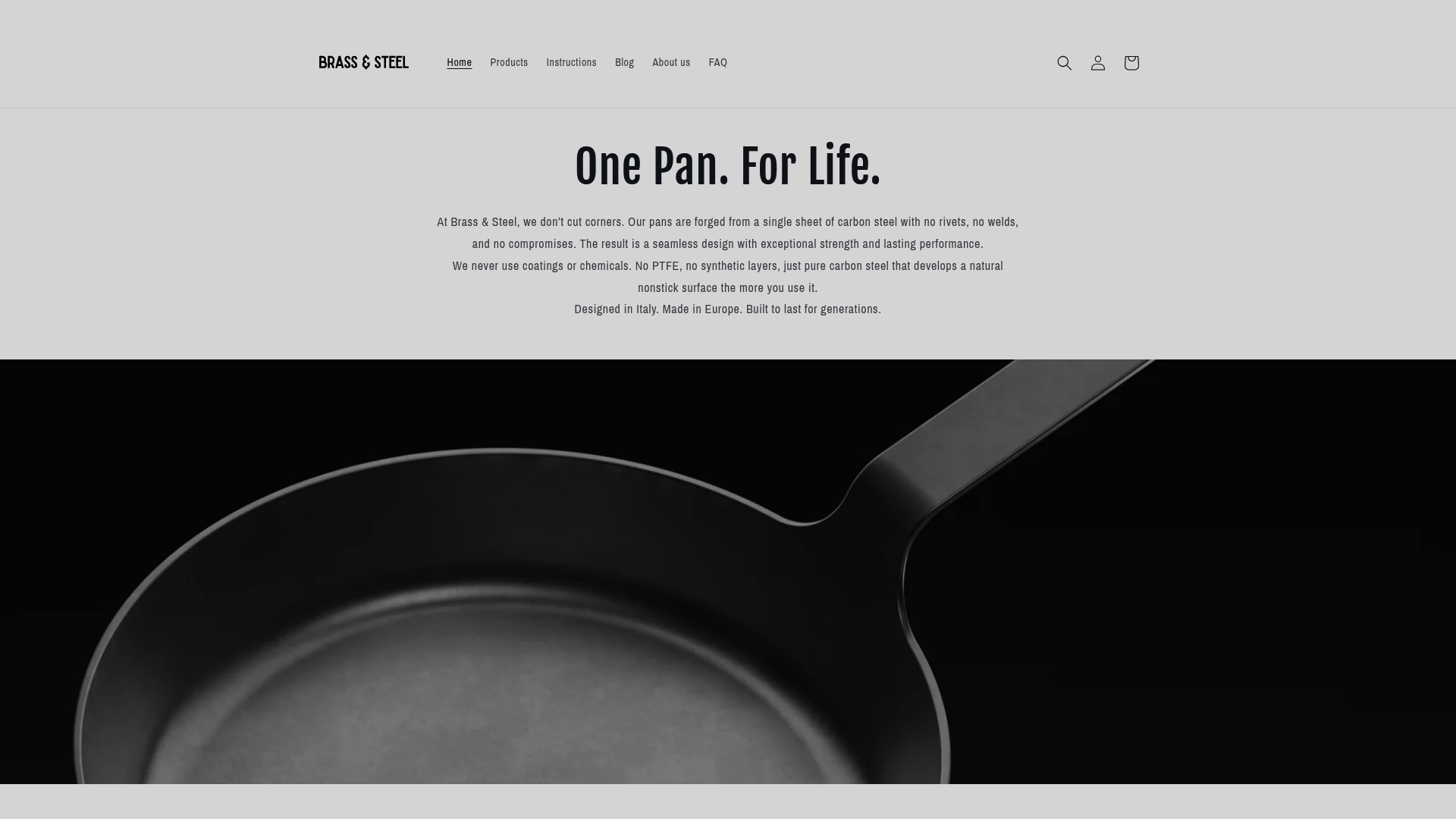
Every Brass-steel pan is forged from a single sheet of carbon steel, which eliminates the welds, rivets, and bonded disc bases that cause most long-term failures. The result is a pan that expands uniformly under heat, works on all hob types including induction, and builds a natural nonstick seasoning that improves with use. No PTFE, no PFOA, no synthetic coatings to degrade and replace.
The 27 cm and 30 cm carbon steel sauté pans are made at 3 mm and 4 mm thickness respectively, with bases engineered for both domestic and professional induction use. Brass-steel also publishes full care guides and supports customers throughout the lifetime of each pan, because a pan that lasts 20 years only does so with the right start. Browse the full range and invest in cookware that genuinely earns its place in your kitchen for good.
FAQ
What is the most important factor in futureproof cookware?
Lifespan is the single biggest factor. Cast iron and carbon steel pans lasting 20 to 50 years have dramatically lower environmental and financial costs than nonstick alternatives replaced every one to three years.
How do I know if a pan is truly induction compatible?
Check that the base has strong magnetic coverage across its full surface, not just the centre. Consumer testing found that nearly half of induction-labelled pots failed base flatness tests within 90 days of purchase.
Does a non-toxic coating make cookware sustainable?
Not on its own. A coating can be chemically safe but still fail within two years, sending the pan to landfill. Genuinely eco-friendly cookware options combine a safe surface with a long lifespan and, where possible, recyclable materials.
Why does cookware warp, and can it be prevented?
Warping is caused by uneven thermal expansion, most often from rapid heating or sudden cooling. Using gradual preheating, avoiding cold water on a hot pan, and choosing pans with thick, well-bonded or single-piece bases prevents the vast majority of warping.
Is a riveted handle better than a welded one?
Both can be durable when well-made. Riveted handles loosen progressively, giving you a warning before failure. Welded handles are cleaner but depend entirely on weld quality. For heavy pans, inspect the joint carefully before buying.