What is artisan cookware: a guide for home cooks
TL;DR:
- Artisan cookware is handmade, built for long-term use and tailored to material behavior under heat. It outperforms mass-produced pans in lifespan, durability, and environmental sustainability by avoiding synthetic coatings. Proper care and attention enhance performance, making it ideal for cooks seeking control, longevity, and mindful cooking experiences.
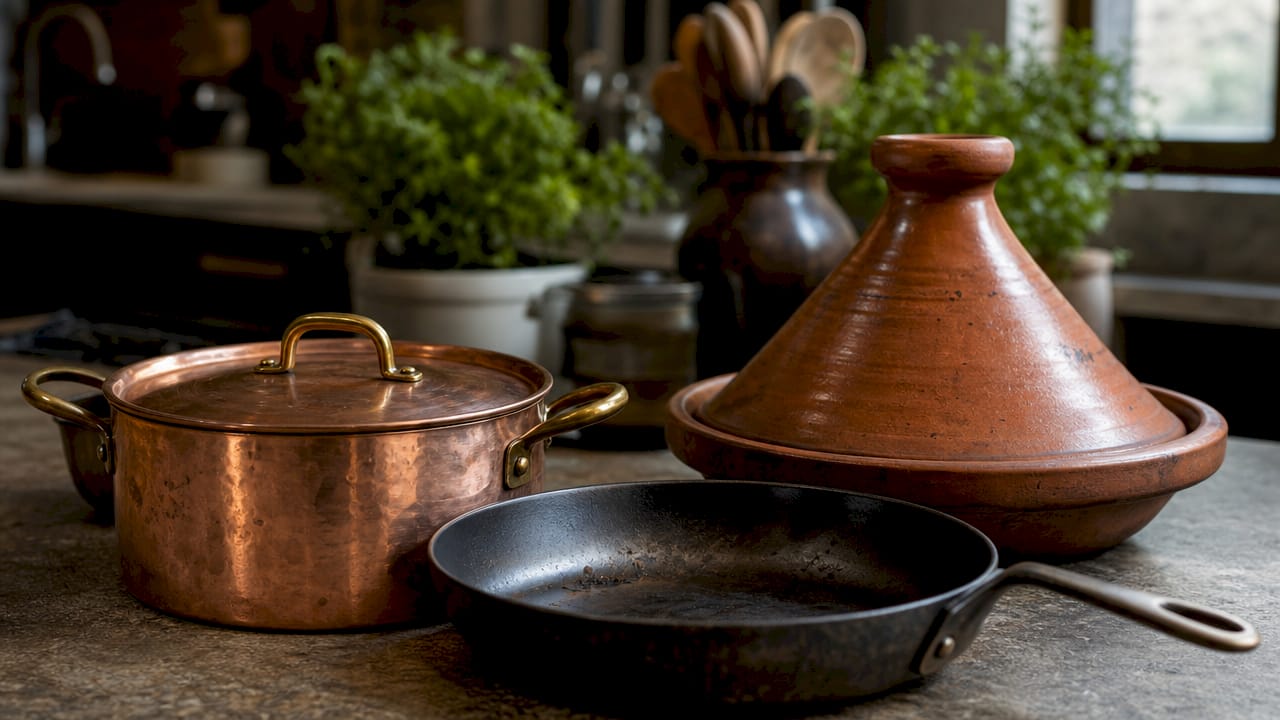
Artisan cookware is handmade kitchenware crafted with material intelligence, built to last a lifetime rather than a few seasons. Unlike factory-produced pans stamped out by the thousand, each artisan piece is shaped by a maker who understands how the raw material behaves under heat, pressure, and daily use. The most common materials are clay, copper, brass, and carbon steel, each chosen for specific cooking advantages. Artisan cookware functions as a partner in cooking rather than a mere container, engaging the cook in an interactive process that rewards patience and attention.
How does artisan cookware differ from mass-produced cookware?
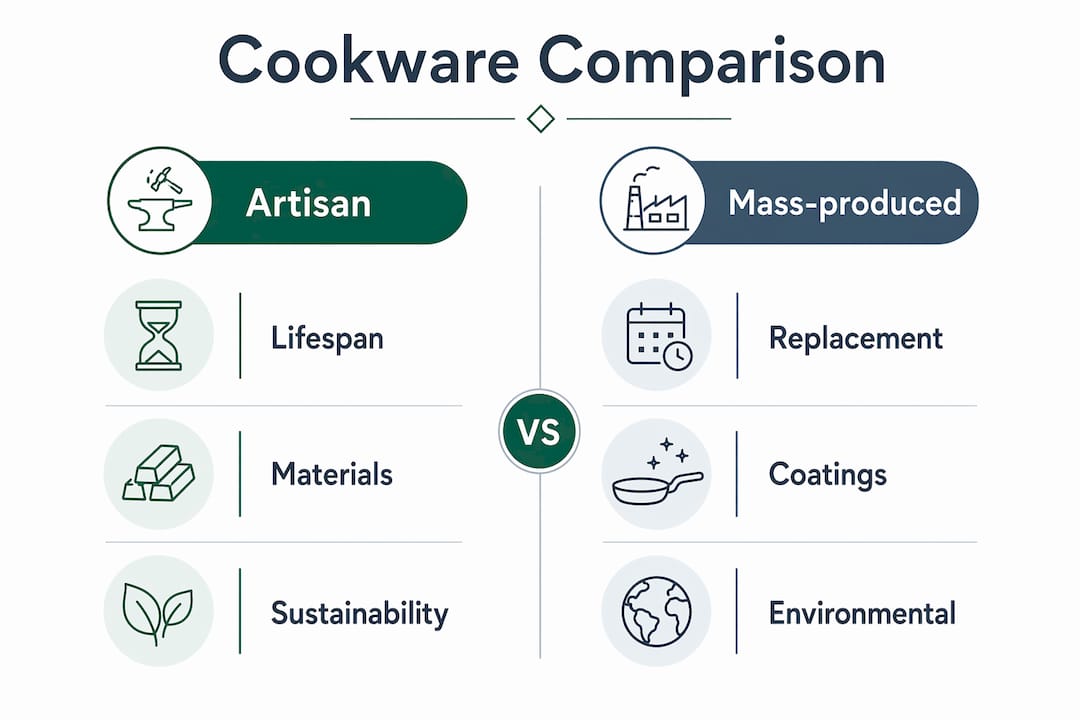
The clearest difference is lifespan. Mass-produced non-stick pans have a 2–3 year replacement cycle due to coating degradation. Artisan cookware, made from carbon steel, copper, or clay, is designed for lifelong durability. That gap in longevity is not just about quality. It changes the economics entirely: one well-made pan outlasts a dozen cheap replacements.
The manufacturing process is equally different. Mass-market cookware is pressed, coated, and assembled on automated lines built for speed. Artisan cookware involves hand hammering, forging, and shaping by skilled craftspeople who respond to the material as they work. Hand-hammered copper and brass cookware exhibits enhanced heat performance and unique surface texture. That texture is not decorative. It increases surface area, which improves heat distribution across the pan.
Sustainability is another real distinction. Artisan cookware typically uses local or traceable materials and skips the synthetic coatings that degrade and end up in landfill. A carbon steel pan from Brass-steel, for example, is forged in one piece from a single sheet of steel, with no rivets, no welds, and no PTFE or PFOA coatings. It seasons naturally over time, building a non-toxic patina that actually improves with use.
Pro Tip: When comparing handmade cookware options, look at the construction method first. A single-piece forged pan will always outperform a riveted or welded equivalent in both strength and hygiene.
| Feature | Artisan cookware | Mass-produced cookware |
|---|---|---|
| Lifespan | Decades to generations | 2–3 years (non-stick coating) |
| Construction | Hand-forged, hammered, or thrown | Automated pressing and assembly |
| Surface | Natural seasoning or raw material | Synthetic non-stick coating |
| Sustainability | Minimal waste, no toxic coatings | Frequent replacement, coating disposal |
| Cost | Higher upfront, lower long-term | Low upfront, high replacement cost |
What materials are used in artisan cookware?
The material defines everything: how the pan heats, how it feels in your hand, and what it does to your food. Each artisan material has a distinct character.
- Clay and earthenware. Clay pots trap moisture and steam, creating a moist cooking environment ideal for slow braises, tagines, and rice dishes. The thermal mass of clay holds heat steadily, which means food stays warm long after the heat is off.
- Copper. Copper offers unparalleled thermal conductivity, ideal for precision cooking tasks like sauces and confectionery. It responds to heat changes almost instantly, giving you control that stainless steel simply cannot match. Copper cookware performance is well documented in professional kitchens.
- Brass. Brass is dense and conducts heat evenly. Hand-hammered brass pots are traditional across South Asia and the Middle East, valued for their durability and the subtle mineral quality they bring to slow-cooked dishes.
- Carbon steel. Carbon steel sits between cast iron and stainless steel in weight and performance. It heats quickly, retains heat well, and builds a natural non-stick seasoning over time. Brass-steel forges its carbon steel sauté pans from a single sheet of 3mm or 4mm steel, which means no weak points and no trapped food residue around rivets.
Material intelligence describes the collaboration between maker and raw material, making each artisan piece perform uniquely for its owner. A carbon steel pan used daily for six months will have a seasoning that reflects exactly how you cook. That is not a flaw. That is the point.
Pro Tip: Carbon steel and copper are the best artisan cooking tools for cooks who want responsive heat. Clay is the better choice for slow, moist cooking. Match the material to your most common cooking style.
| Material | Best for | Heat behaviour |
|---|---|---|
| Clay / earthenware | Braises, stews, rice | Slow, steady, retains moisture |
| Copper | Sauces, confectionery | Fast response, precise control |
| Brass | Slow cooking, traditional dishes | Even, dense heat distribution |
| Carbon steel | Searing, sautéing, everyday cooking | Quick heat-up, excellent retention |
How do you use and maintain artisan cookware?
Using artisan cookware well requires a small mental shift. The instinct with modern non-stick pans is to crank the heat and walk away. With handcrafted cookware, you work at lower temperatures and pay attention to what the pan is telling you. Artisan cookware requires attentiveness to prevent scorching and ensures even heat distribution. Listen for the sound of a gentle simmer rather than an aggressive spit. That auditory cue tells you the pan is at the right temperature.
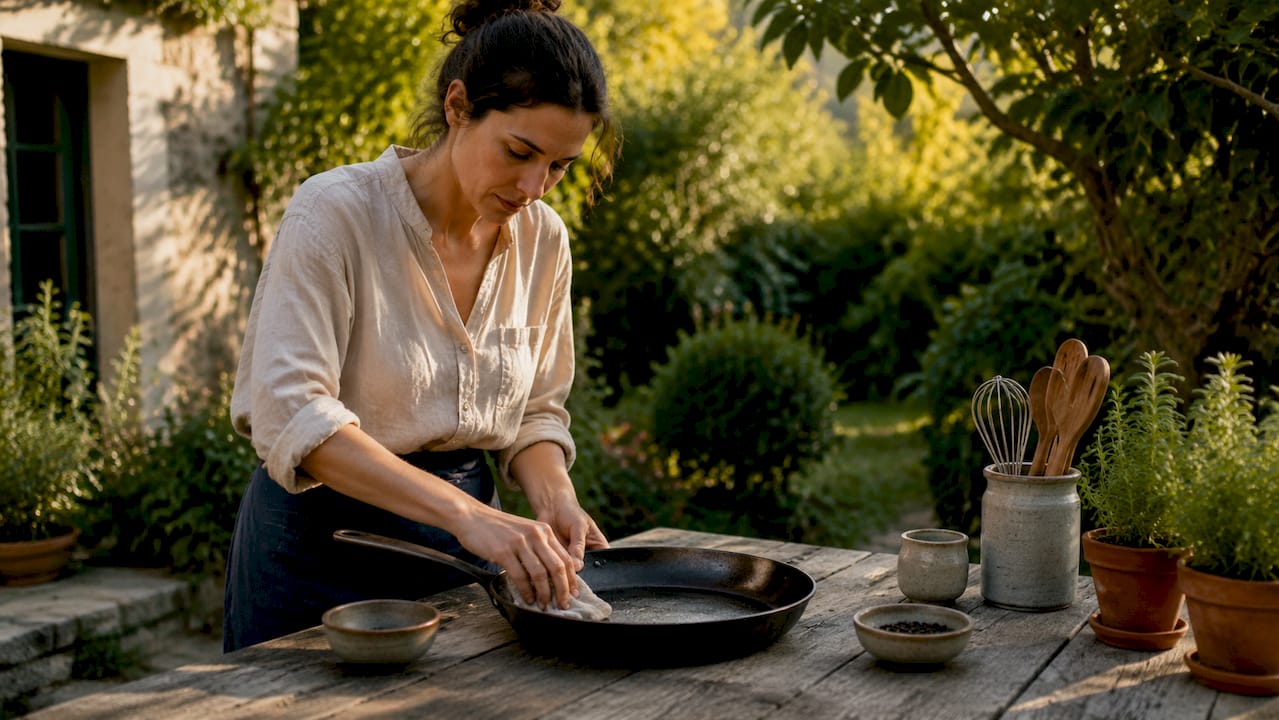
The maintenance routine is straightforward once it becomes habit. For carbon steel specifically, the care steps are:
- Wash with warm water after each use. Avoid soaking the pan.
- Dry the pan immediately and completely. Residual moisture causes rust.
- Apply a very thin coat of a high-smoke-point oil such as grapeseed, avocado, or sunflower oil.
- Wipe off any excess so the pan looks almost dry, not oily.
- Re-season in the oven at 250°C if the surface looks dull or feels sticky.
Maintenance rituals like hand washing, drying promptly, and seasoning are key to artisan cookware’s longevity and performance. These steps form a feedback loop: the more you cook with and care for the pan, the better it performs. A well-seasoned carbon steel pan from Brass-steel will release eggs cleanly after a few months of regular use. That is a result of consistent care, not a factory coating.
The learning curve is real but short. Most cooks find their rhythm within two to three weeks. The reward is a pan that improves with every use rather than one that degrades from the first scratch. For a full care walkthrough, the carbon steel care guide from Brass-steel covers seasoning, rust prevention, and warping in practical detail.
Is artisan cookware right for your kitchen?
Artisan cookware suits cooks who want control, longevity, and a cooking experience that feels deliberate rather than disposable. The benefits are clear and concrete.
- Durability. Artisan pieces are built to last generations, not seasons. A carbon steel or copper pan maintained properly will outlast any non-stick alternative.
- Cooking control. Superior weight, balance, and thermal conductivity in artisan cookware make cooking more intuitive. You feel the pan working with you.
- Health. Artisan cookware made from carbon steel, copper, or clay contains no PTFE, PFOA, or synthetic coatings. There is nothing to flake into your food.
- Sustainability. Buying one pan that lasts 30 years is categorically better for the environment than replacing a non-stick pan every two to three years.
- Mindful cooking. 68% of artisan cookware users reported cooking more mindfully after switching from mass-market alternatives. Attention to heat and technique improves results across every dish.
The limitations are worth naming honestly. Artisan cookware costs more upfront. A Brass-steel 27 cm carbon steel sauté pan is €99.00, and the 30 cm version is €119.00. That is more than a budget non-stick pan, but less than the cumulative cost of replacing cheap pans every few years. There is also a maintenance commitment. If you want to pull a pan from the cupboard and ignore it, artisan cookware is not the right fit. And the learning curve, while short, does exist. Lower heat, more attention, and a seasoning routine are all part of the deal.
Artisan cookware is the right choice for culinary enthusiasts who cook regularly and want their tools to grow with them. It is not the right choice for someone who wants zero maintenance and maximum convenience.
Key takeaways
Artisan cookware outperforms mass-produced alternatives in durability, cooking control, and long-term value because it is built from real materials with real craftsmanship, not synthetic coatings designed to be replaced.
| Point | Details |
|---|---|
| Lifespan advantage | Artisan cookware lasts decades; mass-market non-stick pans need replacing every 2–3 years. |
| Material matters | Carbon steel, copper, clay, and brass each offer distinct thermal properties suited to specific cooking styles. |
| Care builds performance | Regular seasoning and hand washing strengthen the pan’s surface and improve its non-stick properties over time. |
| Mindful cooking benefit | Attentive, lower-heat cooking with artisan tools produces better results and a more rewarding experience. |
| Cost in context | The higher upfront price of artisan cookware is lower than the long-term cost of repeated non-stick replacements. |
Why I think artisan cookware changes how you cook, not just what you cook with
I have used both. I know the appeal of a cheap non-stick pan. You buy it, you use it, and for about 18 months it works fine. Then the coating starts to go, you notice the scratches, and you bin it. The whole cycle costs you money and attention you did not plan to spend.
Switching to a carbon steel pan felt different from the first week. Not because it was easier, but because it asked something of me. Lower heat. A bit more patience. Listening to the sound of the oil rather than just watching the clock. Artisan cookware fosters a rewarding, intentional relationship with cooking that contrasts the fast, disposable culture. That description sounds abstract until you actually experience it.
The thing nobody tells you is that the care routine becomes satisfying rather than burdensome. Washing the pan, drying it, rubbing in a thin coat of oil. It takes two minutes. But it also means you are paying attention to your tool, which means you pay more attention when you cook with it. The results follow naturally.
My honest view is that most cooks underestimate how much the pan shapes the cooking. A well-made carbon steel pan does not just hold heat. It teaches you to use heat properly. That is worth more than any coating.
— Davide
Brass-steel carbon steel pans: built for cooks who mean it
Brass-steel makes carbon steel sauté pans forged from a single piece of steel in Jarocin, Poland. There are no rivets, no welds, and no synthetic coatings. The 27 cm pan at €99.00 handles everyday searing and sautéing. The 30 cm version at €119.00 suits larger meals and family cooking.
Both pans work on all cooktops including induction, and both build a natural non-stick patina through seasoning. If you are ready to move away from disposable non-stick and into cookware that improves with use, explore the full range at Brass-steel. The forging process guide explains exactly how each pan is made, which is worth reading before you buy.
FAQ
What is artisan cookware, exactly?
Artisan cookware is handmade kitchenware crafted from natural materials such as carbon steel, copper, clay, or brass, built for durability and cooking performance rather than mass-market convenience.
How long does artisan cookware last?
Artisan cookware is designed to last a lifetime and can be passed down through generations. Mass-produced non-stick pans typically need replacing every 2–3 years due to coating degradation.
Is artisan cookware hard to maintain?
The care routine is simple: hand wash, dry immediately, and apply a thin coat of oil after each use. Carbon steel pans from Brass-steel require seasoning, which takes a few minutes and improves the pan’s performance over time.
What makes cookware artisan rather than just handmade?
Artisan cookware combines skilled handcraft with material intelligence, meaning the maker understands how the raw material behaves and shapes it accordingly. The result is a piece that performs uniquely for its owner and improves with use.
Can artisan cookware be used on induction hobs?
Carbon steel artisan cookware is fully induction compatible. Clay and copper pieces vary by design, so check the manufacturer’s specification before buying.