Natural Nonstick Patina: The Secret to Superior Cooking

Many European cooks and chefs know the frustration of food sticking to their pans or worrying about chemical coatings that wear out quickly. For those searching for truly durable, health-conscious cookware, carbon steel pans with a naturally developed patina offer a standout solution. As repeated seasoning builds up this nonstick layer, chefs discover better food release, improved heat conduction, and a reliable cooking surface that only gets smoother with time.
Table of Contents
- Natural Nonstick Patina In Carbon Steel Pans
- How Seasoning Creates A Patina Layer
- Benefits And Properties Of Patina
- Maintaining And Restoring Patina
- Comparing Patina With Synthetic Coatings
Key Takeaways
| Point | Details |
|---|---|
| Patina Development | A natural nonstick surface forms through seasoning, improving with each cooking session. |
| Oil Selection | Use high smoke point oils such as grapeseed or flaxseed to enhance the patina formation. |
| Maintenance Techniques | Clean with hot water and soft cloth; apply thin layers of oil to preserve patina integrity. |
| Patina vs. Synthetic Coatings | Natural patina provides superior durability and performance over synthetic nonstick coatings. |
Natural nonstick patina in carbon steel pans
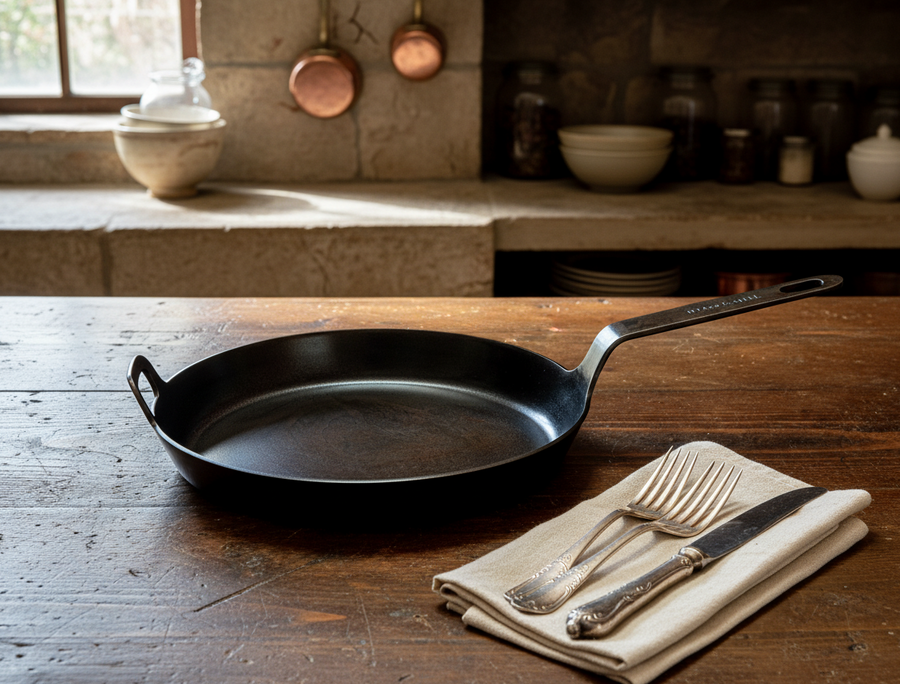
Carbon steel pans transform through a fascinating process of developing a natural nonstick surface known as patina. Unlike synthetic coatings, this protective layer emerges from repeated cooking and careful maintenance, creating a unique cooking surface that improves with every meal.
The patina develops through a process called seasoning, where oils polymerise and bond with the pan’s metal surface. Carbon steel pan patina development involves multiple layers of molecular interactions that gradually create a smooth, protective barrier. These layers prevent food from sticking and protect the pan from rust, offering superior performance compared to traditional nonstick cookware.
Key characteristics of a well-developed patina include:
- Gradually darkening metal surface
- Increasingly smooth cooking surface
- Enhanced food release properties
- Natural rust resistance
- Improved heat distribution
Building a robust patina requires consistent technique and understanding. Cooking fatty foods, avoiding soap during cleaning, and applying thin layers of high-smoke-point oils help accelerate patina formation. Professional chefs often consider a well-seasoned carbon steel pan a prized cooking tool precisely because of its evolving nonstick properties.
Pro tip: Cook bacon or other fatty meats during the early seasoning stages to help build a strong, even patina more quickly.
How seasoning creates a patina layer
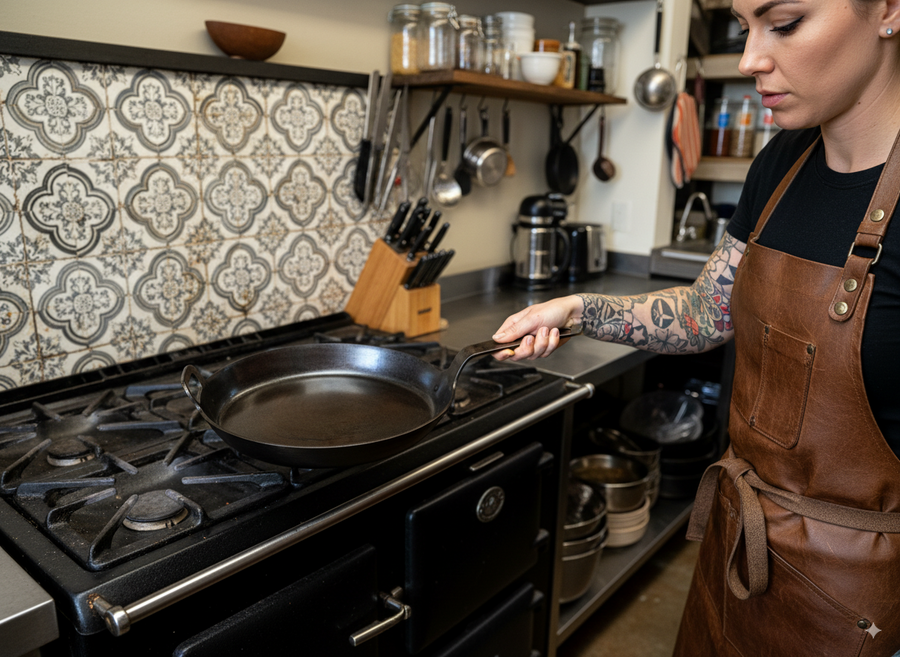
The creation of a patina layer in carbon steel pans is a sophisticated molecular transformation that turns an ordinary cooking surface into a remarkable nonstick cooking companion. Polymerisation of cooking oils involves a precise chemical process where oils bond with the metal’s surface at high temperatures, creating a durable protective coating.
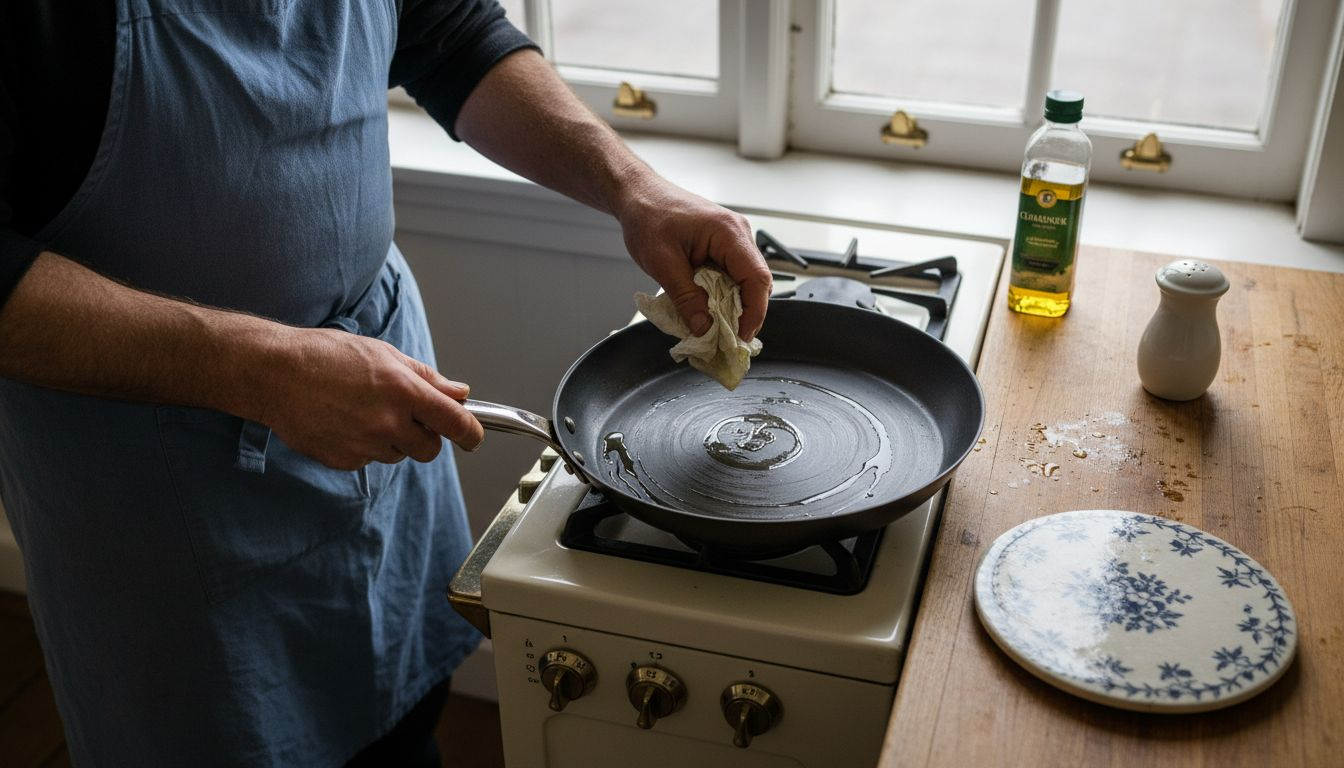
This intricate process occurs through multiple heating cycles that gradually transform the pan’s surface. When oils are heated beyond their smoke point, they undergo carbonisation, creating a hard molecular layer that fills microscopic metal irregularities. The result is a smooth, naturally nonstick surface that becomes more effective with each cooking session.
Key stages of patina development include:
- Initial oil application
- Heating to polymerise oil molecules
- Gradual surface transformation
- Repeated seasoning cycles
- Continuous surface improvement
The magic of patina development lies in its gradual, cumulative nature – each cooking session contributes to a more refined cooking surface.
Professional chefs recommend using high smoke point oils like grapeseed or flaxseed to accelerate patina formation. These oils create more stable molecular bonds, resulting in a more durable and effective nonstick layer that protects the pan from rust and enhances cooking performance.
Use this reference for recommended oils and their impact on patina formation:
| Oil Type | Smoke Point | Effect on Patina |
|---|---|---|
| Grapeseed | 215°C | Creates durable, hard layer |
| Flaxseed | 225°C | Builds strong, rapid patina |
| Avocado | 265°C | Enhances even coating |
| Vegetable | 205°C | Provides basic protection |
Pro tip: Apply thin, even layers of oil during seasoning and avoid thick, uneven coatings that can lead to sticky or mottled patina development.
Benefits and properties of patina
The patina on carbon steel pans represents far more than a mere cooking surface coating. Polymerised fat layer properties create a remarkable transformation that elevates cooking performance and pan durability through multiple extraordinary characteristics.
These unique properties develop progressively, turning a standard metal pan into a sophisticated cooking instrument. As the patina matures, it generates a naturally nonstick surface that becomes increasingly effective with repeated use, simultaneously protecting the underlying metal from corrosion and environmental damage.
Key benefits of a well-developed patina include:
- Enhanced nonstick capabilities
- Improved heat distribution
- Rust prevention
- Flavour enhancement
- Increased cooking surface durability
- Natural, chemical-free surface protection
A mature patina transforms a simple pan into a culinary masterpiece, improving with every meal prepared.
Professional chefs value the patina’s ability to create a cooking surface that actually improves performance over time. Unlike synthetic nonstick coatings that degrade, a carbon steel pan’s patina becomes more refined, developing a smooth, almost silky texture that releases food effortlessly and contributes subtle depth to culinary preparations.
Pro tip: Regularly cook fatty foods during early seasoning stages to accelerate and strengthen your pan’s patina development.
Maintaining and restoring patina
Carbon steel pan owners must understand the delicate art of preserving their pan’s nonstick surface. Patina maintenance techniques require a nuanced approach that balances careful cleaning with strategic seasoning to protect the pan’s unique molecular layer.
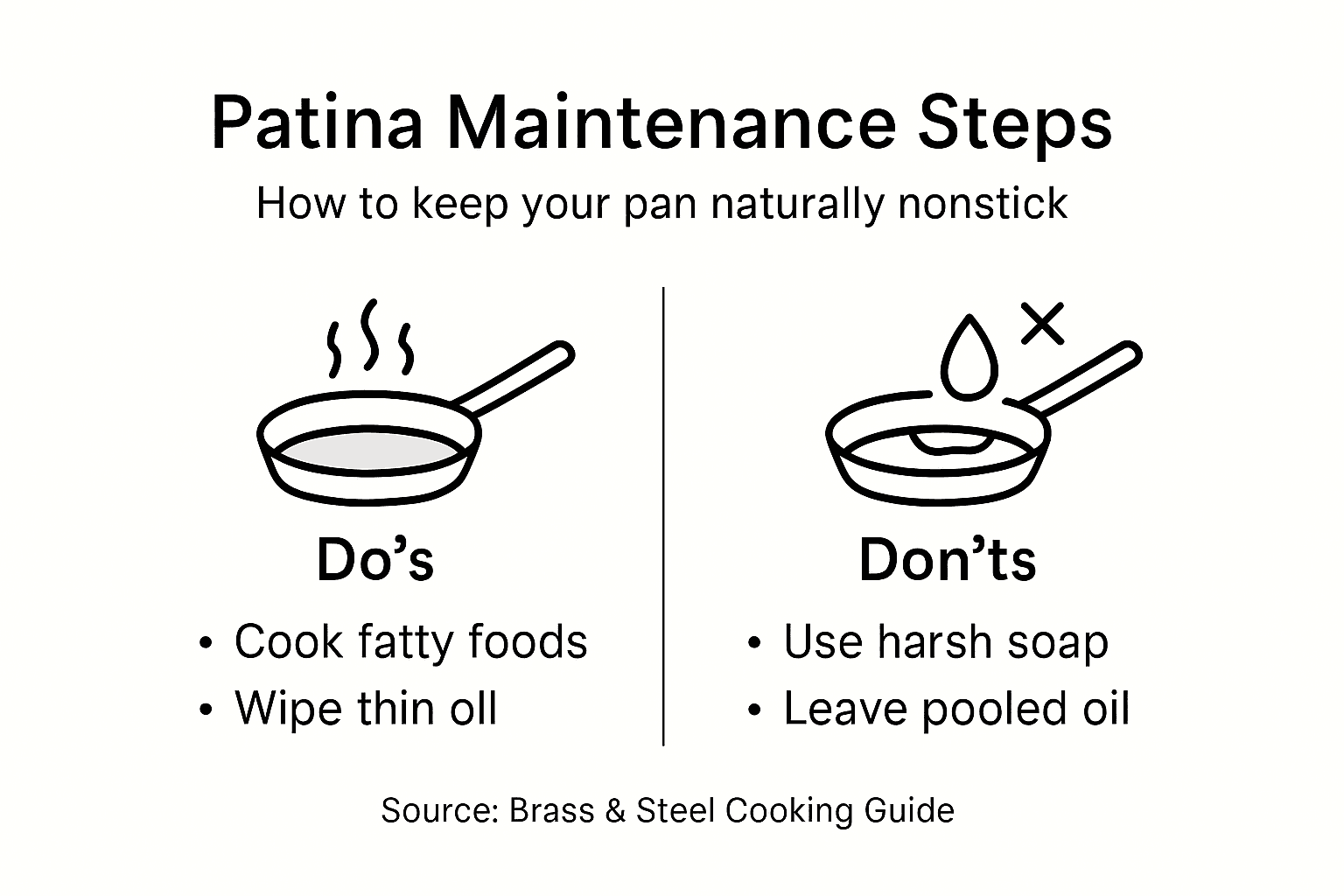
Restoring a damaged patina involves several strategic steps that help rebuild the pan’s protective surface. When the seasoning becomes uneven or starts to degrade, cooks can rehabilitate their cookware through targeted interventions like gentle cleaning, targeted re-seasoning, and careful oil application.
Key maintenance strategies include:
- Avoiding harsh detergents
- Cleaning with hot water and soft cloth
- Drying immediately after washing
- Applying thin oil layers after each use
- Cooking fatty foods periodically
- Monitoring patina development
A well-maintained patina is not just a cooking surface, but a living culinary heritage passed from one cooking session to the next.
Professional chefs recognise that patina restoration is more of an art than a precise science. Some methods involve gentle sanding of damaged areas, followed by multiple seasoning cycles using high smoke point oils. The goal is always to rebuild a smooth, protective layer that enhances cooking performance and prevents rust.
Pro tip: Use a paper towel to apply a gossamer-thin layer of oil after cleaning, ensuring even coverage without pooling.
Comparing patina with synthetic coatings
Home cooks and professional chefs are increasingly questioning the merits of traditional nonstick cookware. Nonstick surface science reveals fundamental differences between synthetic coatings and natural patina that extend far beyond surface appearance.
Synthetic nonstick coatings like PTFE rely on artificial chemical layers that degrade rapidly under high temperatures. These manufactured surfaces typically last only a few years before requiring complete replacement. In stark contrast, carbon steel’s natural patina develops through a molecular bonding process that actually strengthens and improves with consistent cooking.
Here’s a comparison of natural patina versus synthetic nonstick coatings for carbon steel pans:
| Criteria | Natural Patina | Synthetic Coating (PTFE) |
|---|---|---|
| Longevity | Improves with regular use | Wears out in several years |
| Chemical Safety | Chemical-free protection | May release chemicals when heated |
| Resistance to Heat | Stable in high temperatures | Degrades above 260°C |
| Environmental Impact | Sustainable, no waste | Non-biodegradable, creates waste |
| Maintenance Effort | Requires regular seasoning | Easy, but replacement necessary |
Key comparative characteristics include:
- Durability of coating
- Heat resistance
- Chemical composition
- Environmental impact
- Long-term performance
- Maintenance requirements
Natural patina represents a living, evolving cooking surface that grows more sophisticated with each meal prepared.
Professional kitchens increasingly favour carbon steel’s natural nonstick properties over synthetic alternatives. While PTFE-based pans can release potentially harmful chemicals when overheated, carbon steel’s patina remains stable, chemical-free, and increasingly effective through regular use. The gradual development of patina transforms cooking from a mundane task into a nuanced culinary art form.
Pro tip: Select high smoke point oils like grapeseed or avocado for seasoning to build a more resilient and effective patina.
Discover the Power of Natural Nonstick Patina with Brass & Steel
Achieving a durable, non-toxic cooking surface like the natural patina described in this article takes dedication and the right cookware. Brass & Steel’s expertly forged carbon steel pans are designed exactly for this journey. Crafted from a single piece of carbon steel without rivets or welds these pans build a safe, chemical-free patina that improves with every meal. This means you gain a superior cooking partner that delivers excellent heat retention, rust resistance, and enhanced food release — all while supporting your health-conscious lifestyle.
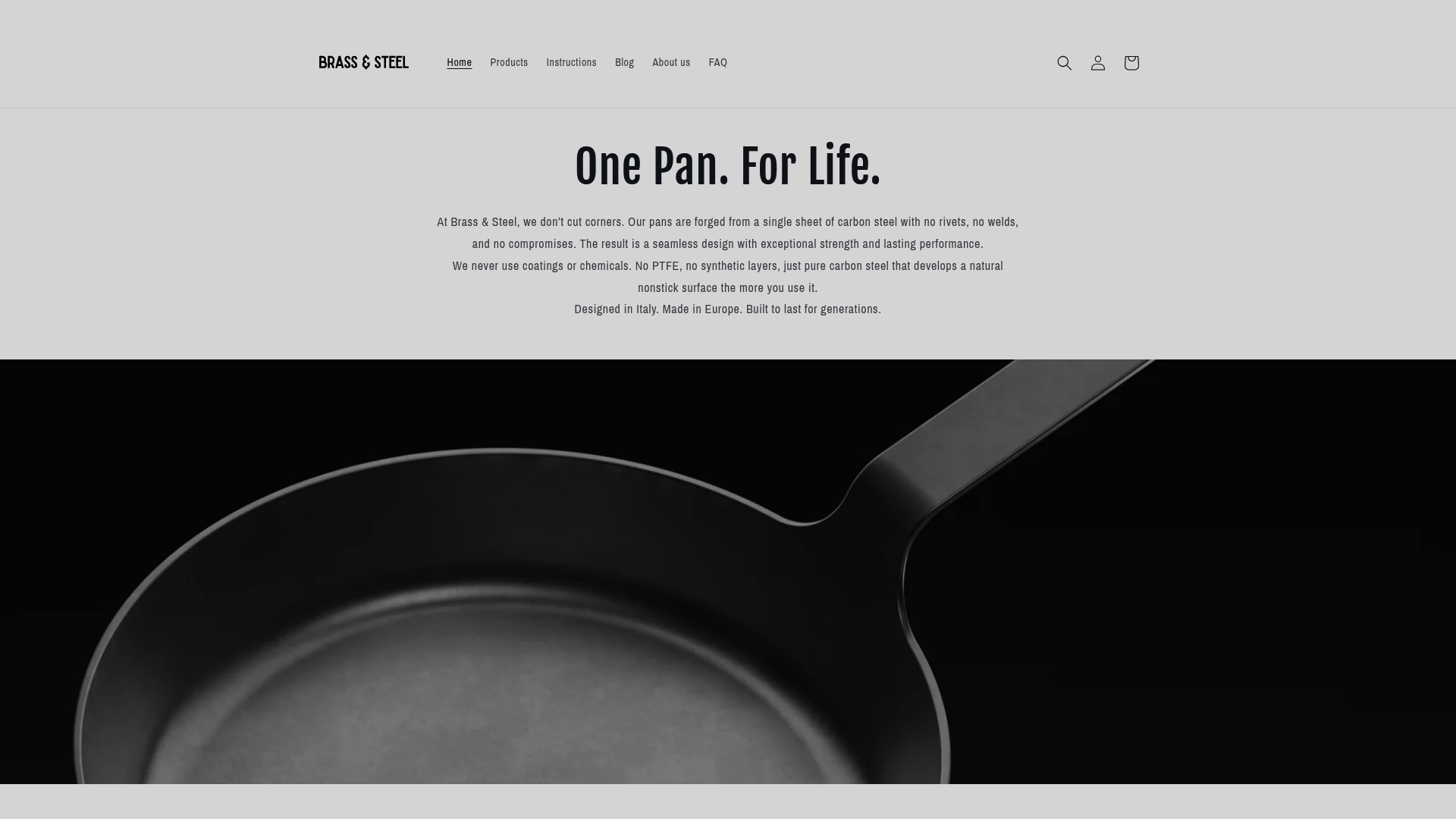
Start your patina development with confidence by choosing from our Carbon Steel Collection | Brass&Steel featuring both 27 cm and 30 cm pans perfect for everyday cooking or professional use. Visit our website today to explore heirloom-quality cookware engineered in Poland with Italian design roots. Take control of your cooking experience and enjoy a natural nonstick surface that becomes better with every use.
Frequently Asked Questions
What is a natural nonstick patina in carbon steel pans?
A natural nonstick patina is a protective layer that develops on carbon steel pans through the process of seasoning, making the cooking surface smoother and preventing food from sticking.
How do I properly season my carbon steel pan to develop patina?
To season your carbon steel pan, apply thin layers of high-smoke-point oils, heat the pan to the smoking point, and repeat this process several times. Cooking fatty foods can accelerate patina formation.
How does the patina compare to synthetic nonstick coatings?
Unlike synthetic nonstick coatings, which degrade over time, a natural patina improves with regular use. It offers superior heat resistance, chemical-free protection, and long-term durability.
How can I maintain and restore the patina on my carbon steel pan?
To maintain your pan’s patina, avoid harsh detergents, clean with hot water and a soft cloth, dry it immediately, and apply thin layers of oil regularly. If the patina damages, gentle sanding and re-seasoning can help restore it.