Seasoned pans explained: master carbon steel cookware

TL;DR:
- A properly seasoned carbon steel pan can outperform nonstick pans in searing, heat response, and longevity.
- Seasoning creates a durable, nonstick surface through polymerized oil that improves with use and maintenance.
- Regular oil application, careful cleaning, and avoiding moisture damage extend the pan’s lifespan and performance.
Most home cooks assume that nonstick pans are the only route to fuss-free cooking. Scratch-resistant coatings, slippery surfaces, and easy washing feel like the obvious choice. But here is the truth: a properly seasoned carbon steel pan can outperform your nonstick in almost every meaningful way. It sears better, handles higher heat, and unlike nonstick, it actually improves over time. This article explains exactly what a seasoned pan is, why the seasoning process matters, and how you can build and maintain it at home. By the end, you will have everything you need to cook with genuine confidence on carbon steel.
Table of Contents
- What does it mean to season a pan?
- How does seasoning change your cooking?
- How is a pan seasoned? Methods, myths, and maintenance
- Avoiding common pitfalls and maximising pan life
- Why a seasoned pan beats nonstick every time: Our take
- Ready to transform your cooking? Discover the best carbon steel pans
- Frequently asked questions
Key Takeaways
| Point | Details |
|---|---|
| Seasoned pan defined | A seasoned pan has a bonded oil layer that prevents rust and creates natural nonstick qualities. |
| Superior performance | Properly seasoned carbon steel rivals nonstick and cast iron, offering superb searing and control. |
| Ongoing maintenance | Regular seasoning ensures longevity and consistent performance for decades. |
| Common mistakes | Avoid moisture and harsh cleaning to protect the seasoning and pan life. |
| Pro-level cookware | Seasoned pans reward users with reliable results and develop better food release over time. |
What does it mean to season a pan?
Seasoning is not a spice blend or a flavour treatment. It is a thin layer of polymerised oil baked onto the surface of a pan. When oil is applied at high heat, it bonds chemically with the metal and hardens into a smooth, dark coating. That coating is what gives a carbon steel pan its naturally nonstick quality, and it also acts as a barrier against rust.
Every carbon steel pan must be seasoned, whether that happens in the factory before it reaches you or at home before you first cook with it. Some manufacturers apply a light carbon steel seasoning process to protect the pan during shipping. This is a starting point, not a finished result. Your cooking builds on it from there.
The science behind seasoning is straightforward. Oils that reach their smoke point begin to break down and polymerise, meaning they form long molecular chains that adhere to the metal surface. The thinner the oil layer, the better this bonding works. A thick application does not polymerise properly. Instead, it turns sticky and gummy, which frustrates many first-time users.
According to Serious Eats testing, proper seasoning rivals cast iron for searing ability and nonstick performance. That is a significant benchmark. Cast iron is widely respected for its searing credentials, so matching it with a pan that heats faster and weighs considerably less is a real advantage.
Here is what good seasoning should deliver:
- A dark, even surface colour ranging from brown to near-black
- Food release that improves with every cook
- Protection from rust and moisture damage
- No chemical coatings, no PTFE, no PFOA
- A surface that responds to your cooking style over time
For a clear walkthrough, follow the step-by-step seasoning process to build a strong base from day one.
Pro Tip: Never rush initial seasoning. Apply two to three thin coats at the start, baking each one fully before the next. This foundation determines how well your pan performs for years to come.
How does seasoning change your cooking?
Once a pan is well-seasoned, cooking on it feels genuinely different. Food releases more cleanly, heat distributes more evenly, and you gain far more control over browning and crust formation. These are not vague promises. They reflect what happens when a pan’s surface is properly conditioned.
Carbon steel holds a specific advantage over cast iron: it responds to temperature changes faster. If you lower the heat mid-cook, a carbon steel pan adjusts almost immediately. Cast iron, being denser and heavier, holds residual heat much longer, which can overcook delicate proteins. For a more thorough look at these trade-offs, the carbon steel pros and cons guide covers the comparison in practical detail.
Here is how the key cookware types compare:
| Feature | Seasoned carbon steel | Cast iron | Nonstick (PTFE) |
|---|---|---|---|
| Heat responsiveness | Excellent | Slow | Moderate |
| Weight | Light to medium | Heavy | Light |
| Nonstick quality | Builds over time | Good when seasoned | Immediate but degrades |
| Lifespan | Generations | Generations | 3 to 5 years |
| Safe at high heat | Yes | Yes | No (above 260°C) |
| Chemical coatings | None | None | Yes |
A well-seasoned carbon steel pan excels at tasks that demand real heat. Searing a steak, stir-frying vegetables at high temperature, crisping the skin on fish, or getting a proper crust on a chicken thigh. These are the moments where nonstick pans fall short, because they cannot safely reach the temperatures needed.

It is also worth noting the longevity factor. Some pans last over 100 years with proper care. Compare that to a nonstick pan that typically needs replacing every few years as the coating degrades. The seasoned pan does not wear out in the same way. It builds character.
Professional chefs have long understood this. Chef insights on carbon steel reveal why most restaurant kitchens rely on carbon steel rather than nonstick, primarily for durability, performance under extreme heat, and long-term reliability.
The key cooking benefits at a glance:
- Superb searing and crust development
- Reliable food release that improves with every use
- Consistent stir-fry results at very high heat
- Oven-safe at temperatures that would destroy nonstick pans
- Versatility across every cooking method
How is a pan seasoned? Methods, myths, and maintenance
There are two routes into a seasoned pan: factory seasoning and home seasoning. Factory seasoning gives you a protective start, but it is home seasoning that truly tailors the pan to your cooking habits and builds a robust nonstick surface.
Here is the basic process for seasoning at home from scratch:
- Wash the pan with warm, soapy water to remove any factory oil or residue.
- Dry it completely, either with a towel or briefly on a warm hob.
- Preheat your oven to 250°C.
- Place the empty pan in the oven for 10 minutes to ensure it is bone dry.
- Apply a very thin coat of high-smoke-point oil such as grapeseed, sunflower, or avocado oil.
- Wipe off the excess until the pan looks almost dry, not shiny.
- Place the pan upside down in the oven for 30 minutes.
- Repeat steps five through seven two to three times for a solid base layer.
The most common myth about seasoning is that one thorough session is all you ever need. That is not how it works. Seasoning builds and wears unevenly over time depending on what you cook, how hot you cook it, and how you clean the pan. It is a living surface, not a permanent coating.
If you need to restore an older pan or fix a patch that has worn away, the repairing pan seasoning guide walks through that process clearly. For those who want a quick-reference format, the seasoning checklist guide is a practical companion.
A thin oil layer applied after every cook is the single most effective maintenance habit you can build. It takes thirty seconds and prevents almost every common seasoning problem before it starts.
Pro Tip: After washing and drying your pan, place it on the hob for a minute on low heat before wiping in the post-cook oil layer. The warmth helps the oil absorb into the surface rather than just sitting on top.
For ongoing re-seasoning tips, especially if your pan has been neglected or developed sticky patches, a full re-seasoning session can restore it to full performance quickly.
Avoiding common pitfalls and maximising pan life
Most seasoned pan problems come from a small set of repeated mistakes. Knowing what they are makes them easy to avoid.
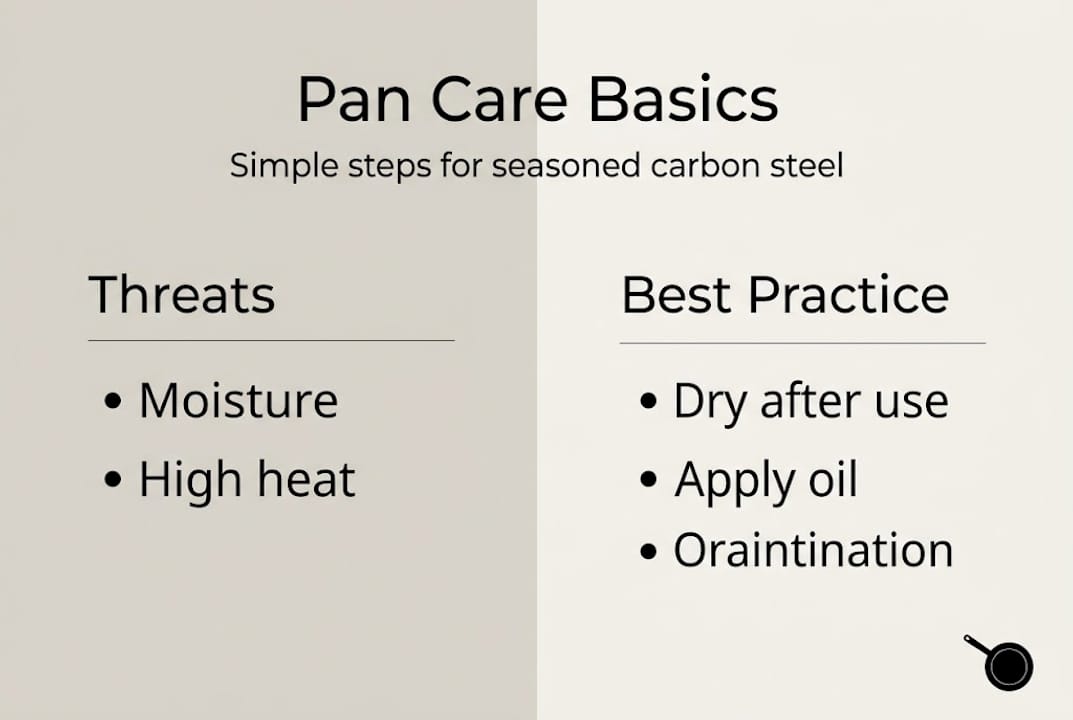
Moisture is the primary threat. Leaving a carbon steel pan wet, soaking it in a sink, or storing it without drying properly will cause rust to form beneath and through the seasoning layer. Heat treatment during manufacturing aids initial rust resistance, but it does not make the pan waterproof. After washing, always dry immediately and thoroughly.
| Mistake | What happens | Better practice |
|---|---|---|
| Soaking in water | Rust forms quickly | Rinse and dry immediately |
| Using too much oil | Sticky, gummy surface | Apply a very thin coat only |
| Cooking acidic foods often | Seasoning strips away | Keep acidic dishes brief and occasional |
| Skipping post-cook oil | Seasoning dries and cracks | Wipe in a thin oil layer every time |
| Leaving on high heat empty | Warping or uneven seasoning | Always heat gradually with contents |
For a full approach to rust prevention for carbon steel, it is worth reading before you run into problems rather than after. And if rust does appear, the step-by-step rust care guide shows you how to treat it without damage.
Signs your seasoning needs attention:
- Food starts sticking where it previously released cleanly
- The surface looks dull, grey, or patchy rather than dark and smooth
- Small rust spots appear, particularly around the edges
- The pan smells metallic when heating
- Visible flaking or peeling on the cooking surface
With consistent habits, maintaining your carbon steel pan becomes second nature. Rinse, dry, oil, store. That four-step routine after every session is what separates pans that deteriorate within a year from those passed down through kitchens across generations.
Why a seasoned pan beats nonstick every time: Our take
We hear this often from new customers: “I am nervous to give up my nonstick.” We understand. Nonstick pans are immediately convenient. But convenience and performance are not the same thing, and after a short time with a seasoned carbon steel pan, most cooks do not look back.
Nonstick pans are fragile by design. Their coatings degrade under high heat, scratch with metal utensils, and require replacement every few years. A seasoned carbon steel pan, by contrast, gets better with age. Every cook you do deposits more polymerised oil onto the surface. The pan adapts to your cooking style, your preferred oils, your heat habits.
For a thorough look at the key pros and cons, the evidence consistently favours carbon steel for any cook who is serious about their results. The initial learning period is short. The reward is a pan that could genuinely outlast you.
Ready to transform your cooking? Discover the best carbon steel pans
If this article has sparked your curiosity, the next step is straightforward. At Brass & Steel, we craft carbon steel sauté pans forged from a single piece of steel, with no rivets, no welds, and no chemical coatings. Our pans are designed to be seasoned, used hard, and handed down.
Our 27 cm pan at €99 suits everyday home cooking, while the 30 cm version at €119 handles larger family meals and professional use with ease. Both arrive ready to season and built to last a lifetime. Visit Brass & Steel carbon steel pans to explore the full range and find the right pan for your kitchen.
Frequently asked questions
Can you cook acidic foods in a seasoned pan?
Occasionally cooking acidic foods is perfectly fine, but repeated exposure to tomatoes, citrus, or vinegar will gradually strip away your seasoning layer, so keep acidic dishes brief and infrequent.
What oil is best for seasoning a carbon steel pan?
High-smoke-point oils such as grapeseed, sunflower, or avocado oil are ideal for both initial seasoning and routine maintenance; avoid olive oil and animal fats as they polymerise poorly.
How do I know if my pan’s seasoning needs repair?
If food begins sticking in areas it previously released cleanly, or if you notice rust spots or a dull grey surface, your seasoning needs attention, as noted by Serious Eats wok research on how seasoning wears unevenly over time.
Will a seasoned pan always stay nonstick?
Not automatically. The nonstick quality can weaken with improper cleaning or heat use, but as seasoning research confirms, it is dynamic and fully restorable with a quick maintenance session.
Are factory-seasoned pans better than seasoning at home?
Factory seasoning provides a useful protective start, but home seasoning layers built through regular cooking ultimately create a more personalised and robust surface, as Serious Eats pan testing consistently demonstrates.