Seasoned Steel Surface: Complete Guide for Cooks
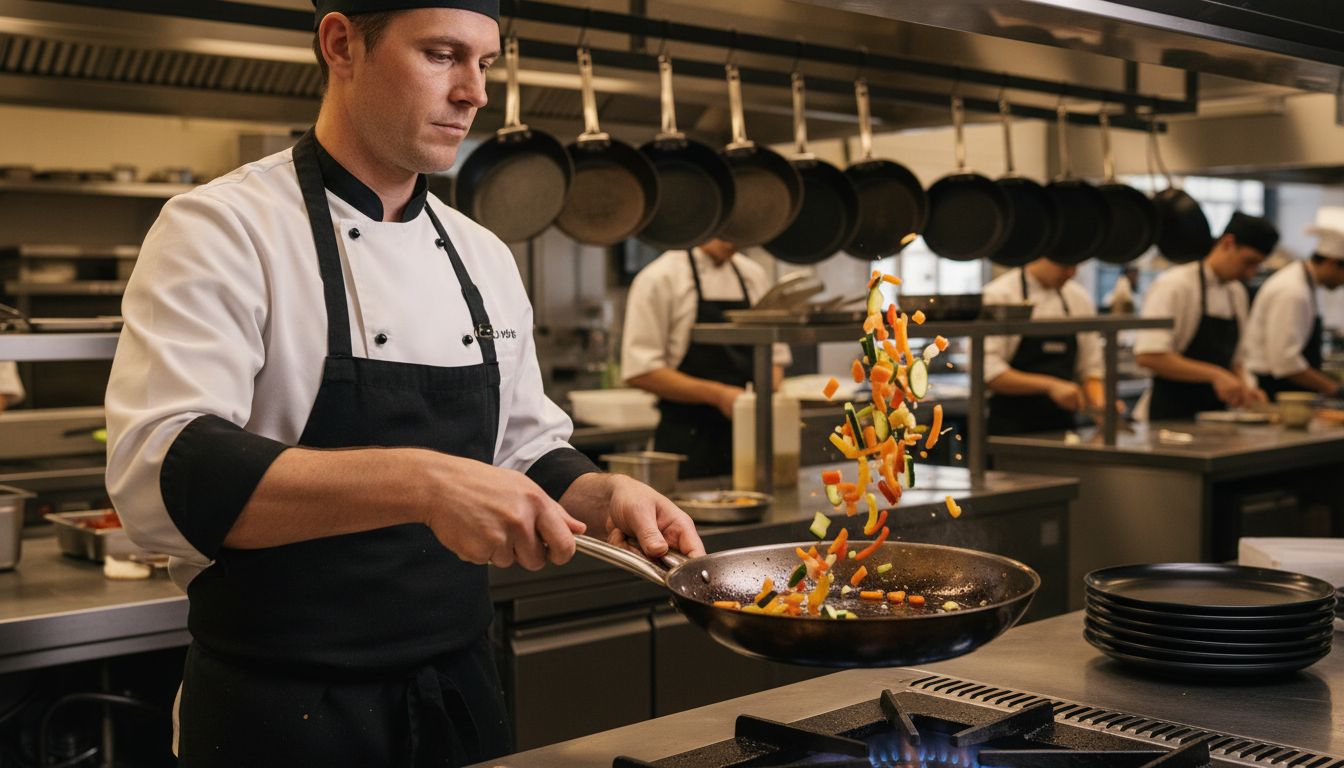
Countless home cooks are surprised to learn that a well-seasoned steel pan can outperform modern nonstick cookware over time. A seasoned steel surface not only resists rust but also turns into a naturally non-stick platform with repeated use. For anyone frustrated by sticky food or flaking chemical coatings, understanding this traditional technique opens the door to better flavor and healthier cooking. Discover what makes seasoned steel a favorite in both home and professional kitchens.
Table of Contents
- What Is a Seasoned Steel Surface?
- How Seasoning Works on Carbon Steel
- Benefits of a Naturally Seasoned Pan
- Key Steps to Season Carbon Steel Pans
- Common Mistakes and How to Avoid Them
- Seasoned Steel vs Nonstick and Cast Iron
Key Takeaways
| Point | Details |
|---|---|
| Seasoning Process | Properly seasoning carbon steel pans involves cleaning, applying a thin layer of oil, and heating to create a durable, non-stick layer. |
| Benefits of Seasoned Pans | Naturally seasoned pans offer superior non-stick properties, enhanced food flavor preservation, and improved rust resistance compared to synthetic options. |
| Common Mistakes | Avoid using oils with low unsaturation and applying excessive oil to ensure effective polymerization and a smooth coating. |
| Comparison with Other Cookware | Seasoned steel pans are lighter and heat faster than cast iron, and they provide a more durable non-stick surface than synthetic nonstick cookware. |
What Is a Seasoned Steel Surface?
A seasoned steel surface is a specially prepared cooking surface created through a precise culinary technique that transforms ordinary metal cookware into a remarkable non-stick platform. According to Wikipedia, seasoning refers to the process of applying a layer of oil to metal pans like carbon steel and heating it to create a protective, non-stick coating that prevents rust and enhances cooking performance.
The science behind seasoning is fascinating. As explained by the American Chemical Society, this process involves applying oils high in unsaturated fats and heating them to form a polymerized layer that fills the metal’s microscopic pores. This creates a hydrophobic surface that naturally resists sticking and provides exceptional cooking characteristics.
Key characteristics of a seasoned steel surface include:
- Natural non-stick properties
- Enhanced rust resistance
- Improved heat distribution
- Chemical-free cooking surface
- Increasing performance with each use
For those interested in mastering this technique, our step-by-step carbon steel pan seasoning guide provides comprehensive instructions to help you create the perfect seasoned surface.
How Seasoning Works on Carbon Steel
Seasoning a carbon steel pan is a transformative culinary process that converts a plain metal surface into a remarkable cooking platform. According to the American Chemical Society, seasoning involves applying a thin layer of oil and heating it to form a polymerized coating that fills the metal’s microscopic pores, creating a smooth, non-stick surface that improves with repeated use.
Wikipedia explains that the seasoning process begins with thoroughly cleaning the pan to remove any residues, then applying a thin, even coat of oil. When heated, this oil undergoes oxidation, creating a durable layer that not only prevents rust but also enhances the pan’s cooking performance.
The science behind seasoning is quite fascinating. When oil is heated to high temperatures, its molecules break down and reorganize, creating a hard, plastic-like polymer that bonds directly to the metal surface. This process essentially creates a protective shield that:
- Prevents metal oxidation
- Reduces food sticking
- Improves heat distribution
- Develops a natural non-stick surface
If you want to dive deeper into perfecting your carbon steel pan seasoning technique, our carbon steel seasoning checklist offers comprehensive guidance to help you achieve lasting nonstick performance.
Benefits of a Naturally Seasoned Pan
A naturally seasoned pan offers far more than just a cooking surface. According to the American Chemical Society, these pans provide a durable, non-stick surface that uniquely improves with use, eliminating the need for synthetic coatings and protecting against rust and corrosion while extending the cookware’s lifespan.
Wikipedia highlights that naturally seasoned pans deliver a chemical-free non-stick experience that actually enhances food flavors. Unlike modern non-stick surfaces that degrade over time, a carbon steel pan’s seasoning becomes more effective with each cooking session, creating a robust protective layer that grows stronger and more reliable.
Key benefits of a naturally seasoned pan include:
- Progressively improving non-stick performance
- Chemical-free cooking surface
- Enhanced food flavor preservation
- Superior heat distribution
- Remarkable durability and longevity
If you’re looking to master the art of maintaining your carbon steel cookware, our best practices for carbon steel care guide provides expert insights to help you maximize your pan’s potential.
Key Steps to Season Carbon Steel Pans
Seasoning a carbon steel pan is a precise process that transforms an ordinary metal surface into a culinary masterpiece. According to Wikipedia, the fundamental approach involves thoroughly cleaning the pan to remove any residues, applying a thin layer of oil, and heating it until the oil polymerizes, creating a durable non-stick coating.
The American Chemical Society recommends using oils high in unsaturated fats to achieve optimal results. The key is to apply an extremely thin, even layer that can polymerize effectively, building a smooth surface that becomes more non-stick with each use.
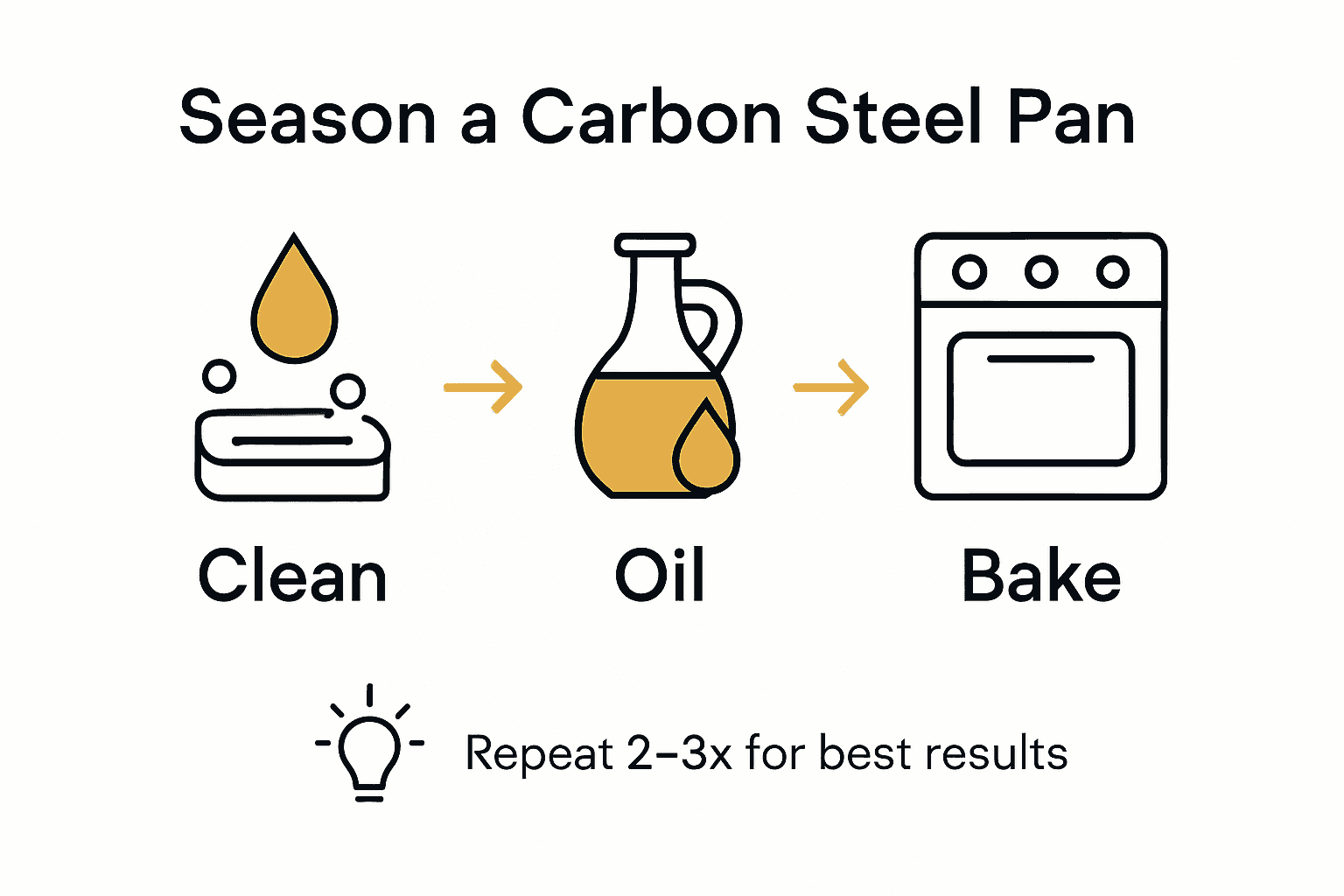
Here’s a comprehensive breakdown of the seasoning process:
- Thoroughly clean the pan with hot water and mild detergent
- Dry completely using heat or a clean towel
- Apply a very thin layer of high smoke-point oil
- Wipe off excess oil until the pan looks almost dry
- Bake in a preheated oven at high temperature
- Repeat the process 2-3 times for a robust seasoning
If you want a detailed walkthrough of this technique, our step-by-step guide to seasoning a carbon steel pan offers expert insights to help you perfect your seasoning method.
Common Mistakes and How to Avoid Them
Seasoning a carbon steel pan might seem straightforward, but several critical pitfalls can compromise your cookware’s performance. According to the American Chemical Society, one of the most common mistakes is using oils low in unsaturated fats, which fail to polymerize effectively. Chefs should prioritize oils like flaxseed or vegetable oil and ensure the pan reaches the appropriate temperature during seasoning.
Wikipedia highlights another frequent error: applying too much oil, which results in a sticky, uneven surface. The key is to apply an extremely thin, uniform layer that can heat and bond properly. Think of seasoning like painting – multiple light coats create a smoother finish than one thick, clumpy application.
Most common seasoning mistakes include:
- Using low smoke-point oils
- Applying oil too thickly
- Uneven heating of the pan
- Neglecting to clean the pan before seasoning
- Cooking acidic foods before establishing a strong seasoning
When you’re ready to master the nuances of carbon steel care, our re-seasoning guide provides expert techniques to rescue and revive your cookware.
Seasoned Steel vs Nonstick and Cast Iron
The world of cookware is diverse, with seasoned steel pans offering a unique alternative to traditional nonstick and cast iron options. According to the American Chemical Society, seasoned steel pans provide a natural non-stick surface without synthetic coatings, and unlike cast iron, they are significantly lighter and heat up much faster, making them incredibly versatile for various cooking methods.
Wikipedia highlights another crucial difference: while nonstick pans degrade over time, seasoned steel pans develop a more durable non-stick surface that actually improves with use. This means your cookware becomes more effective and reliable with each meal you prepare.
Key comparative features include:
Here’s a comparison of seasoned steel, nonstick, and cast iron pans:
| Feature | Seasoned Steel | Nonstick | Cast Iron |
|---|---|---|---|
| Non-stick Surface | Natural Improves with use |
Synthetic Degrades over time |
Natural Improves with use |
| Weight | Lightweight | Lightweight | Very heavy |
| Heating Speed | Fast | Fast | Slow |
| Maintenance | Moderate care needed | Low care needed | High care needed |
| Durability | Long-lasting Surface strengthens |
Limited lifespan | Extremely durable |
| Chemical-Free | Yes | No | Yes |
| Oven Safe | Yes | Some types only | Yes |
- Nonstick Pans: Synthetic coating, limited lifespan
- Cast Iron: Heavy, slow to heat, requires extensive maintenance
- Seasoned Steel: Natural non-stick, lightweight, quick heating
To dive deeper into understanding these cookware differences, our guide comparing carbon steel and nonstick pans offers comprehensive insights for home cooks and professional chefs alike.
Discover the Power of a Perfectly Seasoned Carbon Steel Pan
The challenge every cook faces is achieving that ideal non-stick surface that improves with use and resists wear while remaining healthy and safe. This article detailed how seasoning creates a natural, durable barrier on steel surfaces that transforms your cooking experience. If you are seeking cookware that embraces this natural, chemical-free seasoning process to enhance both flavour and durability, Brass & Steel’s product range offers exactly that.
Explore our Carbon Steel Collection | Brass&Steel to find pans forged from a single sheet of carbon steel, designed for effortless seasoning and excellent heat performance. Our heirloom-quality pans provide a natural nonstick surface that only gets better with every meal, without any coatings or harmful chemicals. Take control of your cooking with lightweight, induction-compatible pans that blend engineering precision with culinary artistry.
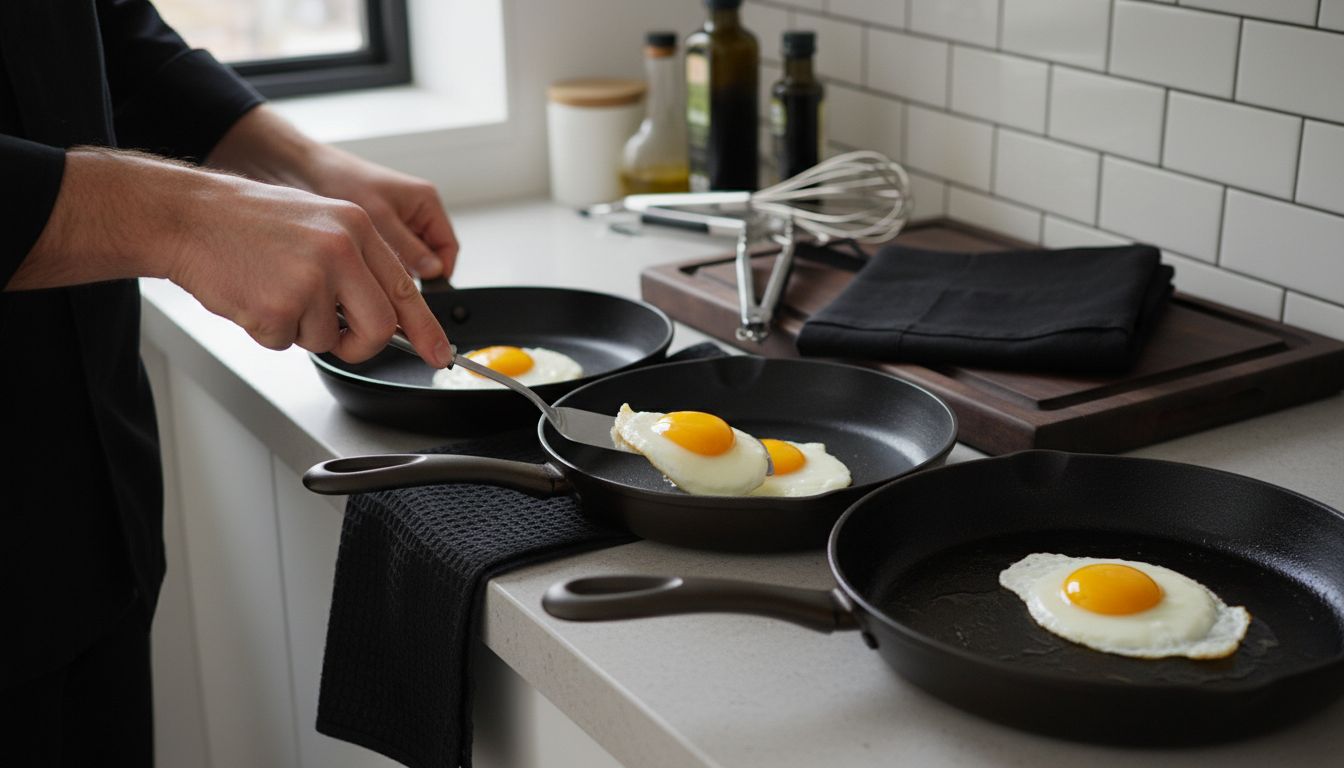 Visit Brass & Steel to start your journey towards owning a truly seasoned carbon steel pan today.
Frequently Asked Questions
What is a seasoned steel surface?
A seasoned steel surface is a cooking platform enhanced through the application of oil and heating, creating a non-stick, protective coating on metal cookware.
How do I season a carbon steel pan properly?
To season a carbon steel pan, clean it thoroughly, apply a thin layer of high smoke-point oil, and heat it until the oil polymerizes, preferably repeating the process several times for best results.
What are the benefits of using a naturally seasoned pan?
Naturally seasoned pans offer a chemical-free cooking surface, improved non-stick properties that enhance with use, better flavor preservation, and superior heat distribution.
How does seasoned steel compare to nonstick and cast iron cookware?
Seasoned steel pans provide a natural, improving non-stick surface, are lighter and heat up faster than cast iron, and unlike nonstick pans, they do not degrade over time as their seasoning strengthens with use.
Recommended
- Ultimate Carbon Steel Pan Seasoning Guide for Perfect Results – Brass & Steel
- Carbon Steel Seasoning Checklist for Lasting Nonstick Performance – Brass & Steel
- Cooking with Carbon Steel Step by Step: Mastering Techniques – Brass & Steel
- How to Re-Season a Carbon Steel Pan for Perfect Cooking – Brass & Steel