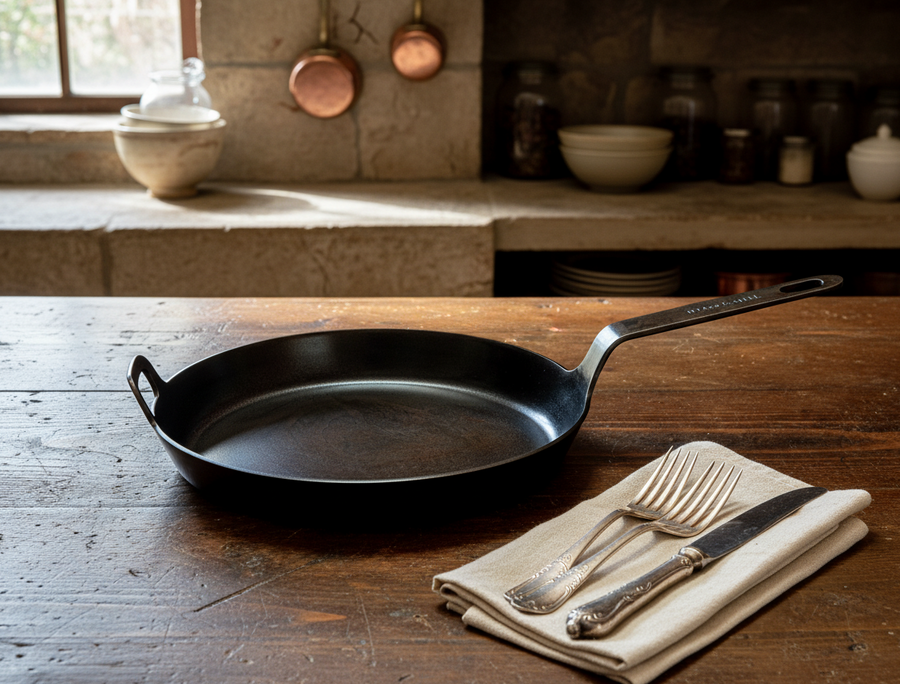
Kitchen pan materials explained: find the perfect cookware
TL;DR:
- Different cookware materials have unique thermal, reactivity, and durability properties affecting cooking results.
- Carbon steel is a versatile, durable material that improves with use and offers excellent heat responsiveness.
- Choosing the right pan depends on your cooking habits, maintenance willingness, and compatible heat sources.
Walk into any kitchen shop across Europe and you will face a wall of cookware described in terms like “tri-ply,” “non-reactive,” “clad,” and “seasoned patina.” Most of us stand there guessing, then grab whatever looks good on the shelf. The material your pan is made from shapes every meal you cook, affecting how evenly heat spreads, whether food sticks, how long the pan lasts, and even whether certain dishes taste as they should. Understanding the differences is not a bonus for professional chefs. It is genuinely useful knowledge for any serious home cook.
Table of Contents
- What defines a kitchen pan material?
- Key kitchen pan materials and their characteristics
- Spotlight on carbon steel: what makes it different?
- How to choose the right pan material for your kitchen
- Why the right material makes more difference than you think
- Discover exceptional kitchenware with Brass & Steel
- Frequently asked questions
Key Takeaways
| Point | Details |
|---|---|
| Material affects performance | The type of pan material dramatically impacts cooking results and durability. |
| Understand alloy terms | Knowing terms like non-reactive and thermal conductivity helps in choosing the right pan. |
| Carbon steel excels | Carbon steel offers an outstanding blend of heat response and durability for home cooks. |
| Choose for your style | Match the pan material to your cooking needs, not just popular trends or brands. |
What defines a kitchen pan material?
Cookware materials are not just marketing categories. Each one has measurable physical properties that determine how it behaves on your hob and in your oven. The most important of these is thermal conductivity, which describes how quickly and evenly a material transfers heat. Copper conducts heat far better than stainless steel, which is why professional pastry kitchens have traditionally valued copper pans for their precise temperature control.
Two other terms come up constantly in cookware descriptions:
- Non-reactive: A non-reactive material does not interact chemically with acidic or alkaline foods. Cooking tomato sauce in a reactive pan, such as uncoated cast iron or plain carbon steel that lacks seasoning, can introduce metallic flavours into the dish.
- Clad construction: Because some metals conduct heat brilliantly but corrode easily (copper, aluminium), and others resist corrosion but conduct poorly, manufacturers bond multiple layers together. This is clad construction. A pan sold as “tri-ply” typically has a stainless steel exterior, an aluminium core, and a stainless steel cooking surface.
“Stainless steel is an iron alloy with at least 10.5% chromium, non-reactive, durable, and corrosion-resistant, but has poor thermal conductivity at just 16 W/m·K, so it is clad with aluminium at 237 W/m·K or copper for even heating in tri-ply construction.”
Understanding stainless steel durability in its wider context helps you appreciate why no single metal is perfect on its own. Every material is a set of trade-offs, and knowing those trade-offs lets you make genuinely informed choices rather than relying on packaging copy.
Key kitchen pan materials and their characteristics
Now that the definitions are clear, it is time to explore what each material actually brings to your kitchen and how they compare against each other.
| Material | Conductivity | Reactivity | Durability | Typical use |
|---|---|---|---|---|
| Carbon steel | Good | Reactive when unseasoned | Very high | Searing, sautéing, high heat |
| Stainless steel (clad) | Good (with core) | Non-reactive | Very high | Everyday cooking, sauces |
| Aluminium (anodised) | Excellent | Low | Moderate | Frying, baking |
| Copper (lined) | Outstanding | Non-reactive when lined | High (with care) | Sauces, precise temperature work |
| Cast iron | Moderate | Reactive when unseasoned | Exceptional | Slow cooking, braising, searing |
| Nonstick (PTFE coated) | Moderate | Non-reactive | Low to moderate | Eggs, delicate fish |
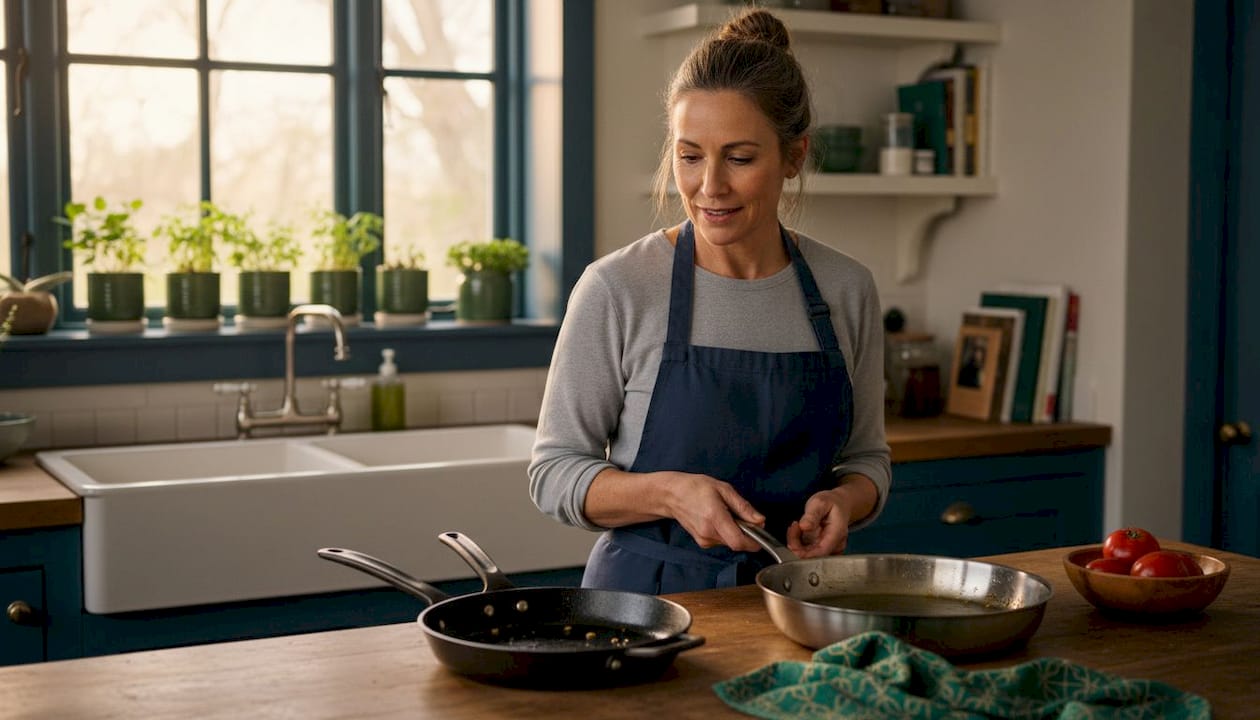
Each material excels in at least one area and struggles in another. Stainless steel is non-reactive and extremely durable, but without a copper or aluminium core it spreads heat unevenly, leaving hot spots that can scorch food. That is why clad construction matters so much in stainless steel cookware. You can explore a thorough carbon vs stainless steel comparison to see how these trade-offs play out in everyday cooking scenarios.
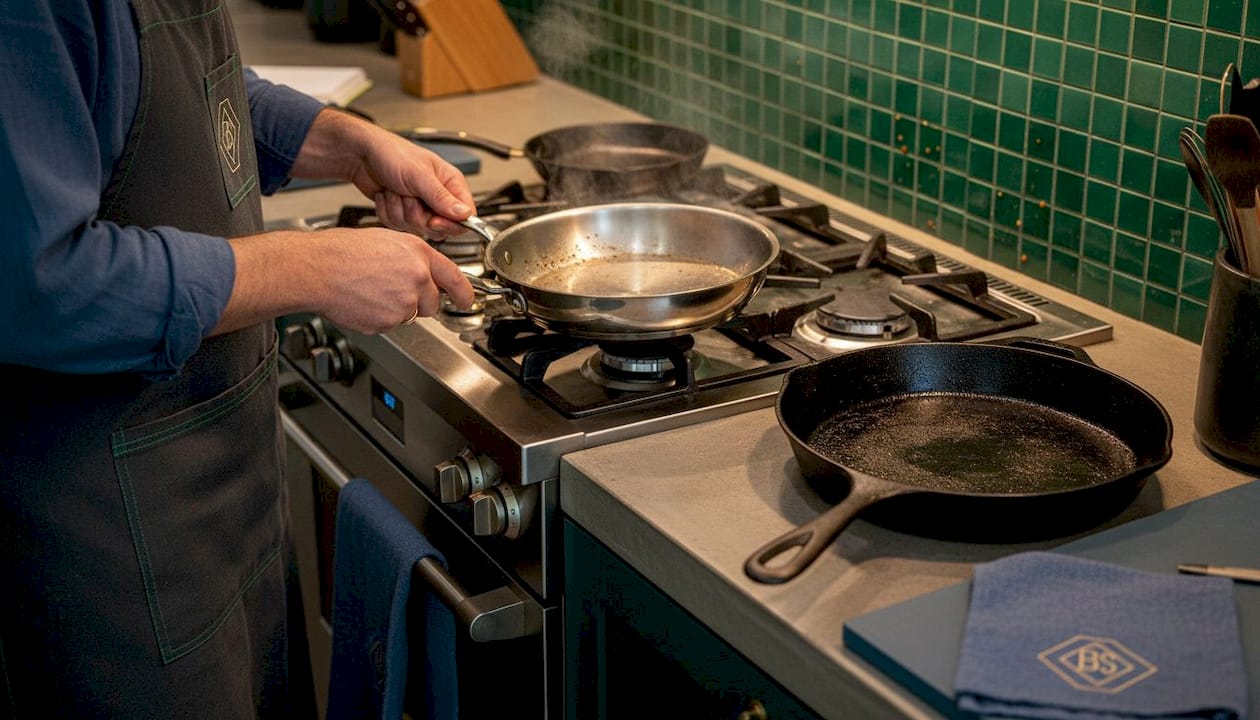
For those considering lighter options, the aluminium vs stainless steel question often comes down to weight preference and whether you cook acidic foods regularly.
When choosing by cooking task, here is what material science actually supports:
- High-heat searing: Carbon steel or cast iron. Both retain and radiate intense heat effectively.
- Sautéing vegetables quickly: Carbon steel. Its lighter weight compared to cast iron makes tossing and manoeuvring easy.
- Simmering sauces with wine or tomato: Clad stainless steel or lined copper. Non-reactive surfaces protect flavour.
- Scrambled eggs or omelettes: Well-seasoned carbon steel or PTFE nonstick. A smooth, low-stick surface is essential.
- Long, slow braises: Enamelled cast iron. Exceptional heat retention and no reactivity concerns.
Pro Tip: If you cook across a wide range of tasks and want one or two pans that cover most of them, carbon steel is the closest thing to a universal performer. It sears brilliantly, handles delicate work once seasoned, and lasts decades with basic care.
Spotlight on carbon steel: what makes it different?
Having looked at the full range of materials, it is only right to give carbon steel extra focus for those seeking top cooking performance and durability.
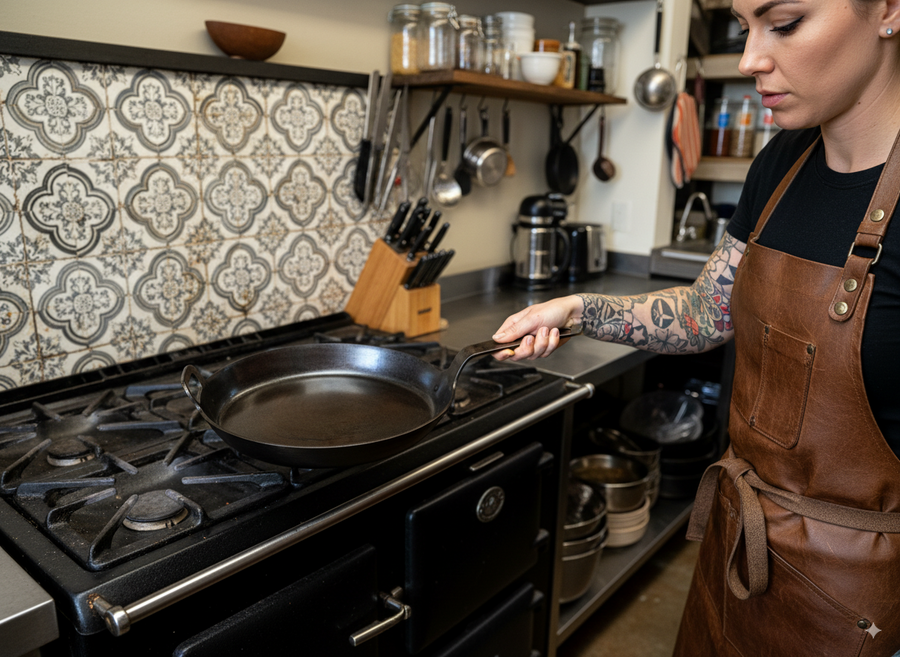
Carbon steel is an alloy of iron and carbon, typically containing around 98 to 99% iron and 1 to 2% carbon. That small percentage of carbon makes the metal harder and more durable than pure iron while remaining far lighter than cast iron. It responds to heat rapidly, which means you can adjust cooking temperatures with real precision. Professional kitchens across France, Spain, and Italy have relied on carbon steel for crêpe pans, paella pans, and woks for generations. The material is not a modern marketing trend. It is a culinary workhorse with a long track record.
What sets carbon steel apart from stainless steel’s even-heating approach (which requires aluminium or copper cladding to compensate for poor conductivity) is its organic relationship with heat and seasoning. A carbon steel pan improves with every use. The forged carbon steel advantages become most apparent when you understand that seasoning is not a coating applied externally. It is a polymerised layer of oil that bonds into the metal surface itself, creating natural, non-toxic nonstick properties over time.
The more you cook with carbon steel, the better it becomes. Unlike nonstick pans that degrade with heat, carbon steel actually gains performance with proper use. That is a fundamentally different relationship between cook and pan.
There are important carbon steel safety considerations worth knowing. Carbon steel is free from PTFE, PFOA, and any synthetic coatings. When seasoned correctly it is entirely food-safe, and unlike some nonstick pans it will not release harmful fumes if accidentally overheated.
How to season and care for a carbon steel pan:
- Wash the new pan with warm, soapy water to remove any protective oil applied during shipping.
- Dry the pan completely, either with a cloth or by heating it briefly on the hob.
- Preheat your oven to 250°C.
- Place the pan in the oven for 10 minutes to ensure it is absolutely dry.
- Apply a very thin coat of a high-smoke-point oil such as grapeseed, avocado, sunflower, or canola.
- Wipe off nearly all the oil with a cloth. The surface should look almost completely dry, not shiny.
- Place the pan upside down in the oven and bake for 30 minutes.
- Repeat steps 5 to 7 two or three more times to build a strong base seasoning layer.
Pro Tip: Avoid sudden temperature changes with carbon steel. Placing a very hot pan under cold water risks warping the base, which will cause uneven contact with induction hobs and ceramic cooktops. Always let the pan cool naturally before washing.
How to choose the right pan material for your kitchen
Armed with an understanding of material properties, the next step is knowing how to translate that knowledge into smart purchases for your unique kitchen setup.
Start by assessing your cooking habits honestly. Ask yourself four questions before buying any pan:
1. What heat levels do you typically use? High-heat cooking, such as searing steaks or stir-frying, demands a material that can withstand and retain intense temperatures without warping or degrading. Carbon steel and cast iron are your best options here.
2. How much maintenance are you willing to commit to? Stainless steel clad pans require almost no special maintenance. Carbon steel and cast iron both need seasoning and careful drying. Copper requires regular polishing. Nonstick surfaces need gentle handling and periodic replacement.
3. What types of food do you cook most? Acidic foods like tomatoes, citrus, and wine require non-reactive surfaces. If these feature heavily in your cooking, stainless steel or lined copper are safer choices for uncoated pans.
4. What is your cooktop type? Induction hobs require ferromagnetic materials. Carbon steel, cast iron, and some stainless steel pans work on induction. Pure aluminium and copper do not work on induction unless they have a ferromagnetic base layer added.
The fact that thermal conductivity varies enormously, with aluminium at 237 W/m·K and stainless steel at a relatively modest 16 W/m·K, directly shapes which pans are suited to which tasks. A high heat pan comparison makes this difference very visible in real cooking results. And if you are curious about production methods, understanding how carbon steel pans are made gives useful context for evaluating quality.
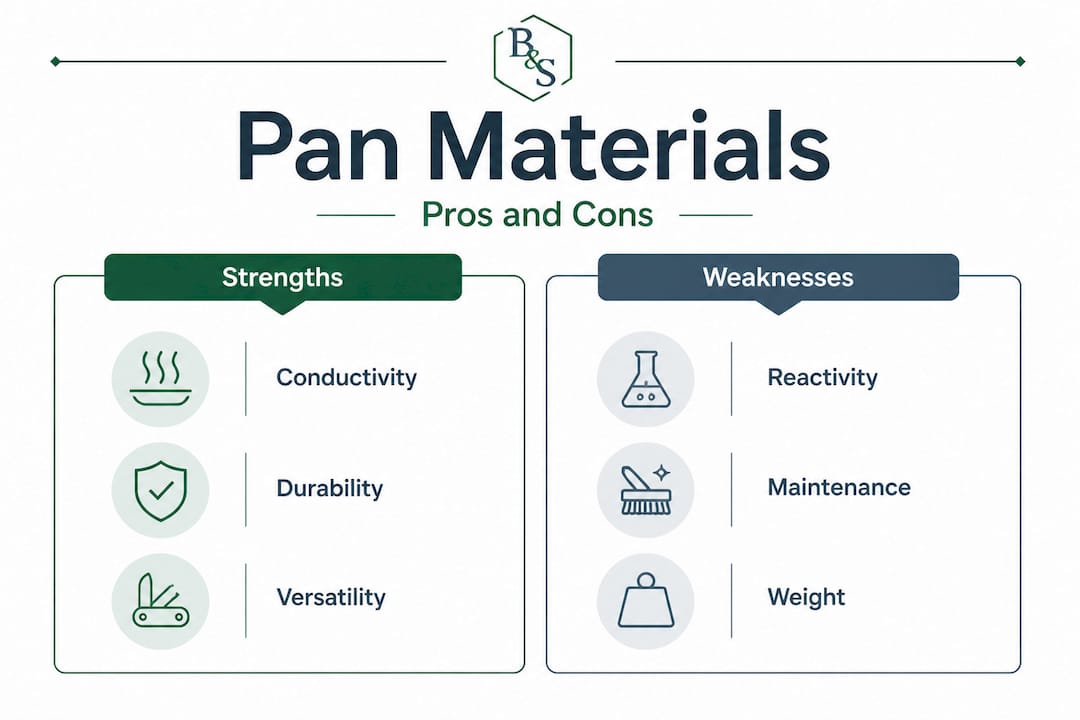
| Cooking priority | Best material | Avoid |
|---|---|---|
| High-heat searing | Carbon steel, cast iron | Nonstick, thin aluminium |
| Everyday versatility | Carbon steel, clad stainless | Plain cast iron (weight) |
| Delicate sauces | Lined copper, clad stainless | Reactive uncoated iron |
| Low-fat eggs and fish | Seasoned carbon steel, nonstick | Stainless (sticking risk) |
| Induction compatibility | Carbon steel, cast iron | Pure copper, pure aluminium |
Common mistakes to avoid when choosing a pan:
- Buying based on brand name alone without checking the construction method or material thickness.
- Assuming heavier is always better. A very thick cast iron pan is superb for braising but impractical for daily sautéing.
- Ignoring the handle. Pan handles affect balance and comfort significantly, especially for heavier pans. Riveted handles can trap grease; seamless, riveted-free designs are easier to maintain.
- Choosing nonstick for high-heat tasks. PTFE coatings begin to break down above 260°C and should never be used at very high temperatures.
- Overlooking seasoning requirements. Many buyers purchase carbon steel or cast iron without realising they need to season the pan before first use, which leads to sticking and frustration.
Why the right material makes more difference than you think
There is a persistent idea in culinary circles that technique matters far more than equipment. Experienced chefs sometimes say this to encourage beginners, and there is genuine truth in it for many skills. But when it comes to pan material, the advice breaks down. Material is not a marginal variable. It is often the primary variable.
Consider a simple example: a chicken breast seared in a thin aluminium nonstick pan versus one cooked in a well-seasoned carbon steel pan at proper temperature. The carbon steel pan holds more heat when the cold protein hits its surface, so it recovers temperature faster, produces a deeper crust with genuine Maillard reaction colouring, and releases the chicken naturally once the exterior has seared. The nonstick pan, limited to lower temperatures to protect its coating, produces a paler result with a softer texture. Technique cannot fully compensate for that thermal difference.
Most home cooks go wrong by chasing brand prestige or attractive design rather than understanding function. An expensive nonstick pan from a famous brand will still degrade within a few years. A properly maintained carbon steel pan, particularly one with real-world pan performance behind it, will outlast every other pan in your kitchen and improve continuously with use.
We would also challenge the notion that carbon steel is only for advanced cooks. The initial seasoning process requires care and patience, but once established, carbon steel is remarkably forgiving. It tolerates high heat, goes from hob to oven without complaint, and is cleaned in minutes. The learning curve is short. The payoff extends across a lifetime of cooking.
Investing in quality cookware is one of the few kitchen decisions that genuinely compounds in value. A €99 or €119 carbon steel pan used correctly will deliver better results in ten years than the day you bought it. That is a relationship with your kitchen that cheaper, disposable alternatives simply cannot offer.
Discover exceptional kitchenware with Brass & Steel
If this guide has clarified what you need from your cookware, Brass & Steel offers a direct path from understanding to action.
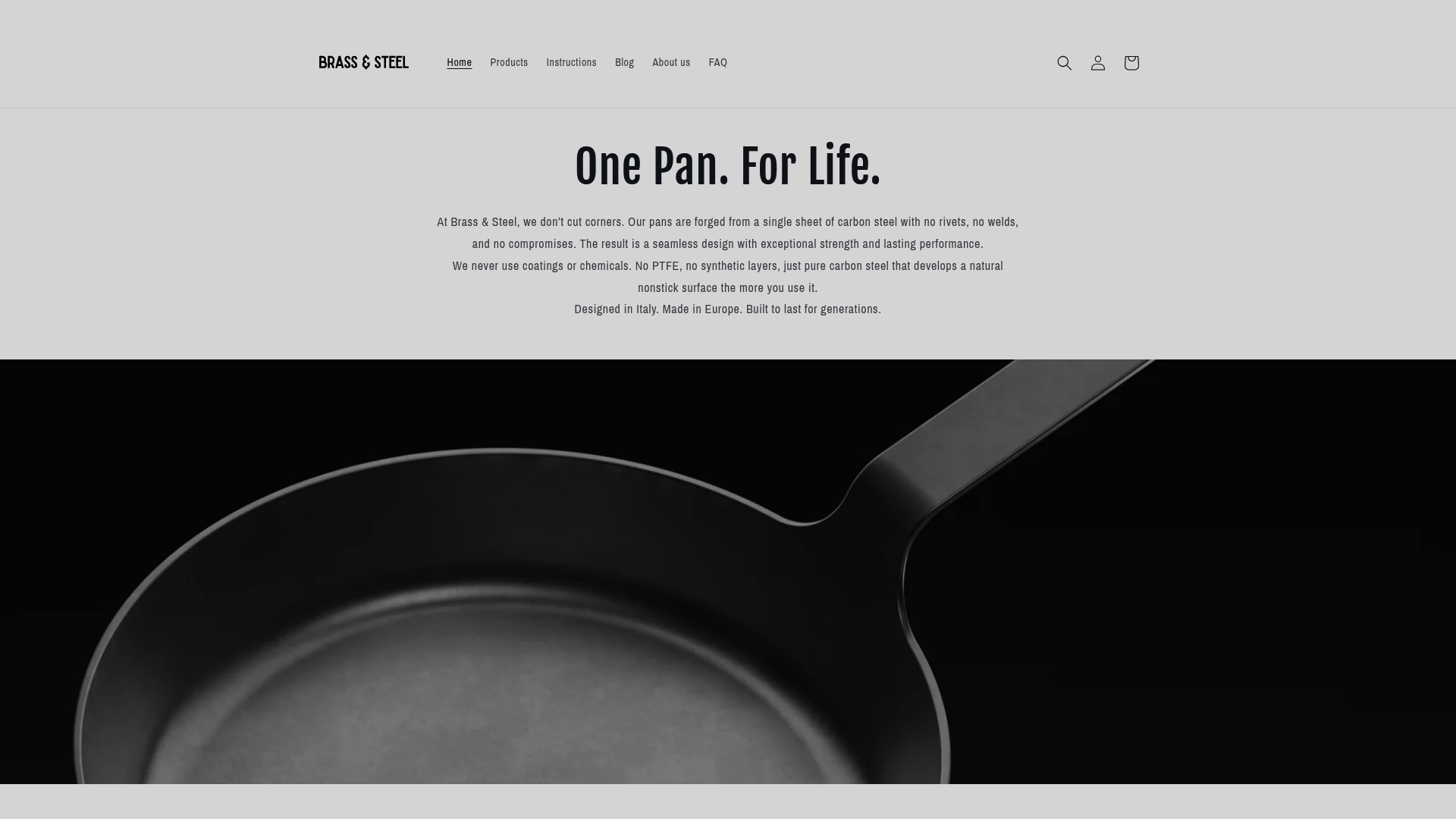
At Brass & Steel, we craft single-piece forged carbon steel pans in Jarocin, Poland, with design values rooted in Italian minimalism. Our 27 cm sauté pan at €99 and our 30 cm sauté pan at €119 are built without rivets or welds, free from PTFE and PFOA, and fully compatible with induction cooktops. Both pans are designed to build a natural nonstick seasoning that improves with every cook. Explore our product range and in-depth guides to find the pan that suits your kitchen, your cooking style, and your long-term ambitions. When you are ready to invest in cookware that lasts a lifetime, we are ready to help.
Frequently asked questions
What does ‘non-reactive’ mean in pan material descriptions?
Non-reactive means the material does not interact with acidic or alkaline foods, preventing unwanted flavours or discolouration. Stainless steel is a commonly used non-reactive material, making it ideal for cooking tomato-based or wine-based sauces.
Why do some stainless steel pans have aluminium or copper cores?
Stainless steel conducts heat poorly on its own, so aluminium or copper cores are bonded inside the pan to distribute heat evenly and eliminate hot spots during cooking.
How do I prevent my carbon steel pan from rusting?
Season your pan thoroughly before first use and always dry it completely after washing. A light wipe of oil after each use creates a protective barrier that keeps rust from forming.
Is aluminium safe to use in cookware?
Yes, aluminium is widely used in cookware and considered safe for cooking, especially when anodised or sandwiched within a stainless steel clad construction that prevents direct food contact.
What is the main advantage of carbon steel over cast iron?
Carbon steel heats up significantly faster than cast iron and is considerably lighter, making it far more practical for everyday tasks like sautéing, tossing vegetables, or quick searing where responsiveness matters.
Recommended
- 7 Essential Insights on Different Cookware Materials – Brass & Steel
- Pots vs pans: 5 key differences for better cooking – Brass & Steel
- Aluminium vs Stainless Steel vs Ceramic – Choosing Cookware Wisely – Brass & Steel
- Healthy Cookware Explained: Essential Guide to Safe Choices – Brass & Steel
- Why choose lightweight cookware for outdoor convenience