Aluminium pans vs stainless steel: safe cookware in 2026

Choosing between aluminium and stainless steel pans affects both your health and cooking results. Many home cooks worry about aluminium cookware leaching metals into food, particularly when preparing acidic dishes like tomato sauces. Meanwhile, stainless steel promises durability but heats differently. This guide clarifies material properties, health implications under EU regulations, and practical selection criteria so you can cook confidently with cookware that matches your priorities.
Table of Contents
- How Aluminium And Stainless Steel Cookware Differ In Material And Health Impact
- Thermal Performance And Durability: How They Impact Cooking Experience
- Managing Risks And Choosing Cookware That Fits Your Kitchen
- Comparing Aluminium And Stainless Steel Cookware: Summary Of Benefits And Limitations
- Explore Quality Cookware Options For Your Kitchen
- Frequently Asked Questions
Key takeaways
| Point | Details |
|---|---|
| Aluminium heats faster | Conducts heat 20-30% quicker than stainless steel, allowing rapid temperature changes but risking uneven heating. |
| Metal leaching concerns | Raw aluminium can exceed safe intake limits with acidic foods; anodised versions reduce leaching by over 90%. |
| Stainless steel durability | Resists warping, corrosion, and maintains shape better than aluminium over repeated high-heat use. |
| EU safety standards | Regulations ensure cookware metal migration stays within safe limits, but cookware condition matters significantly. |
| Choice factors | Consider cooking style, food acidity, health priorities, and maintenance commitment when selecting cookware. |
How aluminium and stainless steel cookware differ in material and health impact
Aluminium’s exceptional thermal conductivity makes it popular for quick cooking, but this material can leach significant amounts into your food. The effect intensifies with acidic ingredients like citrus, vinegar, or tomatoes, which interact chemically with the pan surface. Research shows that aluminium intake can significantly exceed tolerable weekly limits, especially for children consuming meals prepared in untreated aluminium cookware.
Stainless steel behaves differently as an inert material. Its complex alloy composition, typically including chromium and nickel, creates a stable surface that resists chemical reactions with food. This stability means virtually no metal migration occurs during normal cooking, making it substantially safer for acidic preparations and prolonged simmering.
European regulations set clear migration limits for cookware materials, but aluminium cookware is not banned outright. Instead, manufacturers must ensure their products meet safety thresholds. The critical distinction lies in implementation: regulatory compliance assumes proper cookware condition and appropriate use.
Key factors affecting aluminium migration:
- Surface treatment and coating quality
- Food pH level and acidity concentration
- Cooking duration and temperature
- Pan age and surface wear
- Storage practices between uses
Well-maintained anodised aluminium cookware demonstrates dramatically reduced metal leaching compared to raw aluminium. The anodisation process creates a hard, non-reactive oxide layer that acts as a barrier between the metal and your food. For those exploring various cookware materials, our aluminium vs stainless steel ceramic comparison provides additional context.
“Understanding your cookware’s surface condition matters as much as the base material. A scratched anodised pan behaves more like raw aluminium, whilst a pristine stainless steel pan maintains its inert properties indefinitely.”
Practical safety depends heavily on cookware condition rather than material alone. A damaged stainless steel pan with exposed base metals can pose risks, whilst properly maintained anodised aluminium performs safely for years. Regular inspection prevents gradual deterioration from compromising your cookware’s safety profile.
Thermal performance and durability: how they impact cooking experience
Thermal behaviour separates these materials dramatically in everyday cooking. Aluminium’s heat response time is 20-30% faster than stainless steel, enabling rapid temperature adjustments when you increase or decrease heat. This responsiveness suits quick sautéing techniques but demands closer attention to prevent scorching.
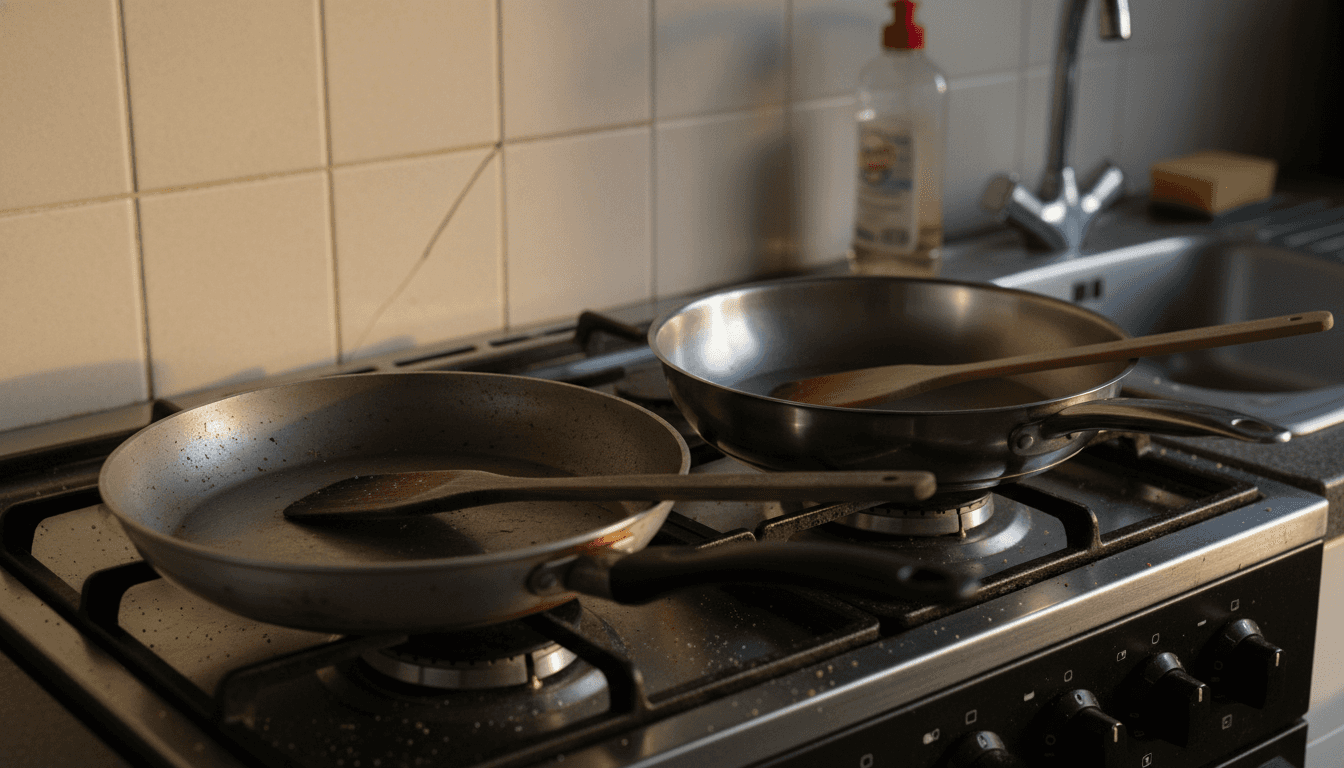
Stainless steel’s slower heat conduction creates more forgiving cooking conditions. The material conducts heat gradually, resulting in stable temperature distribution across the pan surface. This characteristic particularly benefits simmering sauces, braising meats, or any technique requiring sustained, even heat without constant monitoring.
Warping presents a significant durability concern with aluminium. The material’s softness means aluminium cookware warps more easily, especially in thinner pans subjected to rapid temperature changes. A warped pan creates uneven contact with your cooktop, leading to hot spots and inefficient heating. Stainless steel’s rigidity resists deformation even under repeated thermal stress.
Hard-anodised aluminium bridges some durability gaps, lasting 2 to 3 times longer than untreated aluminium. The hardened surface resists scratching and maintains integrity through years of regular use. However, it still cannot match stainless steel’s exceptional longevity and resistance to physical damage.
Comparison of heat and durability characteristics:
| Property | Aluminium | Stainless Steel |
|---|---|---|
| Heat-up time | Very fast (20-30% quicker) | Moderate to slow |
| Temperature stability | Rapid changes, less forgiving | Gradual, stable distribution |
| Warping resistance | Low (softness causes deformation) | High (maintains shape) |
| Scratch resistance | Moderate (anodised) to low (raw) | High (hard surface) |
| Typical lifespan | 3-5 years (anodised), 1-2 years (raw) | 10-20+ years |
| Weight | Lightweight, easy handling | Heavier, more substantial |
These performance differences directly affect your cooking workflow and long-term costs. Frequent pan replacement due to warping or surface degradation adds up financially, whilst investing in durable stainless steel reduces replacement cycles. Our guide on cookware stainless steel benefits explores these economic considerations further.
Pro Tip: Match cookware to your dominant cooking techniques. Fast heat response benefits quick stir-fries and delicate proteins requiring precise temperature control, whilst stable heat suits slow-cooked dishes and recipes with extended simmering times.
Managing risks and choosing cookware that fits your kitchen
Selecting appropriate cookware starts with understanding your cooking patterns. Anodised or coated aluminium pans reduce aluminium leaching by over 90% compared to raw versions, making them viable for most cooking tasks when maintained properly. The protective layer acts as an effective barrier during normal use.
Avoid using raw or heavily scratched aluminium pans entirely, particularly for acidic preparations. Surface damage exposes reactive aluminium directly to food, dramatically increasing metal migration. Even small scratches compromise the protective barrier, allowing acids to interact with the base metal. Hard-anodised and well-coated cookware presents low risk, whilst worn surfaces pose higher concerns.
Stainless steel’s chemical stability makes it the safer default choice for acidic foods, long cooking times, or food storage in the pan. You can confidently prepare tomato-based sauces, citrus marinades, or vinegar reductions without worrying about metal interaction. This versatility simplifies meal planning and reduces mental overhead about ingredient compatibility.
Practical maintenance and selection guidelines:
- Inspect pan surfaces monthly for scratches, discolouration, or coating damage
- Replace cookware showing significant wear or exposed base metal
- Wash with gentle detergents and soft sponges only
- Avoid metal utensils that scratch protective layers
- Never use abrasive cleaners or scouring pads on anodised aluminium
- Store pans with protective layers between them to prevent scratching
- Consider cooking frequency: daily users benefit from stainless steel durability
Your cooking habits significantly influence appropriate material selection. Frequent preparation of acidic dishes, extended simmering times, or high-heat searing all favour stainless steel’s robust properties. Occasional cooking with gentle techniques and non-acidic ingredients permits greater flexibility with anodised aluminium. For those exploring alternatives, our carbon steel vs stainless steel comparison examines another durable option.
Pro Tip: Regularly photograph your cookware surfaces to track wear patterns over time. Visible changes in finish, colour, or texture signal when replacement becomes necessary, preventing gradual exposure to unsafe metal migration.
Comparing aluminium and stainless steel cookware: summary of benefits and limitations
A structured comparison clarifies these materials’ distinct advantages and constraints. Neither material is universally superior; their differences manifest most clearly in heat behaviour, wear patterns, and maintenance requirements. Your priorities determine which trade-offs best serve your cooking needs.
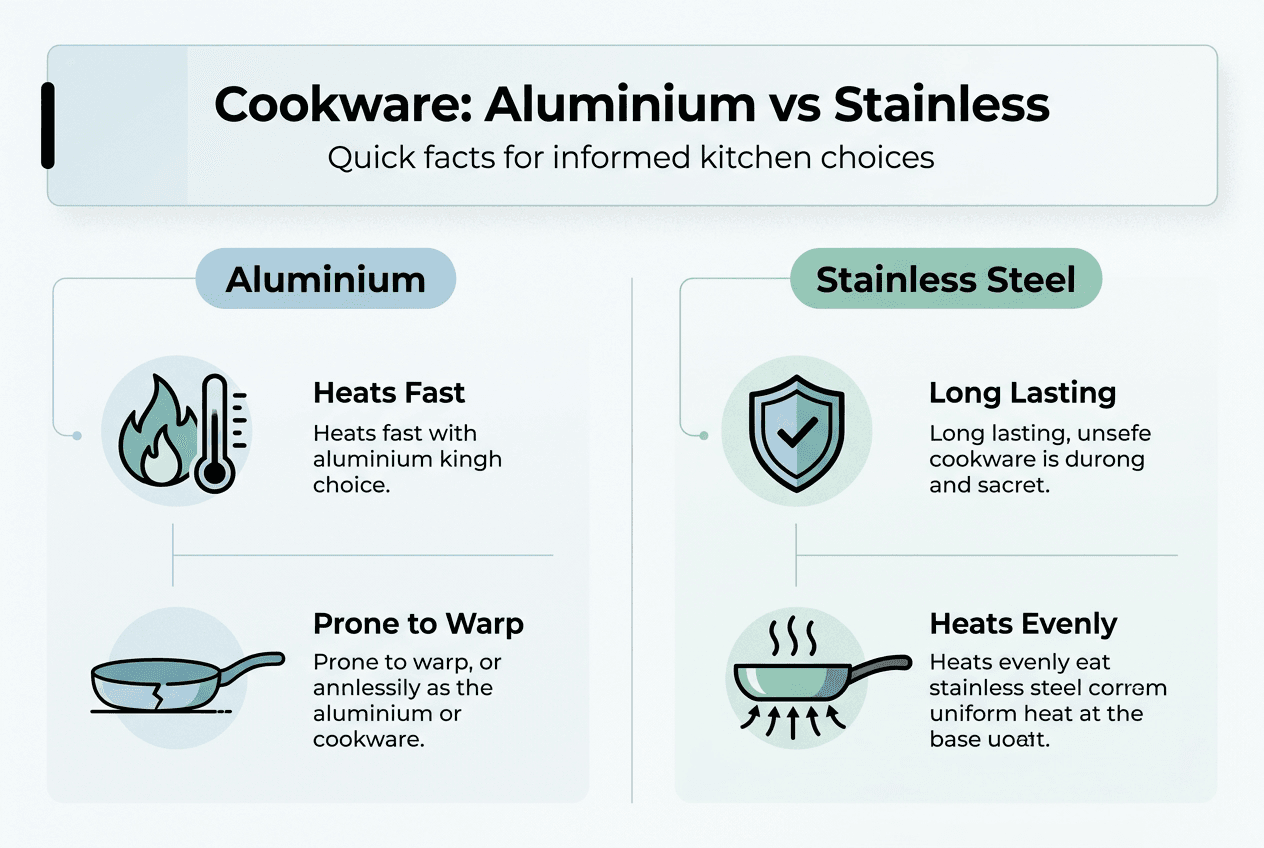
Comprehensive material comparison:
| Aspect | Aluminium | Stainless Steel |
|---|---|---|
| Heat conduction | Excellent, rapid and responsive | Moderate, slower and more stable |
| Durability | Moderate (anodised), low (raw) | Excellent, resists damage |
| Health considerations | Requires anodising to reduce leaching risk | Inert, minimal migration concern |
| Maintenance | Requires careful handling, avoid acidic storage | Low-maintenance, dishwasher-safe |
| Weight | Lightweight, easy to manoeuvre | Heavier, requires more strength |
| Price range | Lower initial cost | Higher initial investment |
| Lifespan | 3-5 years typical | 10-20+ years common |
Aluminium cookware advantages:
- Lightweight construction reduces arm fatigue during cooking
- Rapid heating saves time and energy
- Lower purchase price suits budget constraints
- Excellent for quick-cooking techniques
Aluminium cookware limitations:
- Health concerns with acidic foods unless properly anodised
- Prone to warping under high heat
- Shorter lifespan requires more frequent replacement
- Surface easily damaged by metal utensils
Stainless steel cookware advantages:
- Superior durability withstands decades of use
- Safe for all food types including highly acidic preparations
- Maintains performance through repeated high-heat cooking
- Low maintenance and simple cleaning
Stainless steel cookware limitations:
- Heavier weight challenges some users
- Slower heating requires patience and technique adjustment
- Higher initial cost represents larger investment
- May require additional fat to prevent sticking
The choice ultimately balances speed against longevity, health concerns against performance, and initial cost against long-term value. Budget-conscious cooks preparing mostly non-acidic foods might prefer anodised aluminium’s affordability and responsiveness. Health-focused cooks or those frequently working with acidic ingredients gain peace of mind from stainless steel’s inert properties. Our pros and cons of steel cookware guide provides additional perspective on durable options.
Explore quality cookware options for your kitchen
Understanding these material differences empowers better cookware decisions for your specific needs. At Brass & Steel, we specialise in durable cookware engineered for serious home cooks who value both performance and safety. Our carbon steel pans offer a compelling alternative that combines rapid heat response with chemical stability and exceptional longevity.
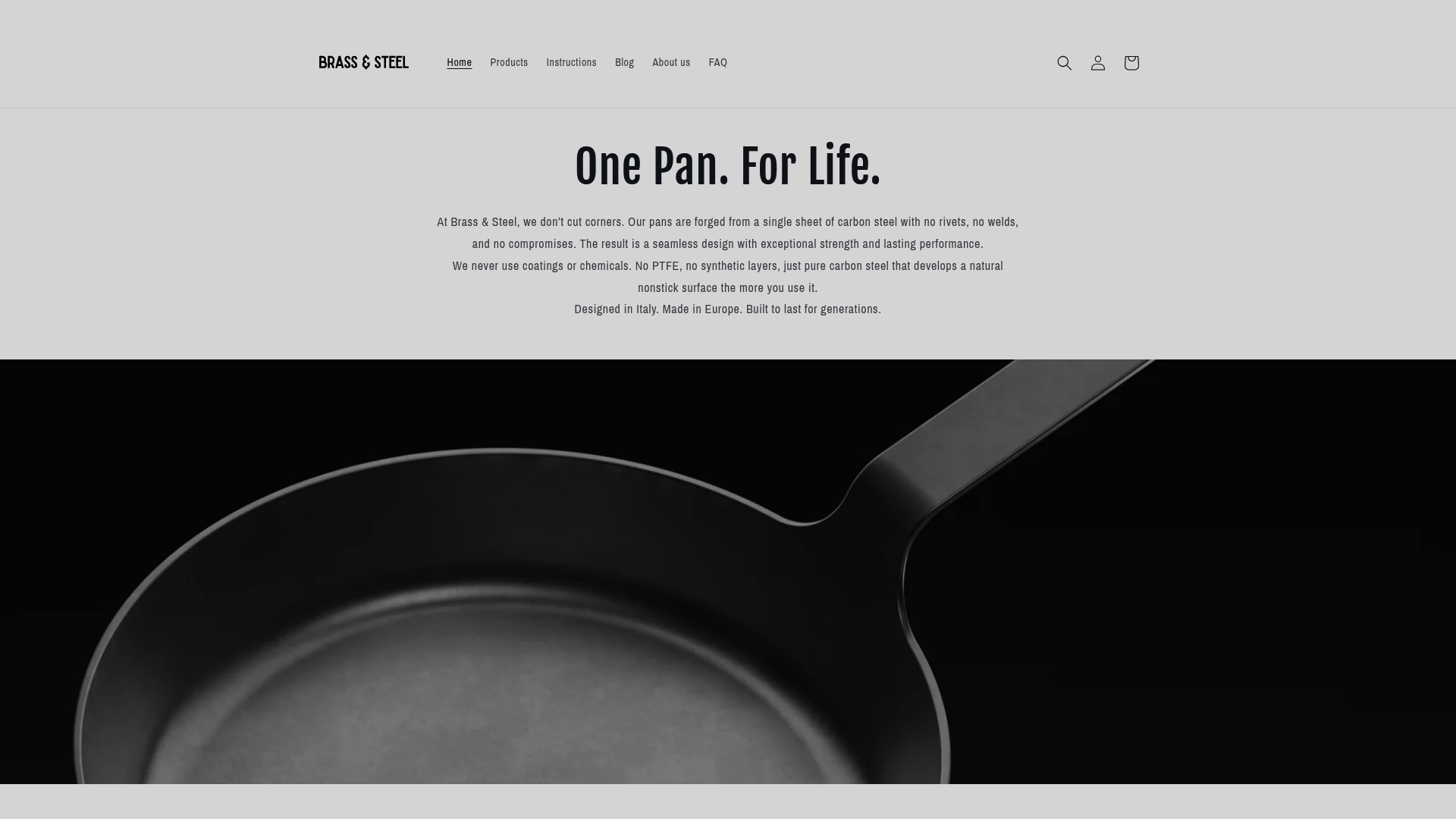
Our single-piece forged construction eliminates rivets and welds that trap food particles and bacteria. The naturally developing non-stick patina requires no synthetic coatings, addressing health concerns whilst delivering reliable performance across all cooking techniques. Whether you prioritise quick heating, chemical inertness, or decades of reliable service, exploring steel cookware alternatives reveals options beyond the aluminium-stainless steel binary. Visit our steel cookware pros and cons guide or browse the complete Brass & Steel collection to discover cookware matching your cooking style, health priorities, and durability expectations. Our comprehensive cookware comparison helps refine your selection.
Frequently asked questions
Are aluminium pans safe to use with acidic foods?
Raw aluminium pans can leach significant metal amounts into acidic dishes like tomato sauce or citrus marinades, potentially exceeding safe intake limits. However, anodised aluminium cookware is suitable for acidic cooking because the hardened oxide layer prevents metal migration. Always verify your pan’s surface treatment and condition before cooking acidic foods.
How do I maintain aluminium cookware to minimise health risks?
Avoid abrasive cleaning tools that scratch protective coatings, exposing reactive aluminium beneath. Replace pans showing heavy wear, discolouration, or visible scratches, as cookware condition affects metal migration significantly. Regular visual inspections help identify deterioration before it compromises safety.
Why is stainless steel often recommended for durability?
Stainless steel’s rigidity resists deformation and corrosion better than aluminium, maintaining pan shape through repeated heating cycles. This structural stability prevents warping that creates uneven cooking surfaces. Its corrosion resistance contributes to multi-decade lifespans, making it ideal for frequent high-heat cooking. Explore more about stainless steel durability benefits in our detailed guide.
Can I use aluminium cookware safely if I cook mostly non-acidic foods?
Aluminium pans generally perform safely with non-acidic foods when properly maintained and undamaged. Real-world home use typically results in lower exposure than worst-case laboratory migration tests suggest. Good coating condition and avoiding prolonged food storage in the pan further reduce any minimal risks with neutral-pH ingredients.
Recommended
- Master your cooking with durable stainless pans in 2026 – Brass & Steel
- Carbon Steel vs Aluminium Cookware – Performance and Health Impact – Brass & Steel
- Aluminium vs Stainless Steel vs Ceramic – Choosing Cookware Wisely – Brass & Steel
- Carbon Steel vs Stainless Steel Pans, which one is best? – Brass & Steel
- Foods High Risk for Bacteria in Canada: Safety for 2025 - Probe IT