How to clean your de Buyer carbon steel pan properly
TL;DR:
- Cleaning a de Buyer carbon steel pan involves careful deglazing, gentle wiping, thorough drying, and oiling to build a stronger nonstick patina over time. Avoid harsh detergents, soaking, or dishwasher use, as these can damage the seasoning and cause rust. Proper routine maintenance ensures your pan remains nonstick, durable, and beautifully seasoned for years to come.
You pull your pan from the hob after a gorgeous sear, and there it is: a ring of burnt residue, a suspicious dull patch, or worse, the faint orange blush of rust creeping in at the edge. It is a disheartening sight, especially when you have spent weeks building up a beautiful patina. The good news is that cleaning a de Buyer carbon steel pan is far more straightforward than most people fear, and doing it correctly will actually strengthen your nonstick surface over time rather than diminish it. This guide walks you through every scenario, from daily upkeep to rust rescue.
Table of Contents
- What you’ll need before you start
- Step-by-step cleaning method for daily use
- How to tackle stubborn stains, burnt food, and rust
- Special cases: first use, re-seasoning, and long-term care
- What to expect: patina, performance, and frequent concerns
- The uncomfortable truth about cleaning de Buyer carbon steel pans
- Ready to keep your pan performing? Explore more expert resources
- Frequently asked questions
Key Takeaways
| Point | Details |
|---|---|
| Daily cleaning routine | Clean with hot water and a soft brush while warm, dry thoroughly, and lightly oil your pan each time. |
| Rust and stubborn stains | Use salt, vinegar, or gentle abrasives only as needed, and always re-season after deep cleaning. |
| Patina means progress | A darkening surface indicates your pan is becoming more nonstick and easier to maintain. |
| Moisture is the enemy | Never leave your pan wet—dry and oil it to keep rust at bay and preserve performance. |
What you’ll need before you start
To clean your pan efficiently without damaging its seasoning, the right tools and preparation make all the difference. Reaching for the wrong item, even once, can undo weeks of careful seasoning work.
Here is what you should have on hand before you start:
- Non-abrasive brush or soft sponge for routine cleaning
- Chainmail scrubber for stubborn food without stripping seasoning
- Paper towels or a clean cloth for drying and applying oil
- High smoke point oil such as rapeseed, sunflower, or grapeseed
- Coarse salt for gentle mechanical scrubbing when needed
- Steel wool or fine scouring pad reserved only for rust removal
What you should absolutely avoid keeping near your carbon steel pan: harsh detergents, bleach-based cleaners, dishwasher tablets, and anything labelled as a degreaser. These will strip the polymerised oil layer, which is the very thing that makes your pan nonstick.
| Tool | Safe to use | Purpose |
|---|---|---|
| Soft sponge | Yes, always | Daily residue removal |
| Chainmail scrubber | Yes, carefully | Stubborn cooked-on food |
| Coarse salt | Yes, with oil | Gentle abrasive scrub |
| Steel wool | Emergency only | Rust removal |
| Dishwasher | Never | N/A |
| Soaking in water | Never | N/A |
The standard daily cleaning method recommended for de Buyer carbon steel pans involves deglazing with hot water while still warm, wiping with a cloth or non-abrasive brush, drying thoroughly, heating briefly to evaporate all moisture, applying a thin oil layer, and storing dry. Keep that sequence in mind as your default routine.
Once you have assembled your cleaning kit, it is worth reading our guide on seasoning a carbon steel pan so you fully understand what you are protecting when you clean.
Pro Tip: Hang your pan or store it with nothing resting on its cooking surface. Even a light object placed inside can trap moisture and encourage rust, especially in humid European kitchens during winter months.
Step-by-step cleaning method for daily use
With your cleaning kit assembled, it is time to walk through the correct daily routine that protects your pan’s nonstick surface. The sequence matters as much as the tools.
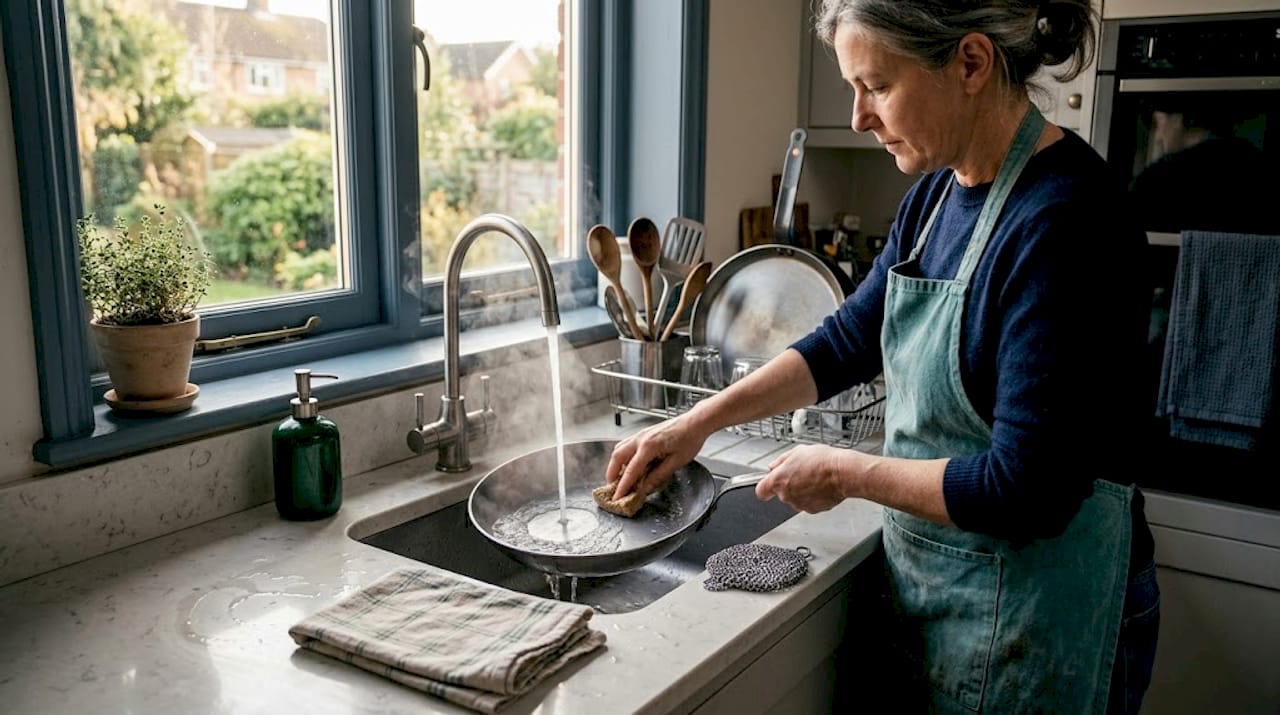
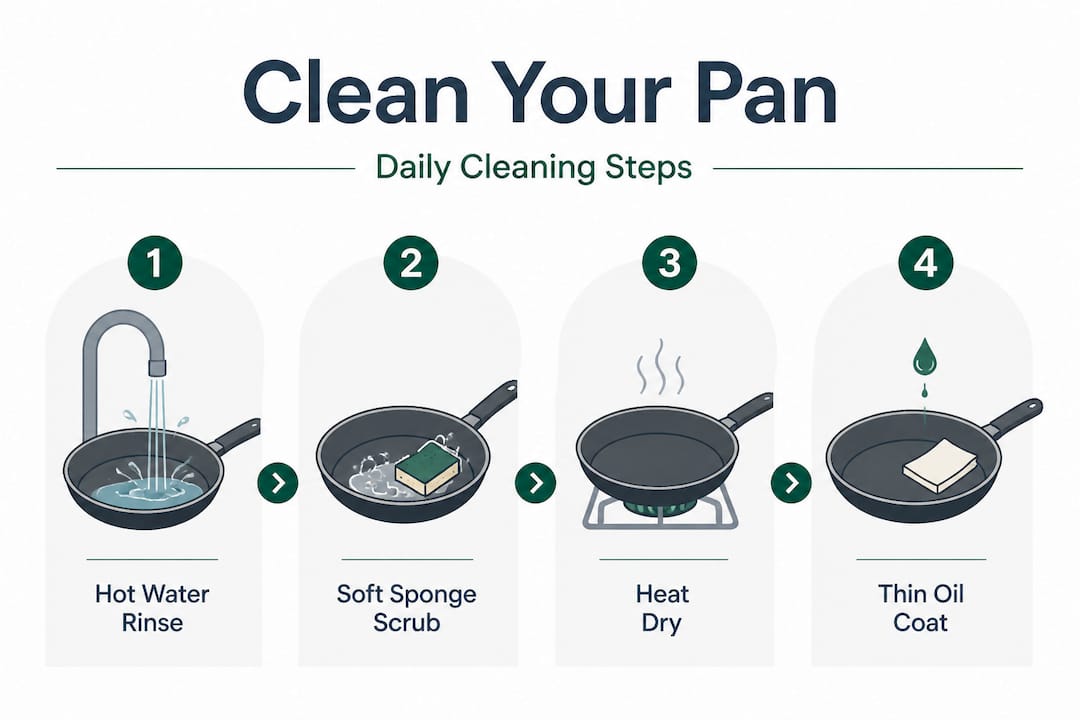
- Deglaze while still warm. As soon as you finish cooking, add a splash of hot water to the pan while it is still on the hob. This loosens nearly all residue almost instantly. Do not wait until the pan is cold; a cold pan makes residue cling much harder.
- Wipe or brush gently. Use a soft brush or non-abrasive sponge to remove loosened food. You rarely need more than a light pass. Avoid anything scratchy at this stage.
- Rinse with hot water only. A quick rinse under the hot tap is all you need. No soap, no soaking.
- Dry thoroughly with a cloth or paper towel. Get the surface as dry as you can by hand. This step is not optional; any moisture left behind will begin to oxidise the steel within hours.
- Return the pan to a low hob for one to two minutes. This drives off the last traces of moisture from the pores of the steel. You will see any remaining water evaporate as steam. Wait until no more steam rises.
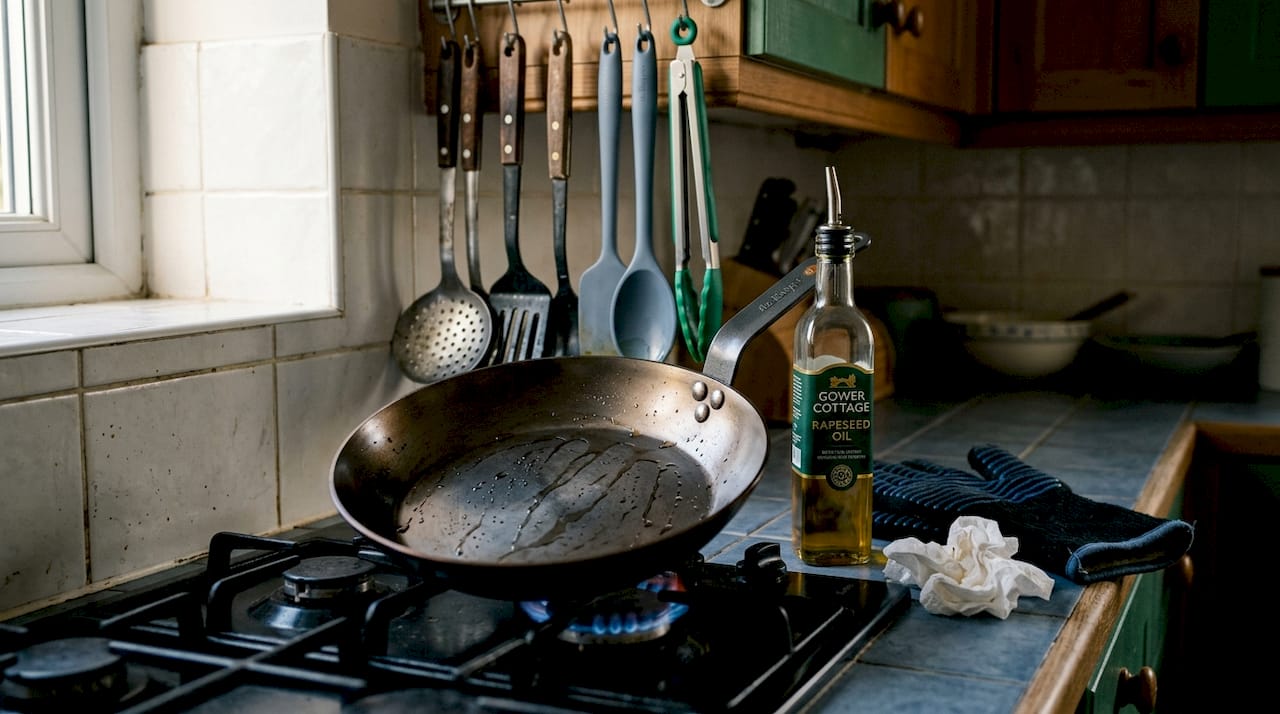
- Apply a very thin layer of high smoke point oil. Put a few drops of rapeseed or sunflower oil onto a paper towel and wipe the entire cooking surface. The pan should look almost dry, not greasy. Excess oil will turn sticky and create a gummy layer that undermines your nonstick performance.
- Store in a dry location. Avoid leaving it near a sink or in a damp cupboard.
Warning: Never place your de Buyer carbon steel pan in the dishwasher, and never leave it submerged in water. Even a short soak strips the seasoning and invites rust far faster than you might expect. This is one shortcut that will cost you significantly more time in the long run.
Following this routine consistently produces one clear, measurable result: a darkening patina that improves nonstick performance with every single use. What starts as raw steel grey gradually deepens to amber, then dark brown, and eventually near black. Each layer is seasoning building on itself.
For a broader look at keeping your pan in peak condition, the guide on best carbon steel care practices covers everything from oil choice to hob settings.
Pro Tip: If you notice tiny droplets of water beading on your pan’s surface after rinsing, that is a sign of good seasoning. A poorly seasoned pan will absorb water rather than repel it.
How to tackle stubborn stains, burnt food, and rust
But what happens when a normal clean is not enough? Here is how to rescue your pan from burnt-on food or rust without causing lasting harm.
| Problem | Method | Re-seasoning needed? |
|---|---|---|
| Stuck food | Chainmail scrubber with hot water | No |
| Light discolouration | Salt scrub with a little oil | No |
| Heavy residue | Minimal soap, warm water, scrub | Yes, light pass |
| Minor rust spots | Salt and oil scrub | Yes |
| Significant rust | Steel wool or scouring pad | Yes |
| Severe rust | Vinegar soak, baking soda neutralise | Yes, full re-season |
The chainmail scrubber approach is widely endorsed for carbon steel because it provides enough mechanical action to dislodge burnt food without scratching through the seasoning itself. Work in small circular motions with a little hot water. You will be surprised how effective it is.
For rust removal, the recommended sequence is as follows:
- For minor rust: scrub the affected area with coarse salt and a small amount of oil using a paper towel or sponge. The salt acts as a gentle abrasive while the oil protects the surrounding seasoning.
- For stubborn rust: use a fine scouring pad or steel wool, working only on the affected area. Rinse well and dry immediately.
- For severe rust: prepare a solution of equal parts white vinegar and water. Submerge the pan for one to five hours, checking regularly. Once the rust lifts, neutralise any remaining acid by rinsing with a dilute baking soda solution, then rinse again with clean water.
Important: A vinegar soak will strip your seasoning entirely, not just the rust. Always follow rust removal with a full re-seasoning process before cooking again. Skipping this step leaves your steel unprotected and the rust will return quickly.
For deeper guidance on rebuilding a damaged surface, the resource on restoring carbon steel seasoning is an excellent next step. And if you want to understand how rust forms in the first place, the article on avoiding rust on pans explains the environmental factors that accelerate oxidation.
When it comes to using soap on a carbon steel pan, it is acceptable in genuine emergencies for heavy grime, but routine soap use will progressively strip the seasoning. Think of soap as a reset button, not a regular cleaning agent.
Pro Tip: When using a chainmail scrubber on a hot pan, always use a heatproof glove or allow the pan to cool just enough to handle safely. The combination of a hot pan and chainmail is extremely effective but requires care.
Special cases: first use, re-seasoning, and long-term care
Beyond daily cleaning, some situations call for extra care, especially for new pans or after restoring from rust.
First use: Your brand new de Buyer pan arrives coated in beeswax, which the manufacturer applies to prevent rust during storage and shipping. This is the one occasion where washing with warm soapy water is not just acceptable but necessary. Use soap once, rinse well, dry thoroughly, and then follow your full seasoning process before the first cook.
After deep cleaning or rust removal: This is essentially the same process as seasoning from scratch. Clean the surface, dry it completely, apply a very thin coat of high smoke point oil, and bake the pan upside down in a 250°C oven for 30 minutes. Repeat two to three times.
| Scenario | Cleaning approach | Oil needed? | Full re-season? |
|---|---|---|---|
| New pan with beeswax | Hot soapy water once | Yes | Yes |
| Post-rust removal | Salt scrub or vinegar soak | Yes | Yes |
| Infrequent use storage | Wipe dry, thin oil coat | Yes | No |
| After heavy cooking | Daily routine | Yes, thin coat | No |
For European home cooks, French culinary sources describe the process of re-culottage, which translates roughly as relayering the seasoning. It is simply re-seasoning, but the French approach treats it as a normal, expected part of long-term carbon steel maintenance rather than a sign of failure. Adopt that mindset and you will find the process far less daunting.
If you are storing the pan for more than two weeks without use, particularly in a humid climate such as the coastal regions of Britain or northern France, apply a slightly more generous oil coating before storage. Check the pan periodically. A stored pan in a dry environment with a thin oil coat will last indefinitely without rust.
For a comprehensive look at keeping your pan going for years, the guide on long-term carbon steel upkeep covers storage conditions, seasonal care, and when to consider a full re-season.
Pro Tip: Store your pan with a folded sheet of paper towel inside the cooking surface. It absorbs any ambient moisture and prevents condensation from forming overnight, especially in kitchens that experience significant temperature swings between day and night.
What to expect: patina, performance, and frequent concerns
Once you implement the right cleaning routine, your pan’s surface will begin to change. Here is what that looks like and what it means for your cooking.
The most visible change is colour. A new de Buyer pan is a silvery blue-grey. After a few weeks of correct cleaning and cooking, it shifts to amber. Then deeper brown. Eventually, with sustained use, it reaches a dark, almost black surface. This is the patina, and it is entirely desirable.
The darkening patina is a direct result of polymerised oil bonding to the steel surface through heat. Each cooking and cleaning cycle adds another micro-thin layer. The nonstick performance improves proportionally. A pan that initially required butter or significant oil to prevent sticking will, after six months of proper care, handle eggs and fish with almost no lubrication at all.
Here are the most common concerns home cooks raise:
- Blue or grey tinting after cleaning: Completely normal. This is the steel’s natural response to heat. It does not affect performance.
- Uneven dark patches: Normal in the early months. Patina builds unevenly at first, darkening fastest where heat is highest. It evens out with time.
- Sticky or gummy surface: Almost always caused by applying too much oil during seasoning or after cleaning. Scrub with the chainmail, re-season with a much thinner oil coat.
- Flaking: Rare, but it happens when thick oil layers were baked on repeatedly. Strip and re-season from scratch.
The science behind it is that oil undergoes polymerisation when heated, forming a hard, smooth layer bonded to the steel. Moisture, by contrast, causes oxidation. That is why drying completely after every wash is the single most important step in your entire cleaning routine.
Understanding the carbon steel patina in detail will help you feel confident rather than confused when your pan’s appearance changes.
The uncomfortable truth about cleaning de Buyer carbon steel pans
Here is something most cleaning guides will not tell you plainly: you are far less likely to ruin your pan than you think.
The seasoning on a well-used carbon steel pan is remarkably resilient. One accidental splash of soapy water will not strip it. Forgetting to oil it once will not cause immediate rust, particularly in a dry kitchen. Using a chainmail scrubber more firmly than recommended will not destroy months of work. Carbon steel is tougher than the anxiety around it suggests.
The real risk is not individual mistakes. It is consistent neglect. Leaving the pan wet repeatedly. Storing it damp. Using harsh detergents every session. Soaking it regularly. Those cumulative habits cause genuine damage. A single lapse rarely does.
The cookware community has largely shifted towards a more relaxed approach to carbon steel maintenance. Chainmail scrubbers, which were once considered too aggressive by some, are now widely used and recommended. Minimal soap in genuine emergencies is accepted rather than forbidden. Re-seasoning after a deep clean is treated as routine maintenance rather than an admission of failure.
The best mindset is to focus on results. Does food release cleanly? Is the surface darkening gradually? Is there no rust? If the answers are yes, your routine is working, regardless of whether you followed every step perfectly every time. The care routines for lasting performance that actually work long-term are the ones you will sustain consistently, not the ones that demand perfection.
Perfection paralysis, where you avoid using the pan because you are worried about cleaning it incorrectly, is genuinely more damaging than the occasional cleaning mistake. Use the pan often. Cook fatty foods regularly. Clean promptly and dry thoroughly. The rest will take care of itself.
Ready to keep your pan performing? Explore more expert resources
With your confidence restored, you might be curious about next-level care or troubleshooting tough pan scenarios.
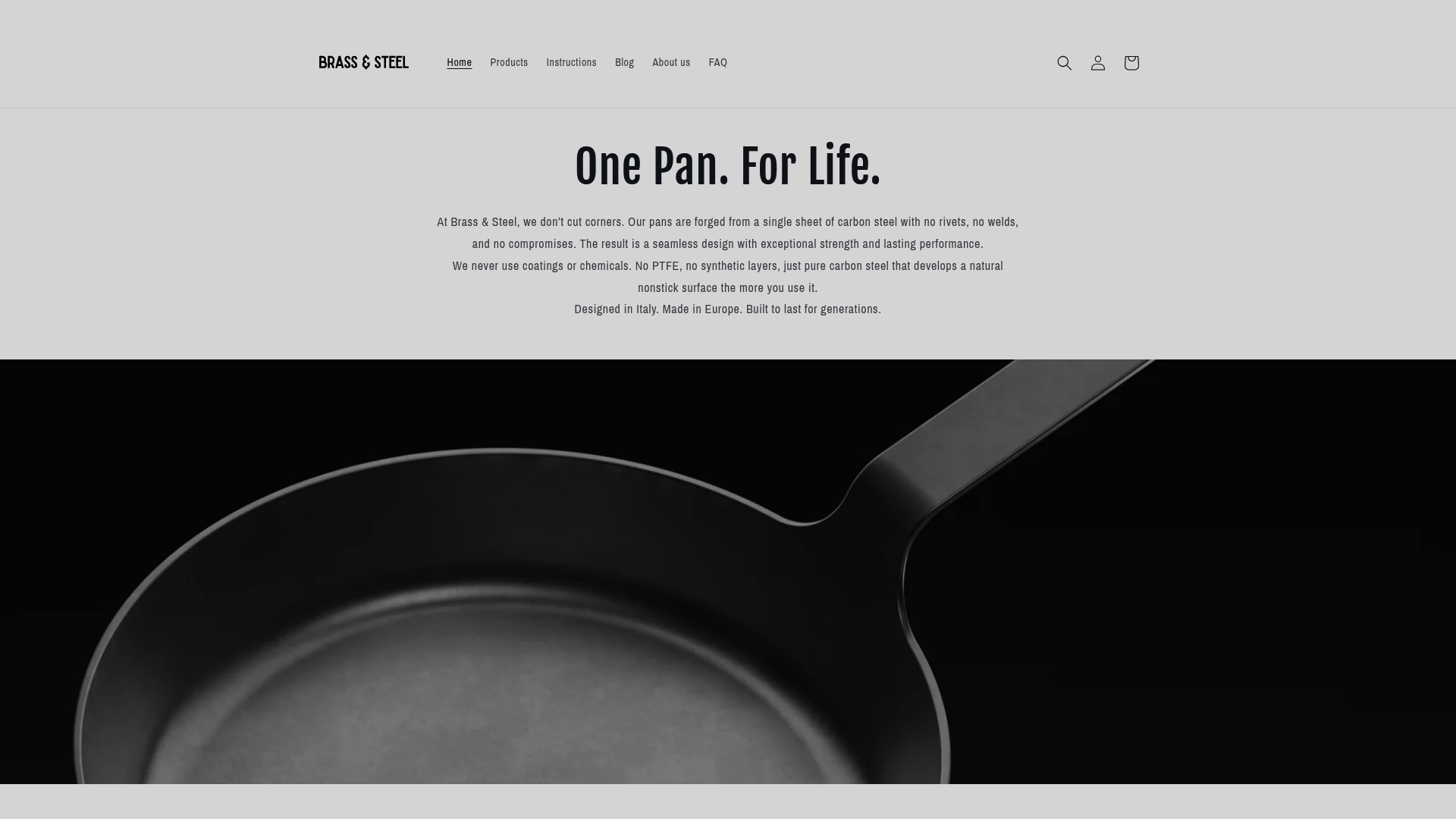
At Brass & Steel, we have built an extensive library of guides written specifically for serious home cooks across Europe who want their carbon steel pans to last a lifetime, not just a season. Whether you are troubleshooting a sticky surface, trying to understand why your seasoning looks uneven, or simply want to refine your technique, our resources cover every angle. For advanced scenarios including professional kitchen approaches, the guide on professional carbon steel care tips offers a level of detail that goes well beyond the basics. Your pan is an investment worth protecting properly.
Frequently asked questions
Can I use soap on my de Buyer carbon steel pan?
Use soap sparingly and only when dealing with heavy grease or grime; regular soap use will gradually strip the seasoning and leave the surface vulnerable to rust.
What do I do if my pan develops rust spots?
Scrub minor rust with coarse salt and oil, or for severe rust, use a vinegar and water soak for one to five hours, neutralise with baking soda, then re-season the pan fully before cooking again.
Why is my pan turning darker or blue after cleaning?
A darkening or blue patina is a positive sign: it indicates that seasoning is building correctly, and your nonstick performance will continue to improve with regular use.
Is it safe to let my de Buyer pan air-dry?
Never leave it to air-dry. Moisture causes oxidation rapidly, so always heat-dry on a low hob and apply a thin oil coat before storing.
How do I clean a brand new de Buyer carbon steel pan?
Wash with hot water and soap just once to remove the beeswax coating, dry the pan thoroughly, and then follow a full seasoning routine before you cook in it for the first time.